<?xml version="1.0" encoding="UTF-8"?>
<feed xmlns="http://www.w3.org/2005/Atom">
  <title type="text">Intermountain Histories</title>
  <updated>2026-04-17T19:32:11+00:00</updated>
  <generator uri="http://framework.zend.com" version="1.12.20">Zend_Feed_Writer</generator>
  <link rel="alternate" type="text/html" href="https://www.intermountainhistories.org/"/>
  <link rel="self" type="application/atom+xml" href="https://www.intermountainhistories.org/items/browse?output=rss2"/>
  <id>https://www.intermountainhistories.org/</id>
  <author>
    <name>Intermountain Histories</name>
    <uri>https://www.intermountainhistories.org</uri>
  </author>
  <link rel="hub" href="https://pubsubhubbub.appspot.com/"/>
  <entry>
    <title type="html"><![CDATA[Granite Mountain/Speculator Mine Disaster]]></title>
    <summary type="html"><![CDATA[<p><strong><em>The Granite Mountain/Speculator Mine disaster is considered the worst hard-rock mine disaster in the United States, with 163 people dying as a result of the fire. The disaster is remembered both for its death toll as well as the strike that ensued following the fire. </em></strong></p><img src="https://www.intermountainhistories.org/files/fullsize/b27dced64868903650ec532263084c95.jpg" alt="Where there’s smoke" /><br/><p>The Granite Mountain/Speculator Mine disaster near Butte, Montana, began a little before midnight on June 8, 1917, as the result of a tragic but ironic accident. The North Butte Mining Company planned to install a sprinkler system in the 3,500-foot shaft of Granite Mountain to increase safety. The system was nearly complete when one of the last steps required moving an electrical cable that was 1,200 feet long and weighted three tons. While workers lowered the cable, it slipped and fell about a thousand feet down a mine shaft. The cable was ruined in the fall, as it had stripped away the cable’s lead sheathing, revealing the oil-soaked cloth insulation underneath. Workers left the cable in the shaft and reported the incident to the assistant foreman, Ernest Sullau.
Sullau and John Collins, a shift boss, went down to inspect the damages and locate the cable. Sullau carried a carbide-burning lantern, with an open flame, and as he walked around the shaft, he set a piece of cloth on fire. Surprised, he moved the lantern back away from the burn but inadvertently set another section of cloth on fire. Sullau stayed below while Collins went above to inform the engineers of the fire.
Although the fire burned extremely hot, few miners were burned. Instead, the fire’s smoke and gas was the true threat as it spread throughout the mine as well as into adjoining mines, asphyxiating Sullau and many miners. Firefighters worked for five days to contain the fire, and it took rescuers three days thereafter to get all the survivors out. Most of those who survived were treated for smoke and gas inhalation onsite and were able to go home; the few particularly bad but still living cases were rushed to the hospital. By the time the dust settled, the community counted 168 dead.
The fire was a breaking point for the workers in Butte. Left with no unions since 1914, they went on strike and created the Metal Mine Workers’ Union. However, Butte was one of the largest producers of copper, and due to World War I copper was in high demand. As a result of the need for copper, in August the federal government deployed troops to break the strike. With federal troops on the scene adding to mounting pressures against the miners, their strike ended in December.
The fire was also particularly difficult for the miners’ families. While compensation was available, it was only given to miners who had wives or children. Otherwise, the company was only obligated to pay $75 for funeral expenses. However, many of the unmarried miners were the sole providers to their elderly parents. Miners whose family members were either not U.S. citizens or not in the country also did not receive financial compensation. Overall, only 39 of the 163 families of the dead received any non-funeral financial compensation.</p><p><em><strong><a href="https://www.intermountainhistories.org/items/show/535">For more (including 4 images) view the original article</a></strong></em></p>]]></summary>
    <published>2021-11-13T10:53:02+00:00</published>
    <updated>2026-04-17T19:32:11+00:00</updated>
    <link rel="alternate" type="text/html" href="https://www.intermountainhistories.org/items/show/535"/>
    <id>https://www.intermountainhistories.org/items/show/535</id>
    <author>
      <name>Megan Wagner, Northern Arizona University</name>
    </author>
  </entry>
  <entry>
    <title type="html"><![CDATA[Women and the Colorado Coalfield Strike<br />
]]></title>
    <summary type="html"><![CDATA[<p><strong><em>While it is true that all miners who participated in the Colorado Coalfield Strike of 1913–14 were men, women were also embroiled in the controversy and consequences of the movement. Wives of miners, sympathetic locals, and even a famous union agitator involved themselves in remarkable ways throughout the strike.</em></strong></p><img src="https://www.intermountainhistories.org/files/fullsize/275364180e69f96a7008fa29fa529432.jpg" alt="Business Section of Trinidad, Colorado" /><br/><p>When the United Mine Workers of America (UMWA) strike was called in September, women enthusiastically joined the cause of their male family members. They harassed strikebreaking miners—“scabs”—and beat one scab, tracklayer John Hale, so badly that some newspapers erroneously reported that he had died. Meanwhile, other women organized their new homes in the various tent colonies throughout the area. The deprivations suffered by the women and children in those colonies were probably no worse than what they faced in company housing, apart from the thin canvas tents. The thin tents could do little to protect them from the cold and a record-breaking four-foot snowfall in December 1913.</p><p>To make matters worse, women were unable to leave the colonies without a male escort because they feared assault by militiamen. Hungry, tired, cold, and scared, women were desperate to see the results of a successful strike. Mother Jones, a seventy-six-year-old famous union agitator, “pepped up” women of the tent colonies several times as she encouraged them to keep up the fight. After the arrest of Mother Jones in January 1914, the UMWA encouraged the women to participate in a peaceful demonstration for the release of the elderly Mother Jones. General John Chase consented to a procession through downtown Trinidad with the expectation that the women would not approach the San Rafael hospital where Mother Jones was being kept prisoner. As the women marched, the militiamen on horseback blocked the way to the hospital. As General Chase shouted at the women to stop, he fell from his horse—much to the delight of the women. Infuriated, he ordered his troops to charge. Women began hurling stones, bottles, and bricks at the soldiers, provoking the frightened cavalrymen to slash at the projectiles and the women with their sabers. Instantly, the parade turned into a full-blown riot as sympathetic townspeople jumped into the fray. Eleven men and eight women were arrested for inciting a riot. Dozens of women and children were injured, but no deaths were reported. </p><p>Troubles persisted after the women’s march, but the militia now included women and children on their enemies list. 	</p><p><em><strong><a href="https://www.intermountainhistories.org/items/show/220">For more (including 5 images) view the original article</a></strong></em></p>]]></summary>
    <published>2018-06-12T22:31:22+00:00</published>
    <updated>2026-04-17T19:32:03+00:00</updated>
    <link rel="alternate" type="text/html" href="https://www.intermountainhistories.org/items/show/220"/>
    <id>https://www.intermountainhistories.org/items/show/220</id>
    <author>
      <name>Natalie Larsen, Brigham Young University</name>
    </author>
  </entry>
  <entry>
    <title type="html"><![CDATA[The Colorado Coalfield Strike of 1913-1914<br />
]]></title>
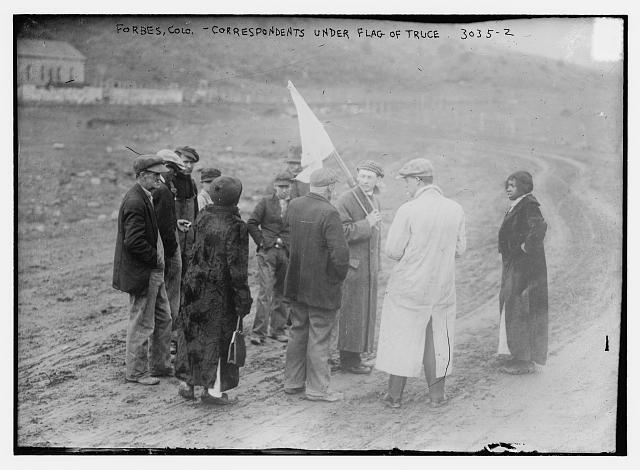
    <summary type="html"><![CDATA[<p><strong><em>After years of abuses by the Colorado Fuel & Mining Company (CFI), thousands of miners throughout the southern Colorado coalfields joined a United Mine Workers of America (UMWA) strike. The ensuing violence from September 1913 to May 1914 made it the bloodiest labor dispute in American history.</em></strong></p><img src="https://www.intermountainhistories.org/files/fullsize/3f01a2004adb3e26ee5a32815170fd21.jpg" alt="Forbes, Colo. -- Correspondents under Flag of Truce" /><br/><p>Animosity between union organizers and mining operators hit a boiling point in August 1913 after the callous murder of union organizer Gerald Lippiatt by mine guards. The Colorado Fuel & Mining Company (CFI) did not acknowledge the murder and local authorities refused to investigate. Angered by their inaction, the United Mine Workers of America (UMWA) District 15 gathered at Trinidad to declare a strike on September 16. The union demanded recognition, a ten percent wage increase, enforcement of eight-hour workday laws, checkweighmen to verify the payment per ton of coal, payment in cash, freedom to buy and sell, and enforcement of all other mining laws. When their demands were announced on September 23, retribution was swift.</p><p>Before the day was out, all miners and their families had been evicted from company housing and left without means to buy food and other goods. To aid them, the UMWA provided half a dozen tent colonies, the largest of which were at Aguilar and Ludlow.</p><p>For a month, spurts of violence interrupted the lull in negotiations. The Baldwin-Felts Agency, anti-union mercenaries employed by the mining operators, sent in strikebreakers from West Virginia to harass the strikers and break the union. The detectives drove around in machine-gun equipped cars and assaulted the Forbes tent colony, killing a striker and a small boy. However, the strikers were not guiltless either. They continually harassed non-union miners (“scabs”) who continued to work, threatening them and their families if they refused to join the strike. Civil conditions rapidly deteriorated in the region, culminating in the murder of company guard John Nimmo. It was at that moment that CFI president L.M. Bowers begged Colorado Governor Elias Ammons to send in the National Guard to restore order.</p><p>Governor Ammons declared martial law in the coalfields, and militiamen under the command of General John Chase arrived in late October. Their arrival, however, only intensified the violence. An official government report described the militiamen as the “very scum of humanity” for their unwarranted assaults on women, children, and enslavement of captured strikers. General Chase vehemently denied those accusations, insisting that the actions of the National Guard were legal necessities to prevent unnecessary loss of life. By the time the strike ended in May 1914, an estimated 150–200 people had been killed or severely maimed.</p><p><em><strong><a href="https://www.intermountainhistories.org/items/show/219">For more (including 6 images) view the original article</a></strong></em></p>]]></summary>
    <published>2018-06-12T16:54:41+00:00</published>
    <updated>2026-04-17T19:32:03+00:00</updated>
    <link rel="alternate" type="text/html" href="https://www.intermountainhistories.org/items/show/219"/>
    <id>https://www.intermountainhistories.org/items/show/219</id>
    <author>
      <name>Natalie Larsen, Brigham Young University</name>
    </author>
  </entry>
  <entry>
    <title type="html"><![CDATA[Conditions at the CFI Mines of the Colorado Coalfields<br />
]]></title>
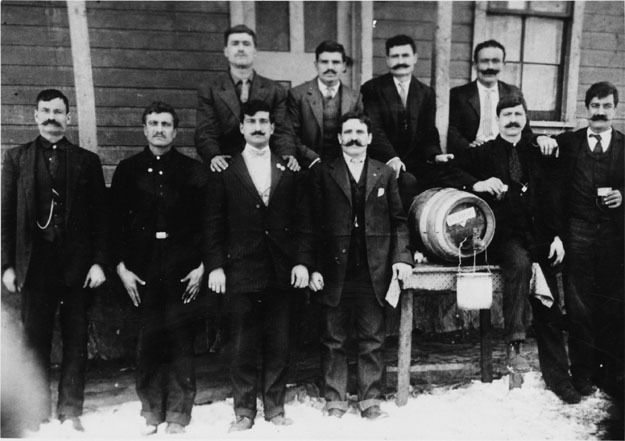
    <summary type="html"><![CDATA[<p><strong><em>Hundreds of feet below ground in the dirty and dangerous mines of southern Colorado, many miners did not expect their lives above ground to be much better. Mostly immigrants, they were at the mercy of the Colorado Fuel and Iron Company. In the company towns and nearby communities, corruption and discrimination ran rampant as conditions deteriorated for the miners and their families.  </em></strong></p><img src="https://www.intermountainhistories.org/files/fullsize/e11b9f0a938a00cd5b3ec03e023ad8f0.jpg" alt="Cretan Creek Coal Mine " /><br/><p>In 1913, the Colorado Fuel and Iron Company (CFI) tightly controlled the coalfields of southern Colorado and the miners who worked there. The early 1900s were a dangerous time to be employed by the CFI—their miners had the highest mortality rate in the country. Yet most miners remained at the coalfields because their professional options were so limited: approximately 70 percent of the miners were foreign-born and non-English speaking. Though most were Greek, there were also many Mexicans, Czechs, Russian, Poles, Scotch, English, and Italians. Their diverse linguistic and cultural backgrounds made it difficult for miners to communicate with each other, distinctions often exploited by the company. The atmosphere created by that jumble of language and cultural expectation was ripe for abuses.</p><p>The official report of the U.S. Commission on Industrial Relations described the situation in the mines, prior to the strike, as an “insult to American values and constitutional law.” The report denounced the way in which miners had “been stripped of their liberties, robbed of portions of their earnings, subjected to ruthless persecution and abuse, and reduced to a state of economic and political serfdom.” Most miners were required to live in company towns and were paid in company scrip that could only be used at the company stores, where prices were significantly inflated. Sometimes, the company allowed miners to convert their scrip into U.S. currency, but the miners only received a maximum of 90 cents to the dollar. Also, because miners were paid based on the tonnage of coal they produced, the company would tamper with the scales in order to pay them even less. Miners often were forced into debt to CFI because they were unable to afford basic goods.</p><p>A 1908 Colorado law sought to reduce work hours by imposing an eight-hour workday for men who worked underground and also prohibited payment by scrip. Still, CFI regularly flouted state law while maintaining the appearance of innocence. Daily, conditions became more desperate for the hungry, impoverished miners. Yet, the miners of the southern Colorado coalfields had never been unionized. Attempts by the United Mine Workers of America (UMWA) were squelched by an efficient co-effort between the CFI management, local law enforcement, and the presence of anti-union Baldwin Felts detectives, who were essentially hired as mercenaries to keep order in the camps. UMWA organizer Mike Livoda recalled being followed, beaten, shot at, and threatened by deputies of Huerfano County Sheriff Jeff Farr. Livoda and his recruits constantly risked their lives as they struggled to demand fair and legal treatment for themselves and their families. The last recourse of the hopeless miners was to strike. </p><p><em><strong><a href="https://www.intermountainhistories.org/items/show/218">For more (including 4 images&#32;&amp;&#32;1 audio file) view the original article</a></strong></em></p>]]></summary>
    <published>2018-06-12T16:01:35+00:00</published>
    <updated>2026-04-17T19:32:03+00:00</updated>
    <link rel="alternate" type="text/html" href="https://www.intermountainhistories.org/items/show/218"/>
    <id>https://www.intermountainhistories.org/items/show/218</id>
    <author>
      <name>Natalie Larsen, Brigham Young University</name>
    </author>
  </entry>
  <entry>
    <title type="html"><![CDATA[The 1914 Ludlow Massacre <br />
]]></title>
    <summary type="html"><![CDATA[<p><strong><em>On the morning of April 20, 1914, gunfire broke out at the Ludlow tent colony. The ensuing eleven-hour gun battle between the state militia and the strikers left at least twenty dead, including two women and twelve children. Later dubbed the “Ludlow Massacre” by union advocates, this tragedy capped one of the darkest chapters in American labor relations.</em></strong></p><img src="https://www.intermountainhistories.org/files/fullsize/ed1731de3deeafc6b6e13eb32784823a.jpg" alt="Massacre during Colorado Coal Strike at Ludlow, Colorado" /><br/><p>At nearly 9:00 that morning, Mary Thomas O’Neal and her children finished their breakfast of oatmeal within the flaps of one of the many union-issued tents at the Ludlow tent colony. The seven-month coal miners’ strike against the Colorado Fuel and Iron Company (CFI) had not been as successful as the United Mine Workers of America (UMWA) had initially expected, but hopes of a satisfactory settlement remained high. Most troops from the Colorado National Guard had been recalled a week earlier by Governor Elias Ammons, leaving only a small company of militiamen under the command of Lieutenant Karl E. Linderfelt.</p><p>While O’Neal cleaned up breakfast, Linderfelt and union leader Louis Tikas argued on the ridge overlooking Ludlow. Below, strikers felt increasingly uneasy as Linderfelt’s soldiers began pointing machine guns and cannons directly at the camp.  A few strikers, fearing an attack, ran towards a more defensible position. Militiamen set off one of three warning bombs, but no one in the camp knew that the loud explosion was just a warning. Assuming that they were under attack, strikers began shooting back. Louis Tikas’s voice boomed over the megaphone, “All women and children, RUN FOR YOUR LIVES!” As women and children fled from the camp, militiamen tried to hasten them along by shooting at their heels. One of these bullets struck O’Neal in the wrist. Though compelled to flee, the firefight at the camp had become so intense that many chose to remain bunkered down rather than face certain death. Twelve-year-old Frank Snyder was in his parents’ tent, clutching his three-year-old sister, when a bullet struck his head and killed him instantly.</p><p>Nearby, three women and eleven children sought refuge in a tent’s subterranean cellar. While they huddled together, praying that the battle would stop, the militia looted and then set fire to the tents. The fire above the women and children sucked the air out of the cellar, suffocating everyone but Mrs. Alcarita Pedregon. By April 21, more than twenty people lay dead on the high Colorado Plateau. More than 400 strikers were later indicted on charges of murder and other crimes, while all court-martialed militiamen were exonerated.</p><p><em><strong><a href="https://www.intermountainhistories.org/items/show/217">For more (including 7 images) view the original article</a></strong></em></p>]]></summary>
    <published>2018-06-12T02:08:49+00:00</published>
    <updated>2026-04-17T19:32:03+00:00</updated>
    <link rel="alternate" type="text/html" href="https://www.intermountainhistories.org/items/show/217"/>
    <id>https://www.intermountainhistories.org/items/show/217</id>
    <author>
      <name>Natalie Larsen, Brigham Young University</name>
    </author>
  </entry>
</feed>