<?xml version="1.0" encoding="UTF-8"?>
<feed xmlns="http://www.w3.org/2005/Atom">
  <title type="text">Intermountain Histories</title>
  <updated>2026-04-17T19:32:09+00:00</updated>
  <generator uri="http://framework.zend.com" version="1.12.20">Zend_Feed_Writer</generator>
  <link rel="alternate" type="text/html" href="https://www.intermountainhistories.org/"/>
  <link rel="self" type="application/atom+xml" href="https://www.intermountainhistories.org/items/browse?output=rss2"/>
  <id>https://www.intermountainhistories.org/</id>
  <author>
    <name>Intermountain Histories</name>
    <uri>https://www.intermountainhistories.org</uri>
  </author>
  <link rel="hub" href="https://pubsubhubbub.appspot.com/"/>
  <entry>
    <title type="html"><![CDATA[Katherine Garetson, Female Homesteader<br />
]]></title>
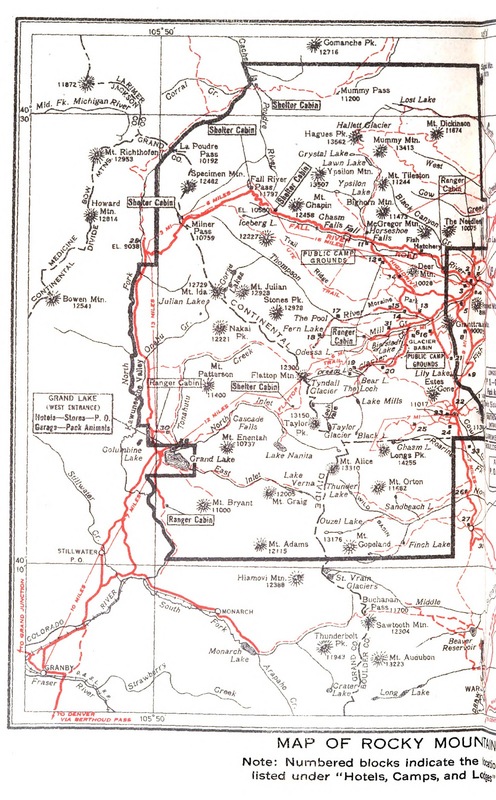
    <summary type="html"><![CDATA[<p><strong><em>Midsummer 1914, Katherine Garetson stood on the front porch of her sister’s mountain cabin and felt herself “whipped and tossed and spattered by a violent storm of wind, rain, thunder, and lightning.” Instead of hating the experience, she wished that “everyone could put into his life one storm of the high mountains.” Katherine saw homesteading as an opportunity for adventure as well as property ownership. </p></strong></p><img src="https://www.intermountainhistories.org/files/fullsize/db41df44e2eae29d90afc2b68b337941.jpg" alt="Map of Estes Park
" /><br/><p>During that 1914 midsummer storm, Katherine offered shelter to a man who had recently established his own homestead in the area, and he related its virtues to her. Katherine wrote that “every American with a spark of romance in his make-up has at some time of his life cherished this idea of taking up a claim.” Her visitor’s words, however, “fell on particularly fertile ground because [she] was seeking escape from the return to St. Louis.” So, in 1914, Katherine Garetson, a single woman in her late thirties from St. Louis, Missouri, filed for a 160-acre claim in Tahosa Valley, Colorado just south of Rocky Mountain National Park.</p><p>Katherine called filing a three-year residence claim “the most serious thing you can do, aside from marrying.” As she considered the possibility, she said “The more I thought, the more I feared. At last I deliberately took the leap as one who shuts his eyes and jumps.” </p><p>Katherine’s cabin on the property was completed just before winter set in. It was given the name Big Owl, a tribute to the great horned owl living nearby. She moved in with two companions, Annie Adele (A.A.) Shreve and Gypsy, a Great Dane. Even with their company, she often felt “desolately lonely and homesick.” With so much to learn and do, Katherine, overwhelmed, “now and then… nearly lost [her] nerve.” Looking back, Katherine commented, “It seems to me that I had an unbearable amount of ignorance to fight against that first year.” </p><p>Fortunately, there were friends who offered kindness and support. With the first big snow, Alfred Oberg “rushed down in the morning… fearing that [they] would not know how to prepare for the storm.” He taught the women tricks to prepare for and survive the long, cold winters. The excitement of Saturday mail was a boost, but also “interfered with a settled content,” reawakening interest in a life from which they “were hopelessly cut off.” </p><p>Katherine endured incredible hardship, poverty, and loneliness, especially after A.A. took a teaching position in Wyoming and Gypsy, who she struggled to feed, had to be given away. The tearoom Katherine operated was only marginally successful. The first summer ended with bills pouring in and Katherine uncertain how she could survive the coming winter. A brief visit with family revitalized her determination and provided her with a wealthy benefactor willing to “take a long chance on a good land proposition.” He gave her a thousand dollars to pay her debts and get restarted.</p><p>Katherine continued her improvements and endured another winter before reporting to the land office in Denver in December 1917 to “prove up” her claim (colloquial phrase for the legal process of securing title to homestead lands after meeting certain government requirements). “Free of all obligations to the government,” she boarded a train for St. Louis. In March, a large envelope arrived from the land office. Instead of containing her patent, it informed her that the Forest Service contested her fulfillment of cultivation requirements. Disregarding the advice of friends and family, she returned, with A.A. to the claim and planted another crop. The next envelope was good news, delivering her patent, the reward of all her labors.</p><p>While Katherine had originally hoped her land “would become valuable as summer cottage sites,” by the end of her proving time, she “was in no hurry to go someplace else to live.” She loved her home, her land, and “the whole mountain world.” She stayed as long as possible, but World War I and the influenza epidemic forced her, financially, to move out to Denver. There, she relied on her stenography and typewriting skills to work for a state senator and later the Secretary of State. She vacationed at Big Owl, “the best loved spot on earth” for years to come, but never lived there again.</p><p><em><strong><a href="https://www.intermountainhistories.org/items/show/454">For more (including 8 images) view the original article</a></strong></em></p>]]></summary>
    <published>2021-02-06T08:37:02+00:00</published>
    <updated>2026-04-17T19:32:09+00:00</updated>
    <link rel="alternate" type="text/html" href="https://www.intermountainhistories.org/items/show/454"/>
    <id>https://www.intermountainhistories.org/items/show/454</id>
    <author>
      <name>Anna Bailey, Brigham Young University</name>
    </author>
  </entry>
  <entry>
    <title type="html"><![CDATA[The Hellenic Historic Monument]]></title>
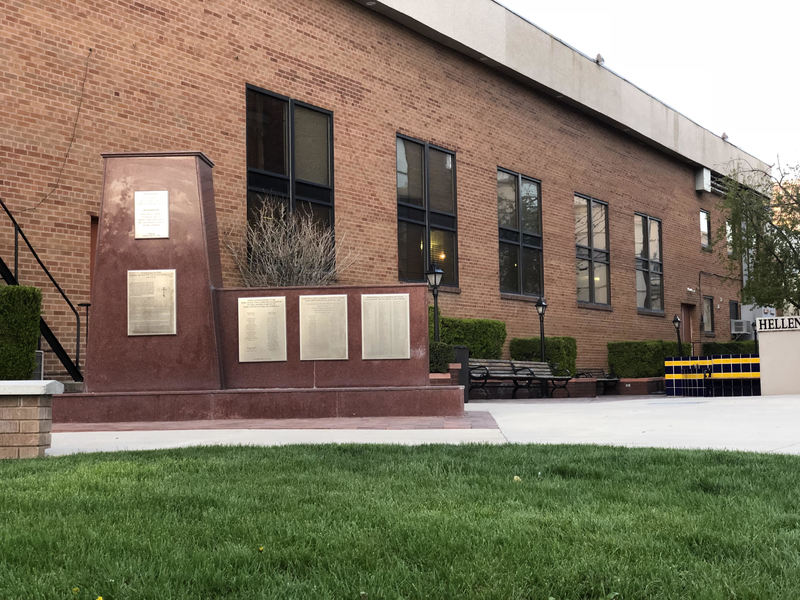
    <summary type="html"><![CDATA[<p><strong><em>A significant number of Greek Utahns served in the United States military. Their sacrifice to protect the nation is honored at the Hellenic Historic Monument in Salt Lake City. How can this monument impact our appreciation for United States service men and women?</em></strong></p><img src="https://www.intermountainhistories.org/files/fullsize/5b2ad5dcbfae1cdfc8fca342a54518b0.jpg" alt="Hellenic Historic Monument" /><br/><p>America experienced heightened nationalist ideology during World Wars I and II. As hysteria over the broader conflicts in Europe increased, xenophobia in the United States created strong inter-ethnic stress. In Utah, tension already existed in the industrial labor forces between Greeks, Americans, and other Eastern European immigrants at the start of the century. Lynchings were not widely publicized but nevertheless occurred in response to immigrant culture in the Salt Lake Valley. Greek immigrants were particularly targeted as un-American because they did not immediately desert their language and customs (often due to foundational religious beliefs), were involved in domestic labor strikes, and sent large amounts of money home. However, many Greeks were at the forefront of purchasing Liberty Bonds. Though criticized for not knowing English, Greek Newspapers (like O Ergatis) provided a resource to Greek-speaking immigrants to stay updated on war efforts in the United States.</p><p>Greek-Americans held an invested interest in World War I and II, regardless of their position on the conflict. Not only was America involved in the war, but so was their expatriate country – Greece. While many Greek Utahns joined the military by choice, others were drafted. The fairness of the draft was called into question when 221 of the 801 people in the Carbon County draft were Greek. Other members of the Greek community wanted to enlist, but were unable because they did not speak English. While many enlisted in the military to show their support for the war, others supported it through the Greek Orthodox Church. A parade was held from Price to the Holy Trinity Greek Orthodox church where speeches of patriotism were given and loyalty was pledged to the United States. </p><p>The wars significantly impacted Greek communities in Salt Lake City. Economically, the wars pushed copper miners and other industrial workers toward the city and into the middle class. This was partially due to the smaller number of more highly educated immigrants that came to Utah to be with family or friends who had already immigrated. Marriages decreased during the war (though they increased once the war had ended), and the Greek school located in the basement of the Holy Trinity Orthodox Church became less important than Orthodoxy itself. </p><p>To honor the history of Greek Utahns that fought in World Wars I, II, and the Korean Conflict, as well as the resulting effects of the war, the Hellenic Cultural Association (HCA) erected the Hellenic Historic Monument. The monument names the thirty-eight Greek Utahns that lost their lives in World Wars I, II, and the Korean Conflict, including Private First Class Theodore C. Dimas. Dimas was honored both in the community and by the Holy Trinity Orthodox church after his death. The HCA continues to hold Memorial Services for Greek servicemen and women at the monument each year.</p><p><em><strong><a href="https://www.intermountainhistories.org/items/show/157">For more (including 3 images) view the original article</a></strong></em></p>]]></summary>
    <published>2018-05-06T01:22:42+00:00</published>
    <updated>2026-04-17T19:32:01+00:00</updated>
    <link rel="alternate" type="text/html" href="https://www.intermountainhistories.org/items/show/157"/>
    <id>https://www.intermountainhistories.org/items/show/157</id>
    <author>
      <name>Katie Calton, Brigham Young University</name>
    </author>
  </entry>
</feed>