<?xml version="1.0" encoding="UTF-8"?>
<feed xmlns="http://www.w3.org/2005/Atom">
  <title type="text">Intermountain Histories</title>
  <updated>2026-04-17T19:32:16+00:00</updated>
  <generator uri="http://framework.zend.com" version="1.12.20">Zend_Feed_Writer</generator>
  <link rel="alternate" type="text/html" href="https://www.intermountainhistories.org/"/>
  <link rel="self" type="application/atom+xml" href="https://www.intermountainhistories.org/items/browse?output=rss2"/>
  <id>https://www.intermountainhistories.org/</id>
  <author>
    <name>Intermountain Histories</name>
    <uri>https://www.intermountainhistories.org</uri>
  </author>
  <link rel="hub" href="https://pubsubhubbub.appspot.com/"/>
  <entry>
    <title type="html"><![CDATA[Anti-Chinese Riot near Virginia City, Nevada]]></title>
    <summary type="html"><![CDATA[<p><strong><em>In 1869, with anti-Chinese sentiment growing in the west, a mob in Virginia City, Nevada attempted to expel the Chinese immigrants from town. They raided the railroad where the Chinese were laying tracks, demanded their departure, and destroyed all of their property. </em></strong></p><img src="https://www.intermountainhistories.org/files/fullsize/b8f3b7605935f2ffe65447f76de43fe6.jpg" alt="Three Chinese Women and a Chinese Boy in Virginia City" /><br/><p><span style="font-weight:400;">In the latter half of the nineteenth century, thousands of people, including many immigrants, flocked to the Intermountain West region in search of economic opportunity. Virginia City, Nevada was a popular destination for these laborers due to its booming silver mining industry. The city sprung up in the late 1850s, and by the late 1860s, it was the largest mining town in Nevada. Most who migrated to Virginia City were of European descent, but the town also attracted many Chinese laborers. As was common in other parts of the country, the Chinese in Virginia City were willing to work for lower wages than other ethnic groups. This increased the competitiveness of the labor market in Virginia City and turned other groups against the Chinese community. </span>
<span style="font-weight:400;">In 1869, anti-Chinese sentiment was running high in Virginia City, and the unionized miners in the city decided to act against the Chinese laborers working on grading the Virginia and Truckee Railroad. On September 29th, a mob of nearly 400 men marched on the Chinese. Sensing trouble, Sheriff W. J. Cummings followed the mob and tried to stop them, but he was powerless against the mass of angered miners. When the mob arrived at the tracks, they demanded that the Chinese depart within thirty minutes and began destroying their property and makeshift residences. Luckily, no Chinese people were injured by the mob, but the property destruction was extensive. </span>
<span style="font-weight:400;">A week later, William Sharon, a railroad official, met with the leaders of the mob and came to an agreement with two provisions: first, the railroad would stop employing Chinese workers; and second, the mob would stop harassing the Chinese. Sharon was reluctant to enter into this agreement because he could employ Chinese laborers at a better rate than white laborers, but the mob could not be reasoned with. They simply wanted the Chinese gone. </span>
<span style="font-weight:400;">Local newspapers condemned the actions of the mob and called for those involved to be arrested; however, they knew it would be extremely difficult to find a jury who would convict the mob members. Indeed, no action was taken against any of the mob participants. By October 21st, the railroad only employed workers of European descent. Many of the Chinese people did leave town, but others found various forms of employment in the city. Chinese people faced continual discrimination in Virginia City, but they continued to find work and ways to send money back to their families in China and make a life in the country.</span></p><p><em><strong><a href="https://www.intermountainhistories.org/items/show/729">For more (including 6 images) view the original article</a></strong></em></p>]]></summary>
    <published>2023-03-06T22:17:52+00:00</published>
    <updated>2026-04-17T19:32:16+00:00</updated>
    <link rel="alternate" type="text/html" href="https://www.intermountainhistories.org/items/show/729"/>
    <id>https://www.intermountainhistories.org/items/show/729</id>
    <author>
      <name>Sydney Wilson, Brigham Young University</name>
    </author>
  </entry>
  <entry>
    <title type="html"><![CDATA[Piper’s Opera House and the Virginia Benevolent Association]]></title>
    <summary type="html"><![CDATA[<p><strong><em>This historic venue in Virginia City, Nevada offered a space for women during the early nineteenth century to express their creativity. Whether it was public plays or private theatrics, the auditorium was a place where women could escape daily life and participate in meetings dedicated to their unique interests with friends.</em></strong></p><img src="https://www.intermountainhistories.org/files/fullsize/494df09b46e1da0a2bc49152b8f0e09c.jpg" alt="Piper’s auditorium" /><br/><p>The building that currently sits on B Street in Virginia City, Nevada is the third iteration of Piper’s Opera House. Wealthy entrepreneur John Piper financed the city’s first opera house in 1863, but the structure burned to the ground in the Great Fire of 1875. Three years later in 1878, Piper funded construction for a new opera house on the same land, yet it also burned down in 1883. To raise money for yet another opera house, Piper rented Cooper Hall and began presenting various entertainments within only days after the 1883 fire. Piper’s (third) Opera House opened its doors on March 6, 1885, and John Piper organized a town dance on the same day to celebrate its completion.
This final version of Piper’s Opera House, built into the eastern slope of Mount Davidson, has a stone foundation and masonry façade with wooden shiplap siding and asymmetrical arched windows. Inside is an auditorium smaller than a full basketball court, a sloped stage which makes the entire area visible from any seat, a box office, and Piper’s private apartment. Colorful and textured wallpapers adorn the auditorium interior, and wooden flooring runs throughout. The opera house still bears its original sign, featured above the entrance doors. In its early history, the building served as a performing venue, meeting ground, and training facility for boxers.
Piper’s three Opera Houses also provided acceptable public forums for women to participate in amateur and professional theater. The Virginia Benevolent Association produced a concert in 1875 to raise funds to help the poor prepare for winter. Club women provided much of the entertainment. Members recited from <em>Hiawatha</em>, sang “Good Night My Sweet,” and played the hornpipe. One club affiliate reminisced that the opera house provided an outlet for women to express themselves in a safe space, whether in public or privately among a few women. Piper’s Opera House was an essential location for Virginia City’s women to discover and develop creative expression.
The Virginia Benevolent Association disbanded in the early-twentieth century, but Piper’s Opera House still hosts events today. Theater production is ongoing, and Piper’s is also a popular venue for local events like weddings, ceremonies, birthdays, and holidays. Preservationists secured the opera house a place on the National Register of Historic Places in 1997.</p><p><em><strong><a href="https://www.intermountainhistories.org/items/show/607">For more (including 5 images) view the original article</a></strong></em></p>]]></summary>
    <published>2022-06-10T20:15:56+00:00</published>
    <updated>2026-04-17T19:32:13+00:00</updated>
    <link rel="alternate" type="text/html" href="https://www.intermountainhistories.org/items/show/607"/>
    <id>https://www.intermountainhistories.org/items/show/607</id>
    <author>
      <name>Amy Megowan, Northern Arizona University</name>
    </author>
  </entry>
  <entry>
    <title type="html"><![CDATA[Camels at Virginia City]]></title>
    <summary type="html"><![CDATA[<p><strong><em>Camels traversed to and from Virginia City carrying salt to the mines to process gold and silver ore. They have lingered in contemporary Virginia City life in the form of the International Camel Races thanks to journalistic playfulness in the tradition of Mark Twain.</em></strong></p><img src="https://www.intermountainhistories.org/files/fullsize/6dca0be67a8f123c338a726b9ad7af27.jpg" alt="Camel train" /><br/><p>In Virginia City, camels arrived in 1865 to convey salt. Nevada, famed for its Comstock lode and peppered with mining towns such as Virginia City, derived much of its wealth and population from ore deposits. However, translating these deposits into a livelihood required processing the raw ore. The Washoe process, developed in the 1860s by Comstock millmen, involved heating and grinding ore in an iron vessel along with mercury and a solution of salt. Thus, the silver rush required a salt rush as well.
Camels helped supply the need, bringing salt across the desert lands from the Walker River salt marsh district all the way to Virginia City. Otto Esche, a commission merchant who imported hemp as well as humped beasts from Central Asia, supplied some of these camels, hoping to install them as useful contributions to the American West. The auction intended to raffle these camels off, however, flopped, and Julius Bandmann, the agent for Esche’s commission, bought all thirteen Bactrians. He then sold them to Nevadan mining companies in need of salt transporters. Another entrepreneur, Samuel McLeneghan, purchased camels from the government when they auctioned the remains of their defunct US Camel Corps, an experiment in using dromedaries as military pack animals, in 1864. Marius Chevalier, a Frenchman, also supplied salt-packing Nevada camels.
By the end of the century, the cyanide reduction process replaced salt amalgamation for ore processing. The use of camels in Nevada, though, had already declined. Camels frightened horses and mules, much more ubiquitous than they and much more familiar to the settlers and miners. Camels caused such a nuisance with their disturbance of other, more common steeds that the Nevada state government passed a law prohibiting camels from public highways in 1875. This law remains on the books today.
Despite this ban, Virginia City engages in an annual sanctioned public appearance of camels in the form of their International Camel Races. According to popular legend, a spoof article written in 1959 by Robert Richards, the editor of the local paper <em>The Territorial Enterprise,</em> claiming that his city held camel races, fooled the editor of <em>The San Francisco Chronicle</em>, who reprinted it. Realizing he’d been hoodwinked, he challenged Virginia City to actually hold a camel race and offered to send a team to compete. The Hollywood director John Huston, who was filming <em>The Misfits</em> in northern Nevada at the time, came down to win this first race.
The journalistic jocularity of this saga holds well with <em>The Territorial Enterprise</em>’s fame as the proving ground for the young Samuel Clemens, who first wrote under the name of Mark Twain at this newspaper. Twain similarly fabricated stories and appreciated tall tales such as the ones surrounding the origin of Virginia City’s annual Labor Day camel racing tradition.</p><p><em><strong><a href="https://www.intermountainhistories.org/items/show/526">For more (including 5 images) view the original article</a></strong></em></p>]]></summary>
    <published>2021-10-20T09:42:41+00:00</published>
    <updated>2026-04-17T19:32:11+00:00</updated>
    <link rel="alternate" type="text/html" href="https://www.intermountainhistories.org/items/show/526"/>
    <id>https://www.intermountainhistories.org/items/show/526</id>
    <author>
      <name>Emily Moore, Northern Arizona University</name>
    </author>
  </entry>
  <entry>
    <title type="html"><![CDATA[Virginia City’s Volunteer Fire Department<br />
]]></title>
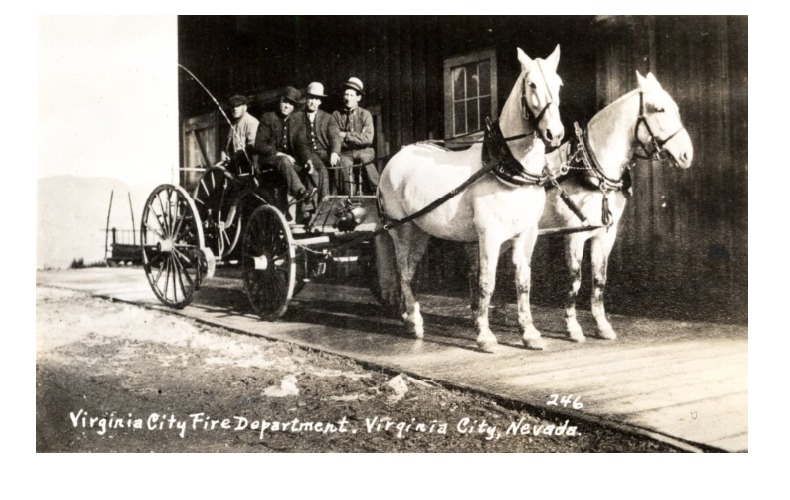
    <summary type="html"><![CDATA[<p><strong><em>The Volunteer Virginia City firemen were heroes in the public eye. They fought fires for a decade, choosing to risk their lives to keep the town, mines and people safe.  </p></strong></p><img src="https://www.intermountainhistories.org/files/fullsize/393f2aa049c504300a561238b49a1a56.jpg" alt="Virginia City Fire Department" /><br/><p>The volunteer fire department began with a snowball fight. In 1861, a fire broke out in town. Having no department, no fire-battling equipment, and no organization, townspeople attempted to douse the fire using snowballs. Although their attempts did nothing to discourage the flames, it began the formation of the future Virginia City Volunteer Fire Department. The citizens decided that something needed to change to ensure security for their community. First, a volunteer bucket brigade was formed, followed by a volunteer fire engine company. The Virginia Engine Company No. 1 was the first fire engine company created, quickly followed by the Ladder Company No. 1, in 1861.  After creating five more companies, the Virginia City fire department formed in 1866. </p><p>The Virginia Fire Department brought men from all walks of life, from well-to-do business men, to those who frequently warmed a bar stool in the local saloons, to serve the community. It was considered an honor to volunteer for the department. The department organized themselves under an informal set of bylaws, hoping to bring order to the rough frontier town. These bylaws were mostly a rule of conduct. Among these rules, firemen were expected to not instigate fights, to perform all duties assigned to them, to obey their commanding officer, to not shirk from their duty, and to always conduct themselves with decorum. However, this did not stop the occasional disagreement that occurred between the men in the department. There was an unspoken rivalry between the various companies, all competing to be the first company to report to the scene of a fire. Often these rivalries got so heated that riots broke out between the men. Even though they had a standard of conduct, they were still rough frontiersmen who solved their problems with fists rather than diplomacy. </p><p>However, their popularity had its limits. After the Great Fire of 1875, the volunteer fire department received partial blame for the extensive damage. The public felt that they were ineffective in their methods of protecting the city. The Territorial Enterprise was especially critical of the fire chief, Frank McNair, and the department. They reported, “Toward McNair as a man we bear no malice, but on more than one occasion he has shown his utter incompetency as fire chief…We call upon Mr. McNair to resign…There should be no ill-feeling between the citizens and the firemen, but when the citizens grant every reasonable request of the firemen, they, in return, should respect the reasonable desires of the citizens.” After continual pressure from the press and public, most volunteer fire engine companies had disbanded by 1877. The city officials began hiring a full-time, paid crew and organized a city sponsored fire department. A new building was constructed, as well as hoses installed throughout the city to offer easier access for the firemen. The era of volunteer firemen had passed, but the new fire department received a warm welcome. The Virginia City Fire Department continue to protect the city, and do its duty to serve the public to the present day. </p><p><em><strong><a href="https://www.intermountainhistories.org/items/show/249">For more (including 3 images) view the original article</a></strong></em></p>]]></summary>
    <published>2019-01-18T02:05:49+00:00</published>
    <updated>2026-04-17T19:32:04+00:00</updated>
    <link rel="alternate" type="text/html" href="https://www.intermountainhistories.org/items/show/249"/>
    <id>https://www.intermountainhistories.org/items/show/249</id>
    <author>
      <name>Rachel Hendrickson, Brigham Young University</name>
    </author>
  </entry>
  <entry>
    <title type="html"><![CDATA[Women in Virginia City<br />
]]></title>
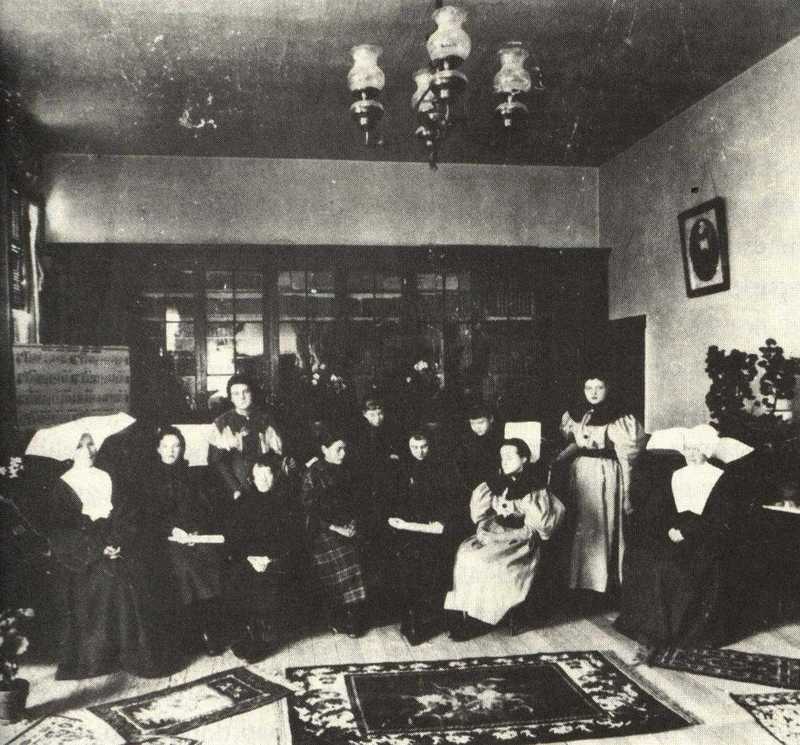
    <summary type="html"><![CDATA[<p><strong><em> Contrary to popular belief, soiled doves did not rule the nest in Virginia City. Further historical analysis shows that the majority of women in Virginia City and other mining communities came from diverse backgrounds and participated in number of reputable professions, such as homemaking, teaching, housekeeping, and the liberal arts. </p></strong></p><img src="https://www.intermountainhistories.org/files/fullsize/643a68ceb2b8c350ad27841787d5ccfc.jpg" alt="Daughters of Charity" /><br/><p>Historically, prostitution and other unsavory occupations have been connected to the reputations of women in the Wild West. The reputation of women living in Virginia City was no exception. Several sources reported that “there was always a large class of poor, misguided, prostitutes” living throughout the city. In modern-day Virginia City, a museum commemorates the famous soiled dove, Julia Bulette, and the red light district. However, the historical narrative too often focuses on the fallen feminine denizens of the West and neglects to tell the story of the other women who lived during the period. While prostitution was a practice that did exist in many towns, it was not the major practice during the early days of Virginia City, nor was it the most popular profession for women in the later years.   </p><p>During the founding years of Virginia City, the population was heavily male dominated. The 1860 census recorded that there were 111 women living in the Virginia City and Gold Hill area.  However, of the one hundred and eleven, eighty-three were recorded as married women, and forty-three households recorded children in the home. This shows that the majority of women were married, not single. Those who were single found occupations in households and boarding houses, working as maids and laundresses. According to recent historians, prostitution did not come into effect “until a mining district demonstrated that it would last.” It seemed that many prostitutes did not want to establish roots in a community unless they felt it was worth investing in. </p><p>The women of Virginia City occupied themselves in various professions. As mentioned before, housekeeping and laundry work were popular professions. Some women chose to be teachers, seeking to educate the children in the city. Other women chose to start their own businesses, such as opening boarding houses and dress shops. While Virginia City was considered uncouth to eastern standards, the women of the Comstock sought to bring sophistication and refinement from the East. Needlework became the third most popular profession among women on the Comstock. By 1870, reports showed that there were 71 businesses of needlework, accounting for seamstresses, dressmakers, milliners, and sewing women. They served the women of the upper class in Virginia City like Marie Louis Mackay, the wife of bonanza king John Mackay, who could afford such luxuries. Along with bringing eastern couturier to the city, women also formed social societies and clubs that were popular in the west. They organized charities, orphanages, and temperance societies. Many of these societies were backed by the local congregations, such as the Catholic Church. Their charity, the Daughters of Charity of Virginia City, sought to serve the men working in the mines. They provided care for injured miners and their families. They were determined to “carry to [the miners’] poor ‘shanties’ little delicacies, and words of consolation,” hoping to ease the harsh realities that every miner faced living on the Comstock. </p><p>The women of Virginia City also came from diverse backgrounds. While a majority came from an Anglo-American background, women of Chinese, African American, and Native American descent also occupied the city. While many claimed that those from foreign descent participated in immoral practices, such as prostitution and opium dens, many continued to work in similar occupations that white American women enjoyed. Chinese women mostly occupied themselves with housekeeping, working in boarding houses throughout the city. Women of the Comstock involved themselves in a number of professions, and through them they built a strong and lively community. </p><p><em><strong><a href="https://www.intermountainhistories.org/items/show/248">For more (including 4 images) view the original article</a></strong></em></p>]]></summary>
    <published>2019-01-17T23:51:13+00:00</published>
    <updated>2026-04-17T19:32:04+00:00</updated>
    <link rel="alternate" type="text/html" href="https://www.intermountainhistories.org/items/show/248"/>
    <id>https://www.intermountainhistories.org/items/show/248</id>
    <author>
      <name>Rachel Hendrickson, Brigham Young University</name>
    </author>
  </entry>
  <entry>
    <title type="html"><![CDATA[The Territorial Enterprise and &quot;Birth&quot; of Mark Twain and Western Journalism]]></title>
    <summary type="html"><![CDATA[<p><strong><em>Sweeping the west like wildfire, The Territorial Enterprise became the mainstream venue for sensational stories of the American frontier. Founded in 1858, The Enterprise provided a foundation for western American journalism for more than three decades, operating out of Nevada’s famous boom town, Virginia City. </p></strong></p><img src="https://www.intermountainhistories.org/files/fullsize/c9c073bda2cd7047763a9a5395b40c4d.jpg" alt="Mark Twain" /><br/><p>In 1858, W.L. Jernegan and Alfred James published a local newspaper in a former Mormon colony, Mormon Station (later renamed Genoa) in the then Utah Territory. This paper, The Territorial Enterprise, later became the first newspaper in Nevada Territory. Printed as a weekly column, The Enterprise did not gain much traction until its move in 1860 to the quickly booming town of Virginia City.   </p><p>The Comstock Lode, one of the largest silver discoveries in the United States, brought thousands of hopeful miners to Virginia City. Capitalizing on the rising mining population, Jernegan and James decided to uproot their small-town newspaper, and moved it to Virginia City in September of 1860. The move to Virginia City brought the paper under new ownership. Throughout its time of operation in Virginia City, The Enterprise resided in three locations, its last and present location on C street. </p><p>The 1860’s was a prosperous decade for the growing newspaper. In 1861 Joseph T. Goodman and Dennis E. McCarthy became the new proprietors of the newspaper. With their business sense combined with the hiring of shrewd, witty writers, Goodman and McCarthy made The Territorial Enterprise the territory’s most popular paper. William Wright (under the pen name ‘Dan de Quille’) Rollin M. Daggett, Sam Davis, and Judge C.C. Godwin were among the few who created The Territorial Enterprise’s lasting legacy. However, the most famous of the small crew was a man who would later become one of America’s most beloved authors, Mark Twain. Before the birth of ‘Twain,’ he was simply known as Samuel Clemens. Clemens, a former riverboat pilot, migrated west hoping to strike-it-rich in mining. However, due to bad luck and laziness, Clemens found that mining was not his calling. Turning to journalism, Clemens was hired as an editor, and joined The Enterprise staff in 1862. </p><p>Between 1862-1864, Clemens created a new name for himself. Adopting the pen name ‘Mark Twain,’ Clemens wrote the most sensational articles for The Enterprise. Entertaining, but not necessary accurate, Twain’s stories quickly became a favorite. Writing for a community where libel was rarely monitored, Twain creatively reported mining incidents, Indian encounters, local leaders and gossip, as blown-up, over-the-top dramas. He humored readers of The Enterprise with his sharp criticisms and hilarious commentaries. Twain left The Territorial Enterprise after two years, but the newspaper did not fall apart after his departure. Continuing to print daily after Twain’s departure, the bohemian-style stories of local and national news entertained and informed the citizens throughout the territory and later, the state of Nevada for nearly two decades. However, as the silver boom died, so did the town and the newspaper. Its last issue came off the press on January 15, 1893, The Territorial Enterprise closed its doors after three decades, but left a legacy as the foundation of Western American journalism and produced some of America’s wittiest writers.  </p><p><em><strong><a href="https://www.intermountainhistories.org/items/show/247">For more (including 4 images) view the original article</a></strong></em></p>]]></summary>
    <published>2019-01-17T23:27:36+00:00</published>
    <updated>2026-04-17T19:32:03+00:00</updated>
    <link rel="alternate" type="text/html" href="https://www.intermountainhistories.org/items/show/247"/>
    <id>https://www.intermountainhistories.org/items/show/247</id>
    <author>
      <name>Rachel Hendrickson, Brigham Young University</name>
    </author>
  </entry>
  <entry>
    <title type="html"><![CDATA[The Virginia City Great Fire of 1875<br />
]]></title>
    <summary type="html"><![CDATA[<p><strong><em>Considered one of Nevada’s fastest growing cities in its day, Virginia City quickly became a pile of rubble after an 1875 fire ravaged the city for nine hours, leaving more than 2,000 structures destroyed, and hundreds homeless.</em></strong></p><img src="https://www.intermountainhistories.org/files/fullsize/cfcb08d69c92c7d2a6bdf3030dd74e58.jpg" alt="Extinguishing flames on C Street" /><br/><p>Fire was feared throughout the West. Most boom towns were constructed of lumber since wood was cheaper, more accessible and easier to ship. However, this made towns major fire hazards. Virginia City battled several fires throughout its history, but the ‘Great Fire of 1875’ was the largest. On the morning of October 26, 1875 at 5:15am, a single lamp caused the biggest fire in the town’s history. The fire started on A Street in Kate Shea's boarding house when a lamp was accidentally knocked over, probably due to the rough, rowdy atmosphere. Within minutes, the fire consumed the dry timber, quickly burning the entire building. To make matters worse, nature intervened. The westerly wind, known as the “Washoe Zephyr,” began to fan and push the flames further into town.</p><p>The fire quickly consumed all buildings in its path. Reportedly, even the few buildings built with brick melted due to the intense heat. Several attempts were made to extinguish the flames, but to no avail. The volunteer fire companies tried to combat the fire, but their water hoses could not pump enough water to fight the flames. Even a bucket brigade did little good in competing with the large-scale fire. The greatest fear was the fire reaching the Consolidated Virginia and Ophir mine shafts. If the fire reached the mines, it could potentially cause extensive damages and leave most of the town jobless. As fire continued to destroy everything in its wake, the wind finally shifted in the afternoon, leaving only the southern end of town standing. By 2:00pm, most of the flames were extinguished, leaving behind only a memory in the charred remains of one of the largest cities in the Nevada. </p><p>The damage was severe. Over 2,000 structures were destroyed, including homes, churches, saloons, businesses, mills and other mining buildings. The burnt section of town spanned three-quarters of a mile long and half-a-mile wide. Over $1,000,000 was estimated in damages, causing stocks to drop overnight. Further problems arose as over three hundred people were left homeless and sought shelter in the only remaining public buildings standing, the school houses. Rioting began in the streets, causing city patrols to ask for additional help from the National Guard to protect still-standing property. The city also forced the remaining saloons to prohibit the sale of alcohol, trying to prevent further problems. The biggest concern was providing food, clothing, and shelter for the fire victims. </p><p>Luckily, immediate humanitarian relief was sent from California, providing food and clothing for the victims. The mines reopened the following day after the fire, since minimal damage to the shafts in the Ophir mine allowed miners to go back to work. Optimistic townspeople reported to newspapers that “the town will be all right in a week or two.” Although the total amount of money lost estimated to be almost $10,000,000, the townspeople proved to be resilient and the fire became just another minor setback in the rich history of the Comstock. </p><p><em><strong><a href="https://www.intermountainhistories.org/items/show/246">For more (including 4 images) view the original article</a></strong></em></p>]]></summary>
    <published>2019-01-12T01:21:47+00:00</published>
    <updated>2026-04-17T19:32:03+00:00</updated>
    <link rel="alternate" type="text/html" href="https://www.intermountainhistories.org/items/show/246"/>
    <id>https://www.intermountainhistories.org/items/show/246</id>
    <author>
      <name>Rachel Hendrickson, Brigham Young University</name>
    </author>
  </entry>
  <entry>
    <title type="html"><![CDATA[John Mackay, Prince of Miners<br />
]]></title>
    <summary type="html"><![CDATA[<p><strong><em>“No man in Nevada more thoroughly understands the Comstock lode than Mr. Mackay. He has made it his study for years…Mr. Mackay is the “boss” of the big bonanza.” -Dan de Quille (William Wright)</p></strong></p><img src="https://www.intermountainhistories.org/files/fullsize/ed34637a123fbd3b3b813cf0f70aa69a.jpg" alt="John Mackay" /><br/><p>In 1857, the Grosh brothers, Ethan Allen and Hosea came close to making a remarkable discovery in Nevada history. The brothers prospected deposits of gold and silver in the near Six Mile Canon, close to the vein of the famous Comstock Lode. Unfortunately, death came to both brothers before they could continue to explore the area. James Finney and Henry Comstock took the credit a year later, discovering one of the largest silver deposits in America. However, the first years of mining moved slowly. Having bought up large mining claims in Gold Hill and the future Virginia City, a discouraged Comstock made the mistake and sold his interests, hoping to move into the mercantile business. Comstock sold out too early; he ultimately died a poor man in Montana. </p><p>However, others took advantage of the Comstock’s wealth. The lode yielded six large finds, called bonanzas, in the first several years of mining. Beginning with the Ophir bonanza, thousands were flocking to the Virginia City and Gold Hill areas to tap into the massive fortune hidden beneath the earth. Among them was John Mackay. Mackay was born in Dublin, Ireland and emigrated to America in 1840 as a young boy. Tragedy struck the family two years after their arrival to the States when Mackay’s father died unexpectedly. At a young age Mackay left school to work, needing to support his mother and sister. Perhaps for this reason, Mackay headed west to the gold fields in California in 1851. Like many miners during the time, Mackay worked in the mines, but did not strike it rich. He eventually arrived in Virginia City in 1859 practically penniless, looking for the opportunity that California had not offered him. Family was his main motivation in striking it rich. Telling his friend Jack O’Brien, “All I want is my $30,000; with that I can make my old mother comfortable.” Little did Mackay know that in the next two decades he would not only receive his $30,000, but would be averaging $300,000 a month. </p><p>Mackay started at $4 a day as a placer miner, but quickly worked his way up and become a superintendent in the Caledonia Tunnel Mining Company. With enough money saved, Mackay began investing in several mining companies. This business move changed his career, leading him to a road of riches. Buying up stock alongside James Flood, William S. O’Brien, James Fair, these men soon owned half of the mining shares in Virginia City. The four would be known as the “Bonanza Kings” of the Comstock. Mackay was determined to make it big in Virginia City. While most men in his position preferred the comforts of overseeing in an office space, Mackay frequented the deep mining shafts alongside his men. He offered fair and generous wages to his workers, but also worked them hard. He dug deeper into the lode, gambling on the hope that there was more ore to be discovered. His determination paid off, as his company hit the “big bonanza.” The find yielded $166 million between 1873 to 1878. Mackay became one of the richest men in the world. He offered a life of luxury to his family. He donated to charities, showed patronage to the arts, met foreign figureheads, and traveled the world. Mining finally slowed in the 1880’s, but the legacy of the Comstock lived on in the pockets of men like John Mackay and the Bonanza kings. </p><p><em><strong><a href="https://www.intermountainhistories.org/items/show/245">For more (including 3 images) view the original article</a></strong></em></p>]]></summary>
    <published>2019-01-12T00:50:31+00:00</published>
    <updated>2026-04-17T19:32:03+00:00</updated>
    <link rel="alternate" type="text/html" href="https://www.intermountainhistories.org/items/show/245"/>
    <id>https://www.intermountainhistories.org/items/show/245</id>
    <author>
      <name>Rachel Hendrickson, Brigham Young University</name>
    </author>
  </entry>
</feed>