<?xml version="1.0" encoding="UTF-8"?>
<feed xmlns="http://www.w3.org/2005/Atom">
  <title type="text">Intermountain Histories</title>
  <updated>2026-04-17T19:32:20+00:00</updated>
  <generator uri="http://framework.zend.com" version="1.12.20">Zend_Feed_Writer</generator>
  <link rel="alternate" type="text/html" href="https://www.intermountainhistories.org/"/>
  <link rel="self" type="application/atom+xml" href="https://www.intermountainhistories.org/items/browse?output=rss2"/>
  <id>https://www.intermountainhistories.org/</id>
  <author>
    <name>Intermountain Histories</name>
    <uri>https://www.intermountainhistories.org</uri>
  </author>
  <link rel="hub" href="https://pubsubhubbub.appspot.com/"/>
  <entry>
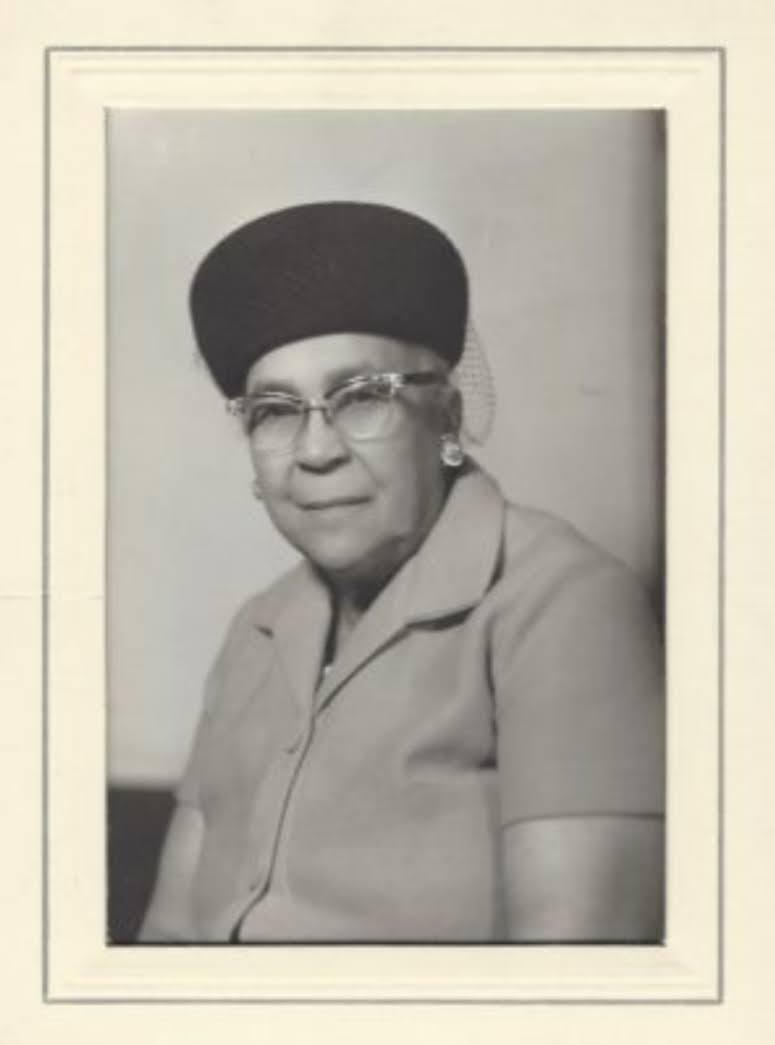
    <title type="html"><![CDATA[Mignon Richmond: First Black Woman College Graduate in Utah]]></title>
    <summary type="html"><![CDATA[<p><strong><em><span style="font-weight:400;">In 1921 Mignon Barker Richmond became the first African American woman to graduate from college in Utah and went on to become a community organizer and civil rights activist.</span></em></strong></p><img src="https://www.intermountainhistories.org/files/fullsize/8b40389c2ee054bc94fe17722f9e1b3b.jpg" alt="Mignon Barker Richmond" /><br/><p><span style="font-weight:400;">Mignon Barker Richmond was born on April 1, 1897 in Salt Lake City to William Barker and Mary Alice Reagan Barker. She attended Utah Agricultural College, now known as Utah State University, in Logan, Utah, graduating in 1921 with a degree in home economics. She persisted in spite of gross racism from her professors and peers, and participated in the Empyrean Club, a group of women that discussed contemporary problems and events, becoming its secretary-treasurer in her senior year. Following graduation, she faced difficulties finding a job in her field of study due to racial discrimination, and only after 27 years was she able to obtain work in her field of study, working first as a laboratory technician, and later as a school lunch supervisor at the University of Utah Stewart School from 1948 to 1953, and was afterwards hired to start home-living classes for the Utah State Industrial School. </span>
<span style="font-weight:400;">During this period she was active in the National Association for the Advancement of Colored People (NAACP) and the Young Women’s Christian Association (YWCA), and in 1957 she became the YWCA Food Services Director in Salt Lake City, where she stayed until her retirement in 1962 at the age of 65. Later, during president Lyndon Johnson’s administration, she became the head of the Women’s Job Corps and chairwoman of Project Medicare Alert. During her work with the Salt Lake chapter of the NAACP, she co founded the Nettie Gregory Center, a venue for minority youth to be involved in recreation in Salt Lake City, as well as on boards for the Utah Community Service Council and the Women’s Legislative Council, where she helped create legislation to fight poverty. After receiving several awards for her community service and commitment to education and civil rights, she died at the age of 86 on March 10, 1984. Many organizations including the Salt Lake Branch NAACP, Trinity AME Church, and Calvary Baptist Church came together to dedicate Richmond Park in Salt Lake City in 1984, and commissioned a plaque describing Mignon Barker Richmond as an educator, civil leader, and humanitarian.</span></p><p><em><strong><a href="https://www.intermountainhistories.org/items/show/874">For more (including 3 images) view the original article</a></strong></em></p>]]></summary>
    <published>2024-11-02T22:24:37+00:00</published>
    <updated>2026-04-17T19:32:20+00:00</updated>
    <link rel="alternate" type="text/html" href="https://www.intermountainhistories.org/items/show/874"/>
    <id>https://www.intermountainhistories.org/items/show/874</id>
    <author>
      <name>Morgon George, Utah State University</name>
    </author>
  </entry>
  <entry>
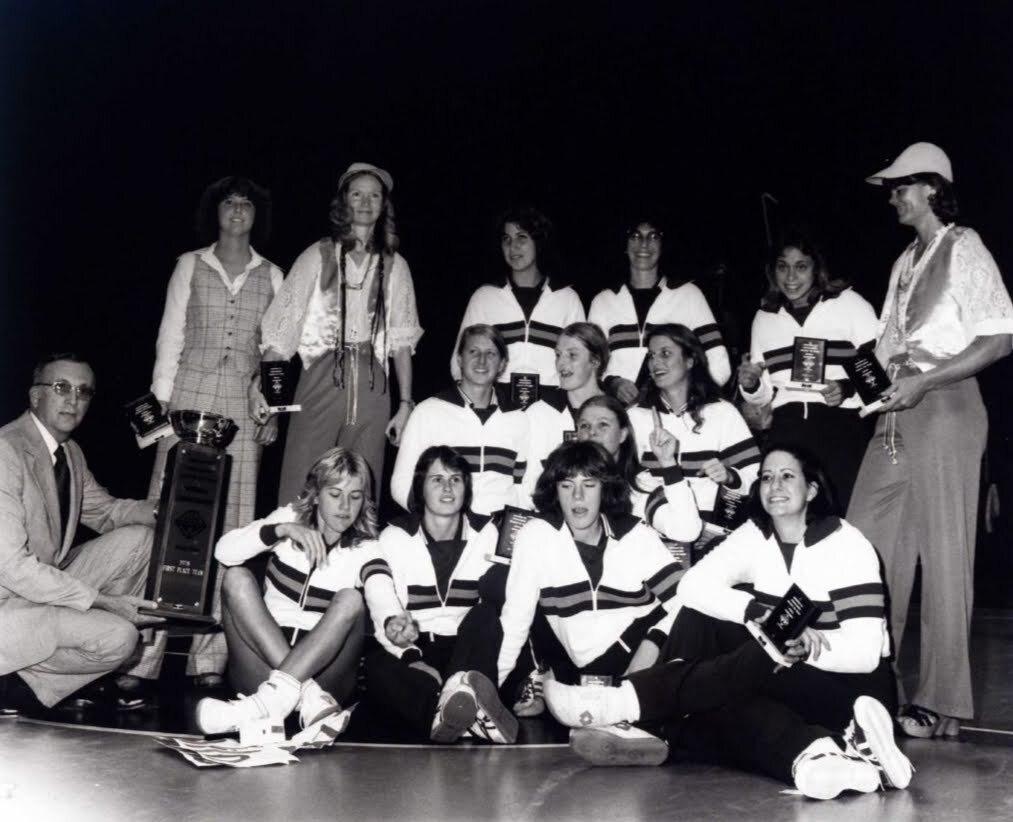
    <title type="html"><![CDATA[Title IX and Women’s Athletics at Utah State University]]></title>
    <summary type="html"><![CDATA[<p><strong><em>Women’s athletics at Utah State University have come a long way since the passing of Title IX in 1972. Athletic Director Marilyn Weiss worked hard to gain more resources for female athletes. During her time at Utah State, three women’s athletic teams won national championship titles. She helped to lay the foundation for the long-term success of women’s athletics at USU.</em></strong></p><img src="https://www.intermountainhistories.org/files/fullsize/db7904d3f034ebce2d2e9c00c65de8d7.jpg" alt="1978 Women&#039;s Volleyball Team at Utah State University" /><br/><p><span style="font-weight:400;">Women have been involved in athletics since the early days of Utah State University. As early as 1901, USU boasted an organized softball team and hosted basketball tournaments. Due to a lack of funding, however, women’s athletics stayed local and small. This began to change after Title IX became law on June 23, 1972. The law prohibited sex-based discrimination in any institution that receives federal funding. Initially created to encourage more women to pursue higher education, today the law is mostly associated with college and high school athletics and promoting equality between men’s and women's sports. </span></p><p><span style="font-weight:400;">Title IX changed the college landscape, in the classroom and on the court. Schools were required to give women more support and resources. Before Title IX, women’s athletics didn’t offer athletic scholarships. As of 2021, there are 74,173 athletic scholarships available to women compared to 77,784 available to men.</span>
<span style="font-weight:400;">Marilyn Weiss was the USU Athletics Director for Women’s sports from 1975 to 1981. Under her leadership, Utah State formed its first volleyball team in 1976. Weiss served as the USU’s women’s basketball coach, volleyball coach, and track coach during her tenure with the university, and knew that not much had changed at USU after the passage of Title IX. She was determined to change that. In 1976, Weiss hired Mary Jo Peppler and Marilyn McReavy, both former Olympians, as co-head coaches of the volleyball team. They recruited strongly from across the country to bring great talent to USU. </span>
<span style="font-weight:400;">Weiss knew that the women’s programs would have to operate under a very tight budget, but she was determined to succeed. If the Aggies wanted to compete against the top teams in the country, they had to get to the West Coast. In the off-season, the team traveled in a fifth-wheel trailer to southern California to challenge powerhouse teams like USC and UCLA. Although the budget was small, the coaches and athletic director made it work and their efforts paid off. The USU Volleyball team became National Champions in 1978, winning the Association for Intercollegiate Athletics for Women (AIAW) volleyball championship. They were runner-up the following season. During Weiss’s time at USU, the softball team also won two national titles in 1980 and 1981. </span>
<span style="font-weight:400;">Weiss filed a Title IX complaint against the university a few years before she left. Although USU saw success while she was here, she knew womens’ athletics were still being underfunded. Marilyn Weiss and the coaches and players laid a foundation to move women’s athletics forward at Utah State University. As of 2024, USU has 8 women's varsity teams and over 180 women rostered. USU offered $3,106,721.54 in scholarships to female athletes in 2024, among 149 athletes.</span></p><p><em><strong><a href="https://www.intermountainhistories.org/items/show/873">For more (including 5 images) view the original article</a></strong></em></p>]]></summary>
    <published>2024-11-02T17:31:25+00:00</published>
    <updated>2026-04-17T19:32:19+00:00</updated>
    <link rel="alternate" type="text/html" href="https://www.intermountainhistories.org/items/show/873"/>
    <id>https://www.intermountainhistories.org/items/show/873</id>
    <author>
      <name>Hadli Lords, Utah State University</name>
    </author>
  </entry>
</feed>