<?xml version="1.0" encoding="UTF-8"?>
<feed xmlns="http://www.w3.org/2005/Atom">
  <title type="text">Intermountain Histories</title>
  <updated>2026-04-17T19:32:11+00:00</updated>
  <generator uri="http://framework.zend.com" version="1.12.20">Zend_Feed_Writer</generator>
  <link rel="alternate" type="text/html" href="https://www.intermountainhistories.org/"/>
  <link rel="self" type="application/atom+xml" href="https://www.intermountainhistories.org/items/browse?output=rss2"/>
  <id>https://www.intermountainhistories.org/</id>
  <author>
    <name>Intermountain Histories</name>
    <uri>https://www.intermountainhistories.org</uri>
  </author>
  <link rel="hub" href="https://pubsubhubbub.appspot.com/"/>
  <entry>
    <title type="html"><![CDATA[Dark Sky over Flagstaff]]></title>
    <summary type="html"><![CDATA[<p><strong><em>In 2001, Flagstaff, Arizona, became the first International Dark Sky City because of its long-term commitment to reducing outdoor light pollution without compromising safety.  The Colorado Plateau’s clear, dry air, cloudless nights, and distance from major cities has made Flagstaff a significant location for astronomy.</em></strong></p><img src="https://www.intermountainhistories.org/files/fullsize/ac2b6faa24e41544e57d8b18d3228661.jpg" alt="Night sky in Flagstaff" /><br/><p>Flagstaff’s history of dark sky conservation began even before the International Dark Sky City designation in 2001 when it issued the world’s first outdoor lighting ordinance in 1958. Lowell Observatory, founded in 1894 by Percival Lowell to study the surface of Mars, was concerned about how light pollution would limit the capacity of a reflecting telescope transferred from the Ohio Perkins Observatory. To protect astronomy, the Anti-Searchlight Law of 1958 passed to forbid the use of searchlights, common in advertising, within city limits.
However, light pollution levels kept rising in Flagstaff, even with the passing of a second lighting ordinance in 1972 requiring all outdoor lights be properly shielded and pointed downwards.  A shielded outdoor light has a surface or hood built in to prevent any light from escaping upwards or horizontally so the beam is directed at the ground. Fourteen years later, Tucson and Pima County updated their ordinances from 1973, and Lowell Observatory partnered with Flagstaff city planners to maintain Flagstaff’s status as an important site for astronomy.  In conjunction with the Arizona Public Service in 1987, Dr. Arthur Hoag from Lowell Observatory tested low-pressure sodium lights on Santa Fe Avenue in downtown Flagstaff as a method to reduce light pollution. With 90% approval from the public and evidence proving the new lights reduced the city’s light pollution, Flagstaff updated its lighting codes to mandate low-pressure sodium lights and ban mercury vapor light common in old streetlamps.  The amber hue of low-pressure sodium lights causes the least amount of sky glow, uses the least amount of energy to operate, and has the least impact on the natural rhythms of humans and nocturnal animals.  For astronomy, Christian Luginbuhl of the U.S. Naval Observatory documented that low-pressure sodium lights take up only two bands of the visible light spectrum, allowing astronomers to research within every other area of the light spectrum.
But in 1988, pressure from the Yellow Freight Company to allow higher levels of light pollution for a trucking yard near Lowell Observatory and the U.S. Naval Observatory Flagstaff Station split Flagstaff’s residents with arguments over economic and scientific interests.  The conflict ended in favor of continuing to reduce light pollution, and on September 26, 1989, the Flagstaff City Council enacted strict lighting codes for protecting Flagstaff’s unique natural. Yellow Freight withdrew from the city three years later.
The <em>Daily Sun</em> newspaper framed the clash over light pollution in Flagstaff as pitting money and jobs against scientific innovation and potential in the <em>Daily Sun</em> newspaper, but as time passed, the light ordinances did not harm Flagstaff’s economy.  In fact, the exceptional environmental conditions in Flagstaff grew the astronomical community with organizations such as the U.S. Naval Observatory and the U.S. Geological Survey contributing to a major tourism draw.  Residents and tourists alike interact with Flagstaff’s dark skies in different ways.  For example, the Flagstaff Star Party organizes every year with the help of astronomers Christian Luginbuhl and Jeff Hall from Lowell Observatory and helps residents and tourists learn how to observe the city’s dark skies  Another organization, the Flagstaff Dark Skies Coalition under Christian Luginbuhl, promotes music, art, and theater about Flagstaff’s skies in partnership with the Coconino Center for the Arts.
Flagstaff’s popular culture has grown to include the dark sky it is deeply proud of. In 2001, Flagstaff received an International Dark Sky City designation thanks to its conservation efforts and appreciation for a rare natural resource in the age of urban expansion.</p><p><em><strong><a href="https://www.intermountainhistories.org/items/show/540">For more (including 4 images) view the original article</a></strong></em></p>]]></summary>
    <published>2021-11-14T01:29:49+00:00</published>
    <updated>2026-04-17T19:32:11+00:00</updated>
    <link rel="alternate" type="text/html" href="https://www.intermountainhistories.org/items/show/540"/>
    <id>https://www.intermountainhistories.org/items/show/540</id>
    <author>
      <name>Emma Svenson, Northern Arizona University</name>
    </author>
  </entry>
  <entry>
    <title type="html"><![CDATA[Boise&#039;s Chinatown]]></title>
    <summary type="html"><![CDATA[<p><strong><em>Walking around Boise today, there is little evidence of a bustling Chinatown—no markers, signs, or old buildings. In fact, most people would be surprised to learn that a large population of Chinese people once lived in Boise.  In fact, the Chinese community was strong and active in the early years of the city’s history</em></strong></p><img src="https://www.intermountainhistories.org/files/fullsize/f098af98c1e67d4e82ded64443854cf3.jpg" alt="Chinese New Year Parade" /><br/><p>Similar to the rest of Idaho, Boise was home to many Chinese immigrants in the mid to late 1800s. Integral to Boise’s history, Boise’s first Chinatown was first located in the middle of downtown Boise, on Idaho Street. Attracted to the Boise Basin area for its gold mines, many Chinese immigrants arrived to earn funds to return home to their families in China. Thousands of Chinese arrived at Boise and its surrounding area in the 1860s. However, by 1920, fewer than 600 remained. Despite the brevity of this period, Chinese immigrants left an impact on Boise that is often forgotten. </p><p>Cultural celebrations and parades in Boise's Chinatown were a key factor in raising its prominence in the broader community. Chinese parades fascinated the locals, and many residents of Boises took to the streets to watch the strange and colorful parades. Government officials, invited by Chinese associations, would also attend. During an era where Chinese were often discriminated against, the festivals provided Chinese immigrants a chance to celebrate their heritage. Moreover, these celebrations helped Chinese immigrants feel at home in a foreign land, and provided a way for them pass on Chinese cultural traditions to their children. </p><p>Despite the popularity of such events, all was not well in the community. Boise’s early Chinatown was often a violent place. First, Chinese immigrants faced violence from locals, such as Billy Haug robbing laundryman Wong Hong—and being acquitted for the act. Anti-Chinese sentiments grew from cultural, social, and economic rifts. There was also internal conflict. Belonging to different “tongs” or organizations, there was constant friction between the different groups of Chinese. Newspapers constantly reported on the various skirmishes between the tongs. Local Chinese leaders tried to control the violence by signing peace agreements. </p><p>Today, there are no historical markers to indicate Boise’s long-ago Chinese presence. Boise’s Chinatown is not a ghost town, but a town that has been completely subsumed by Boise’s cityscape. The last original Chinese building was removed in 1970 to make way for renovations. The presence and contributions of early Chinese immigrants to Boise merit remembrance.</p><p><em><strong><a href="https://www.intermountainhistories.org/items/show/126">For more (including 5 images) view the original article</a></strong></em></p>]]></summary>
    <published>2018-02-01T18:42:28+00:00</published>
    <updated>2026-04-17T19:32:00+00:00</updated>
    <link rel="alternate" type="text/html" href="https://www.intermountainhistories.org/items/show/126"/>
    <id>https://www.intermountainhistories.org/items/show/126</id>
    <author>
      <name>Dani Carmack, Brigham Young University</name>
    </author>
  </entry>
  <entry>
    <title type="html"><![CDATA[Silver, Snow, and Cinema: Park City, Utah ]]></title>
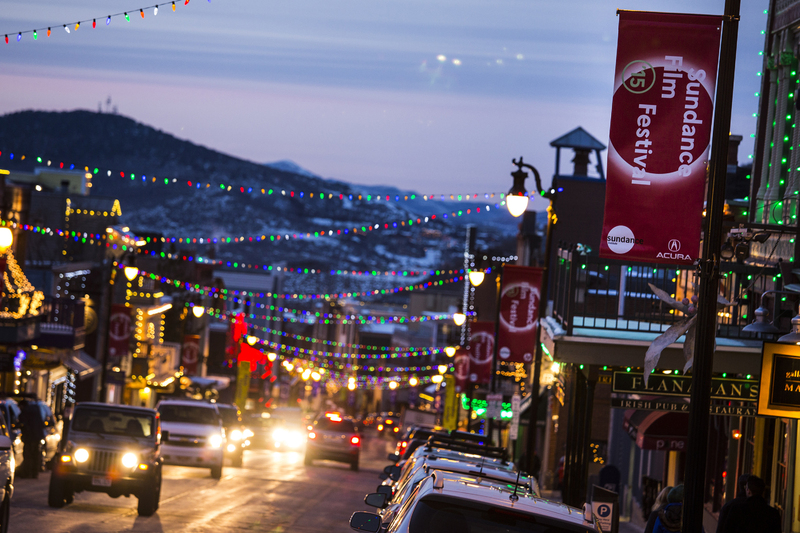
    <summary type="html"><![CDATA[<p><strong><em>High in the Wasatch Mountains sits one of Utah’s true cultural jewels: Park City. Though it started as a simple mining community, Park City experienced explosive growth with the rise of the recreational winter sports industry in the mid 20th century. Currently, Park City is most well-known for hosting the Sundance Film Festival, the largest independent film festival in the United States. </em></strong></p><img src="https://www.intermountainhistories.org/files/fullsize/d8d1e857bfa049169bf789d8c5baa41a.jpg" alt="Park City Street " /><br/><p>The discovery of the Ontario silver deposit is what first put Park City on the map. A joint claim filed in 1872 by Herman Buden, James Kane, Rector Steen, and Augustus Dawell was the beginning of a very productive mining operation that ran up until the mid-20th century. The productivity of the mine attracted the attention of other investors. George Hearst (a mining magnate from San Francisco) purchased control on the mining operation and passed off the day-to-day management to his friend, R.C. Chambers. Under their management the mining operation flourished, and Park City experienced an economic boom as a result. </p><p>The early 20th century saw the decline of the mining industry in Park City. The multiple economic recessions and the Great Depression dealt a deadly blow to operations, and Park City was looking more and more like so many other mining boom towns in the Rocky Mountains. Park City’s savior ended up being its ideal location as a winter sport resort town. It’s unique geographical location made it a gateway to resorts in the west, and skiers and snowboarders flocked to the town. This revitalized the dying community and turned Park City into one of Utah’s premier snow sports destinations. </p><p>Today, Park City remains a staple of the winter sports industry, but its most recent claim to fame is as the host of the Sundance Film Festival. Sterling van Wagenen (a Brigham Young University film graduate) and John Earle (the head of the Utah State Film Commission) collaborated to create the festival in order to attract the film industry to Utah, bring famous filmmakers to the area, and provide a place for smaller films to reach an audience. The first festival took place in 1978, and with the help of Hollywood star Robert Redford spreading the word, its notoriety increased dramatically. Today it remains among the top worldwide film festivals, often placed together with Cannes, Venice, and Toronto in terms of importance. It’s success has significantly changed Park City from its early days as a mining capital to a hub for Hollywood elites and aspiring filmmakers. </p><p><em><strong><a href="https://www.intermountainhistories.org/items/show/36">For more (including 5 images) view the original article</a></strong></em></p>]]></summary>
    <published>2017-03-27T20:17:32+00:00</published>
    <updated>2026-04-17T19:31:58+00:00</updated>
    <link rel="alternate" type="text/html" href="https://www.intermountainhistories.org/items/show/36"/>
    <id>https://www.intermountainhistories.org/items/show/36</id>
    <author>
      <name>Addison Blair, Brigham Young University </name>
    </author>
  </entry>
  <entry>
    <title type="html"><![CDATA[Atomic Liquors ]]></title>
    <summary type="html"><![CDATA[<p><strong><em>Walk into this aptly themed bar in 2016 and you will find something unique for the city of Las Vegas: an authentic part of its history. While it has expanded in recent years, Atomic is one of those rare historical specimens that has managed to survive, and even thrive, in a city that continuously reinvents itself for the changing tides of tourism. The bar has kept the same look, and many of the same relics of its past, down to the classic neon sign that has adorned the building since Joe and Stella Sobchik opened it in the early 1950s. </em></strong></p><img src="https://www.intermountainhistories.org/files/fullsize/0cbc06ed75225977ab5afc469a76d5d7.jpg" alt="Atomic Neon at Night " /><br/><p>It started in 1945 as Virginia’s Café, named after Stella’s mother who acquired the property in an inheritance from a local judge she cared for during his final years of life. Stella ran the restaurant for her mother with her husband Joe, while Virginia managed other endeavors on the property. At this time, federal military-industrial spending helped the Las Vegas economy to boom, along with many cities in the American West during the Cold War. The arrival of the Nevada Test Site (NTS) in 1951 was one aspect of this federal military involvement in the Las Vegas community, which continued from the World War II establishments of Basic Magnesium Inc. and Nellis Airforce Base. </p><p>Public opinion of the NTS was initially marked by worry of the possible side effects of radiation and fallout. The quick acceptance and even excitement over being a part of the nation’s defense grew from active efforts by the Atomic Energy Commission, along with the generally increased anti-Communist sentiment in the United States. Fears were easy to quell through created images of the American West as simultaneously an empty wasteland made for testing, and a beautiful sunny oasis. </p><p>The development of the NTS contributed to a prominent nuclear culture, a form of patriotic pride in the city, from which Atomic Liquors directly grew. While the NTS was dropping its first above ground test-bomb, Joe and Stella grew tired of cooking food and looked towards selling alcohol. Initially in the form of a liquor store in 1952, by 1954 the Sobhiks had established Atomic Liquors as a full-service bar, complete with a rooftop to watch mushroom clouds rise 60-70 miles outside of town while sipping popular “atomic cocktails” that marked the era.</p><p>As above-ground testing ended in 1963, the “atomic hairdos,” “Miss Atomic Bomb Contests,” and “atomic cocktails” that marked the era’s culture fell-out of popularity. Atomic Liquors, however, remained. Consistently a hangout for mobsters, celebrities, and other Fremont Street laborers, the bar continued as a popular neighborhood staple for a few decades. As the Fremont Street District hit harder economic times, it lost out to the popularity of the Strip, and Atomic Liquors became a little-known neighborhood watering-hole most locals and tourists alike had not heard of, or did not want to venture into. When the Sobchiks passed in 2010, the bar went to their son, Ron, who then sold it to a group of investors, reopening it in 2012, fully restored. Today locals and tourists alike can enjoy the nostalgia of a bygone classic Las Vegas era, while also embracing the new craft beers and cocktail menu that compliments the larger revitalization of Downtown Las Vegas. </p><p><em><strong><a href="https://www.intermountainhistories.org/items/show/29">For more (including 9 images) view the original article</a></strong></em></p>]]></summary>
    <published>2017-02-27T17:36:37+00:00</published>
    <updated>2026-04-17T19:31:58+00:00</updated>
    <link rel="alternate" type="text/html" href="https://www.intermountainhistories.org/items/show/29"/>
    <id>https://www.intermountainhistories.org/items/show/29</id>
    <author>
      <name>Billy Marino, University of Nevada, Las Vegas </name>
    </author>
  </entry>
  <entry>
    <title type="html"><![CDATA[The Las Vegas Courthouse and Post Office]]></title>
    <summary type="html"><![CDATA[<img src="https://www.intermountainhistories.org/files/fullsize/9b949b6fdc4d133edc9c750b25e722aa.jpg" alt="External Facade " /><br/><p>Located at 300 Stewart Ave, the Las Vegas Federal Courthouse and Post Office, opened on November 27th 1933 and remained in constant use until 2005. Prior to President Franklin Roosevelt’s appointment of a Federal Judge in Las Vegas the state had only one full time federal court in the state capitol, Carson City. Instead, judges from adjacent states rotated through Las Vegas hearing federal cases in the absence of a full time jurist. Judge Roger Thomas Foley’s Appointment in 1945 signified a greater projection of federal power into the “Battle Born State” and more specifically into Las Vegas. Locally, the Courthouse served both to give locals access to Federal offices but is also noteworthy due to the overwhelming federal oversight of Nevada’s natural resources and often contentious relations between the Federal Government and local residents. </p><p>The courthouse also played host to two events of national importance. On November 15th 1950 the Kefauver Hearings on Organized Crime convened in Las Vegas. Although this installment of Tennessee Senator Estes Kefauver’s investigation lacked the theatre of previous episodes it provided insight into sports wire operations overseen by Organized Crime thereby underscoring the national nature of the Mob.  The Kefauver Hearings, apart from providing “must see television” spurred congress to pass gambling bans thereby solidifying Las Vegas’ role as the capital of American gambling. Authors Ed Reid and Ovid Demaris estimate in their book The Green Felt Jungle that organized crime invested more than $300 million in gambling operations in Las Vegas by 1962. </p><p>Later, on April 13, 1955 Hank Greenspun, publisher of the Las Vegas Sun, faced an “inciting murder” indictment over his editorials criticizing Senator Joe McCarthy at the height of his power. Prosecutors cited headlines reading “Is Senator McCarthy a Secret Communist” as evidence that the author, Greenspun, sought to incite McCarthy’s assassination. The council for the defense countered with the First Amendment to the United States Constitution, the guarantee of Free Speech, while also citing the ruin McCarthy brought to one hundred and eight State Department employees that he accused of Communist ties without any evidence. This contention thereby proposed that rather than inciting McCarthy’s murder their client was a journalist with the courage to speak truth to unchecked power. In a small victory for decency Greenspun was acquitted on the first ballot. </p><p>The Las Vegas Federal Courthouse and Post Office was recognized by the Federal Registry of Historic Places on February 10, 1983 (#83001108). The building served as a courthouse until 1965 and as a  Post Office until it was purchased, re-purposed and refurbished into the National Museum of Organized Crime and Law Enforcement. Museum visitors trace the evolution of Organized Crime and Law Enforcement from localized phenomenons to national movements while simultaneously exploring criminal influence both in illegal activities and in shaping American pop culture.</p><p><em><strong><a href="https://www.intermountainhistories.org/items/show/27">For more (including 3 images) view the original article</a></strong></em></p>]]></summary>
    <published>2017-02-17T18:57:49+00:00</published>
    <updated>2026-04-17T19:31:58+00:00</updated>
    <link rel="alternate" type="text/html" href="https://www.intermountainhistories.org/items/show/27"/>
    <id>https://www.intermountainhistories.org/items/show/27</id>
    <author>
      <name>James Steele, University of Nevada, Las Vegas </name>
    </author>
  </entry>
</feed>