<?xml version="1.0" encoding="UTF-8"?>
<feed xmlns="http://www.w3.org/2005/Atom">
  <title type="text">Intermountain Histories</title>
  <updated>2026-04-17T19:32:16+00:00</updated>
  <generator uri="http://framework.zend.com" version="1.12.20">Zend_Feed_Writer</generator>
  <link rel="alternate" type="text/html" href="https://www.intermountainhistories.org/"/>
  <link rel="self" type="application/atom+xml" href="https://www.intermountainhistories.org/items/browse?output=rss2"/>
  <id>https://www.intermountainhistories.org/</id>
  <author>
    <name>Intermountain Histories</name>
    <uri>https://www.intermountainhistories.org</uri>
  </author>
  <link rel="hub" href="https://pubsubhubbub.appspot.com/"/>
  <entry>
    <title type="html"><![CDATA[Battle Creek Canyon Massacre]]></title>
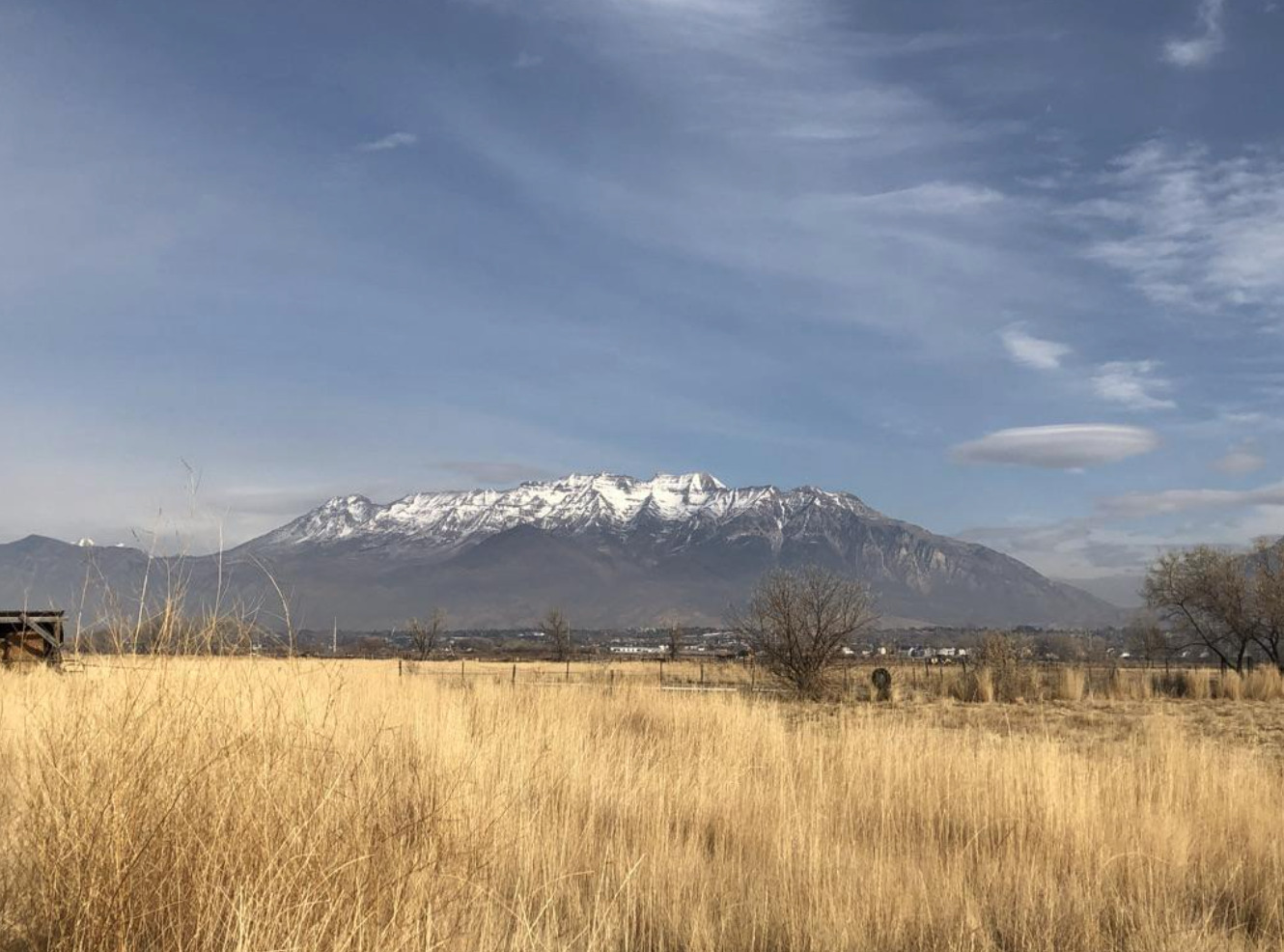
    <summary type="html"><![CDATA[<p><strong><em>Battle Creek Canyon's name originates from Utah's first major skirmish between the Utes and the Mormon militia. </em></strong></p><img src="https://www.intermountainhistories.org/files/fullsize/54eea90162a257c6e9cd4299408aea71.jpg" alt="Kade Dallin, Purple Mountain Majesties, 2020.
" /><br/><p><span style="font-weight:400;">When the pioneers of the Church of Jesus Christ of Latter-day Saints entered the Salt Lake Valley, they generally settled in what is now Salt Lake County on the Wasatch Front. The area was largely a desert and many, including some mountain men, suggested that the people settle further south in the freshwater valley that now comprises the bulk of Utah County. Brigham Young immediately sent out people to found colonies, cities, and towns throughout modern Utah, Arizona, Nevada, California, and Mexico. Yet, the pioneers balked at the initial thought of settlement in Utah Valley because of the native tribes who already lived there. Various bands of the Ute and Timpanogos tribes lived throughout the valley and had a reputation of being warlike and aggressive as a way to defend their land and livelihood. </p>
<span style="font-weight:400;">The pioneers especially resented the Ute practice of poaching the settler’s cattle. Roman Nose, a prominent Ute, was particularly troublesome. He led a band that repeatedly raided the farms and ranches near the valley border, and was even accused of stealing several of Brigham Young’s personal horses. After Brigham Young heard of the theft, he ordered Captain John Scott to lead a posse against the Utes in hopes of apprehending Roman Nose and his band. Their orders were to find the band of thieves and to “take such measures as would put a final end to their depredations in the future.” In 1849, they began raiding the Ute bands they deemed responsible for the loss of the livestock. However, Brigham Young soon discovered that the Utes had been mistakenly blamed: his horses had simply been moved to different pastures. He ordered Scott and the posse to stand down, but they refused. </p>
<span style="font-weight:400;">On the morning of March 5, 1849, the relationship between Mormon settlers and the local band of Timpanogos Indians deteriorated into brutal hostility in what is now Pleasant Grove, Utah. Scott’s rogue posse of 44 men soon arrived where they found the Ute camp which they thought participated in the raids. The group surrounded the sleeping camp and opened fire in a reign of terror. The members of the posse then hunted down many of the Utes who managed to escape the initial shootout. In total, they killed seventeen men, women, and children, including Roman Nose. </p>
<span style="font-weight:400;">After seeing the massacre, the chief of the Native American tribe, Little-Chief was distraught. Although he reportedly agreed that the killing of the supposed thieves was justified, he understood that this would cause a rift to form between white settlers and local tribes. This event, among many other skirmishes, led to heightened tension between the two groups and permanently damaged the already delicate relationship between the Native American tribes and the Mormon settlers. After this event, the area became known as Battle Creek Canyon and is today memorialized by the Battle Creek Marker. </span>


</p><p><em><strong><a href="https://www.intermountainhistories.org/items/show/757">For more (including 2 images) view the original article</a></strong></em></p>]]></summary>
    <published>2023-10-22T05:05:29+00:00</published>
    <updated>2026-04-17T19:32:16+00:00</updated>
    <link rel="alternate" type="text/html" href="https://www.intermountainhistories.org/items/show/757"/>
    <id>https://www.intermountainhistories.org/items/show/757</id>
    <author>
      <name>Kade Dallin, Brigham Young University&amp;#32;&amp;amp;&amp;#32;Bryce Revelli, Brigham Young University</name>
    </author>
  </entry>
  <entry>
    <title type="html"><![CDATA[Battle of Diamond Fork]]></title>
    <summary type="html"><![CDATA[<p><strong><em>A raid in Maple Canyon turned into a short battle. This battle, leaving eight dead, is representative of the character of the Black Hawk War in Utah County.</em></strong></p><img src="https://www.intermountainhistories.org/files/fullsize/85c8e01e353c7e050a8d9157aa8ffb59.jpg" alt="Battlefield" /><br/><p>Before daybreak on June 26, 1866, a party of Timpanogos and Utes—led by Mountain, a Colorado Ute chief—seized around fifty animals, a mix of cattle and horses, from Mapleton, Utah. It was in the middle of Black Hawk’s War, and the Native American party hoped they had achieved a meaningful victory. After driving the animals through a canyon to Little Diamond Creek and feeling they had made a clean getaway, the Native American group took a break in a clear, open field near the convergence of the Little Diamond and Diamond Fork rivers to graze their horses.
However, while the horses were grazing, militiamen roused from Springville surprised the indigenous group and cut off their escape route. Knowing they had no other way to escape, the Timpanogos retaliated, and the militiamen took cover in a grove of trees and fired on the Timpanogos. Both sides fired on each other to little avail for a few hours, and Mountain taunted the militiamen, calling out Albert Dimmick specifically as a “coward and a squaw.” Dimmick furiously stood up, out of his cover, and a Native American immediately got a hit on him. Injured, Dimmick died a few hours later.
Reinforcements from Spanish Fork came to support the Springville militiamen, further pinning the Timpanogos raiders in the brush. Both the Native Americans and the militiamen tried to spread out and surround the other, but only the settlers succeeded. Pinned between two groups of enemies, the Native Americans stopped fighting—until a leader, most likely Mountain, raised a crest above them and urged them to fight on. At his appearance, the militiamen fired until he slumped in his horse and rode away. As their leader retreated, so did the rest of the Timpanogos and Utes, heading up the steep sides of the canyon and abandoning the captured animals to save their lives.
Later, the militiamen found out from Native American contacts that they had killed five or six Utes in the battle. A second militiaman, this one from Spanish Fork, a hotheaded youth of eighteen years, Jonathan Edmiston, had also been killed when he rushed into the middle of the Timpanogos to try to reach the Springville militia’s captain. His fellow soldiers had lost track of him in the brush, and after the raiding party retreated with their wounded and dead, they searched unsuccessfully for his body. The following day, a search party returned to the battleground and found Edmiston’s scalped corpse. This exchange is demonstrative of the scattered battles of the Black Hawk War in Utah.</p><p><em><strong><a href="https://www.intermountainhistories.org/items/show/630">For more (including 3 images) view the original article</a></strong></em></p>]]></summary>
    <published>2022-06-30T23:20:52+00:00</published>
    <updated>2026-04-17T19:32:13+00:00</updated>
    <link rel="alternate" type="text/html" href="https://www.intermountainhistories.org/items/show/630"/>
    <id>https://www.intermountainhistories.org/items/show/630</id>
    <author>
      <name>Will Anderson, Brigham Young University</name>
    </author>
  </entry>
</feed>
