<?xml version="1.0" encoding="UTF-8"?>
<feed xmlns="http://www.w3.org/2005/Atom">
  <title type="text">Intermountain Histories</title>
  <updated>2026-04-17T19:32:20+00:00</updated>
  <generator uri="http://framework.zend.com" version="1.12.20">Zend_Feed_Writer</generator>
  <link rel="alternate" type="text/html" href="https://www.intermountainhistories.org/"/>
  <link rel="self" type="application/atom+xml" href="https://www.intermountainhistories.org/items/browse?output=rss2"/>
  <id>https://www.intermountainhistories.org/</id>
  <author>
    <name>Intermountain Histories</name>
    <uri>https://www.intermountainhistories.org</uri>
  </author>
  <link rel="hub" href="https://pubsubhubbub.appspot.com/"/>
  <entry>
    <title type="html"><![CDATA[Zitkala-Ša’s (Gertrude Simmons Bonnin) Sojourn in Utah<br />
]]></title>
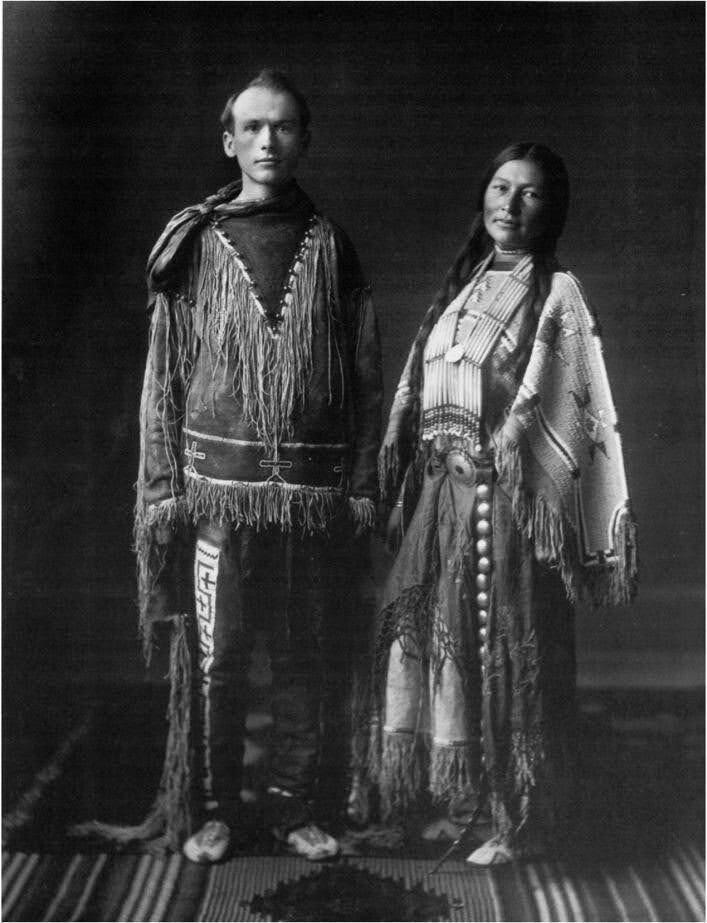
    <summary type="html"><![CDATA[<p><strong><em><span style="font-weight:400;">Zitkala-Ša, or Gertrude Simmons Bonnin, is a celebrated Yankton Dakota writer and activist. She lived in Utah from 1902-1917.</span></em></strong></p><img src="https://www.intermountainhistories.org/files/fullsize/45b71b8be1582e338eb8a6eee61bb4cc.jpg" alt="William F. Hanson and Zitkala-Ša" /><br/><p><span style="font-weight:400;">Born on the Yankton Sioux Reservation in South Dakota in 1876, Gertrude Simmons or Zitkala-Ša left the reservation at age eight to attend White’s Manual Labor Institute in Indiana. This assimilation-focused boarding school instilled Euro-American and Christian values in its students. She attended Earlham College and became an increasingly skilled writer and musician.</span> <span style="font-weight:400;">She taught at the Carlisle Indian Industrial School. After a while, she became critical of the emphasis on assimilation and acculturation and resigned. She began writing under the name Zitkala-Ša (Red Bird) around 1889, publishing essays in national magazines such as </span><i><span style="font-weight:400;">Harper’s Monthly</span></i><span style="font-weight:400;">. Her writings often criticized the practice of many reformers and stressed the importance of Native identities.</span>
<span style="font-weight:400;">Zitkala-Ša married Raymond Bonnin in 1902 and they moved to </span><span style="font-weight:400;">Whiterocks, Utah, where Raymond worked for the Indian Bureau on the Uintah and Ouray Reservation. In 1903, they had a son, Raymond “Ohiya” Bonnin. A young, orphaned Ute boy named Oran Curry and Old Sioux, a survivor of the Battle of the Little Bighorn, also lived with them. </span>
<span style="font-weight:400;">The Bonnins lived in Utah from 1902 to 1917, except for several months spent on the Standing Rock Reservation in the Dakotas. It was while away at Standing Rock that she converted to Catholicism. After returning to Utah, she kept up a correspondence with Father William Ketcham, director of the Bureau of Catholic Indian Missions, expressing her wish to introduce Catholicism to the Utes.</span>
<span style="font-weight:400;">In 1908, she met music teacher William Hanson</span><span style="font-weight:400;">. They eventually collaborated in writing and composing the </span><i><span style="font-weight:400;">Sun Dance Opera</span></i><span style="font-weight:400;">, which debuted in Vernal, Utah, in 1913. The Sun Dance is a religious ceremony practiced by some Natives, especially Plains Peoples. The opera combined Native rituals with European-styled performances. It is unclear what motivated her to collaborate on this opera, which could be viewed as a violation of religious respect. Interestingly, the Sun Dance was outlawed on the Uintah and Ouray Reservation at this time, and the opera allowed Ute performers to participate in it to some degree. At the time of its debut, a Vernal newspaper praised it as greatly pleasing the audience.</span>
<span style="font-weight:400;">During her first few years in Utah, Zitkala-Ša taught at the Whiterocks Boarding School. She also spent time working for the Indian Service. In 1913, she joined the Society of American Indians, a national organization advocating for Native rights. She was elected secretary of the SAI in 1916. After moving to Duchesne, Utah, in 1915, she created a Ute community center. While in Utah, she began an anti-peyote campaign. Zitkala-Ša and her husband Ray moved to Washington, D.C., where she continued her activism. Zitkala-Ša’s time in Utah was one of “relative obscurity." Yet, during her fourteen years there, she continued to evolve and to advance the causes she believed in.</span></p><p><em><strong><a href="https://www.intermountainhistories.org/items/show/888">For more (including 3 images) view the original article</a></strong></em></p>]]></summary>
    <published>2025-04-21T15:25:26+00:00</published>
    <updated>2026-04-17T19:32:20+00:00</updated>
    <link rel="alternate" type="text/html" href="https://www.intermountainhistories.org/items/show/888"/>
    <id>https://www.intermountainhistories.org/items/show/888</id>
    <author>
      <name>Emmaretta Barnett, Brigham Young University</name>
    </author>
  </entry>
  <entry>
    <title type="html"><![CDATA[The Salt Lake Theatre: Brigham Young&#039;s Love Letter to Theater Out West]]></title>
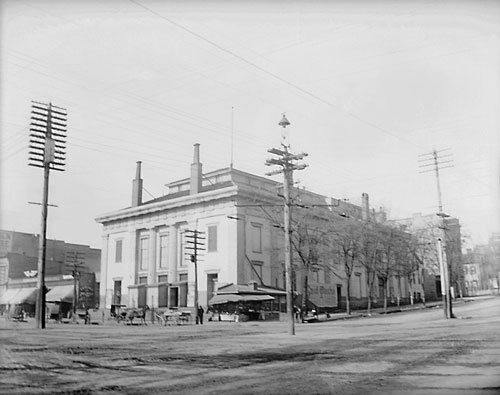
    <summary type="html"><![CDATA[<p><strong><em>The creation of the Salt Lake Theatre was led by Brigham Young and supported by the Church of Jesus Christ of Latter Day Saints in 1862. The Theatre was the most decorated building in Utah territory before the Salt Lake City Temple and Tabernacle were constructed. Its 66-year run brought entertainment and enjoyment to early Utah settlers.</em></strong></p><img src="https://www.intermountainhistories.org/files/fullsize/5d59a9a867f7c3f8c5b35d2310be0c7e.jpg" alt="An Exterior View of the Salt Lake Theatre. Salt Lake City, Utah, 1900. " /><br/><p>Early LDS church leaders were fond of artistic expression to bring culture, entertainment, and refinement to the Salt Lake Valley. In 1852, just a few years after settling in Utah, Brigham Young decided it was time to bring theater back into the lives of the saints, forming The Deseret Dramatic Association. These Saint-actors performed at the Social Hall for five years, marking a vital advancement to society in the West. Unfortunately, the Utah War made the stage go dark for a few years. It returned when Phill Margaretts created The Mechanics Dramatic Association in 1859, which sponsored plays that were not affiliated with the church. In response, Brigham Young decided it was time to create a permanent stage where he could control the actors, scripts, and overall impression of the theater.</p><p>It was the perfect timing in Utah History for the construction of a gathering place to enjoy the arts. Initially, Brigham Young intended to build a dance hall. Instead, he determined to create “a model playhouse for producing professional theatre.” Construction of the Salt Lake Theatre began in July 1861 and was completed by March the following year at a cost of around $100,000. The architect was William H Folsom, with E. L. T. Harrison designing the interior. The theatre had room to hold an audience of 1500. Throughout Utah’s territorial history, the LDS church and the growth of Utah’s economy went hand and hand. The theater was just one of many buildings and ventures that were sponsored by the church. Because Young used church funds to finance the Salt Lake Theatre he guided its operation.</p><p>A dedication was held to honor this “temple of drama,” built to bring wholesome amusement and moral guidance to its patrons. The theater became a huge success. Thomas Lyne, a professional actor who had joined the church and promoted theater in Nauvoo, was instrumental in the popularity of plays presented there. The success of The ‘Mormon theater’ sparked the interest of many famous actors and drew them to Utah throughout its 66-year run. Several famous actresses, including Maude Adams, who later pioneered the role of Peter Pan on Broadway, played their first roles in Salt Lake City. The building was used not only for local arts but it hosted political events and eventually touring performing groups coming through Salt Lake City. Despite Young’s original vision, over time the theater welcomed people of all religious backgrounds and secular attitudes. Throughout its history, the theater played a significant role in the culture of Salt Lake City. Unfortunately, the creation of many new vaudeville theaters and Utah’s economic downturn of 1920s drove the theater into deep debt. People desperate for basic needs could not afford to attend shows. In addition, the building needed renovations. The president of the Church, Heber J. Grant, closed the theater and sold the building. In 1928 it was demolished–a great loss of a cultural icon to Utah and the United States.</p><p><em><strong><a href="https://www.intermountainhistories.org/items/show/779">For more (including 4 images) view the original article</a></strong></em></p>]]></summary>
    <published>2024-02-23T15:13:08+00:00</published>
    <updated>2026-04-17T19:32:17+00:00</updated>
    <link rel="alternate" type="text/html" href="https://www.intermountainhistories.org/items/show/779"/>
    <id>https://www.intermountainhistories.org/items/show/779</id>
    <author>
      <name>Mikenzie Moon, Brigham Young University</name>
    </author>
  </entry>
  <entry>
    <title type="html"><![CDATA[Life in Los Alamos: Linking the Past and Present <br />
]]></title>
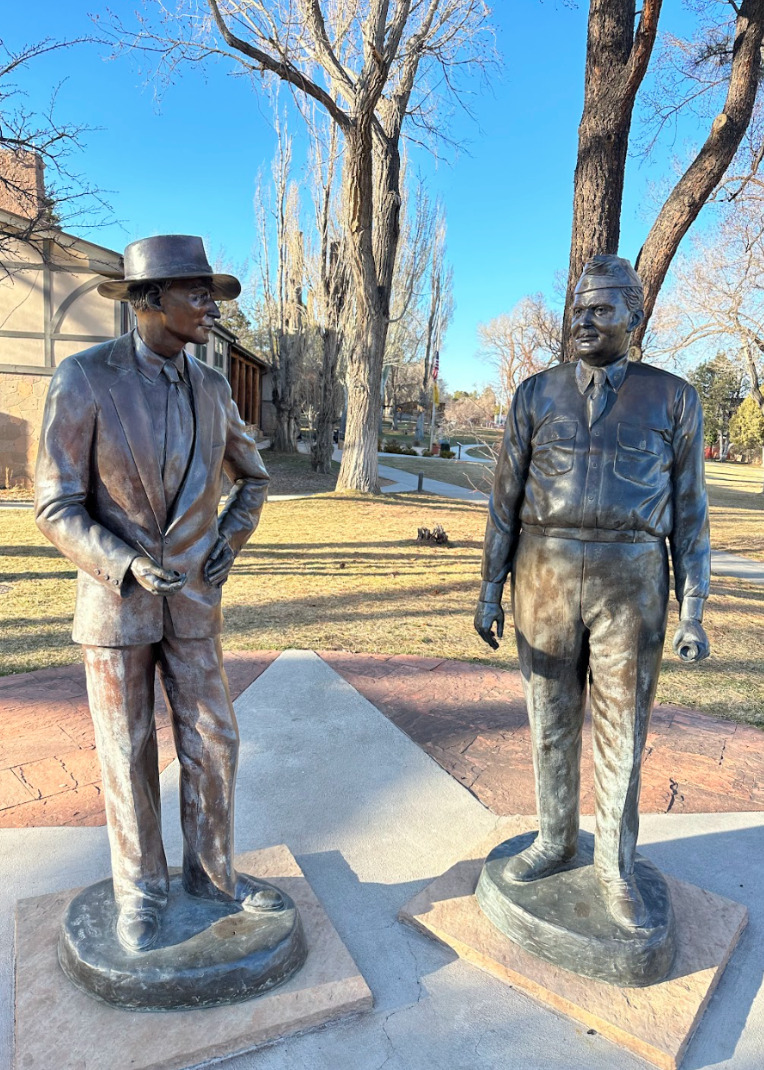
    <summary type="html"><![CDATA[<p><strong><em>Los Alamos residents in the 1940s found themselves in unusual circumstances. John von Neumann explained that, “At great expense we have gathered on this mesa the largest collection of crackpots ever seen.” Yet these people continued life under the cover of secrecy and created a community which has lasted until this day. 	</p></strong></p><img src="https://www.intermountainhistories.org/files/fullsize/a56ce2e0f40dcd7d1a6e2fe9af1ddcf0.jpg" alt="Statue of Oppenheimer and Groves" /><br/><p><span style="font-weight:400;">As the scientists and military personnel worked furiously to create an atomic weapon during the latter years of WWII, many moved to the classified town of Los Alamos, New Mexico. Because their project was shrouded in such secrecy, they were required to move themselves and their family without knowing many of the details of their new job or location. Although the civilian and academic director, J. Robert Oppenheimer, tried to make it as much of a collaborative and normal operation as possible, the nature of their assignment meant that living in Los Alamos was unique. </p>
<span style="font-weight:400;">Many scientists arrived without knowing exactly where they would be working or what they would be doing. They were not even allowed to tell their spouses what their work in the restricted laboratories entailed. Secrecy was of the utmost importance. Oppenheimer spread disinformation to nearby cities, such as Santa Fe, that they were working on an electric rocket. Mail for all scientists was addressed to Box 1663, Sandoval County, Rural. It was liable to searches and some outgoing mail was redacted for security concerns. Even phone calls were monitored—army intelligence agents were obvious in listening in on people’s private conversations. Barbed wire covered the scenic landscape and made some workers feel as though they were the ones imprisoned rather than the liberators of those in European prison camps. </p>
<span style="font-weight:400;">Despite the secrecy and sometimes oppressive security, many familiar aspects of daily life continued in Los Alamos. Many women were given clerical jobs such as secretaries or computer operators to keep them occupied while their husbands worked. Children continued to attend school and babies continued to be born. In regards to the baby boom, the military official General Leslie Groves grumbled that they were simply taking advantage of the free healthcare awarded to those in the army effort. The few movies which were allowed to play were quite popular. In a move for additional entertainment, engineers and scientists threw amateur theatricals which even featured the eminent Oppenheimer in the role of “corpse.” </p>
<span style="font-weight:400;">The setting of Los Alamos itself served as a diversion for employees and their families. Oppenheimer had picked the site of Los Alamos for its beauty and openness. He thought that it could give the scientists a sense of freedom amidst all of their restrictions. Placed on top of towering mesas flanked by green mountains and overlooking fantastic natural features, there were many opportunities for outdoor recreation. During the winter, avid skiers trekked up the nearby Jemez Mountains and skied back down to their homes. The outdoor ice rink, built in 1936, became an unofficial youth center for local children to spend their winters with friends. The warmer months brought camping, horseback riding, fishing, and hiking. Curious children and adults also explored the many nearby Ancestral Puebloan archaeological sites and ruins. </p>
<span style="font-weight:400;">Even though Los Alamos was a unique environment of brilliant scientists sequestered in the wilderness, life found a way to continue in relative normalcy. It grew out of a wartime necessity into a long-lasting community with unusual origins. Today, Los Alamos is home to around 13,000 people and a National Laboratory specializing in weapon-making for the United States government. The community maintains their engagement in many of the recreational activities that their predecessors did. The Pajarito Ski Hill and the ice rink continue to gather youth and adults during the winter months. Warmer times of the year bring outdoor sports, especially running and hiking, among the abundant natural landscape. Summer is also the ideal time for weapons testing. For seasoned Los Alamos citizens, a large explosion miles away that rattles windows and door frames is unsurprising—rarely do they suspect an earthquake.  The work and life of Los Alamos persists nearly a century after it was settled. </span>


</p><p><em><strong><a href="https://www.intermountainhistories.org/items/show/754">For more (including 5 images) view the original article</a></strong></em></p>]]></summary>
    <published>2023-09-20T19:36:59+00:00</published>
    <updated>2026-04-17T19:32:16+00:00</updated>
    <link rel="alternate" type="text/html" href="https://www.intermountainhistories.org/items/show/754"/>
    <id>https://www.intermountainhistories.org/items/show/754</id>
    <author>
      <name>Abigail Beus, Brigham Young University</name>
    </author>
  </entry>
  <entry>
    <title type="html"><![CDATA[Piper’s Opera House and the Virginia Benevolent Association]]></title>
    <summary type="html"><![CDATA[<p><strong><em>This historic venue in Virginia City, Nevada offered a space for women during the early nineteenth century to express their creativity. Whether it was public plays or private theatrics, the auditorium was a place where women could escape daily life and participate in meetings dedicated to their unique interests with friends.</em></strong></p><img src="https://www.intermountainhistories.org/files/fullsize/494df09b46e1da0a2bc49152b8f0e09c.jpg" alt="Piper’s auditorium" /><br/><p>The building that currently sits on B Street in Virginia City, Nevada is the third iteration of Piper’s Opera House. Wealthy entrepreneur John Piper financed the city’s first opera house in 1863, but the structure burned to the ground in the Great Fire of 1875. Three years later in 1878, Piper funded construction for a new opera house on the same land, yet it also burned down in 1883. To raise money for yet another opera house, Piper rented Cooper Hall and began presenting various entertainments within only days after the 1883 fire. Piper’s (third) Opera House opened its doors on March 6, 1885, and John Piper organized a town dance on the same day to celebrate its completion.
This final version of Piper’s Opera House, built into the eastern slope of Mount Davidson, has a stone foundation and masonry façade with wooden shiplap siding and asymmetrical arched windows. Inside is an auditorium smaller than a full basketball court, a sloped stage which makes the entire area visible from any seat, a box office, and Piper’s private apartment. Colorful and textured wallpapers adorn the auditorium interior, and wooden flooring runs throughout. The opera house still bears its original sign, featured above the entrance doors. In its early history, the building served as a performing venue, meeting ground, and training facility for boxers.
Piper’s three Opera Houses also provided acceptable public forums for women to participate in amateur and professional theater. The Virginia Benevolent Association produced a concert in 1875 to raise funds to help the poor prepare for winter. Club women provided much of the entertainment. Members recited from <em>Hiawatha</em>, sang “Good Night My Sweet,” and played the hornpipe. One club affiliate reminisced that the opera house provided an outlet for women to express themselves in a safe space, whether in public or privately among a few women. Piper’s Opera House was an essential location for Virginia City’s women to discover and develop creative expression.
The Virginia Benevolent Association disbanded in the early-twentieth century, but Piper’s Opera House still hosts events today. Theater production is ongoing, and Piper’s is also a popular venue for local events like weddings, ceremonies, birthdays, and holidays. Preservationists secured the opera house a place on the National Register of Historic Places in 1997.</p><p><em><strong><a href="https://www.intermountainhistories.org/items/show/607">For more (including 5 images) view the original article</a></strong></em></p>]]></summary>
    <published>2022-06-10T20:15:56+00:00</published>
    <updated>2026-04-17T19:32:13+00:00</updated>
    <link rel="alternate" type="text/html" href="https://www.intermountainhistories.org/items/show/607"/>
    <id>https://www.intermountainhistories.org/items/show/607</id>
    <author>
      <name>Amy Megowan, Northern Arizona University</name>
    </author>
  </entry>
  <entry>
    <title type="html"><![CDATA[Moraine Park Museum and Amphitheater]]></title>
    <summary type="html"><![CDATA[<p><strong><em>Catch the morning sun at the Moraine Park Amphitheater and enjoy a view of Longs Peak in the distance.</em></strong></p><img src="https://www.intermountainhistories.org/files/fullsize/4a03e1b6c12de566555b8cbb98c72010.jpg" alt="Moraine Amphitheater" /><br/><p>In the 1930s, the Civilian Conservation Corps removed Moraine Lodge from Rocky Mountain National Park in an initiative to restore the land to its original state. They converted the lodge’s remaining assembly hall into a museum in 1936 and the following year added the Moraine Park Museum Amphitheater. Like other outdoor venues in the national parks, the amphitheater follows Greek design with a rustic naturalism that blends in with the setting. The architecture plays a subordinate role to nature, responding to the terrain rather than controlling it, by following basic principles such as refraining from removing large numbers of trees to create seating, incorporating a distant natural view as the stage background, and placing a campfire near the stage. The amphitheater also reflects the ‘Parkitecture’ era of Park Service design that naturalized visitor centers, creating an organic aesthetic for guests that blended manmade structures with nature.
Overlooking a view of Longs Peak, the amphitheater features rustic design elements like the plank and stone seating built around the topographic shape of the bowl, ponderosa pines creating a wall around the stage, and stone steps and trails for pedestrian traffic. The new museum and theater were important additions to the Park Service’s education and interpretation programs at Rocky Mountain and served as a venue for delivering slideshow presentations. The first lecture took place in the summer of 1937 and hosted 97 guests. The <em>Estes Park Trail</em>—a local newspaper—published a list of weekly programs held at the amphitheater which included motion pictures like <em>Glimpses of the National Parks</em> and campfire lectures such as “Oddities in Nature’s Gardens” and “Winter Life in the Rockies,” both given in the week of July 25, 1938.
The Moraine Park Museum Amphitheater site is one of the best representations of National Park rustic design and remains unchanged to this day. Using the natural landscape, retaining native plants, and including views of the park were key elements of the Park Service’s conservation movement in the 1930s. Citizens nominated the site to the National Register of Historic Places in 1976, and promoted understanding landscapes as places of historical information.
Since its original construction, the National Park Service replaced the amphitheater’s stone seating with wood planks in the 1950s. The amphitheater has hosted many events over the years, ranging from lectures and religious gatherings to stargazing and campfires. It remains in use today largely for weddings and school education programs.</p><p><em><strong><a href="https://www.intermountainhistories.org/items/show/601">For more (including 3 images) view the original article</a></strong></em></p>]]></summary>
    <published>2022-06-09T22:08:39+00:00</published>
    <updated>2026-04-17T19:32:13+00:00</updated>
    <link rel="alternate" type="text/html" href="https://www.intermountainhistories.org/items/show/601"/>
    <id>https://www.intermountainhistories.org/items/show/601</id>
    <author>
      <name>Jennifer John, Northern Arizona University</name>
    </author>
  </entry>
  <entry>
    <title type="html"><![CDATA[Redwood Drive-in]]></title>
    <summary type="html"><![CDATA[<p><strong><em>The 1950s were known for their fast and fashionable cars. Salt Lake City’s Redwood Drive-in provided these automobile enthusiasts with an impressive alternative to their movie-going experience, complete with magic moonglow and pony rides.</em></strong></p><img src="https://www.intermountainhistories.org/files/fullsize/789c1a0b2330e93722b7fa1a31a9a551.jpg" alt="Artist’s conception" /><br/><p>The United Intermountain Theaters Association opened the Redwood Drive-in on July 22, 1949, and the first movie to be featured on the forty-six by sixty screen was <em>The Big Cat</em> in technicolor.  The drive-in theater cost a total of $140,000 and was designed to provide families with a wide variety of entertainment opportunities. Advertisements described the complex as being both a theater and playground, and it featured picnic tables, barbecue pits, wading pools, swing sets, and train and pony rides. Architects designed the lot to accommodate up to 600 cars at once, but they also constructed a seating area for guests who preferred to enjoy the film outside of their vehicles. The drive-in provided comforts such as individual speakers for each car, a button to request refreshments, and bottle warmers for its youngest visitors. One of the most impressive features of the setting was its “magic moonglow” light fixture, which provided the illusion of a full moon each night to help guests navigate through the site in the dark. The day before the Redwood’s grand opening, the <em>Deseret News</em> reported that there were 2,784 electric light bulbs on the backside of the screen tower alone.
The drive-in served more than just Salt Lake City’s entertainment needs; the complex also hosted political advocacy and entrepreneurial events. For example, in October 1949, the Redwood hosted a special show for adults only. Titled <em>The Burning Question</em>, the show was an informational film warning against marijuana use and advising parents about how to protect their children from this illegal drug. And in 1960, the Redwood began regularly hosting a swap meet where vendors could buy and sell their belongings or other goods. Artists also utilized this to their benefit. In 1995, a Navajo artist, Ronnie Yazzie, began selling his art at the Redwood, where he met his most important sponsors and clients. The Redwood continues to host the Swap Meet, and it has become a popular community event.
Over the course of its history, the Redwood has undergone many changes technologically and on its grounds. In 1961, over $200,000 were invested into renovations which included new speakers, bigger bathrooms, an upgraded playground, a new snack bar, a larger screen, and general landscaping. On September 18, 1994, a fire in the middle of the night destroyed the central screen, resulting in thousands of dollars in damage. To the relief of the community, the fire did not close the Redwood forever. It continues to be a community favorite for both local families and visitors alike.</p><p><em><strong><a href="https://www.intermountainhistories.org/items/show/554">For more (including 3 images) view the original article</a></strong></em></p>]]></summary>
    <published>2021-12-18T00:34:31+00:00</published>
    <updated>2026-04-17T19:32:12+00:00</updated>
    <link rel="alternate" type="text/html" href="https://www.intermountainhistories.org/items/show/554"/>
    <id>https://www.intermountainhistories.org/items/show/554</id>
    <author>
      <name>Melissa Valenzuela, Northern Arizona University</name>
    </author>
  </entry>
  <entry>
    <title type="html"><![CDATA[Park Theatre]]></title>
    <summary type="html"><![CDATA[<p><strong><em>Built in 1913, the historic Park Theatre is one of the oldest buildings in Estes Park, Colorado. It has provided generations of Coloradoans with entertainment and continues to be a community favorite. </em></strong></p><img src="https://www.intermountainhistories.org/files/fullsize/a883487d6ca541a3aee3ba0591772da9.jpg" alt="The theatre" /><br/><p>The Park Theatre opened in 1913 and was one of the earliest features of the Estes Park land development in Colorado. The Estes Park Town Company, an organization of wealthy landowners and businessmen in the area, commissioned architect J.R. Anderson to design and begin the project. Parts of the building were constructed in Longmont, Colorado, and transported to Estes Park for the final installation. C.H. Bond completed the project in 1913, and in September of that year, he and his wife Alma purchased the property from the Estes Park Town Company. Fred Jackson operated the theater under the Bonds’ supervision until 1922, when they sold the building to Ralph Gwynn.
Gwynn operated projectors and sound equipment at various movie houses throughout Denver before investing in the Park Theatre. Shortly after purchasing the property, he began renovations that increased the interior space, and he introduced a new projection technique to the theater. Gwynn added the front lobby and an additional twelve feet to the projection booth, which now constitute the west portion of the building. The additional area added to the projection space would allowed Gwynn to pass the light beam of the projector through a window that looked into the auditorium. It was an innovative method that had not been practiced at any other theaters in the area but soon became standard practice in film projection. In 1926, Gwynn added an eighty-foot tower with neon lighting to the building to catch the attention of potential customers and improve advertising. This addition soon became a landmark and added to the tourist appeal of Estes Park. Locals referred to this new addition as the “Tower of Love,” as they believed Gwynn designed and dedicated it to his wife, Mary. The couple operated the theater until Ralph’s passing in 1963.
Vic Walker purchased the building from Ralph Gwynn’s estate sale and continued operating the theater with one of Gwynn’s close friends, John Ramey. The two ran the Park Theatre for five more years before selling the property to Ola and Mickey Stanger, owners of several movie theaters and drive-ins throughout Colorado, including the Lake Estes Drive-in, also in Estes Park. Vic Walker continued operating the theater alongside the Stangers until 1982, when the couple took full control of the movie house with their children. When Ola and Mickey passed in the early 2000s, their descendants took over the Park Theatre along with their other entertainment properties. The theater remains open and is operated as a Stanger family business. While there have been many additions and renovations to the original building, it remains a treasured landmark for generations of Estes Park residents.</p><p><em><strong><a href="https://www.intermountainhistories.org/items/show/553">For more (including 3 images) view the original article</a></strong></em></p>]]></summary>
    <published>2021-12-17T22:51:30+00:00</published>
    <updated>2026-04-17T19:32:11+00:00</updated>
    <link rel="alternate" type="text/html" href="https://www.intermountainhistories.org/items/show/553"/>
    <id>https://www.intermountainhistories.org/items/show/553</id>
    <author>
      <name>Melissa Valenzuela, Northern Arizona University</name>
    </author>
  </entry>
  <entry>
    <title type="html"><![CDATA[Spud Drive-in]]></title>
    <summary type="html"><![CDATA[<p><strong><em>Designed in the 1950s at the height of America’s drive-in theater trend, the Spud provided residents of Teton County, Idaho, with an exciting cinematic experience. It has gained national attention for its service and its mascot “Old Murphy,” an oversized fake potato. </em></strong></p><img src="https://www.intermountainhistories.org/files/fullsize/8cfcc674d758aa9c4a1daea9044fcd1c.jpg" alt="Spud Drive-in" /><br/><p>A.C. “Ace” Wood started drafting plans for the construction of a drive-in theater in 1950. Wood was the owner of an indoor theater in Driggs known as “The Orpheum,” but the automobile culture of the 1950s inspired him to re-envision the cinema experience. He began the Spud Drive-in in 1953 and newspapers dutifully covered the development for their readers. In the 1950s, Teton County during was a very small, rural community home to only about 3,000 citizens and limited entertainment options, but a drive-in promised excitement, especially for families. Residents were also car enthusiasts and became thrilled about the novelty of enjoying films from their favorite automobiles. The drive-in could hold up to 170 cars at one time and included features such as individual speakers for each car. The Spud sold a variety of refreshments, including sandwiches and soda-pop, at a concession stand located in the center of the site. Finally, Ace Wood added a local touch to the drive-in that drew visitors from all over the county: a large, fake potato parked in the bed of a 1946 Chevy truck. Wood and early visitors nicknamed the potato “Old Murphy,” and it quickly became a popular tourist site.
Upon his retirement in 1968, Ace Wood sold the drive-in to Leo and Gladys Davis. They added the “Gladys Burger” to the concession stand menu, but later changed the name to the “Spud Burger.” The burger became a local favorite, drawing more tourism to the drive-in. The Davises owned and operated the Spud for eighteen years before selling the property back to the Wood family. In 1986, Ace Wood’s great nephew Richard and his wife Dawnell purchased the drive-in. They quickly made technological improvements that were both necessary cost-effective. The couple switched the old carbon arc light system in their projectors to the Xenon bulb in 1986, making it possible to show movies without dedicated projectionists or segmented film.
The Spud drew steady crowds throughout its history and appealed to families and teens at the height of the American automobile fascination. While the Spud remains a local treasure, it has also received national attention. Joe Bob Briggs, a popular drive-in movie critic, published a positive review in the July, 1992 edition of the <em>San Francisco Chronicle </em>which listed The Spud in his list of the top three drive-in movie theaters in the country. The Spud Drive-in remains open and is a popular spot for local Teton County residents and visitors alike.</p><p><em><strong><a href="https://www.intermountainhistories.org/items/show/552">For more (including 3 images) view the original article</a></strong></em></p>]]></summary>
    <published>2021-12-17T21:29:42+00:00</published>
    <updated>2026-04-17T19:32:11+00:00</updated>
    <link rel="alternate" type="text/html" href="https://www.intermountainhistories.org/items/show/552"/>
    <id>https://www.intermountainhistories.org/items/show/552</id>
    <author>
      <name>Melissa Valenzuela, Northern Arizona University</name>
    </author>
  </entry>
  <entry>
    <title type="html"><![CDATA[Blue Fox Theatre]]></title>
    <summary type="html"><![CDATA[<p><strong><em>The first theater in Grangeville to play talking pictures, the Blue Fox introduced a modern form of entertainment to this small Idaho town. It also hosted school plays and live music, and it continues to serve the community’s entertainment needs. </em></strong></p><img src="https://www.intermountainhistories.org/files/fullsize/1336d57c9ac40d49096042cbd93aad9d.jpg" alt="Blue Fox" /><br/><p>The Blue Fox Theatre opened on May 2, 1930, in the small town of Grangeville, Idaho, three hours north of Boise. Its opening film was <em>The Gold Diggers of Broadway</em>, starring Nancy Welford and Conway Tearle. The theater’s owner, Al Wagner, developed a passion for the industry after his experiences in a local theater circuit. Wagner and his family had migrated to Cottonwood, Idaho from North Dakota in 1910. He attended the Moscow campus of the University of Idaho in the early 1920s before getting at Cottonwood’s local bank as a bookkeeper. It was during this time that Wagner first became interested in motion pictures. With his personal portable projector, Wagner traveled to neighboring towns and rented halls to show movies for the locals. In 1929, he purchased a plot of land to build his own theater and hired Contractor J.R. Adkison and designer W.T. Cregan, both from Washington state, to take on the project. While Cregan began drafting plans for the interior, Adkison broke ground on the project in November 1929.
The community eagerly awaited the completion of the project, especially since it would be the only theater in town that would play talking films, or “talkies”. The <em>Idaho Falls Free County Press</em> covered the project extensively at the end of 1929 and the beginning of 1930 leading up to the Grand Opening. Wagner hosted a contest in the newspaper to select the name, and the winner received three free tickets and a cash prize of ten dollars. Hundreds of local residents submitted suggestions for the name; among the most notable were the “Granada,” “Wagner,” “Majestic,” and “Lone Star." Runner-ups for the contest were also awarded free movie tickets for their submissions of the “Balboa,” “Alhambra,” “Wagnerian,” and “Tolo.” Resident of Lucille, Idaho J.H. Dickinson won the contest for his suggestion of “The Blue Fox Theatre,” which Wagner felt was both unique and good for promotional opportunities. After its opening, Wagner remained dedicated to serving the public and keeping the theater involved in community events. The Blue Fox hosted vaudeville shows, school plays, and live music performances in addition to its regular showing of films.
The theater has undergone significant changes over the years, both architecturally and technologically. Its current marquee with neon lighting was added in 1940 and remains operational. In 1944, a fire originating in the basement destroyed much of the interior. While Wagner had promised the community that repairs would be made as soon as possible, he worried that limited resources due to the war effort would prevent this from happening. The War Productions Board, realizing that the Blue Fox was an important source of entertainment and community outreach, prioritized the remodeling efforts. In March of 1945, Wagner installed a new sound system, air conditioning, and heating systems, and reupholstered the original chairs. The theater remains open and provides the community with entertainment for all ages. The Wagner family continues to own and operate the Blue Fox.</p><p><em><strong><a href="https://www.intermountainhistories.org/items/show/551">For more (including 3 images) view the original article</a></strong></em></p>]]></summary>
    <published>2021-12-17T05:52:29+00:00</published>
    <updated>2026-04-17T19:32:11+00:00</updated>
    <link rel="alternate" type="text/html" href="https://www.intermountainhistories.org/items/show/551"/>
    <id>https://www.intermountainhistories.org/items/show/551</id>
    <author>
      <name>Melissa Valenzuela, Northern Arizona University</name>
    </author>
  </entry>
  <entry>
    <title type="html"><![CDATA[Fremont Theatre]]></title>
    <summary type="html"><![CDATA[<p><strong><em>From hosting the premiere of the 1960 American classic <em>Ocean’s Eleven</em>, to standing against racial discrimination, the history of the Fremont Theatre is a lost treasure in the Las Vegas desert.</em></strong></p><img src="https://www.intermountainhistories.org/files/fullsize/faf1a3d4f220e9826b159120efba04fc.jpg" alt="Marquee" /><br/><p>The Fremont Theatre was located inside a hotel of the same name in Las Vegas, Nevada in the 1930s. It was one of the only theaters in town, but visitor attendance was not high enough to keep the Fremont active during the Great Depression period, so it soon fell into disrepair. Irene Dunne, an old film actress, purchased the Fremont, Huntridge, and Guild Theatres and leased them to Gertrude Sperling in 1951. Sperling acquired the theaters as a business endeavor following her divorce, but she quickly found herself out of her depth. For help, she reached out to her daughter and son-in-law, Edythe and Lloyd Katz.
Lloyd had a background in the film industry, having worked for several motion picture companies throughout California and Arizona as a film distributor and was well respected in the business. When his mother-in-law signed a twenty-seven-year lease on the Vegas theaters, Lloyd was head of the Eagle-Lion motion picture company in San Francisco. The Katzes agreed to take over the running the theaters, and they relocated from San Fransisco to Las Vegas in 1951. Upon taking over the theaters, he consulted designers from the Bay Area to renovate the Fremont and began hosting artist releases and premieres to increase visitor attendance. Some of the films that had their first screenings at the Fremont later became classics in American cinema, such as <em>Las Vegas Story </em>and <em>Ocean’s Eleven</em>. Lloyd quickly became known as the “P.T. Barnum of Las Vegas”, bringing a vibrant and often star-studded presence to Fremont Street.
Beyond hosting high-profile events, the Fremont Theatre was also the first Las Vegas theater to desegregate. Growing up in Vegas during the 1960s, Arne Rosencrantz has fond memories of going out with friends to the Saturday matinee showings at the Fremont. It was one of the only theaters where he, as a Black teenager, did not have to worry about segregation. Lloyd and Edythe Katz were dedicated to the Civil Rights movement and set an example by integrating all three movie theaters under their ownership. Lloyd frequently defended his African American patrons and instructed his workers to let guests sit wherever they pleased, regardless of race. When confronted by disgruntled white patrons, Lloyd refused to change his integration policy. Instead, he continued to provide his African American guests with the same service as their white counterparts. Because of this, the Fremont became a favorite entertainment spot for generations of African Americans in Las Vegas. The Katzes operated the Fremont until 1978 when their twenty-seven-year lease expired. The Fremont closed and was demolished in 1981, but its legacy as one of Las Vegas’ first integrated theater lives on in the hearts of many residents.</p><p><em><strong><a href="https://www.intermountainhistories.org/items/show/550">For more (including 3 images) view the original article</a></strong></em></p>]]></summary>
    <published>2021-12-17T05:05:04+00:00</published>
    <updated>2026-04-17T19:32:11+00:00</updated>
    <link rel="alternate" type="text/html" href="https://www.intermountainhistories.org/items/show/550"/>
    <id>https://www.intermountainhistories.org/items/show/550</id>
    <author>
      <name>Melissa Valenzuela, Northern Arizona University</name>
    </author>
  </entry>
  <entry>
    <title type="html"><![CDATA[The Polysophical Society]]></title>
    <summary type="html"><![CDATA[<p><strong><em>The Polysophical Society was an intellectual and cultural society held in the home of Lorenzo Snow from 1854-1856. </p></strong></p><img src="https://www.intermountainhistories.org/files/fullsize/83495cfadd7d9042ba0f89d135a943e8.jpg" alt=" Lorenzo Snow Brigham Street Home" /><br/><p>On December 20, 1854, siblings Lorenzo Snow and Eliza R Snow formed the Polysophical Society, where plays, poetry, music, orations, and other spectacles were performed. Eliza described that it was a “gathering for social, literary, and a general cultivation for mind and manners” and a “magnificent moral, intellectual, and spiritual picnic.” The group meet weekly in the home of Lorenzo Snow on the Southeast corner of South Temple and Third East in Salt Lake City. One of its members, Henry Naisbitt, described the society as “the first nucleus of a varied intellectual character in the Church and its speedily drew toward itself the lion’s share of that latent talent which through the gathering, gravitated to Salt Lake City.”</p><p>For a typical Polysophical Society meeting, Lorenzo’s home was “decorated in a manner to correspond to the occasion” according to Eliza. Each member was allowed no more than fifteen minutes for their performance. The acts were typically all planned and arranged beforehand. Many different types of instruments were played such as the guitar, organ, piano, violin, bagpipe, flute, and clarinet. Dramatic productions were often performed in French, Italian, or English. Many of the members also wrote poetry for the meetings. Eliza, as well as other poets such as Martha S. Heywood, penned several poems discussing a range of spiritual, social, and economic issues that they read for the society.</p><p>Eliza described, that “throughout the city quite a sensation was created...many came to my brother and with persistent earnestness begged admittance.” Soon the meetings were too large to be held in Lorenzo’s home and were often held in the Seventies Hall and the Social Hall. Prominent Church members such as Wilford Woodruff, Orson Pratt, and Brigham Young were members of the society. This original group inspired other polysophical groups to be formed within different wards in the Church.</p><p>However, in the fall of 1856, the Polysophical Society was shut down after only two years of existence. This was not the choice of its members, but the decision of Mormon Church leaders Jedediah Grant and Heber C. Kimball, who said the group had an “adulterous spirit” and was “a stink in [the] nostrils.” Despite the original society’s demise however, by the 1880s many ward and city polysophical societies spring up again and continued to inspire its members with intellectual, cultural, and spiritual refinement.</p><p><em><strong><a href="https://www.intermountainhistories.org/items/show/310">For more (including 3 images) view the original article</a></strong></em></p>]]></summary>
    <published>2019-02-22T11:19:34+00:00</published>
    <updated>2026-04-17T19:32:05+00:00</updated>
    <link rel="alternate" type="text/html" href="https://www.intermountainhistories.org/items/show/310"/>
    <id>https://www.intermountainhistories.org/items/show/310</id>
    <author>
      <name>McKenzi Christensen, Brigham Young University</name>
    </author>
  </entry>
  <entry>
    <title type="html"><![CDATA[The Utah Shakespeare Festival: A Player’s Oasis in Cedar City]]></title>
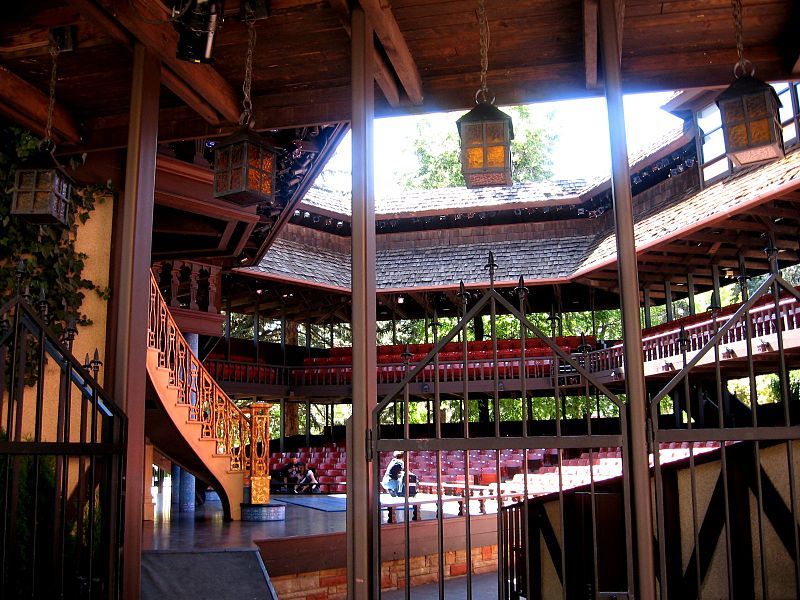
    <summary type="html"><![CDATA[<p><strong><em>The Utah Shakespeare Film Festival is a hallmark of Cedar City, a university town in southern Utah. Over the years, the festival has transformed the town into an oasis of artistic creativity that attracts hundreds of thousands of people and steals the show every summer.</em></strong></p><img src="https://www.intermountainhistories.org/files/fullsize/fbd2aadda1e5b1b4070783687894de78.jpg" alt="Interior of the Adams Memorial Theater, a Replica of the Globe Theatre" /><br/><p>Cedar City, settled by Mormon pioneers in 1851, is located in the southeast Great Basin, a place that one traveler called “a spot of mange,” and affirmed that “no portion of the earth is more lacquered with paltry, unimportant ugliness.” Despite its proximity to the arid landscape, the town of 30,000 residents has blossomed artistically as the home of the Utah Shakespeare Festival. In Cedar City, Shakespeare’s words come to life in the summers, and the impressive festival now attracts over 120,000 people.</p><p>The festival was established in 1961, but its founding was not met without opposition. Fred Adams, the festival’s organizer, saw resistance from the Cedar City Council and the Chamber of Commerce, who “thought it was a really dumb idea.” He eventually received $1,000 as an investment. Despite the budget constraints, the first season’s two-week run in 1962—which included The Merchant of Venice, The Taming of the Shrew, and Hamlet—attracted 3,000 spectators and yielded a $2,000 profit. Adams produced Macbeth in 1964, and Romeo and Juliet first appeared in 1968, a few months before Franco Zeffirelli’s Academy Award-winning film adaptation was released on the big screen. That same year, after the actress playing Juliet refused to climb the balcony on the festival’s makeshift stage because it wobbled, Adams recognized the importance of a permanent theater. Throughout the 1970s, the festival spent $250,000 to construct the Adams Memorial Shakespearean Theatre, an Elizabethan-style, open-air theater that was designed after The Globe Theatre in London.</p><p>The festival’s budget has increased from that initial $1,000 to $7 million, 75 percent of which is raised from ticket sales. A 2012 study determined the economic impact of the festival to be at more than $35 million annually. Many actors have taken part in the festival, and some have achieved fame in recognizable Hollywood roles. Benjamin Bratt, the star of Law and Order, began his career at the festival, and comedian Ty Burrell of Modern Family participated in 1999. As the festival has grown, it has branched out from Shakespeare. For example, since 2010, it has also produced adaptations of Pride and Prejudice, The Diary of Anne Frank, Les Misérables, To Kill a Mockingbird, Into the Woods, Mary Poppins, and The Three Musketeers. </p><p><em><strong><a href="https://www.intermountainhistories.org/items/show/210">For more (including 3 images) view the original article</a></strong></em></p>]]></summary>
    <published>2018-06-08T17:22:38+00:00</published>
    <updated>2026-04-17T19:32:03+00:00</updated>
    <link rel="alternate" type="text/html" href="https://www.intermountainhistories.org/items/show/210"/>
    <id>https://www.intermountainhistories.org/items/show/210</id>
    <author>
      <name>Marc Jonathan Wein, Brigham Young University</name>
    </author>
  </entry>
  <entry>
    <title type="html"><![CDATA[The Egyptian Theatre: A Centerpiece of Culture]]></title>
    <summary type="html"><![CDATA[<p><strong><em>Located in Park City, the home of the Sundance Film Festival, the Egyptian Theatre is a testament of creativity and culture along the Wasatch Front. Inspired by the Egyptomania of the 1920s, the theatre has survived fires and snowstorms to become the artistic center of Utah’s famous ski town. </em></strong></p><img src="https://www.intermountainhistories.org/files/fullsize/a7b586a4a9630490aec6b82bd9a9f703.jpg" alt="Park City Residents Among Ruins of Main Section of Silver Mining Town Shortly After the 1898 Fire" /><br/><p>Founded in 1869 as Parley’s Park City—after LDS apostle Parley P. Pratt—the historic mining town has always valued the arts. Today, Park City is ranked one of the top ten ski resorts in North America and is best known for its slopes and independent films. As the host of the Sundance Film Festival, the largest independent film festival in the United States, the town attracts famous Hollywood faces and up-and-coming filmmakers. Sundance moved to Park City in 1981, but the town’s association with the theatre—the predecessor of film—predates the festival by nearly a century.</p><p>In the late nineteenth century, the Park City Opera House attracted crowds to its live theatrical performances. On June 19, 1898, the “greatest fire in the history of Utah” consumed the town’s commercial district, destroying more than 200 homes and businesses and causing a million dollars’ worth of property damage. The disaster turned Park City into a “fiery furnace” and “practically wiped [it] out of existence.” Residents could not prevent the blaze from reaching the Opera House, but a new artistic venue rose from the ashes. The following year, on the same site, the Dewey Theatre opened its doors. However, in 1916, its roof collapsed under record-breaking snowfall. In 1922, Park City residents constructed a new theatre. Captivated by the Egyptomania that reignited after the discovery of Tutankhamun’s tomb, property managers hired Egyptologist C.R. Berg to supervise the decorations based on scarabs, lotus leaf motifs, and hieroglyphics. It was christened the Egyptian Theatre when it opened on Christmas Day in 1926.</p><p>In 1981, two decades after Park City had reinvented itself as a ski resort town, the theatre became home to the Sundance Film Festival. According to public tax returns, the Egyptian Theatre’s gross revenue exceeded $2.35 million in 2013. Park City’s Egyptian Theatre has withstood snowstorms, the Great Depression, and the exodus of the town’s original mining residents to become a centerpiece of culture in the Intermountain West. Utahns are proud of the artistic contributions the theatre has made throughout the years. For that reason, it is a cultural icon in its own light, a place where films are premiered and stars are born. </p><p><em><strong><a href="https://www.intermountainhistories.org/items/show/207">For more (including 3 images) view the original article</a></strong></em></p>]]></summary>
    <published>2018-06-08T04:10:44+00:00</published>
    <updated>2026-04-17T19:32:02+00:00</updated>
    <link rel="alternate" type="text/html" href="https://www.intermountainhistories.org/items/show/207"/>
    <id>https://www.intermountainhistories.org/items/show/207</id>
    <author>
      <name>Marc Jonathan Wein, Brigham Young University</name>
    </author>
  </entry>
</feed>