<?xml version="1.0" encoding="UTF-8"?>
<feed xmlns="http://www.w3.org/2005/Atom">
  <title type="text">Intermountain Histories</title>
  <updated>2026-04-17T19:32:16+00:00</updated>
  <generator uri="http://framework.zend.com" version="1.12.20">Zend_Feed_Writer</generator>
  <link rel="alternate" type="text/html" href="https://www.intermountainhistories.org/"/>
  <link rel="self" type="application/atom+xml" href="https://www.intermountainhistories.org/items/browse?output=rss2"/>
  <id>https://www.intermountainhistories.org/</id>
  <author>
    <name>Intermountain Histories</name>
    <uri>https://www.intermountainhistories.org</uri>
  </author>
  <link rel="hub" href="https://pubsubhubbub.appspot.com/"/>
  <entry>
    <title type="html"><![CDATA[The Escalante Cross: A Reminder of Utah&#039;s Past]]></title>
    <summary type="html"><![CDATA[<p><strong><em>The Declaration of Independence was not the only progress to be made in America in the year 1776. Spanish explorers Dominguez and Escalante became known as the first Europeans to document travels in what would become Utah Territory. Their initial intention to convert Natives on their journey towards California made way for future explorers to discover the Utah Territory.</em></strong></p><img src="https://www.intermountainhistories.org/files/fullsize/b81d7023fc173daf29504bcf4bd4178b.jpg" alt="Dominguez Plaque" /><br/><p><span style="font-weight:400;">In 1776, two Spanish friars, </span><span style="font-weight:400;">Silvestre Vélez de</span><span style="font-weight:400;"> Escalante and </span><span style="font-weight:400;">Atanasio</span><span style="font-weight:400;"> Dominguez, chose to traverse the American West in search of a northern route to the missions of California. At the time, both Mexico and Spain claimed ownership of the territory. The journey became known for its historical success thanks to Escalante’s journal, which contains the first map of Utah. Beginning the exploration in Santa Fe,  Dominguez and Escalante observed and recorded landmarks that would help future explorers find their way. These recordings also helped governments know and understand the rich opportunities that lay in these lands. The journey was full of dangers for the small group, and they crossed many western states such as Utah, Colorado, and Arizona, among others. The explorers ventured through modern-day Dinosaur National Monument, down through Strawberry, Utah and eventually made their way through Spanish Fork Canyon. This path directly influenced the erection of Escalante’s Cross in Spanish Fork, Utah. </span>
<span style="font-weight:400;">These two Spanish missionaries paved the way for other explorers such as John C. Fremont to encourage The Church of Jesus Christ of Latter-Day Saints to one day settle in Utah. Escalante’s cross, located in Spanish Fork, was dedicated May 1, 1981, sponsored by The Knights of Columbus Father Escalante Council to honor Dominguez and Escalante’s expedition. It was recently restored on October 31, 2015 thanks to a member of the Woodland Hills Scout Troop’s Eagle project. The cross majestically overlooks the entrance to Spanish Fork Canyon and stands brilliantly white against the mountain range beyond. </span>
<span style="font-weight:400;">Today, the site seems like an almost forgotten piece of history. However, one sign remains in the form of a plaque at the base of the cross. It has become a beloved hike here in Utah because of the landscape’s beautiful greenery and various paths leading from the cross. Escalante Cross stands as a reminder to Utah residents of earlier explorers who literally put Utah on the map. </span></p><p><em><strong><a href="https://www.intermountainhistories.org/items/show/733">For more (including 3 images) view the original article</a></strong></em></p>]]></summary>
    <published>2023-04-05T19:50:24+00:00</published>
    <updated>2026-04-17T19:32:16+00:00</updated>
    <link rel="alternate" type="text/html" href="https://www.intermountainhistories.org/items/show/733"/>
    <id>https://www.intermountainhistories.org/items/show/733</id>
    <author>
      <name>Holly Stirling, Brigham Young University</name>
    </author>
  </entry>
  <entry>
    <title type="html"><![CDATA[The Icelander Lighthouse Monument of Spanish Fork: A Tribute to Icelandic Settlers]]></title>
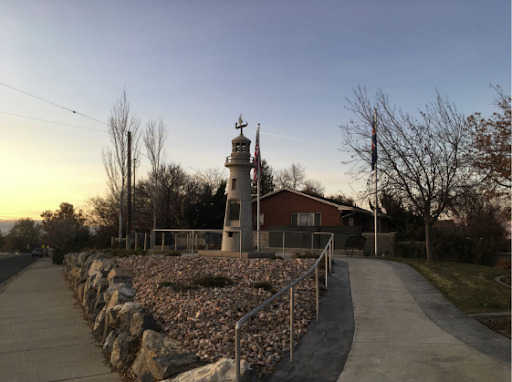
    <summary type="html"><![CDATA[<p><strong><em>A lighthouse monument was erected in Spanish Fork in 1938 to honor the first sixteen permanent Icelandic settlers in the United States. These immigrants came to Utah in 1855 after converting to the Church of Jesus Christ of Latter-day Saints.  </em></strong></p><img src="https://www.intermountainhistories.org/files/fullsize/20df20e0ba5f6d47d3afd8ebd282bad9.jpg" alt="Lighthouse Broad Perspective" /><br/><p>The lighthouse monument in Spanish Fork, Utah, was erected in 1938 to honor the original Icelandic pioneers, the first permanent settlers from that country, who immigrated into the United States in 1855. The monument is a celebration of Icelandic culture and customs. It also celebrates the bravery of those first Icelandic pioneers who crossed the Atlantic in 1854 after their conversion to the Church of Jesus Christ of Latter-day Saints. The structure was unveiled as part of the “Iceland Day” celebrations in 1938. The monument is a miniature lighthouse replica with a Viking ship on the top that references the seafaring for which the Vikings, the Icelanders’ ancestors, were best known. A plaque, which carries the names of the first sixteen Icelandic settlers, accompanies the monument. The first Iceland Day took place in Utah in 1897 to commemorate the settlement of Iceland in 870 CE. Every year from this point on, Iceland Day has been celebrated on the same day as the annual holiday in the Westmann Islands (Vestmannaeyjar), Iceland, from which the first Icelandic pioneers came. </p><p>This monument is a hallmark that has helped foster ever-improving relationships between the Church of Jesus Christ and the Icelandic government. The improving relations made it possible for the Church to renew their missionary efforts in Iceland after not having a permanent presence in the country for over 50 years. In 1975, Bryon T. Geslison and his family would be the first missionaries since 1914 called to serve in Iceland. Because of the missionary efforts initiated by Geslison and his family, the Icelandic government officially recognized the missionary work of the Church in 1983. Ever since then, the relations between the Icelandic government and the Church of Jesus Christ have been very positive and friendly. The importance of the monument has been recognized by local representatives of Utah who, in 2005, started a makeover project to make this monument more similar to one that was erected in the Westmann Islands, Iceland in 2000. The monument in Iceland was erected by the local government to honor the brave men who faced the harsh weather, sea, and other difficulties and emigrated to Utah after “hearing the call to build Zion.” </p><p>Some of the new features of the lighthouse monument in Spanish Fork include a rock brought from the shores of Vestmannaeyjar, where the first pioneers were baptized; bronze plaques that retell the history of Icelanders in Utah; and, a granite monument that lists the names of over 400 Icelanders who settled in Utah between 1855 and World War I. The renewed project was dedicated by President Gordon B. Hinckley, then the president of the Church of Jesus Christ, who commemorated the culture and faith of the Icelandic settlers in his speech</p><p><em><strong><a href="https://www.intermountainhistories.org/items/show/427">For more (including 3 images) view the original article</a></strong></em></p>]]></summary>
    <published>2020-10-07T03:59:58+00:00</published>
    <updated>2026-04-17T19:32:08+00:00</updated>
    <link rel="alternate" type="text/html" href="https://www.intermountainhistories.org/items/show/427"/>
    <id>https://www.intermountainhistories.org/items/show/427</id>
    <author>
      <name>Jessyca K. O. Zanetti, Brigham Young University</name>
    </author>
  </entry>
  <entry>
    <title type="html"><![CDATA[The Dominguez-Escalante Expedition Reaches Utah Valley]]></title>
    <summary type="html"><![CDATA[<p><strong><em>In 1776, a pair of Spanish Franciscan friars set out to find an overland route from New Mexico to California. Their hope was to find a safe path between the difference Catholic missions in the southwestern United States. While they were never able to reach California, their expedition provided valuable map information for future travelers and part of their documented route became part of the Old Spanish Trail, a trade route that was frequently used for years afterwards. They were also the first of European ancestry to set eyes on the Utah Valley. </em></strong></p><img src="https://www.intermountainhistories.org/files/fullsize/a55569ce8c30b3a800d575dcaea85131.jpg" alt="Escalante Etching " /><br/><p>In the summer of 1776, Atanasio Domínguez and Silvestre Vélez de Escalante (along with a team of other men and Native American guides that would join them later) set out from Santa Fe, New Mexico to find an alternative route to the other Spanish missions in California along the Monterey coast. The local settlers already knew a path through modern-day Arizona, but the Grand Canyon and hostile native tribes forced the Spanish to look for an alternative route. Their trip through the southwest was carefully documented, and they often refer to the rugged landscape, local plant and animal life, and the potential for settlement by anybody who chose to follow them. </p><p>By September of 1776 the party reached Utah Valley where the mouth of Spanish Fork Canyon opens up to the wider valley. One of their native guides, Silvestre, was a member of a local tribe and this connection provided the party with safe passage and a small opportunity for trade. While this moment was important (as they were the first Europeans to see the valley), it wasn’t the end goal of their expedition. A few days later, the party continued their journey to the southwest, but not before they made the observation that, “[the area consists] of flat meadows with good land for farming; it carries more water than the foregoing two, has a larger poplar grove and meadows of good soil which can be irrigated—all good for two or even three good settlements.” Dominguez and Escalante would later encounter trouble on their journey and have to return early to New Mexico, never reaching California.  </p><p>In the 1920s, residents of Spanish Fork wanted to commemorate the arrival of the expedition to Utah Valley. A monument was erected and later dedicated in January of 1923. The Bronze tablet that accompanies it is inscribed with further information from the expedition’s visit to the valley. In 1981 a large white cross was constructed overlooking the valley, a symbolic representation of the arrival of the Spanish friars to the area. The site is accessible by hiking trail above the Spanish Fork reservoir.     </p><p><em><strong><a href="https://www.intermountainhistories.org/items/show/35">For more (including 5 images) view the original article</a></strong></em></p>]]></summary>
    <published>2017-03-20T16:43:17+00:00</published>
    <updated>2026-04-17T19:31:58+00:00</updated>
    <link rel="alternate" type="text/html" href="https://www.intermountainhistories.org/items/show/35"/>
    <id>https://www.intermountainhistories.org/items/show/35</id>
    <author>
      <name>Addison Blair, Brigham Young University </name>
    </author>
  </entry>
  <entry>
    <title type="html"><![CDATA[Spanish Fork Sugar Beet Factory ]]></title>
    <summary type="html"><![CDATA[<p><strong><em>The tall smokestack of the (mostly) abandoned sugar beet factory is impossible to miss on the interstate between Spanish Fork and Payson. In it’s heyday, the factory operated as a critical lynchpin in a thriving sugar beet economy that stretched across the valley. Now serving as a little more than a warehouse for a pallet business and a popular shooting location for local photographers, the factory remains one of Spanish Fork’s most recognizable landmarks. </em></strong></p><img src="https://www.intermountainhistories.org/files/fullsize/f1e3387a4003d356d99ff14012de03cd.jpg" alt="Sugar Factory Exterior " /><br/><p>While it may seem odd to anybody familiar with Utah Valley, the corridor of towns from Spanish Fork to Lehi operated as one of the most productive sugar beet processing operations in the country. In it’s early days, it was widely sponsored by the Church of Jesus Christ of Latter-day Saints to help the Church generate an alternative source of income through which they could fund other projects. To this end, they put up a significant amount of money towards the construction of a factory in Lehi, Utah that acted as the “hub” of the regional sugar industry. </p><p>For a time, sugar beets provided a substantial source of income for the valley. The success of the Lehi plant led to the construction of several other plants in Utah and a couple in Idaho; eventually, these factories would come together to form the Utah-Idaho Sugar Company, the business entity that controlled most of the sugar beet industry in the intermountain west. Business was good until the end of World War I, when a catastrophic combination of plummeting crop prices and widespread agricultural blight dealt sever damage to the industry. As a result, factories were dismantled or moved to new locations; the Nampa, Idaho infrastructure was effectively moved to the current Spanish Fork Location.</p><p>The Spanish Fork factory functioned for almost 50 years (from 1916-1952) until broader changes in the sugar industry—especially the rise of cheap and more widely produced cane sugar—brought the relevance of Utah’s sugar beet project to a halt. Today, Wasatch Pallet owns the factory, which uses it as a warehouse, repair facility, and construction area for their business. The company still allows guests to tour certain areas of the factory, though sections of the facility have been condemned and aren’t safe for observation. It’s become a popular spot for local photographers and history buffs who want to see up close a relic of Utah’s early economic history.        </p><p><em><strong><a href="https://www.intermountainhistories.org/items/show/33">For more (including 3 images) view the original article</a></strong></em></p>]]></summary>
    <published>2017-03-20T16:36:34+00:00</published>
    <updated>2026-04-17T19:31:58+00:00</updated>
    <link rel="alternate" type="text/html" href="https://www.intermountainhistories.org/items/show/33"/>
    <id>https://www.intermountainhistories.org/items/show/33</id>
    <author>
      <name>Addison Blair, Brigham Young University </name>
    </author>
  </entry>
</feed>