<?xml version="1.0" encoding="UTF-8"?>
<feed xmlns="http://www.w3.org/2005/Atom">
  <title type="text">Intermountain Histories</title>
  <updated>2026-04-17T19:32:12+00:00</updated>
  <generator uri="http://framework.zend.com" version="1.12.20">Zend_Feed_Writer</generator>
  <link rel="alternate" type="text/html" href="https://www.intermountainhistories.org/"/>
  <link rel="self" type="application/atom+xml" href="https://www.intermountainhistories.org/items/browse?output=rss2"/>
  <id>https://www.intermountainhistories.org/</id>
  <author>
    <name>Intermountain Histories</name>
    <uri>https://www.intermountainhistories.org</uri>
  </author>
  <link rel="hub" href="https://pubsubhubbub.appspot.com/"/>
  <entry>
    <title type="html"><![CDATA[Slave Trade on the Old Spanish Trail]]></title>
    <summary type="html"><![CDATA[<p><strong><em>Indigenous slavery in the United States has deep roots in native societies, and Spanish and Mexican traders took advantage of that in what became Utah Territory. </em></strong></p><img src="https://www.intermountainhistories.org/files/fullsize/db511dc6fc44435eee5a2e980a5d637d.jpg" alt="Old Spanish Trail" /><br/><p>Slavery existed across the precontact North American continent even before the first Europeans set foot within the confines of modern Utah. It was an integral part of indigenous societies; captives were regularly taken as spoils of war and thereafter either kept to demonstrate the captor’s power, traded to establish peaceful relations with other tribes, or incorporated into the captor’s tribe to replace lost family members.
European colonization and expansion introduced a demand for large numbers of indentured servants or enslaved laborers which the indigenous slave trade adapted to meet. Indigenous slavers equipped with European guns and horses preyed upon neighboring tribes, fueling the depopulation of indigenous peoples through slave raiding, warfare, and disease transmission.
Spain officially declared slavery illegal in 1811 but did virtually nothing to eradicate it, and Spanish colonizers sometimes even perpetuated it. Religious fervor from the Reformation further added difficulty: Spanish and other Europeans believed indigenous peoples needed to be “saved” by the “civilizing” influence of Christianity and Western Europe. Claiming charity, colonizers bought and sold their fellow human beings on a grand scale to build new empires.
Although technically illegal under Spanish and Mexican rule, the indigenous slave trade flourished in the Great Basin region that became Utah Territory. Ute enslavers raided far and wide as well as close to home for captives whom they bartered to New Mexican traders plying the Old Spanish Trail. The trade in enslaved persons constituted a significant portion of the region’s economy.
When members of The Church of Jesus Christ of Latter-day Saints (sometimes called Mormon pioneers) arrived in the Great Basin in 1847, they entered a part of the country steeped in the indigenous slave trade. While a few Latter-day Saints themselves claimed ownership of enslaved Black Americans whom they brought to the territory, other Latter-day Saints, sometimes from the American northeast or from Europe, opposed slavery and favored abolition. Euro-American Latter-day Saints initially avoided dealing with slavers, who tortured or killed their captives to excite pity from the settlers. 
After some Latter-day Saints tried rescuing a few children from captivity by trading for them, Church leaders encouraged the strategy, and Latter-day Saints’ involvement in the indigenous slave trade became complicit. Motivated by a paternalistic desire to save indigenous captives from their captors, the need for enslaved labor, and religious zeal, Church leadership urged members to buy as many indigenous slaves as they could.
Mormon efforts to save indigenous slaves from destitution and make them “pure and delightsome” frequently met no success. The mortality rate for child slaves was exceedingly high, and very few of those taken into Mormon households even survived to maturity. It was rare for Latter-day Saint men to marry indigenous women, and only a few indigenous men are known to have married white women.
Under early Utah territorial law, Latter-day Saints could legally acquire indigenous indentures and keep them for up to twenty years as long as they allowed their charges to attend school for three months each year. Slavery in Utah Territory was outlawed on June 19, 1862, when Congress abolished slavery in all federal territories.</p><p><em><strong><a href="https://www.intermountainhistories.org/items/show/587">For more (including 3 images) view the original article</a></strong></em></p>]]></summary>
    <published>2022-04-09T09:19:55+00:00</published>
    <updated>2026-04-17T19:32:12+00:00</updated>
    <link rel="alternate" type="text/html" href="https://www.intermountainhistories.org/items/show/587"/>
    <id>https://www.intermountainhistories.org/items/show/587</id>
    <author>
      <name>Jordan Pueblo, Brigham Young University</name>
    </author>
  </entry>
  <entry>
    <title type="html"><![CDATA[The Confederate Connections of Dixie State University]]></title>
    <summary type="html"><![CDATA[<p><strong><em>A Dixie State University alumni said, “I have been asked in each of my 7 post-grad interviews, ‘Where is Dixie?’” After all, who could know it was in southern Utah?</em></strong></p><img src="https://www.intermountainhistories.org/files/fullsize/1e2f92d9224feef966957a918dd7745b.jpg" alt="Dixie State University" /><br/><p><span style="font-weight:400;">“The name ‘Dixie’ is one of those distinctive things about this part of Utah,” historian Andrew Karl Larson wrote in his 1962 history of the Virgin River Basin of southern Utah. “It is a name much used, indeed overused, it would seem to the casual visitor. Businesses use it; its newspapers have been called after it; its junior college is named for it.”</span>
<span style="font-weight:400;">As of 2021, that “junior college” is Dixie State University—though likely not for much longer.</span>
<span style="font-weight:400;">In the mid-nineteenth century, members of The Church of Jesus Christ of Latter-day Saints grew cotton in southern Utah as part of a Church project to make Utah economically self-sufficient. Although the majority of settlers were from the northeastern United States, a community lore developed claiming many were from the American South, including former slave owners and overseers, chosen because they were familiar with cultivating cotton. The settlers dubbed the region “Dixie,” allegedly in reference to the similarly sunny, cotton-growing South. During the Civil War, although Church prophet Brigham Young assured the United States that “Utah has not seceded, but is firm for the Constitution,” a small number of Dixie settlers sympathized with their namesake. For example, local bishop Robert Dockery Covington rejoiced when he heard about Confederate victories. In a similarly sectional spirit, in April 1868—during Reconstruction—local newspaper </span><i><span style="font-weight:400;">Our</span></i> <i><span style="font-weight:400;">Dixie Times</span></i><span style="font-weight:400;"> ridiculed a Republican senator for “vot[ing] for negro equality.”</span>
<span style="font-weight:400;">The “junior college” was founded in 1911 as Dixie Academy. In 1916 it became Dixie Normal College and later Dixie College, even though school founder and trustee Edward Hunter Snow seemed unlikely to be a Confederate sympathizer. Snow was a northerner, and when he had preached as a Latter-day Saint missionary in the South years earlier, the Ku Klux Klan threatened to kill him.</span>
<span style="font-weight:400;">However, after Snow’s death in 1932, the campus community increasingly used “Dixie” to mean more than cotton and sunny skies. In 1952, Dixie College changed its mascot from “the Flyers” to “Rodney the Rebel.” In 1959, the community embraced the Confederate battle flag as a secondary school symbol. Then, in 1966, the yearbook’s name changed from </span><i><span style="font-weight:400;">The Dixie</span></i><span style="font-weight:400;"> to </span><i><span style="font-weight:400;">The Confederate</span></i><span style="font-weight:400;">.</span>
<span style="font-weight:400;">For the rest of the century, student costumes, activities, and displays made light of slavery and embraced the Confederacy. Students wore blackface as late as the 1990s and organized “slave days” and mock slave auctions. Confederate battle flags adorned school spirit imagery. These ongoing embraces of the Dixie-Confederate connection paralleled the broader mid-twentieth-century Dixiecrat campaign against the Civil Rights Movement.</span>
<span style="font-weight:400;">The school began moving away from Confederate imagery when it retired the battle flag as a school emblem in 1994. In 2005, it replaced Rodney the Rebel as a mascot, and it officially dropped the “Rebels” nickname in 2007 in favor of becoming the Red Storm and later the Trailblazers.</span>
<span style="font-weight:400;">Yet the Dixie name stayed. When the college transitioned into a university, the board of trustees voted unanimously on January 13, 2013 to name the school Dixie State University, despite growing grassroots interest in dropping “Dixie.” Multiple donors said they would withdraw funding if “Dixie” wasn’t in the name, and chairman Steve Caplin insisted, “No one on this board or in this administration is aware of any racial discrimination in our past.”</span>
<span style="font-weight:400;">Jeanetta Williams, president of the Salt Lake City chapter of the NAACP and a Black woman, was stunned. “Have they not seen all the blackface, the mock slave auction?” she asked.</span>
<span style="font-weight:400;">In 2020, pressure again mounted against the name during a nationwide reckoning on racial justice, and the university commissioned an impact study on “Dixie.” Released on December 13, the study revealed that over a third of out-of-state prospective students believed the Dixie name hurt the university’s reputation. Some expressed discomfort with the idea of wearing Dixie State memorabilia. The next day, the board of trustees voted unanimously to recommend the university change its name.</span>
<span style="font-weight:400;">Authorizing a name change fell to Utah’s state legislature, but some representatives and members of the community were reluctant, and others were hostile. While the legislature and community deliberated, the university’s Student Executive Council wrote an op-ed pleading for a new name. They quoted an anonymous alumni who reported,</span>
<p style="margin-left:50px;"><span style="font-weight:400;">I have been asked in each of my seven post-grad interviews, ‘Where is Dixie?’ …My first day at each of [three] jobs has been explaining the Dixie name as quickly as possible and only getting neutral or negative responses.</span>
<span style="font-weight:400;">On March 4, Utah’s legislature finally passed a bill authorizing a name change, and on March 16 Governor Spencer Cox signed the bill into law. On June 14, 2021, a university committee recommended “Utah Polytechnic State University” as a new name, but community backlash was nearly immediate and trenchantly hostile to a name some argued was too reminiscent of nineteenth-century polygamy. By June 29, the committee withdrew its polytechnic suggestion and instead proposed “Utah Tech University,” which the university decided to move forward with, pending approval from the Utah state board of higher education, legislature, and governor.</span>
<span style="font-weight:400;">After more than a century, the name “much used, indeed overused,” would be used one time less.</span></p><p><em><strong><a href="https://www.intermountainhistories.org/items/show/496">For more (including 7 images) view the original article</a></strong></em></p>]]></summary>
    <published>2021-09-18T08:24:43+00:00</published>
    <updated>2026-04-17T19:32:10+00:00</updated>
    <link rel="alternate" type="text/html" href="https://www.intermountainhistories.org/items/show/496"/>
    <id>https://www.intermountainhistories.org/items/show/496</id>
    <author>
      <name>Makoto Hunter, Brigham Young University</name>
    </author>
  </entry>
  <entry>
    <title type="html"><![CDATA[The Rebels of Dixie State]]></title>
    <summary type="html"><![CDATA[<p><strong><em>In the 1980s, St. George locals commissioned a Utah artist to create a larger version of an earlier work depicting two Union soldiers. There was one request: change the soldiers to Confederates.</em></strong></p><img src="https://www.intermountainhistories.org/files/fullsize/75e7666a3274b5f2fe5a5ecb51ac8965.jpg" alt="The Rebels in Leeds" /><br/><p><span style="font-weight:400;">A statue on Dixie State College campus depicted a scene right out of American history: a Civil War soldier rode on horseback through a battlefield, reaching down to grab a comrade by the arm and lift him out of danger. The artist, Jerry Anderson of southern Utah, said his message was “one man helping another” and that the statue “represented every war in every country.”</span>
<span style="font-weight:400;">For a growing proportion of the St. George community in 2012, though, three sticking points of the statue overshadowed this supposed message. The statue’s name was </span><i><span style="font-weight:400;">The Rebels</span></i><span style="font-weight:400;">, the boys depicted were not Union soldiers, and the rider brandished a large Confederate battle flag.  Why, people asked, was this Confederate statue on the campus of Dixie State College in St. George, Utah?</span>
<span style="font-weight:400;">The story began in 1982 when Anderson finished his latest work: a small statue titled </span><i><span style="font-weight:400;">Retreat</span></i><span style="font-weight:400;">. Based on the song “Two Little Boys,” it depicted two Union soldiers in a pose similar to </span><i><span style="font-weight:400;">The Rebels</span></i><span style="font-weight:400;">, one reaching down to rescue another. In 1983, a group of St. George residents commissioned Anderson to create a similar work at a larger scale, with one change requested: replace the Union soldiers with Confederates. The commissioners wanted to donate the statue to the city of St. George, and they told Anderson they wanted it to visually relate to Dixie College’s mascot: Rodney the Rebel. Formerly the Flyers, the mascot became Rodney the Rebel in the 1950s, during the era of Southern Dixiecrat revivals of Confederate imagery to promote segregation (see tour introduction “Confederate Imagery in the Intermountain West”). Anderson complied with the request.</span>
<span style="font-weight:400;">After four years of work, Anderson completed the statue, and it was dedicated at the Dixie Center Plaza on March 14, 1987 as part of a Dixie “Secession” Fair held as a fundraiser by the Chamber of Commerce (see “The Dixie ‘Secessions’ of 1987 and 1988”). Then called </span><i><span style="font-weight:400;">Two Little Boys</span></i><span style="font-weight:400;">, the statue later came to be known by its current name, </span><i><span style="font-weight:400;">The Rebels</span></i><span style="font-weight:400;">.</span>
<i><span style="font-weight:400;">The Rebels</span></i><span style="font-weight:400;"> passed the next two decades seemingly quietly. When the city built a new convention center, it sold the old center’s property to the state of Utah, which added the land to Dixie State College.</span>
<span style="font-weight:400;">In 2005, the Dixie mascot changed to the Red Storm, and later again to Brooks the Bison (the current mascot), but </span><i><span style="font-weight:400;">The Rebels</span></i><span style="font-weight:400;"> kept its place on campus and its name.</span>
<span style="font-weight:400;">In 2012, however, controversy thrust </span><i><span style="font-weight:400;">The Rebels</span></i><span style="font-weight:400;"> into the statewide spotlight. Dixie State College was in the middle of a four-year process to transition into a university by 2013, and university status would require a new name for the institution. While some favored Dixie State University as an obvious choice, others requested a name that did not include “Dixie.” Newspaper editorials, students, and other community members criticized the name “Dixie” for its ties to the Confederate States of America, itself from the “Dixie” American South for which southern Utah had been nicknamed, and advocates cited </span><i><span style="font-weight:400;">The Rebels</span></i><span style="font-weight:400;"> as evidence of a connection between the Dixie name and Confederate imagery. By late November 2012, community members staged anti-racism rallies around the statue, and in one demonstration a protester threw a sheet over the statue’s Confederate flag. (For more, see <a href="https://www.intermountainhistories.org/items/show/496?tour=38&index=4">“The Confederate Connections at Dixie State University.”</a>)</span>
<span style="font-weight:400;">On December 6, 2012, Dixie State College moved the statue into storage as a precaution against damage or vandalism. Dixie State President Stephen Nadauld said, “The statue has become a lighting rod… We are nervous something might happen to the statue.”</span>
<span style="font-weight:400;">Anderson criticized the decision and accused the college of being “wusses.” In an interview with local news, Anderson said the college “should have kept it up,” and he used racially charged language to make his point. “Let the black people, or whoever is fighting against it, try to disfigure it in some way, and put them in jail where they belong,” he said. “They don’t stand up for what we, in St. George, believe in.”</span>
<i><span style="font-weight:400;">The Rebels</span></i><span style="font-weight:400;"> stayed in storage for two years while the college became a university and investigated the statue’s ownership. Anderson’s clients originally donated the statue to the city of St. George, and while the state of Utah had purchased the land it sat on, the college was unsure if that included the statue.</span>
<span style="font-weight:400;">Two years later, in 2015, a judge finally declared Dixie State University the legal owners of </span><i><span style="font-weight:400;">The Rebels</span></i><span style="font-weight:400;">. On January 13, Dixie State announced it would move the statue out of storage and return it to Anderson in exchange for him donating another work to display on campus. When asked about the statue’s departure from Dixie State campus, Anderson said, “You've got to make everybody happy, is what I've learned from it all.”</span>
<span style="font-weight:400;">Anderson moved the statue to his personal gallery in Leeds, Utah, where he displayed it by the front door as recently as February 2020. By January 2021, Anderson gave </span><i><span style="font-weight:400;">The Rebels</span></i><span style="font-weight:400;"> to an unidentified friend, where it most likely remains.</span></p><p><em><strong><a href="https://www.intermountainhistories.org/items/show/495">For more (including 5 images) view the original article</a></strong></em></p>]]></summary>
    <published>2021-09-18T07:47:32+00:00</published>
    <updated>2026-04-17T19:32:10+00:00</updated>
    <link rel="alternate" type="text/html" href="https://www.intermountainhistories.org/items/show/495"/>
    <id>https://www.intermountainhistories.org/items/show/495</id>
    <author>
      <name>Makoto Hunter, Brigham Young University</name>
    </author>
  </entry>
  <entry>
    <title type="html"><![CDATA[The Dixie “Secessions,” 1987–1988]]></title>
    <summary type="html"><![CDATA[<p><strong><em>A presidential inauguration, feast, and slave auction attended Dixie’s springtime secession from the Union. But it wasn’t 1861 or south of the Mason–Dixon line—it was March 13, 1987 in St. George, Utah.</em></strong></p><img src="https://www.intermountainhistories.org/files/fullsize/1ff8daacca6fd81435544f635c7c5808.jpg" alt="Confederate header" /><br/><p><span style="font-weight:400;">“The old South will rise again,” declared the </span><i><span style="font-weight:400;">Washington County News</span></i><span style="font-weight:400;"> on March 13, 1987. “Rebels everywhere prepare to secede from the state in a two-day celebration of Utah’s Dixie,” a nickname for southern Utah.</span>
<span style="font-weight:400;">Part county fair, part gala, and part fundraiser, the Dixie “Secession” of 1987 was the brainchild of Lon Henderson, a St. George resident who the Chamber of Commerce had tasked with putting together a fundraiser. Rejecting the Chamber’s initial suggestion of a coupon book, Henderson proposed a “once-a-year, gala celebration-type activity” with Secession as the unifying theme, inspired by the region’s nickname and the local college’s Rebel mascot.</span>
<span style="font-weight:400;">Although the Chamber of Commerce liked the idea, it did not feel confident about hosting such a large event on its own. But the city government of St. George had also asked Henderson to organize a fundraiser on its behalf, and he realized he could solve one problem with another. Henderson invited the city to join the enterprise and later Dixie College and the Washington County School District as well. Together, the four groups agreed to jointly sponsor the Secession, and they tasked a “Secession committee” with organizing the event. Advertisements sponsoring the Secession appeared in newspapers, television, and radio, and local businesses tied into the Secession, promising discounts for customers who displayed official Secession pin-back buttons.</span>
<span style="font-weight:400;">The two-day “celebration package” spanned Friday through Saturday, March 13 and 14, and was large in scope. Some events seemed like they could come from any weekend fair, such as the golf tournament, inauguration of Dixie College president Douglas Alder, country music concert with Mel Tillis and Dottie West, and hot air balloon race. But other activities embraced the aesthetics of the Secession name. At 11:00 AM on Saturday, a bronze statue of two Confederate soldiers was dedicated at the Dixie Center Plaza (see <a href="https://www.intermountainhistories.org/items/show/495?tour=38&index=3">“</a></span><a href="https://www.intermountainhistories.org/items/show/495?tour=38&index=3"><i><span style="font-weight:400;">The Rebels</span></i></a><span style="font-weight:400;"><a href="https://www.intermountainhistories.org/items/show/495?tour=38&index=3"> of Dixie State”</a> for more). Later, at 11:45 AM in Worthen Park, Utah Governor Norman Bangerter read a secession proclamation, announcing that St. George would be “officially seceded” from Utah from noon until midnight. Accompanied by the Dixie Middle School Band, Bangerter fired an “old Dixie cannon” at 12:00 PM to officially begin the festivities.</span>
<span style="font-weight:400;">A “Southern Utah State Fair” offered rides on hot air balloons, a greased pig chase, and a chance to plunge Mayor Karl Brooks at a dunking booth. Simultaneously, a “Southern barbecue” served barbecued meats, corn bread, and green salad while performers sang jazz and country music. An auction also started at noon, offering over a hundred items including a microwave, a keyboard, a chainsaw—and “slaves.” The </span><i><span style="font-weight:400;">Washington County News</span></i><span style="font-weight:400;"> wrote, “Slaves will also be sold at the auction.” These “slaves” were local community members, and “purchasing” them at the auction entitled one to “the services they will provide.” For example, Mayor Karl Brooks put himself up for sale and offered to “assign the city to perform a service.” Royce Jones, executive vice president of the Chamber of Commerce, promised to “mow a lawn.” Finally, the Secession closed with the evening “Dixie Ball,” a dance themed after the popular 1939 film </span><i><span style="font-weight:400;">Gone With the Wind</span></i><span style="font-weight:400;">. Plus, whoever wore the “best overall” “Southern costume” was promised a special prize: a $400 VCR with a copy of </span><i><span style="font-weight:400;">Gone With the Wind</span></i><span style="font-weight:400;">.</span>
<span style="font-weight:400;">Including both advertising sponsorships and ticket fees, the 1987 Secession took in a little over $40,000 in revenue, but the cost of putting on the event was so high the Secession’s four organizing institutions made only about $15,000 in profit. Nevertheless, they resolved to make the tradition annual, and on February 12, 1988, Mayor Brooks publicly proclaimed that on March 12, Utah’s Dixie would secede “from everything or anything you want,” including “snow, fog, the phone, the kids.” Henderson helped unfurl a forty-foot-long Confederate battle flag over St. George Boulevard, and members of the Utah National Guard fired a rifle salute.</span>
<span style="font-weight:400;">The 1988 Secession added new events: a 10K run, a volleyball tournament, and a second dance intended for college students called “The Rebellion.” Governor Bangerter stepped aside as “president” of the Secession, replaced by television news anchor Dick Norse.</span>
<span style="font-weight:400;">TV and radio commercials once again publicized the Secession, made possible  in 1988 by John H. Morgan, president of Utah Resources International, Inc. In exchange for including a plug for his St. George Hilton Inn, Morgan donated nearly $30,000 of advertising time to the Secession. One ad declared, “Dixie is Rising again. And we are rebelling. Rebelling against crime, ignorance, sloth, and idleness. And we’re building a great community.”</span>
<span style="font-weight:400;">Despite the excitement, the “annual” tradition did not take. 1988 was the last time Utah’s Dixie “seceded.”</span></p><p><em><strong><a href="https://www.intermountainhistories.org/items/show/494">For more (including 9 images&#32;&amp;&#32;1 audio file) view the original article</a></strong></em></p>]]></summary>
    <published>2021-09-18T06:15:02+00:00</published>
    <updated>2026-04-17T19:32:10+00:00</updated>
    <link rel="alternate" type="text/html" href="https://www.intermountainhistories.org/items/show/494"/>
    <id>https://www.intermountainhistories.org/items/show/494</id>
    <author>
      <name>Makoto Hunter, Brigham Young University</name>
    </author>
  </entry>
  <entry>
    <title type="html"><![CDATA[Mary Mountain and Adoptions of Native Children in Utah Territory]]></title>
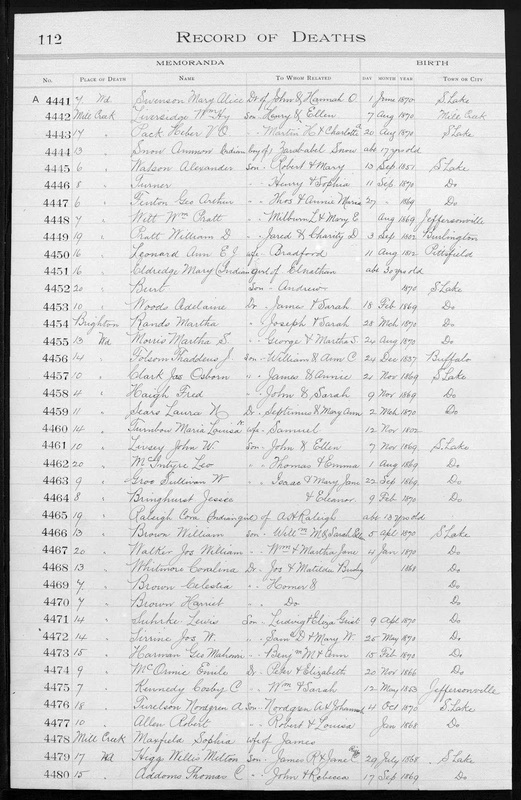
    <summary type="html"><![CDATA[<p><strong><em>A Latter-day Saint family adopted Mary Mountain under the “Act for the Further Relief of Indian Slaves and Prisoners.” Many families in the 1850s claimed this policy in order to justify their actions of legally indenturing indigenous children. Mary Mountain’s story illustrates the effects of this act, which many native children commonly experienced.</em></strong></p><img src="https://www.intermountainhistories.org/files/fullsize/c17e79facb4b24b93731db58d42269ab.jpg" alt="Record of Mary Mountain’s death." /><br/><p>Beginning with their 1847 arrival in the Great Basin and continuing through the Civil War era, Latter-day Saint settlers adopted (though legal documents of the time used the term “indentured”) indigenous children by purchasing them from slave-trading tribes such as the Utes. Mary Mountain represents one of many native children indentured according to the “Act for the Further Relief of Indian Slaves and Prisoners” passed by the Legislative Assembly of the Territory of Utah in 1851. This act legalized the indentured servitude of indigenous children in order to rescue them from Ute captivity. Another intention for this act was to redeem the children by encouraging them to adopt Christian beliefs and thereby transform into what Book of Mormon scripture describes as “a pure and a delightsome people.”</p><p>Through this act, any white settler living in Utah Territory with an “Indian prisoner, child, or woman, in [their] possession, whether by purchase or otherwise” could receive approval by a probate judge to indenture the child up to twenty years. Those involved agreed to send children between the ages of seven and sixteen to school for three months of the year. In his proclamation regarding the “Act for Further Relief,” Brigham Young declared that although they should treat indigenous people with humanity, they must not “elevate them... to an equality with those whom nature and nature's God has indicated to be their masters, their superiors.”</p><p>Ruth and Elnathan Eldredge adopted Mary Mountain in 1849 after Elnathan found her standing alone after a skirmish between the Timpanogos tribe and the Mormon militia. Although her date of birth remains unknown, the Eldredges claimed Mary was around nine years old when they found her; they also gave her the name “Mary Mountain.” Mary’s biography reveals that the Eldredges treated her well as she learned to set the table, fetch water from the stream, and tend to the Eldredges’ baby. Although the Eldredges adopted Mary, Ruth Eldredge recorded that she was “solid and dependable in practical things, but not a daughter for solace and comfort in things near her heart.” As a consequence of isolation from her native culture, Mary grew to fear members of her own tribe and ran and hid whenever they passed by the Eldredge home. Even as Mary grew older and indigenous men attempted to court her, she would have nothing to do with them, and when white men came to court her, Elnathan Eldredge advised against it due to her indigenous heritage.</p><p>Mary Mountain died from tuberculosis around the age of thirty and was buried in the Salt Lake City Cemetery. Unfortunately, many indigenous children adopted into Latter-day Saint homes also faced early deaths from exposure to European pathogens. The “Act for the Further Relief of Indian Slaves and Prisoners” represents a unique point in Utah’s history, combining hopeful intentions with sometimes fatal results.</p><p><em><strong><a href="https://www.intermountainhistories.org/items/show/407">For more (including 3 images) view the original article</a></strong></em></p>]]></summary>
    <published>2020-03-17T01:32:45+00:00</published>
    <updated>2026-04-17T19:32:08+00:00</updated>
    <link rel="alternate" type="text/html" href="https://www.intermountainhistories.org/items/show/407"/>
    <id>https://www.intermountainhistories.org/items/show/407</id>
    <author>
      <name>Taylor Tree, Brigham Young University</name>
    </author>
  </entry>
</feed>