<?xml version="1.0" encoding="UTF-8"?>
<feed xmlns="http://www.w3.org/2005/Atom">
  <title type="text">Intermountain Histories</title>
  <updated>2026-04-17T19:32:17+00:00</updated>
  <generator uri="http://framework.zend.com" version="1.12.20">Zend_Feed_Writer</generator>
  <link rel="alternate" type="text/html" href="https://www.intermountainhistories.org/"/>
  <link rel="self" type="application/atom+xml" href="https://www.intermountainhistories.org/items/browse?output=rss2"/>
  <id>https://www.intermountainhistories.org/</id>
  <author>
    <name>Intermountain Histories</name>
    <uri>https://www.intermountainhistories.org</uri>
  </author>
  <link rel="hub" href="https://pubsubhubbub.appspot.com/"/>
  <entry>
    <title type="html"><![CDATA[Founding of the Utah People’s Party]]></title>
    <summary type="html"><![CDATA[<p><strong><em><span style="font-weight:400;">19th-century tensions between members of the Church of Jesus Christ of Latter-day Saints and opponents of the church in Utah led to the creation of two political parties in 1870, the People’s Party and the Liberal Party. The founding of these parties was controversial in that members of the Church flooded their opponents’ meeting in order to form their own party. </span></em></strong></p><img src="https://www.intermountainhistories.org/files/fullsize/59e45fffcfef628985ad3c07fba0226b.jpg" alt="William Godbe" /><br/><p><span style="font-weight:400;">In 1870, tension between the members of the Church of Jesus Christ of Latter-day Saints and non-members living in Utah was high. Church members voted as a block, which made it nearly impossible for non-members of the church to find a voice in government through traditional democratic means. </span>
<span style="font-weight:400;">The foundation of what some called the New Movement, or the Godbeites aggravated the tensions. The Godbeites were former members of the LDS Church, newfound spiritualists, and reformists. They were a unique splinter group within the Church who wanted to reform the Church rather than destroy it, as many of its enemies hoped to do. The Godbeites preached education and reform to Utah’s LDS and non-LDS residents as well as to the federal officials in the state. </span>
<span style="font-weight:400;">The Godbeites gained little traction against the the Church of Jesus Christ of Latter-day Saints, which maintained a large majority of the population in Utah, but it did capture the attention of non-members who sought to create a coalition to counter church political dominance. Godbeites joined non-member businessmen, miners, and others unaffiliated with the Church, bound by little other than their goal of disrupting the dominance of the Church of Jesus Christ in political matters. </span>
<span style="font-weight:400;">On the evening of February 10, 1870, the Godbeites and their partners gathered at the Walker Dry Goods Store on the corner of 3rd South and Main Street in Salt Lake City, Utah. The Godbeites and their new allies intended to form a new political party—one for the “People” as they advertised it. Church members caught word. Editors of the Deseret News and other church leaders organized a protest. Many members showed up at the meeting and managed to get in the doors before anyone else. They occupied all the seats, elected their own candidates, and formed a new party, calling themselves the “People’s Party” as a tongue-in-cheek reference to the Godbeites earlier advertisements. </span>
<span style="font-weight:400;">After their peaceful protest, the Saints left and the non-members organized the “Liberal Party.” One member of the new party remarked that the move by LDS leaders to flood their meeting was the “cleverest thing.” Luckily, the event did not devolve into violence, but the tension between these two parties would continue for their two decades of existence. Newspapers as far away as Sacramento, California wrote about the tension, predicting incorrectly that conflict between the competing factions spelled “impending doom.”</span></p><p><em><strong><a href="https://www.intermountainhistories.org/items/show/788">For more (including 4 images) view the original article</a></strong></em></p>]]></summary>
    <published>2024-03-02T01:46:51+00:00</published>
    <updated>2026-04-17T19:32:17+00:00</updated>
    <link rel="alternate" type="text/html" href="https://www.intermountainhistories.org/items/show/788"/>
    <id>https://www.intermountainhistories.org/items/show/788</id>
    <author>
      <name>Elle Morgan, Brigham Young University</name>
    </author>
  </entry>
  <entry>
    <title type="html"><![CDATA[The B’nai Israel Cemetery]]></title>
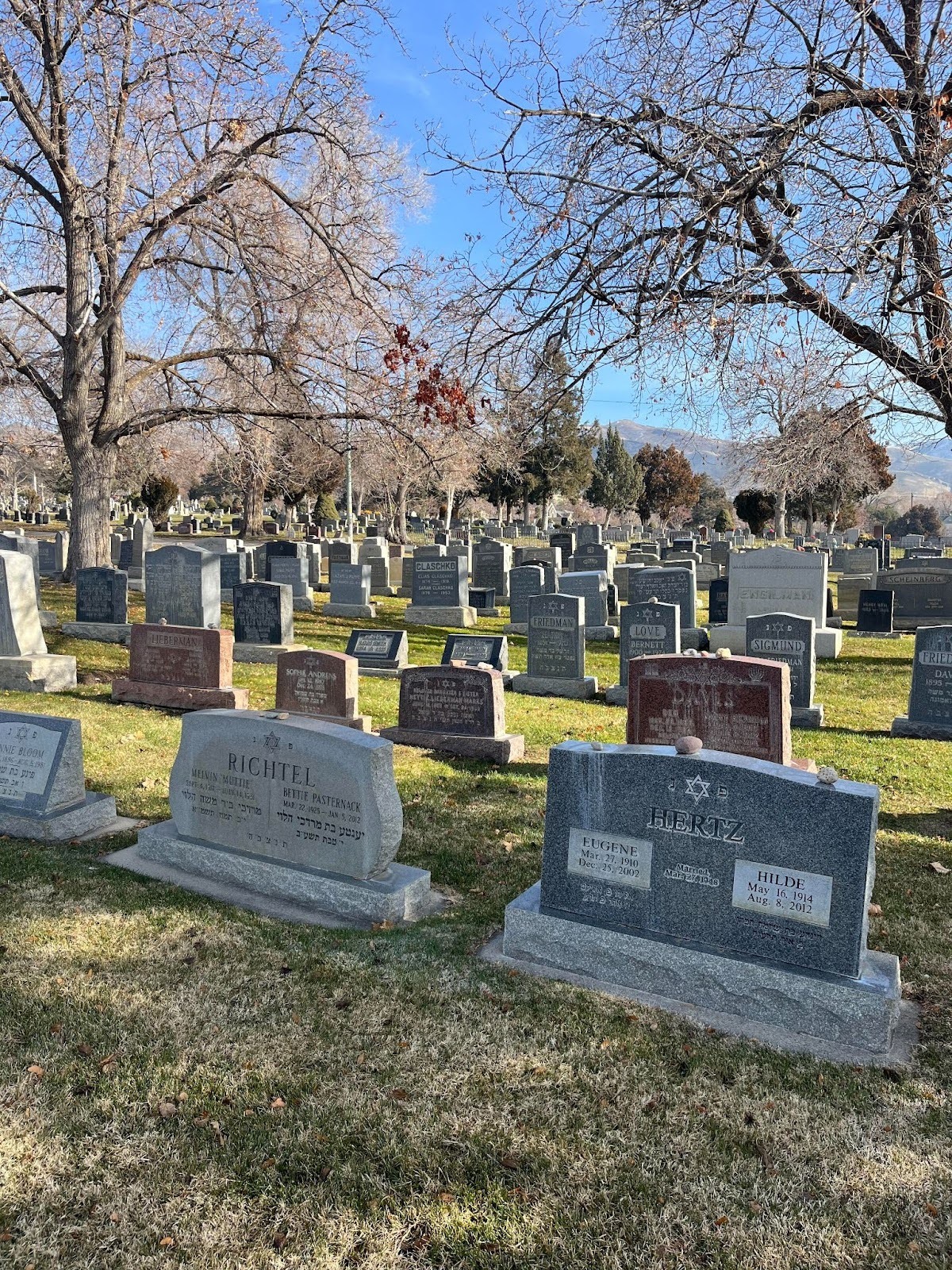
    <summary type="html"><![CDATA[<p><strong><em><span style="font-weight:400;">Cemetery B’nai Israel is a burial ground dedicated to followers of the Reform branch of Judaism. Located in the sloping Avenues of Salt Lake City, this space is a beautiful resting place for some of Utah’s most famous Jewish residents.</span></em></strong></p><img src="https://www.intermountainhistories.org/files/fullsize/fdf6c8848584d2a8d6f2dee9d815a3ee.jpg" alt="B&#039;nai Israel Cemetery" /><br/><p><span style="font-weight:400;">The B’nai Israel Cemetery is one of Salt Lake City’s three Jewish cemeteries. The other cemeteries connected with the Kol Ami Cemetery Association are Montefiore (Conservative) and Shaare Tzedek (Orthodox). Located at 1021 East and 4th Avenue, it serves adherents of Reform Judaism. The tenets of Reform Judaism include an emphasis on the growing, changing nature of Judaism, a focus on its ethical implications rather than its ceremonial ones, a constant search for knowledge and truth, and a focus on human reason. It is a more liberal branch of Judaism, with less focus on ritual observance and more focus on the autonomy of the individual and progressive values. </span>
<span style="font-weight:400;">The land for Salt Lake’s Jewish cemeteries was originally donated to the Jewish community by Brigham Young around 1866. These were the first Jewish cemeteries in the Intermountain West. The cemeteries are exclusively maintained by the Kol Ami Cemetery Association. This association is composed of members of Salt Lake’s synagogue, Congregation Kol Ami. Members of the board serve as volunteers. Although any Jewish person can be buried in one of the three cemeteries, each has slightly different requirements. Those wanting to be buried with non-Jewish spouses can only do so in the Reform cemetery. Orthodox and Conservative cemeteries require a ceremonial washing of the body before burial, but Reform cemeteries make that ritual optional. </span>
<span style="font-weight:400;">Cemetery B’nai Israel is located on the south side of Salt Lake City Cemetery. Unlike the Montefiore and Shaare Tzedek cemeteries, B’nai Israel permits the burial of non-Jewish spouses and minor Children with the Jewish family member. The guiding principles of the Kol Ami Cemetery Association are </span><i><span style="font-weight:400;">Kavod Ha Meit: </span></i><span style="font-weight:400;">showing honor and respect for the dead; </span><i><span style="font-weight:400;">Nichum Aveilim: </span></i><span style="font-weight:400;">comforting those who are mourning a loss; and simplicity: all are equal in death.</span>
<span style="font-weight:400;">Several prominent figures in Utah history were laid to rest in this peaceful graveyard, including Simon Bamberger, the first Jewish governor of Utah whose term ran from 1917 to 1921, and brothers Samuel and Frederick Auerbach, who established the People’s Store– a long-time Salt Lake City landmark. </span>
<span style="font-weight:400;">The tranquil B’nai Israel Cemetery has served practitioners of Reform Judaism for well over one hundred years, and continues to do so today. Under the governance of the Kol Ami Cemetery Association, these burial grounds are maintained with a tangible sanctity and respect.</span></p><p><em><strong><a href="https://www.intermountainhistories.org/items/show/765">For more (including 4 images) view the original article</a></strong></em></p>]]></summary>
    <published>2024-01-12T22:29:43+00:00</published>
    <updated>2026-04-17T19:32:17+00:00</updated>
    <link rel="alternate" type="text/html" href="https://www.intermountainhistories.org/items/show/765"/>
    <id>https://www.intermountainhistories.org/items/show/765</id>
    <author>
      <name>Isabella Holt, Brigham Young University</name>
    </author>
  </entry>
  <entry>
    <title type="html"><![CDATA[The Cathedral of the Madeleine ]]></title>
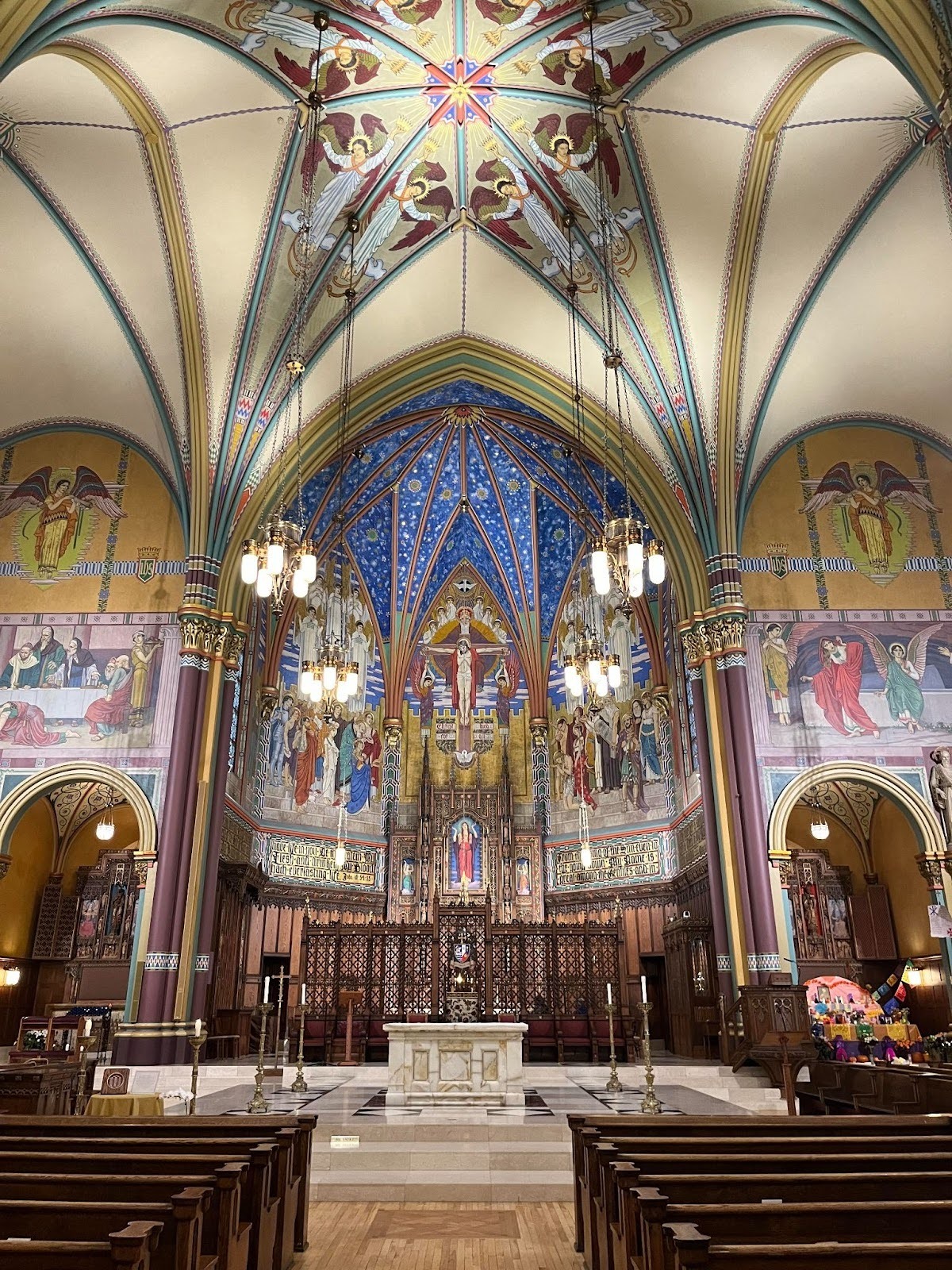
    <summary type="html"><![CDATA[<p><strong><em><span style="font-weight:400;">The Cathedral of the Madeleine, constructed in the late 19th and early 20th centuries, stands at the head of the Diocese of Salt Lake City. Featuring neo-Gothic architecture and glorious stained glass windows, the cathedral is a beautiful place to visit and worship. </span></em></strong></p><img src="https://www.intermountainhistories.org/files/fullsize/f7791fe20b0648355edb90452c3b4370.jpg" alt="Church Interior" /><br/><p><span style="font-weight:400;">The Cathedral of the Madeleine, located in downtown Salt Lake City, is the only cathedral in the United States under the patronage of Saint Mary Magdalene. Construction on this venerable building began in 1899 and was completed in 1909. It was dedicated under the name Saint Mary’s Cathedral on August 15, 1909, but was given its present name under the leadership of Bishop Joseph Glass, the second bishop of Salt Lake City.</span>
<span style="font-weight:400;">The stained glass windows are original to the Cathedral and were commissioned by Lawrence J. Scanlan, the first Catholic bishop of Salt Lake City. Designed by F.X. Zettler of the Royal Bavarian Institute in Munich, Germany, these windows tell the story of Christ’s life through what Catholics call the “Mysteries of the Rosary.” Scenes included are the annunciation with Gabriel and Mary, Mary visiting Elizabeth, Christ’s birth, Christ’s presentation at the temple to Simeon and Anna, the Resurrection, Christ’s ascension into heaven, the Assumption of Mary, and Mary being crowned Queen of Heaven. </span>
<span style="font-weight:400;">In addition to these scenes from the “Mysteries of the Rosary, moments  from Christ’s life between His presentation at the temple and His Resurrection are commemorated with stunning murals. These murals were completed in 1918 by artist Felix Lieftuchter. Combining Byzantine, Spanish Gothic, and modern art styles, the murals depict Christ teaching at the temple, a woman (portrayed here as Mary Magdalene) washing Christ’s feet, and Christ’s suffering in the Garden of Gethsemane. A mural of Christ’s sacrifice on the cross stands above the Blessed Sacrament Chapel and the Tabernacle. It is the focal point of the chapel. Christ is shown on the cross in a red robe, with God the Father and the Holy Spirit watching from above. Below Christ’s pierced feet are a pelican and her chicks. In Catholic iconography, the pelican symbolizes Christ’s sacrifice. Biblical figures and Catholic saints stand on either side of the crucified Christ, worshiping and praising the Lord. </span>
<span style="font-weight:400;">The Stations of the Cross were painted by Utah native Roger ‘Sam’ Wilson between 1992-1993. The Stations of the Cross commemorate Christ’s suffering and death. There are fourteen stations in all, each depicting a moment on His journey to Calvary. The Stations at the Cathedral of the Madeleine follow the revisions of the second Vatican Council, which took place between 1962-1965. This council helped to bridge the gap between Catholic tradition and the modern world. It made many changes to Catholic practices– one of the most dramatic of these was holding Mass in languages other than Latin. The updated Stations of the Cross are more in keeping with Biblical descriptions rather than oral tradition. Wilson’s rendition of the Stations blends Catholic iconography with an American Southwestern style. Flowers, animals, and other symbols are included to lend to the significance and power of each scene. </span>
<span style="font-weight:400;">The cathedral underwent heavy restoration projects between 1991-1993. The stained glass was carefully preserved. The altar and the baptismal font were re-positioned in accordance with the established traditions of the Vatican II Council. The organ was replaced, as were the Stations of the Cross. The floor of the Cathedral of the Madeleine is currently being restored. There are about four hundred regularly attending constituents, with about half of that number speaking Spanish as their first language. On weekdays, masses are held at 8:00 AM and 5:15 PM. Saturday masses are at 8:00 AM, 5:00 PM, and 7:00 PM, with the latter exclusively in Spanish. Sunday worship times are at 8:30 AM, 11:00 AM, 3:00 PM (Spanish), and 6:00 PM. The Cathedral was added to the National Register of Historic Places on March 11, 1971, and serves thousands of people annually. From practicing Catholics to those interested in theology or the Cathedral’s architecture, all are welcome. </span></p><p><em><strong><a href="https://www.intermountainhistories.org/items/show/764">For more (including 7 images) view the original article</a></strong></em></p>]]></summary>
    <published>2024-01-12T22:03:33+00:00</published>
    <updated>2026-04-17T19:32:17+00:00</updated>
    <link rel="alternate" type="text/html" href="https://www.intermountainhistories.org/items/show/764"/>
    <id>https://www.intermountainhistories.org/items/show/764</id>
    <author>
      <name>Isabella Holt, Brigham Young University</name>
    </author>
  </entry>
  <entry>
    <title type="html"><![CDATA[Shaare Tzedek Cemetery]]></title>
    <summary type="html"><![CDATA[<p><strong><em>The Shaare Tzedek Cemetery is a dedicated gravesite for practicing Orthodox Jews in the Salt Lake City area. Though smaller than its sister cemeteries, B’nai Israel and Montefiore, the recently rededicated Shaare Tzedek is nonetheless a quiet and peaceful site for remembrance and service.</em></strong></p><img src="https://www.intermountainhistories.org/files/fullsize/70156a3e7c4070953a3aad3742f17530.jpg" alt="Cemetery Gate" /><br/><p><span style="font-weight:400;">Cemetery Shaare Tzedek has stood for over a century and is one of the three Jewish cemeteries in the Salt Lake City metro. It can be found at 915 East 11th Avenue. Shaare Tzedek is designated for Orthodox adherents of Judaism, whereas its sister cemeteries, Montefiore and B’nai Israel, serve Conservative and Reform Jews, respectively. Orthodox Jews believe that the Torah (both the written word and oral traditions) were divinely revealed to Moses on Mount Sinai and have been faithfully maintained throughout the centuries. Being Orthodox entails a strict adherence to Jewish law (</span><i><span style="font-weight:400;">halakha</span></i><span style="font-weight:400;">). Practices include Sabbath-day observance, following Kosher dietary restrictions, and regular study of the Torah. To be buried in an Orthodox Jewish cemetery, one must be an Orthodox Jew, undergo rituals of washing and dressing, and generally be buried in a plain wooden casket without internal or external adornment. </span>
<span style="font-weight:400;">These lands in the larger Salt Lake City Cemetery were set aside for the use of the Jewish community by Brigham Young in 1866. The care and upkeep of these three cemeteries is entrusted to the Kol Ami Cemetery Association. This association is run on a volunteer basis by members of Salt Lake’s synagogue, Congregation Kol Ami. Members of the board serve as volunteers. The guiding principles of the Kol Ami Cemetery Association are </span><i><span style="font-weight:400;">Kavod Ha Meit: </span></i><span style="font-weight:400;">showing honor and respect for the dead; </span><i><span style="font-weight:400;">Nichum Aveilim: </span></i><span style="font-weight:400;">comforting those who are mourning a loss; and simplicity: all are equal in death. While any member of the Jewish community may be buried in one of the three cemeteries, each graveyard has slightly different requirements. Those wanting to be buried with non-Jewish spouses are only permitted to do so in the Reform cemetery. Both Conservative and Orthodox cemeteries require a ceremonial washing of the body before burial, but that practice is mandatory in Reform cemeteries. </span>
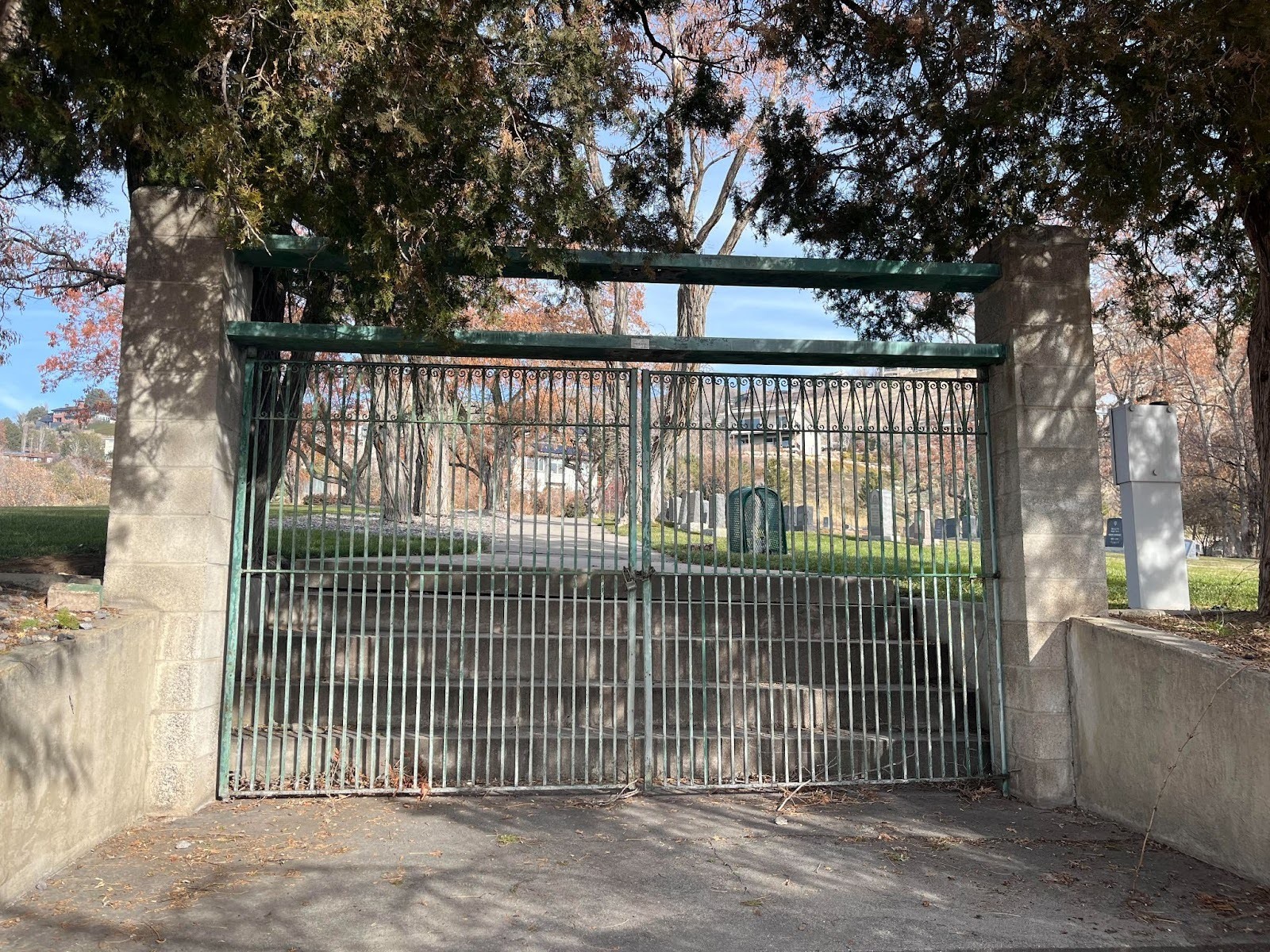
<span style="font-weight:400;">The Shaare Tzedek Cemetery is located just above the sprawling expanse of the Salt Lake City Cemetery, a few blocks north of the B’nai Israel and Montefiore cemeteries. It is the smallest of the three Jewish cemeteries. Salt Lake’s Orthodox Jewish community and synagogue faded around 1930, largely due to financial reasons and fewer Orthodox Jews as opposed to Conservative and Reform Jews in the city. The Shaare Tzedek Cemetery was recently rededicated– a very rare circumstance, but necessary because the western part of the burial ground, though original to the cemetery, had never been dedicated. That issue was resolved in 2023. Shortly after the rededication, the Kol Ami Cemetery Board held a tree-planting ceremony to further protect and beautify the space. </span></p><p><em><strong><a href="https://www.intermountainhistories.org/items/show/763">For more (including 4 images) view the original article</a></strong></em></p>]]></summary>
    <published>2024-01-12T20:29:15+00:00</published>
    <updated>2026-04-17T19:32:17+00:00</updated>
    <link rel="alternate" type="text/html" href="https://www.intermountainhistories.org/items/show/763"/>
    <id>https://www.intermountainhistories.org/items/show/763</id>
    <author>
      <name>Isabella Holt, Brigham Young University</name>
    </author>
  </entry>
  <entry>
    <title type="html"><![CDATA[Montefiore Cemetery ]]></title>
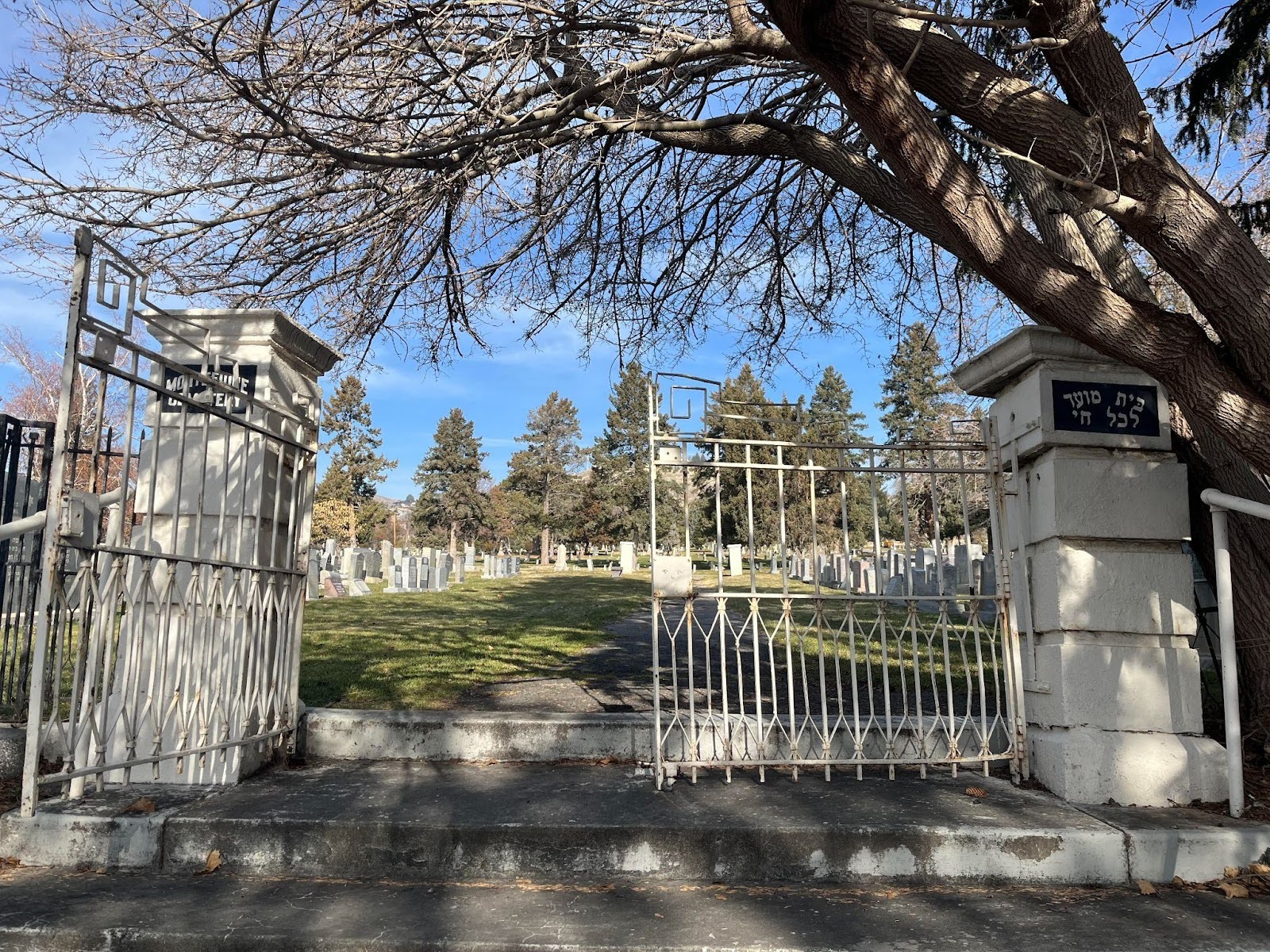
    <summary type="html"><![CDATA[<p><strong><em>Serving Conservative Jews in the Salt Lake area, the Montefiore Cemetery can be found amidst the city’s historic Avenues. Dedicated to preserving the memories of Utah’s Jewish community, the Montefiore Cemetery contains a personal memorial to those who lost their lives in the Holocaust. </em></strong></p><img src="https://www.intermountainhistories.org/files/fullsize/50818c535c735867b8f5aed3ca63fe44.jpg" alt="Cemetery Gates" /><br/><p><span style="font-weight:400;">Cemetery Montefiore is one of three Jewish cemeteries in Salt Lake City. It is affiliated with cemeteries B’nai Israel, serving Reform Jews, and Shaare Tzedek, which is specifically for Orthodox Jews. Located at 1081 East 4th Avenue, Montefiore is dedicated to followers of the Conservative branch of Judaism. Conservative Judaism is a movement that focuses on the authority of Jewish law and tradition, but with an emphasis on obtaining assent from the people. For Conservative Jews, Jewish law (</span><i><span style="font-weight:400;">Halakha</span></i><span style="font-weight:400;">) is simultaneously binding and subject to historical development. It allows for greater pluralism than Orthodox Judaism, but is more traditional than Reform Judaism. There is room for the traditional, received forms, but Conservative Jews hold space for various ways to interpret and apply these past traditions. </span>
<span style="font-weight:400;">Brigham Young donated the land for this and Salt Lake’s other Jewish cemeteries to the Jewish community in 1866. The cemeteries are operated by the Kol Ami Cemetery Association: Salt Lake City does not allocate resources to maintain them. Those serving on the board of this association are volunteers from Salt Lake’s synagogue, Congregation Kol Ami. The guiding principles of the Kol Ami Cemetery Association are </span><i><span style="font-weight:400;">Kavod Ha Meit: </span></i><span style="font-weight:400;">showing honor and respect for the dead; </span><i><span style="font-weight:400;">Nichum Aveilim: </span></i><span style="font-weight:400;">comforting those who are mourning a loss; and simplicity: all are equal in death. A Jew can be in any one of the three cemeteries, but each has slightly different requirements. Those who wish to be buried with their non-Jewish spouses can only do so in the Reform cemetery. Orthodox and Conservative cemeteries require a ceremonial washing of the body before burial, but Reform cemeteries do not require the washing. </span>
<span style="font-weight:400;">The Montefiore Cemetery can be found on the southern end of the larger Salt Lake City Cemetery, just a few streets east of the Reform B’nai Israel Cemetery. As it is Conservative, those wishing to be buried in this cemetery are to be ritually washed before burial and cannot be buried with non-Jewish family members. </span>
<span style="font-weight:400;">One of the most moving sites at the Montefiore Cemetery is very discrete– it does not immediately catch one’s eye amidst the rows of marble. Toward the eastern edge of the cemetery stands the headstone of Josef and Ruth Teustch Schwager, whose son, Pete Schwager, is on the Kol Ami Cemetery Board. The Schwagers fled Nazi Germany in 1939, arriving in New York that same year, then making their way west to Utah. Ruth Schwager’s parents, Dr. Arthur Teutsch and Clara Holzinger Teutsch, were unable to escape the Nazi regime and perished in the Theresienstadt and Auschwitz concentration camps. Ruth Schwager was determined that her parents be remembered, and thus included their names on her gravemarker. </span>
<span style="font-weight:400;">Cemetery Montefiore is a calm and peaceful spot amidst the bustle of Salt Lake City. Dedicated to adherents of Conservative Judaism, it has stood for over a century. The Kol Ami Cemetery Association preserves this and other Jewish cemeteries with evident care and approbation. </span></p><p><em><strong><a href="https://www.intermountainhistories.org/items/show/762">For more (including 5 images) view the original article</a></strong></em></p>]]></summary>
    <published>2024-01-12T20:03:55+00:00</published>
    <updated>2026-04-17T19:32:17+00:00</updated>
    <link rel="alternate" type="text/html" href="https://www.intermountainhistories.org/items/show/762"/>
    <id>https://www.intermountainhistories.org/items/show/762</id>
    <author>
      <name>Isabella Holt, Brigham Young University</name>
    </author>
  </entry>
  <entry>
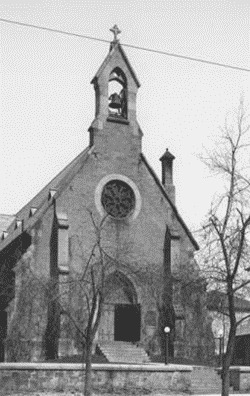
    <title type="html"><![CDATA[Cathedral Church of Saint Mark]]></title>
    <summary type="html"><![CDATA[<p><strong><em>St. Mark’s Cathedral began its life as the headquarters of the Salt Lake Missionary Diocese, later becoming the base for the Diocese of Utah. Serving parishioners for over 150 years, this Gothic Revival Cathedral was added to the National Register of Historic Places in 1970.</em></strong></p><img src="https://www.intermountainhistories.org/files/fullsize/e7e58cf77fd4e76efacbeb4cf870ec8d.jpg" alt="Photograph of St. Mark&#039;s Cathedral " /><br/><p><span style="font-weight:400;">The story of St. Mark’s Cathedral begins with Bishop Daniel S. Tuttle, who took his post presiding over the missionary district of Montana in 1867. This district included jurisdiction over Idaho and Utah. After the completion of the Transcontinental Railroad in 1869, Bishop Tuttle decided to make Salt Lake City the headquarters of the district. From 1867-1871, Utah’s earliest Episcopalian parishioners met in Independence Hall, an adobe building on Third South and East Temple (now Main Street). The land for St. Mark’s Cathedral was purchased on April 20, 1870. The cornerstone was laid on July 30, 1870. Opening on September 3, 1871, St. Mark’s Cathedral was designed in the Gothic Revival style by Richard Upjohn – one of his only two identified works west of the Mississippi River. </span>
<span style="font-weight:400;">The Cathedral was officially consecrated on May 14, 1874. In April 1902, money was raised for the addition of the west transept, the Chancel, and a room to house the organ pipes. When the chancel was added in 1903, this room became the Chapel of the Resurrection. Extensive renovations took place after the Cathedral was damaged by a fire in 1935. Fire damage can still be observed today from the exterior and along the ceiling of the Chapel of the Resurrection. A number of the Cathedral’s windows were destroyed in the fire, but the May Lillian Bishop Thompson Window (a scene depicting the women at Christ’s tomb speaking with an angel), was reassembled. When the fire melted the lead holding the window together, a parishioner was able to collect the glass pieces and take them to Tiffany Studios in New York, where the window was repaired. However, some pieces were lost, and thus the previously brunette angel became a blonde. </span>
<span style="font-weight:400;">St. Mark’s Cathedral has hosted a number of noteworthy visitors over the years. Episcopalian Archbishop Demond Tutu came to Salt Lake City for the opening ceremonies of the 2002 Olympics, calling on the Cathedral on February 10, 2002. St. Mark’s hosted the North American Dean’s Conference from April 23-25, 2009. Over the week of June 25-July 3, 2015, the Diocese of Utah and St. Mark’s Cathedral welcomed delegates to the 78th Convention of the Episcopal Church. On June 27, 2015, St. Mark’s made headlines when Michael Bruce Curry became the first African American to be elected presiding bishop of the Episcopalian Church. </span>
<span style="font-weight:400;">To conclude, St. Mark’s Cathedral has been part of the Salt Lake City skyline since 1871. Its bell was the first church bell to ring in Salt Lake City and continues to call Episocpalians and visitors for worship today. </span></p><p><em><strong><a href="https://www.intermountainhistories.org/items/show/761">For more (including 12 images) view the original article</a></strong></em></p>]]></summary>
    <published>2024-01-11T23:36:49+00:00</published>
    <updated>2026-04-17T19:32:16+00:00</updated>
    <link rel="alternate" type="text/html" href="https://www.intermountainhistories.org/items/show/761"/>
    <id>https://www.intermountainhistories.org/items/show/761</id>
    <author>
      <name>Isabella Holt, Brigham Young University</name>
    </author>
  </entry>
  <entry>
    <title type="html"><![CDATA[Congregation Kol Ami ]]></title>
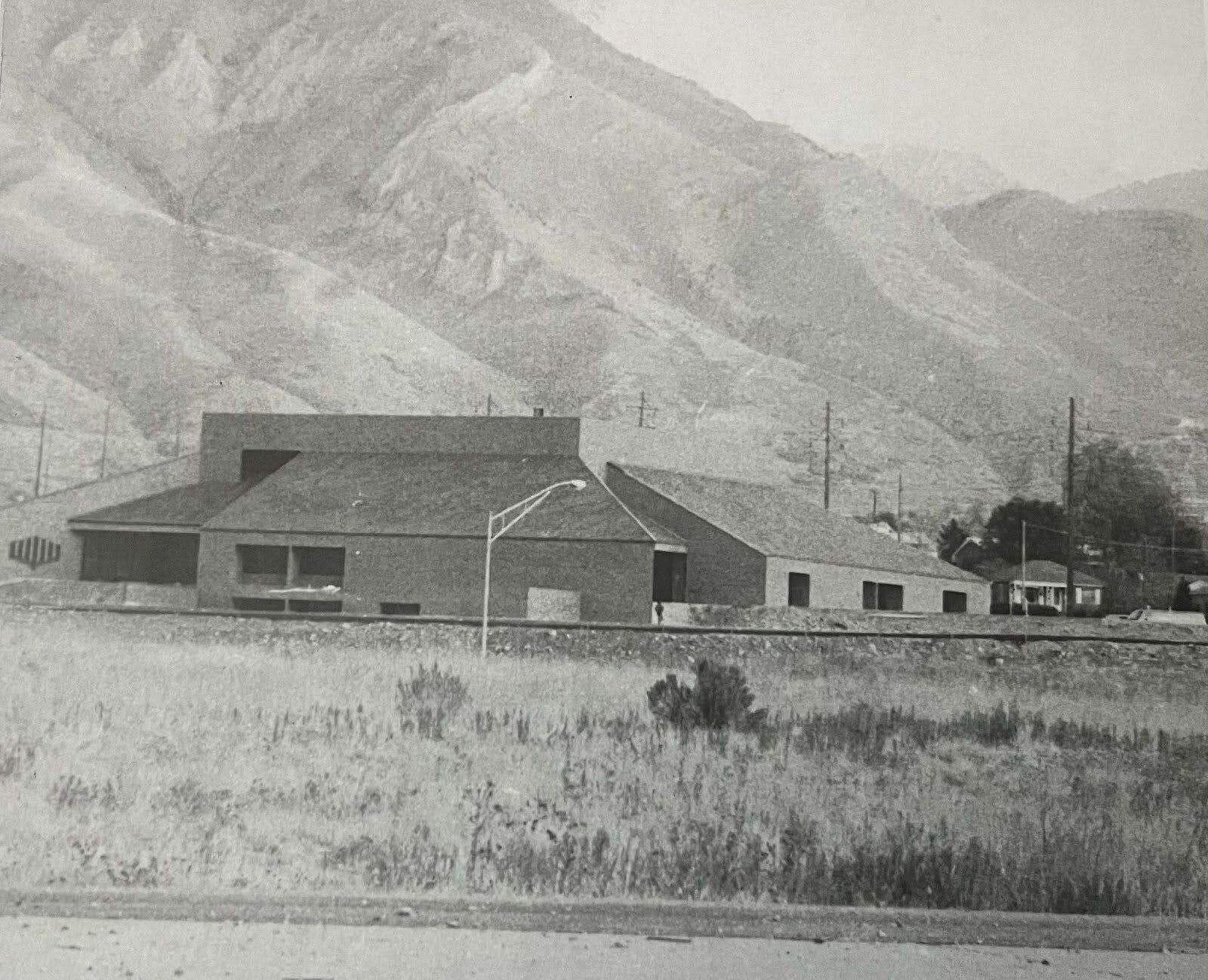
    <summary type="html"><![CDATA[<p><strong><em>Nestled in the foothills of Salt Lake City, Congregation Kol Ami recently celebrated its 50th anniversary. Born of a merger between two branches of Judaism, this synagogue now serves about a quarter of Utah’s Jewish population. </em></strong></p><img src="https://www.intermountainhistories.org/files/fullsize/0875c2459ce79a9c26983139436db612.jpg" alt="Exterior of Kol Ami, taken between the 1970s-1980s.
" /><br/><p><span style="font-weight:400;">Salt Lake City’s Jewish community traces its roots back to 1854, with the arrival of both European immigrants and east-coast transplants. Several prominent figures in Utah history belonged to this community, including brothers Samuel and Frederick Auerbach (founders of the People’s Store: F. Auerbach and Brothers) and Simon Bamberger, who was elected governor of Utah in 1916. The city’s first synagogues were Congregation B’nai Israel and Congregation Montefiore. Congregation B’nai Israel was founded in 1891 and served those following Reform practices, while Congregation Montefiore was established in 1899 and served Conservative adherents to the faith. </span>
<span style="font-weight:400;">Congregation Kol Ami was established in 1972 as a result of a merger between these two historic communities. The merger occurred for several reasons. Financially, it was more viable to have Salt Lake’s Jewish community gather in one place. It also strengthened ties between adherents of Reform and Conservative Judaism. The synagogue’s name, </span><i><span style="font-weight:400;">Kol Ami </span></i><span style="font-weight:400;">roughly translates to “all of my people” in Hebrew.  Because it is a joint Conservative and Reform Congregation, Congregation Kol Ami holds Reform worship services on Fridays and Conservative on Saturdays. Now into its fiftieth year, Congregation Kol Ami serves about 400 families and has experienced 35% growth since Rabbi Samuel Spector’s tenure began in 2018. </span>
<span style="font-weight:400;">Construction of the synagogue was completed in the early 1970s. It is a multi-purpose space, holding classrooms, offices, a central worship space, and a kitchen. In addition to Shabbat services, the synagogue hosts daily classes at the Rafi Schwartz Religious School. The mission of the Religious School is “to create students who are active participants in the intellectual, religious, and cultural traditions of Judaism.” The school serves students of various backgrounds and traditions from preschool through 12th grade. </span>
<span style="font-weight:400;">Congregation Kol Ami hosts a number of community events, including a class called “Introduction to Jewish Life.” Members of the congregation or interested residents of the greater Salt Lake area are invited to come learn more about Jewish beliefs, practices, history, holidays, and basic Hebrew. There are also Sunday study sessions hosted by Rabbi Fred Wenger. Topics vary week by week, but typically address themes connected to the Jewish diaspora. With their emphasis on education, community, and worship, Kol Ami’s congregants are wonderful contributors to Salt Lake City’s diversity and development.</span></p><p><em><strong><a href="https://www.intermountainhistories.org/items/show/759">For more (including 4 images) view the original article</a></strong></em></p>]]></summary>
    <published>2024-01-11T21:53:01+00:00</published>
    <updated>2026-04-17T19:32:16+00:00</updated>
    <link rel="alternate" type="text/html" href="https://www.intermountainhistories.org/items/show/759"/>
    <id>https://www.intermountainhistories.org/items/show/759</id>
    <author>
      <name>Isabella Holt, Brigham Young University</name>
    </author>
  </entry>
</feed>