<?xml version="1.0" encoding="UTF-8"?>
<feed xmlns="http://www.w3.org/2005/Atom">
  <title type="text">Intermountain Histories</title>
  <updated>2026-04-17T19:32:10+00:00</updated>
  <generator uri="http://framework.zend.com" version="1.12.20">Zend_Feed_Writer</generator>
  <link rel="alternate" type="text/html" href="https://www.intermountainhistories.org/"/>
  <link rel="self" type="application/atom+xml" href="https://www.intermountainhistories.org/items/browse?output=rss2"/>
  <id>https://www.intermountainhistories.org/</id>
  <author>
    <name>Intermountain Histories</name>
    <uri>https://www.intermountainhistories.org</uri>
  </author>
  <link rel="hub" href="https://pubsubhubbub.appspot.com/"/>
  <entry>
    <title type="html"><![CDATA[Chief Barboncito and The Treaty of 1868]]></title>
    <summary type="html"><![CDATA[<p><strong><em>After years of displacement and internment, negotiations between Chief Barboncito and the United States government resulted in a treaty that allowed the Navajo to returned to their homeland in the Four Corners region.</em></strong></p><img src="https://www.intermountainhistories.org/files/fullsize/acdbc3e43efc463260bb43435470b6cc.jpg" alt="Treaty marker" /><br/><p>Navajo Chief Barboncito (1821–1871) played an important role in the negotiations that helped the Navajo return to the Four Corners region in 1868. Fluent in Navajo and Spanish, Barboncito communicated with US negotiators, who used translators that were fluent in English and Spanish, to draft a dual language treaty that would allow the Navajo to return home, making them the first American Indian tribe able to do so.
The Navajo had lived in Bosque Redondo from 1864–1868. Arriving by forced relocation that put an end to the Navajo Wars at the command of General James Carleton and carried out by Colonel Christopher “Kit” Carson, the Navajo internment camp refinement period proved to be a failure due to the high cost required to maintain provisions to keep the Navajo alive. Due to poor soil conditions and resource constraints, the United States needed to rethink their role in confining the Navajo.
In addition to negotiating with the United States regarding Navajo internment, Barboncito was also a spiritual leader and medicine man who gained prominence alongside Chief Manulito and Ganado Mucho due to their diplomacy and oratory skills. When it came time to discuss treaty provisions, Barboncito rejected General William Sherman’s offer to relocate the Navajo to Indian Country in Oklahoma. Fearing that Oklahoma would be similar to Bosque Redondo, Barboncito advocated on behalf of himself and the 9,000 other Navajo that they would be a peaceful people upon their return home, declaring that the area between the four sacred mountains was created and given to them by their gods, First Man and First Woman, solely for them.
The treaty was signed and made official on June 1, 1868. After returning home and following the creation of the Navajo reservation system, Barboncito kept his word, and the Navajo no longer engaged in warring behavior against neighboring white settlements. Compared to the initial reservation boundary, the territory has since tripled in size, currently covering an area the size of West Virginia. The Navajo today can enjoy their ancestral land and continue to teach their traditions and cultures thanks to men like Chief Barboncito.</p><p><em><strong><a href="https://www.intermountainhistories.org/items/show/488">For more (including 3 images) view the original article</a></strong></em></p>]]></summary>
    <published>2021-09-16T22:05:02+00:00</published>
    <updated>2026-04-17T19:32:10+00:00</updated>
    <link rel="alternate" type="text/html" href="https://www.intermountainhistories.org/items/show/488"/>
    <id>https://www.intermountainhistories.org/items/show/488</id>
    <author>
      <name>Colin Tompson, Brigham Young University</name>
    </author>
  </entry>
  <entry>
    <title type="html"><![CDATA[Kate Heizer, Female Homesteader<br />
]]></title>
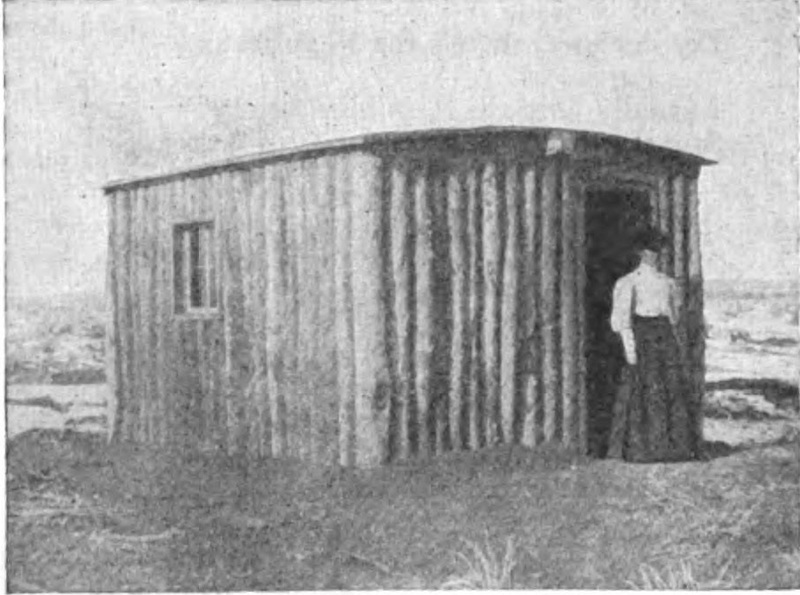
    <summary type="html"><![CDATA[<p><strong><em>Of homesteading, Kate Heizer wrote, “One inquirer has an exaggerated idea of the difficulties and hardships. Another has a mistaken notion of taking a pleasant vacation while waiting till he receives title to a piece of property that will place him above financial anxiety for the rest of his life.” As for herself, Kate recognized the truth lay somewhere in the middle. </p></strong></p><img src="https://www.intermountainhistories.org/files/fullsize/5dff0bee6f413282d2b91a59c25175a3.jpg" alt="First Cabin on Heizer Claim" /><br/><p>The Dawes Severalty Act of 1887 authorized and began a process of subdividing reservation lands among Native families, breaking up and diminishing Native landholdings, including the Uintah Indian Reservation. In August 1905, “surplus” land was opened to homesteading and mineral claims. Kate Heizer was only one of thousands who applied for property in these areas. Preference for pieces of property was decided by drawing lots and Kate picked #247, low when compared to other higher possible picks. Time for potential homesteaders to look over the available land was short. Wasatch Land Company and other professional “locators” promised to identify prime lots for a price, but, with high stakes, there was a general mistrust of anyone claiming to know anything. </p><p>Potential for success rested all on the decision of what piece of land was selected. Prospective owners frantically learned all they could of sagebrush and other indicators of soil quality. Kate was skeptical of her ability to choose, writing, “I was as little capable of judging [the land] as I am of discussing the canals on Mars.” She questioned and listened to everyone who could give her any information, carefully judging “which men really understood conditions and were giving honest advice, and which either mistakenly thought they knew or had interested motives.” Her biggest concern was how the property would be irrigated, so she decided largely based on where others gathered, hoping that community would increase value and ensure a greater effort and feasibility for irrigation schemes. Kate’s study and planning paid off and she “secured a better claim than many a one who had had an earlier choice.”</p><p>The filing took place in early fall and, once settled, Kate returned to her teaching job to finish out the school year. To fulfill settlement requirements, she “resided” on her homestead for several days during the Christmas break. It was common for individuals to leave for periods to save money to fund work done in the spring. There were lonely spells as people moved in and out. Contests were raised, occasionally, against abandoned claims and Kate had one filed against herself in her absence. Fortunately, empathetic neighbors “with unmistakable western emphasis” advised the man to drop it—and he did. The incident spurred Kate to move out permanently and begin her required 14 months of continuous residence. The first summer was a difficult season. Many homesteaders needed ditches that didn’t yet exist to access water. Kate was fortunate in that her property was within a gully that retained water into midsummer and provided shade that grew trees for lumber. Once it was completed, she paid $1.25 per acre to the Indian Fund and, in exchange, received her patent. </p><p>Supplies had to be freighted in and were expensive to acquire. When funds ran dry, Kate had to sell 50 acres to continue improvements to the rest of her land. She was tormented by rabbits and prairie dogs that ate her crops and gardens, making “scarecrows, guns, and poison... futile.” Despite its difficulties, she persevered, seeing homesteading as an opportunity to learn and a cause for hope. Kate planted 90 acres of alfalfa and studied agriculture so she could take over management of her ranch entirely. </p><p>Regarding success, Kate explained that “the man who is alert and ready to seize opportunities, who holds to a purpose until it is accomplished, is the man most likely to succeed in any undertaking, and homesteading is no exception.” She certainly followed her own advice. While Kate took pride in becoming successful and competent, she found something even more gratifying—“the realization of being an important factor in the community, one whose voice has weight, a person to be consulted about matters of public interest.” Through her hard work and determination, Kate found success, independence, and political influence as a single woman in the American West.</p><p><em><strong><a href="https://www.intermountainhistories.org/items/show/455">For more (including 4 images) view the original article</a></strong></em></p>]]></summary>
    <published>2021-02-06T08:54:57+00:00</published>
    <updated>2026-04-17T19:32:09+00:00</updated>
    <link rel="alternate" type="text/html" href="https://www.intermountainhistories.org/items/show/455"/>
    <id>https://www.intermountainhistories.org/items/show/455</id>
    <author>
      <name>Anna Bailey, Brigham Young University</name>
    </author>
  </entry>
  <entry>
    <title type="html"><![CDATA[1878 Bannock War and Chief Buffalo Horn]]></title>
    <summary type="html"><![CDATA[<p><strong><em>By rebelling against the United States military, Chief Buffalo Horn took initiative in improving the livelihood of the Bannocks after their relocation to the Fort Hall Reservation. Although his death did not immediately end the war, the Bannocks eventually returned to the reservation, forced to deal with confinement and limited resources.</p></strong></p><img src="https://www.intermountainhistories.org/files/fullsize/6a9d7b8c29f4bf5b5dd2d6d43ed102bc.jpg" alt="Bannock Camp" /><br/><p>The first Bannock War against the United States military occurred in 1878. With close ties to the Shoshones, groups of Bannocks and Paiutes joined together to oppose confinement at Fort Hall in southern Idaho. Reasons for action included limited agricultural opportunities, lack of promised supplies, and discontent with their treatment by the American military.</p><p>The Bannocks and Shoshones exhibited friendship toward Americans during the fur trade in the first half of the 19th century. Relations turned sour when the fur trade declined and increasing numbers of permanent American settlers encroached upon tribal homelands and consumed native resources without compensation. Additionally, as native peoples’ land and resources diminished, so did their ability to maintain independence. During the 1860s, treaties held at Fort Bridger and Box Elder in 1863 and 1868 relocated indigenous people to the Fort Hall reservation.</p><p>Although the U.S. government required that the Bannocks remain on the reservation, in the summer of 1877, many natives left the territorial limits dissatisfied with their current situation. Despite threats of military involvement, the Bannock rebellion and subsequent war quickly commenced in May 1878, perhaps because the Bannocks felt that the United States had failed to fulfill treaty obligations.</p><p>Bannock leader Chief Buffalo Horn mobilized several hundred Bannocks, adding additional Paiute allies to augment their numbers. These warriors engaged in a sequence of attacks along the Snake River, raiding settlements and even killing some settlers who opposed them. Word reached American leadership in Boise, who called upon military action to force Chief Buffalo Horn’s men to surrender. In early June, Chief Buffalo Horn and his accompanying warriors briefly fought against a small volunteer group of militiamen, resulting in a few casualties, including the fatality of Chief Buffalo Horn. Chief Egan took his place until the Umatilla people, posing as allies, killed him to collect an alleged bounty reward offered by the United States.</p><p>The remaining Bannocks separated into smaller groups or surrendered and returned to Fort Hall by August 1878. Following this resolution, the U.S. government carefully monitored Bannock movement within the reservation, limiting their use of local resources and interactions with local native groups. As a result of their surrender, the Bannocks conceded to rebuilding their livelihood on the allotted territory on the Fort Hall reservation. </p><p><em><strong><a href="https://www.intermountainhistories.org/items/show/412">For more (including 6 images) view the original article</a></strong></em></p>]]></summary>
    <published>2020-03-20T00:38:31+00:00</published>
    <updated>2026-04-17T19:32:08+00:00</updated>
    <link rel="alternate" type="text/html" href="https://www.intermountainhistories.org/items/show/412"/>
    <id>https://www.intermountainhistories.org/items/show/412</id>
    <author>
      <name>Camilla Richardson, Brigham Young University</name>
    </author>
  </entry>
  <entry>
    <title type="html"><![CDATA[AIM Occupation of Fairchild Plant on Navajo Reservation]]></title>
    <summary type="html"><![CDATA[<p><strong><em>Activism plays a significant role in improving employment quality and longevity, but situations like the occupation of the Fairchild Plant on the Navajo Reservation causes people to question whether or not activism is the best method to achieve such goals.</em></strong></p><img src="https://www.intermountainhistories.org/files/fullsize/f881a04cf0a41c0bb4ee8d31723f525d.jpg" alt="Ribbon cutting at Fairchild Building Dedication, 1969" /><br/><p>In the early 1960s, unemployment on the Navajo Reservation hovered around 40% and Tribal leadership desperately tried to create jobs for Diné peoples. In 1964, Tribal chairman Raymond Nakai advocated for better economic development on the reservation and – hoping to attract outside investment – opened up the Navajo Nation to outside businesses. To further entice companies, the tribe offered $1 million toward development to any company willing to relocate. Fairchild Camera and Instrument Corporation responded to the offer and decided to build a plant in Shiprock, New Mexico and provide housing for tribal members who helped with construction. After its completion, Fairchild employed more than a thousand workers (the majority being female) and provided consistent jobs for ten years. </p><p>In the early 1970s, however, the country’s economy lagged, affecting companies like Fairchild. Many of the workers in Shiprock faced reduced paychecks or even termination. According to one Navajo account, the plant manager said, “This is a business venture, not a charitable activity.” The weakened economy combined with news of the plant’s financial solution wounded the community’s morale. The American Indian Movement (AIM) – an organization founded during the Civil Rights Era that fought for indigenous communities’ rights – heard about the situation and decided to intervene. Protestors including activist Russell Means came to Shiprock and laid siege to the plant on behalf of the underpaid and dismissed workers. The protestors demanded that Fairchild rehire the workers and restore their paychecks to pre-reduction rates. However, some local Natives considered this protest against the company dangerous and unnecessary. </p><p>Fairchild refused AIM’s conditions and let the tribal government handle the matter. However, the tribal government did not help overcome the impasse and the siege ultimately shut down the plant. Fairchild executives expressed frustration over how the tribe handled the situation and withdrew from the reservation altogether, relocating their operations to Korea. Some AIM supporters perceived this result as a victory, but locals recognized the great loss of employment opportunity alongside a damaged reputation for future incoming businesses on the Navajo Reservation. Even today, these consequential outcomes continue to have a harmful effect on Navajo employment.</p><p><em><strong><a href="https://www.intermountainhistories.org/items/show/398">For more (including 3 images) view the original article</a></strong></em></p>]]></summary>
    <published>2020-03-06T23:38:51+00:00</published>
    <updated>2026-04-17T19:32:08+00:00</updated>
    <link rel="alternate" type="text/html" href="https://www.intermountainhistories.org/items/show/398"/>
    <id>https://www.intermountainhistories.org/items/show/398</id>
    <author>
      <name>Elias Gold, Brigham Young University</name>
    </author>
  </entry>
  <entry>
    <title type="html"><![CDATA[Creation of Wind River Reservation<br />
]]></title>
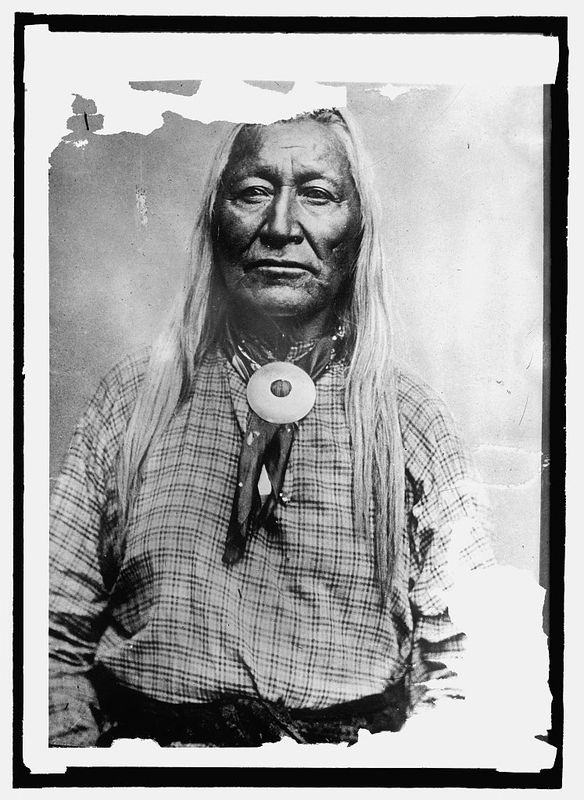
    <summary type="html"><![CDATA[<p><strong><em>“The Wind River Valley which is the favorite hunting ground for these Indians, will be the most suitable locality…” -Luther Mann Jr., Indian Agent over the Fort Bridger Indian Agency</p></strong></p><img src="https://www.intermountainhistories.org/files/fullsize/0534f93f1289fd0db2228344bf3947e0.jpg" alt="Washakie" /><br/><p>The Eastern Shoshone tribe occupied the region north of Utah and around Fort Bridger. After Mormon pioneers began settling the area around Bear River, Shoshone Chief, Washakie, and his band of Eastern Shoshone were forced to leave the region. Washakie was known for his peacekeeping. Federal officials favored him because he tried to keep peace between his tribe and white settlers. While Washakie was successful in keeping relative peace between his people and the setters moving into Shoshone territory, he still fought for his people. After signing the Fort Bridger Treaty of 1863, Washakie determined that his people needed a permanent place to settle.  </p><p>Looking for an area to set aside as a reservation, the Wind River Valley in western Wyoming was at the top of the list. Indian Agent, Luther Mann, was the first to recommend the area for a possible reservation. He said that it was “one of the finest valleys in the mountains.” The Eastern Shoshone used the region as their winter hunting grounds because of the large herds of buffalo. However, it took nearly a decade for a reservation to be set aside. One superintendent over Indian Affairs mentioned in his reports that “the Wind River Valley which is the favorite hunting ground for these Indians, will be the most suitable locality, unless it shall be found to be rich in mines of gold and silver and springs of petroleum.” Unfortunately, Indian affairs did not take precedence over a higher federal agenda. Establishing peace with the Native Americans was important, but it did not trump the possibility of gold.  </p><p>However, the reservation was finally established by treaty in the Fort Bridger Treaty of 1868. Although Washakie and the Indian agency had been campaigning for a reservation for years, the reservation was organized as a protection for the white settlers. The Indian wars on the plains were coming further west, which concerned many white settlements. Incidents on the Bozeman trail and raids on mining communities left white settlers fearful. Seeing an opportunity to protect the settlements, the reservation was created as buffer between the warring tribes and the white settlements.  The Eastern Shoshone have maintained the reservation since 1868. Washakie continued to lead his people from the reservation. </p><p><em><strong><a href="https://www.intermountainhistories.org/items/show/244">For more (including 3 images) view the original article</a></strong></em></p>]]></summary>
    <published>2019-01-12T00:20:57+00:00</published>
    <updated>2026-04-17T19:32:03+00:00</updated>
    <link rel="alternate" type="text/html" href="https://www.intermountainhistories.org/items/show/244"/>
    <id>https://www.intermountainhistories.org/items/show/244</id>
    <author>
      <name>Rachel Hendrickson, Brigham Young University</name>
    </author>
  </entry>
</feed>