<?xml version="1.0" encoding="UTF-8"?>
<feed xmlns="http://www.w3.org/2005/Atom">
  <title type="text">Intermountain Histories</title>
  <updated>2026-04-17T19:32:19+00:00</updated>
  <generator uri="http://framework.zend.com" version="1.12.20">Zend_Feed_Writer</generator>
  <link rel="alternate" type="text/html" href="https://www.intermountainhistories.org/"/>
  <link rel="self" type="application/atom+xml" href="https://www.intermountainhistories.org/items/browse?output=rss2"/>
  <id>https://www.intermountainhistories.org/</id>
  <author>
    <name>Intermountain Histories</name>
    <uri>https://www.intermountainhistories.org</uri>
  </author>
  <link rel="hub" href="https://pubsubhubbub.appspot.com/"/>
  <entry>
    <title type="html"><![CDATA[The Johnson County Cattle War]]></title>
    <summary type="html"><![CDATA[<p><strong><em><span style="font-weight:400;">After assembling an armed expedition of wealthy cattlemen and hired Texas gunmen, members of the Wyoming Stock Growers Association rode on horseback to the small ranch of their first suspected cattle rustling target, Nate Champion. After gunning both Champion and his brother Nick Ray down at the K.C. Ranch, the Invaders continued North where they became involved in yet another hours-long standoff with a posse consisting of around two hundred Johnson County residents who had been warned of the invasion.</span></em></strong></p><img src="https://www.intermountainhistories.org/files/fullsize/2b084641e34d158b100ac1b672c9b922.jpg" alt="The T.A. Ranch barn where the invaders took cover from the gunfire of the Johnson County posse for hours before being taken into custody by the U.S. Army." /><br/><p><span style="font-weight:400;">Following the organization of an armed expedition by the Wyoming Stock Growers Association, the “Invaders” rode for 68 miles to K.C., the home of small-time rancher Nate Champion. Reaching the ranch, the Invaders planned to capture Champion and get a confession of rustling out of him before hanging him. It wasn’t until after the cabin was surrounded that the Invaders discovered that two trappers and Champion’s brother Nick Ray were also at the cabin. Taking the two trappers captive, the Invaders shot down Ray when he stepped out of the cabin. </span>
<span style="font-weight:400;">While the shooting between Champion and the Invaders continued from noon to 3 o’clock, two people passing by witnessed the shootout and fled while being fired upon by some of the Invaders. In their escape, the people left their hay-filled wagon behind which the Invaders then used to burn down the cabin with Champion inside. Knowing his flaming fate was at hand, Champion chose his own way out and ran out of the cabin with a rifle in one hand and revolver in the other, firing on the Invaders as he was shot down beside the burning cabin. After disposing of Champion’s body, the Invaders found that their plan for assassinating the officials of Johnson County was spoiled by people alerting Sheriff Red Angus of Buffalo. Hearing that armed Johnson County citizens were attempting to head them off, the Invaders decided to reach the T.A. Ranch where they fortified against the posse.</span>
<span style="font-weight:400;">After reaching the T.A. Ranch, the Invaders took apart many of the wagons they brought with them and reinforced the barn and other structures to protect them against gunfire. As Sherriff Red Angus organized his deputies to confront the Invaders, he deputized any able-bodied men who they came across on their way to the T.A. ranch. With his posse now totaling over 200 men, Angus surrounded the T.A. ranch and the two sides hunkered down for a two day standoff with near constant gunfire from both sides.</span>
<span style="font-weight:400;">During those two days the posse built a mobile bunker to approach the Invader’s defenses and burn them down while being protected from gunfire. While the posse was constructing the “go-devil” from the Invader’s salvaged wagons, allies of the Invaders in Cheyenne alerted the acting governor of Wyoming Amos Barber of their besiegement by the residents of Johnson County. Governor Barber, being associated with the WSGA, immediately telegraphed a request for the federal troops stationed near Buffalo in Fort McKinney to put a peaceful end to the insurrection and put the Invaders safely into their custody. When the troops arrived, the shootout ended with no fatalities. The Invaders were apprehended by federal troops and returned to Cheyenne, where they faced a series of inconclusive trials.</span></p><p><em><strong><a href="https://www.intermountainhistories.org/items/show/868">For more (including 3 images) view the original article</a></strong></em></p>]]></summary>
    <published>2024-10-21T20:57:49+00:00</published>
    <updated>2026-04-17T19:32:19+00:00</updated>
    <link rel="alternate" type="text/html" href="https://www.intermountainhistories.org/items/show/868"/>
    <id>https://www.intermountainhistories.org/items/show/868</id>
    <author>
      <name>Cooper Smith, Rocky Mountain College</name>
    </author>
  </entry>
  <entry>
    <title type="html"><![CDATA[Outside Invaders and the Johnson County Cattle War]]></title>
    <summary type="html"><![CDATA[<p><strong><em><span style="font-weight:400;">With violence and vigilantism on the rise in the late 1800s cattle industry, Wyoming had been booming with the success of both large thousand-head outfits and smaller family or individual-owned outfits. Within years the competition for both grazing land and the heads of cattle sparked cattle rustling and vigilante violence from both kinds of operators. To end this, the wealthy Stockgrowers made a hit list of rustlers and associates in Johnson County and hired over twenty Texas gunmen to kill or coerce the people of Johnson County.</span></em></strong></p><img src="https://www.intermountainhistories.org/files/fullsize/99d595cea52803cc73bd2e751eb8dd24.jpg" alt="Invaders on horseback in Casper before departing to the K.C. Ranch in Johnson County." /><br/><p><span style="font-weight:400;">In 1892, after years of economic and political competition between smaller ranches and the larger mostly foreign-owned cattle companies, a series of vigilante lynchings took place across Wyoming, particularly in the Northeastern portion of the state where Johnson County is located. The Wyoming Stock Growers Association (WSGA), representing the large cattle companies, accused many smaller cattle operations of stock theft, but local juries refused to convict because of lack of evidence or sympathy for the smaller operators. With seemingly no quick legal action able to stop any alleged rustlers, the WSGA devised a plan for an expedition to northeastern Wyoming to capture, coerce, or kill the rustlers and their associates.</span>
<span style="font-weight:400;">The network of stock growers and their associates was deeply entrenched in both state politics and economics. Judges, politicians, and bankers worked with ranchers to plan this expedition into rustler territory to root out the suspected rustlers. The scale of the operation was astonishing with the amount of sourcing of supplies, transportation, weapons & ammunition, and number of men involved. The crew of the expedition to Johnson County included multiple WSGA members, stock inspectors, and around twenty gunslingers brought by train from Texas. Using Cheyenne as their base of operations and calling themselves the Invaders, this 50-man group confidently had their photograph taken before at Fort D.A. Russell in Cheyenne before they left for Johnson County.</span>
<span style="font-weight:400;">Meanwhile in Cheyenne, the inner circles of the stock growers worked to establish their legal justifications for their violent actions against the suspected rustlers and their associates. Dozens of the expedition members, including the Texas gunmen, partied throughout both the day and night at many of the wealthier association members’ estates. When the Invaders regrouped in the morning, they boarded a privately booked train to Casper further north. While riding the train, some stops included a photo shoot of the train passing through Platte Canyon on its way to Casper. The expedition rode onward to the K.C. Ranch where they planned to kill one of their primary rustler targets, Nate Champion. Once again taking the opportunity to document their actions, the Invaders had the mounted expedition photographed before leaving to kill Nate Champion and move on to the town of Buffalo.</span></p><p><em><strong><a href="https://www.intermountainhistories.org/items/show/867">For more (including 3 images) view the original article</a></strong></em></p>]]></summary>
    <published>2024-10-21T18:53:43+00:00</published>
    <updated>2026-04-17T19:32:19+00:00</updated>
    <link rel="alternate" type="text/html" href="https://www.intermountainhistories.org/items/show/867"/>
    <id>https://www.intermountainhistories.org/items/show/867</id>
    <author>
      <name>Cooper Smith, Rocky Mountain College</name>
    </author>
  </entry>
  <entry>
    <title type="html"><![CDATA[Pleasant Valley War]]></title>
    <summary type="html"><![CDATA[<p><strong><em><span style="font-weight:400;">Desperation, betrayal, and revenge accompany one of the bloodiest feuds in U.S. history.</span></em></strong></p><img src="https://www.intermountainhistories.org/files/fullsize/61d94e75d33185cc1728da42902375f5.jpg" alt="Unidentified member of Sheriff Munvenon’s Posse that came to investigate the violent occurrences of Pleasant Valley in 1887" /><br/><p><span style="font-weight:400;">The Pleasant Valley War was a feud between two ranching families on the Arizona frontier: The Grahams and the Tewksburys. About three decades before Arizona became a U.S. state, Gila County–and the rest of the territory–was being overrun by American cowboys. They had their own vendettas, loyalties, and codes for living. In 1882 Samuel Graham, his wife Jane, and their five children were invited to Pleasant Valley by their friend Edwin Tewksbury. The Grahams were Irish immigrants who lived in Oklahoma before they ventured west to try ranching. The head of the Tewksbury family, James, had been a miner in San Francisco before establishing a settlement in Arizona with his family. He got married and he and his wife also had five children. The first signs of bad blood between the families began to show about two years later. </span>
<span style="font-weight:400;">There were several incidents that have been claimed as the catalyst for the war, but each of them stemmed from organized theft–which had been rampant in the area long before cattle had. In the early days, when the Grahams and Tewksburys were on friendly terms, they shared a common enemy: the Stinsons. It was primarily the Tewksburys who they had it out for, and the Grahams made the first crack in the glass when they entered a shady contract with the Stinsons. Arrangements were made for the Grahams to be paid in cattle in exchange for spreading false claims about the Tewksburys. The feud escalated through acts of revenge until nobody in the territory was safe to claim neutrality. Baseless accusations turned to gunfights, cold-blooded murder, and organized theft. </span>
<span style="font-weight:400;">In an essentially lawless land with little order, few natural resources, and no shortage of desperation, it was not uncommon for ranchers to wake up and find that their cattle had been stolen. As the population grew Pleasant Valley became increasingly treacherous and unwelcoming. G.W. Shute, the District Attorney of Gila County, warned, “Strangers entering the Pleasant Valley disappeared completely. Horse thieves infested the whole of the country. A cattleman or farmer, when he turned his horses upon the range, never knew whether or not he would see them again.” In one case, the Daggs brothers–who were in cahoots with the Grahams–drove a herd of sheep, belonging to the Tewksburys, off a cliff. </span>
<span style="font-weight:400;">The Grahams instigated and perpetrated so many of these heinous acts that they were labeled “thieves” and untrustworthy by the Tewksburys, but this didn’t stop them from gaining some powerful allies. James Houck, deputy sheriff of a nearby county, as well as many popular cattle suppliers of the territory sided with the Graham family. The Tewksbury sons, who were half-Native American, were called a variety of racist slurs by their enemies. At one point there was a fifty-dollar reward offered to anyone who would bring in a “Tewksbury Scalp.”</span>
<span style="font-weight:400;">There would be no peace or goodwill to end the war. One of the last and most brutal events of this fateful vendetta took place on Tewksbury Ranch in 1887. The Grahams and some of their associates murdered John Tewkbsury and one of his sons. Their bodies were guarded outside by their killers, so that their bodies would be mutilated before a proper burial. Of this twisted act, Jim Tewksbury stated, “No damned man can kill a brother of mine and stand guard over him for the hogs to eat him, and live within a mile and a half of me.” By the time it was all over, every member of the Graham family and their faction had been killed. </span></p><p><em><strong><a href="https://www.intermountainhistories.org/items/show/801">For more (including 5 images) view the original article</a></strong></em></p>]]></summary>
    <published>2024-05-16T00:32:09+00:00</published>
    <updated>2026-04-17T19:32:17+00:00</updated>
    <link rel="alternate" type="text/html" href="https://www.intermountainhistories.org/items/show/801"/>
    <id>https://www.intermountainhistories.org/items/show/801</id>
    <author>
      <name>Megan Bailey, Brigham Young University</name>
    </author>
  </entry>
  <entry>
    <title type="html"><![CDATA[Fielding Garr Ranch]]></title>
    <summary type="html"><![CDATA[<p><strong><em>The Fielding Garr Ranch is located on the southeastern portion of Antelope Island State Park in the Great Salt Lake. This portion is called Garr Springs, which is one of the strongest and most consistent springs of the forty known springs on the Island. Archaeological findings show that there has been human activity at the springs for at least 1,000 years.</em></strong></p><img src="https://www.intermountainhistories.org/files/fullsize/11deaada2b16379ae336a217cf0e17c2.jpg" alt="The Ranch on Antelope Island" /><br/><p><span style="font-weight:400;">Fielding Garr arrived in Utah from Illinois in October of 1847. In 1848, Garr was assigned by the early Church of Jesus Christ of Latter-day Saints to build a ranch on Antelope Island. <span>Garr was asked to remain and take care of the church stock and the personal herds of Brigham Young and Heber C. Kimbell. Garr, a widower, brought his seven children with and built a five-room adobe house, a rock milk house with a natural spring running through it, and a corral. </span></p>
<span style="font-weight:400;">In 1855, Garr fell off of his horse and passed away. Briant Stringhan then became the ranch foreman. Stringham and his sons managed the ranch until his death in 1871. He had four wives and twenty-seven children. His last wife was Nancy Garr Badger, Fielding’s daughter. </span><span style="font-weight:400;">Stringham transported the stock to and from the island on a large flat-bottom boat. He grew grain and alfalfa, cultivated a large garden, and planted an orchard. During his time as foreman, the church-owned livestock company invested in valuable stallions and broodmares which were turned loose to run and breed on the island. The band of horses sometimes numbered over one thousand. During these years, the Stringhams maintained residence in Salt Lake City, yet spent considerable time at their Island home. </span><span style="font-weight:400;">In July of 1871, Briant Stringham was caught in a storm on the lake and was soaked and exposed to the chilling wind. He became ill, developed congestion of the lungs, and died the next month. He had worked on the island for nearly sixteen years.</span>
<span style="font-weight:400;">The Ranch remained under control of the LDS Church until 1870, when John Dooly Sr. purchased the entire island for one million dollars.  Dooly lived on the ranch and set up the Island Improvement Company to provide cattle and sheep for ranching. Under Dooly's management, twelve bison were also introduced to the island. </span>
<span style="font-weight:400;">The ranching operation continued uninterrupted through several owners. Just after the turn of the century, the focus of the ranch turned to sheep. Under the direction of John Dooly Jr., the sheep operation expanded to more than 10,000 sheep to become one of the largest and most industrialized ranching efforts in the western United States. When sheep ranching became unprofitable in the 1950s due to a failing wool market, the operation turned again to cattle.</span>
<span style="font-weight:400;">During the 1920s, ranch hands built stables, a sheep-shearing barn, a grain silo, a corral, a pump house, and a reservoir. In the 1950s, another round of e</span><span style="font-weight:400;">xtensive remodeling occurred on the Garr house. A concrete block addition was added to the north end, one of the two principal </span><span style="font-weight:400;">windows on the original facade was enlarged by about one-and-a-half feet, and </span><span style="font-weight:400;">one of the two original doors was closed in.</span>
<span style="font-weight:400;">The Anshutz Corporation purchased the ranch in 1972, raising livestock there until the state of Utah bought the land for a state park in 1981. High lake levels during the 1980s made the ranch inaccessible. The ranch first opened to the public in 1993 on a  limited basis. In 1997, the Utah State Legislature appropriated $3.6 million to pave the eleven-mile dirt road that leads from the island's north-end recreation hub to the Garr Ranch site. The Utah Division of Parks and Recreation undertook a comprehensive project involving many partners to preserve and restore the ranch for visitors.</span></p><p><em><strong><a href="https://www.intermountainhistories.org/items/show/673">For more (including 2 images) view the original article</a></strong></em></p>]]></summary>
    <published>2022-10-19T16:30:29+00:00</published>
    <updated>2026-04-17T19:32:14+00:00</updated>
    <link rel="alternate" type="text/html" href="https://www.intermountainhistories.org/items/show/673"/>
    <id>https://www.intermountainhistories.org/items/show/673</id>
    <author>
      <name>Clint Erickson, Weber State University</name>
    </author>
  </entry>
  <entry>
    <title type="html"><![CDATA[Grandstaff Canyon: A Beautiful Place with a Complicated Naming History]]></title>
    <summary type="html"><![CDATA[<p><strong><em>Grandstaff Canyon was renamed in 2017 due to its controversial name. Previously  known as Negro Bill Canyon since the 1940’s, this historical location provides a rich  history and provokes deep thought into how that history should be portrayed. </em></strong></p><img src="https://www.intermountainhistories.org/files/fullsize/a6af9c137339bb03665ba3a182d5f9d3.jpg" alt="Walking trail through Grandstaff Canyon" /><br/><p><span style="font-weight:400;">Beginning in the 1940’s, Negro Bill Canyon was an official place on the map, located just outside of Moab, Utah. The canyon was named after William Grandstaff. For the  past 20 years, questions have surrounded its controversial name and whether it should be changed out of respect for William Grandstaff or kept in order to maintain history. Ultimately, a federal board voted to change the canyon's name to Grandstaff Canyon in 2017. </span>
<span style="font-weight:400;">William Grandstaff’s life was a bit of a mystery, although some basic facts are known. In the 1830s, William Grandstaff was born into slavery in Shenandoah County, Virginia. During the first 30-40 years of his life, Grandstaff made his way across the country. After a stop in Cincinnati, Ohio, where Grandstaff fought in the Black Brigade of Cincinnati during the Civil War, he made it to the Moab area in 1877. Grandstaff first resided in an abandoned LDS fort that had been constructed during a period of conflict between the settlers and local Utes. Grandstaff was a frontiersman and one of the first non-native settlers in the area. His presence in Moab helped to promote settlement in the area.  </span>
<span style="font-weight:400;">Grandstaff ranched, grew crops, and had a large herd of cattle. Due to the stream and trees that provided shade, the canyon was perfect for agriculture and ranching. Local Indigenous people visited the canyon to trade with Grandstaff. Today, this area is used as a beautiful recreational area for local hikers and visitors to explore. By changing the name  of the canyon, its visitors can now hold deeper respect, appreciation, and curiosity for William Grandstaff, one whose legacy is still remembered by the people of Moab.</span></p><p><em><strong><a href="https://www.intermountainhistories.org/items/show/650">For more (including 4 images) view the original article</a></strong></em></p>]]></summary>
    <published>2022-09-14T18:50:03+00:00</published>
    <updated>2026-04-17T19:32:14+00:00</updated>
    <link rel="alternate" type="text/html" href="https://www.intermountainhistories.org/items/show/650"/>
    <id>https://www.intermountainhistories.org/items/show/650</id>
    <author>
      <name>Addison Ashby, Brigham Young University</name>
    </author>
  </entry>
  <entry>
    <title type="html"><![CDATA[Land Claims in Malheur National Wildlife Refuge]]></title>
    <summary type="html"><![CDATA[<p><strong><em>Northern Paiute tribes have long struggled for the right to use their ancestral homelands in Malheur National Wildlife Refuge and its surrounding basin. Yet the Paiute people are not the only group who feel they have a right to the land, and the now-infamous Oregon militia occupation of the refuge in 2016 has sparked further conversations about the importance of land repatriation.</em></strong></p><img src="https://www.intermountainhistories.org/files/fullsize/c51a6682c39eab1642916d4143f1a27d.jpg" alt="Buena Vista Overlook at Malheur" /><br/><p>Like many areas in the continental United States and beyond, human presence in Malheur National Wildlife Refuge spans not hundreds of years but thousands. Though steady environmental changes altered the land’s usage over time (mainly the rise and fall of water levels in the Malheur and Harney Lakes), Paiutes’ connection to the land never diminished. Resource gathering remained constant as tribal members passed their cultural knowledge across generations, and the Paiute people continually returned to build new living centers. However, the arrival of fur trappers in the nineteenth century complicated this long-standing relationship with the land, and explorers identified the region not as one of plenty, but as one of <em>malheur</em>, French for misfortune. Paiute bands roamed the territory freely alongside these fur trappers until the creation of Malheur Indian Reservation in 1872.
In addition to fur trading, plume hunters in the 1880s began to hunt the regions’s white herons for their feathers. When photographers William L. Finley and Herman T. Bohlman recognized the dismal state of their population, the two rallied for the creation of a refuge to protect the birds’ habitats. They got their wish in 1908 when President Roosevelt signed the Malheur National Wildlife Refuge into existence, creating one of the earliest wildlife refuges west of the Mississippi. Since then, Malheur has protected the homes of not only white herons but other bird species in the area.
Decades of homesteading have had their impact on the land, however, and many people still call the surrounding areas home. Beginning in the 1900s, the Bureau of Land Management began to issue cattle grazing permits in the area. However, the jurisdiction of the federal government did not sit well with many ranchers. One pair of cattle ranchers, father and son Dwight and Steven Hammond, was convicted of repeated arson on refuge lands in 2012. A later order for them to return to prison would spark a national incident in 2016.
The militia occupation of Malheur Refuge had many inciting factors, including the emboldening white nationalism in Donald Trump’s presidential campaign. Frustration with the federal government had long been present in the area, mainly from farmers and ranchers who felt they lacked adequate access to grazing land. Such frustrations were and are hardly unique in the United States West, and certainly not in Oregon. This entitlement, however, overlooks a similar loss of access—one that the Northern Paiute have faced for far longer. Forcefully evicted from their land, the Paiute fought for their treaty rights in the 1870s only for the government to forcefully relocate them to the Yakama Reservation in 1879. The recent Malheur occupation sparked discussions of land repatriation among the Paiute, something owed for far too long, bringing attention to the nationwide indigenous #LandBack movement, which aims to remove land rights from federal and private colonizers’ control. In many ways, Malheur shows the myriad disconnections between living the land, owning the land, and respecting the land.</p><p><em><strong><a href="https://www.intermountainhistories.org/items/show/547">For more (including 6 images) view the original article</a></strong></em></p>]]></summary>
    <published>2021-12-17T02:11:13+00:00</published>
    <updated>2026-04-17T19:32:11+00:00</updated>
    <link rel="alternate" type="text/html" href="https://www.intermountainhistories.org/items/show/547"/>
    <id>https://www.intermountainhistories.org/items/show/547</id>
    <author>
      <name>Len Truelsen, Northern Arizona University</name>
    </author>
  </entry>
  <entry>
    <title type="html"><![CDATA[Elinore Pruitt Stewart, Female Homesteader<br />
]]></title>
    <summary type="html"><![CDATA[<p><strong><em>“I just love to experiment, to work, and to prove out things,” wrote Elinore Pruitt Stewart in 1913. “Ranch life and ‘roughing it’ just suit me.” Elinore was not born into homesteading, but it suited her and she sought it out in her search for independence.</em></strong></p><img src="https://www.intermountainhistories.org/files/fullsize/8531e6b6c25202a7b1390570da791f74.jpg" alt="Front of the Stewart Cabin
" /><br/><p>Orphaned in her teenage years, Elinore Pruitt Stewart was accustomed to independence. She found employment as a housekeeper for Mrs. Juliet Coney in Colorado after leaving a failed marriage in Oklahoma. In 1909, Elinore decided to seek a more permanent and reliable life for herself and her daughter, Jerrine. Following the advice of her employer and her priest, Elinore began looking for a position as a housekeeper for a homesteader. She accepted a position from Clyde Stewart and moved west to his property in Burntfork, Wyoming.</p><p>That May, she filed for a 160 acre homestead under the Homestead Act on a lot adjacent to Clyde’s. The two married shortly after. She recalled that first summer of work as “the busiest, happiest” she could remember. While the work was hard, it was labor she could “really enjoy.” Over the years, Elinore detailed her life and experiences in Wyoming in letters sent to her friend and previous employer, Mrs. Coney. This collection of letters was later published as a book. It heralded the merits of homesteading as a means for women to provide for themselves. Of women considering the possibility, Elinore wrote, “I feel like urging them every one to get out and file on land… It really requires less strength and labor to raise plenty to satisfy a large family than it does to go out to wash, with the added satisfaction of knowing that their job will not be lost to them if they care to keep it.” She was “very enthusiastic about women homesteading” as a source of autonomy and solution to poverty. In her eagerness for independence and ownership of land, Elinore delayed revealing her new husband to Mrs. Coney until nearly a year after the marriage took place. </p><p>Homestead law required that married women file jointly with their husbands or live separately. Elinore had to relinquish her claim to her mother-in-law in 1912 to avoid losing it completely. She and Clyde later bought the property back once the deed had been acquired. Together they had five children, three of whom survived to adulthood. The family wintered in Boulder, Colorado so their children could attend school there. The remaining months were spent on the ranch, gardening, haying, and caring for livestock. </p><p>In addition to the hard labor, Elinore’s letters described trips with her children or into the mountains. On one such occasion, “after working so hard and so steadily,” she got away by dawn and had a “glorious day” riding in the hills with Jerrine. The publication of her letters brought some notoriety and time was also spent entertaining visitors who came to meet the confident and optimistic woman homesteader.</p><p>Elinore spent her life working and improving the Stewart homestead until her death in 1933. She died of a blood clot to the brain after a surgery following several bouts of serious illness in the years leading to her death. She was buried in Burntfork Pioneer Cemetery, leaving both a historic and a literary legacy that preserves her memory as a successful female homesteader in the American West. </p><p>The ranch continued to be operated by Clyde and their sons until it was leased in 1940 and then sold. The site is now included on the National Register of Historic Places. The homestead building still remains at its original site, although in a much dilapidated condition. There are no current plans to preserve or restore it.</p><p><em><strong><a href="https://www.intermountainhistories.org/items/show/457">For more (including 4 images) view the original article</a></strong></em></p>]]></summary>
    <published>2021-02-07T05:41:39+00:00</published>
    <updated>2026-04-17T19:32:09+00:00</updated>
    <link rel="alternate" type="text/html" href="https://www.intermountainhistories.org/items/show/457"/>
    <id>https://www.intermountainhistories.org/items/show/457</id>
    <author>
      <name>Anna Bailey, Brigham Young University</name>
    </author>
  </entry>
  <entry>
    <title type="html"><![CDATA[Kate Heizer, Female Homesteader<br />
]]></title>
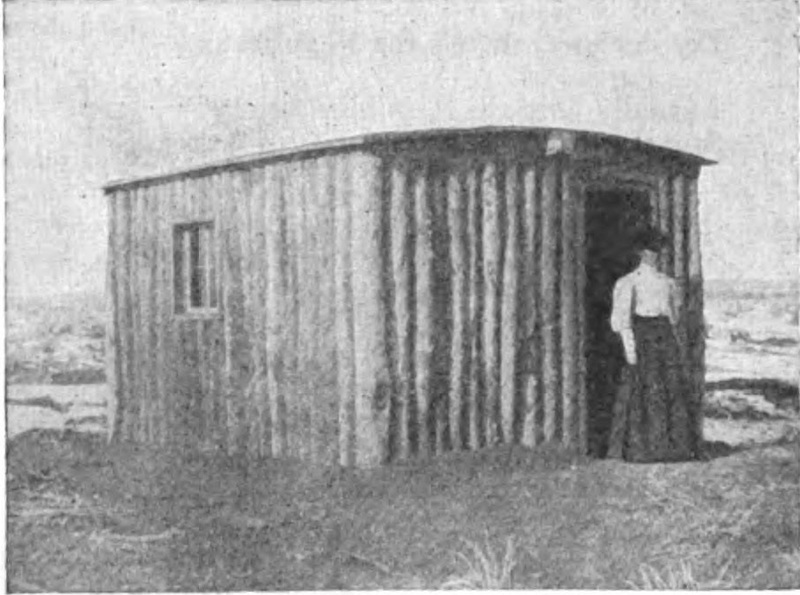
    <summary type="html"><![CDATA[<p><strong><em>Of homesteading, Kate Heizer wrote, “One inquirer has an exaggerated idea of the difficulties and hardships. Another has a mistaken notion of taking a pleasant vacation while waiting till he receives title to a piece of property that will place him above financial anxiety for the rest of his life.” As for herself, Kate recognized the truth lay somewhere in the middle. </p></strong></p><img src="https://www.intermountainhistories.org/files/fullsize/5dff0bee6f413282d2b91a59c25175a3.jpg" alt="First Cabin on Heizer Claim" /><br/><p>The Dawes Severalty Act of 1887 authorized and began a process of subdividing reservation lands among Native families, breaking up and diminishing Native landholdings, including the Uintah Indian Reservation. In August 1905, “surplus” land was opened to homesteading and mineral claims. Kate Heizer was only one of thousands who applied for property in these areas. Preference for pieces of property was decided by drawing lots and Kate picked #247, low when compared to other higher possible picks. Time for potential homesteaders to look over the available land was short. Wasatch Land Company and other professional “locators” promised to identify prime lots for a price, but, with high stakes, there was a general mistrust of anyone claiming to know anything. </p><p>Potential for success rested all on the decision of what piece of land was selected. Prospective owners frantically learned all they could of sagebrush and other indicators of soil quality. Kate was skeptical of her ability to choose, writing, “I was as little capable of judging [the land] as I am of discussing the canals on Mars.” She questioned and listened to everyone who could give her any information, carefully judging “which men really understood conditions and were giving honest advice, and which either mistakenly thought they knew or had interested motives.” Her biggest concern was how the property would be irrigated, so she decided largely based on where others gathered, hoping that community would increase value and ensure a greater effort and feasibility for irrigation schemes. Kate’s study and planning paid off and she “secured a better claim than many a one who had had an earlier choice.”</p><p>The filing took place in early fall and, once settled, Kate returned to her teaching job to finish out the school year. To fulfill settlement requirements, she “resided” on her homestead for several days during the Christmas break. It was common for individuals to leave for periods to save money to fund work done in the spring. There were lonely spells as people moved in and out. Contests were raised, occasionally, against abandoned claims and Kate had one filed against herself in her absence. Fortunately, empathetic neighbors “with unmistakable western emphasis” advised the man to drop it—and he did. The incident spurred Kate to move out permanently and begin her required 14 months of continuous residence. The first summer was a difficult season. Many homesteaders needed ditches that didn’t yet exist to access water. Kate was fortunate in that her property was within a gully that retained water into midsummer and provided shade that grew trees for lumber. Once it was completed, she paid $1.25 per acre to the Indian Fund and, in exchange, received her patent. </p><p>Supplies had to be freighted in and were expensive to acquire. When funds ran dry, Kate had to sell 50 acres to continue improvements to the rest of her land. She was tormented by rabbits and prairie dogs that ate her crops and gardens, making “scarecrows, guns, and poison... futile.” Despite its difficulties, she persevered, seeing homesteading as an opportunity to learn and a cause for hope. Kate planted 90 acres of alfalfa and studied agriculture so she could take over management of her ranch entirely. </p><p>Regarding success, Kate explained that “the man who is alert and ready to seize opportunities, who holds to a purpose until it is accomplished, is the man most likely to succeed in any undertaking, and homesteading is no exception.” She certainly followed her own advice. While Kate took pride in becoming successful and competent, she found something even more gratifying—“the realization of being an important factor in the community, one whose voice has weight, a person to be consulted about matters of public interest.” Through her hard work and determination, Kate found success, independence, and political influence as a single woman in the American West.</p><p><em><strong><a href="https://www.intermountainhistories.org/items/show/455">For more (including 4 images) view the original article</a></strong></em></p>]]></summary>
    <published>2021-02-06T08:54:57+00:00</published>
    <updated>2026-04-17T19:32:09+00:00</updated>
    <link rel="alternate" type="text/html" href="https://www.intermountainhistories.org/items/show/455"/>
    <id>https://www.intermountainhistories.org/items/show/455</id>
    <author>
      <name>Anna Bailey, Brigham Young University</name>
    </author>
  </entry>
  <entry>
    <title type="html"><![CDATA[Marie Jordan Bell, Female Homesteader<br />
]]></title>
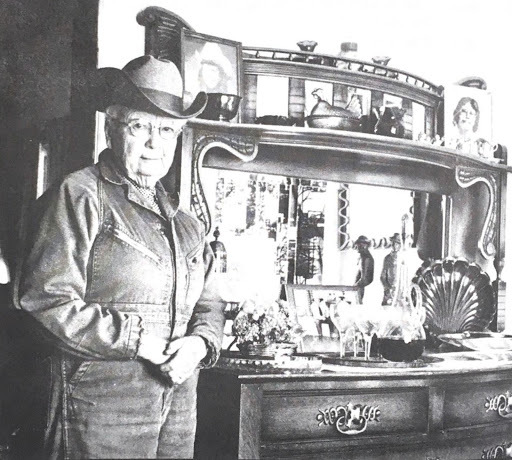
    <summary type="html"><![CDATA[<p><strong><em> Ranching was the preferred way of life for Marie Jordan Belle. Homesteading, for her, was an outlet for independence and an economic investment for her future.</p></strong></p><img src="https://www.intermountainhistories.org/files/fullsize/0abbd421f7d0b37611bce6ff3f925943.jpg" alt="Marie Jordan Bell in her ranch house
" /><br/><p>Born on a family ranch in Iron Mountain, Wyoming in 1898, Ella Marie Jordan grew up riding and working horses with her father and brothers. From her toddler years, she sustained a love for horses and her wild home. A lack of modern conveniences like electricity, running water, or a telephone characterized her early years. It was “just a way of life” and never impeded her love for ranching. She found passion in her work, opting to continue it even into her eighties.</p><p>When she turned 16, Marie took out a homestead section “up in the meadow by a tiny stream” near her family’s home. Her father built a small house for her that she lived in for three years, except when she was at school. It was small and simple, with only a bed, stove, mirror, window, and garden, but Marie “was sort of proud of it.” At the end of those three years, she was able to prove her claim (colloquial phrase for the legal process of securing a title to homestead lands after meeting certain government requirements). Marie’s father leased the land from her for several years, but ultimately purchased it from her for $1,000 after she tried to simply give it to him. In that way, the homestead served as an investment property for Marie rather than a permanent home. </p><p>After going to Baltimore, and later Kansas, to attend college, Marie met and married John Bell, “a gregarious, fun-loving cowboy with an acute business sense.” Together they built a large and successful ranch from the ground up in southern Wyoming. The money she had earned from her homestead was used to fix up their home, something they would have been unable to afford otherwise. John died of cancer in 1972, but Marie never considered moving away from their ranch. “What would I do in town?” she asked—a cowgirl through and through.</p><p><em><strong><a href="https://www.intermountainhistories.org/items/show/453">For more (including 4 images) view the original article</a></strong></em></p>]]></summary>
    <published>2021-02-05T03:39:06+00:00</published>
    <updated>2026-04-17T19:32:09+00:00</updated>
    <link rel="alternate" type="text/html" href="https://www.intermountainhistories.org/items/show/453"/>
    <id>https://www.intermountainhistories.org/items/show/453</id>
    <author>
      <name>Anna Bailey, Brigham Young University</name>
    </author>
  </entry>
  <entry>
    <title type="html"><![CDATA[Nellie Burgess, Female Homesteader<br />
]]></title>
    <summary type="html"><![CDATA[<p><strong><em>Eager to “help tame that Wild West,” Nellie Burgess Sudduth left a job at the Chicago Daily News with plans to establish a homestead. Nellie followed in the footsteps of her father, who had gone to California during the Gold Rush, and headed west seeking independence and adventure.</p></strong></p><img src="https://www.intermountainhistories.org/files/fullsize/b5fe1ab92bde2b87268d4550dbc33a1d.jpg" alt="Nellie as a young woman" /><br/><p>In 1908, Nellie Burgess was spurred west by the suggestion of a doctor to treat a nagging cough. An ad for a land raffle in Idaho was the only additional inducement she needed. When she arrived in King Hill, it was little more than a shed and city of tents on the banks of the Snake River. Many would-be settlers left empty handed, but Nellie persisted. Her number was the fortieth drawn from the old wooden butter churn used as the raffle pot. By that time, her first preference was already spoken for, so she selected her second—forty acres neighboring a bend in the Snake River. </p><p>Having secured her property claim, Nellie set to work improving it, both for her own quality of life and to fulfill the requirements of the Carey Act of 1894, under which she had filed her claim. Later, this would require irrigating her property, but she first set about constructing a prove-up cabin. Nellie’s was 14x16 with a small attic used as her bedroom. She rigged the trapdoor that served as its entrance to deliver a barrage of pungent pepper to the face of anyone who opened it while she slept. The resulting sound would alert Nellie and allow time to ready the gun that she slept with.</p><p>Still concerned about her safety, her family sent her sixteen year old nephew Glenn Mills to join her in 1912. By that time, her “Rainbow Ranch'' homestead was well established and she was enjoying many successes. After an initial crop of alfalfa, she added wheat, corn, melons, assorted fruits, sunflowers, and lilacs. In the first season, Nellie even grew a forty pound watermelon. Irrigation brought new weeds, but ensured that the garden grew fast. Wildlife occasionally threatened her crops, but she learned to fend them off. To supplement crops, she bought livestock, a horse, cow, pig, and chickens. Demonstrating remarkable independence and ability, she learned to hunt to supply meat. Nellie and Glenn took trips out to the mountains where they gathered berries and hunted large game.  Once, fishing along the banks of the Snake River, Glenn caught a 10 foot sturgeon that weighed over 400 pounds. They used the ferry to cross the river for other needed supplies.</p><p>In 1914, Nellie married Dave Sudduth, a neighboring rancher from Montana. She lived to see the 50th anniversary of the King Hill land drawings. By the 60th anniversary in 1968, she was the only original settler left. She died later that year. Esteemed for her courageous and adventurous spirit, friends and community members raised funds to establish a bronze plaque honoring her memory. It was cemented to a stone wall at Rainbow Ranch in 1969. The property has since been sold, but the plaque remains there in tribute to her legacy.</p><p><em><strong><a href="https://www.intermountainhistories.org/items/show/452">For more (including 11 images) view the original article</a></strong></em></p>]]></summary>
    <published>2021-02-05T03:09:47+00:00</published>
    <updated>2026-04-17T19:32:09+00:00</updated>
    <link rel="alternate" type="text/html" href="https://www.intermountainhistories.org/items/show/452"/>
    <id>https://www.intermountainhistories.org/items/show/452</id>
    <author>
      <name>Anna Bailey, Brigham Young University</name>
    </author>
  </entry>
  <entry>
    <title type="html"><![CDATA[Zay Philbrook, Female Homesteader<br />
]]></title>
    <summary type="html"><![CDATA[<p><strong><em>“If you have ever ridden up some mountain canyon when your trail led far above the aspen tops into higher silence… in an open world that seemed so full of God and happiness that you wanted to laugh and sob with the joy of living, then I’m sure you understand why we who have been here must always come back.” Zay Philbrook was one of those eternally drawn to the open mountains of the West.</em></strong></p><img src="https://www.intermountainhistories.org/files/fullsize/f970bb5e9d36a2bdc2f98b41a02e367e.jpg" alt="Sketch of Zay Philbrook’s Homestead Cabin" /><br/><p>Zay Philbrook had limited capital but a limitless love for the “glorious heart of Wyoming.” After boarding with a ranger and his family the summer of 1914, Zay was so smitten with her time in the Big Horn mountains that she wanted to stay. With her sister, she rented a small cabin near the town Ten Sleep and searched for land to homestead that suited her means and capabilities. Zay was realistic in her approach to settlement, considering costs of improvements and the physical demands of their completion. The restraints on her funds and time led her to consider a “Timber and Stone” claim. Such claims ranged from 40-160 acres and cost the appraised value of the land and its natural timber or stone. There were no requirements for improvements or time spent occupying the property, so Zay could purchase the patent outright.</p><p>With the help of a ranger, Zay discovered a “quiet, happy little valley fenced by red rimrock and timbered buttes, opening to the south to give a view of the Big Horn basin.” At the head of the valley were several springs that emerged from the hillside, forming a stream that ran the length of the valley. Zay wrote that even with her excitement about the property and its future, she hesitated, asking herself, if once started, she could “see the thing through to the end.” She “looked up at the mountains... measured the responsibility,” and decided she could. Zay had found her claim and, in her words, “All the rest was gladness.”</p><p>A surveyor came out to inspect the property and establish the claim. Zay, like other “timber and stone” claim holders, had to wait nine months before her patent was officially approved. At that time, she made the necessary payments which totaled $520.70 and included surveying, water and timber rights, the property, and all other fees. She paid an old trapper to build her simple one room cabin and made her own closet, shelves, table, and benches. The single room served many purposes and could be adapted to suit a single woman or a half dozen visitors passing through. Zay described it as such a “cosy, warm little room that one forgets winter is drifting down over long miles of mountainside.”</p><p>Economy was considered in all of Zay’s proceedings. She explained her thrift, saying, “Few of us lovers of the West can afford to start such a place just for the pleasure there is in it; we must look for some return for our time and money.” Improvements were viewed as an investment. The property, if necessitated, could be sold for a dude ranch or lambing ground, but Zay’s intentions were to establish a self-supporting ranch. She bought as many horses as she could afford, mainly yearlings. The homestead had only 5-6 irrigable acres and these were cleared of sage brush for a small hay pasture, a vegetable garden, and hardy fruit trees. Vegetables lasted into November and late spring frosts were more of a risk than early fall ones. </p><p>Homestead life was often marked by labor, loneliness, and difficulty, but it was also fulfilling and rewarding. Zay counseled prospective homesteaders to “expect some strenuous days,” but also to “know that every day brings fresh happiness, as you help the claim to grow, as the mountains become more friendly.”</p><p><em><strong><a href="https://www.intermountainhistories.org/items/show/450">For more (including 4 images) view the original article</a></strong></em></p>]]></summary>
    <published>2021-02-03T02:32:12+00:00</published>
    <updated>2026-04-17T19:32:09+00:00</updated>
    <link rel="alternate" type="text/html" href="https://www.intermountainhistories.org/items/show/450"/>
    <id>https://www.intermountainhistories.org/items/show/450</id>
    <author>
      <name>Anna Bailey, Brigham Young University </name>
    </author>
  </entry>
  <entry>
    <title type="html"><![CDATA[Ranching and Success on Fort Hall: The Indian Stockmen’s Association<br />
]]></title>
    <summary type="html"><![CDATA[<p><strong><em>During the 1910s, conflict and failure demarcated the relationship between the Shoshone-Bannock of Fort Hall and the federal government. To protest the government’s discriminatory policies and lack of economic opportunity, the successful Indian Stockmen’s Association was founded in 1920.</em></strong></p><img src="https://www.intermountainhistories.org/files/fullsize/4f9bf5bea0ec4b2194f39b77ef6d21ff.jpg" alt="[Untitled]" /><br/><p>From the creation of the Fort Hall Indian Reservation until the 1934 Indian Reorganization Act, the reservation was controlled by the federal Bureau of Indian Affairs (BIA). Without clearly understanding the cultural and physical needs of the Shoshone-Bannock, the BIA and on-site agents often made decisions that conflicted with local values and harmed the general welfare. For example, horses symbolized power, mobility, and strength to the Shoshone-Bannocks, who required at least ten steers as payment for just one horse. To the government, the horses were just obstacles in the way of progress. The final straw was in September 1920, when government agents quietly rounded up 1,200 horses and sold them for less than $6 apiece—to be turned into chicken feed.</p><p>Meanwhile, individual ranchers were successfully circumventing the reservation bureaucracy by communally sharing allotment lands for cattle grazing. In 1917, Thomas LeSieur, a Cherokee married to a Shoshone woman, sold his cattle for $8.45 a head, the highest price for range beef cattle in Idaho that year. Others on the reservation had also realized the economic potential cattle provided, especially Ralph Dixey and Pat Tyhee, both Shoshones.  Dixey stated in 1917, “This is a cattle country; my people here are stock raisers.” Land-use policies under previous Indian agents gave preference to non-Native ranchers with the pretext that their herds were more profitable. Outraged by discriminatory policies, the loss of their horses, and the general poverty of the reservation, Dixey and Tyhee joined with other Shoshone-Bannock ranchers to form the Fort Hall Indian Stockmen’s Association (ISA) in 1921. The organization’s objectives were to protect the reservation range land, to raise better cattle and horses, to make the herds self-sustaining, to build a sales yard at Fort Hall, and to foment cooperation with white neighbors.</p><p>By the end of 1921, the ISA had about 5,000 head of cattle on the reservation. Local newspapers and ranchers were amazed by the quality of the herds. The ISA became so successful that the herdsmen built stock yards and feeders to expand the scope of their operation. Buyers came from as far away as Los Angeles to look at the cattle, but the ISA was insistent that the cattle first be sold locally. Partially, this goal would help offset costs, but it was also a useful tool to build bridges between Shoshone-Bannock ranchers and their non-Native neighbors. The cattle operation turned out to be a popular and very profitable experiment for many decades afterward and was subsequently copied by several other Native American groups in the west.</p><p>The Indian Cattlemen’s Association continued to be a powerful player in tribal economics and politics throughout the twentieth century, but today the ISA has been superseded by Shoshone-Bannock Tribal Enterprises.</p><p><em><strong><a href="https://www.intermountainhistories.org/items/show/205">For more (including 3 images) view the original article</a></strong></em></p>]]></summary>
    <published>2018-06-08T03:06:17+00:00</published>
    <updated>2026-04-17T19:32:02+00:00</updated>
    <link rel="alternate" type="text/html" href="https://www.intermountainhistories.org/items/show/205"/>
    <id>https://www.intermountainhistories.org/items/show/205</id>
    <author>
      <name>Natalie Larsen, Brigham Young University</name>
    </author>
  </entry>
  <entry>
    <title type="html"><![CDATA[The Wolfe Homestead]]></title>
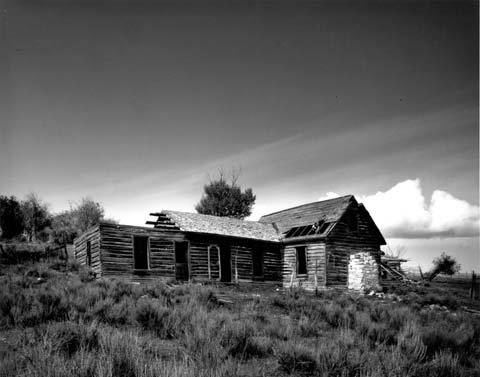
    <summary type="html"><![CDATA[<p><strong><em> John Wesley Wolfe, a Civil War veteran, left his family in Ohio to find relief from his wounds in a drier climate. He and his oldest son established a cattle ranch and trading stop for Indians. In their last years on the ranch, John’s daughter Flora and her family kept him company and contributed to the ranch.</em></strong></p><img src="https://www.intermountainhistories.org/files/fullsize/af938743024b683a80bf043ceb5c95ce.jpg" alt="Arches National Park" /><br/><p>John Wesley Wolfe was born on February 17, 1829 in Tennessee. When the Civil War broke out in 1861, John joined the Union even though his home state joined the Confederacy. He fought in several major battles as a member of the 17th Ohio Battery. At the Siege of Vicksburg, John injured his leg lifting a cannon out of the mire and was given a disability discharge. He never walked without the aid of a crutch again, and this injury eventually prompted him to move to Utah.</p><p>In 1898, at the age of sixty-nine, John decided to heed his doctor’s advice and move to a drier climate. He hoped the desert air would alleviate the pain in his leg and stop the infection from spreading. He only managed to convince his son Fred to go with him to southern Utah. John’s wife and their three other children stayed behind in Ohio. John and Fred erected a simple cabin and set to work creating their “Bar DX” ranch. Though it’s not visible today, there was abundant native grass in the area that allowed over 1,000 cattle to graze on the Wolfe’s ranch. </p><p>In 1906, John’s daughter Flora and her family came to live on the ranch. She, her husband Ed Stanley, and their children Esther and Ferol brought new life to the remote homestead. Fred and Ed built a new cabin with wood floors and a window to make Flora and the children more comfortable. The men hauled timber from the Colorado River to use for the walls. They built the roof out of a frame of small logs and a large center beam. Fred and Ed laid bark from juniper trees and dirt from the surrounding hills over the top of the frame. The children helped stuff clay into the cracks between logs for insulation. This cabin is visible from the trail that leads to Delicate Arch in Arches National Park today. </p><p>Despite living in such a remote area, the Wolfes and Stanleys ate well. John irrigated a garden by plugging the creek that ran nearby with a simple dirt dam. He grew squash, corn, pumpkins, and a few extra melons to trade with the Indians who passed through. Few things made John as angry as when a rainstorm flushed out the dam. The family ate rabbit, venison, and chicken until butchering season came each fall and they had fresh beef. John supplanted their diet with groceries like canned milk that he picked up at Thompson Springs. Ed missed fresh milk so much that he once tried to milk a wild cow. The rest of the family watched as the cow kicked both hind feet and Ed quickly learned to be content with canned milk. </p><p>After two years, the Stanleys moved to Moab so their children could receive a formal education. In 1910, John sold the ranch to Tommy Larson and moved back to Ohio. John died in October of 1913 at age eighty-four. In 1914, Marvin Turnbow, the first custodian of Arches National Monument, bought the ranch from Larson. His family used the cabin occasionally until they sold it to Emmit Elizondo, who eventually sold the property to the U.S. government for inclusion in Arches National Monument.</p><p><em><strong><a href="https://www.intermountainhistories.org/items/show/200">For more (including 3 images) view the original article</a></strong></em></p>]]></summary>
    <published>2018-06-07T01:18:25+00:00</published>
    <updated>2026-04-17T19:32:02+00:00</updated>
    <link rel="alternate" type="text/html" href="https://www.intermountainhistories.org/items/show/200"/>
    <id>https://www.intermountainhistories.org/items/show/200</id>
    <author>
      <name>Samuel Hauber, Brigham Young University</name>
    </author>
  </entry>
</feed>