<?xml version="1.0" encoding="UTF-8"?>
<feed xmlns="http://www.w3.org/2005/Atom">
  <title type="text">Intermountain Histories</title>
  <updated>2026-04-17T19:32:20+00:00</updated>
  <generator uri="http://framework.zend.com" version="1.12.20">Zend_Feed_Writer</generator>
  <link rel="alternate" type="text/html" href="https://www.intermountainhistories.org/"/>
  <link rel="self" type="application/atom+xml" href="https://www.intermountainhistories.org/items/browse?output=rss2"/>
  <id>https://www.intermountainhistories.org/</id>
  <author>
    <name>Intermountain Histories</name>
    <uri>https://www.intermountainhistories.org</uri>
  </author>
  <link rel="hub" href="https://pubsubhubbub.appspot.com/"/>
  <entry>
    <title type="html"><![CDATA[Mignon Richmond: First Black Woman College Graduate in Utah]]></title>
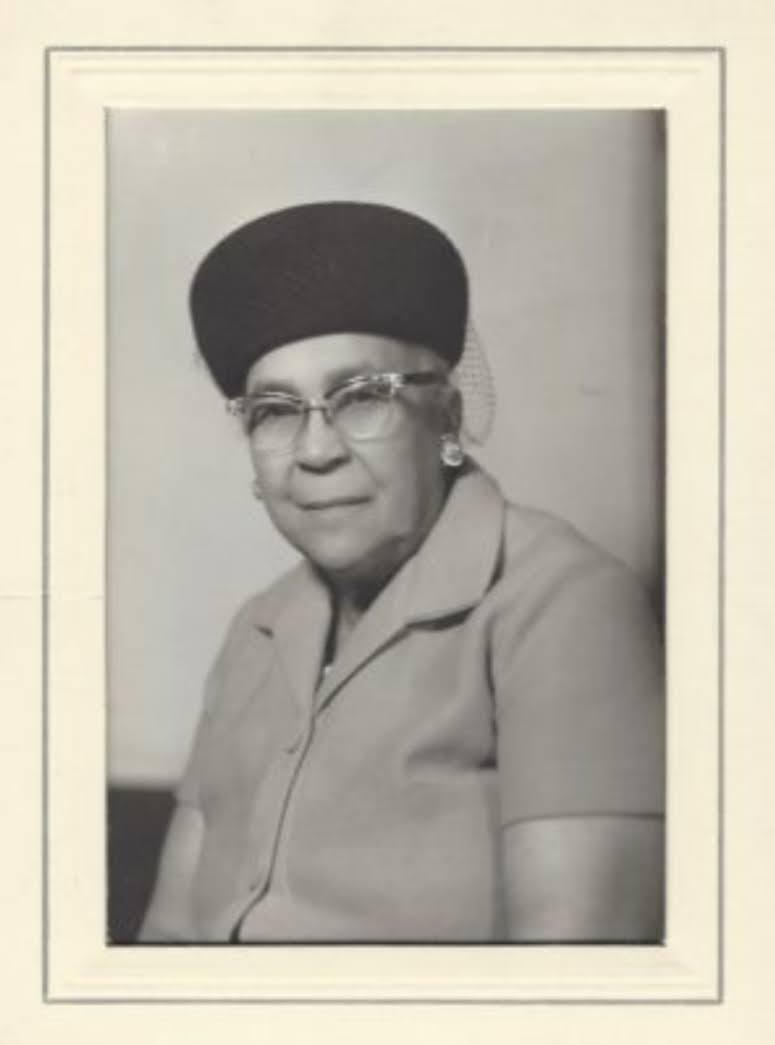
    <summary type="html"><![CDATA[<p><strong><em><span style="font-weight:400;">In 1921 Mignon Barker Richmond became the first African American woman to graduate from college in Utah and went on to become a community organizer and civil rights activist.</span></em></strong></p><img src="https://www.intermountainhistories.org/files/fullsize/8b40389c2ee054bc94fe17722f9e1b3b.jpg" alt="Mignon Barker Richmond" /><br/><p><span style="font-weight:400;">Mignon Barker Richmond was born on April 1, 1897 in Salt Lake City to William Barker and Mary Alice Reagan Barker. She attended Utah Agricultural College, now known as Utah State University, in Logan, Utah, graduating in 1921 with a degree in home economics. She persisted in spite of gross racism from her professors and peers, and participated in the Empyrean Club, a group of women that discussed contemporary problems and events, becoming its secretary-treasurer in her senior year. Following graduation, she faced difficulties finding a job in her field of study due to racial discrimination, and only after 27 years was she able to obtain work in her field of study, working first as a laboratory technician, and later as a school lunch supervisor at the University of Utah Stewart School from 1948 to 1953, and was afterwards hired to start home-living classes for the Utah State Industrial School. </span>
<span style="font-weight:400;">During this period she was active in the National Association for the Advancement of Colored People (NAACP) and the Young Women’s Christian Association (YWCA), and in 1957 she became the YWCA Food Services Director in Salt Lake City, where she stayed until her retirement in 1962 at the age of 65. Later, during president Lyndon Johnson’s administration, she became the head of the Women’s Job Corps and chairwoman of Project Medicare Alert. During her work with the Salt Lake chapter of the NAACP, she co founded the Nettie Gregory Center, a venue for minority youth to be involved in recreation in Salt Lake City, as well as on boards for the Utah Community Service Council and the Women’s Legislative Council, where she helped create legislation to fight poverty. After receiving several awards for her community service and commitment to education and civil rights, she died at the age of 86 on March 10, 1984. Many organizations including the Salt Lake Branch NAACP, Trinity AME Church, and Calvary Baptist Church came together to dedicate Richmond Park in Salt Lake City in 1984, and commissioned a plaque describing Mignon Barker Richmond as an educator, civil leader, and humanitarian.</span></p><p><em><strong><a href="https://www.intermountainhistories.org/items/show/874">For more (including 3 images) view the original article</a></strong></em></p>]]></summary>
    <published>2024-11-02T22:24:37+00:00</published>
    <updated>2026-04-17T19:32:20+00:00</updated>
    <link rel="alternate" type="text/html" href="https://www.intermountainhistories.org/items/show/874"/>
    <id>https://www.intermountainhistories.org/items/show/874</id>
    <author>
      <name>Morgon George, Utah State University</name>
    </author>
  </entry>
  <entry>
    <title type="html"><![CDATA[The Short and Storied History of The Colored Citizen]]></title>
    <summary type="html"><![CDATA[<p><strong><em>In 1884, the <em>Colored Citizen</em> became the first African American newspaper to be published in Montana. This newspaper is credited with helping Helena become the capital city of Montana. Additionally, while this newspaper was short-lived, it set the foundations for the other African American newspapers that followed.</em></strong></p><img src="https://www.intermountainhistories.org/files/fullsize/768f6a0faac6043afd8ad289535d1d70.jpg" alt="[Untitled]" /><br/><p><span style="font-weight:400;">In the early 1880s, a fight erupted in Montana over the location of the state capital. William Andrews Clark and Marcus Daly, the biggest names in the Montana copper industry, each wanted their local city to become the capital. While Daly preferred his beloved Anaconda, Clark fought to make the upstart mining city of Helena the capital. As part of the campaign to persuade voters to select Helena, he created and funded </span><i><span style="font-weight:400;">The</span></i> <i><span style="font-weight:400;">Colored Citizen</span></i><span style="font-weight:400;">. Clark was known as a famous entrepreneur, the “Copper King of Montana,” and as one of the wealthiest men in the United States during the late nineteenth century. He spent over $200,000 supporting the newspaper during its short run from September-November 1894, which was during the campaign season. James Presley Ball Jr. was named editor of the newspaper. Ball Jr. was also a photographer, and he represented a variety of African Americans who migrated to Helena in the 1880s in search of better treatment. He published the newspaper at 137 N. Main St, which is in the downtown area of the city. </span>
<span style="font-weight:400;">The </span><i><span style="font-weight:400;">Colored Citizen</span></i><span style="font-weight:400;">’s opening issue discussed the purpose of the paper. According to the Library of Congress, “Its reason for being was the intense interest among the city’s 279 ‘Colored’ Citizens in the upcoming election to decide the site of the state capital: Helena or Anaconda.” This issue also stated that Montana should be immensely proud of all of its “Colored Citizens.” During 1884, African Americans represented around 1% of the total state population with about 1,500 citizens. Additionally, the </span><i><span style="font-weight:400;">Colored Citizen </span></i><span style="font-weight:400;">had stories and articles about news on the local and state level. The newspaper was four pages long, with six columns. </span>
<span style="font-weight:400;">In the final issue of the newspaper on November 5th, 1894, a full-page endorsement filled the front page. It stated, “The Anaconda Mining Company Does Not Employ a solitary Colored man. Dagoes and Foreigners are preferred to Native Colored Americans. Helena has 500 Prosperous Colored Citizens. They own Thousands of Dollars of Real Estate and are Engaged in every kind of Business. Colored Men of Montana stand by your Helena Brethren. Vote for HELENA for the CAPITAL.” Unfortunately, the newspaper was shut down shortly before the vote, which ended up coming down to the wire. With a narrow gap of less than 2,000 votes out of the 50,00 votes cast, Helana won. The </span><i><span style="font-weight:400;">Colored Citizen</span></i><span style="font-weight:400;">’s influence on the vote is immeasurable, and its work to make Helena the capital has impacted Montana to this day. The newspaper also laid the groundwork and foundation for the African American newspapers that followed. </span><span style="font-weight:400;"> </span></p><p><em><strong><a href="https://www.intermountainhistories.org/items/show/871">For more (including 4 images) view the original article</a></strong></em></p>]]></summary>
    <published>2024-10-22T21:23:11+00:00</published>
    <updated>2026-04-17T19:32:19+00:00</updated>
    <link rel="alternate" type="text/html" href="https://www.intermountainhistories.org/items/show/871"/>
    <id>https://www.intermountainhistories.org/items/show/871</id>
    <author>
      <name>Morgan Baird, Rocky Mountain College  </name>
    </author>
  </entry>
  <entry>
    <title type="html"><![CDATA[The Women of the Ku Klux Klan in Denver]]></title>
    <summary type="html"><![CDATA[<p><strong><em><span style="font-weight:400;"> In 1926, the Women of the Ku Klux Klan (WKKK), along with their male counterparts, marched down Larimer Street in downtown Denver. The WKKK was an appealing way for Protestant women to display comradery, exist in a historically male space, and spew anti-Catholic and Jewish rhetoric.</span></em></strong></p><img src="https://www.intermountainhistories.org/files/fullsize/5d9244d4ded11646b84fd3324a59938c.jpg" alt="“Ku Klux Klan members march down Larimer Street in Denver.” 1926." /><br/><p><span style="font-weight:400;">A notable difference between the KKK of the 19</span><span style="font-weight:400;">th</span><span style="font-weight:400;"> century and the Klan of the 20</span><span style="font-weight:400;">th</span><span style="font-weight:400;"> century was the latter’s inclusion of women—a sub-organization called the Women of the Ku Klux Klan (WKKK). Like their male counterparts, the WKKK promoted a skewed version of “Americanism” and believed that the United States needed saving from minorities and non-Protestant religions. However, they filtered their bigotry and xenophobia through a uniquely feminine manner. They sought to present themselves as good, charitable, white Protestant American women and believed that they needed to uphold KKK ideals to do so. Furthermore, they had their own leaders, rules, and initiations. </span></p><p><span style="font-weight:400;">Colorado’s Klan chapters and activities were perhaps the most potent of anywhere in the Intermountain West during the 1920s, and the Klanswomen activities in this period reflected that. In 1926, the Klan held a large parade and marched down Larimer Street in Denver, Colorado. The women, like the men, marched in full regalia, although they were notably unhooded. It seems like they felt a great deal of pride and wanted their actions recognized. </span>
<span style="font-weight:400;">An important figure of Colorado’s WKKK was influential leader Laurena Senter. Senter was very active in the public sphere and acted as president of organizations such as the Colorado Federation of Women’s Clubs and the Women’s Club of Denver. Her husband was a very high-ranking member of the Klan and together they were very dedicated to the Klan. </span>
<span style="font-weight:400;">In 1925, Senter traveled around the state and performed rituals and initiations. Historian Betty Jo Brenner notes that women were eager to join the WKKK for reasons such as the allure of mystery and ritual. However, rather notably it also appealed to women seeking more agency. Women often joined independently from their husbands and were able to obtain leadership positions. Joining the WKKK also allowed women to foster comradery with other women and participate in secret organizations, a space historically dominated by men. Because of these reasons, their actions can be seen as a form of feminism. </span>
<span style="font-weight:400;">Klanswomen in Denver believed that charitable actions and benevolence defined their role. They delivered Thanksgiving baskets to less fortunate families in Denver and even adopted an orphaned child called Richard—who they dressed up in Klan regalia. They also attempted to deter people from patronizing businesses that were “run by Jews,” and raised money to keep orphans out of Catholic-supported orphanages.</span>
<span style="font-weight:400;">The WKKK of Colorado eventually split from the national WKKK. Senter described in her diary her frustration with the Klan’s leadership in Colorado. It seems that although she still believed in its mission of white Protestant supremacy, she believed that the Colorado Klan had lost sight of its purpose and criticized members for joining in hopes of personal gain and glory. </span>
<span style="font-weight:400;">The national WKKK determined that the Colorado chapter could no longer call themselves the WKKK and thus Senter reorganized her group as the “Colorado Cycle Club.” Although some members defected, many remained loyal to Senter’s group. Under the “Colorado Cycle Club,” the organization lasted until 1945. </span></p><p><em><strong><a href="https://www.intermountainhistories.org/items/show/815">For more (including 3 images) view the original article</a></strong></em></p>]]></summary>
    <published>2024-05-21T01:24:52+00:00</published>
    <updated>2026-04-17T19:32:18+00:00</updated>
    <link rel="alternate" type="text/html" href="https://www.intermountainhistories.org/items/show/815"/>
    <id>https://www.intermountainhistories.org/items/show/815</id>
    <author>
      <name>Aidan Capristo, Northern Arizona University</name>
    </author>
  </entry>
  <entry>
    <title type="html"><![CDATA[The Klan in Colorado Springs]]></title>
    <summary type="html"><![CDATA[<p><strong><em><span style="font-weight:400;">Following successes in Denver, the Ku Klux Klan formed a new chapter in Colorado Springs. Although this new chapter hoped to gain similar success, it faced many difficulties in accomplishing its goals.</span></em></strong></p><img src="https://www.intermountainhistories.org/files/fullsize/baf2ca0344300dd4d216c34836e78a31.jpg" alt="“KKK members standing in front of a cross at Pikes Peak.” July 4th, 1923." /><br/><p><span style="font-weight:400;">The Klan in Colorado originally began in Denver, but soon spread to nearby towns and cities such as Colorado Springs in hopes of gaining more influence and followers. The 30,605 residents of Colorado Springs were overwhelmingly Protestant, with only 500 Jews and 2,965 Catholics, and thus seemed like an ideal location for the Klan to penetrate. </span></p><p><span style="font-weight:400;">In 1921, the Klan immediately sought to gather support from local organizations— a strategy that worked well for them in Denver. However, many in the community, the police included, were weary of the Klan. After sending a letter to a veteran’s group that was deemed to be a veiled threat, the Klan was met with fervent backlash from local organizations. The leadership of the American Legion condemned the Klan and emphasized its lawbreaking, and Reverend Charles A. Fulton denounced the Klan to his congregation. The Klan’s attempts to gain support in Colorado Springs were deemed a failure and they retreated for the time being</span>
<span style="font-weight:400;">Two years later, on July 4th, 1923, the day following a local screening of </span><i><span style="font-weight:400;">Birth of a Nation,</span></i><span style="font-weight:400;"> Klansmen set ablaze a 30-foot-tall cross on Pikes Peak near Colorado Springs. This marked the creation of a new Klan chapter that sought to renew previous efforts. As before, Klansmen sought connections with local groups but now attempted to invoke fears about the town’s bootlegging Catholics and presented themselves as a lawful solution.</span>
<span style="font-weight:400;">However, the Klan faced multiple problems bringing their goals to fruition. Although anti-Catholicism was no doubt present in the majority Protestant population, many did not view Catholics as an immediate threat. Thus, the Klan offered a violent and militant solution that offered little appeal. Bootlegging, a prominent crime in Colorado Springs that was often used to scapegoat Catholics, was being dealt with by the actual law enforcement, and the Klan’s vigilantism was not seen as needed by the police and citizens. Colorado Springs was a popular tourist destination and residents feared that the Klan’s violent image could negatively affect their commerce and industry.  The Klan’s frequent crises of local leadership also did not help their cause. During their brief presence in Colorado Springs during the 1920s, four different men acted as the local leader or “Exalted Cyclops.” Two of these leaders were deposed before the end of their term.</span>
<span style="font-weight:400;">Although the Klan did not initially vacate the city this time, its unpopularity drove the Klan to operate from the shadows. Klan activities in Colorado Springs during the 1920s mostly consisted of debate and discussion at lodge meetings, and the occasional cross-burning. The Colorado Springs Chapter only appeared once publicly during the 1920s. Not even daring to show themselves in Colorado Springs, they decided to make a donation to a church in the nearby municipality of Fountain resulting in an uproar.</span>
<span style="font-weight:400;">Following their actions in Fountain and the subsequent backlash, the Colorado Springs Klan chapter shrank and eventually dissipated. Although reaching a notable member count of 2,000 during the 1920s, a combination of poor leadership and uninterested potential members resulted in the Colorado Springs chapter of the Klan not having the same amount of success as their Denver neighbors in gaining membership and influence during the 1920s.</span></p><p><em><strong><a href="https://www.intermountainhistories.org/items/show/814">For more (including 3 images) view the original article</a></strong></em></p>]]></summary>
    <published>2024-05-21T01:15:28+00:00</published>
    <updated>2026-04-17T19:32:18+00:00</updated>
    <link rel="alternate" type="text/html" href="https://www.intermountainhistories.org/items/show/814"/>
    <id>https://www.intermountainhistories.org/items/show/814</id>
    <author>
      <name>Aidan Capristo, Northern Arizona University</name>
    </author>
  </entry>
  <entry>
    <title type="html"><![CDATA[A Large KKK Parade and Initiation Ceremony in Boise, Idaho]]></title>
    <summary type="html"><![CDATA[<p><strong><em><span style="font-weight:400;">A large Ku Klux Klan parade marched through downtown Boise in 1924. The parade had floats and pyrotechnics. The procession ended at the fairgrounds where Klan initiation ceremonies took place. </span></em></strong></p><img src="https://www.intermountainhistories.org/files/fullsize/49066b000484ae4fe8e361ce7330a383.jpg" alt="Group of Klansmen photographed without masks" /><br/><p><span style="font-weight:400;">On September 8</span><span style="font-weight:400;">th</span><span style="font-weight:400;">, 1924, 350 Knights of the Ku Klux Klan marched through downtown Boise, Idaho. The parade—representing Klan chapters from all over Idaho—was a large spectacle and reminiscent of a traditional Fourth of July celebration. The parade contained floats, pyrotechnics, and a band blaring “Rally ‘Round the Flag”—an old Civil War tune. They marched through downtown before eventually ending at the fairground where Klan initiation ceremonies and speeches took place in front of an audience of 3000.</span></p><p><span style="font-weight:400;">Most remarkable about the Klan’s presence on that day was how they chose to represent themselves. Following backlash concerning its violent and clandestine nature in previous years, Klansmen presented themselves unhooded and orderly to emphasize their grandeur and image as proper Americans. Many members felt proud to display their allegiance, and twenty even chose to pose unmasked for an </span><i><span style="font-weight:400;">Idaho Statesman</span></i><span style="font-weight:400;"> photograph.  Their use of expensive pyrotechnics and floats is also notable because it not only shows a desire for attention but demonstrates the Klan was organized and wealthy enough to produce such a parade. Furthermore, when the procession reached the fairgrounds, Klansman concluded speeches with special bombs exploding in the air. When the bombs exploded, American flags and three “K” flags were produced in the air and gradually floated back to the ground. </span>
<span style="font-weight:400;">Two floats present in the parade represented Klan political beliefs/tactics during this period. One float was titled “Little Red Schoolhouse” but instead of a traditional red schoolhouse the Klan had draped the schoolhouse in white and added a banner proclaiming “one flag, one county, one school.” Another float followed, also covered in white, with a banner stating, “America First.” According to the Boise paper the </span><i><span style="font-weight:400;">Idaho Statesman,</span></i><span style="font-weight:400;"> this float represented the women of the Klan. Together these floats show the Klan desired to be represented as model Protestant Americans.</span>
<span style="font-weight:400;">The </span><i><span style="font-weight:400;">Statesman</span></i><span style="font-weight:400;"> and others had criticized the Klan inflicting violence against minorities and the Klan used the parade to quell the fears of the citizens. When they reached the fairgrounds, J.H Harmon, a Klansman, stated “we have demonstrated in Boise today that we are a law and order organization…It should prove to you that we do not commit violence.”  Another Klansman, W.M Cortner, stated in a speech “The Knights of the Ku Klux Klan are standing for nothing that is not just, right and honorable. It is not anti-one church, race, creed, or people. The reason why a Catholic, a Jew, or a negro cannot belong to the Klan Is because they have their own organizations.”  </span>
<span style="font-weight:400;">The Boise parade and speeches represent the Klan’s desire to use grandeur and spectacle to alter its image from violence and racism to a softer one of proper American Protestants and white supremacists. </span></p><p><em><strong><a href="https://www.intermountainhistories.org/items/show/813">For more (including 3 images) view the original article</a></strong></em></p>]]></summary>
    <published>2024-05-21T01:01:51+00:00</published>
    <updated>2026-04-17T19:32:18+00:00</updated>
    <link rel="alternate" type="text/html" href="https://www.intermountainhistories.org/items/show/813"/>
    <id>https://www.intermountainhistories.org/items/show/813</id>
    <author>
      <name>Aidan Capristo, Northern Arizona University</name>
    </author>
  </entry>
  <entry>
    <title type="html"><![CDATA[Dave Tatsuno: Film at Topaz Internment Camp]]></title>
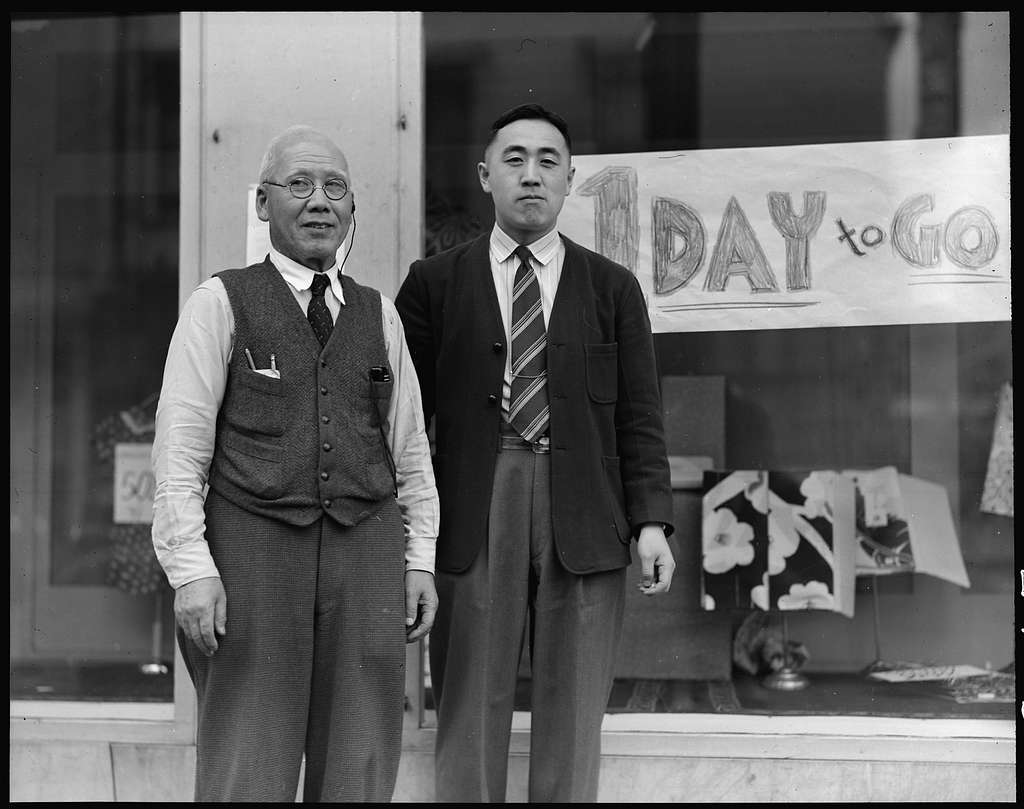
    <summary type="html"><![CDATA[<p><strong><em><span style="font-weight:400;">Dave Tatsuno was one of 11,000 Japanese and Japanese-Americans that were held in Topaz Internment Camp in Delta, Utah. His experience was unique in that he recorded some of his family’s experiences through a motion picture camera that he smuggled into camp. While never intended to be a documentary, his compiled film has since been added to the Library of Congress and further brings to light the conditions experienced by the Japanese in Topaz. </span></em></strong></p><img src="https://www.intermountainhistories.org/files/fullsize/152ee8719f930d9151064c1c1657e3d6.jpg" alt="Dave Tatsuno and his father, merchants of Japanese ancestry in San Francisco prior to evacuation " /><br/><p><span style="font-weight:400;">Born Masaharu Tatsuno in Japan in 1913, Tatsuno immigrated to the United States with his parents when he was only a few months old. Upon arrival in the Bay Area, and due to a clerical error that not even his family understands, he was given a U.S. birth certificate. At a young age, his mother abandoned his family and returned to Japan, leading him to become heavily involved in the YMCA. He decided to adopt the name “Dave” while in junior high. He married Alice Okada in 1938, and their first son, Sheldon, was born in 1940. Amateur filmmaking became a passionate hobby of his after the death of a close friend, when he realized that film had the potential to metaphorically “bring someone back to life.” </span>
<span style="font-weight:400;">Due to the Japanese attack on Pearl Harbor in 1941 (in addition to other Japanese imperialist activities) and racist attitudes towards the Japanese, President Franklin D. Roosevelt issued Executive Order 9066 in February 1942. This order divided the West Coast into military zones and gave the army authority to relocate civilians further inland. The Japanese were the main group affected by the order. Prior to evacuation and internment, Tatsuno helped his father, Shojiro, operate a dry goods store in the Bay area called “Nichi Bei Bussan.” In order to prepare to move, “Nichi Bei Bussan” had an evacuation day sale, where they were forced to sell their goods at incredibly low prices in order to get rid of inventory quickly. </span>
<span style="font-weight:400;">Tatsuno and his family were first held at Tanforan Racetrack and later relocated to Topaz in 1942. Tatsuno, who was familiar with running a business, became one of the managers of the co-op store in camp. While working, he met Walter Honderick, a War Relocation Authority official who owned a camera himself. Honderick encouraged Tatsuno to send for his camera under Honderick’s name. Tatsuno, while on a trip for supplies for the co-op, purchased film for the camera in Chicago. With camera and film, Tatsuno was able to participate in his old hobby again.</span>
<span style="font-weight:400;">In interviews, Tatsuno was adamant that his film in Topaz was never meant to be a documentary. Its focus was specifically on his family and friends. Despite that, the film does contain significant and telling scenes. One scene depicts several Japanese men digging a trench outside one of the barracks. Tatsuno’s narration (which was added to the film much later) relates that the men were repairing a broken pipe. This scene depicts the labor that the Japanese were expected to contribute in order to keep the camp running. Another scene, perhaps one of the most significant, shows Tatsuno’s brother, Masateru (or “Tut”) visiting the camp as an American soldier on his way to Germany. In later interviews, Tatsuno described that he found great irony and injustice in the fact that his brother, especially with his position as a U.S. soldier, had to visit his family behind barbed wire. </span>
<span style="font-weight:400;">Tatsuno and his family returned to the Bay Area in 1945, where they reopened “Nichi Bei Bussan” and sought to help other Japanese returning from internment camps transition back to everyday life. Tatsuno continued to serve as part of the Japanese American Citizens League (JACL) and the YMCA throughout the rest of his life. His film </span><i><span style="font-weight:400;">Topaz</span></i><span style="font-weight:400;"> was added to the Library of Congress in 1996. Tatsuno passed away in 2006, but his legacy of recording his experience at Topaz remains. </span></p><p><em><strong><a href="https://www.intermountainhistories.org/items/show/775">For more (including 3 images) view the original article</a></strong></em></p>]]></summary>
    <published>2024-01-23T05:03:04+00:00</published>
    <updated>2026-04-17T19:32:17+00:00</updated>
    <link rel="alternate" type="text/html" href="https://www.intermountainhistories.org/items/show/775"/>
    <id>https://www.intermountainhistories.org/items/show/775</id>
    <author>
      <name>Sara Davis, Brigham Young University</name>
    </author>
  </entry>
  <entry>
    <title type="html"><![CDATA[James P. Beckwourth: Enslaved African to Crow Chief]]></title>
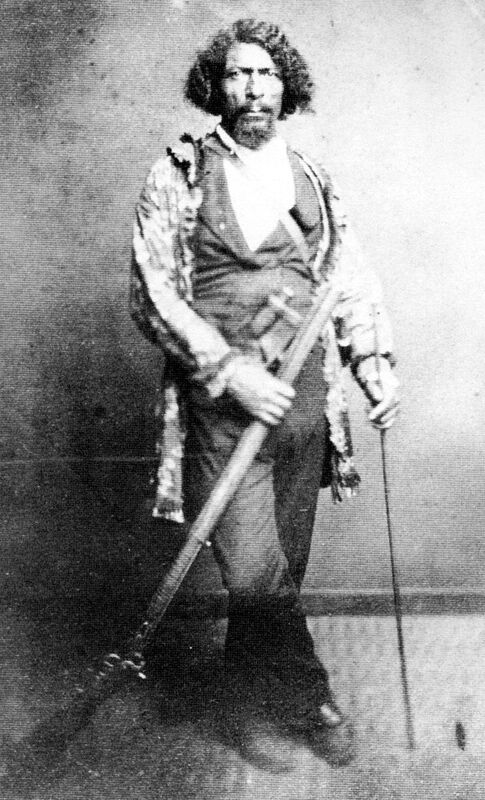
    <summary type="html"><![CDATA[<p><strong><em>James P. Beckwourth, born to a mixed-race couple in 1798, ended up becoming the Chief of the Crows. </em></strong></p><img src="https://www.intermountainhistories.org/files/fullsize/b9b6bc63d500243cc53b88766daaadf2.jpg" alt="Beckwourth in His Regalia." /><br/><p><span style="font-weight:400;">About a decade before his death, James Pierson Beckwourth recounted the events of his life to Thomas Bonner, which was published in 1856 as </span><i><span style="font-weight:400;">The Life and Adventures of James P. Beckwourth: Mountaineer, Scout, Pioneer and Chief of the Crow Nation</span></i><span style="font-weight:400;">. Although historians have criticized the account for Beckwourth’s embellishments—especially his role in certain events—the account reveals incredible details of the African American Chief. </span>
<span style="font-weight:400;">James P. Beckwourth had one of the most exciting lives among mountain men. Born on April 26, 1798, near Fredericksburg, Virginia, the son of Irish aristocrat Sir Jennings Beckwith and his mulatto servant, Miss Kill. In total, Miss Kill bore a dozen more children by Beckwith. Beckwith moved his family to St. Louis in 1809, where he could raise his mixed-race progeny as family.  </span>
<span style="font-weight:400;">When the family moved to St. Louis in 1809, Beckwith apprenticed James as a blacksmith with George Casner and John Sutton. Beckwith manumitted his son when Beckwourth turned 18. After a few years mining lead on the Galena River, James returned to St. Louis and joined the Ashley-Smith fur trapping enterprise in 1824. He attended the first Rocky Mountain Rendezvous on Henry’s Fork of the Green River on July 1, 1825. He was one of the first black men to enter and trap in the soon-to-be Utah Territory.</span>
<span style="font-weight:400;">Perhaps his most intriguing adventure was his journey to become a chief of the Crow Nation. On their way from the Rocky Mountains to the Yellowstone River, Beckwourth and his fur-trapping companion, Jim Bridger, left their trapping group to set out on their own for a few days. Beckwourth and Bridger split up at a river’s fork, planning to meet up after a few hours. Beckwourth followed the stream when suddenly he found himself surrounded by Crows. He had a long history of escaping from Indians intent to do him harm, but this time he knew he could not escape and pleaded for mercy. The Crows took Beckwourth to their chief Big Bowl, who mistook Beckwourth for his long-lost son, calling him a “great warrior.” This may have been a ritualistic adoption commonplace to replace loved ones lost in warfare. Beckwourth had taken part in many altercations with other tribes such as the Blackfeet and Cheyenne, enemies of the Crows. When Big Bowl heard about a warrior who had slain so many of his enemies, he adopted him. The people of the village celebrated and gave abundant gifts to Beckwourth, including a wife. </span>
<span style="font-weight:400;">While his mountaineer friends believed him dead, Beckwourth started a new life as a member of the Crows. He participated in many battles against enemy tribes, mostly with Blackfeet and Cheyenne warriors. Beckwourth’s strength and courage in battle continued to impress the Crows and he lived up to his reputation as a great warrior. In one battle, the Chief Arapooash died, and the tribe unanimously elected Beckwourth as one of their leaders.</span>
<span style="font-weight:400;">Beckwourth helped found a trading post in Pueblo, Colorado, supplied miners in the California gold rush, and piloted a wagon road through the Sierra-Nevadas in 1850. He supplied miners in the Colorado gold rush of 1859. He was present at the tragic massacre of Black Kettle’s peaceful Cheyenne village at Sand Creek on November 29, 1864. He worked as an army scout. Some accounts report he died on October 29, 1866, but the details are unverifiable. </span></p><p><em><strong><a href="https://www.intermountainhistories.org/items/show/748">For more (including 4 images) view the original article</a></strong></em></p>]]></summary>
    <published>2023-04-11T18:58:24+00:00</published>
    <updated>2026-04-17T19:32:16+00:00</updated>
    <link rel="alternate" type="text/html" href="https://www.intermountainhistories.org/items/show/748"/>
    <id>https://www.intermountainhistories.org/items/show/748</id>
    <author>
      <name>Marcus Anderson, Brigham Young University</name>
    </author>
  </entry>
  <entry>
    <title type="html"><![CDATA[Aryan Nations Compound]]></title>
    <summary type="html"><![CDATA[<p><strong><em><span style="font-weight:400;">Aryan Nations was a community founded in 1973 by White nationalist, Richard Butler, to serve as the nucleus of an Aryan (White) homeland in northern Idaho. It closed in 2000 due to a court judgment after members assaulted two local Native American people.</span></em></strong></p><img src="https://www.intermountainhistories.org/files/fullsize/ccbe800e83299d88222551b757292630.jpg" alt="The Founder" /><br/><p><span style="font-weight:400;">Aryan Nations was a White-nationalist community founded on the Christian Identity movement which was based on the belief that people of Northern European ancestry are the true descendants of the ancient Israelites. The most prominent early figure in the movement was California minister Wesley A. Swift (1913-1970), who added the belief that people of color are subhuman and that Jews are descendants of Satan with inordinate power who want to destroy the White race. </span>
<span style="font-weight:400;">Richard Girnt Butler (1918-2004) was an aeronautical engineer who was inspired by the caste system while working in India during WWII and hoped to import the idea to the United States. Later, while living in California, he began to attend Swift’s sermons and became active in the church, eventually taking over as leader upon Swift’s death in 1970. In 1973, he moved his congregation to a twenty-acre property near the town of Hayden Lake, Idaho, hoping that it would be the nucleus of a future “Aryan homeland” in the northwestern states.</span>
<span style="font-weight:400;">Some parishioners moved with Butler from California to Idaho, and he used various recruiting methods to enlarge the congregation, including offering land to local struggling farmers and conducting prison outreach. He constructed a bunkhouse where formerly incarcerated men could live in exchange for printing and distributing his literature, and a watchtower with armed guards after an unknown person bombed his church.</span>
<span style="font-weight:400;">Only four people lived permanently on the grounds, but there were normally other residents staying there for periods of time ranging from months to years, and people living outside of the compound attended regular Sunday services, Bible studies, and holiday celebrations. Members were expected to abstain from alcohol, drugs, swearing, and extra-marital sex. There were numerous collective projects such as home-schooling residents’ children, operating the printing press, and administering the prison ministry.</span>
<span style="font-weight:400;">Over the next few decades, the Aryan Nations compound served as a gathering place for the White-supremacist movement, as exemplified by the annual Aryan Youth Festival and the Aryan World Congress, attended by hundreds of members of various White-supremacist groups, such as the KKK, neo-Nazis, and skinheads throughout the 1980s. Butler referred to it as the “international headquarters of the White race.” </span>
<span style="font-weight:400;">In the early 1980s the organization received public attention because of a series of bank robberies and a murder committed by a splinter group. The organization also faced increased resistance from locals in Cœur d’Alene; Kootenai County established a task force for human rights and residents would often protest the group’s activities.</span>
<span style="font-weight:400;">Aryan Nations was deteriorating by the late 1990s, however it met with a sudden, dramatic dénouement.  On July 1, 1998, two security guards assaulted Victoria Keenan, a local Native American woman, and her son on the road outside the compound. In a 2000 verdict, a district court found the organization negligent in the management of the guards and required it to pay $6.3 million to the victims. Butler declared bankruptcy and the compound was awarded to the Keenans. After leadership disputes following Butler’s death in 2004, Aryan Nations splintered into various factions.</span></p><p><em><strong><a href="https://www.intermountainhistories.org/items/show/706">For more (including 4 images) view the original article</a></strong></em></p>]]></summary>
    <published>2023-02-22T03:23:02+00:00</published>
    <updated>2026-04-17T19:32:15+00:00</updated>
    <link rel="alternate" type="text/html" href="https://www.intermountainhistories.org/items/show/706"/>
    <id>https://www.intermountainhistories.org/items/show/706</id>
    <author>
      <name>Evan Železny-Green, Northern Arizona University</name>
    </author>
  </entry>
  <entry>
    <title type="html"><![CDATA[Queen Aggie: Boise’s Black Madam]]></title>
    <summary type="html"><![CDATA[<p><strong><em>Levy’s Alley was Boise’s most notorious restricted district. After Davis Levy’s death, Agnes Bush became one of its most famous proprietors.</em></strong></p><img src="https://www.intermountainhistories.org/files/fullsize/0cad4d80950205d12f20127cfaf8287c.jpg" alt="Parlor" /><br/><p>Named for Davis Levy, the original owner of many of the cribs that lined the alley in the 1880s, Levy’s Alley ran behind the 600 block of Main Street in downtown Boise. While the alley was not the only restricted district in the city, it was the most notorious, and the majority of Boise’s most famous madams and sex workers lived and worked there. One such person was Agnes Bush, also known as “Queen Aggie,” a Black woman who operated multiple cribs and parlor houses in Boise.
Bush was one of Levy’s prior tenants, and after he died, she acquired some of the property for herself and expanded a pleasure business of her own. Bush soon ran multiple rooms in the district, by then nicknamed “Levy’s Alley” after Davis, which she rented out by individual women known as “crib girls.” She was known not only as a successful businesswoman but also as a prominent citizen, and the <em>Idaho Daily Statesman</em> frequently wrote about her charitable acts for the poor and children in need. Bush also made important donations to the city and formed long-standing financial and “friendly” ties with the press and local law enforcement. These relationships were supplemented by expensive gifts such as a diamond-encrusted badge she gave to Boise police chief B. F. Francis and a $250 diamond ring to local journalist C. Miles. These gifts and activities both ensured and announced Bush’s prominent role in Boise, for which she earned the nickname “Queen Aggie.”
Agnes Bush stands out because she was a Black woman. As a prominent figure in the Boise community with ties to law enforcement, as well as significant property holdings and wealth, she stands as a curious anomaly in the history of the Treasure Valley and the broader region. Though there was white supremacist activity in the area given Boise’s proximity to Oregon (which white residents established officially as a white-only state in its 1859 constitution), Bush was a major player in her community. Indeed, local government and law enforcement typically tolerated sex workers in Boise until 1909, when national sentiments turned against the traditional practice of relegating sex workers to restricted districts in favor of completely expelling such para-legal practices in the name of public health. That year, Congress passed the Mann Act, and local Boise officials began targeting their city’s sex workers for fear of federal intervention.
After being run out of the city, Bush moved to Portland, Oregon to live with one of her sons while she suffered from partial paralysis. In 1910, the <em>Statesman</em> reported her death in Portland and revealed her “real name,” Frances Richardson. Despite how her story ended, Bush’s success and her ties to the community suggest the rich tapestry of people that comprised the state of Idaho’s early years and reflect the fascinating and dynamic time in which she lived.</p><p><em><strong><a href="https://www.intermountainhistories.org/items/show/624">For more (including 3 images) view the original article</a></strong></em></p>]]></summary>
    <published>2022-06-25T23:56:23+00:00</published>
    <updated>2026-04-17T19:32:13+00:00</updated>
    <link rel="alternate" type="text/html" href="https://www.intermountainhistories.org/items/show/624"/>
    <id>https://www.intermountainhistories.org/items/show/624</id>
    <author>
      <name>Gabriel Herring, College of Idaho</name>
    </author>
  </entry>
  <entry>
    <title type="html"><![CDATA[Aryan Nations in Coeur d’Alene, Idaho: Is the state “Too Great for Hate?”]]></title>
    <summary type="html"><![CDATA[<p><strong><em>Coeur d’Alene is the largest city in Northern Idaho, nestled among the Rocky Mountains and a picturesque lake. It was also home to a major compound of the Aryan Nations.</em></strong></p><img src="https://www.intermountainhistories.org/files/fullsize/2da7685c12ed5a2ea90e86e36e9487ae.jpg" alt="Founder of the Aryan Nations" /><br/><p>From the early-1970s arrival of Aryan Nations leader Richard Butler, to the March 2020 Idaho House’s failed vote for a “Too Great for Hate” specialty license plate, the state of Idaho has in recent years struggled over both the presence and meaning of modern white supremacy within its borders. Shortly after moving to Idaho, Butler established an Aryan Nations headquarters in rural Kootenai County on a twenty-acre site just north of Coeur d’Alene. Butler used funding he had saved and donations from fellow worshippers to begin holding services for his own congregation of the Church of Jesus Christ-Christian, a group founded in the 1940s that promulgated white supremacy and antisemitism. Butler’s compound included an adjoined print shop for publishing books, fliers, posters, and pamphlets filled with racist propaganda and antisemitic caricatures. The group led parades that gathered large crowds of youths in downtown Coeur d’Alene alongside annual summits at the compound. In the mid-1990s, the Aryan Nations began running its own website, one of the first dedicated sites for recruiting white supremacists. The religious tenor of Butler’s compound was a major draw for many who saw him as a prophetic individual, and he claimed a religious freedom right to spread his message of hate. From this headquarters, Butler preached white supremacy and exclusion to his followers, making the area synonymous with white supremacy.
However, many residents of Coeur d’Alene felt distressed at Butler’s growing presence. In 1981, Butler’s followers and rivals engaged in violent conflict, and someone defaced a local Jewish restaurant with antisemitic grafitti. This brought the compound and the town to the attention of the Kootenai County Task Force on Human Relations. The brainchild of local activists Tony Stewart, Norman Gissel, and Marshall Mend, the task force rallied locals to advocate against hate by using community outreach programs to speak against white supremacy and by intervening in disputes involving Butler and his supporters.
The advocacy group finally made headway when they won a $6.3 million lawsuit against Butler’s group for violating local codes. Stewart, Gissel, and others involved in that campaign were loath to offer their strategy as a solution for other cities, but they say their approach might be one way to address white supremacy in the US and around the world. Bankrupted by the suit, the Aryan Nations lost possession of their local property. Idaho firefighters used the compound buildings for arson investigation training, eventually burning down every structure.
The Carr Foundation later purchased the land and gifted it to the North Idaho College Foundation on the condition that they redevelop it into a “peace park.” However, in 2019 NICF obtained the Carr foundation’s permission to instead sell the land in a favorable market to fund an endowment for human rights education.
The task force’s victory over the Aryan Nations does not mean the struggle against white supremacy has concluded. Coeur d’Alene remains a town of mixed emotions between those who allow racism to flourish and those who believe Idaho can be “too great for hate.”</p><p><em><strong><a href="https://www.intermountainhistories.org/items/show/622">For more (including 3 images) view the original article</a></strong></em></p>]]></summary>
    <published>2022-06-25T05:20:37+00:00</published>
    <updated>2026-04-17T19:32:13+00:00</updated>
    <link rel="alternate" type="text/html" href="https://www.intermountainhistories.org/items/show/622"/>
    <id>https://www.intermountainhistories.org/items/show/622</id>
    <author>
      <name>Omotayo Akingba, College of Idaho</name>
    </author>
  </entry>
  <entry>
    <title type="html"><![CDATA[Fremont Theatre]]></title>
    <summary type="html"><![CDATA[<p><strong><em>From hosting the premiere of the 1960 American classic <em>Ocean’s Eleven</em>, to standing against racial discrimination, the history of the Fremont Theatre is a lost treasure in the Las Vegas desert.</em></strong></p><img src="https://www.intermountainhistories.org/files/fullsize/faf1a3d4f220e9826b159120efba04fc.jpg" alt="Marquee" /><br/><p>The Fremont Theatre was located inside a hotel of the same name in Las Vegas, Nevada in the 1930s. It was one of the only theaters in town, but visitor attendance was not high enough to keep the Fremont active during the Great Depression period, so it soon fell into disrepair. Irene Dunne, an old film actress, purchased the Fremont, Huntridge, and Guild Theatres and leased them to Gertrude Sperling in 1951. Sperling acquired the theaters as a business endeavor following her divorce, but she quickly found herself out of her depth. For help, she reached out to her daughter and son-in-law, Edythe and Lloyd Katz.
Lloyd had a background in the film industry, having worked for several motion picture companies throughout California and Arizona as a film distributor and was well respected in the business. When his mother-in-law signed a twenty-seven-year lease on the Vegas theaters, Lloyd was head of the Eagle-Lion motion picture company in San Francisco. The Katzes agreed to take over the running the theaters, and they relocated from San Fransisco to Las Vegas in 1951. Upon taking over the theaters, he consulted designers from the Bay Area to renovate the Fremont and began hosting artist releases and premieres to increase visitor attendance. Some of the films that had their first screenings at the Fremont later became classics in American cinema, such as <em>Las Vegas Story </em>and <em>Ocean’s Eleven</em>. Lloyd quickly became known as the “P.T. Barnum of Las Vegas”, bringing a vibrant and often star-studded presence to Fremont Street.
Beyond hosting high-profile events, the Fremont Theatre was also the first Las Vegas theater to desegregate. Growing up in Vegas during the 1960s, Arne Rosencrantz has fond memories of going out with friends to the Saturday matinee showings at the Fremont. It was one of the only theaters where he, as a Black teenager, did not have to worry about segregation. Lloyd and Edythe Katz were dedicated to the Civil Rights movement and set an example by integrating all three movie theaters under their ownership. Lloyd frequently defended his African American patrons and instructed his workers to let guests sit wherever they pleased, regardless of race. When confronted by disgruntled white patrons, Lloyd refused to change his integration policy. Instead, he continued to provide his African American guests with the same service as their white counterparts. Because of this, the Fremont became a favorite entertainment spot for generations of African Americans in Las Vegas. The Katzes operated the Fremont until 1978 when their twenty-seven-year lease expired. The Fremont closed and was demolished in 1981, but its legacy as one of Las Vegas’ first integrated theater lives on in the hearts of many residents.</p><p><em><strong><a href="https://www.intermountainhistories.org/items/show/550">For more (including 3 images) view the original article</a></strong></em></p>]]></summary>
    <published>2021-12-17T05:05:04+00:00</published>
    <updated>2026-04-17T19:32:11+00:00</updated>
    <link rel="alternate" type="text/html" href="https://www.intermountainhistories.org/items/show/550"/>
    <id>https://www.intermountainhistories.org/items/show/550</id>
    <author>
      <name>Melissa Valenzuela, Northern Arizona University</name>
    </author>
  </entry>
  <entry>
    <title type="html"><![CDATA[The Confederate Connections of Dixie State University]]></title>
    <summary type="html"><![CDATA[<p><strong><em>A Dixie State University alumni said, “I have been asked in each of my 7 post-grad interviews, ‘Where is Dixie?’” After all, who could know it was in southern Utah?</em></strong></p><img src="https://www.intermountainhistories.org/files/fullsize/1e2f92d9224feef966957a918dd7745b.jpg" alt="Dixie State University" /><br/><p><span style="font-weight:400;">“The name ‘Dixie’ is one of those distinctive things about this part of Utah,” historian Andrew Karl Larson wrote in his 1962 history of the Virgin River Basin of southern Utah. “It is a name much used, indeed overused, it would seem to the casual visitor. Businesses use it; its newspapers have been called after it; its junior college is named for it.”</span>
<span style="font-weight:400;">As of 2021, that “junior college” is Dixie State University—though likely not for much longer.</span>
<span style="font-weight:400;">In the mid-nineteenth century, members of The Church of Jesus Christ of Latter-day Saints grew cotton in southern Utah as part of a Church project to make Utah economically self-sufficient. Although the majority of settlers were from the northeastern United States, a community lore developed claiming many were from the American South, including former slave owners and overseers, chosen because they were familiar with cultivating cotton. The settlers dubbed the region “Dixie,” allegedly in reference to the similarly sunny, cotton-growing South. During the Civil War, although Church prophet Brigham Young assured the United States that “Utah has not seceded, but is firm for the Constitution,” a small number of Dixie settlers sympathized with their namesake. For example, local bishop Robert Dockery Covington rejoiced when he heard about Confederate victories. In a similarly sectional spirit, in April 1868—during Reconstruction—local newspaper </span><i><span style="font-weight:400;">Our</span></i> <i><span style="font-weight:400;">Dixie Times</span></i><span style="font-weight:400;"> ridiculed a Republican senator for “vot[ing] for negro equality.”</span>
<span style="font-weight:400;">The “junior college” was founded in 1911 as Dixie Academy. In 1916 it became Dixie Normal College and later Dixie College, even though school founder and trustee Edward Hunter Snow seemed unlikely to be a Confederate sympathizer. Snow was a northerner, and when he had preached as a Latter-day Saint missionary in the South years earlier, the Ku Klux Klan threatened to kill him.</span>
<span style="font-weight:400;">However, after Snow’s death in 1932, the campus community increasingly used “Dixie” to mean more than cotton and sunny skies. In 1952, Dixie College changed its mascot from “the Flyers” to “Rodney the Rebel.” In 1959, the community embraced the Confederate battle flag as a secondary school symbol. Then, in 1966, the yearbook’s name changed from </span><i><span style="font-weight:400;">The Dixie</span></i><span style="font-weight:400;"> to </span><i><span style="font-weight:400;">The Confederate</span></i><span style="font-weight:400;">.</span>
<span style="font-weight:400;">For the rest of the century, student costumes, activities, and displays made light of slavery and embraced the Confederacy. Students wore blackface as late as the 1990s and organized “slave days” and mock slave auctions. Confederate battle flags adorned school spirit imagery. These ongoing embraces of the Dixie-Confederate connection paralleled the broader mid-twentieth-century Dixiecrat campaign against the Civil Rights Movement.</span>
<span style="font-weight:400;">The school began moving away from Confederate imagery when it retired the battle flag as a school emblem in 1994. In 2005, it replaced Rodney the Rebel as a mascot, and it officially dropped the “Rebels” nickname in 2007 in favor of becoming the Red Storm and later the Trailblazers.</span>
<span style="font-weight:400;">Yet the Dixie name stayed. When the college transitioned into a university, the board of trustees voted unanimously on January 13, 2013 to name the school Dixie State University, despite growing grassroots interest in dropping “Dixie.” Multiple donors said they would withdraw funding if “Dixie” wasn’t in the name, and chairman Steve Caplin insisted, “No one on this board or in this administration is aware of any racial discrimination in our past.”</span>
<span style="font-weight:400;">Jeanetta Williams, president of the Salt Lake City chapter of the NAACP and a Black woman, was stunned. “Have they not seen all the blackface, the mock slave auction?” she asked.</span>
<span style="font-weight:400;">In 2020, pressure again mounted against the name during a nationwide reckoning on racial justice, and the university commissioned an impact study on “Dixie.” Released on December 13, the study revealed that over a third of out-of-state prospective students believed the Dixie name hurt the university’s reputation. Some expressed discomfort with the idea of wearing Dixie State memorabilia. The next day, the board of trustees voted unanimously to recommend the university change its name.</span>
<span style="font-weight:400;">Authorizing a name change fell to Utah’s state legislature, but some representatives and members of the community were reluctant, and others were hostile. While the legislature and community deliberated, the university’s Student Executive Council wrote an op-ed pleading for a new name. They quoted an anonymous alumni who reported,</span>
<p style="margin-left:50px;"><span style="font-weight:400;">I have been asked in each of my seven post-grad interviews, ‘Where is Dixie?’ …My first day at each of [three] jobs has been explaining the Dixie name as quickly as possible and only getting neutral or negative responses.</span>
<span style="font-weight:400;">On March 4, Utah’s legislature finally passed a bill authorizing a name change, and on March 16 Governor Spencer Cox signed the bill into law. On June 14, 2021, a university committee recommended “Utah Polytechnic State University” as a new name, but community backlash was nearly immediate and trenchantly hostile to a name some argued was too reminiscent of nineteenth-century polygamy. By June 29, the committee withdrew its polytechnic suggestion and instead proposed “Utah Tech University,” which the university decided to move forward with, pending approval from the Utah state board of higher education, legislature, and governor.</span>
<span style="font-weight:400;">After more than a century, the name “much used, indeed overused,” would be used one time less.</span></p><p><em><strong><a href="https://www.intermountainhistories.org/items/show/496">For more (including 7 images) view the original article</a></strong></em></p>]]></summary>
    <published>2021-09-18T08:24:43+00:00</published>
    <updated>2026-04-17T19:32:10+00:00</updated>
    <link rel="alternate" type="text/html" href="https://www.intermountainhistories.org/items/show/496"/>
    <id>https://www.intermountainhistories.org/items/show/496</id>
    <author>
      <name>Makoto Hunter, Brigham Young University</name>
    </author>
  </entry>
  <entry>
    <title type="html"><![CDATA[The Rebels of Dixie State]]></title>
    <summary type="html"><![CDATA[<p><strong><em>In the 1980s, St. George locals commissioned a Utah artist to create a larger version of an earlier work depicting two Union soldiers. There was one request: change the soldiers to Confederates.</em></strong></p><img src="https://www.intermountainhistories.org/files/fullsize/75e7666a3274b5f2fe5a5ecb51ac8965.jpg" alt="The Rebels in Leeds" /><br/><p><span style="font-weight:400;">A statue on Dixie State College campus depicted a scene right out of American history: a Civil War soldier rode on horseback through a battlefield, reaching down to grab a comrade by the arm and lift him out of danger. The artist, Jerry Anderson of southern Utah, said his message was “one man helping another” and that the statue “represented every war in every country.”</span>
<span style="font-weight:400;">For a growing proportion of the St. George community in 2012, though, three sticking points of the statue overshadowed this supposed message. The statue’s name was </span><i><span style="font-weight:400;">The Rebels</span></i><span style="font-weight:400;">, the boys depicted were not Union soldiers, and the rider brandished a large Confederate battle flag.  Why, people asked, was this Confederate statue on the campus of Dixie State College in St. George, Utah?</span>
<span style="font-weight:400;">The story began in 1982 when Anderson finished his latest work: a small statue titled </span><i><span style="font-weight:400;">Retreat</span></i><span style="font-weight:400;">. Based on the song “Two Little Boys,” it depicted two Union soldiers in a pose similar to </span><i><span style="font-weight:400;">The Rebels</span></i><span style="font-weight:400;">, one reaching down to rescue another. In 1983, a group of St. George residents commissioned Anderson to create a similar work at a larger scale, with one change requested: replace the Union soldiers with Confederates. The commissioners wanted to donate the statue to the city of St. George, and they told Anderson they wanted it to visually relate to Dixie College’s mascot: Rodney the Rebel. Formerly the Flyers, the mascot became Rodney the Rebel in the 1950s, during the era of Southern Dixiecrat revivals of Confederate imagery to promote segregation (see tour introduction “Confederate Imagery in the Intermountain West”). Anderson complied with the request.</span>
<span style="font-weight:400;">After four years of work, Anderson completed the statue, and it was dedicated at the Dixie Center Plaza on March 14, 1987 as part of a Dixie “Secession” Fair held as a fundraiser by the Chamber of Commerce (see “The Dixie ‘Secessions’ of 1987 and 1988”). Then called </span><i><span style="font-weight:400;">Two Little Boys</span></i><span style="font-weight:400;">, the statue later came to be known by its current name, </span><i><span style="font-weight:400;">The Rebels</span></i><span style="font-weight:400;">.</span>
<i><span style="font-weight:400;">The Rebels</span></i><span style="font-weight:400;"> passed the next two decades seemingly quietly. When the city built a new convention center, it sold the old center’s property to the state of Utah, which added the land to Dixie State College.</span>
<span style="font-weight:400;">In 2005, the Dixie mascot changed to the Red Storm, and later again to Brooks the Bison (the current mascot), but </span><i><span style="font-weight:400;">The Rebels</span></i><span style="font-weight:400;"> kept its place on campus and its name.</span>
<span style="font-weight:400;">In 2012, however, controversy thrust </span><i><span style="font-weight:400;">The Rebels</span></i><span style="font-weight:400;"> into the statewide spotlight. Dixie State College was in the middle of a four-year process to transition into a university by 2013, and university status would require a new name for the institution. While some favored Dixie State University as an obvious choice, others requested a name that did not include “Dixie.” Newspaper editorials, students, and other community members criticized the name “Dixie” for its ties to the Confederate States of America, itself from the “Dixie” American South for which southern Utah had been nicknamed, and advocates cited </span><i><span style="font-weight:400;">The Rebels</span></i><span style="font-weight:400;"> as evidence of a connection between the Dixie name and Confederate imagery. By late November 2012, community members staged anti-racism rallies around the statue, and in one demonstration a protester threw a sheet over the statue’s Confederate flag. (For more, see <a href="https://www.intermountainhistories.org/items/show/496?tour=38&index=4">“The Confederate Connections at Dixie State University.”</a>)</span>
<span style="font-weight:400;">On December 6, 2012, Dixie State College moved the statue into storage as a precaution against damage or vandalism. Dixie State President Stephen Nadauld said, “The statue has become a lighting rod… We are nervous something might happen to the statue.”</span>
<span style="font-weight:400;">Anderson criticized the decision and accused the college of being “wusses.” In an interview with local news, Anderson said the college “should have kept it up,” and he used racially charged language to make his point. “Let the black people, or whoever is fighting against it, try to disfigure it in some way, and put them in jail where they belong,” he said. “They don’t stand up for what we, in St. George, believe in.”</span>
<i><span style="font-weight:400;">The Rebels</span></i><span style="font-weight:400;"> stayed in storage for two years while the college became a university and investigated the statue’s ownership. Anderson’s clients originally donated the statue to the city of St. George, and while the state of Utah had purchased the land it sat on, the college was unsure if that included the statue.</span>
<span style="font-weight:400;">Two years later, in 2015, a judge finally declared Dixie State University the legal owners of </span><i><span style="font-weight:400;">The Rebels</span></i><span style="font-weight:400;">. On January 13, Dixie State announced it would move the statue out of storage and return it to Anderson in exchange for him donating another work to display on campus. When asked about the statue’s departure from Dixie State campus, Anderson said, “You've got to make everybody happy, is what I've learned from it all.”</span>
<span style="font-weight:400;">Anderson moved the statue to his personal gallery in Leeds, Utah, where he displayed it by the front door as recently as February 2020. By January 2021, Anderson gave </span><i><span style="font-weight:400;">The Rebels</span></i><span style="font-weight:400;"> to an unidentified friend, where it most likely remains.</span></p><p><em><strong><a href="https://www.intermountainhistories.org/items/show/495">For more (including 5 images) view the original article</a></strong></em></p>]]></summary>
    <published>2021-09-18T07:47:32+00:00</published>
    <updated>2026-04-17T19:32:10+00:00</updated>
    <link rel="alternate" type="text/html" href="https://www.intermountainhistories.org/items/show/495"/>
    <id>https://www.intermountainhistories.org/items/show/495</id>
    <author>
      <name>Makoto Hunter, Brigham Young University</name>
    </author>
  </entry>
  <entry>
    <title type="html"><![CDATA[The Dixie “Secessions,” 1987–1988]]></title>
    <summary type="html"><![CDATA[<p><strong><em>A presidential inauguration, feast, and slave auction attended Dixie’s springtime secession from the Union. But it wasn’t 1861 or south of the Mason–Dixon line—it was March 13, 1987 in St. George, Utah.</em></strong></p><img src="https://www.intermountainhistories.org/files/fullsize/1ff8daacca6fd81435544f635c7c5808.jpg" alt="Confederate header" /><br/><p><span style="font-weight:400;">“The old South will rise again,” declared the </span><i><span style="font-weight:400;">Washington County News</span></i><span style="font-weight:400;"> on March 13, 1987. “Rebels everywhere prepare to secede from the state in a two-day celebration of Utah’s Dixie,” a nickname for southern Utah.</span>
<span style="font-weight:400;">Part county fair, part gala, and part fundraiser, the Dixie “Secession” of 1987 was the brainchild of Lon Henderson, a St. George resident who the Chamber of Commerce had tasked with putting together a fundraiser. Rejecting the Chamber’s initial suggestion of a coupon book, Henderson proposed a “once-a-year, gala celebration-type activity” with Secession as the unifying theme, inspired by the region’s nickname and the local college’s Rebel mascot.</span>
<span style="font-weight:400;">Although the Chamber of Commerce liked the idea, it did not feel confident about hosting such a large event on its own. But the city government of St. George had also asked Henderson to organize a fundraiser on its behalf, and he realized he could solve one problem with another. Henderson invited the city to join the enterprise and later Dixie College and the Washington County School District as well. Together, the four groups agreed to jointly sponsor the Secession, and they tasked a “Secession committee” with organizing the event. Advertisements sponsoring the Secession appeared in newspapers, television, and radio, and local businesses tied into the Secession, promising discounts for customers who displayed official Secession pin-back buttons.</span>
<span style="font-weight:400;">The two-day “celebration package” spanned Friday through Saturday, March 13 and 14, and was large in scope. Some events seemed like they could come from any weekend fair, such as the golf tournament, inauguration of Dixie College president Douglas Alder, country music concert with Mel Tillis and Dottie West, and hot air balloon race. But other activities embraced the aesthetics of the Secession name. At 11:00 AM on Saturday, a bronze statue of two Confederate soldiers was dedicated at the Dixie Center Plaza (see <a href="https://www.intermountainhistories.org/items/show/495?tour=38&index=3">“</a></span><a href="https://www.intermountainhistories.org/items/show/495?tour=38&index=3"><i><span style="font-weight:400;">The Rebels</span></i></a><span style="font-weight:400;"><a href="https://www.intermountainhistories.org/items/show/495?tour=38&index=3"> of Dixie State”</a> for more). Later, at 11:45 AM in Worthen Park, Utah Governor Norman Bangerter read a secession proclamation, announcing that St. George would be “officially seceded” from Utah from noon until midnight. Accompanied by the Dixie Middle School Band, Bangerter fired an “old Dixie cannon” at 12:00 PM to officially begin the festivities.</span>
<span style="font-weight:400;">A “Southern Utah State Fair” offered rides on hot air balloons, a greased pig chase, and a chance to plunge Mayor Karl Brooks at a dunking booth. Simultaneously, a “Southern barbecue” served barbecued meats, corn bread, and green salad while performers sang jazz and country music. An auction also started at noon, offering over a hundred items including a microwave, a keyboard, a chainsaw—and “slaves.” The </span><i><span style="font-weight:400;">Washington County News</span></i><span style="font-weight:400;"> wrote, “Slaves will also be sold at the auction.” These “slaves” were local community members, and “purchasing” them at the auction entitled one to “the services they will provide.” For example, Mayor Karl Brooks put himself up for sale and offered to “assign the city to perform a service.” Royce Jones, executive vice president of the Chamber of Commerce, promised to “mow a lawn.” Finally, the Secession closed with the evening “Dixie Ball,” a dance themed after the popular 1939 film </span><i><span style="font-weight:400;">Gone With the Wind</span></i><span style="font-weight:400;">. Plus, whoever wore the “best overall” “Southern costume” was promised a special prize: a $400 VCR with a copy of </span><i><span style="font-weight:400;">Gone With the Wind</span></i><span style="font-weight:400;">.</span>
<span style="font-weight:400;">Including both advertising sponsorships and ticket fees, the 1987 Secession took in a little over $40,000 in revenue, but the cost of putting on the event was so high the Secession’s four organizing institutions made only about $15,000 in profit. Nevertheless, they resolved to make the tradition annual, and on February 12, 1988, Mayor Brooks publicly proclaimed that on March 12, Utah’s Dixie would secede “from everything or anything you want,” including “snow, fog, the phone, the kids.” Henderson helped unfurl a forty-foot-long Confederate battle flag over St. George Boulevard, and members of the Utah National Guard fired a rifle salute.</span>
<span style="font-weight:400;">The 1988 Secession added new events: a 10K run, a volleyball tournament, and a second dance intended for college students called “The Rebellion.” Governor Bangerter stepped aside as “president” of the Secession, replaced by television news anchor Dick Norse.</span>
<span style="font-weight:400;">TV and radio commercials once again publicized the Secession, made possible  in 1988 by John H. Morgan, president of Utah Resources International, Inc. In exchange for including a plug for his St. George Hilton Inn, Morgan donated nearly $30,000 of advertising time to the Secession. One ad declared, “Dixie is Rising again. And we are rebelling. Rebelling against crime, ignorance, sloth, and idleness. And we’re building a great community.”</span>
<span style="font-weight:400;">Despite the excitement, the “annual” tradition did not take. 1988 was the last time Utah’s Dixie “seceded.”</span></p><p><em><strong><a href="https://www.intermountainhistories.org/items/show/494">For more (including 9 images&#32;&amp;&#32;1 audio file) view the original article</a></strong></em></p>]]></summary>
    <published>2021-09-18T06:15:02+00:00</published>
    <updated>2026-04-17T19:32:10+00:00</updated>
    <link rel="alternate" type="text/html" href="https://www.intermountainhistories.org/items/show/494"/>
    <id>https://www.intermountainhistories.org/items/show/494</id>
    <author>
      <name>Makoto Hunter, Brigham Young University</name>
    </author>
  </entry>
  <entry>
    <title type="html"><![CDATA[The Moulin Rouge: A Symbol of Las Vegas&#039; Civil Rights Struggle<br />
]]></title>
    <summary type="html"><![CDATA[<p><strong><em>The Moulin Rouge was the first racially-integrated hotel and casino in Las Vegas. It was located three miles from the Las Vegas Strip in the city’s Westside district. Although the casino was open for only six months, to this day it continues to represent the promise of racial integration in Las Vegas.</em></strong></p><img src="https://www.intermountainhistories.org/files/fullsize/e1f09cbbef1338d8bd5213a747141349.jpg" alt="Facade " /><br/><p>The Moulin Rouge was opened in 1955 amidst a civil rights battle in Las Vegas. The city’s black residents insisted that Las Vegas officials pass a civil rights ordinance which would allow African Americans to dine, gamble, and stay at Strip hotels. The city’s practice of segregation, which began in the 1930s, had earned it the moniker “The Mississippi of the West.”  While Las Vegas hotels and casinos employed black employees in behind-the-scenes jobs, the workers who dealt with the public, like dealers and servers, were all white. The most visible African Americans employed by the hotels were entertainers like Sammy Davis Jr., Nat King Cole, and Ella Fitzgerald. Even though their names appeared on hotel marquees, black performers were not permitted in the front door and were required to stay in boarding houses in city’s Westside, the neighborhood where Las Vegas’s black population was restricted. A group of white investors led by Will Max Schwartz saw the business potential of an integrated hotel and casino in Las Vegas. Former heavyweight boxing champion Joe Louis was recruited to serve as the Moulin Rouge’s spokesman and purported co-owner.</p><p>From its opening night on May 24, 1955, the Moulin Rouge attracted a mixed clientele of black and white patrons. Celebrities such as Ella Fitzgerald, Frank Sinatra, Harry Belafonte, Bob Hope, Dean Martin, Milton Berle, Dorothy Lamour, Judy Garland, and Marlene Dietrich all made their way to the Moulin Rouge during its short period of operation. The reason why the Moulin Rouge was such a magnet for performers was because it was the only hotel where black and white entertainers could socialize with one another in Las Vegas. Strip hotels attempted to ban its headliners from visiting the Moulin Rouge. White performers such as Tallulah Bankhead were issued ultimatums, but most refused to comply.  Black entertainers who graced the Moulin Rouge’s showroom include Lionel Hampton, Dinah Washington, Gregory Hines, and the Platters. The Moulin Rouge also offered employment opportunities for residents of the Westside. Black Las Vegans found employment as dealers, cocktail waitresses, bartenders, security guards, and managers.</p><p>The Moulin Rouge, named after the famed Parisian cabaret, had 110 rooms, a swimming pool, a 60-foot-high neon Eiffel Tower and a neon sign designed by Betty Willis in the googie style emblematic of the 1950s. The most popular attraction at the Moulin Rouge was its marquee number, a colorful African-themed late night show called The Tropi Can Can which featured Las Vegas’s only all-black chorus line. In June 1955, showgirls from the Moulin Rouge even made the cover of Life magazine.</p><p>In November 1955, financial mismanagement forced the Moulin Rouge’s closure.  By December, the hotel had filed for bankruptcy. Although it was only open for six months, the Moulin Rouge offered its guests a brief glimpse of what a racially-integrated Las Vegas resort looked like.</p><p>In 1960, black Las Vegans, inspired by the wave of civil rights activism sweeping across the country, threatened to march on the Las Vegas Strip unless the city took action to end segregation. A march would not only block access to the Strip, but also embarrass the city and damage its tourism industry.  In March 1960, days before the planned march, the still-shuttered Moulin Rouge served as the venue for a meeting which included NAACP branch president Dr. James McMillan, Nevada Governor Grant Sawyer, and the city’s powerful gaming executives. At the meeting, mediated by Las Vegas Sun editor Hank Greenspun, casino bosses agreed to end their discriminatory policies and allow African Americans to patronize their establishments. </p><p>In the decades since the Moulin Rouge’s initial closure, a number of different owners have attempted to re-open it and restore the hotel to its former glory. The building fell victim to an arsonist in 2003. In 2010 city officials declared the hotel’s decorative tower a risk to public safety and had it torn down. Despite its long period of dormancy, the Moulin Rouge remains an enduring symbol of racial integration and Las Vegas’s civil rights struggle. </p><p><em><strong><a href="https://www.intermountainhistories.org/items/show/26">For more (including 6 images) view the original article</a></strong></em></p>]]></summary>
    <published>2017-02-17T18:29:57+00:00</published>
    <updated>2026-04-17T19:31:58+00:00</updated>
    <link rel="alternate" type="text/html" href="https://www.intermountainhistories.org/items/show/26"/>
    <id>https://www.intermountainhistories.org/items/show/26</id>
    <author>
      <name>Alan Mattay, University of Nevada, Las Vegas </name>
    </author>
  </entry>
</feed>