<?xml version="1.0" encoding="UTF-8"?>
<feed xmlns="http://www.w3.org/2005/Atom">
  <title type="text">Intermountain Histories</title>
  <updated>2026-04-17T19:32:18+00:00</updated>
  <generator uri="http://framework.zend.com" version="1.12.20">Zend_Feed_Writer</generator>
  <link rel="alternate" type="text/html" href="https://www.intermountainhistories.org/"/>
  <link rel="self" type="application/atom+xml" href="https://www.intermountainhistories.org/items/browse?output=rss2"/>
  <id>https://www.intermountainhistories.org/</id>
  <author>
    <name>Intermountain Histories</name>
    <uri>https://www.intermountainhistories.org</uri>
  </author>
  <link rel="hub" href="https://pubsubhubbub.appspot.com/"/>
  <entry>
    <title type="html"><![CDATA[The S. L. Welsh Herbarium]]></title>
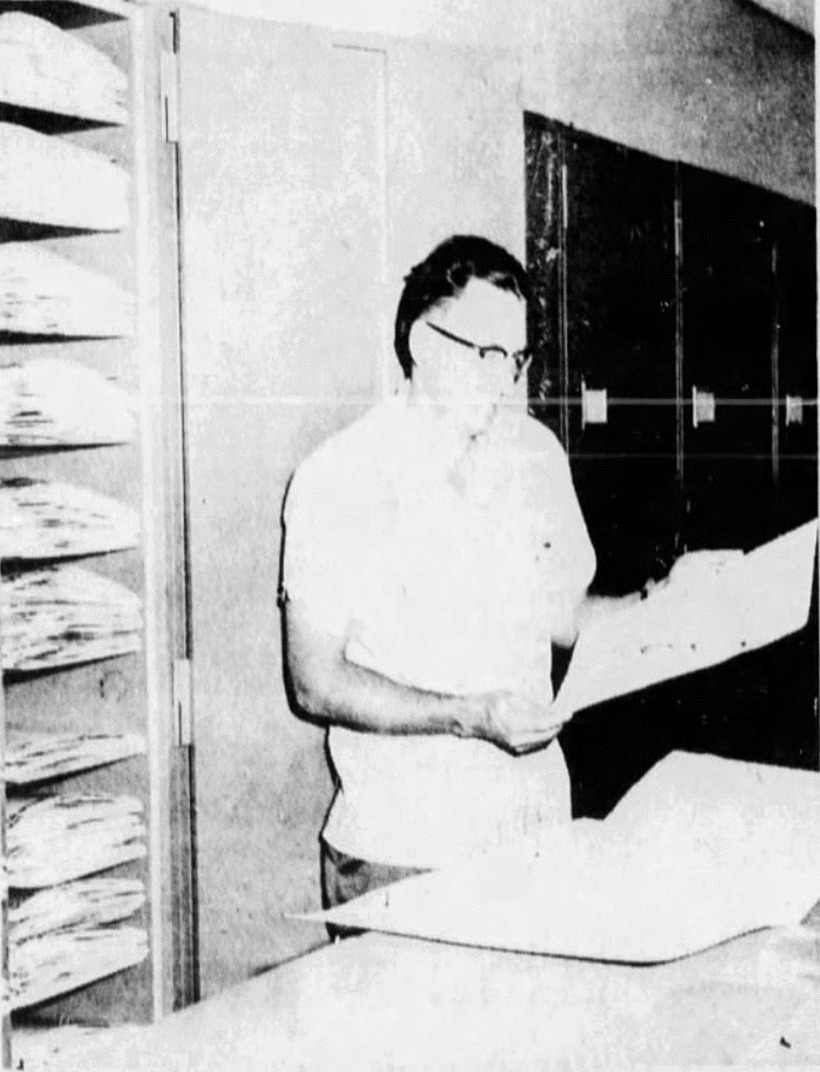
    <summary type="html"><![CDATA[<p><strong><em>Walter P. Cottam, one of the first to receive a master's degree from Brigham Young University, established the S.L. Welsh in 1923. In 1980, the school named the herbarium after Stanley L. Welsh, who served as a curator in the 1960s. The S.L. Welsh Herbarium's collection size is ranked 20th out of 646 nationwide and 65th out of 3,001 herbariums worldwide.</em></strong></p><img src="https://www.intermountainhistories.org/files/fullsize/21fcf6beb8d44646e2e2c531332bf08d.jpg" alt="Dr. Stanley L. Welsh, in the archives of the Stanley L. Welsh herbarium" /><br/><p><span style="font-weight:400;">The S.L. Welsh Herbarium is at Brigham Young University (BYU) in Provo, Utah. The story of its establishment begins in 1874 when  Orson W. Howard created the first herbarium in Utah. Then, in 1923, the university hired Walter P. Cottam, a former master's student and one of the first two individuals to receive a master's degree from BYU, as a botany professor. Upon joining the staff, Cottam received a portion of Howard's herbarium collection to form the Brigham Young University herbarium. However, before adding additional specimens, Cottam had to register the existing collection to choose a permanent acronym, and he selected BRY for Brigham Young. He served as the curator for seven years before passing the role to Dr. Bertrand Harrison in 1930, another BYU former student and Professor of Botany, who held the curator position for the next thirty years. During Harrison's tenure, the herbarium collection grew to 26,000 samples.</p><span style="font-weight:400;">In 1960, Harrison passed the job down to Dr. Stanley L. Welsh. Welsh taught biology at the school and became a well-known curator due to his work developing a program to exchange specimens with numerous universities. By 1971, the herbarium had established connections with Iowa State, North Carolina, Alaska, and international university herbariums. That same year, the collection reached a milestone of 96,000 specimens sourced from Western America, Northern Europe, and the Middle East. The oldest specimen in the archives dates to 1850 and came from Europe, while the oldest native Utah specimen collected was a gift from the University of Utah that dates to the 1880s. Over forty years, Welsh added 150 sheets of pressed and preserved specimens annually, expanding the collection from 25,000 to 450,000. In 1980, the university renamed the herbarium to honor Welsh's contributions. As the collection grew, the herbarium changed locations, moving from the university's Brimhall Building to the Grant Building, then to the Biolab, and finally to its current location under the Bean Museum when it opened in 1978. The school named the museum after Monte Lafayette Bean, a naturalist who funded its construction. The herbarium collection continues to sit under the Bean Museum and currently holds specimens collected globally but emphasizing the Great Basin and Intermountain West.</span></p><p><em><strong><a href="https://www.intermountainhistories.org/items/show/825">For more (including 3 images) view the original article</a></strong></em></p>]]></summary>
    <published>2024-05-22T20:16:59+00:00</published>
    <updated>2026-04-17T19:32:18+00:00</updated>
    <link rel="alternate" type="text/html" href="https://www.intermountainhistories.org/items/show/825"/>
    <id>https://www.intermountainhistories.org/items/show/825</id>
    <author>
      <name>Cristal A. DeSantiago, Northern Arizona University</name>
    </author>
  </entry>
  <entry>
    <title type="html"><![CDATA[Martha Hughes Cannon Memorial Statue]]></title>
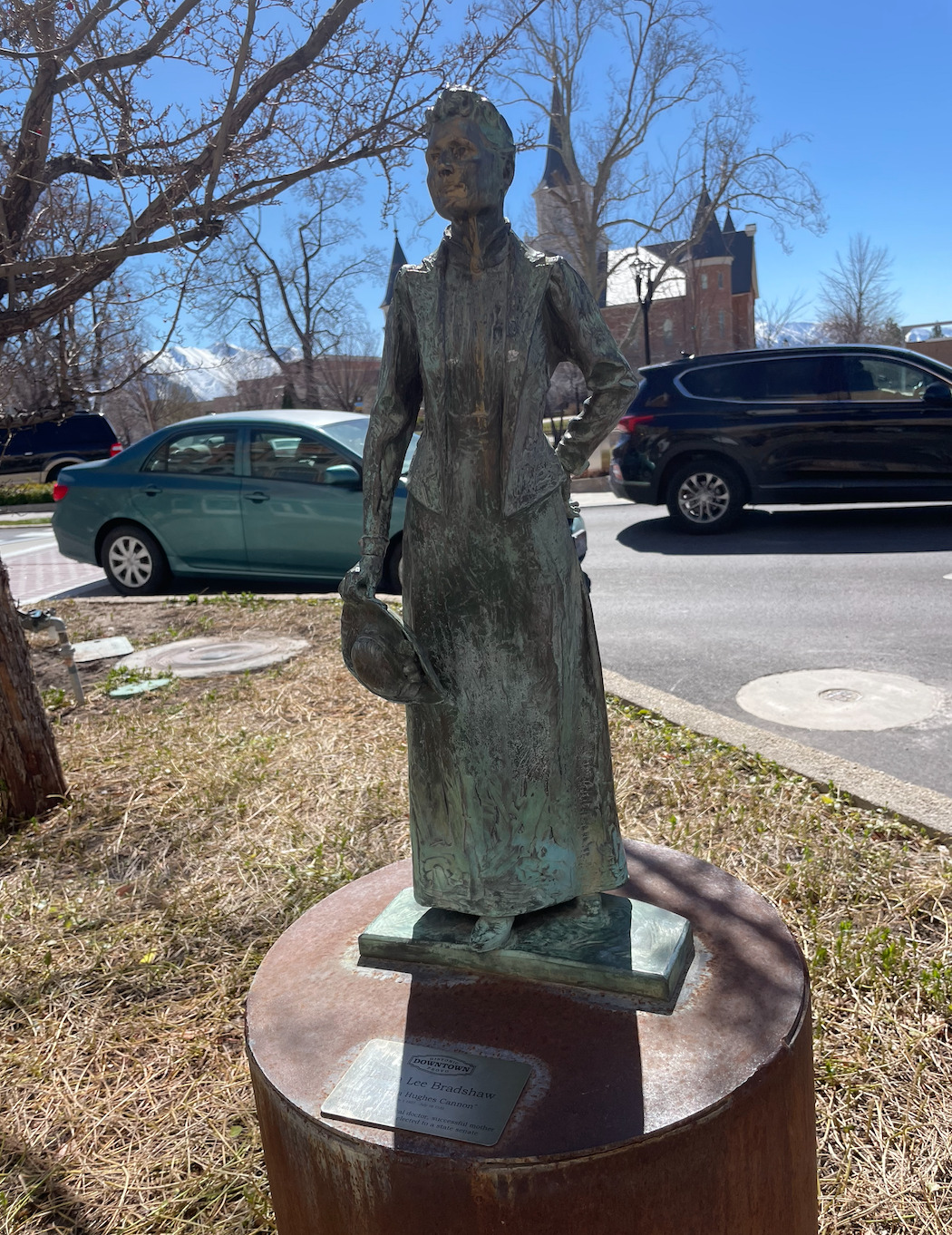
    <summary type="html"><![CDATA[<p><strong><em>Martha Hughes Cannon was an outstanding woman with great ambition and intelligence. As she gained an education and grew in the LDS religion, she capitalized on her position as an educated woman of faith to represent Utah women as they battled anti-polygamy legislation and public health issues.</em></strong></p><img src="https://www.intermountainhistories.org/files/fullsize/48b93f901ad49440cfe49a8350fd6fe1.jpg" alt="Martha Hughes Cannon Statue, Provo" /><br/><p>Martha Hughes Cannon was born in Wales on July 1st, 1857. During her infant years, Martha’s parents joined other new converts to the LDS faith on a long journey to Utah. Tragically, her father passed away only three days after arriving in Utah and surviving the arduous westward trek. By her teenage years, Martha had faced considerable hardship and poverty, but showed resilience and hope for the future. Martha’s young adult years were full of education. After graduating college with a degree in chemistry, Martha was accepted into the University of Michigan, one of few medical schools that admitted men and women. She also studied at the National School of Oratory, becoming a skilled public speaker. Her medical skills and oratorical skills would be great assets during her involvement in Utah politics. </p><p>Martha’s personal and professional life gave her a unique position in the eyes of the United States government. As the fourth wife to Angus M. Cannon, Martha faced considerable scrutiny from territorial officials. As a doctor, she delivered many children born to polygamist mothers and was seen as an important witness to prosecute polygamy. She lived out of state for many years to avoid testifying against and incriminating her husband, along with other polygamist families. The official outlawing of polygamy in 1890 allowed Martha to return to Utah and begin her career in politics.</p><p>A request from the Democratic party prompted Martha to run in the state senate election. Although her husband was running for the Republican party, this did not stop Martha from fulfilling what she viewed as an incredible civic opportunity. After winning the Democratic seat, Martha spent four years effectively advocating for public health and education causes in Utah. She authored bills to start the Utah Health Department, and schools for children with disabilities. Unfortunately, Martha’s political career came to an end with her third pregnancy. The nation viewed this as proof that Mormons were still practicing polygamy, and she was now an unacceptable representative. Although her time was cut short, Martha provided many valuable insights to Utah’s state legislature and was a voice for women across the state of Utah.</p><p><em><strong><a href="https://www.intermountainhistories.org/items/show/783">For more (including 3 images) view the original article</a></strong></em></p>]]></summary>
    <published>2024-02-26T19:39:54+00:00</published>
    <updated>2026-04-17T19:32:17+00:00</updated>
    <link rel="alternate" type="text/html" href="https://www.intermountainhistories.org/items/show/783"/>
    <id>https://www.intermountainhistories.org/items/show/783</id>
    <author>
      <name>Olivia Stockman, Brigham Young University</name>
    </author>
  </entry>
  <entry>
    <title type="html"><![CDATA[Heart of Polyurethane: Barney Clark and the Artificial Heart]]></title>
    <summary type="html"><![CDATA[<p><strong><em>In December 1982, Dr. Barney B. Clark received the first permanent total artificial heart implant in a human. The implant was his last resort and his last chance of survival after being diagnosed with congestive heart failure in 1979. He lived with the Jarvik-7 artificial heart for 112 days. Today a memorial in Provo honors his courage.</p></strong></p><img src="https://www.intermountainhistories.org/files/fullsize/1687587c565e27f65f087d15a77083a3.jpg" alt="Marker Close Up" /><br/><p><span style="font-weight:400;">In December 1982, Dr. Barney Clark pioneered medical research by receiving the first artificial heart implant. Clark had suffered from congestive heart failure for several years and his condition was worsening. Despite the experimental nature of the implant and the potential for significant personal suffering, Clark wanted to receive the artificial heart. It represented his last remaining option for survival, and he aimed to contribute to the medical community’s knowledge in the field of heart disease. Before the surgery, Clark had been treated by several doctors. He tried many treatments including experimental medications. Because of the limited number of heart donors, he was too old and too sick to be eligible for an organic heart transplant. The Jarvik-7 artificial heart was his last resort. </span>
<span style="font-weight:400;">The artificial heart was heavily researched before Clark received it. Dr. William C. DeVries had been researching it since 1967. DeVries had implanted the Jarvik-7 heart in cadavers and in many live animals, including calves. Every detail of the preparation and the surgery were outlined almost two years before Clark was selected to receive the implant. </span>
<span style="font-weight:400;">The implant surgery was initially successful. On Thursday, December 2, 1982 the Provo Daily Herald reported that after seven hours of surgery the artificial heart was working well and that it had given Clark “the blood pressure of an 18-year-old.” Despite the successful surgery, Clark soon started facing complications. He experienced an air leak in his lung, seizures, a broken valve on the artificial heart, and frequent nose bleeds. The doctors fixed these problems as they arose, although they were never able to figure out the cause of the seizures. In March 1983 Clark suffered from aspiration pneumonia, which sent him back into the intensive care unit. He never recovered. On March 23, 1983 Clark “suffered from multiple organ system failure that caused a circulatory collapse” and passed away at 10:02 that night. Researchers concluded that the artificial heart itself had not killed him, but complications associated with the surgery and prior conditions had. </span>
<span style="font-weight:400;">Clark survived with the Jarvik-7 total artificial heart for 112 days, though experiencing great suffering. Many regard Barney Clark as a pioneer and a hero. A memorial in Provo honors his legacy. Today the artificial heart is used as a temporary placement while heart failure patients wait for a heart donor.</span></p><p><em><strong><a href="https://www.intermountainhistories.org/items/show/768">For more (including 2 images) view the original article</a></strong></em></p>]]></summary>
    <published>2024-01-20T07:16:05+00:00</published>
    <updated>2026-04-17T19:32:17+00:00</updated>
    <link rel="alternate" type="text/html" href="https://www.intermountainhistories.org/items/show/768"/>
    <id>https://www.intermountainhistories.org/items/show/768</id>
    <author>
      <name>Caitlin Zollinger, Brigham Young University</name>
    </author>
  </entry>
  <entry>
    <title type="html"><![CDATA[BYU’s Underground]]></title>
    <summary type="html"><![CDATA[<p><strong><em>While BYU is known for its manicured lawns, lush landscapes, and diverse architecture, few are familiar with the complex underground network of tunnels, rooms, and passageways that lie mere feet beneath it all. </p></strong></p><img src="https://www.intermountainhistories.org/files/fullsize/b6f122116ed9acb5f5773b0098d33eac.jpg" alt="An entrance to the tunnels" /><br/><p>At BYU, rumors abound about what lies underneath campus. Whispered stories of students that have plumbed the depths of campus’ underground have intrigued the BYU community for decades. Such stories have become so enmeshed in BYU folklore that it is at times hard to separate fact from fiction. </p><p>It has been half-jokingly suggested that the tunnels extend all the way to downtown Salt Lake City, connecting with the underground passages underneath Temple Square.“ If not to Salt Lake, they surely connect to the Provo Temple,” some amateur amateur urban explorers have surmised. Since at least 2002, the popular “100 Hour Board,” “a BYU online forum run by volunteer students who answer any question,” has perpetuated the idea that there are giant blood guzzling “tunnel worms” that live under campus. </p><p>While there may not be secret passageways to temples or monsters living underneath BYU, for 25 years there was a hidden nuclear reactor nestled underneath BYU’s South Hill. The 10-watt L77 research reactor was operational from 1967 until being disassembled in 1992. The nuclear lab that had once housed the reactor was later demolished in 2009. The facility was accessible through a tunnel that began under the Maeser Building. Since 1992 that part of the tunnel system has been completely sealed off.</p><p>Students that dare to enter the tunnels without permission, do so at great risk. If a student decides to descend into the depths of the BYU tunnel network, he or she potentially faces severe repercussions. If caught, students face a mandatory $300 fine and the possibility of university and/or legal criminal sanctions. While many students who trespass do so for the thrill of discovery, some have used the tunnels for more nefarious purposes. In February 2020, one such offender, a masked nineteen-year-old student, was caught in the BYU Culinary Support Center after hours. He admitted to repeatedly using the subterranean tunnels to steal food from locked university buildings. He was arrested for burglary.</p><p>Fines, expulsion from BYU, and legal charges are not the only threats that face tunnel trespassers. The pipes that extend the length of the tunnels carry 400° steam to heat buildings all across campus. An unsuspecting person touching a pipe or encountering a steam leakage could suffer horrific burns. The motion sensors, legal threats, and other deterrents have all been put into place to protect students’ safety. Those who need to enter the tunnels for maintenance must adhere to strict procedures, including using sign-out sheets. If employees fail to return by the scheduled return time they indicated on the sign-out sheet, BYU Heating Center personnel or the police will go looking for the missing individual(s). </p><p>When the BYU Heating Plant was constructed in the 1950’s tunnels were dug to more easily and efficiently heat buildings on campus. Gradually, underground piping was replaced by pipes in the much more long-lasting and easier to maintain tunnel housing. Over time the tunnel network has grown, extending as far north as the BYU Laundry and the Missionary Training Center. Today, only an estimated 10% of underground heating pipes are not contained within the tunnel system.</p><p>Originating at the Heating Plant, pipes travel to almost every building on campus carrying 400° steam, pressurized at 300psi, to provide heating. There are around 210-220 heat exchangers on campus, allowing for the high pressured steam to be used in campus buildings. Most buildings at BYU have their own heat exchanger in an underground vault. Although less extensive than the network of pipes for heating, the tunnels also house chilled water pipes that help cool buildings during Provo’s hot months. While the primary use of the tunnels is to provide heating and cooling to BYU buildings, they also provide power and internet through fiber optic lines to some buildings. </p><p><em><strong><a href="https://www.intermountainhistories.org/items/show/462">For more (including 3 images) view the original article</a></strong></em></p>]]></summary>
    <published>2021-04-03T07:12:33+00:00</published>
    <updated>2026-04-17T19:32:09+00:00</updated>
    <link rel="alternate" type="text/html" href="https://www.intermountainhistories.org/items/show/462"/>
    <id>https://www.intermountainhistories.org/items/show/462</id>
    <author>
      <name>Ryan J. Hallstrom, Brigham Young University</name>
    </author>
  </entry>
  <entry>
    <title type="html"><![CDATA[Marriott Center]]></title>
    <summary type="html"><![CDATA[<p><strong><em>“Dr. Wilkinson said the new center will be more than a sports pavilion and music hall. It is being designed to accommodate devotionals, student assemblies, forums, lyceums, convocations, religious assemblies, public gatherings, and other activities.” -Office of the News Bureau, Brigham Young University, September 17, 1968</p></strong></p><img src="https://www.intermountainhistories.org/files/fullsize/508122a19b7dfd91f71ba330dc55d753.jpg" alt="Front of the Marriott Center" /><br/><p>Before the construction of the Marriott Center, the George Albert Smith Fieldhouse served as the main sports arena and general gathering venue on campus. However, the growing athletics program and other student body activities created a need for a new facility to accommodate the growing campus. At the conclusion of his tenure as university president, President Ernest L. Wilkinson was successful in getting approval to build a new arena, the future Marriott Center. Construction of the Marriott Center began in the spring of 1970. </p><p>The Marriott Center was an ambitious project from the start. First, a space needed to be procured to accommodate the gigantic arena. BYU found the perfect place north of the Smoot Administration Building. It was a large parcel of land full of temporary war surplus homes, named Wyview Village. After removing the buildings, the construction began. </p><p>The construction of the Marriott Center was pretty unique. Rather start with the mainframe of the arena, work first began with the roof. The ceiling of the Marriott Center is held up by a single-span space frame. Construction crews worked on building the steel, four million pound frame that eventually covered 130,000 square feet. It took extensive work, but eventually frame was ready to be raised. One hundred feet from the ground, approximately the height of a ten-story building, the roof was hoisted into place and the construction of the main building commenced. “The [Marriott Center] measures 380 by 340 feet and covers nearly three acres, enough space to place two football fields side by side.” For the seating area cement was formed to created the raised levels. Benches were installed to accommodate more people in the arena. A full-size basketball court floor was built at the center of the arena. In its completion, the Marriott Center contained 10,092 chair seats, 12,590 bleacher seats, and 372 other spaces for a combined seating of 23,054. Based on the gigantic measurements and the large seating capacity, the Marriott Center became the largest college arena in the United States at the time. </p><p>The Marriott Center was completed in December of 1971 under a new BYU administration headed by Dallin H. Oaks. It was completed in time to host its first home basketball game. A formal dedication ceremony was conducted on February 4, 1973, with then LDS Church President Harold B. Lee presiding. The ceremony honored and celebrated the arena’s main donor and namesake, J. Willard Marriott. </p><p>Since its construction, smaller renovations have been made in the seating to increase legroom for patrons and update technology in the building. The last major renovation in 2015 included removing the lower benches and replacing them with padded chairs, replacing the old scoreboards and  adding four LED video boards above the center of the court, and a brand new training facility next door to the arena. The Marriott Center Annex, entirely funded by private donations, includes offices for the coaches, locker rooms, training and conditioning room, and an exact replica of the Marriott Center court for the players to practice on. </p><p>The Marriott Center has truly become a center for student and community activities. Its functionality as a multi-purpose arena allows it to serve more than just a venue for BYU basketball. It can serve as a venue for gymnastics, volleyball games, and other competitions. The Marriott Center also becomes the stage for music and dance concerts. Traditionally annual concerts like BYU’s Homecoming Spectacular and Christmas Around the World are performed on the Marriott Center court. Many performing artists have showcased their talents at the Marriott Center, including popular artists Kristin Chenoweth and David Archuleta. Weekly university devotionals and forums are broadcasted from the Marriott Center floor. Speakers range from BYU faculty, general authorities and officers of the Church, to social and political and business leaders throughout the world. Public figures such as former president George H. W. Bush, have addressed BYU campus from the Marriott Center podium. Even the unique walkways surrounding the Marriott Center provide a center of activity for the student body. More likely than not, one can find a small body of BYU students and local youth gathering in one of the ‘tunnels’ on a Sunday night, singing hymns and socializing with each other. Perhaps the highlight of most students’ time at BYU comes with the opportunity to walk across the Marriott Center stage and receive their university diploma. Surrounding high schools also use the Marriott Center for their own graduation ceremonies. </p><p>Since its construction in the 1960's, the Marriott Center has become an iconic building on BYU campus, serving as a gathering place for the BYU and Provo, and other surrounding communities. </p><p><em><strong><a href="https://www.intermountainhistories.org/items/show/315">For more (including 4 images) view the original article</a></strong></em></p>]]></summary>
    <published>2019-04-12T03:56:49+00:00</published>
    <updated>2026-04-17T19:32:05+00:00</updated>
    <link rel="alternate" type="text/html" href="https://www.intermountainhistories.org/items/show/315"/>
    <id>https://www.intermountainhistories.org/items/show/315</id>
    <author>
      <name>Rachel Hendrickson, Brigham Young University</name>
    </author>
  </entry>
  <entry>
    <title type="html"><![CDATA[Harold B. Lee Library (HBLL)<br />
]]></title>
    <summary type="html"><![CDATA[<p><strong><em>As the Grant library became too small, BYU administrators decided to build a new building to house the new library.  Finished in 1961, it was named the J. Reuben Clark Library, though soon renamed the Harold B. Lee Library to avoid confusion with the newly created law school.  It receives over 10,000 patrons daily and houses millions of units of materials.</p></strong></p><img src="https://www.intermountainhistories.org/files/fullsize/ad48789968425754ffc5611cc4dbc81d.jpg" alt="Lee Library" /><br/><p>Old Library</p><p>Throughout the early years of BYU, there was no well-established library.  Often, rooms would be cluttered with books and loose papers that created a problematic fire hazard.  The Maeser Building, once created, housed some books and volumes until the creation of the Heber J. Grant Library in 1925.  This building was the school library for nearly five decades.  </p><p>New Library</p><p>As BYU expanded as a school, the university added more books to its collections.  The planned expansion of the existing library in the Grant building never came to pass, and the small quarters soon became cramped.  BYU began a policy of screening book donations in an attempt to lower the amount of books they received and would be responsible to care for.  However, by 1953, it was apparent that the Grant building was too small to house the growing amount of books that the library needed.  President Wilkinson commissioned a committee to survey the space needed, and soon, plans were drawn up for a massive new library to be located in the center of campus.  Construction began on the new library in July 1959 and took two years to finish.</p><p>Completed in 1961, workers moved over 300,000 volumes into the new library and made room for the thousands of expected volumes to be added.  The building was dedicated on October 10, 1962.  It was named for J. Reuben Clark, a prominent LDS leader and attorney.  The library functioned well for the next decade.  In 1965, the library surpassed 500,000 volumes, and by 1971, the library contained over 1 million volumes, with even more planned to arrive soon.  In 1973, the library was renamed to honor Harold B. Lee, the former president of the LDS church.  This was to help avoid confusion with the newly established Law school, with started that same year.  BYU administrators decided that Clark was better namesake for the law school, due to his enormous contributions to law in the area, teachings in the LDS church, and work in the State Department for US President Calvin Coolidge.</p><p>Who was J. Reuben Clark?</p><p>Born in 1871, Joshua Reuben Clark grew up in Grantsville, Utah.  His father was a teacher who taught him to be a lifelong student.  He excelled in school, and soon graduated from the University of Utah.  He attended law school at Columbia, and the year after his graduation, he was appointed as the Assistant Solicitor of the Department of State.  He served in the government for a few years, and later as a lawyer, representing high profile clients like the Japanese Government.  He served again in the State Department, helping to manage affairs during World War 1 and later as Ambassador to Mexico during and after the Mexican Revolution.  He wrote a critical repudiation of the Monroe Doctrine, arguing that the US could not arbitrarily use military force to control Latin American countries.  Later, he served in the First Presidency of the LDS church, despite having never served in previous Church leadership.  He was later ordained an apostle, and worked to reform and improve the welfare system, as the Great Depression ravaged the country.  He died in 1961 in Salt Lake City, serving both his church and his country tirelessly.</p><p>Who was Harold B. Lee?</p><p>Harold B lee was born in 1899 in Idaho, and grew up to become a teacher.  From a very young age, he became a leader in the LDS church right after the start of the Great Depression.  He helped to improve the welfare system and benefit the members struggling in the Depression.  In 1941, he was called to be an apostle in the LDS church, serving there for the next decades of his life.  He was key to improving the teaching system in the church.  He was the president of the LDS church for about a year and a half, before his death at the end of 1973. </p><p>Renovations</p><p>As the number of contained volumes increased exponentially, renovations were soon needed to house the incoming volumes.  In 1974, new construction began on the library to double the available space in add 2,000 more seats for students to study.  This added 215,000 square feet to the library and brought total seating to 4,500.  By 1976, this renovation was completed, and was rededicated on March 15, 1977.  This would only be the first instance of library expansion.  In 1996, the library was expanded again, this time lasting 4 years.  235,000 square feet were added this time, largely focusing on expanding the underground section of the library.  This included new technology classrooms, focused on providing access to computers, a large auditorium and a center for digitization.  Workers took advantage of the closure of certain parts of the library to renovate and update many parts of the library that were older or needed to reflect more modern needs.</p><p>Construction on the library continued off and on for the next two decades, with workers adding and removing small sections of the library.  The South entrance to the library had been closed for nearly two decades, leaving the only entrance into the library being the large glass entrance on the North side.  In 2015, a new south entrance was completed and opened up again.  Later, in 2017, interior construction was finished on the main floor of a family-friendly study section.  This area was geared towards students with young children who wanted a place to study while watching their kids.  It has a small playground and things for children to play with and large chairs and study rooms surrounding the toys.  </p><p>L. Tom Perry Special Collections</p><p>Under library director S. Lyman Tyler, (1954-1966), the number of collections and material increased significantly. One contribution was the organization of the Department of Special Collections and Manuscripts. Originally it was housed in the Maeser building, but it was moved to the first level of the then-named Clark library in 1961. Eventually, in 1999, the department was renamed the L. Tom Perry Special Collections Library, a request from library donors Aline and L. Sam Skaggs, to commemorate LDS apostle L. Tom Perry. </p><p>The L. Tom Perry Special Collection contains documents that span from the 15th century to the present day. It has several areas of concentration, focusing on subjects like art, communications, film, video, and the history of printing. It also contains various documents and from 19th and 20th century United States history and literature. Additionally, Special Collections has large collections of Mormon and Western documents and history. They have a wealth of journals from the Mormon migration and early missionary journals. They have a wealth of Mormon Women’s history, carrying journals of early Relief Society presidents. Special Collections also contain individual collections like Leroy Hafen Western Americana collection, J. Reuben Clark, Aldine collection, M. Wilford Poulsen, and Dale Morgan. Through continual donations and acquisitions, the L. Tom Perry Special Collections contains a wealth of materials for students, faculty and researchers. </p><p>Current Housings/Stats</p><p>Today, the Lee Library houses over 5 million materials, such as books, videos, microfilms, and other documents. The Lee Library is the home to the Primrose International Viola Archive, the largest viola repository in the world, containing thousands of viola-related material. The library receives over 10,000 patrons daily, and over 3 million yearly.  It has been highly ranked as one of the best university libraries in the nation in the past.  In the last few years, while the number of patrons has increased steadily, the number of books checked out has decreased slowly over the last few years.  This is possibly due to the increase in use and access to the internet and computers in the Lee Library.  As students are more able to access and record information on personal computers, the Library also began to offer books online.  This allowed students to access the resources they need from locations outside the library.  It boasts about 98 miles of shelving and can seat 4,600 people for studying and meetings.</p><p>The Harold B Lee Library is a phenomenal resource for the students and faculty of BYU.  It serves as a reminder of the importance of study and learning of the best books to the people in the surrounding community. </p><p><em><strong><a href="https://www.intermountainhistories.org/items/show/314">For more (including 3 images) view the original article</a></strong></em></p>]]></summary>
    <published>2019-03-23T01:02:48+00:00</published>
    <updated>2026-04-17T19:32:05+00:00</updated>
    <link rel="alternate" type="text/html" href="https://www.intermountainhistories.org/items/show/314"/>
    <id>https://www.intermountainhistories.org/items/show/314</id>
    <author>
      <name>Josh Franzen and Rachel Hendrickson, Brigham Young University</name>
    </author>
  </entry>
  <entry>
    <title type="html"><![CDATA[Harman (Caroline Hemenway) Continuing Education Building (HCEB)]]></title>
    <summary type="html"><![CDATA[<p><strong><em>BYU’s Continuing Education programs are housed in the Caroline Hemenway Harman building on the north side of campus. Like its namesake, Caroline Hemenway Harman, the BYU’s Continuing Education programs have helped thousands of people achieve their educational goals.</em></strong></p><img src="https://www.intermountainhistories.org/files/fullsize/bfb444b98f6599644e80d628286615af.jpg" alt="Harman Continuing Education Building" /><br/><p>The Caroline Hemenway Harman building is on the most northern side of campus. It houses the University Conference Center, as well as offices for BYU’s Continuing Education programs. While the building is off the beaten track, it memorializes a generous and compassionate woman in Utah and Church history. </p><p>Who was Caroline Harman?</p><p>Caroline Hemenway Harman was born January 2, 1872 in Salt Lake City, Utah. She was the second of eleven children born of Lachoneus Luther Hemenway and Annie Roberts. The Hemenways settled near the Jordan River. They helped organize the Granger Ward in the Salt Lake Valley. When Caroline was 22, she met and married George Reese Harman, a man who worked for her father. They married on January 26, 1895 in the Salt Lake Temple. Caroline and George became parents to seven children. Caroline served in a number of callings throughout her life, especially serving in the Relief Society and the primary. After seventeen years of marriage, George passed away, leaving Caroline responsible for the family farm and six children. Caroline faced many more trials- she remarried twice more and outlived both husbands and saw the death of a couple of children, as well as dealt with poor health. However, Caroline did not let the trials bring her down. She chose to serve her family and her community despite her trials. As Relief Society president of the Granger Ward, Caroline served the sisters in her community. Her home was always open to neighbors and friends, and many teenagers found a place in her home.  Caroline started a chicken business on her farm. During the Great Depression, she refused to receive aid from federal welfare programs, choosing to cart water from across the road. Caroline worked hard, and was remembered as such. Caroline’s son Leon Weston (Pete) Harman said of his mother, “[She] had every reason to be waited on. Yet she continually served others. She never complained. She never quit. Aunt Carrie asked for so little, and gave so much.”</p><p>The construction of the Caroline Hemenway Harman building was made possible by the generous donation by Pete Harman, the youngest step-son of Caroline. Pete wished for his step-mother’s generous and sweet legacy to be remembered for generations to come. The Harman building was completed and dedicated on April 13, 1982 by President Gordon B. Hinkley. It houses BYU’s Continuing Education programs. Those programs include BYU Independent Study, evening classes, the general studies degree, and programs for middle school and high school students. Continuing Education provides programs that range from sports and music camps for youth to BYU’s Education Week and symposiums. It also houses the offices for the Jerusalem Center study abroad. On June 24, 2016, ground was broken marking the beginning of construction for new additions to the building. After two and half years of construction, the Harman building was rededicated on February 5, 2019 by Elder Ulisses Soares of the Quorum of the Twelve Apostles. The new structure stands at 142,693 square feet, and the new additions created a larger space for BYU’s Independent Study program and Continuing Education offices to operate. </p><p><em><strong><a href="https://www.intermountainhistories.org/items/show/313">For more (including 4 images) view the original article</a></strong></em></p>]]></summary>
    <published>2019-03-23T00:29:04+00:00</published>
    <updated>2026-04-17T19:32:05+00:00</updated>
    <link rel="alternate" type="text/html" href="https://www.intermountainhistories.org/items/show/313"/>
    <id>https://www.intermountainhistories.org/items/show/313</id>
    <author>
      <name>Rachel Hendrickson, Brigham Young University</name>
    </author>
  </entry>
</feed>