<?xml version="1.0" encoding="UTF-8"?>
<feed xmlns="http://www.w3.org/2005/Atom">
  <title type="text">Intermountain Histories</title>
  <updated>2026-04-17T19:32:18+00:00</updated>
  <generator uri="http://framework.zend.com" version="1.12.20">Zend_Feed_Writer</generator>
  <link rel="alternate" type="text/html" href="https://www.intermountainhistories.org/"/>
  <link rel="self" type="application/atom+xml" href="https://www.intermountainhistories.org/items/browse?output=rss2"/>
  <id>https://www.intermountainhistories.org/</id>
  <author>
    <name>Intermountain Histories</name>
    <uri>https://www.intermountainhistories.org</uri>
  </author>
  <link rel="hub" href="https://pubsubhubbub.appspot.com/"/>
  <entry>
    <title type="html"><![CDATA[The KKK in Butte, Montana]]></title>
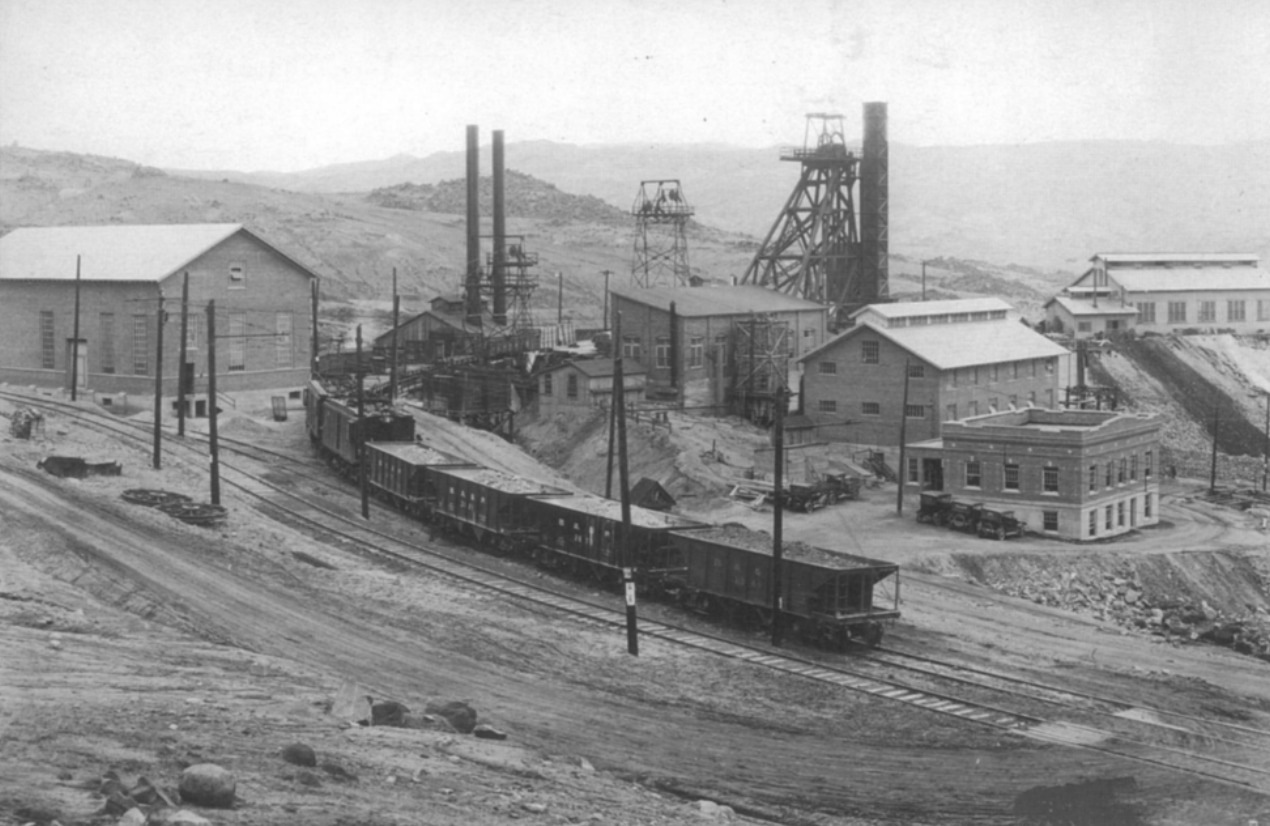
    <summary type="html"><![CDATA[<p><strong><em><span style="font-weight:400;">Taking advantage of existing tensions between Protestants and Irish Catholics in Butte, Montana, the Ku Klux Klan sought to penetrate the community and hoped to stoke discourse.</span></em></strong></p><img src="https://www.intermountainhistories.org/files/fullsize/23f3a64865731d1aad110432024680ba.jpg" alt="Undated photograph of Elm Orlu mine" /><br/><p><span style="font-weight:400;">Before the arrival of the Ku Klux Klan in 1923, tension between Protestants and Catholics existed in the mining communities of Butte, Montana. The so-called “War of the Copper Kings” was a feud between mine owners Marcus Daly and William A. Clark during an 1888 campaign for territorial representation of the companies. Although both were Irish, Clark was a Protestant while Daly was a fervent Catholic. Many of the miners were migrant Irish-Catholics and Daly won the election. Clark never forgot the loss and battled for control until he died in 1900. It was also during this period that a group known as The American Protective Association (APA) gained popularity in Butte. The APA was an organization that was extremely anti-Catholic and members frequently got into violent altercations with Catholics at local bars.   </span></p><p><span style="font-weight:400;">Furthermore, due to issues such as decreased copper demand following the end of the First World War, many in Montana felt economically unstable and wary of foreigners. When the Ku Klux Klan arrived in Butte in the 1920s, it hoped to exacerbate the existing religious tensions and economic fears by using Irish Catholic workers as scapegoats. </span>
<span style="font-weight:400;">Originally gaining popularity in Billings, the Klan sought to move into Butte. However, as Butte historian Christine Erikson notes, “Catholic Immigrants cared little for an organization that referred to the Pope as an ‘impatient, meddling individual controlled by a Jesuitical lot of assaassainous villains.’” The Klan notably chose to act in an especially clandestine manner while conducting operations in Butte. Local Klansmen moved from town to town and conducted meetings under various aliases such as the “Protestant Men’s Welfare Council” and “Butte Men’s Literary Club.” Klan officers also urged other chapters in Montana to avoid exposing Butte Klansmen by ensuring that any mail to members in Butte didn’t indicate anything that suggested a Klan association. It is estimated that at least 181 residents of Butte joined the organization during 1923-1929, including 39 who worked as miners and on rail lines for Clark. </span>
<span style="font-weight:400;">The reasons for their especially secretive nature are not completely clear. The Butte Klan could have been worried about backlash from other Protestant organizations that operated in the area such as Masonic groups. It is also possible that other Butte clandestine organizations were not eager to associate with a group that was gaining a national reputation for terrorism. Another reason could be that in a town with a sizable Irish-Catholic population, the Klan worried about community backlash. Butte’s </span><i><span style="font-weight:400;">Labor Bulletin </span></i><span style="font-weight:400;">heavily criticized the Klan in Butte and proclaimed, “Their Invisible Empire Should Have No Place in These United States.”</span>
<span style="font-weight:400;">The Klan's larger efforts in Butte eventually proved to be fruitless—the membership and public activity essentially became dormant by the 1930s. Instead, the Klansmen opted to do smaller acts such as “guarding” voting booths and writing opinion pieces in editorials about unfavorable politicians. However, most of their Butte activities seemed to be brooding in their meeting places and discussing inter-Klan politics. </span></p><p><em><strong><a href="https://www.intermountainhistories.org/items/show/811">For more (including 3 images) view the original article</a></strong></em></p>]]></summary>
    <published>2024-05-21T00:10:52+00:00</published>
    <updated>2026-04-17T19:32:18+00:00</updated>
    <link rel="alternate" type="text/html" href="https://www.intermountainhistories.org/items/show/811"/>
    <id>https://www.intermountainhistories.org/items/show/811</id>
    <author>
      <name>Aidan Capristo, Northern Arizona University</name>
    </author>
  </entry>
  <entry>
    <title type="html"><![CDATA[The Corinne Methodist Episcopal Church <br />
]]></title>
    <summary type="html"><![CDATA[<p><strong><em>Dedicated in 1870, the Corinne Methodist Episcopal Church was the center of efforts to “convert” Mormons to Christianity and to break the power of the LDS church in Utah Territory. </p></strong></p><img src="https://www.intermountainhistories.org/files/fullsize/b4ed198c1c0ce1ca0ee14f927523b645.jpg" alt="The Methodist Episcopal Church" /><br/><p><span style="font-weight:400;">In 1869, when Union Pacific Railroad tracks were laid on the west side of the Bear River, the city of Corinne was established. It was the last Union Pacific Railroad tracks on the transcon</span><span style="font-weight:400;">tinental line. Within a month, the population had reached 1,500. By April, the number had risen to 3,000. In February 1870, Corinne had been incorporated. The state of Utah was full of members of The Church of Jesus Christ of Latter-day Saints, however, Corinne was not built by its members. Instead, the town was inhabited by people from different religious, mainly Christian, denominations. In September 1870, the Corrinne Methodist Episcopal Church was formed. </span>
<span style="font-weight:400;">The Corrine Methodist Episcopal Church was a samll, one story building. The front entrance has a Gothic arch with a pair of doors under a glass transom bordered with tiny square panes in wood muntins. </span><span style="font-weight:400;">The Reverend G.M. Pierce had a specific mission in opening the church's doors. He hoped to convert Mormons in Utah and diminish the power that the church had in the territory. However, his grand vision was never realized. As the railroad continued to develop in Northern Utah, the main freight hub moved away from Corinne into the rail yard in Ogden and the city largely closed its doors. </span>
<span style="font-weight:400;">In 1971, the building was placed on the National Register of Historic Places. After church services ended in 1957, the building was used for a wide array of purposes. The building was used as a venue for weddings, funerals, civic meetings, and recitals. The space was also used as a museum. It still has the original bricks which were made in Corinne. The original bell still sits in the small tower atop the building. In 2020, the building was closed due to safety concerns. However, as of 2022, restoration efforts are being made by townspeopel to open the building for activities. </span></p><p><em><strong><a href="https://www.intermountainhistories.org/items/show/696">For more (including 3 images) view the original article</a></strong></em></p>]]></summary>
    <published>2022-11-04T15:51:02+00:00</published>
    <updated>2026-04-17T19:32:15+00:00</updated>
    <link rel="alternate" type="text/html" href="https://www.intermountainhistories.org/items/show/696"/>
    <id>https://www.intermountainhistories.org/items/show/696</id>
    <author>
      <name>David Tullis, Weber State University</name>
    </author>
  </entry>
</feed>
