<?xml version="1.0" encoding="UTF-8"?>
<feed xmlns="http://www.w3.org/2005/Atom">
  <title type="text">Intermountain Histories</title>
  <updated>2026-04-17T19:32:16+00:00</updated>
  <generator uri="http://framework.zend.com" version="1.12.20">Zend_Feed_Writer</generator>
  <link rel="alternate" type="text/html" href="https://www.intermountainhistories.org/"/>
  <link rel="self" type="application/atom+xml" href="https://www.intermountainhistories.org/items/browse?output=rss2"/>
  <id>https://www.intermountainhistories.org/</id>
  <author>
    <name>Intermountain Histories</name>
    <uri>https://www.intermountainhistories.org</uri>
  </author>
  <link rel="hub" href="https://pubsubhubbub.appspot.com/"/>
  <entry>
    <title type="html"><![CDATA[The Old Idaho State Penitentiary]]></title>
    <summary type="html"><![CDATA[<p><strong><em>The Old Idaho Penitentiary operated for over 100 years as the first prison in Boise, Idaho. Over the years it has housed over 13,000 inmates, hosted 36 wardens, and was the site of numerous escapes, riots, and executions. Today, it stands as one of only four territorial prisons open to the public and has been converted to a museum detailing the prison’s history.</em></strong></p><img src="https://www.intermountainhistories.org/files/fullsize/a2d30f007de6a7615d40500011f92655.jpg" alt="Women&#039;s Ward" /><br/><p><span style="font-weight:400;">Located between the heart of downtown Boise and the Boise Foothills, the Old Idaho Penitentiary serves as a reminder of Idaho’s territorial past. Inmates quarried the distinctive sandstone that makes up the prison’s buildings and walls from the nearby Table Rock area, a well-known Boise landmark. The penitentiary first opened in 1872 and was originally known as the Territorial Prison. It was later renamed the Idaho State Penitentiary when Idaho achieved statehood in 1890.</span>
<span style="font-weight:400;">The prison was constructed in the Second Empire architectural style with guard turrets and thick walls reminiscent of a castle or fortress. Architects intended the construction to evoke a “somber, dark environment deemed appropriate for prisoners.” Wardens and guards encouraged inmates to work to reduce idleness and the penitentiary became almost entirely self-sufficient. Inmate labor carried the added benefit of reducing construction fees, costs, and wages significantly, saving the state hundreds of thousands of dollars. However, the prison lacked modern amenities, a problem that would cause discontent and riots in later years.</span>
<span style="font-weight:400;">As the number of inmates increased, the compound expanded significantly. The inmates quarried sandstone and constructed most of the buildings themselves. By 1973, the penitentiary’s walls had housed multiple cell blocks, several administrative buildings, the warden’s house, a dining hall, library, commissary, blacksmith and carpenter shop, shirt and license plate factory, women’s ward, an apiary, a garden, and a steam plant. The prison also contained several isolation and punishment cells, known as the “Dungeon,” “Cooler,” and “Siberia,” as well as a gallows that was used to execute ten prisoners. Additionally, the penitentiary owned several ranches and farms that utilized inmate labor to produce the prison’s food.</span>
<span style="font-weight:400;">Harry Orchard was the penitentiary’s most infamous prisoner. He had assassinated Frank Steunenberg, the former governor of Idaho, with a bomb as revenge for the government’s role in the 1890 mining conflicts in Coeur d'Alene. Although he confessed to killing at least 17 men, Orchard remained a model prisoner. Other prisoners were not, and the penitentiary experienced over 500 escape attempts. Prisoners escaped by running away from work assignments, digging tunnels, climbing walls, or lowering themselves down makeshift ropes. Some succeeded, but the majority were caught soon after their escape. </span>
<span style="font-weight:400;">There were also several riots in the later years of the penitentiary's history, reflecting inmate discontent with outdated prison conditions. One of the most notable riots occurred in 1952, when nearly 250 inmates seized the Multipurpose Building and severely damaged it. In 1971, two prisoners were stabbed, inmates set fire to several buildings, and others raided the commissary and hospital. A similar riot occurred in 1973 and caused significant fire damage. </span><span style="font-weight:400;">The riots were all put down, some using tear gas, but the increasing frequency worried prison officials. </span>
<span style="font-weight:400;">The riots, outdated facilities, and lack of space for expansion led to the construction of a new correctional facility in 1972. This facility was built near Kuna, Idaho, and officials gradually transferred inmates there. By 1974, the recently renamed Old Idaho Penitentiary earned a spot in the National Register of Historic Places. Today, it has been converted into a museum run by the Idaho State Historical Society. Boise residents refer to it as the “Old Pen,” and local legend claims it is haunted by the ghosts of former guards and executed inmates.</span></p><p><em><strong><a href="https://www.intermountainhistories.org/items/show/734">For more (including 6 images) view the original article</a></strong></em></p>]]></summary>
    <published>2023-04-05T20:08:12+00:00</published>
    <updated>2026-04-17T19:32:16+00:00</updated>
    <link rel="alternate" type="text/html" href="https://www.intermountainhistories.org/items/show/734"/>
    <id>https://www.intermountainhistories.org/items/show/734</id>
    <author>
      <name>Madison Sommer, Brigham Young University</name>
    </author>
  </entry>
  <entry>
    <title type="html"><![CDATA[Polygamists in the Sugar House Pen]]></title>
    <summary type="html"><![CDATA[<p><strong><em>In the 1880s, Latter-day Saints convicted for polygamy filled Western prisons. One of these was “the Pen,” or Utah Territorial Penitentiary.</em></strong></p><img src="https://www.intermountainhistories.org/files/fullsize/98499b6cc99aca4386a3f83d7a5c4484.jpg" alt="Cannon and the Brethren" /><br/><p><span style="font-weight:400;">In 1857, Latter-day Saints in Britain could buy the fourth volume of the </span><i><span style="font-weight:400;">Journal of Discourses</span></i><span style="font-weight:400;"> and find a stirring declaration attributed to Brigham Young. The prophet-president of The Church of Jesus Christ of Latter-day Saints (sometimes nicknamed “Mormons” at the time) decried the United States Congress’ agitations against polygamy, saying, “True we have more wives than one, and what of that?” Young questioned if Congress could even enforce the law. He hyperbolically supposed a prison large enough to contain every polygamist lawbreaker in Utah would eventually have to encompass the entire Great Basin, “roofed… over from the summit of the Rocky Mountains to the summit of the Sierra Nevada.” When federal prosecution of polygamy cases escalated in the 1870s and 1880s, officials instead relied on western prisons like the Utah Territorial Penitentiary—sometimes nicknamed “the Pen.”</span>
<span style="font-weight:400;">Completed in 1854, the Territorial Penitentiary was southeast of Salt Lake City in Sugar House, Utah. Just two years previous, the territorial Legislative Assembly had requested federal money for building a prison in order “to prevent crime, but also to reform the offenders.” Decades later, federal officials were now trying to use the penitentiary to prevent polygamy and reform the Mormons.</span>
<span style="font-weight:400;">This included Mormons such as George Q. Cannon, who lived in hiding “underground” from 1885 to 1888. Cannon was the First Counselor in the First Presidency of the Church—a high office held only by apostles—and with five wives and thirty-two children, he was an easy target for federal marshals. Despite the dangers, though, hiding grated on Cannon. In his journal, he wrote he was “not anxious to become a martyr,” yet also “always felt to urge our people to stand up courageously to their principles” and wanted to live up to the same standard. When a prosecutor and marshal tried to extort the Church—money in exchange for not prosecuting Cannon—Cannon resolved to turn himself in, deciding, “I had much rather go to the penitentiary and serve the full term” than have the Church pay blackmail money to do him a special favor other Latter-day Saint polygamists could not afford.</span>
<span style="font-weight:400;">Cannon entered the Territorial Penitentiary in Sugar House in September 1888, and he found himself in good company. Fifty other Mormon polygamists were also in the Pen “for living with their wives,” as Cannon wrote, and they even took a few photographs together when they had visitors. Perhaps with some irony, Cannon observed in his journal that he and “the brethren”—as he liked to call his fellow Latter-day Saint incarcerees—resided in the same prison as twenty-two men either accused or convicted of murder. </span>
<span style="font-weight:400;">Conditions in the Pen were scant. Winters were cold, but fires were prohibited for fear of arson. One inmate remembered waking up on winter mornings with his beard frozen solid. The prison provided spoons but no other utensils, so “the brethren have improvised knives out of spoon handles and other scraps of metal they have got hold of and made wooden forks,” Cannon wrote. Meals themselves were mostly coffee, bread, meat, gravy, and “mush.” Cannon did not drink coffee, and he often forewent meat. He substituted milk and butter when he could.</span>
<span style="font-weight:400;">Unlike some other prisons in the Western territories, the Pen did not make labor part of the sentence, leaving inmates with copious free time. Cannon filled the extra time by researching and writing a history he called </span><i><span style="font-weight:400;">The Life of Joseph Smith the Prophet</span></i><span style="font-weight:400;">, a project he and his sons had been writing for the last six years.</span>
<span style="font-weight:400;">On Sundays, Cannon and the other imprisoned Latter-day Saints held Sunday School together, reading the Bible and singing hymns. In October 1888, they even procured an organ from the Church’s Sunday School Union for musical accompaniment. Other ministers came to the Pen to give sermons in the afternoon, and Cannon sometimes assessed them. One Episcopal preacher’s “discourse was a very weak effort,” Cannon thought, but a few months later a Methodist “preached the best Methodist sermon” Cannon had ever heard.</span>
<span style="font-weight:400;">Cannon’s prison sentence was short—only five months—and he left the Pen in February, 1889. In his journal, he was optimistic. He wrote, “The Lord manifested to me in a very plain manner, before I came in, that I ought to go, and that if I did, it would be easier for the brethren who should follow.” Now, five months later, Cannon noticed polygamists receiving shorter sentences, prison officials granting more privileges to inmates, and even the quality of the food improving. “Our lot was far from being a hard one,” Cannon thought. The Latter-day Saints would continue to endure, he was certain.</span></p><p><em><strong><a href="https://www.intermountainhistories.org/items/show/503">For more (including 5 images) view the original article</a></strong></em></p>]]></summary>
    <published>2021-09-24T04:58:21+00:00</published>
    <updated>2026-04-17T19:32:10+00:00</updated>
    <link rel="alternate" type="text/html" href="https://www.intermountainhistories.org/items/show/503"/>
    <id>https://www.intermountainhistories.org/items/show/503</id>
    <author>
      <name>Makoto Hunter, Brigham Young University</name>
    </author>
  </entry>
  <entry>
    <title type="html"><![CDATA[Provo and Orem WWII Labor Camps: Japanese-American Internees<br />
]]></title>
    <summary type="html"><![CDATA[<p><strong><em>Due to war-time labor shortages, prisoners from the Topaz Internment Camp helped Orem and Provo farmers harvest fruit, amid discrimination. </p></strong></p><img src="https://www.intermountainhistories.org/files/fullsize/2cf7dddc066089ac665145de8968404b.jpg" alt="Plaque located at 950 North and 800 East Orem, Utah" /><br/><p>After the Japanese military bombed Pearl Harbor in 1941, some Americans feared that US citizens of Japanese descent might engage in espionage for Japan. This racially charged wartime hysteria led President Roosevelt to sign Executive Order 9066, which forced those of Japanese descent into prison camps across the country. One such camp was in Delta, Utah. It was known as the Topaz Relocation Center.  </p><p>World War II labor shortages increased as more Utah men joined military efforts, and state officials and Utah farmers sought workers to fill their places in designated labor camps to harvest various crops. Seeking work opportunities outside of the prison camp, many of Topaz’s  internees volunteered to work at these labor camps in the surrounding town of Delta and in the northern Utah towns of Provo and Orem. The Provo camp, located at Ninth South and Fourth East, housed 400 persons and consisted of a temporary tent city where local farmers hired Japanese workers to work on beet farms. The Orem labor camp, located at 950 North and 800 East, was a more permanent site with large barracks and cabins, administrative offices, a kitchen and mess hall, and outhouses. The internees worked in orchards of various kinds. In May of 1943, the first seventeen young men arrived in Utah County to work as farmhands. The Utah Farm Association eventually relocated these hired Japanese American workers to the permanent Orem site shortly after.  </p><p>Though farmers hired Japanese workers willingly, anti-Japanese sentiments continued among many Utah residents. In 1943, these sentiments culminated in a violent incident involving Japanese-American workers and some white Provo residents. On October 3rd, five white youth, with shotguns and .30 caliber rifles, gathered and opened fire on the Provo labor camp and on local Japanese homes. Three people were struck by pellets, but no one was seriously injured. The attack had been the third of the week, with two previous reports of white youth throwing stones at Japanese workers and quickly escaping in cars. The War Relocation board threatened to remove the workers, and thereby their desperately needed labor, if Provo residents could not tolerate and protect Japanese workers. The residents chose to protect the workers and keep their labor. The five youth were later arrested for their attack.</p><p>In the fall of 1944, German and Italian prisoners of war replaced Japanese American and immigrant workers at the Orem labor camp, ending the Topaz prisoners’ connections at the Orem labor camp. But today the Topaz prisoners’ important role in Utah farm labor is memorialized at the Orem Heritage Museum. Though a school now stands on the actual Orem camp site, a sign commemorates Japanese workers and the labor contributions they made to WWII-era agricultural efforts. Residents can visit these sites and see Topaz’s influence far beyond the internment camp in central Utah.</p><p><em><strong><a href="https://www.intermountainhistories.org/items/show/300">For more (including 3 images) view the original article</a></strong></em></p>]]></summary>
    <published>2019-02-13T10:52:38+00:00</published>
    <updated>2026-04-17T19:32:05+00:00</updated>
    <link rel="alternate" type="text/html" href="https://www.intermountainhistories.org/items/show/300"/>
    <id>https://www.intermountainhistories.org/items/show/300</id>
    <author>
      <name>Hannah Lee, Melodie Jackson, and Sarah AdamsBrigham Young University</name>
    </author>
  </entry>
  <entry>
    <title type="html"><![CDATA[Arrival at Topaz: The Gate and Its Meaning<br />
]]></title>
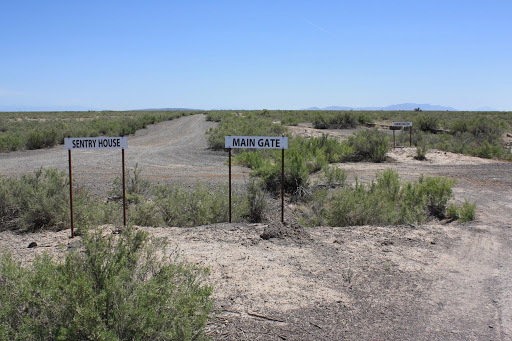
    <summary type="html"><![CDATA[<p><strong><em>The Topaz experience was prefaced by a mixture of welcoming residents and military presence at the camp’s main gate. </p></strong></p><img src="https://www.intermountainhistories.org/files/fullsize/855d8154dd98f7485c8e99a537b65695.jpg" alt="Main Gate" /><br/><p>On September 11, 1942, the first group arrived at Topaz War Relocation Center. That day, over 500 people of Japanese descent entered in Delta by train and were loaded onto buses that brought them to the internment site. There were more arrivals throughout the three-year period Topaz operated, all of whom passed through this main gate. It was here they were met with symbols of patriotism and signs of welcome. The residents of the internment camp tried to ease the new arrivals’ worries with these attempts; however, the barbed wire fences and guard towers framing the gate in the black desert-scape sent a contradicting message.</p><p>The people interned had been brought from homes on the Pacific coast that were exchanged for Topaz’s desert. It was a bleak sight amidst devastating circumstances. One woman, Yoshiko Uchida, noted her appreciation for the Boy Scouts’ effort to soften the arrival experience: “it was such a touching sight to see them standing in the burning sun, covered with dust and making such a determined effort to lessen the shock of our arrival at this bleak desert camp.” Windswept sand from the barren earth scattered about the Boy Scouts bearing instruments. The interned residents had organized a Boy Scout band to welcome new arrivals by song. The Boy Scouts symbolized patriotism to those arriving at the hand of policies that did not live up to American ideals of justice. Eventually, some men within the camp would volunteer for the war effort, enlisting in the segregated 442nd infantry. As the Boy Scout band played, the U.S. military guards stood nearby, holding rifles and kindling fear in the new arrivals.</p><p>Beyond the music of the Boy Scout band, those arriving at the camp were also greeted by signs welcoming them into Topaz. These signs had welcoming phrases such as “Welcome to Topaz: Jewel of the Desert” or “Welcome to Topaz—Your Camp.” However, these signs, whether intentionally or not, covered the truth of the internment experience. For example, one sign describes the camp as a “Jewel,” yet residents were forced to live in close quarters, surrounded by armed guards and barbed wire. Describing it as a “Jewel” hides the reality of what it was really like to live there. Another sign, recounted by Uchida, describes Topaz as “[their] camp.” However, the camp was run by the War Relocation Authority, not the residents. It was surrounded by the military and had strict rules and procedures. As one resident described, “rifles were pointed at us, not outward” (Stone). Although the sign claimed that the camp belonged to them, their surroundings told a different story. The desert landscape and military presence sent a message of fear that overcame the tokens of welcome.</p><p><em><strong><a href="https://www.intermountainhistories.org/items/show/298">For more (including 3 images) view the original article</a></strong></em></p>]]></summary>
    <published>2019-02-13T10:17:11+00:00</published>
    <updated>2026-04-17T19:32:05+00:00</updated>
    <link rel="alternate" type="text/html" href="https://www.intermountainhistories.org/items/show/298"/>
    <id>https://www.intermountainhistories.org/items/show/298</id>
    <author>
      <name>Elizabeth Young and Ann Johnston, Brigham Young University</name>
    </author>
  </entry>
</feed>