<?xml version="1.0" encoding="UTF-8"?>
<feed xmlns="http://www.w3.org/2005/Atom">
  <title type="text">Intermountain Histories</title>
  <updated>2026-04-17T19:32:17+00:00</updated>
  <generator uri="http://framework.zend.com" version="1.12.20">Zend_Feed_Writer</generator>
  <link rel="alternate" type="text/html" href="https://www.intermountainhistories.org/"/>
  <link rel="self" type="application/atom+xml" href="https://www.intermountainhistories.org/items/browse?output=rss2"/>
  <id>https://www.intermountainhistories.org/</id>
  <author>
    <name>Intermountain Histories</name>
    <uri>https://www.intermountainhistories.org</uri>
  </author>
  <link rel="hub" href="https://pubsubhubbub.appspot.com/"/>
  <entry>
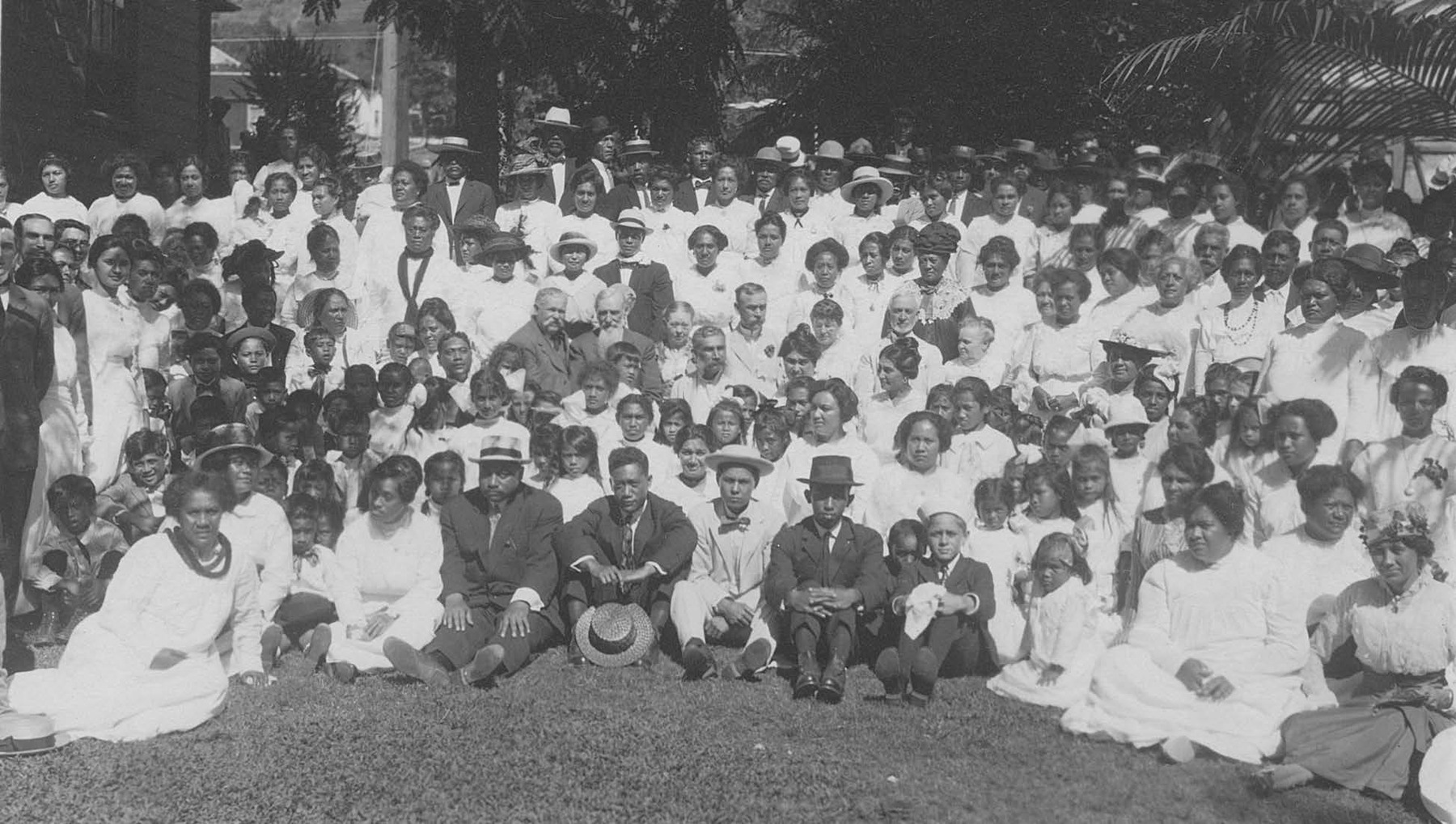
    <title type="html"><![CDATA[Joseph F. Smith and the Islanders of Iosepa]]></title>
    <summary type="html"><![CDATA[<p><strong><em>The Hawaiian members of the Church of Jesus Christ of Latter-day Saints had a very special relationship with the Church’s sixth president, Joseph F. Smith. He was influential in Hawaiian migrations both to and from Utah, including during the time that many of them resided in Iosepa, a Hawaiian colony.</p></strong></p><img src="https://www.intermountainhistories.org/files/fullsize/c4441ee0af02c1fa09ac1230935470cc.jpg" alt="Joseph F. Smith and Hawaiian Saints" /><br/><p><span style="font-weight:400;">At the age of fifteen, Joseph F. Smith served as a missionary for the Church of Jesus Christ of Latter-day Saints in the Hawaiian Islands in the early 1850s. During his several missions, Smith learned the Hawaiian language and developed a loving relationship with the Native Hawaiians. Throughout his life, Smith traveled to Hawaii more often than any other place outside of the western United States. Smith was successful in converting many Hawaiians to the LDS Church. The doctrine of gathering to “Zion” was a central teaching preached by Joseph F. Smith and other missionaries at that time. When immigration laws allowed it, a few hundred Hawaiian Latter-day Saints migrated to Utah to gather with their fellow Saints and to follow the teachings they had received. The Islanders experienced racism, discrimination, job-turnover, and prejudice that led the LDS Church to seek solutions. In 1889, a settlement was established in Tooele County for the Pacific Islanders settling in Utah. It was to be named after Joseph F. Smith, which in the Hawaiian Language is “Iosepa.” At that time, Smith was a member of the Church’s First Presidency and would later become the President of the Church.</span>
<span style="font-weight:400;">In both public and private correspondence, Joseph F. Smith was explicit in expressing his love for the Iosepan Saints. With a letter to S. M. Kinimakalehua of Iosepa, Smith sent “some cloth pants for the cold time that is coming… This is only rags, but take it with my love.” He reported that “Canon [George Q. Cannon] is joining with my family and I in sending a lot of our love to you and Makaweli and all of the Saints in Iosepa.” During a visit to Hawaii in 1915, Smith became convinced of the need for a temple in Hawaii. Upon returning to Utah, he encouraged the Hawaiian Saints to move back to Hawaii and help build a temple in La’ie. Smith also thought that the future Church Presidents would not have the same love for the Hawaiians that he did, which influenced his encouragement of the Islanders to return to their homeland. The Saints trusted in the council of Joseph F. Smith, and most resettled near the temple site in Hawaii. The settlement of Iosepa was fully abandoned by 1917. In November of 1918, Joseph F. Smith passed away and one year later the La’ie Temple was completed. </span></p><p><em><strong><a href="https://www.intermountainhistories.org/items/show/780">For more (including 4 images) view the original article</a></strong></em></p>]]></summary>
    <published>2024-02-24T03:37:50+00:00</published>
    <updated>2026-04-17T19:32:17+00:00</updated>
    <link rel="alternate" type="text/html" href="https://www.intermountainhistories.org/items/show/780"/>
    <id>https://www.intermountainhistories.org/items/show/780</id>
    <author>
      <name>Jordan Castillo, Brigham Young University</name>
    </author>
  </entry>
  <entry>
    <title type="html"><![CDATA[The Historic Pine Valley Chapel]]></title>
    <summary type="html"><![CDATA[<p><strong><em><span style="font-weight:400;">Pine Valley, Utah is home to the oldest Latter-Day Saint chapel in use. The beautiful architecture of the Pine Valley Chapel holds a unique history. </span></em></strong></p><img src="https://www.intermountainhistories.org/files/fullsize/7055bc8e5b88c68ef9fe7269c7ccd428.jpg" alt="Pine Valley Chapel" /><br/><p><span style="font-weight:400;">A few miles north of St. George, Utah stands a small town called Pine Valley. At first glance it does not look different from other small settlements in the area, but the area is home to the oldest Latter-Day Saint chapel still in continuous use. The Pine Valley chapel is unique from any other chapel in the state; its frame stands 54 feet high and has an attic that resembles an upside-down ship. Among Pine Valley’s settlers was a man by the name of Ebenezer Bryce, who worked as a ship builder in Scotland before joining the Church and emigrating to the US.  When he was commissioned to lead the construction of a chapel in the area, he is thought to have said that he didn’t know how to build a church, but he did know how to build a ship. </span>
</p><p><span style="font-weight:400;">Construction began in 1868 and was greatly aided by the operating lumber mill that existed in the valley. Almost 100 years later in 1960 the chapel was rewired for electricity and given minor updates under a Church-sponsored project. From 2000 to 2004, the LDS Church sponsored a massive restoration of the building that replaced the chapel’s windows, roof, and siding. It was rededicated by Elder Jeffery R. Holland, who has familial ties to Pine Valley, on May 15, 2005. </span>
</p><p><span style="font-weight:400;">The chapel’s original meeting room is still in use today and serves hundreds of LDS Church members each year. Its sacrament table, podium, pews, lighting chandeliers, and doors are original items from the chapel’s construction in 1868. The chapel’s walls are adorned with religious artwork, which is another unique aspect in comparison to other LDS meetinghouses. The attic has since been sealed off for safety purposes, but the chapel’s resemblance to a ship is still evident from within the chapel. </span></p><p><em><strong><a href="https://www.intermountainhistories.org/items/show/654">For more (including 3 images) view the original article</a></strong></em></p>]]></summary>
    <published>2022-09-16T17:43:19+00:00</published>
    <updated>2026-04-17T19:32:14+00:00</updated>
    <link rel="alternate" type="text/html" href="https://www.intermountainhistories.org/items/show/654"/>
    <id>https://www.intermountainhistories.org/items/show/654</id>
    <author>
      <name>Ellie Maires, Brigham Young University</name>
    </author>
  </entry>
</feed>
