<?xml version="1.0" encoding="UTF-8"?>
<feed xmlns="http://www.w3.org/2005/Atom">
  <title type="text">Intermountain Histories</title>
  <updated>2026-04-17T19:32:03+00:00</updated>
  <generator uri="http://framework.zend.com" version="1.12.20">Zend_Feed_Writer</generator>
  <link rel="alternate" type="text/html" href="https://www.intermountainhistories.org/"/>
  <link rel="self" type="application/atom+xml" href="https://www.intermountainhistories.org/items/browse?output=rss2"/>
  <id>https://www.intermountainhistories.org/</id>
  <author>
    <name>Intermountain Histories</name>
    <uri>https://www.intermountainhistories.org</uri>
  </author>
  <link rel="hub" href="https://pubsubhubbub.appspot.com/"/>
  <entry>
    <title type="html"><![CDATA[The Sundance Film Festival: Where Skis Meets Cinema]]></title>
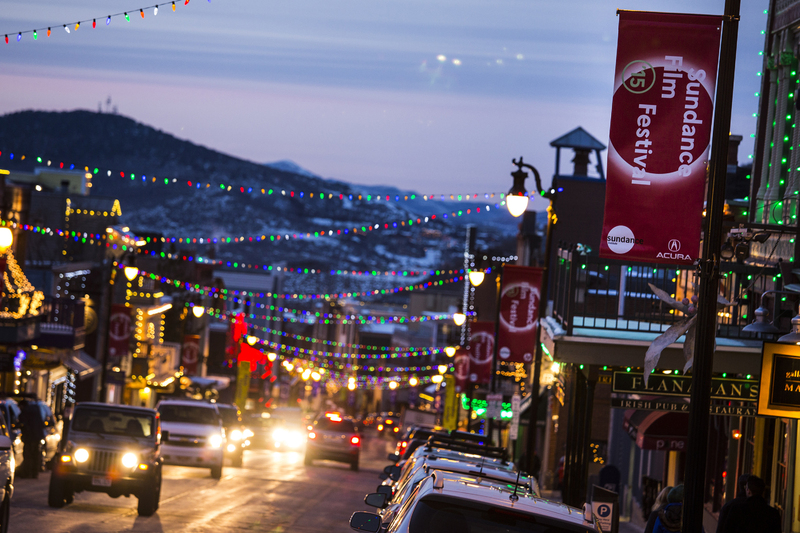
    <summary type="html"><![CDATA[<p><strong><em>The largest independent film festival in America is not hosted in New York City or Los Angeles. Rather, the Sundance Film Festival, which began in 1978 and attracted more than 70,000 attendees in 2017, is based out of Park City, Utah. Unknown filmmakers hoping to become the next Academy Award winners flock to Salt Lake City every winter to show Hollywood producers the film that could be the next box office hit.</em></strong></p><img src="https://www.intermountainhistories.org/files/fullsize/e4432f70ad74e28de5be8515e83307b7.jpg" alt="Park City, looking south. Before its transformation into a Hollywood-esque town, Park City was known for little more than mining." /><br/><p>America’s largest independent film festival, originally known as the U.S. Film Festival, brought more than $150 million in economic impact to Utah in 2017. In the same year, the Sundance Film Festival supported almost 3,000 jobs and attracted visitors from 46 states and 18 foreign countries. Incumbent Governor Gary R. Herbert, a longtime supporter of Sundance, proudly said that his state’s “collaboration with [the festival] highlights the exceptional cultural, recreational, tourism, and business opportunities available here in Utah.”</p><p>The founders of Sundance—Sterling Van Wagenen, John Earle, and Cirina Hampton Catania—envisioned an event that would attract independent filmmakers to Utah. They even convinced Robert Redford, an acclaimed actor who received an Academy Award nomination for his role in The Sting (1973), to serve as the festival’s first board chairman. But organizers struggled to turn a profit from the festival until 1981, when it was moved to Park City. There, the U.S. Film Festival became successful and changed its name to Sundance, after Redford’s character in Butch Cassidy and the Sundance Kid.</p><p>Quentin Tarantino’s Reservoir Dogs, which appeared at the festival in 1992 and has been named the “greatest independent film of all time,” was one of Sundance’s earliest success stories. Damien Chazelle, who won an Academy Award for Best Director for his film La-La Land (2016), made a breakthrough at Sundance in 2013, and Ryan Gosling had his adult acting career launched at the festival with Half Nelson’s 2006 premiere. Some box office hits and critically acclaimed films that Sundance has propelled to fame are The Blair Witch Project (1999), Napoleon Dynamite (2004), Saw (2004), Little Miss Sunshine (2006), and Whiplash (2014). As a result, over 4,000 feature-length films were submitted for consideration in 2017, but “only 113 feature films were selected to play at the festival.”</p><p>Despite the festival’s success, it disdains commercialism and does not want to become a playground for A-list actors or a venue that is overflowing with paparazzi. Although it is connected with Hollywood, Sundance enjoys its place in the intermountain community. Over the past two decades, nearly “20 million feet of 35mm film has been screened at the festival, [which] would stretch from New York City to Paris.” But the Sundance Institute does not have its vision set on New York City, Paris, Hollywood, or Cannes. It found its niche in Utah and longs to remain in the Beehive State. </p><p><em><strong><a href="https://www.intermountainhistories.org/items/show/209">For more (including 3 images) view the original article</a></strong></em></p>]]></summary>
    <published>2018-06-08T16:52:43+00:00</published>
    <updated>2026-04-17T19:32:03+00:00</updated>
    <link rel="alternate" type="text/html" href="https://www.intermountainhistories.org/items/show/209"/>
    <id>https://www.intermountainhistories.org/items/show/209</id>
    <author>
      <name>Marc Jonathan Wein, Brigham Young University</name>
    </author>
  </entry>
  <entry>
    <title type="html"><![CDATA[The Egyptian Theatre: A Centerpiece of Culture]]></title>
    <summary type="html"><![CDATA[<p><strong><em>Located in Park City, the home of the Sundance Film Festival, the Egyptian Theatre is a testament of creativity and culture along the Wasatch Front. Inspired by the Egyptomania of the 1920s, the theatre has survived fires and snowstorms to become the artistic center of Utah’s famous ski town. </em></strong></p><img src="https://www.intermountainhistories.org/files/fullsize/a7b586a4a9630490aec6b82bd9a9f703.jpg" alt="Park City Residents Among Ruins of Main Section of Silver Mining Town Shortly After the 1898 Fire" /><br/><p>Founded in 1869 as Parley’s Park City—after LDS apostle Parley P. Pratt—the historic mining town has always valued the arts. Today, Park City is ranked one of the top ten ski resorts in North America and is best known for its slopes and independent films. As the host of the Sundance Film Festival, the largest independent film festival in the United States, the town attracts famous Hollywood faces and up-and-coming filmmakers. Sundance moved to Park City in 1981, but the town’s association with the theatre—the predecessor of film—predates the festival by nearly a century.</p><p>In the late nineteenth century, the Park City Opera House attracted crowds to its live theatrical performances. On June 19, 1898, the “greatest fire in the history of Utah” consumed the town’s commercial district, destroying more than 200 homes and businesses and causing a million dollars’ worth of property damage. The disaster turned Park City into a “fiery furnace” and “practically wiped [it] out of existence.” Residents could not prevent the blaze from reaching the Opera House, but a new artistic venue rose from the ashes. The following year, on the same site, the Dewey Theatre opened its doors. However, in 1916, its roof collapsed under record-breaking snowfall. In 1922, Park City residents constructed a new theatre. Captivated by the Egyptomania that reignited after the discovery of Tutankhamun’s tomb, property managers hired Egyptologist C.R. Berg to supervise the decorations based on scarabs, lotus leaf motifs, and hieroglyphics. It was christened the Egyptian Theatre when it opened on Christmas Day in 1926.</p><p>In 1981, two decades after Park City had reinvented itself as a ski resort town, the theatre became home to the Sundance Film Festival. According to public tax returns, the Egyptian Theatre’s gross revenue exceeded $2.35 million in 2013. Park City’s Egyptian Theatre has withstood snowstorms, the Great Depression, and the exodus of the town’s original mining residents to become a centerpiece of culture in the Intermountain West. Utahns are proud of the artistic contributions the theatre has made throughout the years. For that reason, it is a cultural icon in its own light, a place where films are premiered and stars are born. </p><p><em><strong><a href="https://www.intermountainhistories.org/items/show/207">For more (including 3 images) view the original article</a></strong></em></p>]]></summary>
    <published>2018-06-08T04:10:44+00:00</published>
    <updated>2026-04-17T19:32:02+00:00</updated>
    <link rel="alternate" type="text/html" href="https://www.intermountainhistories.org/items/show/207"/>
    <id>https://www.intermountainhistories.org/items/show/207</id>
    <author>
      <name>Marc Jonathan Wein, Brigham Young University</name>
    </author>
  </entry>
  <entry>
    <title type="html"><![CDATA[Silver, Snow, and Cinema: Park City, Utah ]]></title>
    <summary type="html"><![CDATA[<p><strong><em>High in the Wasatch Mountains sits one of Utah’s true cultural jewels: Park City. Though it started as a simple mining community, Park City experienced explosive growth with the rise of the recreational winter sports industry in the mid 20th century. Currently, Park City is most well-known for hosting the Sundance Film Festival, the largest independent film festival in the United States. </em></strong></p><img src="https://www.intermountainhistories.org/files/fullsize/d8d1e857bfa049169bf789d8c5baa41a.jpg" alt="Park City Street " /><br/><p>The discovery of the Ontario silver deposit is what first put Park City on the map. A joint claim filed in 1872 by Herman Buden, James Kane, Rector Steen, and Augustus Dawell was the beginning of a very productive mining operation that ran up until the mid-20th century. The productivity of the mine attracted the attention of other investors. George Hearst (a mining magnate from San Francisco) purchased control on the mining operation and passed off the day-to-day management to his friend, R.C. Chambers. Under their management the mining operation flourished, and Park City experienced an economic boom as a result. </p><p>The early 20th century saw the decline of the mining industry in Park City. The multiple economic recessions and the Great Depression dealt a deadly blow to operations, and Park City was looking more and more like so many other mining boom towns in the Rocky Mountains. Park City’s savior ended up being its ideal location as a winter sport resort town. It’s unique geographical location made it a gateway to resorts in the west, and skiers and snowboarders flocked to the town. This revitalized the dying community and turned Park City into one of Utah’s premier snow sports destinations. </p><p>Today, Park City remains a staple of the winter sports industry, but its most recent claim to fame is as the host of the Sundance Film Festival. Sterling van Wagenen (a Brigham Young University film graduate) and John Earle (the head of the Utah State Film Commission) collaborated to create the festival in order to attract the film industry to Utah, bring famous filmmakers to the area, and provide a place for smaller films to reach an audience. The first festival took place in 1978, and with the help of Hollywood star Robert Redford spreading the word, its notoriety increased dramatically. Today it remains among the top worldwide film festivals, often placed together with Cannes, Venice, and Toronto in terms of importance. It’s success has significantly changed Park City from its early days as a mining capital to a hub for Hollywood elites and aspiring filmmakers. </p><p><em><strong><a href="https://www.intermountainhistories.org/items/show/36">For more (including 5 images) view the original article</a></strong></em></p>]]></summary>
    <published>2017-03-27T20:17:32+00:00</published>
    <updated>2026-04-17T19:31:58+00:00</updated>
    <link rel="alternate" type="text/html" href="https://www.intermountainhistories.org/items/show/36"/>
    <id>https://www.intermountainhistories.org/items/show/36</id>
    <author>
      <name>Addison Blair, Brigham Young University </name>
    </author>
  </entry>
</feed>