<?xml version="1.0" encoding="UTF-8"?>
<feed xmlns="http://www.w3.org/2005/Atom">
  <title type="text">Intermountain Histories</title>
  <updated>2026-04-17T19:32:19+00:00</updated>
  <generator uri="http://framework.zend.com" version="1.12.20">Zend_Feed_Writer</generator>
  <link rel="alternate" type="text/html" href="https://www.intermountainhistories.org/"/>
  <link rel="self" type="application/atom+xml" href="https://www.intermountainhistories.org/items/browse?output=rss2"/>
  <id>https://www.intermountainhistories.org/</id>
  <author>
    <name>Intermountain Histories</name>
    <uri>https://www.intermountainhistories.org</uri>
  </author>
  <link rel="hub" href="https://pubsubhubbub.appspot.com/"/>
  <entry>
    <title type="html"><![CDATA[The Nephi Massacre during Wakara’s War<br />
]]></title>
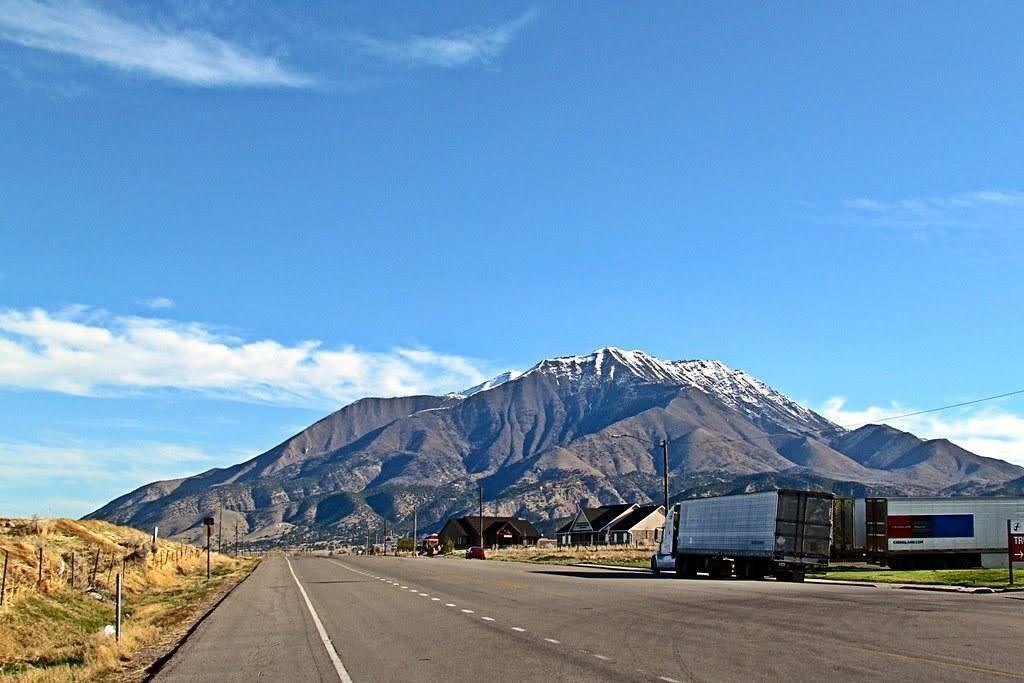
    <summary type="html"><![CDATA[<p><strong><em>During Wakara’s War in 1853-54 a group of Utes killed four Mormons at Fountain Green.  The next day, Mormons killed eight Utes or Goshutes seeking peace with LDS settlers in Nephi, Utah. The discovery of their remains in Nephi’s Old Hallow in 2006 highlighted the brutality of Wakara’s War, a series of conflicts during 1853 between settlers and Indigenous residents in central Utah Territory.</em></strong></p><img src="https://www.intermountainhistories.org/files/fullsize/fafd241883d271d8b9793e3097ca8da1.jpg" alt="Nephi, Utah" /><br/><p>In 2006, an archaeological discovery in Nephi, Utah, shed light on a tragic event that occurred in 1853 during the Walker War, also known as the Wakara War. The excavation revealed a mass grave containing the remains of seven Goshutes, including a young boy. The bodies were found piled on top of each other. Forensic analysis discovered gunshot wounds, shattered bones, and evidence of blunt force trauma.</p><p>The Wakara War between settlers and Utes was infuriated by the encroachment of additional LDS settlements in Utah and Sanpete counties in Utah Territory. The incident in Nephi occurred on October 2, 1853, when a group of Utes or Goshutes came to the fort. The account reported in the Deseret News portrayed the Natives as aggressors in a tussle they initiated with the militia. Recent research, including the discovery of journals of witnesses Adelia Wilcox and Martha Spence Heywood, however, contradict this narrative.</p><p>The forensic evidence from the mass grave suggests that the Native men, ranging in ages from 16 to 25, were not killed in a skirmish but were executed. Gunshot wounds in the back of the head and traumatic injuries indicate a cold-blooded killing, challenging the original historical account. The discovery of the mass grave by construction workers laying a foundation for a home in 2006 provided an opportunity to combine scientific discovery, archaeology and forensic analysis, and historical records to correct and update the historical narrative and include the perspectives of those killed. The story of the Nephi mass grave is a significant reminder of the complexities surrounding historical narratives and how archaeological revelations can amend those stories.</p><p><em><strong><a href="https://www.intermountainhistories.org/items/show/856">For more (including 3 images) view the original article</a></strong></em></p>]]></summary>
    <published>2024-09-25T15:00:26+00:00</published>
    <updated>2026-04-17T19:32:19+00:00</updated>
    <link rel="alternate" type="text/html" href="https://www.intermountainhistories.org/items/show/856"/>
    <id>https://www.intermountainhistories.org/items/show/856</id>
    <author>
      <name>Chelsea Woodruff, Brigham Young University</name>
    </author>
  </entry>
  <entry>
    <title type="html"><![CDATA[The Nephi Mounds : New Light Shed on the Origins of the Fremont]]></title>
    <summary type="html"><![CDATA[<p><strong><em>The Nephi Mounds got their name from their location, which is approximately two miles north of Nephi, Utah. The site is an Fremont archaeological site with 30 pithouses and important historical artifacts. This site helps to substantiate the claims that the Fremont were not originally from Utah, but could have descended from Athabascan tribes from the north. </em></strong></p><img src="https://www.intermountainhistories.org/files/fullsize/420f340e27ce1c781c958e28211e02fe.jpg" alt="Photo of a pithouse." /><br/><p>The Nephi Mounds are a Fremont archaeological site situated approximately two miles north of Nephi Utah. In one of these cattle fields just west of the slopes of the mountains, a farmer first discovered the Fremont mounds while working on his farm in 1871. The site was then covered up. It was not until 1965 when, upon further examination by archaeologists from the University of Utah, discovered a series of pit houses and granaries situated in groups that numbered about 30 total structures. Inside were several artifacts that exemplify Fremont culture. There were several pieces of pottery, bone and stone tools, pieces of food, and firepits. These artifacts contribute to the hypothesis that the Fremont were not originally from Utah, but had heavy influence from neighboring tribes that were well adapted to living in the Utah climate. These artifacts are more congruent with finds from Athabascan tribes to the northwest, which suggest that the Fremont had origins from that region. One of the most important aspects of this site are the adobe-coil dwellings that are unique to the Sevier Fremont tribes. </p><p>Mystery surrounds the origins and disappearance of the Fremont. Data gathered from the pithouses, moccasins, and ceramics found in Fremont sites differentiate the Fremont from their Anasazi and Pueblo neighbors. This hypothesis is further supported by the skeletal remains of</p><p>the Fremont at sites such as the Nephi mounds, which show similarities to Athabaskan groups living in areas as far north as sub-arctic regions. </p><p>The story of the Fremont can be told as one of cultural differences and international relations. The semi-nomadic lifestyle of the Fremont leads to high possibility that the Fremont were travelers from outside of Utah. In synthesizing these findings and considering a possible route of travel along the Ivie and Snake river systems, the theory of Athabascan progenitors living throughout the region can be readily endorsed. </p><p>As for the Nephi site in particular, the findings here have been supportive of migrant theory thus far. There were 30 mounds total, of which some were living structures, others for storage and worship. There were two skeletons found, a male and a female. The man had evidence of rust on his arm, where he was possibly holding a weapon or tool made from iron. There were many ceramic vessels inside, including a metate for grinding corn. Food scraps and other debris from the period were also in the pithouses. There were deer bones fashioned into needles for the purpose of making moccasins as well. </p><p><em><strong><a href="https://www.intermountainhistories.org/items/show/431">For more (including 3 images) view the original article</a></strong></em></p>]]></summary>
    <published>2020-10-11T09:42:14+00:00</published>
    <updated>2026-04-17T19:32:08+00:00</updated>
    <link rel="alternate" type="text/html" href="https://www.intermountainhistories.org/items/show/431"/>
    <id>https://www.intermountainhistories.org/items/show/431</id>
    <author>
      <name>Daniel Martin, Brigham Young University</name>
    </author>
  </entry>
</feed>
