<?xml version="1.0" encoding="UTF-8"?>
<feed xmlns="http://www.w3.org/2005/Atom">
  <title type="text">Intermountain Histories</title>
  <updated>2026-04-17T19:32:20+00:00</updated>
  <generator uri="http://framework.zend.com" version="1.12.20">Zend_Feed_Writer</generator>
  <link rel="alternate" type="text/html" href="https://www.intermountainhistories.org/"/>
  <link rel="self" type="application/atom+xml" href="https://www.intermountainhistories.org/items/browse?output=rss2"/>
  <id>https://www.intermountainhistories.org/</id>
  <author>
    <name>Intermountain Histories</name>
    <uri>https://www.intermountainhistories.org</uri>
  </author>
  <link rel="hub" href="https://pubsubhubbub.appspot.com/"/>
  <entry>
    <title type="html"><![CDATA[Zitkala-Ša’s (Gertrude Simmons Bonnin) Sojourn in Utah<br />
]]></title>
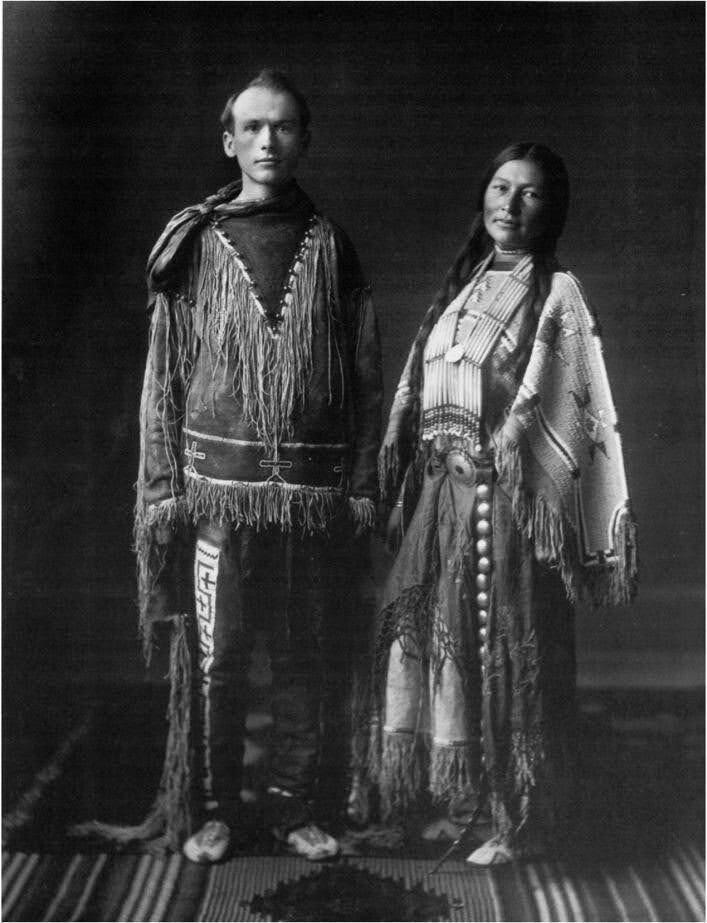
    <summary type="html"><![CDATA[<p><strong><em><span style="font-weight:400;">Zitkala-Ša, or Gertrude Simmons Bonnin, is a celebrated Yankton Dakota writer and activist. She lived in Utah from 1902-1917.</span></em></strong></p><img src="https://www.intermountainhistories.org/files/fullsize/45b71b8be1582e338eb8a6eee61bb4cc.jpg" alt="William F. Hanson and Zitkala-Ša" /><br/><p><span style="font-weight:400;">Born on the Yankton Sioux Reservation in South Dakota in 1876, Gertrude Simmons or Zitkala-Ša left the reservation at age eight to attend White’s Manual Labor Institute in Indiana. This assimilation-focused boarding school instilled Euro-American and Christian values in its students. She attended Earlham College and became an increasingly skilled writer and musician.</span> <span style="font-weight:400;">She taught at the Carlisle Indian Industrial School. After a while, she became critical of the emphasis on assimilation and acculturation and resigned. She began writing under the name Zitkala-Ša (Red Bird) around 1889, publishing essays in national magazines such as </span><i><span style="font-weight:400;">Harper’s Monthly</span></i><span style="font-weight:400;">. Her writings often criticized the practice of many reformers and stressed the importance of Native identities.</span>
<span style="font-weight:400;">Zitkala-Ša married Raymond Bonnin in 1902 and they moved to </span><span style="font-weight:400;">Whiterocks, Utah, where Raymond worked for the Indian Bureau on the Uintah and Ouray Reservation. In 1903, they had a son, Raymond “Ohiya” Bonnin. A young, orphaned Ute boy named Oran Curry and Old Sioux, a survivor of the Battle of the Little Bighorn, also lived with them. </span>
<span style="font-weight:400;">The Bonnins lived in Utah from 1902 to 1917, except for several months spent on the Standing Rock Reservation in the Dakotas. It was while away at Standing Rock that she converted to Catholicism. After returning to Utah, she kept up a correspondence with Father William Ketcham, director of the Bureau of Catholic Indian Missions, expressing her wish to introduce Catholicism to the Utes.</span>
<span style="font-weight:400;">In 1908, she met music teacher William Hanson</span><span style="font-weight:400;">. They eventually collaborated in writing and composing the </span><i><span style="font-weight:400;">Sun Dance Opera</span></i><span style="font-weight:400;">, which debuted in Vernal, Utah, in 1913. The Sun Dance is a religious ceremony practiced by some Natives, especially Plains Peoples. The opera combined Native rituals with European-styled performances. It is unclear what motivated her to collaborate on this opera, which could be viewed as a violation of religious respect. Interestingly, the Sun Dance was outlawed on the Uintah and Ouray Reservation at this time, and the opera allowed Ute performers to participate in it to some degree. At the time of its debut, a Vernal newspaper praised it as greatly pleasing the audience.</span>
<span style="font-weight:400;">During her first few years in Utah, Zitkala-Ša taught at the Whiterocks Boarding School. She also spent time working for the Indian Service. In 1913, she joined the Society of American Indians, a national organization advocating for Native rights. She was elected secretary of the SAI in 1916. After moving to Duchesne, Utah, in 1915, she created a Ute community center. While in Utah, she began an anti-peyote campaign. Zitkala-Ša and her husband Ray moved to Washington, D.C., where she continued her activism. Zitkala-Ša’s time in Utah was one of “relative obscurity." Yet, during her fourteen years there, she continued to evolve and to advance the causes she believed in.</span></p><p><em><strong><a href="https://www.intermountainhistories.org/items/show/888">For more (including 3 images) view the original article</a></strong></em></p>]]></summary>
    <published>2025-04-21T15:25:26+00:00</published>
    <updated>2026-04-17T19:32:20+00:00</updated>
    <link rel="alternate" type="text/html" href="https://www.intermountainhistories.org/items/show/888"/>
    <id>https://www.intermountainhistories.org/items/show/888</id>
    <author>
      <name>Emmaretta Barnett, Brigham Young University</name>
    </author>
  </entry>
  <entry>
    <title type="html"><![CDATA[Lagoon&#039;s Patio Gardens]]></title>
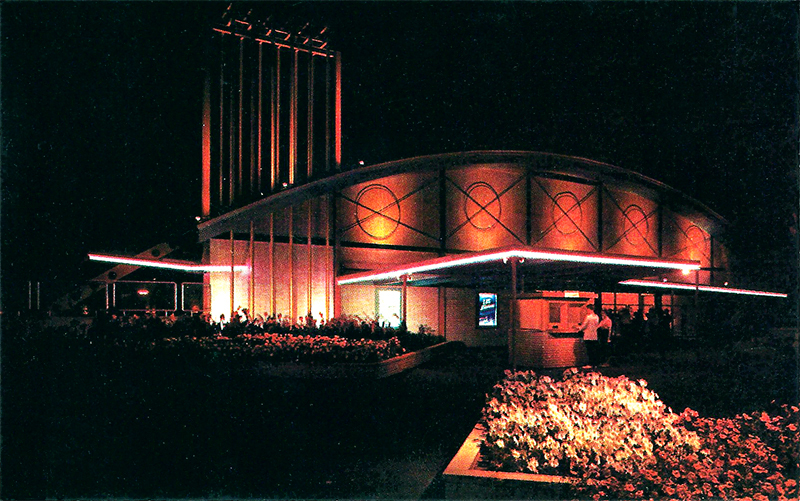
    <summary type="html"><![CDATA[<p><strong><em><span style="font-weight:400;">Utah’s Lagoon used to be more than just an amusement park; it once housed a large concert venue within its gates, hosting many performances by music legends from the 1950s to the early 1970s.</span></em></strong></p><img src="https://www.intermountainhistories.org/files/fullsize/22bf785d177cfc260f8fabc152cf11d6.jpg" alt="Postcard of Patio Gardens" /><br/><p><span style="font-weight:400;">In 1953 a fire tore throughout Lagoon, Utah’s only amusement park, and destroyed many buildings there. Then owner, Robert Freed, saw this as an opportunity to update the architecture of the park to something much more modern–to create the “New Lagoon.” One of the buildings constructed during the renovations was the Patio Gardens, a concert venue to replace an old, ruined Dancing Pavilion. While Lagoon had live performances before the 1950s, Patio Gardens, with its stage and dance floor, became the new house for concerts. The performances in Patio Gardens over the next two decades included some of the most popular national artists and would make Lagoon nationally known, especially within the 1960s counterculture music scene. </span>
<span style="font-weight:400;">One such popular group was the Beach Boys who, on September 7, 1963, thrilled their youthful Utah audience with their song “Salt Lake City,” claiming that Salt Lake City had “the grooviest kids.” The Beach Boys returned to Lagoon again and again with their final performance of fourteen appearances taking place on September 12, 1970.</span>
<span style="font-weight:400;">The Beach Boys were just one of many popular groups that performed at Patio Gardens. Other notable counterculture bands such as The Rolling Stones, The Monkees, The Who, Janis Joplin, and Jefferson Airplane also performed there. Even The Beatles were in discussions to perform at Lagoon, but their high asking price led to their exclusion. Patio Gardens also housed more classic acts, such as Benny Goodman, the Utah Symphony, and Ella Fitzgerald. </span>
<span style="font-weight:400;">Most bands had a good experience, with some even returning to perform again or immortalizing the venue in songs, as the Beach Boys did. However, there were also bands who hated the venue and, more importantly, the crowds. On May 25, 1968, The Doors performed to a crowd of about 3,500, nearing the venue’s 4,000-person capacity limit. Jim Morrison, the band’s lead singer, declared that the crowd was dead for his first performance of the day, hurled vulgar insults to the audience, and after three songs walked off of the stage, never to return. </span>
<span style="font-weight:400;">Regardless of the failure of The Doors concert, Patio Gardens is remembered fondly by many Utahns. Patio Gardens closed in 1973 after operating for twenty years. Where music legends used to perform is now the home of the dark ride Dracula’s Castle and Lagoon’s arcade. The original light fixtures and the top of the stage (the rest of which is hidden by a wall) are the only reminders of what helped make Lagoon so famous.</span></p><p><em><strong><a href="https://www.intermountainhistories.org/items/show/778">For more (including 3 images) view the original article</a></strong></em></p>]]></summary>
    <published>2024-02-22T22:07:05+00:00</published>
    <updated>2026-04-17T19:32:17+00:00</updated>
    <link rel="alternate" type="text/html" href="https://www.intermountainhistories.org/items/show/778"/>
    <id>https://www.intermountainhistories.org/items/show/778</id>
    <author>
      <name>Mikelle Andersen, Brigham Young University</name>
    </author>
  </entry>
  <entry>
    <title type="html"><![CDATA[Wesleyan Heritage Organ at First United Methodist Church: History and Community]]></title>
    <summary type="html"><![CDATA[<p><strong><em>Initially dedicated six months following the dedication of their new church building, the pipe organ at First United Methodist Church has a long and storied history. Having gone through many updates, improvements, and restorations over the last several decades, the organ remains a highlight of religious music culture in Salt Lake City, Utah. </em></strong></p><img src="https://www.intermountainhistories.org/files/fullsize/f60f373de01c4c6aa7aaf09c151e3200.jpg" alt="1930 Console and Organ Choir" /><br/><p>Perhaps the most nationally recognized organ in Utah is found at the Mormon Tabernacle on Temple Square. However, First United Methodist Church in the heart of downtown Salt Lake City, Utah is home to the oldest pipe organ in the state that features the most original components in their original location. The church building on the corner of 200 South and 200 East was built and dedicated in May of 1906. The dedication of the original church organ, made by George Kilgan & Sons, followed seven months later on December 7, 1906. The organ featured pipes painted in shades of green and highlighted by intricate stenciling, as well as a console close to the organ choir that faced the congregation. Between 1915 and 1960, the organ underwent enlargements, various color changes accentuated by gold paint, as well as the movement of the console closer to the congregation on the main floor of the chapel. During the period of 1924–1939, the First United Methodist Church organist and choir director was Dr. Frank W. Asper, who also was an organist for the Mormon Tabernacle during the years 1924–1965. The organ underwent significant renovation during what is called the sanctuary and chancel beautification project. A notable change to the organ included moving the organ pipes behind a screen. Further, the pipes were hidden by a wooden grill, crosses, and lights that highlighted the new front to the Church chancel and sanctuary. The beautification project also included the incorporation of permanent pulpits and flower boxes. </p><p>In 2009, First United Methodist Church made the decision to restore the organ back to its original style, parts, and feel as part of a larger effort to remodel and renovate an integral and central component of the church’s community, history, and tradition. At this time, fundraising efforts began with recitals performed by local organists, grants, and a crowdfunding campaign. First United Methodist’s principal organist, Scott Mills, attributes the success of the fundraising efforts to the community, similar to an outreach that led to the building and dedication of the Church building over one hundred years earlier in 1906. Later at the completion of the project, Mills said, “The donations came in from one penny to thousands of dollars. And so, this whole restored effort . . . it was done mostly by the widow’s mite, literally the widow’s mite was the efforts of people who came together and made this all possible.” By 2014, the church had raised an ample sum to hire local American Fork, Utah based organ builders, Bigelow & Co. The restoration effort consisted of finding necessary vintage parts at the local Salt Lake Masonic Temple, locating and purchasing a 1930 organ console from Old St. Mary’s Catholic Church in Cincinnati, Ohio, and the hiring of Tony Devroude to recreate the original stenciling on the organ pipes. In addition, the 1960 paneling and carpeting was removed, opening up the chancel area and exposing the organ façade.  The organ console was dedicated to the memory of the 1924–1939 director and organist, Dr. Frank W. Asper. Restored to its original look and vintage composition, the Wesleyan Heritage Organ at First United Methodist continues to serve the local Methodist community, a wide variety of community events, as well as amateur and professional organ recitals on a regular basis. </p><p><em><strong><a href="https://www.intermountainhistories.org/items/show/154">For more (including 3 images) view the original article</a></strong></em></p>]]></summary>
    <published>2018-05-04T02:18:30+00:00</published>
    <updated>2026-04-17T19:32:01+00:00</updated>
    <link rel="alternate" type="text/html" href="https://www.intermountainhistories.org/items/show/154"/>
    <id>https://www.intermountainhistories.org/items/show/154</id>
    <author>
      <name>Nicholas Shrum, Brigham Young University</name>
    </author>
  </entry>
  <entry>
    <title type="html"><![CDATA[Saving Jazz in Moscow, Idaho]]></title>
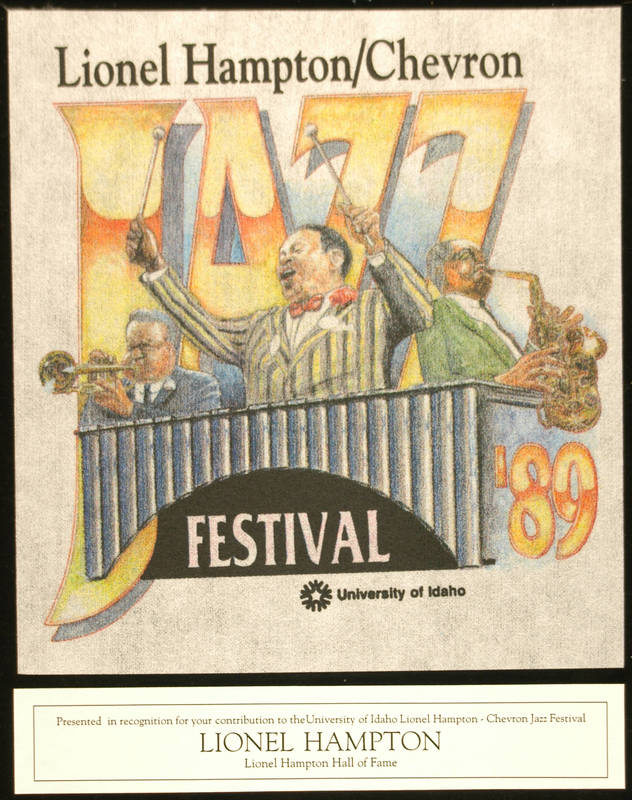
    <summary type="html"><![CDATA[<p><strong><em>Throughout the 1960’s jazz was admired across the nation. In the small college town of Moscow, Idaho, the love for the upbeat New Orleans sound was no different. </em></strong></p><img src="https://www.intermountainhistories.org/files/fullsize/1c996a312d406a7b5865769489bb4ad9.jpg" alt="Award to Lionel Hampton" /><br/><p>In 1968, a small group of students and one guest artist gathered together to perform Jazz music and compete in Moscow, Idaho’s first Jazz Festival. Hosted by David Seiler and Robert Spevack, the festival was embraced by the community. According to University of Idaho graduate, Amanda Nagel, the goal of Seiler and Spevack was to combat the death of Jazz to the rise of Rock-N-Roll through “educating young students and instituting a love for jazz for a new generation.” </p><p>In 1977, Dr. Lynn “Doc” Skinner became the new director for the University of Idaho’s Jazz Festival. It was Doc’s plan to transform the small event into a celebrated festival that would bring big names to the northern Idaho. The intimate, single day event grew into a three-day event that brought renowned artists and thousands of students from all over the country to the University of Idaho. Through workshops, clinics, and concerts, students and faculty have been exposed to a variety of different jazz genres.</p><p>The Jazz Festival was graced with the appearance from the Queen of Jazz herself, Ella Fitzgerald. Her 1982 headlined attendance led to the national recognition of the UI Jazz Festival. Shortly after her visit, the University’s student newspaper, The Argonaut, stated, “The evening was a rare one in Moscow. The appearance of a unique and great talent is something to be appreciated. To use one of the titles, Ella, ‘There Will Never Be Another You.’” It was after the presence of Ms. Fitzgerald that big names became ordinary for the U of I Jazz Festival. </p><p>In 1985, the festival was renamed in the honor of Lionel Hampton. That year his band performed on the intimate stage of the Memorial gym, playing through the night, nearly to sunrise. Charles Gallagher, a writer for the Argonaut, describes the event stating, “The performance reminded one of an old black and white movie depicting a smoky jazz hall in Chicago 50 years ago.” Hampton was so impressed by the enthusiasm from the young musicians that he pledged to be the ambassador for the University of Idaho’s Jazz Festival. According to a 1985 January edition of the Argonaut, Hampton began his commitment by donating $50,000 to establish a foundation for the festival. At his 1985 attendance, the University of Idaho recognized Hampton by formally renaming the event to the Lionel Hampton Jazz Festival. </p><p>To date, the Lionel Hampton Jazz Festival has brought thousands of jazz music enthusiasts together to learn from and listen to artists like Ray Brown, Sarah Vaughn, Doc Severinsen, and Al Jarreau. The international superstar appearing in shows coast-to-coast as the United States’ Ambassador of Jazz, Dizzy Gillespie appeared at the Jazz Festival on multiple occasions. Known for his swollen-like-balloons cheeks while he played the trumpet, Dizzy not only embraced the event as a professional and instructor he dedicated some of his most prized possessions to the Jazz collection at the University. </p><p>It was the appreciation and perseverance of Jazz from people like Lionel Hampton, Ella Fitzgerald, and Dizzy Gillespie that allowed for its endurance throughout musical history. Entering its 50th year anniversary, the Lionel Hampton Jazz Festival has allowed for many diverse artists visit the Northwest region and continues to enable the admiration of jazz for generations.</p><p><em><strong><a href="https://www.intermountainhistories.org/items/show/107">For more (including 4 images) view the original article</a></strong></em></p>]]></summary>
    <published>2018-01-23T21:07:59+00:00</published>
    <updated>2026-04-17T19:32:00+00:00</updated>
    <link rel="alternate" type="text/html" href="https://www.intermountainhistories.org/items/show/107"/>
    <id>https://www.intermountainhistories.org/items/show/107</id>
    <author>
      <name>Annysia Hoffman, University of Idaho</name>
    </author>
  </entry>
</feed>