<?xml version="1.0" encoding="UTF-8"?>
<feed xmlns="http://www.w3.org/2005/Atom">
  <title type="text">Intermountain Histories</title>
  <updated>2026-04-17T19:32:19+00:00</updated>
  <generator uri="http://framework.zend.com" version="1.12.20">Zend_Feed_Writer</generator>
  <link rel="alternate" type="text/html" href="https://www.intermountainhistories.org/"/>
  <link rel="self" type="application/atom+xml" href="https://www.intermountainhistories.org/items/browse?output=rss2"/>
  <id>https://www.intermountainhistories.org/</id>
  <author>
    <name>Intermountain Histories</name>
    <uri>https://www.intermountainhistories.org</uri>
  </author>
  <link rel="hub" href="https://pubsubhubbub.appspot.com/"/>
  <entry>
    <title type="html"><![CDATA[The Nephi Massacre during Wakara’s War<br />
]]></title>
    <summary type="html"><![CDATA[<p><strong><em>During Wakara’s War in 1853-54 a group of Utes killed four Mormons at Fountain Green.  The next day, Mormons killed eight Utes or Goshutes seeking peace with LDS settlers in Nephi, Utah. The discovery of their remains in Nephi’s Old Hallow in 2006 highlighted the brutality of Wakara’s War, a series of conflicts during 1853 between settlers and Indigenous residents in central Utah Territory.</em></strong></p><img src="https://www.intermountainhistories.org/files/fullsize/fafd241883d271d8b9793e3097ca8da1.jpg" alt="Nephi, Utah" /><br/><p>In 2006, an archaeological discovery in Nephi, Utah, shed light on a tragic event that occurred in 1853 during the Walker War, also known as the Wakara War. The excavation revealed a mass grave containing the remains of seven Goshutes, including a young boy. The bodies were found piled on top of each other. Forensic analysis discovered gunshot wounds, shattered bones, and evidence of blunt force trauma.</p><p>The Wakara War between settlers and Utes was infuriated by the encroachment of additional LDS settlements in Utah and Sanpete counties in Utah Territory. The incident in Nephi occurred on October 2, 1853, when a group of Utes or Goshutes came to the fort. The account reported in the Deseret News portrayed the Natives as aggressors in a tussle they initiated with the militia. Recent research, including the discovery of journals of witnesses Adelia Wilcox and Martha Spence Heywood, however, contradict this narrative.</p><p>The forensic evidence from the mass grave suggests that the Native men, ranging in ages from 16 to 25, were not killed in a skirmish but were executed. Gunshot wounds in the back of the head and traumatic injuries indicate a cold-blooded killing, challenging the original historical account. The discovery of the mass grave by construction workers laying a foundation for a home in 2006 provided an opportunity to combine scientific discovery, archaeology and forensic analysis, and historical records to correct and update the historical narrative and include the perspectives of those killed. The story of the Nephi mass grave is a significant reminder of the complexities surrounding historical narratives and how archaeological revelations can amend those stories.</p><p><em><strong><a href="https://www.intermountainhistories.org/items/show/856">For more (including 3 images) view the original article</a></strong></em></p>]]></summary>
    <published>2024-09-25T15:00:26+00:00</published>
    <updated>2026-04-17T19:32:19+00:00</updated>
    <link rel="alternate" type="text/html" href="https://www.intermountainhistories.org/items/show/856"/>
    <id>https://www.intermountainhistories.org/items/show/856</id>
    <author>
      <name>Chelsea Woodruff, Brigham Young University</name>
    </author>
  </entry>
  <entry>
    <title type="html"><![CDATA[Founding of the Utah People’s Party]]></title>
    <summary type="html"><![CDATA[<p><strong><em><span style="font-weight:400;">19th-century tensions between members of the Church of Jesus Christ of Latter-day Saints and opponents of the church in Utah led to the creation of two political parties in 1870, the People’s Party and the Liberal Party. The founding of these parties was controversial in that members of the Church flooded their opponents’ meeting in order to form their own party. </span></em></strong></p><img src="https://www.intermountainhistories.org/files/fullsize/59e45fffcfef628985ad3c07fba0226b.jpg" alt="William Godbe" /><br/><p><span style="font-weight:400;">In 1870, tension between the members of the Church of Jesus Christ of Latter-day Saints and non-members living in Utah was high. Church members voted as a block, which made it nearly impossible for non-members of the church to find a voice in government through traditional democratic means. </span>
<span style="font-weight:400;">The foundation of what some called the New Movement, or the Godbeites aggravated the tensions. The Godbeites were former members of the LDS Church, newfound spiritualists, and reformists. They were a unique splinter group within the Church who wanted to reform the Church rather than destroy it, as many of its enemies hoped to do. The Godbeites preached education and reform to Utah’s LDS and non-LDS residents as well as to the federal officials in the state. </span>
<span style="font-weight:400;">The Godbeites gained little traction against the the Church of Jesus Christ of Latter-day Saints, which maintained a large majority of the population in Utah, but it did capture the attention of non-members who sought to create a coalition to counter church political dominance. Godbeites joined non-member businessmen, miners, and others unaffiliated with the Church, bound by little other than their goal of disrupting the dominance of the Church of Jesus Christ in political matters. </span>
<span style="font-weight:400;">On the evening of February 10, 1870, the Godbeites and their partners gathered at the Walker Dry Goods Store on the corner of 3rd South and Main Street in Salt Lake City, Utah. The Godbeites and their new allies intended to form a new political party—one for the “People” as they advertised it. Church members caught word. Editors of the Deseret News and other church leaders organized a protest. Many members showed up at the meeting and managed to get in the doors before anyone else. They occupied all the seats, elected their own candidates, and formed a new party, calling themselves the “People’s Party” as a tongue-in-cheek reference to the Godbeites earlier advertisements. </span>
<span style="font-weight:400;">After their peaceful protest, the Saints left and the non-members organized the “Liberal Party.” One member of the new party remarked that the move by LDS leaders to flood their meeting was the “cleverest thing.” Luckily, the event did not devolve into violence, but the tension between these two parties would continue for their two decades of existence. Newspapers as far away as Sacramento, California wrote about the tension, predicting incorrectly that conflict between the competing factions spelled “impending doom.”</span></p><p><em><strong><a href="https://www.intermountainhistories.org/items/show/788">For more (including 4 images) view the original article</a></strong></em></p>]]></summary>
    <published>2024-03-02T01:46:51+00:00</published>
    <updated>2026-04-17T19:32:17+00:00</updated>
    <link rel="alternate" type="text/html" href="https://www.intermountainhistories.org/items/show/788"/>
    <id>https://www.intermountainhistories.org/items/show/788</id>
    <author>
      <name>Elle Morgan, Brigham Young University</name>
    </author>
  </entry>
  <entry>
    <title type="html"><![CDATA[Museum of Mormon Mexican History]]></title>
    <summary type="html"><![CDATA[<p><strong><em><span style="font-weight:400;">Tucked away on a Provo side street, the Museum of Mormon Mexican History is a hidden gem. This museum walks through a private collection of historical memorabilia relating to the history of the LDS church in Mexico. </span></em></strong></p><img src="https://www.intermountainhistories.org/files/fullsize/970d37f08694dd900a094665061039b2.jpg" alt="[Untitled]" /><br/><p><span style="font-weight:400;">Provo, Utah is home to an incredible variety of museums, historic sights, and other thrilling experiences. Most students attending either Brigham Young University or Utah Valley University have visited a museum or two, whether for church sponsored outings, a date night, or just looking for something fun to do with friends. However, one of Provo’s museums remains quiet. Established in 2011, the Museum of Mormon Mexican History sits between Brigham Young University campus and west campus housing. Many students pass this small museum daily on their walk to campus, but few have set foot inside its walls. </span>
<span style="font-weight:400;">The Museum of Mormon Mexican History houses the private collection of unique artifacts left by the founder’s paternal grandmother. Many of these come from the 19th and early 20th centuries, providing insight into the beginnings of the Church of Jesus Christ of Latter-Day Saints in Mexico and Latin America. </span>
<span style="font-weight:400;">The founder, Fernando R. Gomez explains that “The idea of establishing a museum of Mexican Mormon History came from a humble but unique collection left by my paternal grandmother's daughter, Consuelo. My cousin Raymond had been the keeper of such memorabilia. With his help and that of Sergio Pagaza Castillo, we founded a museum in Mexico City in 1991, and an extension was opened in Provo, Utah in 2011. The Mexico City museum closed in 2014; however, this endeavor has been a labor of love. We four, Raymundo, Sergio, my wife Enriqueta, and I have made a dream come true. We, with limited resources, have brought to life a forgotten history - a legacy for the future."</span>
<span style="font-weight:400;">The collection comprises items like traditional clothing, early sacrament trays, and original publications. There are also life size mannequins depicting certain scenes, such as the translating of the Book of Mormon into Spanish. There is a full exhibit dedicated to the people in El Paso, Texas, where the Mexican saints found refuge while fleeing persecution. The display placards in the museum are in both English and Spanish, providing a uniquely accessible experience for visitors. </span>
<span style="font-weight:400;">The museum is free for anyone to visit, but donations are appreciated. Museum operators advertise tours for Family Home Evening groups and other student events. While the museum appears small, there is an incredible wealth of information and artifacts within it. </span></p><p><em><strong><a href="https://www.intermountainhistories.org/items/show/786">For more (including 7 images) view the original article</a></strong></em></p>]]></summary>
    <published>2024-03-01T23:17:13+00:00</published>
    <updated>2026-04-17T19:32:17+00:00</updated>
    <link rel="alternate" type="text/html" href="https://www.intermountainhistories.org/items/show/786"/>
    <id>https://www.intermountainhistories.org/items/show/786</id>
    <author>
      <name>Mia Delli Gatti, Brigham Young University</name>
    </author>
  </entry>
  <entry>
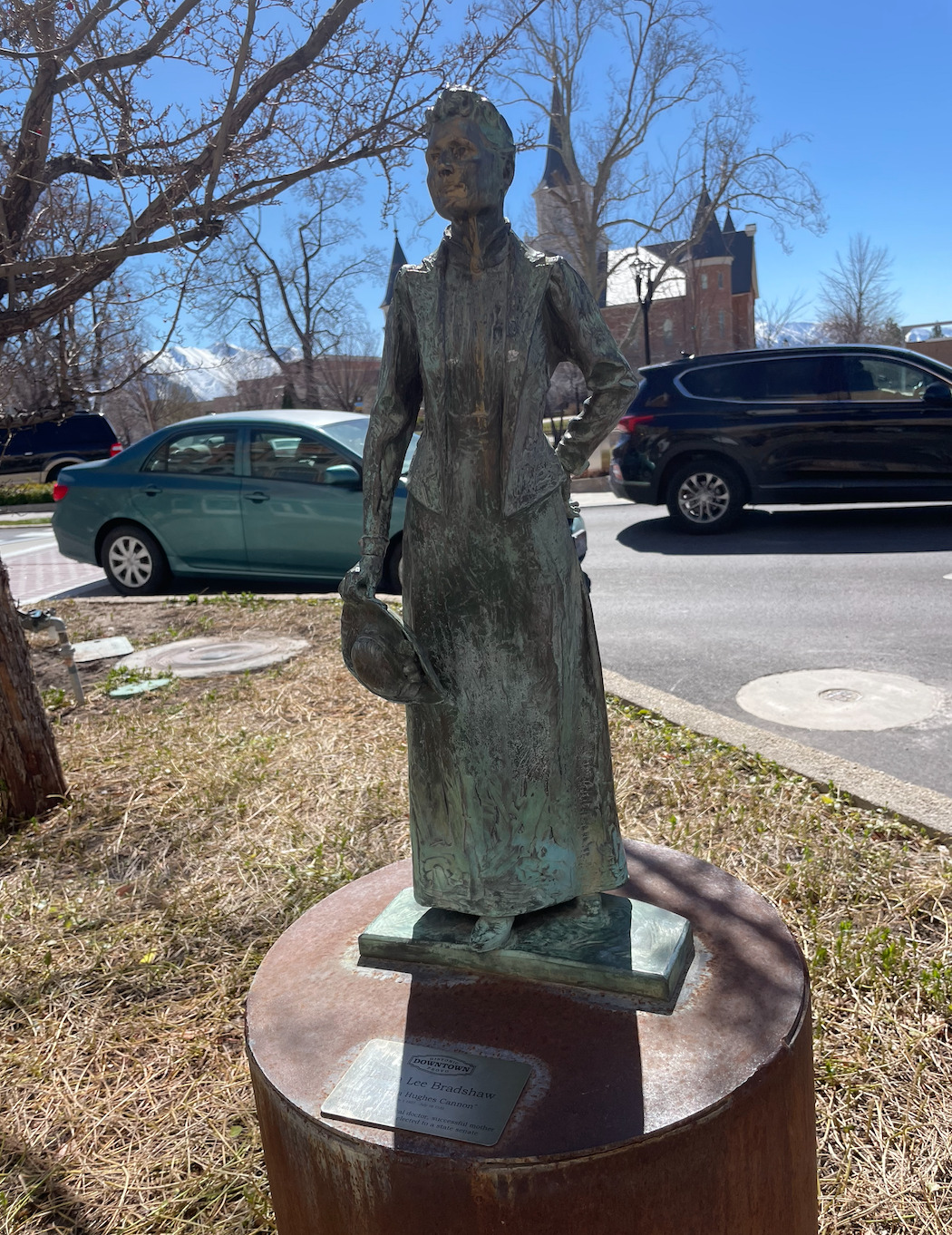
    <title type="html"><![CDATA[Martha Hughes Cannon Memorial Statue]]></title>
    <summary type="html"><![CDATA[<p><strong><em>Martha Hughes Cannon was an outstanding woman with great ambition and intelligence. As she gained an education and grew in the LDS religion, she capitalized on her position as an educated woman of faith to represent Utah women as they battled anti-polygamy legislation and public health issues.</em></strong></p><img src="https://www.intermountainhistories.org/files/fullsize/48b93f901ad49440cfe49a8350fd6fe1.jpg" alt="Martha Hughes Cannon Statue, Provo" /><br/><p>Martha Hughes Cannon was born in Wales on July 1st, 1857. During her infant years, Martha’s parents joined other new converts to the LDS faith on a long journey to Utah. Tragically, her father passed away only three days after arriving in Utah and surviving the arduous westward trek. By her teenage years, Martha had faced considerable hardship and poverty, but showed resilience and hope for the future. Martha’s young adult years were full of education. After graduating college with a degree in chemistry, Martha was accepted into the University of Michigan, one of few medical schools that admitted men and women. She also studied at the National School of Oratory, becoming a skilled public speaker. Her medical skills and oratorical skills would be great assets during her involvement in Utah politics. </p><p>Martha’s personal and professional life gave her a unique position in the eyes of the United States government. As the fourth wife to Angus M. Cannon, Martha faced considerable scrutiny from territorial officials. As a doctor, she delivered many children born to polygamist mothers and was seen as an important witness to prosecute polygamy. She lived out of state for many years to avoid testifying against and incriminating her husband, along with other polygamist families. The official outlawing of polygamy in 1890 allowed Martha to return to Utah and begin her career in politics.</p><p>A request from the Democratic party prompted Martha to run in the state senate election. Although her husband was running for the Republican party, this did not stop Martha from fulfilling what she viewed as an incredible civic opportunity. After winning the Democratic seat, Martha spent four years effectively advocating for public health and education causes in Utah. She authored bills to start the Utah Health Department, and schools for children with disabilities. Unfortunately, Martha’s political career came to an end with her third pregnancy. The nation viewed this as proof that Mormons were still practicing polygamy, and she was now an unacceptable representative. Although her time was cut short, Martha provided many valuable insights to Utah’s state legislature and was a voice for women across the state of Utah.</p><p><em><strong><a href="https://www.intermountainhistories.org/items/show/783">For more (including 3 images) view the original article</a></strong></em></p>]]></summary>
    <published>2024-02-26T19:39:54+00:00</published>
    <updated>2026-04-17T19:32:17+00:00</updated>
    <link rel="alternate" type="text/html" href="https://www.intermountainhistories.org/items/show/783"/>
    <id>https://www.intermountainhistories.org/items/show/783</id>
    <author>
      <name>Olivia Stockman, Brigham Young University</name>
    </author>
  </entry>
  <entry>
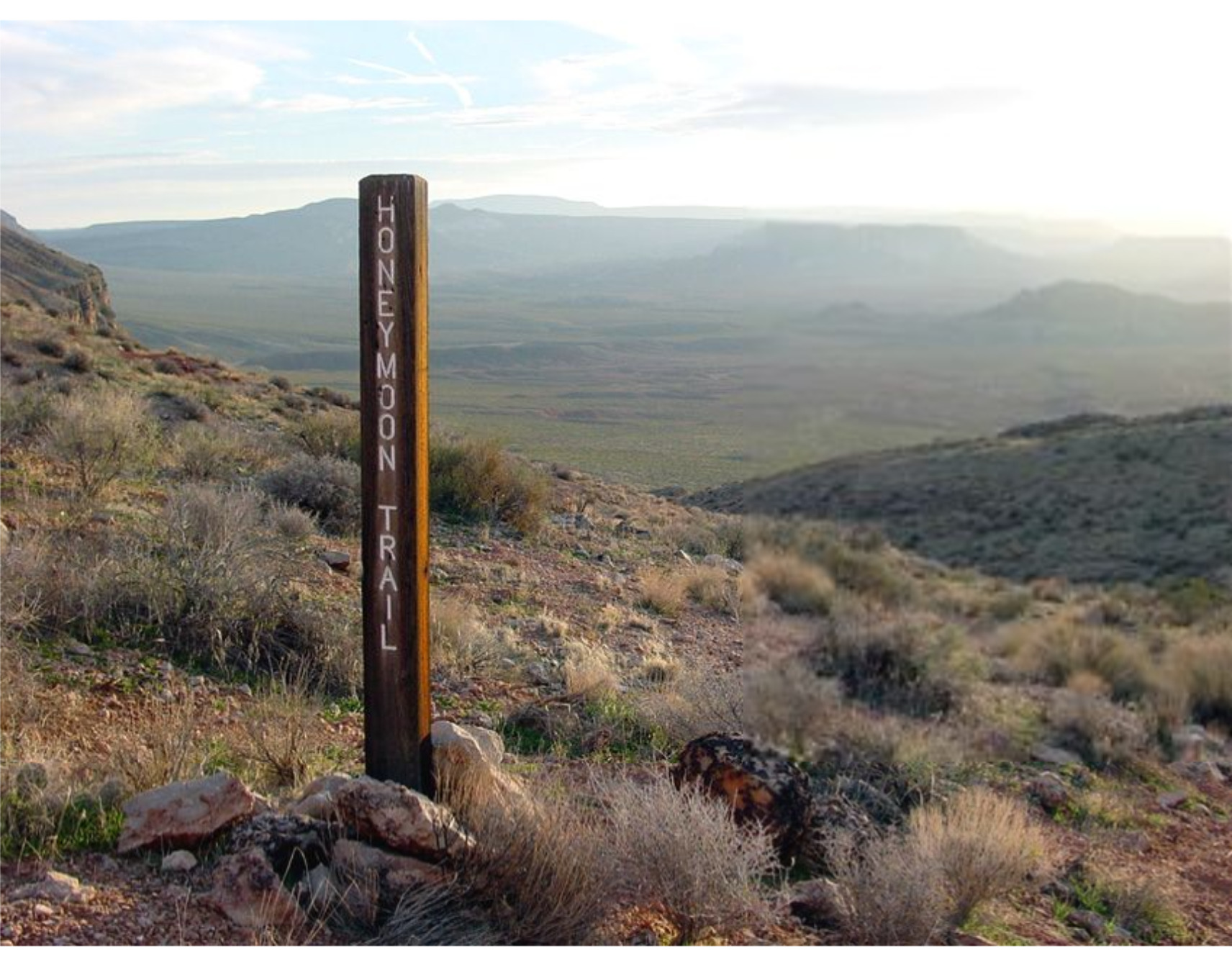
    <title type="html"><![CDATA[Honeymoon Trail]]></title>
    <summary type="html"><![CDATA[<p><strong><em>The Honeymoon Trail connected Latter-day Saint communities in Arizona to St. George and was originally known as the Mormon Wagon Road. Will C. Barnes, an American historian, coined the term Honeymoon Trail as he studied the hundreds of couples who trekked along the trail to the St. George Temple to get married. Couples continued to make the hazardous journey until 1927, when the Mesa, Arizona temple opened. </em></strong></p><img src="https://www.intermountainhistories.org/files/fullsize/b5f9fbc2448e80d9a7874c071208e8c7.jpg" alt="Honeymoon Trail" /><br/><p><span style="font-weight:400;">In 1871, leaders of the Church of Jesus Christ of Latter-Day Saints announced that a temple would be built in St. George in 1871. While this was exciting for members in southern Utah, it was also exciting to the members scattered throughout Arizona who wanted to be married for eternity in a ceremony that could only take place in a temple. After the temple in St. George was completed in 1877, couples in Arizona traveled to St. George to participate in the marriage ceremony. Depending on their starting point in northern or southern Arizona, some couples traveled over 400 miles to be married.</span>
<span style="font-weight:400;">The Honeymoon Trail was difficult to traverse under the best conditions and was sometimes made worse by the weather. Couples had no choice but to cross deep muddy washes and traverse canyons and hills. They could choose between a shorter route across mountains or avoid them by extending their journey by many miles. Although the trail did have a hazardous river crossing, most of the trail lacked adequate drinking water. It was common for oxen to die from dehydration. Some couples made the most of this loss by trading dying or dead oxen to people along the trail for other needed goods. Some couples endured snowstorms while others endured sandstorms. For instance, Joseph Fish, who undertook the trail to marry Julia Reidheid, suffered vision loss due to the sandstorms encountered on the journey. Despite their father’s challenging experience, some of Fish’s children still chose to traverse the same trail to reach the temple, fully aware of the risks they would face.</span>
<span style="font-weight:400;">The physical trail was not the only danger faced by couples. Tensions stemming from the Black Hawk War, a violent confrontation between Latter-Day Saint settlers and the Ute, Paiute, and Navajo nations from 1865 until 1872, led to ongoing confrontations. Some travelers lost horses to Indigenous raiders. However, many of the interactions between travelers and the Natives were friendly. Still, stories of past violence exaggerated the expectations of hostile interactions and caused the travelers to fear. Not only were Natives a concern, but running into strangers and outlaws also brought fear to the lawless wilderness. Danger surrounded the couples and groups who journeyed to the temple in St. George. </span>
<span style="font-weight:400;">The efforts and dedication of the Saints of Arizona were observed by Church leaders. In 1918 they announced that a temple would be built in Mesa Arizona. At the time there were only six operating temples, marking a tremendous victory for the members scattered throughout Arizona. The completion of the Mesa Temple in 1927 brought to an end the colorful history of the Honeymoon Trail.</span></p><p><em><strong><a href="https://www.intermountainhistories.org/items/show/777">For more (including 4 images) view the original article</a></strong></em></p>]]></summary>
    <published>2024-02-02T00:19:57+00:00</published>
    <updated>2026-04-17T19:32:17+00:00</updated>
    <link rel="alternate" type="text/html" href="https://www.intermountainhistories.org/items/show/777"/>
    <id>https://www.intermountainhistories.org/items/show/777</id>
    <author>
      <name>Margie Brown, Brigham Young University</name>
    </author>
  </entry>
  <entry>
    <title type="html"><![CDATA[George Edward Anderson Photographs]]></title>
    <summary type="html"><![CDATA[<p><strong><em><span style="font-weight:400;">George Edward Anderson is known for pioneering early 20</span><span style="font-weight:400;">th</span><span style="font-weight:400;"> century photography in Utah. His collection shows what was important to Utahns, particularly to members of the Church of Jesus Christ of Latter Day Saints.</span></em></strong></p><img src="https://www.intermountainhistories.org/files/fullsize/718d4ca9986add3c0b25a832b99c478b.jpg" alt="George Edward Anderson" /><br/><p><span style="font-weight:400;">George Edward Anderson was born on October 28, 1860 to parents George Anderson and </span><span style="font-weight:400;">Mary Ann Anderson in Salt Lake City. He was raised a member of the Church of Jesus Christ of Latter Day Saints. As a boy he was apprenticed to Charles R. Savage, a pioneer in photography in Utah, and set up his own studio at the age of 17. In 1886, he established the <em>Temple Bazar </em>studio in Manti, and in 1888 moved it to Springville to the southwest corner of Main and 3rd South Streets. He also operated traveling tent studios.</p><span style="font-weight:400;">Early in his career he took many studio photographs of prominent and everyday Utahns. Later he began to travel and take photographs of significant historical LDS sites. However, his travels took a toll on his relationship with his wife, Olive Lowry Anderson, so he remained home for a period. However his church commissioned him to document new temple dedications in photography. Before going to what would be his last photo shoot, his wife urged him to stay home. He ignored her warning, traveling to the Mesa Arizona Temple dedication. Shortly after the ceremony, he suffered heart failure and died on May 9, 1928 after being transported home. In his obituary the Salt Lake Telegram recounted his accomplishments in photography: “he established a studio at Springville and also had studios at Spanish Fork and Manti... He devoted considerable time to a collection of L.D.S. church historical pictures.”</span>
<span style="font-weight:400;">After Anderson’s death, his collection of photographs changed hands many times. The significance of his images were apparent to many different groups, particularly the Church of Jesus Christ of Latter-Day Saints. A group of LDS seminary teachers in Provo bought Anderson’s collection from his wife in 1928, the year he died. Later Church Historians became aware of the collection and bought it from the seminary teachers. Representatives of the Church of Jesus Christ of Latter Day Saints worked to gather all of the negatives from Anderson’s collection and brought all of his photographs into one collection. After digitizing these negatives, the Church destroyed all but 444 of the glass negatives from the collection. Finally, the collection found a home in the L. Tom Perry Special Collections at Brigham Young University.</span></p><p><em><strong><a href="https://www.intermountainhistories.org/items/show/776">For more (including 6 images) view the original article</a></strong></em></p>]]></summary>
    <published>2024-01-25T05:07:20+00:00</published>
    <updated>2026-04-17T19:32:17+00:00</updated>
    <link rel="alternate" type="text/html" href="https://www.intermountainhistories.org/items/show/776"/>
    <id>https://www.intermountainhistories.org/items/show/776</id>
    <author>
      <name>Starrla Kay Pearson, Brigham Young University</name>
    </author>
  </entry>
  <entry>
    <title type="html"><![CDATA[The Benson Gristmill of Tooele]]></title>
    <summary type="html"><![CDATA[<p><strong><em>The popular image of early pioneer Utah is often one of rural and agricultural communities, with little technology beyond the cow and plow. However, industrial mills like the Benson Gristmill in Tooele were integral to utilizing Utah’s resources and encouraging the economy. </em></strong></p><img src="https://www.intermountainhistories.org/files/fullsize/89c222b5d013dedec2fccdeb4f69666a.jpg" alt="Gristmill 1" /><br/><p><span style="font-weight:400;">In the early days of Utah’s settlement, the Church of Jesus Christ of Latter-day Saints encouraged Utahns to develop their land and build industrial infrastructure. One fitting example of this occurred in 1854, when Ezra T. Benson (the great-great grandfather of the later prophet, Ezra Taft Benson) moved to Tooele Valley with orders from Brigham Young to build a gristmill, which would grind raw cereal grains into flour. Such a mill would provide a vital service for the surrounding settlements. Soon, Benson and a few other men gained the rights to the land, water, and timber from Brigham Young and started building the mill by a pond in northern Tooele. </span>
<span style="font-weight:400;">The mill itself was a remarkable piece of resourceful architecture. For example, wooden pegs were used in stabilizing the beams of the building. This allowed the pegs to expand and contract along with the beams as the weather changed, leading to greater stability. </span>
<span style="font-weight:400;">For almost one hundred years, from 1854 until the 1940s, the mill processed many tons of corn and wheat for the communities of Tooele Valley. For instance, in 1860 alone, the mill processed about $17,000 worth of grains. That same year, the mill’s rights were transferred to Brigham Young, after Benson moved to Cache Valley. This transfer of ownership was likely to prevent the mill from being seized by the federal government during the conflict over polygamy. </span>
<span style="font-weight:400;">  In 1922, the mill was bought by the future LDS apostle J. Reuben Clark. Under his ownership, the mill was upgraded and the older wooden waterwheel and millstones were replaced by a metal turbine and free standing “grain breakers,” which were more durable and could grind the grain with greater efficiency. In 1938 the mill switched from milling flour to making animal feed. A few years later the mill stopped being used and fell into disrepair. </span>
<span style="font-weight:400;">The building stood abandoned until 1983, when a committee of volunteers recognized the Benson Gristmill as an important historical site to the community of Tooele. In the next few years, the small group got Terracor Corp, a land development firm that then owned the property, to donate the site to Tooele County as a historical monument, allowing them to restore and preserve the mill. The Benson Gristmill is now one of the most intact pioneer-era sites in the state, standing as a reminder of the humble yet powerful origins of Utah’s communities. </span></p><p><em><strong><a href="https://www.intermountainhistories.org/items/show/773">For more (including 3 images) view the original article</a></strong></em></p>]]></summary>
    <published>2024-01-22T02:54:31+00:00</published>
    <updated>2026-04-17T19:32:17+00:00</updated>
    <link rel="alternate" type="text/html" href="https://www.intermountainhistories.org/items/show/773"/>
    <id>https://www.intermountainhistories.org/items/show/773</id>
    <author>
      <name>Grace Bodily, Brigham Young University</name>
    </author>
  </entry>
  <entry>
    <title type="html"><![CDATA[Battle Creek Canyon Massacre]]></title>
    <summary type="html"><![CDATA[<p><strong><em>Battle Creek Canyon's name originates from Utah's first major skirmish between the Utes and the Mormon militia. </em></strong></p><img src="https://www.intermountainhistories.org/files/fullsize/54eea90162a257c6e9cd4299408aea71.jpg" alt="Kade Dallin, Purple Mountain Majesties, 2020.
" /><br/><p><span style="font-weight:400;">When the pioneers of the Church of Jesus Christ of Latter-day Saints entered the Salt Lake Valley, they generally settled in what is now Salt Lake County on the Wasatch Front. The area was largely a desert and many, including some mountain men, suggested that the people settle further south in the freshwater valley that now comprises the bulk of Utah County. Brigham Young immediately sent out people to found colonies, cities, and towns throughout modern Utah, Arizona, Nevada, California, and Mexico. Yet, the pioneers balked at the initial thought of settlement in Utah Valley because of the native tribes who already lived there. Various bands of the Ute and Timpanogos tribes lived throughout the valley and had a reputation of being warlike and aggressive as a way to defend their land and livelihood. </p>
<span style="font-weight:400;">The pioneers especially resented the Ute practice of poaching the settler’s cattle. Roman Nose, a prominent Ute, was particularly troublesome. He led a band that repeatedly raided the farms and ranches near the valley border, and was even accused of stealing several of Brigham Young’s personal horses. After Brigham Young heard of the theft, he ordered Captain John Scott to lead a posse against the Utes in hopes of apprehending Roman Nose and his band. Their orders were to find the band of thieves and to “take such measures as would put a final end to their depredations in the future.” In 1849, they began raiding the Ute bands they deemed responsible for the loss of the livestock. However, Brigham Young soon discovered that the Utes had been mistakenly blamed: his horses had simply been moved to different pastures. He ordered Scott and the posse to stand down, but they refused. </p>
<span style="font-weight:400;">On the morning of March 5, 1849, the relationship between Mormon settlers and the local band of Timpanogos Indians deteriorated into brutal hostility in what is now Pleasant Grove, Utah. Scott’s rogue posse of 44 men soon arrived where they found the Ute camp which they thought participated in the raids. The group surrounded the sleeping camp and opened fire in a reign of terror. The members of the posse then hunted down many of the Utes who managed to escape the initial shootout. In total, they killed seventeen men, women, and children, including Roman Nose. </p>
<span style="font-weight:400;">After seeing the massacre, the chief of the Native American tribe, Little-Chief was distraught. Although he reportedly agreed that the killing of the supposed thieves was justified, he understood that this would cause a rift to form between white settlers and local tribes. This event, among many other skirmishes, led to heightened tension between the two groups and permanently damaged the already delicate relationship between the Native American tribes and the Mormon settlers. After this event, the area became known as Battle Creek Canyon and is today memorialized by the Battle Creek Marker. </span>


</p><p><em><strong><a href="https://www.intermountainhistories.org/items/show/757">For more (including 2 images) view the original article</a></strong></em></p>]]></summary>
    <published>2023-10-22T05:05:29+00:00</published>
    <updated>2026-04-17T19:32:16+00:00</updated>
    <link rel="alternate" type="text/html" href="https://www.intermountainhistories.org/items/show/757"/>
    <id>https://www.intermountainhistories.org/items/show/757</id>
    <author>
      <name>Kade Dallin, Brigham Young University&amp;#32;&amp;amp;&amp;#32;Bryce Revelli, Brigham Young University</name>
    </author>
  </entry>
  <entry>
    <title type="html"><![CDATA[Snowflake: Zion on the Little Colorado]]></title>
    <summary type="html"><![CDATA[<p><strong><em>Snowflake, Arizona is a small town located in the eastern portion of the state along a tributary of the Little Colorado River known as Silver Creek. It was founded in 1878 by William Jordan Flake and a group of Mormon pioneers who had been directed by Brigham Young to colonize Arizona. The town was officially incorporated in 1919.</em></strong></p><img src="https://www.intermountainhistories.org/files/fullsize/37e4b095306e0664935a3b27b26d576d.jpg" alt="The Snowflake Monument" /><br/><p><span style="font-weight:400;">After finally arriving in the Salt Lake Valley in the late 1840s, early converts of the Church of Jesus Christ of Latter-day Saints deserved a rest. After gathering from across the nation and overseas and fleeing persecution in their flight across the Great Plains, the Saints finally arrived in Salt Lake. They began to make the desert “blossom as a rose” and settled themselves into the comfort of their new home. However, Church President Brigham Young’s ambitions for this fledgling “Zion” extended far beyond the confines of the Salt Lake Valley. His envisioned state of “Deseret” was much larger, and he soon began sending Church members to make new settlements across the Intermountain West.</span>
<span style="font-weight:400;">Church leaders called one such group to settle the Little Colorado River in present-day Arizona in 1876. Among them was William Jordan Flake, a rancher from Beaver who had been orphaned as a child due to the dangers of pioneering. Initially horrified with the idea of leaving all he had worked for to make for the Arizona desert, William asked President Young if he might just go for a year or two and then return to Beaver. Young’s reply was unequivocal: “Sell all that you have, that you cannot take with you. Take your family and go there to settle the Saints. Leave nothing to come back to.” William and his pioneer companions obeyed the command and, upon arriving in the Little Colorado Valley, they established the settlements of Ballinger’s Camp, Sunset, Old Taylor, and Allen’s Camp. The early settlements initially struggled against the hostile environment and the difficulty of living the standards set by the “United Order,” a Church movement which called for collectivist, communal living. William Flake, troubled by these </span><span style="font-weight:400;">problems, decided to look for a place to build a new settlement. He rode out to meet James Stinson, a rancher who had acquired and irrigated 300 acres on Silver Creek, a tributary of the Little Colorado. Stinson said he would sell his land for $12,000, which William raised by convincing Church leaders to procure the sale of cattle from their Utah ranches.</span>
<span style="font-weight:400;">On July 21, 1878, Flake and other pioneer families moved onto the ranch. Soon more followed. On September 24th of the same year, Church Apostle Erastus Snow visited the townsite, and they decided to name the settlement Snowflake, a combination of the two men’s names. The town grew steadily. In 1892, tragedy struck when William’s son Charles was killed in a shootout while attempting to arrest a suspected bank robber (the outlaw was also killed in the gunfight). Nevertheless, Snowflake became one of the more successful of the Little Colorado Valley settlements, and the town was eventually incorporated in 1919. Snowflake now stands as a monument to the legacy of faith left by the early Mormon pioneers.</span></p><p><em><strong><a href="https://www.intermountainhistories.org/items/show/742">For more (including 4 images) view the original article</a></strong></em></p>]]></summary>
    <published>2023-04-10T19:01:01+00:00</published>
    <updated>2026-04-17T19:32:16+00:00</updated>
    <link rel="alternate" type="text/html" href="https://www.intermountainhistories.org/items/show/742"/>
    <id>https://www.intermountainhistories.org/items/show/742</id>
    <author>
      <name>Joseph Flake, Brigham Young University</name>
    </author>
  </entry>
  <entry>
    <title type="html"><![CDATA[Polygamy on the State Line: Short Creek Settlement]]></title>
    <summary type="html"><![CDATA[<p><strong><em>Short Creek was an isolated fundamentalist Mormon intentional community where locals practiced polygamy and communalism. It drew public attention due to a government raid in the 1950s and the imprisonment of its leader in the 2000s.</em></strong></p><img src="https://www.intermountainhistories.org/files/fullsize/1b0bce102b2c4e32a46d16d967d6663f.jpg" alt="Lorin C. Wooley (1856-1934)" /><br/><p><span style="font-weight:400;">Mainstream members of the Church of Jesus Christ of Latter-day Saints (LDS, or Mormons) practiced and accepted polygamy from its introduction to Church practice in the 1840s until the Church prohibited it in 1890 and 1904. This came after years strong anti-polygamy sentiments in the United States and legal persecution of its practitioners. Though facing excommunication after this, some continued the practice and began to coalesce in isolated rural sites, producing their own leaders such as Lorin C. Wooley (1856-1934). He wanted to revive another nineteenth-century practice, the United Order program, intended to emulate the collectivism of the early Christian community by establishing communities based on income equality, group self-sufficiency, and the elimination of poverty. Generally, members contributed their economic property to the community and received a share of the proceeds as income or as housing and food. </span>
<span style="font-weight:400;">Aiming to continue these two traditions, Woolley’s followers established settlements such as Short Creek. Located on the Arizona side of the border with Utah, Short Creek was difficult to reach from Arizona due to the Grand Canyon, an ideal location for remaining out of public scrutiny and for escaping to Utah in case of trouble. Polygamists settled in Short Creek in the 1920s and 1930s, eventually reaching forty families as the Church continued to excommunicate practicing polygamists. Cooperative living was a goal of the inhabitants from the beginning, and in 1936, the community created a trust holding title to land and farm equipment; it also collected clothing and fuel and redistributed these items among the members, who worked the community’s lands.</span>
<span style="font-weight:400;">The community entered public awareness in the early 1950s. Following a complaint from a judge in Kingman, the county seat, the Arizona attorney general planned a raid. He commissioned a detective agency to explore the settlement under the guise of Hollywood agents scouting movie locations. For the operation, the attorney general received $50,000 from the Arizona legislature, though they were not alerted to the purpose of the funds. On July 26, 1953, state police entered the community. Residents had been tipped off in advance by sympathetic law enforcement and some managed to escape into Utah; however, most of the community assembled in the small schoolhouse where Arizona national guardsmen took them into custody. Arizona Governor Howard Pyle announced the raid by radio the following day. Public reaction was mixed, with one editorial worrying about the effect on the women and children. Twenty-six men received one-year suspended sentences and were ordered not to further practice polygamy. The state attempted to retain the children, but the Arizona Supreme Court ordered that they be released.</span>
<span style="font-weight:400;">The raid remained significant in local memory for decades. Ironically, press coverage of the incident raised awareness of the fundamentalist movement, drawing new members to the community. In the 1960s, a new road improved accessibility from the outside. Locals later incorporated the community as Colorado City, Arizona, and Hildale, Utah. The community opened up more to the outside world, establishing hotels and restaurants catering to travelers. However, Short Creek faced new challenges in the early twenty-first century. Its leader, Warren Jeffs (1955- ), was imprisoned for sexual assault against two female minors whom he had married, and the community experienced an epidemic of fumarase deficiency, a debilitating congenital disorder. The community has recently seen several changes, including a new resort, a female mayor, and a public school. </span></p><p><em><strong><a href="https://www.intermountainhistories.org/items/show/704">For more (including 7 images) view the original article</a></strong></em></p>]]></summary>
    <published>2023-02-21T18:20:20+00:00</published>
    <updated>2026-04-17T19:32:15+00:00</updated>
    <link rel="alternate" type="text/html" href="https://www.intermountainhistories.org/items/show/704"/>
    <id>https://www.intermountainhistories.org/items/show/704</id>
    <author>
      <name>Evan Železny-Green, Northern Arizona University</name>
    </author>
  </entry>
  <entry>
    <title type="html"><![CDATA[The Lone Cedar Tree]]></title>
    <summary type="html"><![CDATA[<p><strong><em>In downtown Salt Lake City sits a monument for the Lone Cedar Tree. The Lone Cedar was rumored to be the only tree in the valley at the time Mormon pioneers settled in the area. Its famous role in the story of Mormon settlement has led some to question the tale's veracity.</em></strong></p><img src="https://www.intermountainhistories.org/files/fullsize/a6aa720541f62d8183978d93e3712b78.jpg" alt="A Child with Lone Cedar" /><br/><p><span style="font-weight:400;">In 1847, Brigham Young and his party of Mormon settlers arrived in what would eventually become Utah. Mormons were escaping persecution in the East by the United States. No one had a clear idea of where their destination, and new home, would be, but many agreed that it would have to reside beyond the United States’ political border. Many initially thought that the territories of California or Oregon would be their last stop since it was as far west as one could get from the U.S. without crossing an ocean. However, John C. Fremont’s expeditions into Utah made the territory an attractive place to settle and it was eventually decided that the Utah area would be where the Mormons settled.</span>
<span style="font-weight:400;">Utah was home to the Utes, Paiutes, Dine’, Goshutes, and Shoshone. At the time, some mountain men also lived in the area. These men largely served as road guides for wagoneers heading west and their numbers were generally scarce. Utah was certainly more of a desert than the Mormons envisioned their new home to be and had what many diligent journal writers described as a “dead sea” to accompany it. However, there was one tree, the "Lone Cedar Tree," in the Salt Lake Valley which provided coveted shade. Seemingly everyone used this iconic tree to rendezvous under—children, church officials, lovers, weary travelers. The tree’s significance to these early Mormons was commemorated with a monument in 1933 by the Daughters of Utah Pioneers. The monument initially encompassed the dying tree, but in 1958, the tree was cut down and stolen. A bounty for it was placed by the Daughters of Utah Pioneers. When the missing lumber never turned up, a modified monument was erected in 1960 to preserve what remained of the leveled stump. A bronze replica soon stood in place of the section of tree that was stolen. Unfortunately, the remaining stump of the original tree was later stolen. The monument today contains no traces of the original tree.</span>
<span style="font-weight:400;">However, historians argue whether the tree ever existed in the sense that it is now remembered. Some claim that stories exaggerate the tree’s existence because journals at the time mention other trees in the valley. Some dispute whether the tree was a cedar at all. Moreover, some accounts mention a “Lone Cedar Post” in the proximity of where the tree was believed to have stood, leading a few to believe that it was the post rather than a tree which provided such needed shade. Nevetheless, the memorialization of the lone cedar tree still stands in downtown Salt Lake City to commemorate the pioneer memory that permeates much of early Utah history. </span></p><p><em><strong><a href="https://www.intermountainhistories.org/items/show/702">For more (including 3 images) view the original article</a></strong></em></p>]]></summary>
    <published>2023-02-20T21:21:14+00:00</published>
    <updated>2026-04-17T19:32:15+00:00</updated>
    <link rel="alternate" type="text/html" href="https://www.intermountainhistories.org/items/show/702"/>
    <id>https://www.intermountainhistories.org/items/show/702</id>
    <author>
      <name>Emma Dutcher, Brigham Young University</name>
    </author>
  </entry>
  <entry>
    <title type="html"><![CDATA[Stalwart as Stone: Legacy of the Mason John Rowe Moyle]]></title>
    <summary type="html"><![CDATA[<p><strong><em>Having carved his legacy into the Salt Lake Temple, John Rowe Moyle carved too a living in what could sometimes be an unforgiving land. He proved himself constantly as unmoving as the stones he carved in his determination to better those around him despite any obstacle.</em></strong></p><img src="https://www.intermountainhistories.org/files/fullsize/7034311df1a23fd605d31f02397f502f.jpg" alt="A Picture of John Rowe Moyle" /><br/><p><span style="font-weight:400;">On April 6, 1893, thousands gathered in awe outside the newly dedicated Salt Lake Temple. Embossed upon the eastern edifice of the temple gleamed the golden words, “Holiness to the Lord, the House of the Lord.” Yet the stonecutter who’d carved those words was not among the assembled that day. John Rowe Moyle had died four years prior on February 15, 1889. </span>
<span style="font-weight:400;">Moyle had immigrated to Utah Territory in the 1850’s from England with the Ellsworth Handcart Company. He settled in Alpine with his wife and children. Miner and mason alike, he seemed a natural choice to help carve one of the temple’s most prominent features. Moyle had stalwartly taken up the task. Despite old age, he made the 22 mile hike over the mountains to Salt Lake City every week and then back to spend the weekend with his family. This trek was made all the more difficult when Moyle lost his leg during an accident milking his cow. But Moyle never shirked his duty. Crafting a leg, he re-learned to walk and once more set about carving the words which are now immortalized in one of Utah’s most iconic landmarks. </span>
<span style="font-weight:400;">Moyle left his mark on more than just the temple, though, and he overcame more hardships than the arduous journey to Salt Lake City. Now renamed Moyle Park, his homestead still stands in Alpine. Around the farm are a stone tower and walls which serve to protect it. Moyle’s farm is the only one in the state of Utah to have received such fortifications. Other forts were reserved for the defense of entire towns. Moyle had worked on his family’s home with the same fervor he had worked on the temple. Moyle Park stands as a memorial to John Rowe Moyle’s unwavering determination and selfless duty to church and family.</span></p><p><em><strong><a href="https://www.intermountainhistories.org/items/show/655">For more (including 3 images) view the original article</a></strong></em></p>]]></summary>
    <published>2022-09-16T18:32:18+00:00</published>
    <updated>2026-04-17T19:32:14+00:00</updated>
    <link rel="alternate" type="text/html" href="https://www.intermountainhistories.org/items/show/655"/>
    <id>https://www.intermountainhistories.org/items/show/655</id>
    <author>
      <name>Avery Morgan, Brigham Young University</name>
    </author>
  </entry>
  <entry>
    <title type="html"><![CDATA[Pine Valley: A Mountain Home and Child&#039;s Paradise]]></title>
    <summary type="html"><![CDATA[<p><strong><em>Pine Valley, Utah is an idyllic pioneer lumber settlement in Southern</p><p>Utah. Its mild climate and lush meadows drew settlers from the surrounding desert and created a prosperous, yet close-knit community. </em></strong></p><img src="https://www.intermountainhistories.org/files/fullsize/e00755ebcf86d12072de2204d7cea38f.jpg" alt="Map of Pine Valley" /><br/><p>In the summer of 1855, Gunlock Bill Hamblin and Isaac Riddle were herding cattle in the mountains of Southern Utah. One day, as Riddle followed a stray cow, he stumbled upon a beautiful valley seemingly untouched by man. The valley</p><p>was filled with lush green meadows, pine trees and fauna. It was named Pine Valley. </p><p> </p><p>Not long after the discovery of Pine Valley, Jehu Blackborn and Company built a sawmill and set to work. In 1860, Brigham Young called 300 members of the church to move to St. George and grow cotton as part of the Dixie Mission. Many of those who migrated grew tired of the heat and other challenging living conditions in the area and moved to Pine Valley. Pine Valley, 35 miles north of St. George, had a higher elevation and a milder summer which attracted many St. George families to seek refuge there. As a result, Pine Valley grew in size and popularity.</p><p>Robert Gardner Jr. and Erastus Snow were two of the settlers sent to the Dixie Mission. In 1862, on a trip from Cedar City to Saint George, they took a path through Pine Valley. They saw the operating sawmill and recognized room for growth. After telling Brigham Young of the potential for the area,  Young assigned them to build an additional sawmill in the valley. This project, known as the Pine Valley Mission, produced lumber for the Dixie Mission settlements and beyond. In Salt Lake, the timber was used to fashion the organ pipes for the Salt Lake Tabernacle. </p><p>The secluded nature of Pine Valley fostered a tight-knit community. At the center of town stands the Pine Valley chapel, built in 1867. The chapel housed religious services, school, dances, and other events. Laura Gardner Snow said of her childhood in the valley, “Pine Valley was a child’s paradise. Summers were the most delightful.” Winters were full of sledding, sleigh rides and a magical Christmas Eve party in the chapel. </p><p>After the sawmills shut down in the 1920s, many families remained to farm the valley and raise cattle. Although Pine Valley has remained a small town, it continues to be a favorite summer destination for descendants of Pine Valley pioneers, as well as other residents from nearby communities.</p><p><em><strong><a href="https://www.intermountainhistories.org/items/show/644">For more (including 3 images) view the original article</a></strong></em></p>]]></summary>
    <published>2022-09-09T19:57:21+00:00</published>
    <updated>2026-04-17T19:32:14+00:00</updated>
    <link rel="alternate" type="text/html" href="https://www.intermountainhistories.org/items/show/644"/>
    <id>https://www.intermountainhistories.org/items/show/644</id>
    <author>
      <name>Olivia Bagley, Brigham Young University</name>
    </author>
  </entry>
  <entry>
    <title type="html"><![CDATA[Iona House]]></title>
    <summary type="html"><![CDATA[<p><strong><em>Named after the philanthropic Knights’ youngest daughter, Iona House had a colorful half-century life as a dormitory, missionary training home, therapy clinic, and Spanish laboratory.</em></strong></p><img src="https://www.intermountainhistories.org/files/fullsize/0ed394d7efbad5e4dd4dc97203bc7632.jpg" alt="Addie Iona Knight Jordan" /><br/><p><span style="font-weight:400;">Born December 18, 1891 in Provo, Addie Iona Knight was the youngest daughter of Latter-day Saint philanthropists </span><a href="https://www.intermountainhistories.org/items/show/569"><span style="font-weight:400;">Amanda McEwan Knight</span></a><span style="font-weight:400;"> and </span><a href="https://www.intermountainhistories.org/items/show/140"><span style="font-weight:400;">Jesse Knight</span></a><span style="font-weight:400;">. Her older brother, J. William, recalled that Iona had “a keen intellect, a generous heart, and an unusually intelligent sense of humor.” Always eager to learn, Iona enjoyed discovering the world beyond Utah, and in 1907 she traveled throughout Europe (with a BYU professor chaperone).</span>
<span style="font-weight:400;">Iona was well-educated; she studied first at Brigham Young University, then West Lake School for Girls in Los Angeles, and finally Stanford University in Palo Alto. While at Stanford, Iona befriended Professor David Starr Jordan—a renowned ichthyologist whose controversial legacy includes both democratizing education and propounding racist eugenics—and his wife Jessie Knight.</span>
<span style="font-weight:400;">Iona moved back and forth between Provo and California, and she had a brief stint teaching in BYU’s English Department. She remained close to David and Jessie throughout her life and even moved back to Palo Alto to live with them during David’s final, ailing years. Iona remained in California, and she also died there after a long illness on May 7, 1937. She was buried with the rest of the Knight family in Provo.</span>
<span style="font-weight:400;">The building’s story has its roots in 1942, when World War II defense workers flooded Provo, creating a housing shortage for students. To alleviate this, 1940s BYU bought houses and turned them into “co-op” student residences. </span><a href="https://www.intermountainhistories.org/items/show/619"><span style="font-weight:400;">Warnick House</span></a><span style="font-weight:400;"> was the first, bought in 1942, and BYU considered it such a success they purchased and renovated a second in 1943, which they named Iona House, after the late English teacher.</span>
<span style="font-weight:400;">Like Warnick, Iona was a “co-op.” Student residents shared bedrooms, restrooms, a kitchen, and communal spaces, and they bore responsibility for working together to manage the home. Cooperative living had its pluses; residents always had a group to hold activities with, whether potlucks or sled parties, and they knew how to work together. For example, in a 1945 Women’s Athletic Association softball tournament with several other dormitories plus PEMM (the Physical Education Majors club), Iona’s residents lost only one game and overall tied with PEMM. Three years later, the 1948 residents won the Homecoming parade’s best humor award for their float, which “portrayed college life in the dormitories and completed the task so well.”</span>
<span style="font-weight:400;">In 1959, the need for men’s housing increased such that Iona House switched from a women’s residence to a male graduate student residence. For the next three decades, Iona served numerous purposes. In the 1960s or 1970s, Church missionaries learning to speak Navajo lived in Iona, and from sometime in the 1970s until 1976, sister missionaries learning Italian lived there. From 1976 to at least 1979, BYU Marriage and Family Counseling held its clinic in Iona. Finally, in the 1980s, Iona was the “Spanish House” for students in the intensive Spanish language program.</span>
<span style="font-weight:400;">In the early 1990s, BYU decided Iona had run its course. It demolished the building and apparently sold the lot; today, townhouses fill the property.</span></p><p><em><strong><a href="https://www.intermountainhistories.org/items/show/634">For more (including 12 images) view the original article</a></strong></em></p>]]></summary>
    <published>2022-07-01T16:44:38+00:00</published>
    <updated>2026-04-17T19:32:14+00:00</updated>
    <link rel="alternate" type="text/html" href="https://www.intermountainhistories.org/items/show/634"/>
    <id>https://www.intermountainhistories.org/items/show/634</id>
    <author>
      <name>Makoto Hunter, Brigham Young University</name>
    </author>
  </entry>
  <entry>
    <title type="html"><![CDATA[Tarlton Lewis, “Grand Old Man”]]></title>
    <summary type="html"><![CDATA[<p><strong><em>Tarlton Lewis, a survivor of the Hawn’s Mills Massacre in Missouri, went on to live an energetic life as he explored the West and settled new towns such as Parowan and Minersville in Iron and Beaver Counties in Utah. He lived his life helping other Latter-day Saints, farming and building on the land, and raising a family in the desert.</em></strong></p><img src="https://www.intermountainhistories.org/files/fullsize/04d4a6e7d1c614593ab9129186616d5d.jpg" alt="Tarlton Lewis" /><br/><p>Tarlton Lewis was the fourth of twelve children born to Neriah Lewis and Mary Moss on May 18, 1805 in South Carolina. Tarlton married Malinda Gimlin on March 27, 1828; over the course of their marriage, they had eight children together. While living in Illinois, Tarlton and Malinda joined The Church of Jesus Christ of Latter-day Saints (sometimes nicknamed “Mormons”) and were baptized July 25, 1836 by Tarlton’s older brother Benjamin Lewis. The brothers joined moved to Missouri to live among other Latter-day Saints, and on October 30, 1838, while living near Hawn's Mill, they were attacked by a violent mob agitating for the expulsion of all Mormons from Missouri. The mob murdered Tarlton’s older brother Benjamin, and Tarlton suffered an injury to his shoulder; their younger brother David, however, was uninjured.
After surviving this tragedy, the brothers moved with other Latter-day Saints to Nauvoo, Illinois. There, Joseph Smith, president of the Church, and his brother Hyrum set apart Tarlton as bishop of the Nauvoo Fourth Ward. Also in Tarlton and Malinda received the endowment and sealing ordinances—the Church’s highest sacraments—before joining the mass exodus of Latter-day Saints from Nauvoo, leaving behind the temple they had spent years helping build.
The Lewis family left as part of the second wave of Saints, fleeing westward across the Mississippi Rive, but Tarlton himself stayed behind to continue his service as a bishop and help the Church members under his care prepare to go West. After many weeks crossing Iowa, they settled temporarily at Council Bluffs in Pottawattamie, Iowa, 1846.
After the Latter-day Saints regrouped in Iowa, Tarlton joined the first company of pioneers departing in 1847. As part of the Vanguard Company led by Brigham Young—Smith’s successor to the Church presidency—Tarlton was captain of 50 wagons and entered the Salt Lake Valley on July 21, 1847. There, Young called Tarlton as the first bishop in Salt Lake Valley, and Tarlton remained in the valley to build cabins and plant crops for the Saints who would arrive next. After an almost two-year separation, Tarlton reunited with his family when they arrived at the Salt Lake Valley on September 21, 1848.
Two years later, in December 1850, the Church called Tarlton to travel with apostle George A. Smith and one hundred others to explore southern Utah. Tarlton again captained 50 wagons, and on January 17, 1851, the explorers officially organized Iron County. In their first election, the young county elected Tarlton Lewis as a magistrate. George Smith organized the settlement into four wards, and Tarlton became bishop of the Second Ward in Parowan. The Lewis family helped build roads, log cabins, and furniture.
After Tarlton’s brother David died in September 1855, Tarlton married two of his brother’s widows as polygamous wives. Tarlton explored the mountains of Beaver Valley for lead ore, finding a mine and becoming a director of it. They also helped found Minersville, and Tarlton was active in the community and donated a portion of his lot to finance a Relief Society building. Life in Minersville was a struggle as farming was difficult with little water from Beaver Creek.
The family managed a humble living for fourteen years until the Church assigned Tarlton to establish a United Order in Joseph, Sevier County. The most pressing issue that settlers faced was the difficulty of irrigating water for farmlands; their hard work was paid off with “diverse crops as apples, apricots, peaches, pears, grapes, and black walnuts,” but there was not enough to make Joseph prosper. The Lewises lived there a few years before moving northeast to the larger town of Richfield, and the United Order in Sevier County dissolved in November 1877. Apostle Erastus Snow then set Tarlton apart as bishop of the Richfield Second Ward on July 16, 1877. As an active citizen of Richfield, Tarlton and a hundred other citizens petitioned the Utah Territorial House to incorporate the town, and the provision passed.
Tarlton’s time as a bishop in Richfield was brief, as health complications warranted his resignation a year later, but he recovered his strength enough to serve as a stake patriarch, as listed in the Sevier Stake Conference for August 27, 1887.
Tarlton Lewis died on November 22, 1890 at Teasdale, Utah Territory, at the home of his son, Beason Lewis. He was buried in the Teasdale Cemetery. In 1987, Mount View Camp, the Daughters of Utah Pioneers, and the Lewis Family sponsored and built a marker and plaque at his burial site in 1987.</p><p><em><strong><a href="https://www.intermountainhistories.org/items/show/633">For more (including 3 images) view the original article</a></strong></em></p>]]></summary>
    <published>2022-07-01T03:06:04+00:00</published>
    <updated>2026-04-17T19:32:13+00:00</updated>
    <link rel="alternate" type="text/html" href="https://www.intermountainhistories.org/items/show/633"/>
    <id>https://www.intermountainhistories.org/items/show/633</id>
    <author>
      <name>Debra Tangren, Brigham Young University</name>
    </author>
  </entry>
  <entry>
    <title type="html"><![CDATA[Fruita Schoolhouse: Learning and Community]]></title>
    <summary type="html"><![CDATA[<p><strong><em>Capitol Reef National Park is one of the greatest hidden gems of Central Utah, home to fossils, beautiful hikes, and several historical sites. Of these historical sites, one of the most popular is the Fruita Schoolhouse, a physical memory of what life was like in humble, nineteenth-century Fruita.</em></strong></p><img src="https://www.intermountainhistories.org/files/fullsize/fdf1c72a53ae4ee8430fc91744c589cd.jpg" alt="Step into the past" /><br/><p>In 1893, historian Frederick Jackson Turner famously claimed the year 1890, three years prior, marked the closing of the American Frontier. It seemed in the 1890s that America’s expansionist spirit was shifting from the continental Wild West to locations abroad such as Cuba and the Philippines, pivoting away from consolidating a land empire and toward questing for a sea empire. Pioneers in Fruita, Utah, however, were still preoccupied in the 1890s with frontier processes. Although they had secured their isolated, red rock land, even in 1890 their community lacked important infrastructure such as education, a postal service, and a building for worship.
As they settled in and secured the land, the pioneers were able to gather sufficient time and organization to put together more of a society, beginning with an education system. Nettie Behunin, a young girl 12 years of age, became one of the first teachers.  Nettie might not have been a truly qualified teacher by twenty-first-century standards—or perhaps even by her own—but her endeavors marked the beginning of the first community project in the area: the schoolhouse.
In a collection of childhood memories of Fruita, Clay M. Robinson reflects on his experience as a young boy in the newly built Fruita schoolhouse as his mother was the teacher at the school during his childhood. He writes, “Most vivid of all in those memories, are Mama and the little one-room sawed-log Fruita school where she taught all eight grades in the years 1925–1927.” He also mentioned that the schoolhouse was used for Sunday church services and Sunday School—most of Fruita were members of The Church of Jesus Christ of Latter-day Saints, or Mormons—because there was no dedicated chapel in Fruita. Since residents could rearrange the in the schoolhouse, the small building served as a community center that could host different events like dances, box socials, knitting group meetings, and gatherings for men and young boys who enjoyed baseball. The Fruita schoolhouse evidently served as a center of the community, where the small number of settlers could gather to enjoy each other’s company.
The Fruita schoolhouse still stands today. Tourists can easily see it as they drive through the park since it is located just to the side of the highway. At times the Park Service offers tours in the old schoolhouse that allow small children to briefly roleplay pioneer school life. This schoolhouse represents the first community building of the Fruita settlement, as well as a reminder of what life was like for the small community of Latter-day Saint settlers.</p><p><em><strong><a href="https://www.intermountainhistories.org/items/show/632">For more (including 4 images) view the original article</a></strong></em></p>]]></summary>
    <published>2022-07-01T01:26:07+00:00</published>
    <updated>2026-04-17T19:32:13+00:00</updated>
    <link rel="alternate" type="text/html" href="https://www.intermountainhistories.org/items/show/632"/>
    <id>https://www.intermountainhistories.org/items/show/632</id>
    <author>
      <name>Rachelle E. Robins, Brigham Young University</name>
    </author>
  </entry>
  <entry>
    <title type="html"><![CDATA[Lucy Mack Smith Hall (HR14): Israel A. Smith (Almost) Goes to Provo]]></title>
    <summary type="html"><![CDATA[<p><strong><em>In his zeal to make a mass-dedication of new buildings a “fine chapter” of BYU history, Ernest L. Wilkinson unwittingly created a missed encounter between two Smith family cousins who were on difficult terms despite both loving the “Grandmother Smith” Lucy Mack Smith Hall was named after.</em></strong></p><img src="https://www.intermountainhistories.org/files/fullsize/f80cd674044820befb2f0f883585dd9d.jpg" alt="Smith Hall" /><br/><p><span style="font-weight:400;">BYU president Ernest L. Wilkinson planned for May 26, 1954 to be, in his words, “a very fine chapter to be added to the history of the Institution.” For years BYU had been growing, and there were twenty-two undedicated buildings. To celebrate, BYU hosted a special dedication on May 26. Speakers gave remarks for each building, and David McKay—president of BYU’s sponsor, The Church of Jesus Christ of Latter-day Saints (LDS)—offered a prayer dedicating all twenty-two.</span>
<span style="font-weight:400;">Two days later, Wilkinson received an unexpected letter from Israel A. Smith, president of the Reorganized Church of Jesus Christ of Latter Day Saints (RLDS). In the twentieth century, both the LDS and RLDS Churches claimed to be the sole successor to the nineteenth-century church founded by Joseph Smith. The churches’ relationship vacillated between warmly sharing heritage and icily distrusting one another because they differently interpreted that heritage.</span>
<span style="font-weight:400;">Israel wrote that it was “an honor to be invited” to the dedication of one of BYU’s </span><a href="https://www.intermountainhistories.org/items/show/148"><span style="font-weight:400;">Heritage Halls</span></a><span style="font-weight:400;"> dormitories: Lucy Mack Smith Hall, named after Joseph Smith’s mother, also great-grandmother of Israel. Wilkinson had asked his secretary to “send invitations to all known relatives of the women… having Heritage Halls named after them” but apparently had not expected her to invite Israel even though he was, after all, Lucy’s descendant.</span>
<span style="font-weight:400;">Israel did not attend, though. He offered “good wishes for [Wilkinson’s] personal success” but also brought up the LDS Church’s unfortunate history with Lucy. Nearly a century prior, LDS president Brigham Young excoriated a family history Lucy wrote about Joseph. Israel still felt stung by that undeserved rebuke against his ancestor. Still, while the letter seemed intended to ruffle Wilkinson’s feathers, Israel was otherwise polite.</span>
<span style="font-weight:400;">Given Israel’s relatively mild message, Wilkinson’s response may have been an overreaction. On June 14, he forwarded Israel’s letter to the Joseph Fielding Smith, an LDS apostle who was also a great-grandson of Lucy, and asked for Joseph Fielding’s “approval” of a reply to Israel in which he tried to defend Young’s objections to Lucy’s history. Strangely, Joseph Fielding apparently read “bitterness,” as he wrote, into Israel’s letter and claimed Israel “could not answer a letter like a gentleman” even though Israel’s letter was polite. Perhaps Joseph Fielding felt galled by Israel’s implication that he disrespected their common ancestor, whom Joseph Fielding affectionately called “Grandmother Smith.”</span>
<span style="font-weight:400;">Israel and Joseph did not write directly to each other, and since Israel did not attend, the missed encounter became a kind of muddled tragedy. The Smiths were cousins, after all—family—and both had good reason to celebrate a tribute to their ancestor. Rivalry, unfortunately, kept them from understanding one another and coming together. Warmer feelings had to wait for a future generation.</span>
<span style="font-weight:400;">Lucy Mack Smith Hall went on to be a rather ordinary dormitory, though the hall’s residents did win the 1962–1963 year’s homecoming housing sweepstakes. Like the other Heritage Halls, it was demolished in 2015 to make way for a new Heritage Halls complex with building numbers instead of names.</span></p><p><em><strong><a href="https://www.intermountainhistories.org/items/show/620">For more (including 18 images) view the original article</a></strong></em></p>]]></summary>
    <published>2022-06-24T05:45:27+00:00</published>
    <updated>2026-04-17T19:32:13+00:00</updated>
    <link rel="alternate" type="text/html" href="https://www.intermountainhistories.org/items/show/620"/>
    <id>https://www.intermountainhistories.org/items/show/620</id>
    <author>
      <name>Makoto Hunter, Brigham Young University</name>
    </author>
  </entry>
  <entry>
    <title type="html"><![CDATA[Warnick House]]></title>
    <summary type="html"><![CDATA[<p><strong><em>Named for a pioneering home economics professor at BYU, the Warnick House provided modest cooperative housing for BYU women when housing was short in Provo.</em></strong></p><img src="https://www.intermountainhistories.org/files/fullsize/e25d5bef5741f5ee6008cbd6e0ed1658.jpg" alt="Warnick House" /><br/><p><span style="font-weight:400;">Born April 8, 1883 in Pleasant Grove, Utah, approximately ten miles away from Brigham Young Academy (BYA), Effie Warnick enrolled in BYA’s Normal School when she was seventeen-years-old. After finishing the two-year teaching program, she taught for about ten years before enrolling at Utah State Agricultural College in Logan, where by 1914 she graduated with a Bachelor of Science in food and nutrition. After several years spent teaching first in Cedar City and then in Lehi, in 1922 Warnick returned to her alma mater, the rechristened Brigham Young University, to continue her career as a home economics instructor.</span>
<span style="font-weight:400;">For the next thirty-one years, Warnick was a beloved leader on campus and a pioneer in home economics. She served as president of the Utah State Home Economics Association from 1924 to 1925, and by 1927 she was an assistant professor at BYU; in 1935, she became a full professor. During this time, Warnick continued her own lifelong learning and obtained a Masters degree in Home Management from Iowa State College in 1937. And when BYU built its </span><a href="https://www.intermountainhistories.org/items/show/569"><span style="font-weight:400;">first women’s dorm</span></a><span style="font-weight:400;"> in 1939, Warnick stepped up to serve as matron.</span>
<span style="font-weight:400;">Warnick chaired the Home Economics Department for twenty-five years, from 1923 to 1948, and she broadened BYU’s vision of what studying home and family could mean. In a posthumous tribute, Virginia Poulson and Angelyn Wadley reported that under Warnick’s direction, “the focus changed from separate homemaking skills to a focus on the family with increased emphasis on management problems and relationships of family members. Effie was years ahead of her time.” To Warnick, home economics was more than discrete skills; understanding the home meant understanding people, and that meant studying social sciences and more. Warnick’s expansive Home Economics Department became the forerunner to BYU’s modern College of Family, Home, and Social Sciences.</span>
<span style="font-weight:400;">In 1942, defense workers supporting America’s World War II effort flooded Provo, creating a housing shortage for students. To alleviate the situation, BYU purchased a home near campus to use as student housing, and Warnick directed its conversion into a “co-op house” where student housemates worked together to manage the home. BYU dubbed the building “Warnick House,” fittingly naming it after the pioneering professor who dedicated her life to scholarly study of the home. Warnick House hosted its first cohort of students, whom </span><i><span style="font-weight:400;">Y News</span></i><span style="font-weight:400;"> called the “sweet sixteen,” in 1943, and the </span><i><span style="font-weight:400;">Banyan</span></i><span style="font-weight:400;"> yearbook reported that in their arrangement, “girls who live in one room cook together, and all cooperate on the general upkeep of the home.”</span>
<span style="font-weight:400;">Warnick achieved emeritus status in 1953. In 1963, she suffered a head injury from a serious fall, and she died on January 16, 1965, in Pleasant Grove.</p>
<span style="font-weight:400;">Warnick housed women students at least until 1952 but changed to male student housing by 1956, perhaps because BYU built the larger <a href="https://www.intermountainhistories.org/items/show/148">Heritage Halls</a> to house women students. How long BYU maintained Warnick as student housing after that is not completely clear. Sometime before and until 1976, The Church of Jesus Christ of Latter-day Saints, BYU’s sponsor, used Warnick as housing for sister missionaries.  In 1992, BYU sold Warnick House, and it became a privately-owned single-family dwelling. Warnick House still stands today. Passersby can see the exterior, but it is not open to the public.</span></p><p><em><strong><a href="https://www.intermountainhistories.org/items/show/619">For more (including 17 images) view the original article</a></strong></em></p>]]></summary>
    <published>2022-06-24T00:58:16+00:00</published>
    <updated>2026-04-17T19:32:13+00:00</updated>
    <link rel="alternate" type="text/html" href="https://www.intermountainhistories.org/items/show/619"/>
    <id>https://www.intermountainhistories.org/items/show/619</id>
    <author>
      <name>Makoto Hunter, Brigham Young University</name>
    </author>
  </entry>
  <entry>
    <title type="html"><![CDATA[Suffrage at the City and Council Building in Salt Lake City]]></title>
    <summary type="html"><![CDATA[<p><strong><em>Utah’s Constitutional Convention and the Rocky Mountain Suffrage Convention, both major events in the story of women’s suffrage in Utah, were held here in 1895. Dr. Martha Hughes Cannon also served in office here after she became the country’s first female U. S. state senator.</em></strong></p><img src="https://www.intermountainhistories.org/files/fullsize/521903b93ed013636ed82163ece66a80.jpg" alt="Sisters in suffrage" /><br/><p>Although Utah was one of the earliest territories to codify women’s right to vote, it was not always easy for women to maintain this right. In 1887, the United States Congress passed the Edmunds–Tucker Anti-Polygamy Act; in addition to enhancing criminal penalties for polygamy and “unlawful cohabitation,” Edmunds–Tucker also revoked the voting rights of women in Utah Territory, a right which women had been exercising since 1870. This unequal state of affairs persisted until Utah’s Constitutional Convention met at the then-Capitol Building, today’s City and County Building, in 1895.
That March, delegates came together in Salt Lake City to pursue statehood and write a constitution. For Utah’s women, this was an opportunity to restore suffrage, and they campaigned to include gender equal suffrage as a clause in the constitution so that when Utah received statehood, they would also reobtain the right to vote and hold political office. Although the convention did not allow women to vote for delegates, Utah’s women—led by state suffrage leaders such as Sarah M. Kimball, Emmeline B. Wells, and Dr. Martha Hughes Cannon—still advocated for themselves. An assembled group of women marched into the building to hear their petition read, and Utah women also testified in a committee hearing about the benefits of allowing women to vote.
In this same year, Utah women also hosted the Rocky Mountain Suffrage Convention in the same building; prominent suffragist women like Susan B. Anthony and Anna Howard Shaw, among others, attended and gave speeches. In November 1895, the constitutional convention voted to approve the new state constitution, including an equal suffrage provision. When Utah officially achieved statehood in January 1896, women also reobtained the right to vote and hold public office.
Dr. Martha Hughes Cannon soon exercised that right when she ran for public office. Originally from the United Kingdom, Cannon immigrated to Utah to join the Latter-day Saints with her family in 1861. She later graduated with a medical degree in pharmaceuticals from the University of Pennsylvania; she was the only woman in her graduating class. In addition to running a private practice while also working as the resident physician at Deseret Hospital in Salt Lake City, in 1896 Cannon ran against her own husband for a state senate seat and won, making her the United States’ first female state senator.
Because the City and County Building also served as the first state capitol, Cannon took office and served there until 1900. In 1916, Utah completed a new state Capitol Building on a hill to the north. Today, the City and County Building is still in use for public purposes, and it also serves as a monument for women’s suffrage in the United States.</p><p><em><strong><a href="https://www.intermountainhistories.org/items/show/617">For more (including 4 images) view the original article</a></strong></em></p>]]></summary>
    <published>2022-06-23T08:02:09+00:00</published>
    <updated>2026-04-17T19:32:13+00:00</updated>
    <link rel="alternate" type="text/html" href="https://www.intermountainhistories.org/items/show/617"/>
    <id>https://www.intermountainhistories.org/items/show/617</id>
    <author>
      <name>Megan Salinas, Northern Arizona University</name>
    </author>
  </entry>
  <entry>
    <title type="html"><![CDATA[Suffrage at the Salt Lake Tabernacle]]></title>
    <summary type="html"><![CDATA[<p><strong><em>In 1871, national women’s suffrage leaders met at Temple Square in Salt Lake City, Utah, a year after Seraph Young cast the nation’s first vote by a woman under an equal suffrage law. Both Susan B. Anthony and Elizabeth Cady Stanton were present and spoke to the crowd that gathered. </em></strong></p><img src="https://www.intermountainhistories.org/files/fullsize/09accb9bcc5e5a535558ca686a74dbf4.jpg" alt="Tabernacle at Temple Square" /><br/><p>The Church of Jesus Christ of Latter-day Saints (sometimes nicknamed “Mormons”) built the Salt Lake Tabernacle as a space where members could gather in large groups. Its design was such that the acoustics carry a speaker’s voice a long distance, allowing many people to hear. This made the Salt Lake Tabernacle the perfect location for a historic gathering of women’s suffragists, including Susan B. Anthony and Elizabeth Cady Stanton. Susan B. Anthony and Elizabeth Cady Stanton were incredibly prominent suffragists in the nineteenth century. Anthony is the most widely known suffragist of her time and has become a historical icon, having traveled the country to help organize women’s rights organizations, circulate petitions, and give speeches that inspired women, and men as well, to join the movement. Stanton, another leader in the movement, also toured the United States speaking to women about suffrage. In 1871, both Anthony and Stanton visited Utah Territory. For both Anthony and Stanton, traveling to Utah to watch women exercise their right to vote was incredibly significant. They each bore speeches to women assembled at the Salt Lake Tabernacle in Temple Square, expressing the magnanimity of the privilege that they had received, their opposition to young marriages taking place in Utah, and their support for other women’s rights initiatives such as family planning. While in Salt Lake City, Anthony and Stanton also establish the Women’s Suffrage Association of Utah, an affiliate of Susan B. Anthony’s National American Woman Suffrage Association. Today, the Salt Lake Tabernacle is a National Register Historic Landmark District, both because of its significance as a religious site and as a site of women’s suffrage.</p><p><em><strong><a href="https://www.intermountainhistories.org/items/show/616">For more (including 4 images) view the original article</a></strong></em></p>]]></summary>
    <published>2022-06-23T07:30:55+00:00</published>
    <updated>2026-04-17T19:32:13+00:00</updated>
    <link rel="alternate" type="text/html" href="https://www.intermountainhistories.org/items/show/616"/>
    <id>https://www.intermountainhistories.org/items/show/616</id>
    <author>
      <name>Megan Salinas, Northern Arizona University</name>
    </author>
  </entry>
  <entry>
    <title type="html"><![CDATA[Suffrage at Council Hall in Salt Lake City]]></title>
    <summary type="html"><![CDATA[<p><strong><em>In 1869, Utah became the second territory to codify women’s right to vote, and in 1870 a young woman named Seraph Young became the first woman in the United States to cast a vote under an equal suffrage law.</em></strong></p><img src="https://www.intermountainhistories.org/files/fullsize/ec17009c35844913ef31aefc7de55ea3.jpg" alt="The first vote under equal suffrage" /><br/><p>Wyoming became the first United States territory to extend women the right to vote with the passage of an equality act in 1869. A few months later, Utah Territorial Secretary S. A. Mann signed a similar act, extending voting rights to women who were at least twenty-one-years old and were U. S. citizens or the wife, daughter, or widow of a U. S. citizen. Utah then beat Wyoming to the punch when a woman named Seraph Young—a young schoolteacher and grandniece of Brigham Young, former territorial governor and then-president of The Church of Jesus Christ of Latter-day Saints (nicknamed “Mormons”), the majority faith in Utah—made history on February 14, 1870, when she walked up the steps to Utah’s Council Hall in Salt Lake City and became the first woman to legally cast a vote, only a few days after Utah passed the equal suffrage act.
The seeming irony of women first voting in Utah was not lost to history. In the nineteenth century, Utah was nationally famous—or infamous—for the Latter-day Saints’ practice of religious polygamy, something many Americans at the time and later on as well considered irreconcilable with women suffragists’ vision of political rights and social equality. Latter-day Saints plural marriage primarily took the form of polygyny, meaning one man could have multiple wives, and many people believed this practice could only be oppressive to women. However, polygamy was not a hindrance to making Utah one of the earliest sites of women's suffrage. To anti-polygamists, Utah was the perfect place to experiment with women’s voting rights, as they hoped enfranchised women would rise up and end the practice through their votes. Inside Utah, however, it was this exact attitude that drove Utahns to adopt women’s suffrage, hoping that endorsing women’s voting rights would dispel the idea that their society oppressed women.
Although only a few women voted in this first special election in 1870, thousands more joined in by voting in Utah’s general election a few months later. A few years after her momentous vote, Seraph Young married veteran Seth L. Ford, and they later moved to New York City in the late 1870s to be close to his family. Even though Young was a part of such a momentous occasion, she was all but forgotten in popular memory until Utah women and Young’s descendants resurrected her story in the twenty-first century. In February 2020, Utah women gathered to march from City Creek Park to Council Hall, honoring Young and the other women who were so important to Utah’s history. A mural displayed at Council Hall also commemorates Young’s historic vote.</p><p><em><strong><a href="https://www.intermountainhistories.org/items/show/615">For more (including 4 images) view the original article</a></strong></em></p>]]></summary>
    <published>2022-06-23T06:04:16+00:00</published>
    <updated>2026-04-17T19:32:13+00:00</updated>
    <link rel="alternate" type="text/html" href="https://www.intermountainhistories.org/items/show/615"/>
    <id>https://www.intermountainhistories.org/items/show/615</id>
    <author>
      <name>Megan Salinas, Northern Arizona University</name>
    </author>
  </entry>
  <entry>
    <title type="html"><![CDATA[Rose Cottage and the Blue Tea]]></title>
    <summary type="html"><![CDATA[<p><strong><em>Clubs provided women a means to promote sisterhood, education, and empowerment. The Blue Tea club, which met at Rose Cottage in Salt Lake City, embodied these ideals.</em></strong></p><img src="https://www.intermountainhistories.org/files/fullsize/ceda601cbf3aba27f4eb042ff150dbd0.jpg" alt="Froiseth family and Rose Cottage" /><br/><p>In the nineteenth century, Utah territory was principally populated by members of The Church of Jesus Christ of Latter-day Saints (often nicknamed “Mormons”), and the Church maintained considerable influence over social and political affairs. Consequently, the small population of non-Mormons struggled with limited opportunities for political representation and social engagement; there were few easy ways to meet non-Mormon women when so much of Utah society fell within Latter-day Saint community life. Controversy over the practice of religious polygamy, then endorsed by the Church (though now prohibited by the Church) further contributed to the barrier between practicing Mormons and objecting non-Mormons. Irish immigrant Jennie Froiseth was among this group of anti-polygamists, and she struggled with isolation and loneliness after following her husband, an army surveyor assigned to Utah territory, to Salt Lake City in 1871.
Craving socialization and a sense of culture outside the Church most of her neighbors attended, Jennie established an exclusively non-Mormon organization in 1875. Her home, Rose Cottage, became the site of Utah’s first women’s literary club. Jennie named it Blue Tea in honor of a long social and cultural tradition of tea drinking as well as in commemoration of the Blue Stocking Society, an educational movement for women in mid-eighteenth-century England. On September 21 of the same year, members formalized the club with the purpose to “organize exclusively for women… to promote mental culture.” Like Jennie, members were also looking for a social outlet and an opportunity for self-education, as few had direct access to formal education.
Members met every Thursday afternoon in Rose Cottage to share and discuss research ideas. The first topics focused on London and its history, including the English Parliament, British banking, the architecture of London Tower and Westminster Abbey, the royal family, and London museums, churches, and royal gardens. Through their time together, members of Blue Tea formed bonds of sisterhood, and they celebrated birthdays, anniversaries, and holidays together each year. Sorority, greater confidence, and stronger literary and writing skills led to more participation in political activity.
Blue Tea also provided what historian Lola van Wagenen called an “organizational basis for the anti-polygamy movement” in Utah. By November 12, 1878, several Blue Tea members, including Jennie Froiseth, helped found the Anti-Polygamy Society, an association of Utah residents that petitioned for “special legislation from… Congress to compel a cessation of plural marriages” in the territory. The women of the Anti-Polygamy Society, led by Blue Tea members including Jennie, helped produce <i>The</i> <i>Anti-Polygamy Standard</i> newspaper and a book reprinting some of the <i>Standard</i>’s articles entitled <i>The Women of Mormonism, Or the Stories of Polygamy</i>.
Nevertheless, Blue Tea was primarily a cultural and social club. They focused on the pursuit of mental culture outlined in their mission. Rose Cottage provided a space for non-Mormon women in Salt Lake City to join in self-improvement. Members taught each other about American history, politics, government, and economics as well as European culture, art, literature, and music. They gained self-confidence, created networks, empowered each other, and formed lasting friendships.
Blue Tea functioned for eight years, from 1875 to 1883. The last recorded meeting in the Blue Tea minute book was held on May 2, 1883, and the club disbanded sometime thereafter. Several years later, in 1915, Jennie reflected that on recognizing “the larger scope of the [Ladies] Literary Club, [Blue Tea] discontinued [its] organization.” About twenty percent of former Blue Tea members joined the new Ladies Literary Club, although Jennie did not.</p><p><em><strong><a href="https://www.intermountainhistories.org/items/show/604">For more (including 3 images) view the original article</a></strong></em></p>]]></summary>
    <published>2022-06-10T04:54:37+00:00</published>
    <updated>2026-04-17T19:32:13+00:00</updated>
    <link rel="alternate" type="text/html" href="https://www.intermountainhistories.org/items/show/604"/>
    <id>https://www.intermountainhistories.org/items/show/604</id>
    <author>
      <name>Amy Megowan, Northern Arizona University</name>
    </author>
  </entry>
  <entry>
    <title type="html"><![CDATA[Bear Lake: Traders, Towns, and Tourists]]></title>
    <summary type="html"><![CDATA[<p><strong><em>For hundreds of years people have been drawn to Bear Lake along the Utah-Idaho Border. Shoshones, Fur Traders, Latter-day Saint Pioneers, and contemporary tourists have come to the lake for various purposes over the years, and it remains a vibrant and beautiful place to this day.</em></strong></p><img src="https://www.intermountainhistories.org/files/fullsize/6cec6f3c64c276dd0715a0c85fc6ac96.jpg" alt="Sweet Lake" /><br/><p>Bear Lake is a natural freshwater lake that is 18 miles long and 7 miles wide. It straddles the border between Utah and Idaho, which passes through the center of the lake. Renowned for
its bright blue waters, thanks to the limestone in the mountains surrounding it, Bear Lake has been dubbed the Caribbean of the Rockies. The lake and surrounding communities are also well known for the famous “Bear Lake raspberries” that grow in the area and the associated Raspberry Days festival held every August. In recent years the lake has become a tourism hot spot with vacation homes and resorts spreading along its shores.
The Shoshone inhabitants of the valley historically used the Bear Lake area for food; they fished the lake’s waters and hunted in the surrounding mountains. They called the lake “sweet lake” due to its exceptionally clear water, and the first European fur traders adopted the name “Sweet Lake” for the body of water. The name “Bear Lake” came about when a Scotsman named Donald McKenzie paddled up the Bear River in 1818. When he found the lake he named it “Black Bear Lake,” but later trappers soon dropped the adjective “Black” so the lake’s name matched the river. Fur trapping continued in the area but sharply increased in 1827 when mountain men held a rendezvous along the southern shore of the lake. Thousands of Natives from many tribes came to trade furs for guns, supplies, and other goods. Jim Bridger and Jedediah Smith were among the mountain men in attendance. Mountain men gathered to Bear Lake for another rendezvous in 1828, but it was the last one held in the valley.
From 1829 onward, the rendezvous moved into nearby Wyoming, and Shoshones continued to enjoy the Bear Lake Valley. The next group to arrive were laborers from the Logan, Utah area who were members of The Church of Jesus Christ of Latter-day Saints (sometimes nicknamed “Mormons”) and had come to search for pine trees tall enough to serve as support beams for the Logan Temple then under construction. When their reports of a fertile valley with a large lake reached Brigham Young in Salt Lake City, he sent Church apostle Charles C. Rich to settle the area in 1863.
The Mormons initially strove for peaceful relations with the Shoshones, and at first agreed to keep to the northern part of the valley while the Shoshone used the southern part in what is present-day Utah. These Latter-day Saint quickly established the small towns of St. Charles, Montpelier, Ovid, Bennington, and Fish Haven, all named for cities in Brigham Young’s native Vermont. For a few years the valley became known as “Mormon Valley.” As time went on, both the Mormon name and the agreement they had with the Shoshones faded from memory. The Latter-day Saint settlers expanded southward along the banks of the lake, adding the towns of Paris, Garden City, and Laketown. </p><p>Bear Lake continues to represent a place where people go to fish, boat, and recreate, just as the Shoshones and fur traders had.</p><p><em><strong><a href="https://www.intermountainhistories.org/items/show/592">For more (including 3 images) view the original article</a></strong></em></p>]]></summary>
    <published>2022-04-16T01:52:29+00:00</published>
    <updated>2026-04-17T19:32:12+00:00</updated>
    <link rel="alternate" type="text/html" href="https://www.intermountainhistories.org/items/show/592"/>
    <id>https://www.intermountainhistories.org/items/show/592</id>
    <author>
      <name>Jonathon Whitmore, Brigham Young University</name>
    </author>
  </entry>
  <entry>
    <title type="html"><![CDATA[Utah Lake]]></title>
    <summary type="html"><![CDATA[<p><strong><em>Utah Lake sustained indigenous populations with fresh water and fishing for centuries. Beginning in the 1800s, Mormon pioneers settled the area; nowadays, heavy industry has polluted the once welcoming water source.</em></strong></p><img src="https://www.intermountainhistories.org/files/fullsize/6c9471ba4cb86b91b4ca1e37337e562e.jpg" alt="Utah Lake" /><br/><p>Utah Lake is a freshwater body situated in the Provo–Orem area of Utah County. The Lake has been utilized for hundreds of years by a variety of Native tribes, including but not limited to the Utes, Paiutes, and Shoshones. A variety of American Indian groups such as the Fremont people lived along the lake’s shores prior to these contemporary tribes, and they all had settlements and benefitted from the lake’s resources and fresh drinking water.
Excavation sites organized by archeologist Joel Janetski have yielded a variety of culture-rich native artifacts including arrowheads, beads, shells, cooking utensils, and ceramics like clay pots. The Dominguez and Escalante Expedition of 1776 visited Utah Valley from New Mexico and described the lake and valley in glowing terms. Fur traders also frequented the area in the 1820s and 1830s. In 1847, Euro-American members of The Church of Jesus Christ of Latter-day Saints entered Utah Valley, and they eventually utilized Utah Lake as a source of food and water for agriculture. This marked the beginning of settler colonialism and Western encroachment into the region which ultimately led to numerous settler–native conflicts over the land around Utah Lake.
As one of the largest freshwater lakes west of the Mississippi River, Utah Lake historically was home to a wide variety of fish, bird, and plant species. The water now has high levels of phosphorus and calcium carbonate sediments, a result of pollution. Utah Lake remains an expansive sight for those living in the Provo–Orem area, and residents and visitors sometimes use the lake for watersports in the summer and ice fishing & skating in the winter.</p><p><em><strong><a href="https://www.intermountainhistories.org/items/show/591">For more (including 3 images) view the original article</a></strong></em></p>]]></summary>
    <published>2022-04-16T00:51:10+00:00</published>
    <updated>2026-04-17T19:32:12+00:00</updated>
    <link rel="alternate" type="text/html" href="https://www.intermountainhistories.org/items/show/591"/>
    <id>https://www.intermountainhistories.org/items/show/591</id>
    <author>
      <name>Devin Blake Sanders, Brigham Young University</name>
    </author>
  </entry>
</feed>