<?xml version="1.0" encoding="UTF-8"?>
<feed xmlns="http://www.w3.org/2005/Atom">
  <title type="text">Intermountain Histories</title>
  <updated>2026-04-17T19:32:12+00:00</updated>
  <generator uri="http://framework.zend.com" version="1.12.20">Zend_Feed_Writer</generator>
  <link rel="alternate" type="text/html" href="https://www.intermountainhistories.org/"/>
  <link rel="self" type="application/atom+xml" href="https://www.intermountainhistories.org/items/browse?output=rss2"/>
  <id>https://www.intermountainhistories.org/</id>
  <author>
    <name>Intermountain Histories</name>
    <uri>https://www.intermountainhistories.org</uri>
  </author>
  <link rel="hub" href="https://pubsubhubbub.appspot.com/"/>
  <entry>
    <title type="html"><![CDATA[“A Path Forward”: Celebrating Women&#039;s Suffrage in Utah]]></title>
    <summary type="html"><![CDATA[<p><strong><em>“A Path Forward” was built in 2020 in Salt Lake City, Utah, to celebrate 150 years since women first voted in Utah, and 100 years since the 19th Amendment gave women throughout the United States the right to vote. The memorial, located near the Utah State Capitol, highlights women’s suffrage leaders and movements for women’s rights in Utah, in the United States, and for women of color. </em></strong></p><img src="https://www.intermountainhistories.org/files/fullsize/1854c046bfba836fd7f45e298b4376f2.jpg" alt="Archways" /><br/><p>On February 14, 1870, Seraph Young voted in Utah two days after Utah’s territorial legislature granted women the right to vote. She was, in the words of <i>Better Days 2020</i>, the "first woman to vote under a women’s equal suffrage law" in the United States. Six months later, women in Utah had the opportunity to vote in the general election that took place. The hope for equality for women in Utah and the United States was on the horizon.
However, seventeen years later, the United States federal government revoked the voting rights of Utah women as part of the anti-polygamy Edmunds–Tucker Act of 1878, which disfranchised all women in Utah, including whether or not they Latter-day Saints. However, Utah’s women continued to campaign for their voting rights. In 1894, just four years after the practice of polygamy officially ended in the Church of Jesus Christ of Latter-Day Saints, the United States passed the Enabling Act, which invited Utah to apply for statehood. Utah became a state in 1896, and the constitutional convention included Article Four in the state constitution, which granted women the right to vote and hold office. Twenty-four years later, in 1920, Congress finally granted women across the United States the right to vote with the ratification of the 19th Amendment.
The fight for women’s rights in America did not end here. Other acts were passed through the years that protected and enforced voting rights for women of color. For example, the Voting Rights Act of 1965 secured African Americans’ right to.
The memorial “A Path Forward” takes visitors through a timeline of these milestones of women’s suffrage in Utah and the United States. Tourists first follow footsteps engraved on the ground of the monument honoring Seraph Young as the first woman to vote in a United States election. Next to the footsteps is a sculpted table displaying the Enabling Act. Article 4 of the Utah Constitution is etched on the ground next to the table. A series of arches, each one progressively wider than the previous, represents the expansion of women’s suffrage rights. The first arch includes quotes from suffragists who played a significant role in the women’s suffrage movement including Sojourner Truth, Emmeline B. Wells, Martha Hughes Cannon, Susan B. Anthony, and many more. Emmeline B. Wells wrote in her journal, “I desire to do all in my power to help elevate the condition of my own people, especially women.” The “A Path Forward” monument honors courageous suffragists who, like Wells, fought for women’s right to vote. Today, we have the opportunity to honor them and their valiant efforts.</p><p><em><strong><a href="https://www.intermountainhistories.org/items/show/561">For more (including 3 images) view the original article</a></strong></em></p>]]></summary>
    <published>2021-12-18T06:45:38+00:00</published>
    <updated>2026-04-17T19:32:12+00:00</updated>
    <link rel="alternate" type="text/html" href="https://www.intermountainhistories.org/items/show/561"/>
    <id>https://www.intermountainhistories.org/items/show/561</id>
    <author>
      <name>Kate Hill, Brigham Young University</name>
    </author>
  </entry>
  <entry>
    <title type="html"><![CDATA[Helena, Montana’s Confederate Memorial Fountain]]></title>
    <summary type="html"><![CDATA[<p><strong><em>For more than a century, the Confederate Memorial Fountain in Helena, Montana was one of the country’s northernmost Confederate monuments. But when racial violence in the former Confederacy rippled across the nation, the effects reached Helana’s distant fountain as well.</em></strong></p><img src="https://www.intermountainhistories.org/files/fullsize/faadbd52b5715f201d8facc259ac4c22.jpg" alt="Confederate Memorial Fountain" /><br/><p><span style="font-weight:400;">On the late summer evening of September 6, 1916, Montana’s capital city of Helena formally unveiled and dedicated its newest landmark: a $2,000 fountain gracing the highest hill of a city park. George H. Carsley, known as “the architect of Helena,” designed the fountain and made it from native Montana granite.</span>
<span style="font-weight:400;">Even though it was a monument in Montana, it did not memorialize anyone from the Big Sky State. Instead, carved into the side were the words, “A Loving Tribute to Our Confederate Soldiers.” Helena’s local chapter of the United Daughters of the Confederacy—three members strong with Mrs. Aiken, Mrs. Read, and Gertrude “Georgia” C. Young—had fundraised for the fountain since 1903 and donated it to the city. In a dedicatory speech, Young said the fountain was the Daughters’ gift to their new home, and she praised the city’s American spirit of unity in which there were no bad feelings between the American North and South. “On behalf of the Daughters of the Confederacy,” she concluded, “I present this fountain to the city of Helena as a token of our esteem toward our new home.”</span>
<span style="font-weight:400;">City attorney Edward Horsky declared, “Helena is pleased and honored to accept this substantial and beautiful donation.” Horsky added that the fountain would “long keep bright the memory” of its donor, the United Daughters of the Confederacy.</span>
<span style="font-weight:400;">Although fifty years removed from the Civil War, the nation was in the middle of a decades-long movement to memorialize the Confederacy. Helena’s fountain was one of hundreds of memorials built and dedicated in the first half of the twentieth century (see tour introduction for “Confederate Imagery in the Intermountain West”). At the same time that more and more Confederate monuments dotted the nation, the Ku Klux Klan also resurged in activity and membership nationwide, including in Helena, terrorizing Black Americans.</span>
<span style="font-weight:400;">Aiken, Read, and Young fundraised for and built the Confederate Memorial Fountain against this backdrop, reifying White reconciliation and undermining Black experiences under the chattel slavery the Confederacy promoted. And though they gave Helena a memorial for Confederate soldiers, the city built no Civil War monument for Union soldiers thereafter, whether Black or White, even though there were Union veterans who lived in Helena, including the architect Carlsey himself.</span>
<span style="font-weight:400;">Nearly one hundred years later, on June 17, 2015, a white supremacist gunman murdered nine Black Americans at Emanuel African Methodist Episcopal Church in Charleston, South Carolina. The shock rippled across the United States, reaching Helena and prompting residents to scrutinize their fountain more critically. The Helena City Commission asked the county Heritage Tourism Council to design a sign with contextualizing history to place near the fountain.</span>
<span style="font-weight:400;">By August, heritage preservation officer Pam Attardo proposed a text which explained how Confederate memorials were tools in “the South’s quest for vindication after the Civil War.” The proposed sign even mentioned the United Daughters’ influence on school textbooks and curriculum.</span>
<span style="font-weight:400;">However, the city discovered that a sign large enough to accommodate Attardo’s text legibly would have to be massive, and the project stalled. For two years, Attardo checked in with city officials every few months to no avail while the Heritage Tourism Council waited for the city to approve the sign.</span>
<span style="font-weight:400;">In the wake of violence and death at the August 12, 2017 Unite the Right Rally in Charlottesville, Virginia, Confederate markers returned to the national conversation and to Helena. On August 15, the American Indian Caucus of Montana’s state legislature issued a call to remove the fountain entirely, and other advocates joined the call.</span>
<span style="font-weight:400;">On August 16, the City Commission held a hearing to decide the fountain’s fate. About forty Helena residents spoke, both for and against removal. Some Helenites claimed removing the fountain would disgrace history, though Montana blogger Don Pogreba wryly observed that such “passionate regard for history… seemed to be lacking when… the Montana Historical Society’s funding was under debate” several months earlier. In the end, the Commission directed city workers to remove the fountain on August 18. For lack of better storage, the city moved it to an undisclosed field where it remains.</span>
<span style="font-weight:400;">In February 2018, local civil rights advocate Ron Waterman began raising money to replace the now-gone fountain with a new monument: an Equity Fountain dedicated to equality and compassion. The grassroots campaign fundraised, called for designs, and met with the Public Arts Committee. In January 2019, the City Commission voted unanimously to accept the Equity Fountain as a donation, and in April 2020 the city installed it. Once again, Helena was “pleased and honored to accept” a “substantial and beautiful donation.”</span></p><p><em><strong><a href="https://www.intermountainhistories.org/items/show/493">For more (including 4 images) view the original article</a></strong></em></p>]]></summary>
    <published>2021-09-18T05:48:51+00:00</published>
    <updated>2026-04-17T19:32:10+00:00</updated>
    <link rel="alternate" type="text/html" href="https://www.intermountainhistories.org/items/show/493"/>
    <id>https://www.intermountainhistories.org/items/show/493</id>
    <author>
      <name>Makoto Hunter, Brigham Young University</name>
    </author>
  </entry>
  <entry>
    <title type="html"><![CDATA[Black Hawk Burial Site]]></title>
    <summary type="html"><![CDATA[<p><strong><em>Brigham Young said in 1870 that Black Hawk was "the most formidable foe amongst the red men that the Saints have had to encounter.” Black Hawk experienced both support and hostility from Utah settlers, and his final resting place is marked by a thoughtful memorial that reflects his goal to care for his homeland.</em></strong></p><img src="https://www.intermountainhistories.org/files/fullsize/9057516a6f9102a0c6af54a56f807fca.jpg" alt="Blackhawk memorial" /><br/><p>Antonguer, or Black Hawk, is one of the most iconic and controversial figures in early territorial Utah history. He led the 1865-1867 Black Hawk War. </p><p>Mormon settlers who arrived in Ute lands in 1847 called Black Hawk “a friendly Indian” in his youth, however, conflict emerged between the settlers and natives. Historians theorize that Black Hawk was the only male survivor of the Creek Canyon Battle in March 1849. “The bloodiest week of Indian killing in Utah history” occurred on February 8, 1850 at the battle at Fort Utah when a group of Utes awaited refuge at the fort – Black Hawk and his family among them – but found themselves caught in the middle of violence. Black Hawk helped the Mormons during the battle. For the next fifteen years, despite continued conflicts and starvation, Black Hawk tried to maintain relatively peaceful relations with the settlers. However, some historians believe that what he witnessed during that battle lingered and motivated him to break his loyalty with the Mormon settlers and start the Black Hawk War on April 9, 1865. The majority of violence occurred 1865-1867, but intermittent conflicts continued until 1872. </p><p>Though a “dozen men in Utah claim the honor of killing Black Hawk,” he actually died of tuberculosis and an old wound. In 1869, just prior to his death, Black Hawk declared a “mission of peace” as he visited every “village from Cedar City on the South to Payson” that lost human lives or property, and asked forgiveness from the Mormon pioneers. While Black Hawk experienced both support and hostility from the settlers, his final resting place is marked by a thoughtful memorial, one that reflects his aim to care for his people and homeland.</p><p>In the decades following his 1870 death and burial near Spring Lake Villa, Utah, the controversial identity of Black Hawk resurfaced. In 1911, miners unearthed and displayed Black Hawk’s bones and personal objects, which eventually were placed in a museum in Salt Lake City. After additional relocations, Shane Armstrong and Charmaine Thompson conducted a project in 1995 to locate Black Hawk’s remains and found them at the BYU Museum of Peoples and Cultures. On May 4 the following year, Black Hawk’s family and tribe received these remains and reburied him at a memorial close to the original 1870 burial site. The Salt Lake Tribune reported that “more than 2,000 non-Utes” attended the ceremony. The official dedication for the current permanent marker took place on September 27, 1997. </p><p><em><strong><a href="https://www.intermountainhistories.org/items/show/395">For more (including 5 images) view the original article</a></strong></em></p>]]></summary>
    <published>2020-03-02T23:28:27+00:00</published>
    <updated>2026-04-17T19:32:07+00:00</updated>
    <link rel="alternate" type="text/html" href="https://www.intermountainhistories.org/items/show/395"/>
    <id>https://www.intermountainhistories.org/items/show/395</id>
    <author>
      <name>Carolina Corrales, Brigham Young University</name>
    </author>
  </entry>
  <entry>
    <title type="html"><![CDATA[Veterans of Indian Wars Memorial: While the statue atop the Veterans of Indian Wars Memorial in Provo is rumored to be a mass-produced Union soldier, it was actually carved by a local artist. ]]></title>
    <summary type="html"><![CDATA[<img src="https://www.intermountainhistories.org/files/fullsize/098bc07643f98611856fd3731515ad04.jpg" alt="The Veterans of Indian Wars Memorial" /><br/><p>The Veterans of Indian Wars Memorial, located on the southwest corner of the intersection of 500 West and Center Street in Provo, UT, was constructed by the Sons of the Utah Pioneers and unveiled July 24, 1909.  The memorial is dedicated to the original settlers of Provo and residents who fought in Utah's Indian Wars from 1850 to 1868. These wars included the Walker War, the Battle of Provo River, and other conflicts. The northeast plaque lists twenty-eight individuals and thirteen families as original settlers of Provo in 1849. The southeast, southwest, and northwest plaques list 121 veterans of the Indian Wars. </p><p>There is a story in circulation that a New England company mass produced stock Civil War memorial statues in 1908 in preparation for the fiftieth anniversary of the war in 1911 and that the statue on top of the Provo Indian Wars Memorial is one of these (a statue of a Union soldier).  However, this rumor is untrue. "Victory," the statue that rests atop the memorial, was sculpted by Cyrus Edwin Dallin, renowned sculptor, native of Springville, and creator of The Angel Moroni statue that was placed on the LDS Salt Lake Temple spire.</p><p><em><strong><a href="https://www.intermountainhistories.org/items/show/193">For more (including 7 images) view the original article</a></strong></em></p>]]></summary>
    <published>2018-05-31T18:15:07+00:00</published>
    <updated>2026-04-17T19:32:02+00:00</updated>
    <link rel="alternate" type="text/html" href="https://www.intermountainhistories.org/items/show/193"/>
    <id>https://www.intermountainhistories.org/items/show/193</id>
    <author>
      <name>Jerron Orton, Brigham Young University</name>
    </author>
  </entry>
  <entry>
    <title type="html"><![CDATA[The Hellenic Historic Monument]]></title>
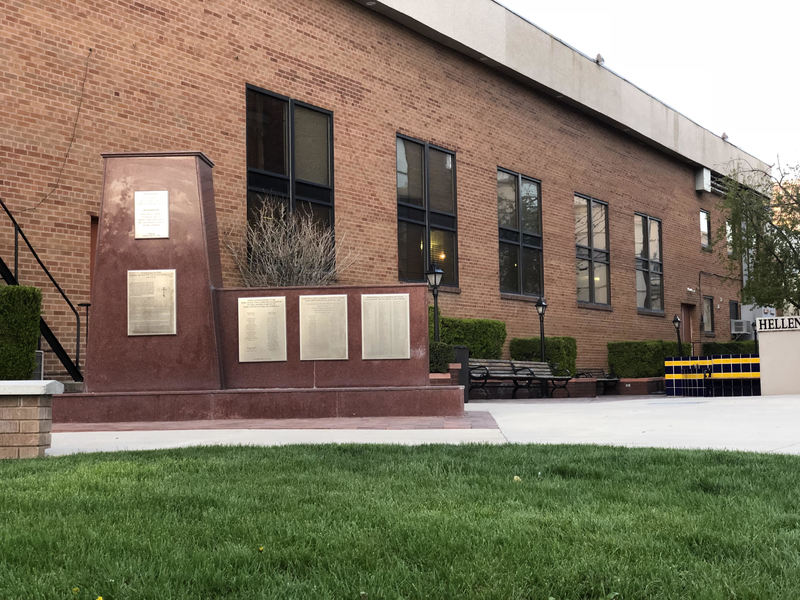
    <summary type="html"><![CDATA[<p><strong><em>A significant number of Greek Utahns served in the United States military. Their sacrifice to protect the nation is honored at the Hellenic Historic Monument in Salt Lake City. How can this monument impact our appreciation for United States service men and women?</em></strong></p><img src="https://www.intermountainhistories.org/files/fullsize/5b2ad5dcbfae1cdfc8fca342a54518b0.jpg" alt="Hellenic Historic Monument" /><br/><p>America experienced heightened nationalist ideology during World Wars I and II. As hysteria over the broader conflicts in Europe increased, xenophobia in the United States created strong inter-ethnic stress. In Utah, tension already existed in the industrial labor forces between Greeks, Americans, and other Eastern European immigrants at the start of the century. Lynchings were not widely publicized but nevertheless occurred in response to immigrant culture in the Salt Lake Valley. Greek immigrants were particularly targeted as un-American because they did not immediately desert their language and customs (often due to foundational religious beliefs), were involved in domestic labor strikes, and sent large amounts of money home. However, many Greeks were at the forefront of purchasing Liberty Bonds. Though criticized for not knowing English, Greek Newspapers (like O Ergatis) provided a resource to Greek-speaking immigrants to stay updated on war efforts in the United States.</p><p>Greek-Americans held an invested interest in World War I and II, regardless of their position on the conflict. Not only was America involved in the war, but so was their expatriate country – Greece. While many Greek Utahns joined the military by choice, others were drafted. The fairness of the draft was called into question when 221 of the 801 people in the Carbon County draft were Greek. Other members of the Greek community wanted to enlist, but were unable because they did not speak English. While many enlisted in the military to show their support for the war, others supported it through the Greek Orthodox Church. A parade was held from Price to the Holy Trinity Greek Orthodox church where speeches of patriotism were given and loyalty was pledged to the United States. </p><p>The wars significantly impacted Greek communities in Salt Lake City. Economically, the wars pushed copper miners and other industrial workers toward the city and into the middle class. This was partially due to the smaller number of more highly educated immigrants that came to Utah to be with family or friends who had already immigrated. Marriages decreased during the war (though they increased once the war had ended), and the Greek school located in the basement of the Holy Trinity Orthodox Church became less important than Orthodoxy itself. </p><p>To honor the history of Greek Utahns that fought in World Wars I, II, and the Korean Conflict, as well as the resulting effects of the war, the Hellenic Cultural Association (HCA) erected the Hellenic Historic Monument. The monument names the thirty-eight Greek Utahns that lost their lives in World Wars I, II, and the Korean Conflict, including Private First Class Theodore C. Dimas. Dimas was honored both in the community and by the Holy Trinity Orthodox church after his death. The HCA continues to hold Memorial Services for Greek servicemen and women at the monument each year.</p><p><em><strong><a href="https://www.intermountainhistories.org/items/show/157">For more (including 3 images) view the original article</a></strong></em></p>]]></summary>
    <published>2018-05-06T01:22:42+00:00</published>
    <updated>2026-04-17T19:32:01+00:00</updated>
    <link rel="alternate" type="text/html" href="https://www.intermountainhistories.org/items/show/157"/>
    <id>https://www.intermountainhistories.org/items/show/157</id>
    <author>
      <name>Katie Calton, Brigham Young University</name>
    </author>
  </entry>
  <entry>
    <title type="html"><![CDATA[Reexamining the Bear River Massacre  ]]></title>
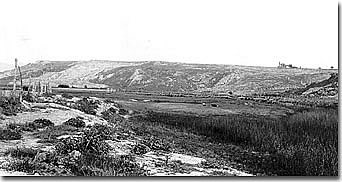
    <summary type="html"><![CDATA[<p><strong><em>January 29, 1863, dawned bright and cold. Encased in snow and silence, the Shoshone Indian camp located near the banks of Bear River near present-day Franklin, Idaho, had little idea what that fateful day held in store for them. In the early dawn hours, screams, gun smoke, and the feverish sounds of a pitched battle pierced the air. Within a few minutes, California militiamen had burned the Shoshones’ homes, shot their husbands and sons, raped and killed women, and blood stained the white snow, bringing immense sorrow and grief to the Shoshones. </em></strong></p><img src="https://www.intermountainhistories.org/files/fullsize/d3796127175afa2318b9c9a5b1ba1316.jpg" alt="Bear River Massacre site, looking east " /><br/><p>Colonel Patrick Edward Connor, upon hearing miner’s charges that Shoshones had stolen good and animals from them, had led his California Volunteers north from Fort Douglas in Utah Territory to Bear Hunter’s Shoshone village adjacent to the Bear River.  Connor, already antagonistic towards Indians and Mormons, had decided to attack the Indians in their winter encampment in order to participate in some form of military combat during the Civil War. </p><p>Connor’s men approached the Indian encampment early that morning. Upon seeing the approaching militia, the Indians quickly gathered up their weapons and the battle commenced. Once their ammunition ran out, the Indians asked to surrender, but received no mercy. The battle quickly turned into a massacre as the militia slaughtered 250 Shoshone men, women, and children while they California Volunteers suffered eighteen casualties. </p><p>At the sight of the confrontation, a national monument was to be erected, bearing the words “Battle of Bear River.” Mae T. Parry, a granddaughter of one of the chief Indians involved in the massacre, has begun to fight for the name of the Bear River Battle to be called the Bear River Massacre. “When you attack a sleeping village of Indian men, women and children, you can't call that a battle” Parry noted.  Her ongoing fight to right the wrongs of history reflects the ongoing struggles of her people against the American government and for the inclusion of Indian point-of-view into the national narrative. </p><p>In 2008 the Shoshone Nation acquired the site and commemorated the 150 year anniversary at the site in 2013. </p><p><em><strong><a href="https://www.intermountainhistories.org/items/show/23">For more (including 5 images) view the original article</a></strong></em></p>]]></summary>
    <published>2017-02-15T17:34:06+00:00</published>
    <updated>2026-04-17T19:31:58+00:00</updated>
    <link rel="alternate" type="text/html" href="https://www.intermountainhistories.org/items/show/23"/>
    <id>https://www.intermountainhistories.org/items/show/23</id>
    <author>
      <name>Kiya Mercado, Brigham Young University  </name>
    </author>
  </entry>
  <entry>
    <title type="html"><![CDATA[Memorializing Mountain Meadows]]></title>
    <summary type="html"><![CDATA[<p><strong><em>This monument honoring the victims of the Mountain Meadows Massacre is a sober one. It tells a story of fear, radicalism, and tragedy. </em></strong></p><img src="https://www.intermountainhistories.org/files/fullsize/52f1afbf2035519af22f18d37ca1543e.jpg" alt="Mountain Meadows Massacre Monument" /><br/><p>In the mid-1850s, the Mormons of Utah were not on friendly terms with the United States of America. Previous persecutions from the government caused Mormons to be distrustful of the United States. The United States saw the Mormon theocracy that existed in Utah and feared its disloyalty. This caused the Utah War, a cold war between the territorial and federal governments. Droughts and pestilence in the mid-1850s caused an extremist movement in Utah called the Mormon Reformation with powerful rhetoric, including a religious capital punishment. The atmosphere of Utah at the time was hostile. </p><p>The Baker-Fancher party of emigrant families was passing through the Southern end of Utah and rumors went with them. Local Mormons feared their intentions and assembled militia and local Paiutes to attack. In a series of attacks from September 7-11, 1857, 120 men, women, and children were killed, leaving only 17 small children alive. After much controversy over who was at fault for the massacre and the extensive efforts to cover up and understand, John D. Lee, one of the men who led the assault, was ultimately convicted and sentenced to death. </p><p>The first monument was built by James H. Carleton in 1859 when he was investigating the massacre for the United States. In shock of what he had seen, he felt the need to build a monument by stacking stones atop one another with a cross at the top. The monument was repeatedly destroyed and rebuilt over the years. Calls for a more honorable and permanent monument were made by the descendants of the Baker-Fancher party and Mormon President Gordon B. Hinckley. While the permanent monument was being built in August 1999, a backhoe dug up the bones of 28 massacre victims. Much controversy went behind whether to study them or to honor them through reburial in time for the dedication. Utah Governor Mike Lee made the decision to not spoil the commemoration of the dead with controversy. The decision was made to honor the dead and allow for the healing of old wounds. </p><p>Historian Levi Peterson likens learning about the massacre to a Greek tragedy. Tragedies tell a story of an honorable hero who falls under a gross misunderstanding. When we view another in the midst of a tragedy, we are capable of escaping our own tragic emotions and seek for healing through catharsis. As one views this monument, one may come seeking healing of their own mistakes.</p><p><em><strong><a href="https://www.intermountainhistories.org/items/show/9">For more (including 4 images) view the original article</a></strong></em></p>]]></summary>
    <published>2017-01-11T00:17:39+00:00</published>
    <updated>2026-04-17T19:31:58+00:00</updated>
    <link rel="alternate" type="text/html" href="https://www.intermountainhistories.org/items/show/9"/>
    <id>https://www.intermountainhistories.org/items/show/9</id>
    <author>
      <name>Jason Colver, Brigham Young University</name>
    </author>
  </entry>
</feed>