<?xml version="1.0" encoding="UTF-8"?>
<feed xmlns="http://www.w3.org/2005/Atom">
  <title type="text">Intermountain Histories</title>
  <updated>2026-04-17T19:32:17+00:00</updated>
  <generator uri="http://framework.zend.com" version="1.12.20">Zend_Feed_Writer</generator>
  <link rel="alternate" type="text/html" href="https://www.intermountainhistories.org/"/>
  <link rel="self" type="application/atom+xml" href="https://www.intermountainhistories.org/items/browse?output=rss2"/>
  <id>https://www.intermountainhistories.org/</id>
  <author>
    <name>Intermountain Histories</name>
    <uri>https://www.intermountainhistories.org</uri>
  </author>
  <link rel="hub" href="https://pubsubhubbub.appspot.com/"/>
  <entry>
    <title type="html"><![CDATA[The Deseret Hospital]]></title>
    <summary type="html"><![CDATA[<p><strong><em>When pioneer Utahns realized their lack of medical knowledge, Brigham Young sent women to the East to obtain medical degrees. Upon their return, many set up private practices, but they wanted to have an official hospital. This desire led to the construction of the Deseret Hospital in 1882 and its operation for 12 years until it closed in 1894. In 2003, a replica of the building was constructed at This is the Place Heritage Park in Salt Lake City. </p></strong></p><img src="https://www.intermountainhistories.org/files/fullsize/84306f5df0e3c988b3178f132247e081.jpg" alt="LDS Hospital - a Full-Service Community Hospital - Salt Lake City, Utah" /><br/><p><span style="font-weight:400;">During Utah’s territorial years, the pioneer settlers lacked medical knowledge which led to high maternal and infant mortality rates. This problem led Brigham Young to encourage a few women to go to the Eastern United States to obtain medical degrees. Some of the women who heeded the call were Martha H. Cannon, Romania P. Penrose, Ellis R. Shipp, Ellen B. Ferguson, and Elvira S. Barney. When they returned to Utah, several opened private practices but they all recognized the need for an official hospital. With the support of the scores of women who convinced church leaders of the need, the women gained their hospital in 1882. </span>
<span style="font-weight:400;">The Deseret Hospital was established by the Latter-day Saint Relief Society and was dedicated in July 1882 by LDS apostle Franklin D. Richards. It was located in a building previously used by the nuns of the Holy Cross Hospital. At the dedication, Ellen B. Ferguson was set apart as the resident physician and Romania P. Penrose as the resident surgeon and visiting physician. </span>
<span style="font-weight:400;">The hospital treated illnesses such as rheumatism, typhoid fever, and diphtheritic tonsillitis, among other diseases. It was also used as a maternity home and training facility for midwives. Women who wanted to learn midwifery but who could not pay for instruction could give fifty days of charity work instead. The hospital was supported by donations that supplied it with the materials necessary to operate. The Relief Society also organized the Deseret Hospital Association, which any woman in good standing could join by paying one dollar annually. Patients were charged $3-6 a week for board, room, and nursing, and the hospital’s maximum capacity was about 40-50 patients. </span>
<span style="font-weight:400;">In 1884 the hospital was moved to a different location, but a lack of funds forced its closure in 1894. The midwifery school continued to operate until 1905 when W. H. Groves purchased land to build a new LDS Hospital. This hospital continued to expand until it had fifteen branches under the direction of The Church of Jesus Christ of Latter-Day Saints. In 1975, the Church transferred the operation of the hospitals to Intermountain Health Care. </span>
<span style="font-weight:400;">A replica of the Deseret Hospital was constructed at This is the Place Heritage Park in 2003. The first floor of the building shows a replica of the hospital and the second floor contains a collection from the Utah Quilt Guild. Elder Russell M. Nelson dedicated the structure on October 25, 2003, to highlight the contributions of the women who traveled to the East to obtain an education and to commemorate the original Deseret Hospital.</span></p><p><em><strong><a href="https://www.intermountainhistories.org/items/show/791">For more (including 4 images) view the original article</a></strong></em></p>]]></summary>
    <published>2024-03-03T04:30:48+00:00</published>
    <updated>2026-04-17T19:32:17+00:00</updated>
    <link rel="alternate" type="text/html" href="https://www.intermountainhistories.org/items/show/791"/>
    <id>https://www.intermountainhistories.org/items/show/791</id>
    <author>
      <name>Madison Sterzer, Brigham Young University</name>
    </author>
  </entry>
  <entry>
    <title type="html"><![CDATA[Heart of Polyurethane: Barney Clark and the Artificial Heart]]></title>
    <summary type="html"><![CDATA[<p><strong><em>In December 1982, Dr. Barney B. Clark received the first permanent total artificial heart implant in a human. The implant was his last resort and his last chance of survival after being diagnosed with congestive heart failure in 1979. He lived with the Jarvik-7 artificial heart for 112 days. Today a memorial in Provo honors his courage.</p></strong></p><img src="https://www.intermountainhistories.org/files/fullsize/1687587c565e27f65f087d15a77083a3.jpg" alt="Marker Close Up" /><br/><p><span style="font-weight:400;">In December 1982, Dr. Barney Clark pioneered medical research by receiving the first artificial heart implant. Clark had suffered from congestive heart failure for several years and his condition was worsening. Despite the experimental nature of the implant and the potential for significant personal suffering, Clark wanted to receive the artificial heart. It represented his last remaining option for survival, and he aimed to contribute to the medical community’s knowledge in the field of heart disease. Before the surgery, Clark had been treated by several doctors. He tried many treatments including experimental medications. Because of the limited number of heart donors, he was too old and too sick to be eligible for an organic heart transplant. The Jarvik-7 artificial heart was his last resort. </span>
<span style="font-weight:400;">The artificial heart was heavily researched before Clark received it. Dr. William C. DeVries had been researching it since 1967. DeVries had implanted the Jarvik-7 heart in cadavers and in many live animals, including calves. Every detail of the preparation and the surgery were outlined almost two years before Clark was selected to receive the implant. </span>
<span style="font-weight:400;">The implant surgery was initially successful. On Thursday, December 2, 1982 the Provo Daily Herald reported that after seven hours of surgery the artificial heart was working well and that it had given Clark “the blood pressure of an 18-year-old.” Despite the successful surgery, Clark soon started facing complications. He experienced an air leak in his lung, seizures, a broken valve on the artificial heart, and frequent nose bleeds. The doctors fixed these problems as they arose, although they were never able to figure out the cause of the seizures. In March 1983 Clark suffered from aspiration pneumonia, which sent him back into the intensive care unit. He never recovered. On March 23, 1983 Clark “suffered from multiple organ system failure that caused a circulatory collapse” and passed away at 10:02 that night. Researchers concluded that the artificial heart itself had not killed him, but complications associated with the surgery and prior conditions had. </span>
<span style="font-weight:400;">Clark survived with the Jarvik-7 total artificial heart for 112 days, though experiencing great suffering. Many regard Barney Clark as a pioneer and a hero. A memorial in Provo honors his legacy. Today the artificial heart is used as a temporary placement while heart failure patients wait for a heart donor.</span></p><p><em><strong><a href="https://www.intermountainhistories.org/items/show/768">For more (including 2 images) view the original article</a></strong></em></p>]]></summary>
    <published>2024-01-20T07:16:05+00:00</published>
    <updated>2026-04-17T19:32:17+00:00</updated>
    <link rel="alternate" type="text/html" href="https://www.intermountainhistories.org/items/show/768"/>
    <id>https://www.intermountainhistories.org/items/show/768</id>
    <author>
      <name>Caitlin Zollinger, Brigham Young University</name>
    </author>
  </entry>
  <entry>
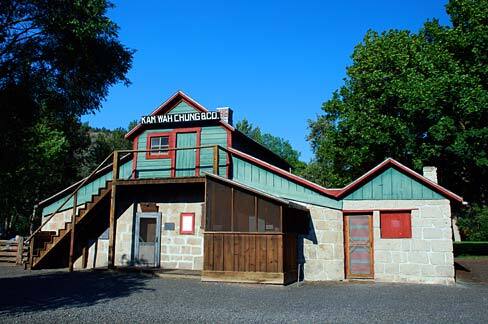
    <title type="html"><![CDATA[Kam Wah Chung &amp; Co. ]]></title>
    <summary type="html"><![CDATA[<p><strong><em>In the 19th century, the United States rapidly expanded West. This expansion was expedited by the discovery of gold in the western mountains. Along with it came an influx of Chinese workers. As anti-Chinese sentiment festered during the latter half of the century, a medicine shop rose to prominence in John Day, Oregon.</em></strong></p><img src="https://www.intermountainhistories.org/files/fullsize/5bc7a3df9efef6793d330b545baa0691.jpg" alt="Kam Wah Chung Museum" /><br/><p><span style="font-weight:400;">Along the Dalles Military Road sits the small town of John Day, Oregon. In the mid-1860s, a Chinatown hub for the Chinese miners and immigrants emerged in the area. A small wooden building purchased by Ing Hay and Lung On served as the foundation for a business with—at the time—no promises for future success.</span> <span style="font-weight:400;">Ing Hay was both an herbalist and pulsologist, diagnosing patients based on their pulse. Born in 1862, he sought better fortunes in the Western United States in 1887. In John Day, Oregon, he met Lung On and purchased the dying Kam Wah Chung & Co. Locally known as “Doc” Hay, he treated a variety of ailments with traditional Chinese remedies based on Taoist teachings of harmony and balance. His clientele diversified and included more non-Chinese patients through the 1910s. </p> <span style="font-weight:400;">Lung On, on the other hand, was a savvy businessman fluent in both Chinese and English. He was also a Chinese immigrant and managed the business side of Kam Wah Chung which included pricing, inventory, translating and responding to letters. Locally known as “Leon”, he owned, co-owned, and invested in numerous other operations around Oregon, including businesses, land and mining claims, racehorses, and later an automotive dealership. He also provided a letter-writing service and assistance in navigating American laws for Chinese migrants and immigrants.</p> <span style="font-weight:400;">Together, the two transformed Kam Wah Chung & Co. into a successful mercantile, apothecary, and clinic. It also served as an education and community center. Kam Wah Chung served as an anchor for the surrounding Chinese community and a bridge for non-Chinese neighbors during an era of heightened anti-Chinese sentiment. This success continued into the early 20th century until Lung On’s death in 1940. Ing “Doc” Hay moved to Portland in 1948 due to failing health. The Kam Wah Chung & Co. has been converted into a museum that houses a plethora of Lung On’s untranslated ledgers and documents, Chinese medicinal recipes from Ing Hay’s days of practice, and records of the significant footprint Hay and On left on western U.S. history.</span>
<i><span style="font-weight:400;">Friends Of Kam Wah Chung, </span></i><span style="font-weight:400;">a non-profit organization, continues to research, translate, and excavate the cultural artifacts left behind in John Day. More information about current research and the museum can be found on their website, and much of their work is available to the public. Kam Wah Chung is now a state park and National Historical site.</span></p><p><em><strong><a href="https://www.intermountainhistories.org/items/show/743">For more (including 6 images) view the original article</a></strong></em></p>]]></summary>
    <published>2023-04-10T19:33:02+00:00</published>
    <updated>2026-04-17T19:32:16+00:00</updated>
    <link rel="alternate" type="text/html" href="https://www.intermountainhistories.org/items/show/743"/>
    <id>https://www.intermountainhistories.org/items/show/743</id>
    <author>
      <name>Emma Dutcher, Brigham Young University</name>
    </author>
  </entry>
  <entry>
    <title type="html"><![CDATA[Utah State Hospital<br />
]]></title>
    <summary type="html"><![CDATA[<p><strong><em>While the hospital struggled from its inception to adequately fill its role in mental health treatment, it stands today as a modern institution illustrating the broader American shift toward effective care of the mentally ill.</em></strong></p><img src="https://www.intermountainhistories.org/files/fullsize/80183f549f53f7c444d18efb460b5920.jpg" alt="Hospital in 1900." /><br/><p>On 6 February 1880, a resolution was passed in the Utah Territorial Legislature forming a committee to consider the necessity of an asylum. The next day a bill was introduced to build such an institution and fund it thereafter. The bill was passed on 20 February 1880. The Territorial Insane Asylum was officially opened in Provo on 15 July 1885. It was placed several blocks away from the city’s population, separated by marshland and the city dump. Before its construction individual counties and private institutions were responsible for the care of the “insane.”</p><p>The dedication of the asylum was a widely publicized and rather grand affair. Not only were reduced railroad rates offered to those attending the event, music, refreshments, and a grand ball for the inmates were planned. At first, it was deemed a credit to Utah, well worth the time and money expended to finally free the territory of the self-inflicted “abuses” it had endured due to the lack of such an institution. The asylum was originally conceived as a place for individuals to be rehabilitated and returned to public life. However, the training and resources were insufficient and the institution soon became a human warehouse with terrible conditions. </p><p>A shift in attitudes toward the institution was signaled in 1903 when it was officially renamed the State Mental Hospital. Later in 1927, it was again renamed the Utah State Hospital in a further attempt to remove stigma. These name changes did little to help the lack of resources and overcrowding which reached a peak when in the 1940s. The 1,100 patients outnumbered their 700-bed capacity. In 1942 Dr. Owen P. Heninger became superintendent, instituting reforms and programs which improved the quality of life for patients and enabled staff to more effectively administer to the needs of the populace. In 1969 state care shifted from hospitalized treatment to more local centers and programs, lessening the load on the hospital and ensuring maximum attention to those still requiring institutionalization. Today the hospital is a modern hospital providing excellent care according to the many advances in mental health treatment made over several decades. </p><p><em><strong><a href="https://www.intermountainhistories.org/items/show/430">For more (including 3 images) view the original article</a></strong></em></p>]]></summary>
    <published>2020-10-11T09:17:09+00:00</published>
    <updated>2026-04-17T19:32:08+00:00</updated>
    <link rel="alternate" type="text/html" href="https://www.intermountainhistories.org/items/show/430"/>
    <id>https://www.intermountainhistories.org/items/show/430</id>
    <author>
      <name>Racheal Minns Kay, Brigham Young University</name>
    </author>
  </entry>
  <entry>
    <title type="html"><![CDATA[Bushnell Military Hospital]]></title>
    <summary type="html"><![CDATA[<p><strong><em>From a hospital to a school, to nothing—the Bushnell Military Hospital wasn’t in operation for long, but it had a lasting impact. </em></strong></p><img src="https://www.intermountainhistories.org/files/fullsize/fd74574b5e34696aec898ecd1a809b0e.jpg" alt="Bushnell Military Hospital Aerial View" /><br/><p>World War II took the lives of approximately 3% of the entire world’s population in the 1940s—so it’s no surprise that life-saving efforts became a top priority at the time. Military hospitals were built throughout the war front as well as the home front. Brigham City, UT became home to one: Bushnell General Military Hospital. The hospital impacted Brigham City in various ways, including the lives of many individuals who served and were served there.</p><p>Many employees at the facility were locals, which boosted Brigham City’s economy. They needed the skills that varying individuals possessed because Bushnell was innovative in their patient care. Just one of many examples is their developing a new type of prosthetic limb that used plastic instead of metal, which soon spread to other amputation centers and became more commonplace in the medical field.</p><p>They were also innovative in their treatment procedures. Bushnell had a significantly low death rate, which is accredited in part to their experimental use of penicillin. Penicillin was new to the medical world and proved effective for many patients, allowing doctors at Bushnell to save many more lives and limbs than they would have been permitted under other circumstances. </p><p>Once soldiers were healed, the focus shifted to rehabilitation. They had band performances by amputees, visits from celebrities such as Helen Keller to boost morale, and a general sense of community involvement to aid in all steps of this process. </p><p>The hospital also provided facilities for mental health treatment. The psychiatrists were well-trained and used the best and newest treatments they had at the time. However, many patients had already suffered from mental and emotional illness before the war, and seeing combat brought them to severe extremes. The psychological knowledge of the time was not sufficient to help many of them, and they ended up in hospitals for extended periods of time. However, due to many experimental treatments, they made advancements in psychiatric treatment that continued to be implemented afterward.</p><p>After the war, the hospital was closed in 1946. The buildings were remodeled and turned into the Intermountain Indian School: a boarding school for Native American children. It was successful for several years but was closed in 1984 and the land was given back to the city. The buildings have mostly been demolished now, but Brigham City has experienced the long-lasting effects of the hospital’s influence. Bushnell brought the community together in a way nothing else could—it was a chance for a small town to band together for a good cause in a troubling time. </p><p><em><strong><a href="https://www.intermountainhistories.org/items/show/86">For more (including 5 images) view the original article</a></strong></em></p>]]></summary>
    <published>2017-08-18T20:26:36+00:00</published>
    <updated>2026-04-17T19:31:59+00:00</updated>
    <link rel="alternate" type="text/html" href="https://www.intermountainhistories.org/items/show/86"/>
    <id>https://www.intermountainhistories.org/items/show/86</id>
    <author>
      <name>Aubrey Glazier, Brigham Young University</name>
    </author>
  </entry>
</feed>