<?xml version="1.0" encoding="UTF-8"?>
<feed xmlns="http://www.w3.org/2005/Atom">
  <title type="text">Intermountain Histories</title>
  <updated>2026-04-17T19:32:17+00:00</updated>
  <generator uri="http://framework.zend.com" version="1.12.20">Zend_Feed_Writer</generator>
  <link rel="alternate" type="text/html" href="https://www.intermountainhistories.org/"/>
  <link rel="self" type="application/atom+xml" href="https://www.intermountainhistories.org/items/browse?output=rss2"/>
  <id>https://www.intermountainhistories.org/</id>
  <author>
    <name>Intermountain Histories</name>
    <uri>https://www.intermountainhistories.org</uri>
  </author>
  <link rel="hub" href="https://pubsubhubbub.appspot.com/"/>
  <entry>
    <title type="html"><![CDATA[Honeymoon Trail]]></title>
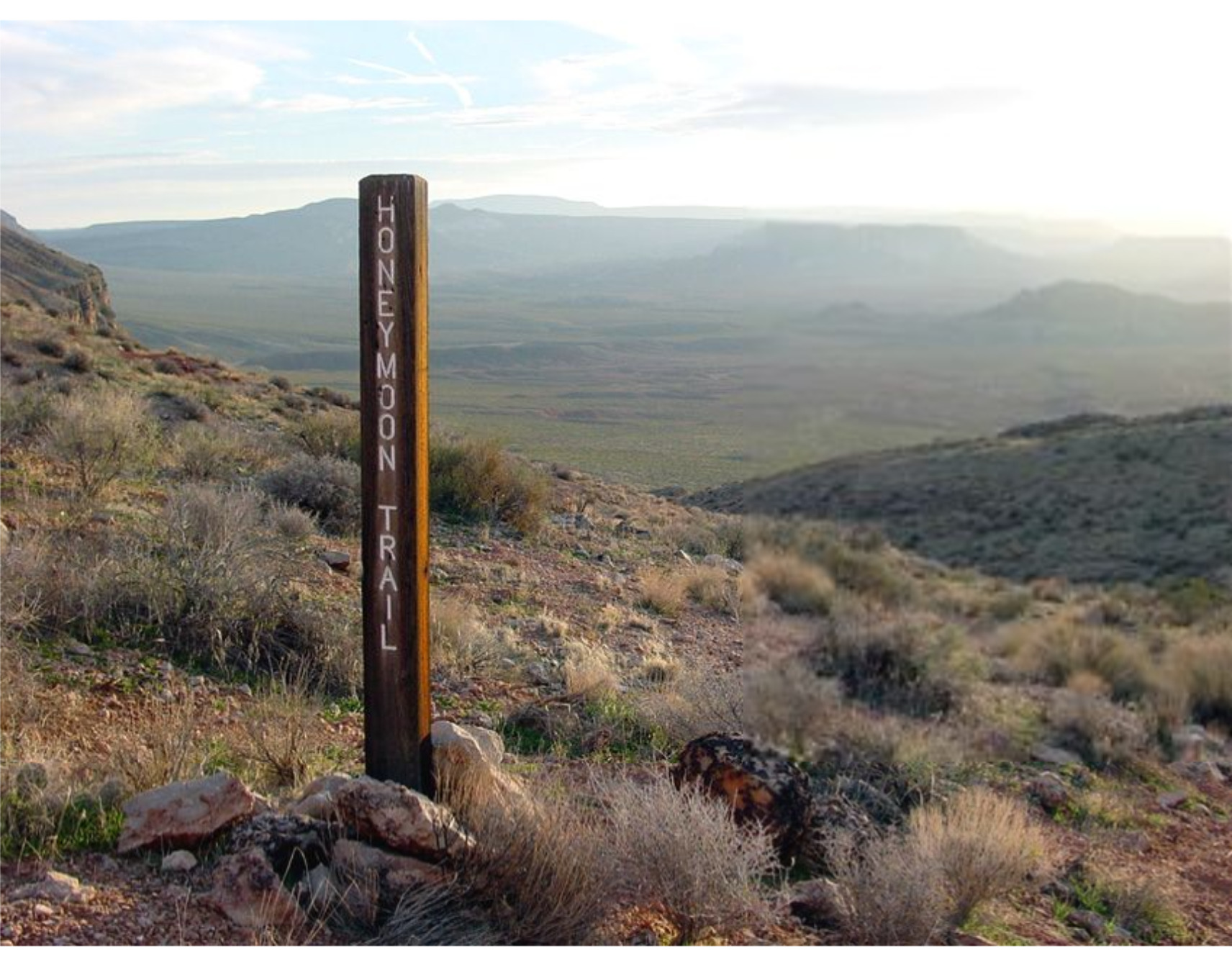
    <summary type="html"><![CDATA[<p><strong><em>The Honeymoon Trail connected Latter-day Saint communities in Arizona to St. George and was originally known as the Mormon Wagon Road. Will C. Barnes, an American historian, coined the term Honeymoon Trail as he studied the hundreds of couples who trekked along the trail to the St. George Temple to get married. Couples continued to make the hazardous journey until 1927, when the Mesa, Arizona temple opened. </em></strong></p><img src="https://www.intermountainhistories.org/files/fullsize/b5f9fbc2448e80d9a7874c071208e8c7.jpg" alt="Honeymoon Trail" /><br/><p><span style="font-weight:400;">In 1871, leaders of the Church of Jesus Christ of Latter-Day Saints announced that a temple would be built in St. George in 1871. While this was exciting for members in southern Utah, it was also exciting to the members scattered throughout Arizona who wanted to be married for eternity in a ceremony that could only take place in a temple. After the temple in St. George was completed in 1877, couples in Arizona traveled to St. George to participate in the marriage ceremony. Depending on their starting point in northern or southern Arizona, some couples traveled over 400 miles to be married.</span>
<span style="font-weight:400;">The Honeymoon Trail was difficult to traverse under the best conditions and was sometimes made worse by the weather. Couples had no choice but to cross deep muddy washes and traverse canyons and hills. They could choose between a shorter route across mountains or avoid them by extending their journey by many miles. Although the trail did have a hazardous river crossing, most of the trail lacked adequate drinking water. It was common for oxen to die from dehydration. Some couples made the most of this loss by trading dying or dead oxen to people along the trail for other needed goods. Some couples endured snowstorms while others endured sandstorms. For instance, Joseph Fish, who undertook the trail to marry Julia Reidheid, suffered vision loss due to the sandstorms encountered on the journey. Despite their father’s challenging experience, some of Fish’s children still chose to traverse the same trail to reach the temple, fully aware of the risks they would face.</span>
<span style="font-weight:400;">The physical trail was not the only danger faced by couples. Tensions stemming from the Black Hawk War, a violent confrontation between Latter-Day Saint settlers and the Ute, Paiute, and Navajo nations from 1865 until 1872, led to ongoing confrontations. Some travelers lost horses to Indigenous raiders. However, many of the interactions between travelers and the Natives were friendly. Still, stories of past violence exaggerated the expectations of hostile interactions and caused the travelers to fear. Not only were Natives a concern, but running into strangers and outlaws also brought fear to the lawless wilderness. Danger surrounded the couples and groups who journeyed to the temple in St. George. </span>
<span style="font-weight:400;">The efforts and dedication of the Saints of Arizona were observed by Church leaders. In 1918 they announced that a temple would be built in Mesa Arizona. At the time there were only six operating temples, marking a tremendous victory for the members scattered throughout Arizona. The completion of the Mesa Temple in 1927 brought to an end the colorful history of the Honeymoon Trail.</span></p><p><em><strong><a href="https://www.intermountainhistories.org/items/show/777">For more (including 4 images) view the original article</a></strong></em></p>]]></summary>
    <published>2024-02-02T00:19:57+00:00</published>
    <updated>2026-04-17T19:32:17+00:00</updated>
    <link rel="alternate" type="text/html" href="https://www.intermountainhistories.org/items/show/777"/>
    <id>https://www.intermountainhistories.org/items/show/777</id>
    <author>
      <name>Margie Brown, Brigham Young University</name>
    </author>
  </entry>
  <entry>
    <title type="html"><![CDATA[Life at “the Murtaugh Place” and Longing for Adventure]]></title>
    <summary type="html"><![CDATA[<p><strong><em>Coming from humble origins, and yet possessing the sophistication, intelligence, and charisma of mavericks, Glen and Bessie Hyde were determined to break the shackles which tied them down to a normal life.</em></strong></p><img src="https://www.intermountainhistories.org/files/fullsize/2af9bc5d4ea3afd3566b7d4026ce2f4e.jpg" alt="Murtaugh Place" /><br/><p>Glen Hyde and Bessie Haley met on a ship steaming from San Francisco to Los Angles in the early summer of 1927, and it was clear to their friends and family that the two were immediately attracted to one another. Glen and Bessie were both intelligent, cultured, and outgoing, and they had the makings of the ultimate power couple. After divorcing her first husband in early April 1928, Bessie immediately married Glen. The newly wedded couple then settled into life at Glen's home near the town of Murtaugh in Twin Falls County, Idaho.
Acquired by the Hydes in the early 1910s, “the Murtaugh Place” was a small parcel of land located fifteen miles east of the family's farm, “the Home Place,” in Kimberly, Idaho. Glen's father, Rollin Hyde, had bought it to expand his farming enterprises. After dropping out of college for the final time in 1923, Glen came to live in the small shack he and Rollin built on the property, dividing his workdays between the Murtaugh Place and the Home Place. In the spring and summer, Glen and Rollin grew crops on both properties to sell in Kimberly, while in the winter, they raised sheep and sold their wool when spring came. When he wasn't working, Glen enjoyed activities like playing tennis on the court he had built at the Home Place, or swimming in the local irrigation canals or in the nearby Snake River. Yet, Glen was never satisfied with his life at the Murtaugh Place. The young man craved adventure.
Glen's new wife shared his ambition. Bessie was accustomed to the bustling and exciting nature of life in the city, having spent much of her early adulthood studying art in San Francisco. Life at the Murtaugh Place was comparatively dull and uneventful, as daily life was largely based on the regular routines of farm work. Though she learned to ride a horse, got a dog, and reportedly worked as hard as her husband, it was clear to friends and family that Bessie, along with Glen, desired a lifestyle that their existence at the Murtaugh Place could not provide. A “normal” life on the farm wasn't for them.
For Glen and Bessie, the means to escape the monotony of the Murtaugh Place came in the form of their upcoming honeymoon, a trip down the Colorado River. By choosing such an undertaking, the couple sought to emulate the fantastical stories of exploration and daring feats reported on the front pages of popular tabloids. If successful, Bessie would have been the first woman to travel the entire length of the nearly 600-mile-long river, a feat that the couple could use to gain further fame for themselves. In essence, their honeymoon was a ticket out of their boring lives at the Murtaugh Place.
After Glen and Bessie disappeared, the Hyde family continued to operate the Murtaugh Place for several more years. At present, it seems as though nothing remains of the shack Glen and Bessie lived in.   </p><p><em><strong><a href="https://www.intermountainhistories.org/items/show/520">For more (including 3 images) view the original article</a></strong></em></p>]]></summary>
    <published>2021-10-16T06:54:47+00:00</published>
    <updated>2026-04-17T19:32:11+00:00</updated>
    <link rel="alternate" type="text/html" href="https://www.intermountainhistories.org/items/show/520"/>
    <id>https://www.intermountainhistories.org/items/show/520</id>
    <author>
      <name>William Knapp, Northern Arizona University</name>
    </author>
  </entry>
  <entry>
    <title type="html"><![CDATA[Polygamist Flight from St. Johns]]></title>
    <summary type="html"><![CDATA[<p><strong><em>Though federal anti-polygamy laws had been on the books for years, the Latter-day Saints of St. Johns, Arizona hoped the remote frontier town would be a refuge for them. An arrest on the evening of July 10, 1884 dashed this hope, and four plural wives fled the city that very night.</em></strong></p><img src="https://www.intermountainhistories.org/files/fullsize/26339c61ea7e17df5da2d02549fe31a0.jpg" alt="St. Johns, Arizona" /><br/><p><span style="font-weight:400;">In July 1884, the David, Ella, and Ida Udall family of St. Johns, Arizona was optimistic about the future. The Udalls were members of The Church of Jesus Christ of Latter-day Saints (then often nicknamed Mormons), and they were also polygamists, plural marriage being a central religious practice of the Church at the time. David’s marriage to both Ella and Ida violated the Edmunds Anti-Polygamy Act of 1882, but like most other Mormon polygamists, the Udalls followed the counsel of their prophet-president John Taylor to engage in civil disobedience. When faced with the choice to “obey God or Congress,” the Udalls chose God.</span>
<span style="font-weight:400;">Despite the 1882 Edmunds Anti-polygamy Act, David had thus far avoided being arrested for polygamy, and their nontraditional family was growing. On July 5, David’s first wife Ella gave birth to their second daughter, to be named Erma. Meanwhile, their first daughter Pearl was four-years old. Despite anti-polygamy sentiments in St. Johns, the Church hoped eastern Arizona could be a haven for polygamist members. A neighbor, Catharine Cottam Romney, second wife to Miles Romney, had even returned to St. Johns after hiding in New Mexico. Ida thought her family might soon be “able to go out and do something as other people did.”</span>
<span style="font-weight:400;">However, July 10 dashed that hope. Just as the Udalls finished dinner, Mormon neighbors Ammon Tenney and Joe Crosby arrived with urgent news. Federal marshals had arrested Tenney for violating the Edmunds Act (though they had not yet taken him into custody) and issued a subpoena to his second wife Eliza Udall Tenney, Ida’s sister, who promptly fled. Tenney and Crosby warned the marshals might next arrest David and subpoena Ida to testify against him.</span>
<span style="font-weight:400;">Ida was hesitant to leave Ella, still recovering from the birth, and Pearl and Erma, who Ida regarded as if her own daughters. Still, she soon agreed to go “underground,” a term Latter-day Saints in the late-nineteenth century used to describelong-term hiding to evade arrests or subpoenas related to polygamy.</span>
<span style="font-weight:400;">Ida stayed the rest of the evening at a neighbors’ home, but before she could sleep David arrived and took Ida along with Eliza, Catharine, and Annie (Miles Romney’s third wife) three miles out of town, arriving at the home of Joel White around 2:00 AM. The house did not have room for all four women, so the group arranged beds for them outside. In her journal, Ida described sleeping “on the shady side of the house, under the blue canopy of heaven… Thus passed our first night as exiles from home.”</span>
<span style="font-weight:400;">All day July 11, Eliza kept watch with binoculars. Whenever she saw someone draw near the homestead, the four women hid behind curtains or underneath the beds. The four remained in hiding at the White home until July 16, when “it was decided,” as Ida wrote, that they would “be shipped” to Snowflake, Arizona. Unlike St. Johns, where the Mormons were newcomers, Latter-day Saints had founded Snowflake, and Ida and Eliza had family there. The women would still need to hide, but everyone hoped they would be safer in Snowflake than in St. Johns.</span>
<span style="font-weight:400;">After sunset that day and before leaving St. Johns, Ida visited Ella, Pearl, and Erma one last time, and she kissed each of them.</span>
<span style="font-weight:400;">The women departed for Snowflake thereafter and traveled through the night. Ida rode with Catharine and Annie in a wagon driven by their husband Miles Romney, but as an extra precaution Eliza (“the only criminal of the lot,” Ida wrote) took a different route. Accompanied by her husband Ammon Tenney and a neighbor, Eliza rode to Snowflake on horseback, disguised in men's clothes. </span>
<span style="font-weight:400;">Catharine gave birth in Snowflake two weeks later, having gone into, out of, and back into the underground in the span of two months, all during her final trimester. </span>
<span style="font-weight:400;">Over time, as federal marshals continued combing northeastern Arizona with subpoenas, the families decided even Snowflake wasn’t far enough. In September, David and Ida agreed to have her travel to Nephi, Utah, where she could live with David’s parents. There in Nephi, in March 1885, Ida, like Catharine, gave birth on the underground to her daughter Pauline. Ida did not reunite with the rest of the family again until the late 1880s, in Round Valley, Arizona.</span>
<span style="font-weight:400;">Catharine moved from Snowflake to St. George, Utah, where she lived with her family for a few years. After Miles resolved to flee prosecution by moving to Mexico, he, Catharine, Hannah, Anna, and their children reunited in Juarez by 1886, continuing their underground exile beyond the reach of the United States.</span>
<span style="font-weight:400;">By 1885, mounting persecution prompted President Taylor to advise the Latter-day Saints of eastern Arizona to flee the country and go to Mexico as the Romneys would in 1886. Around fifty families left St. Johns and the surrounding region, and while David did not leave initially, he eventually quit St. Johns and moved to Round Valley, Arizona in 1888, where the whole family lived together by 1892.  Some families eventually returned to St. Johns, like the Udalls who went on to build a home there (see <a href="https://www.intermountainhistories.org/items/show/504?tour=39&index=7">“The Elm Hotel and the Udall Family”</a>). Other families, like the Romneys who eventually repatriated, never lived in St. Johns again.</span></p><p><em><strong><a href="https://www.intermountainhistories.org/items/show/499">For more (including 3 images) view the original article</a></strong></em></p>]]></summary>
    <published>2021-09-23T09:57:09+00:00</published>
    <updated>2026-04-17T19:32:10+00:00</updated>
    <link rel="alternate" type="text/html" href="https://www.intermountainhistories.org/items/show/499"/>
    <id>https://www.intermountainhistories.org/items/show/499</id>
    <author>
      <name>Makoto Hunter, Brigham Young University</name>
    </author>
  </entry>
  <entry>
    <title type="html"><![CDATA[George Reynolds’s Polygamy Convictions]]></title>
    <summary type="html"><![CDATA[<p><strong><em><i><span style="font-weight:400;">Reynolds v. United States</span></i><span style="font-weight:400;"> would eventually resolve the dispute over polygamy and religious freedom in favor of the United States government. But before the case could get to the Supreme Court, George Reynolds needed to be convicted—and he wanted to fight the charge. </span></em></strong></p><img src="https://www.intermountainhistories.org/files/fullsize/227143f7e6fb8fc3a97c8b41e9bab676.jpg" alt="George Reynolds and sons" /><br/><p><span style="font-weight:400;">Although Congress passed the Morrill Anti-bigamy Act in 1862, twelve years later in 1874 no court had yet found a single member of The Church of Jesus Christ of Latter-day Saints (sometimes nicknamed “Mormons” in that time) guilty of having multiple wives. While the rest of America condemned Mormon polygamy as a barbaric heresy and theocratic threat to democracy, Church leaders insisted the First Amendment to the Constitution protected their plural marriages under the free exercise of religion. Meanwhile, most Latter-day Saint polygamists lived in remote western U.S. territories. Latter-day Saints held electoral majorities for years, effectively guaranteeing territorial law enforcement, judges, and juries were friendly to Latter-day Saints.</span>
<span style="font-weight:400;">However, in June 1874 Congress passed the Poland Act, granting United States district courts exclusive criminal jurisdiction in the territories, thereby putting judges, juries, and polygamy cases in the hands of the federal government instead of territorial voters. Within a year, federal prosecutors finally had a trial for an anti-polygamy case against George Reynolds, a clerk in the office of the Church’s First Presidency who had married a second wife earlier that year. Reynolds originally agreed to be indicted as a “test case” negotiated between the Church and federal prosecutors to settle the Church’s First Amendment claims, but the agreement fell apart after his October 1874 indictment. By the time of Reynolds’s trial in March 1875, Reynolds was fighting for a not guilty verdict.</span>
<span style="font-weight:400;">Court convened on March 31, 1875 for </span><i><span style="font-weight:400;">United States v. Reynolds</span></i><span style="font-weight:400;">. Although Latter-day Saints were among the jury, they agreed to respect the trial court’s ruling on the Morrill Act’s constitutionality for the sake of deciding the verdict. But Carey, the prosecutor, soon found himself at an impasse anyway. He declared his intent to prove Reynolds lawfully married Mary Ann Tuddenham in 1865 and unlawfully married Amelia Jane Schofield in 1874, but the fourteen witnesses he subpoenaed—including friends and family of Reynolds—had planned ahead of time to give testimonies that would obscure as much as possible Reynolds’s relationship to Schofield. Historian Bruce van Orden observed, “their testimonies bordered not merely on evasion but on lying.” Daniel H. Wells, who had officiated the marriage, testified he could not clearly remember the ceremony. Reynolds’s sister Julia, who shared his home, admitted that a woman besides Reynolds’s first wife did live in the house but insisted she did not know if the second woman and Reynolds were married. In later polygamy cases, other families made similar efforts to dance on the edge of “truth” to avoid implicating husbands and wives.</span>
<span style="font-weight:400;">Before the end of the trial’s first day, the prosecution team privately agreed they were failing to prove the case—but they were not ready to give up. There was one potential witness they had not subpoenaed already: Amelia Jane Schofield, Reynolds’s second wife. Since the government did not recognize their marriage as lawful, they could justify subpoenaing Amelia to testify against her husband. The prosecution quietly obtained a subpoena, and while they waited for a deputy marshal to escort Amelia to the courthouse, Carey asked for and received a brief recess.</span>
<span style="font-weight:400;">Not long after, Amelia arrived. Benjamin R. Cowen (sometimes spelled Cowan), Assistant Secretary of the Interior, was in the courtroom audience and believed “the ghost of Joe Smith would scarcely have produced a more profound sensation.” Now several months into her pregnancy, Amelia was obviously carrying someone’s child, and “she must either have sworn herself the lawful wife of George Reynolds or tacitly confessed to being his concubine,” Cowan thought.</span>
<span style="font-weight:400;">In the end, her cross-examination was even simpler. Because the prosecution had not previously subpoenaed Amelia, she had not been part of the other witnesses’ preparation. Carey asked Amelia who she was married to, and she calmly testified that Reynolds was her husband.</span>
<span style="font-weight:400;">Court reconvened on April 1, 1875, and Carey rested his case. J.G. Sutherland, Reynolds’s defense attorney, pivoted his strategy and admitted Reynolds and Amelia indeed were married, but he asserted the First Amendment protected their marriage as a religious practice. The prosecution objected to the statement as irrelevant, and the judge upheld the objection—establishing grounds for Reynolds to eventually bring his case to the Supreme Court. The jury—Mormons and all—returned a guilty verdict after deliberating for thirty minutes.</span>
<span style="font-weight:400;">Several legal snafus followed the trial, including an appellate court decision to overturn the trial’s verdict for irregularities in the original indictment. But after a second trial in which Reynolds’s defense again insisted the First Amendment protected his practice and a second judge again declared this defense invalid, a second jury again declared Reynolds guilty. On December 21, 1875, Judge Alexander White sentenced Reynolds to serve two years in prison.</span>
<span style="font-weight:400;">Reynolds and the Church immediately appealed the decision, and the government postponed his sentence in the meantime. But when the Supreme Court upheld the Morrill Act as constitutional in 1879, Reynolds’s two-year prison sentence caught up to him. On June 16, 1879, Reynolds handed himself over to federal marshals. Latter-day Saints called him a “living martyr,” “imprisoned for conscience’ sake.”</span></p><p><em><strong><a href="https://www.intermountainhistories.org/items/show/498">For more (including 6 images) view the original article</a></strong></em></p>]]></summary>
    <published>2021-09-23T08:48:23+00:00</published>
    <updated>2026-04-17T19:32:10+00:00</updated>
    <link rel="alternate" type="text/html" href="https://www.intermountainhistories.org/items/show/498"/>
    <id>https://www.intermountainhistories.org/items/show/498</id>
    <author>
      <name>Makoto Hunter, Brigham Young University</name>
    </author>
  </entry>
  <entry>
    <title type="html"><![CDATA[Three Conversions to Mormon Polygamy: David, Ella, &amp; Ida Udall]]></title>
    <summary type="html"><![CDATA[<p><strong><em>What persuaded nineteenth-century Latter-day Saints to depart from monogamous norms? Three different Latter-day Saints—Ella Stewart, Ida Hunt, and their husband David Udall—provide three different answers.</em></strong></p><img src="https://www.intermountainhistories.org/files/fullsize/90c5216d6194a73ae17489d82e5a8aec.jpg" alt="David and Ella Udall family" /><br/><p><span style="font-weight:400;">In 1882, Ella Stewart Udall and her husband David King Udall had a happy life as a frontier couple. David ran a store in St. Johns, Arizona and led their local congregation, and they had a two-year-old daughter, Pearl. But on May 25, the family participated in a ceremony deemed illegal by the Edmunds Act of 1882: David married a second wife, Ida Hunt Udall. They were all members of The Church of Jesus Christ of Latter-day Saints (in that time often nicknamed Mormons), which taught plural marriage to its members as a central religious practice. Yet Church membership alone did not persuade Euro-Americans with Protestant roots to accept polygamy, a practice the broader United States abhorred. All three came to accept plural marriage in different ways, often based on lifetime pondering and experiences.</span>
<span style="font-weight:400;">David Udall began considering polygamy while serving as bishop of the St. Johns ward. During that time, Church prophet-president John Taylor encouraged all Church leaders to practice polygamy. For David, this was difficult. His father’s plural marriage was unhappy, so David grew up skeptical of polygamy. In his memoir, David reported he assented to polygamy because of “only the deepest religious conviction,” and many Latter-day Saints of the era couched their acceptance of polygamy in similarly spiritual terms. Some family histories even describe “conversions” to polygamy, much as one might describe conversion to a faith.</span>
<span style="font-weight:400;">David’s attitude softened after he married Ella Stewart. Ella also grew up in a plural family, but both wives, Margery and Macy Wilkerson, were sisters and got along well. Ella’s mother Margery died when Ella was only fifteen, and Macy raised her thereafter, leading Ella to develop a positive attitude toward polygamy But while Ella was open-minded in the abstract, she may have been hesitant about participating in polygamy herself. David occasionally broached the subject of marrying a second wife, but in every case before Ida, Ella disapproved of his suggested spouse, and David dropped the matter each time.</span>
<span style="font-weight:400;">Ida entered the Udalls’ lives in 1881, when David hired her as a clerk for his Co-op store in St. Johns. At the time, she had a boyfriend named Johnny Murdock in Beaver, Utah. Unlike Ella, Ida’s parents were not polygamists during her childhood, so she had not grown up with plural marriage in her immediate family. Instead, Ida converted to polygamy in 1880 when she met Jesse N. Smith, president of the Eastern Arizona Stake, and his wives Emma Seraphine West and Mary Aikens. Ida saw a “distinct spiritual quality” in the family and an “unselfish devotion between” Emma and Mary. Ida was so impressed that she resolved to also have a plural marriage. When Johnny Murdock, her boyfriend from Beaver, wrote to her with a marriage proposal, Ida promptly broke off the relationship because Murdock did not want to practice polygamy, and Ida did.</span>
<span style="font-weight:400;">By 1881, when Ida moved to St. Johns and began working at David’s Co-op, she, Ella, and David each accepted plural marriage, though each for different reasons and to different extents. After Ida broke up with Murdock, David courted her, and he proposed in January 1882. Before accepting, Ida left St. Johns for Snowflake, and she asked Ella by letter for her consent to the proposal: </span>
<p style="margin-left:50px;"><span style="font-weight:400;">I cannot allow another day to pass by without writing you to ascertain if possible your true feelings upon… the possibility or probability of my becoming at some future day a member of your family… I cannot allow the matter to go farther, without first having received some assurance of your willingness to such a step being taken, at least that you have no more serious objections to me than you would to any other under like circumstances.</span>
<span style="font-weight:400;">Two months later, Ella wrote back:</span>
<p style="margin-left:50px;"><span style="font-weight:400;">The subject in question has caused me a great amount of pain and sorrow, more perhaps than you could imagine, yet I feel as I have from the beginning, that if it is the Lord’s will I am perfectly willing to try to endure it and trust it will be overruled for the best good of all. My feelings are such that I can write but briefly on this subject.</span>
<p style="margin-left:50px;"><span style="font-weight:400;">With kind regards to all, I remain your friend.</span>
<span style="font-weight:400;">Ella's blessing on the union was unenthusiastic, but she, Ida, and David reached an agreement. In May, David and Ida married in the St. George, Utah Temple, and in her journal entry for that day, Ida observed she had </span><i><span style="font-weight:400;">two</span></i><span style="font-weight:400;"> new relationships:</span>
<p style="margin-left:50px;"><span style="font-weight:400;">When he [David] bade me goodnight, the sacred name of </span><i><span style="font-weight:400;">wife</span></i><span style="font-weight:400;"> was whispered for the first time in my ear, causing my heart to flutter with a strange new happiness. During the night, Ella, being unable to sleep, came into my room, and mentioned for the first time our relationship to each other, and we talked long and earnestly of our hopes and desires for the future, both feeling much happier for the same.</span>
<span style="font-weight:400;">In the coming years, anti-polygamy laws, Ida going into hiding for two years, David’s arrest and imprisonment, tensions over how to balance the marriage, and financial hardship would all combine to complicate these “hopes and desires.” But at least for that May night in St. George, they were a happy family.</span></p><p><em><strong><a href="https://www.intermountainhistories.org/items/show/497">For more (including 3 images) view the original article</a></strong></em></p>]]></summary>
    <published>2021-09-23T07:25:20+00:00</published>
    <updated>2026-04-17T19:32:10+00:00</updated>
    <link rel="alternate" type="text/html" href="https://www.intermountainhistories.org/items/show/497"/>
    <id>https://www.intermountainhistories.org/items/show/497</id>
    <author>
      <name>Makoto Hunter, Brigham Young University</name>
    </author>
  </entry>
  <entry>
    <title type="html"><![CDATA[The Divorce of Miller, Marilyn, and the Misfits]]></title>
    <summary type="html"><![CDATA[<p><strong><em>Playwright and Movie Star Make Washoe Courthouse History, Twice.</em></strong></p><img src="https://www.intermountainhistories.org/files/fullsize/599c62862b473332f849966482585c68.jpg" alt="Photo of Marilyn Monroe and Arthur Miller at their wedding from the May 1961 issue of TV-Radio Mirror." /><br/><p>Many divorcee’s inaugural steps as single souls graced the Washoe Courthouse steps. One such divorcee was the famous playwright Arthur Miller. Miller had resided at the Pyramid Lake Guest Ranch in the spring of 1956. After his six weeks residency and subsequent divorce,  he returned to film a movie he had written that was founded upon his own six-week stay as a divorcee.  </p><p>Miller’s residency was fulfilled on May 31, 1956. Arthur Miller received his divorce from Mary Slattery Miller on June 12, 1956. He held mental cruelty as grounds for divorcing Mary, whom he’d met in college. The Washoe Courthouse divorce hearing lasted only five minutes. This speedy hearing would strike a strong comparison to another upcoming hearing for Miller.  He had been subpoenaed to testify before the House un-American Activities Committee Washington D.C. the following week. </p><p>Amidst the height of the Red Scare, Miller had been accused of Communist leanings. His hearing before the House had been delayed to allow for Miller to stay in the state for the duration of his residency. After enduring both his marital and political hearings, Miller would marry star Marilyn Monroe. </p><p>Miller had two eras in Reno. The first occurred in 1956 when Miller obtained a divorce from his first wife. In Miller’s second act in Reno, he arrived with his new bride Marilyn. The two arrived to film Misfits in 1960. Misfits’ premise was inspired by his own residency on Pyramid Lake. The film combined Miller’s experience on a divorce ranch with a plot that featured his movie-star wife. The divorce ranch served as a token of Reno that was romanticized by many but brought to the big screen by Arthur Miller and Marilyn Monroe. Monroe operated as the leading lady and starred alongside Clark Gable. Gable was already a familiar face in Reno, beyond his national fame. He had stayed at the Flying M E Ranch and later fished with Sinatra on Nevadan lakes. The stars offered a film that brought the stories of Nevada’s many divorcees to light.</p><p>However, the pensive Miller who had created stories along the shores of Pyramid Lake would later discover a painful irony in his Misfits film. Miller and Monroe’s marriage would fall apart on the Misfits set. The film was released in 1961 and Marilyn’s role as a divorcee in Miller’s film would be realized that same year. </p><p>Within Miller’s own experience and his wife’s portrayal of Reno divorces, the infamous Washoe County Courthouse maintained a central symbolic presence. Miller’s first steps as an ex-husband were captured by local reporters. Then, a few years later, his new wife Monroe would stand on the very steps Washoe County Courthouse steps portraying the divorcee she would soon become. </p><p><em><strong><a href="https://www.intermountainhistories.org/items/show/354">For more (including 4 images) view the original article</a></strong></em></p>]]></summary>
    <published>2019-10-03T04:19:04+00:00</published>
    <updated>2026-04-17T19:32:06+00:00</updated>
    <link rel="alternate" type="text/html" href="https://www.intermountainhistories.org/items/show/354"/>
    <id>https://www.intermountainhistories.org/items/show/354</id>
    <author>
      <name>Ann Johnston, Brigham Young University</name>
    </author>
  </entry>
  <entry>
    <title type="html"><![CDATA[Literature and Legacy of Pyramid Lake Ranch]]></title>
    <summary type="html"><![CDATA[<p><strong><em>This ranch served as home to many divorcees evolved through many owners over the years.</p></strong></p><img src="https://www.intermountainhistories.org/files/fullsize/d6040b730f6676b759e385d0d96c4ebf.jpg" alt="[Untitled]" /><br/><p>Like the Riverside Hotel, Pyramid Lake Guest Ranch has roots in the 1880s, before being passed around from owner to owner in the 20th century. The first commercial use of the land came from Sutcliffe’s 1880s ranch dubbed the Willows. Sutcliffe’s era came to a close in 1926 when he sold the residence to A.J. Olds. Five years later, in 1931, the property was rebounded in its sale to John Marshall. In 1936, the ranch was sold to Alva and Leslie Kitselman who called the property, “The Sage” until 1946. During the Kitselman’s reign, Alva and Leslie’s adult son Beau caused conflicts with neighboring Native Americans. Harry Drackert then leased and managed the ranch with his wife Joan until 1956. By the sixties, Nevada’s role as a divorce haven began to wane as did the number of visitors to Pyramid Lake. </p><p>A few visitors wrote about their experiences at Pyramid Lake. Connecticut transplant Marilu Norden wrote a fictional book based on her 1951 experience at Pyramid Lake . From an interview with her and her son, she describes daily experiences at the ranch and the closeness of the community. She knew and loved the ranch’s manager Harry and his wife and Joan Drackert, she befriended a Grecian Premier, and once talked with Frank Sinatra during her stay. The cabins in pyramid lake were not extravagant.  By Nordan’s description, the cabins bore light with a single dangling light bulb. The cabins were twenty years old when Norden and her son arrived.</p><p>One story set in Pyramid Lake was published a few years later, in 1954. After visiting the lakeside dude ranch, Abbott Joseph Leibling wrote an story based in Pyramid Lake. Leibling’s fictional article was overtaken by Arthur Miller’s 1961 film “Misfits”, also based on his time at  Pyramid Lake.  </p><p>Arthur Miller was a Pulitzer Prize Winner who had penned successful plays like 'Death of A Salesman.'  He came to stay at Pyramid Lake two years after Liebling's Pyramid Lake story was published. Miller came as the lover of Marilyn Monroe and husband of Mary Miller, from whom he was seeking a divorce.</p><p>Miller wrote while waiting out his Nevadan residency on the rural landscape. The ranch rested on the shores of its namesake, Pyramid Lake. Situated 30 miles outside of Reno, the ranch offered a slower pace, well suited to Miller’s writing needs. In 1960, Miller would return when his short story had evolved into a screenplay for the Nevada divorce film. </p><p>Pyramid Lake served as a temporary home to many divorcees. Hospitality ranged from owner to owner, including the troublesome Beau Kitselman to the beloved Harry Drackert.  Like the ownership, the name of the ranch changed frequently moving from its 1880 origins of the Willows to Sutcliffe, then becoming The Sage before being dubbed Pyramid Lake Guest Ranch. After the divorce haven era, the ranch was renamed the Sutcliffe Inn before its current title as the Crosby Lodge. Today, this historic plot of land remains a home to travelers and likely some divorcees in Sutcliffe, Nevada. </p><p><em><strong><a href="https://www.intermountainhistories.org/items/show/353">For more (including 5 images) view the original article</a></strong></em></p>]]></summary>
    <published>2019-10-01T20:39:27+00:00</published>
    <updated>2026-04-17T19:32:06+00:00</updated>
    <link rel="alternate" type="text/html" href="https://www.intermountainhistories.org/items/show/353"/>
    <id>https://www.intermountainhistories.org/items/show/353</id>
    <author>
      <name>Ann Johnston, Brigham Young University</name>
    </author>
  </entry>
  <entry>
    <title type="html"><![CDATA[Sinatra’s Reno Residency]]></title>
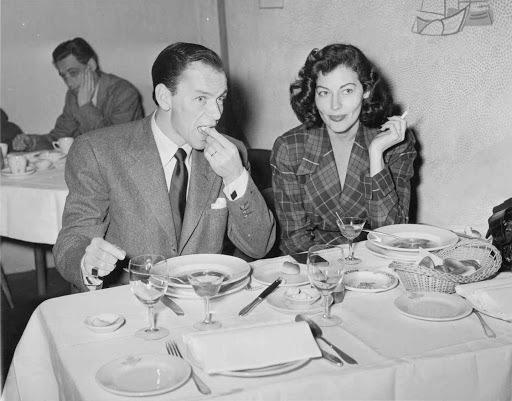
    <summary type="html"><![CDATA[<p><strong><em>Sinatra established residency at the Riverside Hotel where he sang as he filed for divorce from his first wife. </p></strong></p><img src="https://www.intermountainhistories.org/files/fullsize/1c311385456d211225d9b62d734deedf.jpg" alt="Frank Sinatra and Ava Gardner" /><br/><p>The Riverside Hotel became a temporary home to many as the divorce colony blossomed. Its walls evolved and expanded over the 20th century. In 1951, Frank Sinatra came to establish a Nevadan residence to divorce his first wife and sang at the Riverside Hotel during his stay.</p><p>Years before his 1951 divorcee debut in Reno, a twenty four year-old Frank and nineteen year-old Nancy were wed thousands of miles away from the Riverside Hotel. Young Frank and Nancy Sinatra were married in 1939 just as Frank was beginning to sing in a successful band. </p><p>The two were married for eleven years and had three children. Eventually Frank’s fame grew and rumors of infidelity spread. Over time, one extramarital relationship took on greater importance in Sinatra’s life than all the others. Sinatra sought a divorce from Nancy in 1950 per his lover Ava Gardner’s request. On February 14, 1950, Nancy and Frank announced their intent to divorce. His journey towards Reno began.  </p><p>The once humble and now legendary Frank Sinatra arrived in Nevada on August 9, 1951. Newspapers across the country and around the world bore his name that day, announcing his movement towards divorce. While he established residency, his voice filled the Riverside Hotel for six weeks as he performed for visitors and residents. Frank did not come alone, however. On August 18th, a familiar brunette arrived at Lake Tahoe to stay with friends. From that day, Sinatra was accompanied by his new love interest and intended wife, Ava Gardner. </p><p>Complexity filled Sinatra’s time at the Riverside Hotel. His ties to the mob intensified as Lucky Luciano, a known mob member, visited Sinatra in the gambling town. Evidently, Sinatra mingled with the famous and the infamous while seeking the usual Reno cure. Clark Gable also visited Sinatra in August. This visit to the divorce haven spurred questions of Gable’s own intent to divorce. </p><p>Newspapers across the country noted Sinatra’s schedule while residing in the divorce capital. The Des Moines Tribune noted on August 24, that Ava Gardner, Clark Gable, and Frank Sinatra had plans to go on a fishing trip together. </p><p>Gable and Sinatra also spent time at the Riverside Casino. Their time was documented by newspapers that mentioned Gable’s presence and Sinatra’s lack of finances. At the time, Sinatra’s fame had been dwindling and rumors of Sinatra’s troubled financial situation mounted.</p><p>In an article documenting Gable’s presence, the Gazette also notes, “Sinatra is crooning for his supper at the Riverside.” Sinatra performed in Reno’s Riverside until August 22. Gardner and Sinatra relocated to Las Vegas for another singing engagement before he completed his six week residency at the end of September. He ultimately received his divorce in Las Vegas.</p><p>The day after Sinatra’s divorce, the duo applied for a marriage license. Some newspapers note that twenty-four hours had not passed from the time Sinatra was divorced from Nancy before applying for the marriage license with Gardner. Frank Sinatra and Ava Gardner left the Nevadan communities they’d called home to marry at Isaac Levy’s home in Pennsylvania on November 7, 1951. </p><p><em><strong><a href="https://www.intermountainhistories.org/items/show/352">For more (including 3 images) view the original article</a></strong></em></p>]]></summary>
    <published>2019-10-01T20:23:37+00:00</published>
    <updated>2026-04-17T19:32:06+00:00</updated>
    <link rel="alternate" type="text/html" href="https://www.intermountainhistories.org/items/show/352"/>
    <id>https://www.intermountainhistories.org/items/show/352</id>
    <author>
      <name>Ann Johnston, Brigham Young University</name>
    </author>
  </entry>
  <entry>
    <title type="html"><![CDATA[Judge Bartlett’s Legacy]]></title>
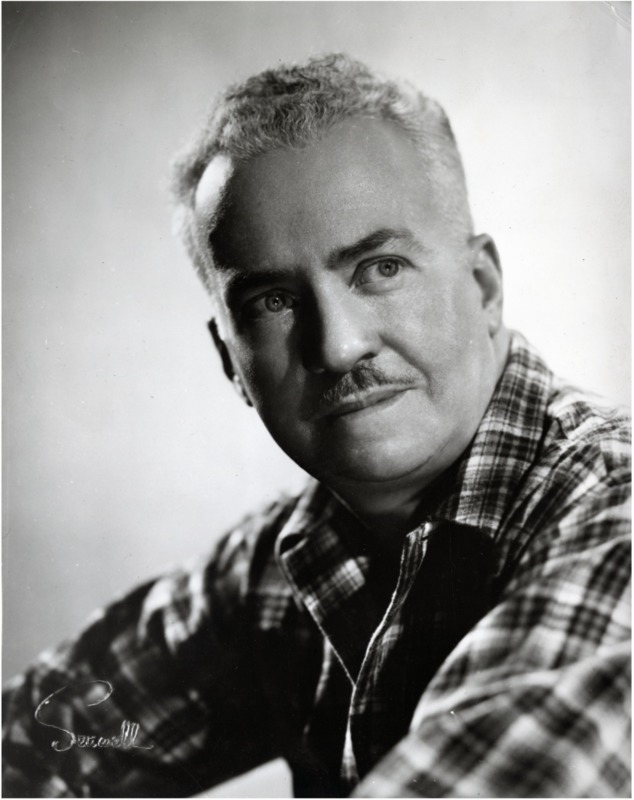
    <summary type="html"><![CDATA[<p><strong><em>A Reno judge witnessed and shaped the evolution of the Nevada divorce haven.</em></strong></p><img src="https://www.intermountainhistories.org/files/fullsize/6b37d5ae2f19cbd173ff378d9d2d0854.jpg" alt="The Cure" /><br/><p>Reno’s honorable Judge Bartlett presided over divorce proceedings and served as and attorney in the early 20th century. Bartlett was revered by his clients and received heavy criticism for his role in Reno divorces. Through his books and his presence in the community and the courtroom, Bartlett serves as an iconic symbol of Reno divorce. </p><p>George Arthur Bartlett was born in 1869, graduated from Georgetown Law in 1894, and became a district attorney of Eureka County in 1899. He also married Pearl Gates in 1899 and joined the marital institution he would later criticize. </p><p>After serving as district attorney, he represented Nevada as a House Representative in 1907. He served as a representative until 1911 and then worked as a law partner.</p><p>Bartlett first became a judge in 1918. He served in the district courts for decades where he caused Nevada’s divorce proceedings to become more lenient. As a judge, he is most widely associated with divorce, but he also married couples. After marrying a couple, he was known to ask the groom, “How much is she worth to you?” The groom might hand the judge all the money in his pockets and the judge would give that money to the bride. Judge Bartlett’s unique approach became iconic. However, in 1931, he was replaced by Judge Ben Curler after controversy over a child custody case cost him the election. </p><p>After years on the bench of the district court, Bartlett wrote a book drawing from his experience as a judge. His book “Men, Women, and Conflict” sparked controversy in questioning the efficacy of marriage. Bartlett republished the book in 1947 under a more provocative title, “Is Marriage Really Necessary?”</p><p>When he lost his seat as district judge, Bartlett turned to private practice. Through his experience as both judge and attorney in Reno, Nevada, Judge Bartlett was the divorce expert for the nation. He received streams of letters from potential divorcees asking for advice, from children pleading for the judge not to allow their parents’ divorce, and criticism for his liberal views. </p><p>Judge Bartlett’s clients often felt a strong sense of endearment to the man as evidenced by letters from high profile clients such as Tellulah Bankhead. He continued practicing law for decades and was practicing law at the time of his death.</p><p>The local newspapers reported the 81-year-old’s fall which broke his hip in March 1951. This article was followed by his obituary a few months later. He died on June 1, 1951 as a judge, attorney, U.S. representative, husband and father. </p><p>It appears Bartlett was a family man. His daughter Dorothy offered housing accommodations to his clients seeking residency. He was known to host gatherings in his home and walk his red setter dog around the town. Although he wrote criticisms of marriage and helped with the dissolution of countless marriages, Bartlett remained married to Pearl throughout his life. </p><p><em><strong><a href="https://www.intermountainhistories.org/items/show/351">For more (including 4 images) view the original article</a></strong></em></p>]]></summary>
    <published>2019-10-01T19:59:42+00:00</published>
    <updated>2026-04-17T19:32:06+00:00</updated>
    <link rel="alternate" type="text/html" href="https://www.intermountainhistories.org/items/show/351"/>
    <id>https://www.intermountainhistories.org/items/show/351</id>
    <author>
      <name>Ann Johnston, Brigham Young University</name>
    </author>
  </entry>
  <entry>
    <title type="html"><![CDATA[Reno Residence Options Evolve With Residency Law]]></title>
    <summary type="html"><![CDATA[<p><strong><em> The lowering of residency requirements caused Reno housing options to expand.</em></strong></p><img src="https://www.intermountainhistories.org/files/fullsize/d3ed162ddf5fc6fdc24f072de821c426.jpg" alt="Cornelius Vanderbilt" /><br/><p>News of Laura Corey’s divorce brought hopeful divorcees to Reno in droves. To augment the influx of divorcees and improve the state’s reputation, the state legislature voted to lengthen the time required to establish residency in 1913. The state increased the required six-month residency to one year to slow the draw of divorcees. However, amidst competing divorce havens, Nevada’s economic success came to a halt. Therefore, just two years later, in 1915, the legislature remitted the change and the six-month residency was reinstated. The divorce mecca was restored. Divorcees continued to cycle through the town throughout that decade and into the next.</p><p>The fluctuating residency requirement shifted again in 1927 as six month stays were reduced to three months. However, as the Great Depression hit, divorces around the country waned. In 1931, Nevada combatted the economic devastation by legalizing gambling and amending the state residency requirement. Suddenly, residency could be established and divorces obtained in a mere six weeks. By offering the easiest divorces and the forbidden sport of gambling, Nevada found financial respite in one of the most devastating economic crises. </p><p>With their sights on the 1927 revisions to the state’s divorce law, forthcoming hotel owners lobbied to support the reduction in residency requirement. As a result, two massive hotels were constructed to accommodate the anticipated influx of visitors. The El Cortez Hotel and the Riverside Hotel would continue to expand over the 19th-century. </p><p>This growth of housing opportunity in Reno would explode and diversify in the coming decade. After the residency requirements were shortened once again in 1931, the city’s population continued to swell and more divorcees began to briefly call Reno home. The town’s expanding population was supported by the city’s accommodations. The housing accommodations varied to fit the range of economic backgrounds flocking to the city.</p><p>The emergence of guest ranches in the 1920s offered alternative housing for Reno divorcees. In 1927, Cornelius Vanderbilt Jr. opened the luxurious Lazy Me Dude Ranch which was equipped with private baths for posh visitors like Amelia Earhart.  Lavish accommodations like Vanderbilt’s contributed to an increase in affluent visitors and Reno offered divorces to many prominent figures during the early 1930s.  In a span of three years, Dale Carnegie (1931) General MacArthur (1929), and Norman Rockwell (1930) all received Reno divorces either by their spouse’s trek to the city or by their own Reno relocation.  </p><p>Dude ranches offered housing at lower costs and subsequently offered the possibility of divorce to those with less financial security. On these ranches, labor may be required to fulfill housing costs. While some found peace and solace in a cost-effective stay on a ranch, other visitors found themselves spending their six-weeks at a luxurious six story hotel. Reno’s economic opportunity offered a variety of housing options for those seeking dicorves. While housing and entertainment expanded, the Washoe Courthouse remained Reno’s greatest attraction as the courthouse flooded with divorce decrees.</p><p><em><strong><a href="https://www.intermountainhistories.org/items/show/350">For more (including 3 images) view the original article</a></strong></em></p>]]></summary>
    <published>2019-09-28T03:14:49+00:00</published>
    <updated>2026-04-17T19:32:06+00:00</updated>
    <link rel="alternate" type="text/html" href="https://www.intermountainhistories.org/items/show/350"/>
    <id>https://www.intermountainhistories.org/items/show/350</id>
    <author>
      <name>Ann Johnston, Brigham Young University</name>
    </author>
  </entry>
  <entry>
    <title type="html"><![CDATA[Evolution of the Riverside Hotel]]></title>
    <summary type="html"><![CDATA[<p><strong><em>One prominent building built in 1870 evolved with the Reno divorce colony.</em></strong></p><img src="https://www.intermountainhistories.org/files/fullsize/d18534375041f0583d63e6790a9d418f.jpg" alt="Riverside Hotel 1880" /><br/><p>The Riverside Hotel witnessed the emergence of Reno’s divorce haven. It sits on the Truckee River and was central to Reno’s divorce history. The 20th century hotel evolved from an 1870s home.  The house was dubbed The Lake House after its owner Myron C. Lake. It was purchased by Lake’s family in 1880 and was given its famous name, Riverside. This first sale of the building would begin a long pattern of transferring ownership.</p><p>The hotel was sold again in 1896, this time to Harry Gosse. Gosse rebuilt the Riverside into an extravagant hotel. The Riverside was transformed from a home into a modern three story hotel at the turn of the 20th century. After its debut in 1907, Gosse’s hotel held prestige in the community for over a decade. The hotel had 110 rooms and touted ornate architecture amid its brick exterior. However, this grand version of the Riverside was destroyed by fire in 1922. </p><p>After the fire, the historic property was sold to George Wingfield in 1924. Wingfield found a local architect to rebuild Riverside into a six-story building. Wingfield lobbied for a shorter residency period to prepare for his hotel’s grand opening in 1927. Wingfield knew a reduction of the residency requirement from six months to three months would bring security to his massive hotel. With the legislation in place, his hotel was filled with an influx of divorcees. Just after residency was reduced, greater draw to Nevada came in 1931 with the state’s legalization of gambling. The Riverside met that legal opportunity by opening a casino in 1935. </p><p>While the Riverside Hotel’s business for gambling grew, a young divorced mother worked at a neighboring club. In the late 1930’s Jessie Beck worked at a gambling club alongside her second husband, Fred Beck. When Fred passed away in 1954, Jessie took over the games and grew to be a more prominent figure in Reno. Jessie’s decades of experience at the club prepared her with the business acumen and sense of hospitality which supported her in her 1971 purchase of the Riverside Hotel. After the three million dollar purchase, Jessie added her name to the hotel’s signage after purchasing the hotel. </p><p>The Riverside Hotel lays claim to many different owners. Through reconstruction and sell outs, the hotel maintains a legacy for the people it housed throughout Reno’s time as a divorce haven. George Wingfield had sold the building in 1955 in the height of Reno’s divorce haven heyday. He had owned the hotel as the residency period shortened in 1931 and sold before other states lessened obstacles to divorce in the 1960’s. By Jessie Beck’s death in 1987, the city had entirely lost its national draw as a divorce haven. The Riverside hotel serves as a monument to housing and hospitality for divorcees throughout Reno's history. </p><p><em><strong><a href="https://www.intermountainhistories.org/items/show/349">For more (including 7 images) view the original article</a></strong></em></p>]]></summary>
    <published>2019-09-28T02:45:38+00:00</published>
    <updated>2026-04-17T19:32:06+00:00</updated>
    <link rel="alternate" type="text/html" href="https://www.intermountainhistories.org/items/show/349"/>
    <id>https://www.intermountainhistories.org/items/show/349</id>
    <author>
      <name>Ann Johnston, Brigham Young University</name>
    </author>
  </entry>
  <entry>
    <title type="html"><![CDATA[President of U.S. Steel Gets Renovated]]></title>
    <summary type="html"><![CDATA[<p><strong><em>Prominent figure Laura Corey filed for divorce in Reno and brought the national spotlight to the divorce haven. </em></strong></p><img src="https://www.intermountainhistories.org/files/fullsize/0243116008dcc5c4bdabb5fc0863d05b.jpg" alt="Laura Corey" /><br/><p>Reno first met Laura Corey in December 1905 as she came seeking a divorce from her husband. William Ellis Corey was President of U.S. Steel and previously the president of the Carnegie Steel Company. Laura and William had married in 1883 with meager financial conditions but the president of U.S. Steel had left Laura for actress Mabelle Gilman. </p><p>At this prominent woman’s arrival in Reno, rumors began circulating that William and Laura Corey’s marriage would soon be 'Renovated,' a term later used to describe a Reno divorce. </p><p>The Corey family was a prominent one. The news spread of Laura Corey’s relocation to a place widely known to draw those seeking a divorce. Subsequently, newspapers across the country began following Mrs. Corey and cast predictions of an imminent divorce. Once Corey’s intent to divorce was confirmed, newspapers around the country highlighted Reno. Laura Corey’s quickie divorce propelled the city’s reputation as a divorce capital. </p><p>In the early 1900’s, Nevada law required a six-month stay to establish residency. Once an individual had obtained residency, they could seek a Nevada divorce. </p><p>While in Nevada, Laura Corey and her son Alan Corey were joined by her sister-in-law, Miss Ada Corey. Ada and Laura Corey seemed to  immerse themselves in the community, according to local newspapers. Laura Corey and her son resided at the elegant R. L. Fulton Home. </p><p>Relocating across the country for six months generated great expense. However, with her means, Corey experienced a comfortable stay in Reno. In 1900, those who could migrate to obtain a Reno divorce had wealth and means. Over  time, with transportation advances and Reno’s developing accommodations, middle class Americans could come to sever their marital ties. </p><p>Laura Corey filed for divorce on June 11, 1906 and the trial would take place on the last day of July. On July 24th, William Ellis’ family flocked to Reno for the divorce proceedings and testified in favor of Laura. </p><p>The divorce hearing was held at ten o’clock in the morning on Monday, July 31, 1906. Laura Corey had solicited the legal help of an east-coast attorney for her divorce. However, in coming years the city of Reno would swell with capable divorce attorneys. Laura was awarded $3 million in the divorce settlement. Crowds of newspapermen surrounded the Washoe County Courthouse to catch the first sight of the newly-divorced Corey. </p><p>In the wake of the divorce, a newspaper in the Corey’s home state of Pennsylvania noted, “The Carnegie Steel Company will drill a well 6000 feet. What an excellent hole for President Corey to crawl into.” The nation’s eyes were rested upon the Corey’s and the pains of such a public divorce. However, this publicity ultimately supported divorce migration to Reno for years to come. </p><p><em><strong><a href="https://www.intermountainhistories.org/items/show/348">For more (including 3 images) view the original article</a></strong></em></p>]]></summary>
    <published>2019-09-28T02:32:40+00:00</published>
    <updated>2026-04-17T19:32:06+00:00</updated>
    <link rel="alternate" type="text/html" href="https://www.intermountainhistories.org/items/show/348"/>
    <id>https://www.intermountainhistories.org/items/show/348</id>
    <author>
      <name>Ann Johnston, Brigham Young University</name>
    </author>
  </entry>
  <entry>
    <title type="html"><![CDATA[Russell’s Renovation]]></title>
    <summary type="html"><![CDATA[<p><strong><em>The divorce of a British Earl in 1901 brought Reno international attention for easy divorces.</em></strong></p><img src="https://www.intermountainhistories.org/files/fullsize/821f45bf9e1973e59264f5b6ff07f564.jpg" alt="[Untitled]" /><br/><p>At the dawn of the 20th century, Nevada’s divorce laws required six months to establish state residency and offered seven grounds for divorce. The state’s liberal divorce laws and ease for establishing residency drew interest across the world, including a British Earl hoping to be remarried. John Francis Stanley Russell’s migration to Nevada sparked an international reputation for the budding divorce industry. Russell was a member of the House of Lords and a member of British royalty. He arrived in Glenbrook, Nevada in 1899 with Mollie Somerville. He and Mollie maintained a six-month state residency in the Glenbrook House on Lake Tahoe.</p><p>Six months later, in the spring of 1900, the Earl received his divorce. Judge Ben Curler served as the judge for Russell’s divorce in the city of Genoa. The judge then accompanied the couple to Reno where the trio ventured to Riverside Hotel. Three days after the Earl’s April 12th divorce, Curler officiated the wedding of Mollie Somerville and Earl Russell. After the marriage, the newlyweds returned to England where legal trouble ensued.</p><p>In 1895, before the Earl’s divorce migration, his first wife Mabel had sought judicial separation from the Earl which was denied her but eventually granted to the Earl as he brought up charges against his wife. Though legally separated, the two were not divorced in England’s eyes. This difference of legality between countries sparked intrigue to the efficacy of Nevada divorces. </p><p>While Russell’s Nevadan divorce was not recognized, his Nevada marriage to Mollie was recognized. The Earl was arrested for bigamy on June 17, 1900. He was tried before the House of Lords, the chamber of Parliament of which he was part, and sat before his peers in judgement. The American judge who ruled Russell’s divorce and married the two divorcees in Nevada, Judge Curler, was summoned to England to testify for the prosecution. Russell pleaded guilty to the charges and was sentenced to three months in prison. For the rest of his life, Russell worked to reform British divorce laws though he would not see his advocacy realized. In part due to the legal attention of an imprisoned English Lord, Russell’s global migration for divorce cast the eyes of the world to Reno’s tolerant divorce laws and this media attention served as a catalyst to the emerging divorce haven.</p><p><em><strong><a href="https://www.intermountainhistories.org/items/show/347">For more (including 5 images) view the original article</a></strong></em></p>]]></summary>
    <published>2019-09-28T02:18:16+00:00</published>
    <updated>2026-04-17T19:32:06+00:00</updated>
    <link rel="alternate" type="text/html" href="https://www.intermountainhistories.org/items/show/347"/>
    <id>https://www.intermountainhistories.org/items/show/347</id>
    <author>
      <name>Ann Johnston, Brigham Young University</name>
    </author>
  </entry>
  <entry>
    <title type="html"><![CDATA[Making the Divorce Capital of the World]]></title>
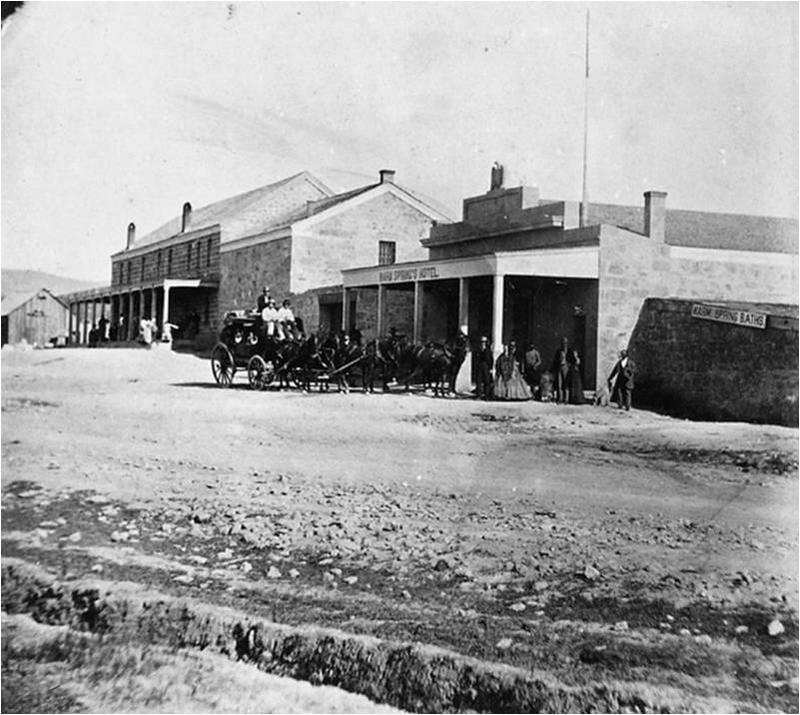
    <summary type="html"><![CDATA[<p><strong><em>Divorce blossomed in the American west though the emergence of Nevada’s statehood and lenient divorce laws.</em></strong></p><img src="https://www.intermountainhistories.org/files/fullsize/aba27889d61cd8ebc9fc597b5042952b.jpg" alt="The Warms Springs Hotel" /><br/><p>For the majority of the 20th century, Reno, Nevada served as the divorce capital of the world. The state offered easy divorce requirements at a time when most states discouraged divorce through complex legal barriers. Nevada’s comparatively lax requirements for divorce demonstrated the early evolution to normality of divorce evident today.  </p><p>Modern divorce stems from ancient Rome.  Romans bore liberal views of divorce when compared to the strict marital laws of England that are most evident in chaotic attempts by English ruler Henry the VIII to be released from marriage. While King Henry and his many wives received annulments rather than divorces, 1,500 years earlier Romans allowed men and women to seek divorce. English and Roman precedents bore lasting influence on world perspectives of ending marital commitments. </p><p>Hundreds of years after King Henry’s marital discords, a country emerged across the sea. America held a flourishing population and new marital laws. American divorce was bred by Roman and English influences but took innovative turns. In the early 20th century, American states held varied qualifications for divorce. Many states held extensive requirements to prevent divorce, New York being the most extreme.  New York demanded evidence of adultery for grounds for divorce. Others states like Nevada offered comparative ease of nuptial dissolution. One Colorado newspaper noted Nevada’s lenient laws on their front page, “extreme stinginess is considered a sufficient cause for divorce in Nevada court.” </p><p>Interstate influences were paramount in developing the divorce haven. Nevada’s lenient divorce law drew from Utah’s divorce traditions. The neighboring Utah territory held liberal qualifications like “incompatibility” as grounds for divorce. These lenient divorce requirements accommodated women trying to leave unhappy polygamous situations. However, so liberal was Utah’s divorce law, Nevada dropped Utah’s no-fault divorce in their adaptation of divorce law. Although Utah offered more liberal divorces, Nevada welcomed more out of state divorcees who could obtain residency more easily. This low residency requirement fostered  the migratory divorce trade and opened Nevada’s lenient divorces to unhappy couples all over the country.</p><p>The territory’s first legislature met and established foundational laws between October and November of 1861 in the upper room of the Warm Springs Hotel. The hotel was located in the recently established legislative city of Carson City which would become the state capital. When the state of Nevada emerged in 1864, the divorce laws bore minimal changes from those established in the territory’s 1861 legislature.  </p><p>Nevada’s liberal grounds for divorce drew divorce tourism which offered economic growth for the western territory. In offering a unique ease of dissolution to marriage, Nevada found economic growth in providing a home to the divorce tourists. Nevada encouraged a divorce migration by pairing liberal grounds for divorce with short residency requirements to allow people from other states to benefit from the state’s liberal divorce laws. With easier divorcements and quick residency, many unhappy wives and husbands came flocking to the city of Reno which teemed with housing and cultural accommodations for divorcees.</p><p><em><strong><a href="https://www.intermountainhistories.org/items/show/346">For more (including 3 images) view the original article</a></strong></em></p>]]></summary>
    <published>2019-09-28T02:00:38+00:00</published>
    <updated>2026-04-17T19:32:06+00:00</updated>
    <link rel="alternate" type="text/html" href="https://www.intermountainhistories.org/items/show/346"/>
    <id>https://www.intermountainhistories.org/items/show/346</id>
    <author>
      <name>Ann Johnston, Brigham Young Universty</name>
    </author>
  </entry>
</feed>