<?xml version="1.0" encoding="UTF-8"?>
<feed xmlns="http://www.w3.org/2005/Atom">
  <title type="text">Intermountain Histories</title>
  <updated>2026-08-18T16:00:16+00:00</updated>
  <generator uri="http://framework.zend.com" version="1.12.20">Zend_Feed_Writer</generator>
  <link rel="alternate" type="text/html" href="https://www.intermountainhistories.org/"/>
  <link rel="self" type="application/atom+xml" href="https://www.intermountainhistories.org/items/browse?output=rss2"/>
  <id>https://www.intermountainhistories.org/</id>
  <author>
    <name>Intermountain Histories</name>
    <uri>https://www.intermountainhistories.org</uri>
  </author>
  <link rel="hub" href="https://pubsubhubbub.appspot.com/"/>
  <entry>
    <title type="html"><![CDATA[Rocky Mountain Herbarium]]></title>
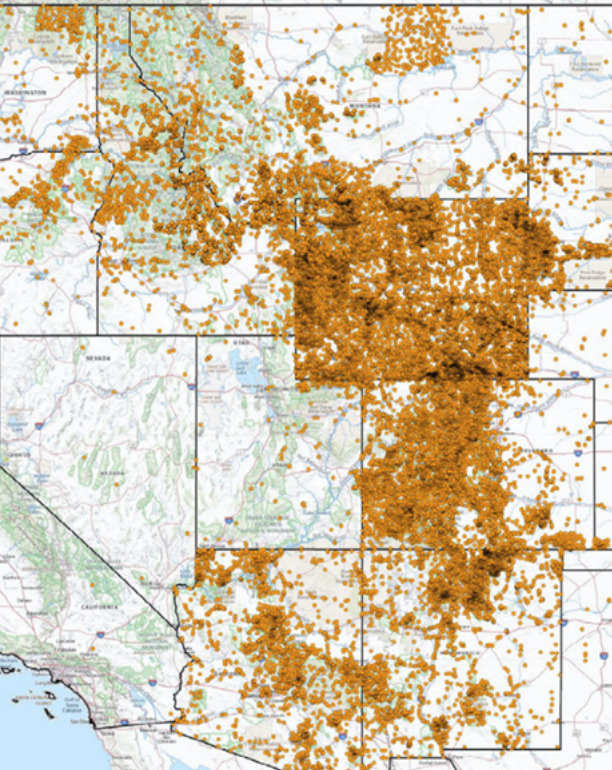
    <summary type="html"><![CDATA[<p><strong><em>Aven Nelson was originally an English professor but was unexpectedly thrust into the world of botany after being hired at the University of Wyoming in 1893. He discovered a passion for the subject, eventually leading to the creation of the Rocky Mountain Herbarium. Over the years, the herbarium has assembled a collection of 1.3 million specimens through extensive collection efforts and collaborations.</em></strong></p><img src="https://www.intermountainhistories.org/files/fullsize/a9b0acfa38d3d30d1c75600955782178.jpg" alt="Rocky Mountain Herbarium collection sites" /><br/><p><span style="font-weight:400;">The Rocky Mountain Herbarium is at the University of Wyoming in Laramie, Wyoming. Aven Nelson, one of the original faculty members,  established the herbarium in 1893. The university initially hired Nelson as an English professor, but the board of directors made him the biology professor when the school mistakenly employed two English professors. This position led to Nelson discovering his passion for botany. His interest in botany grew as he assisted the university's resident plant expert, Burt Buffum, in identifying plant samples for the Chicago World's Fair in 1893. Nelson's journey in botany continued with his exploration into the Yellowstone National Park in 1899. His journey gained him respect within the botany field, leading to the official establishment of the herbarium as part of the University of Wyoming, with Nelson as its curator. He named it </span><i><span style="font-weight:400;">The Rocky Mountain Herbarium.</span></i><span style="font-weight:400;"> Nelson later became the president of the American Society of Plant Taxonomists and Botanical Society of America and the president of the University of Wyoming from 1918 to 1922.</span></p><p><span style="font-weight:400;">       Following Nelson's resignation in 1930, the herbarium experienced additional growth with the installation of the W. G. Solheim Mycological Herbarium. Added to the herbarium by the head of the university botany department, Dr. Wilhelm G. Solheim, it was Solheim's personal collection of fungi. With 48,000 fungi specimens, it is the largest collection of fungi globally. In 1960, the herbarium collection, comprising around 265,000 samples, moved to the Aven Nelson Memorial Building. Initially constructed as the university's first library in 1923, the building provided a new home for the expanding herbarium. The herbarium collection further grew in 1982 when the US Forest Service National Herbarium (USFS), founded in Washington, D.C., granted an indefinite loan of 120,000 plant specimens. Between the Rocky Mountain Herbarium's personal collection, W. G. Solheim Mycological Herbarium, and the collaboration with the USFS, the herbarium archives now contain over 1.3 million plant samples. This collection has earned the reputation of being one of the largest herbariums between St. Louis and the West Coast.</span></p><p><em><strong><a href="https://www.intermountainhistories.org/items/show/821">For more (including 4 images) view the original article</a></strong></em></p>]]></summary>
    <published>2024-05-21T21:49:59+00:00</published>
    <updated>2026-04-17T19:32:18+00:00</updated>
    <link rel="alternate" type="text/html" href="https://www.intermountainhistories.org/items/show/821"/>
    <id>https://www.intermountainhistories.org/items/show/821</id>
    <author>
      <name>Cristal A. DeSantiago, Northern Arizona University</name>
    </author>
  </entry>
  <entry>
    <title type="html"><![CDATA[The Ivinson Mansion and Laramie Plains Museum]]></title>
    <summary type="html"><![CDATA[<p><strong><em>Located in Laramie, Wyoming, the Ivinson Mansion was aptly renamed to the Laramie Plains Museum. Used as a home by the Ivinson family, a school for girls, and now as a museum, the mansion gives insight into many facets of life of frontier living in early U.S. history. </em></strong></p><img src="https://www.intermountainhistories.org/files/fullsize/b37d172bb9c50d9e76fa504c25c064f5.jpg" alt="Ivinson Mansion - Laramie Wyoming 2012
" /><br/><p>Edward Ivinson was born in 1830 in the Virgin Islands. At the age of twenty-three, he married the English-born Jane Wood. They moved to Laramie City in 1868 where the family helped establish numerous local ventures. In 1868, Edward Ivinson ran a grocery store—where the family held church services in the backyard of the store. Edward Ivinson bought the local bank in 1871 and used the funds to help establish the city’s courthouse five years later. With money from Ivinson’s successful business ventures, the family started construction on their mansion in 1892. After Jane’s death in 1914, Edward contributed $50,000 to build a hospital and donated money to local churches. In 1921, Edward donated his home to the Episcopal Missionary District of Wyoming. The church used the home as a school for local girls who could not travel to school elsewhere. As transportation became easier, the school closed in 1958. The building stood empty until 1972 when the Laramie Plains Museum Association bought the mansion.</p><p>Contracted by Frank Cook and designed by Salt Lake City architect W.E. Ware, the mansion originally featured central heating, electric lights, and running water. The 11,726-square-foot mansion cost $40,000 to build. It has characteristics of the Queen Anne architectural style with steeply pitched, irregular roof shapes, a prominent, front-facing gable, patterned roof shingles, and towers (one square and the other octagonal). The masonry on the walls varies in color and texture with carved ornamentation and patterned horizontal siding. The towers create an asymmetrical facade, and a porch is centered at the front of the home. Jane Ivinson influenced the interior decorating, favoring furnishings and fixtures from Chicago and stained-glass windows.</p><p>The Laramie Plains Museum Association (LPMA) bought the mansion in 1972. That same year, the government listed the mansion on the National Register of Historic Places. The LPMA has spent the past thirty-seven years restoring and caring for the mansion to return it to its original splendor. Guides offer tours 1:00 – 4:00 PM Tuesdays through Saturdays. During the summer, the museum is open 9:00 AM – 5:00 PM Tuesdays through Thursdays and Sunday afternoons. The Girls’ School built the Alice Harvey Stevens Center as a gymnasium, and now it can be rented for weddings, classes, parties, and other community events. The mansion and the grounds can also be rented for similar events. </p><p><em><strong><a href="https://www.intermountainhistories.org/items/show/237">For more (including 5 images) view the original article</a></strong></em></p>]]></summary>
    <published>2018-06-19T22:44:00+00:00</published>
    <updated>2026-04-17T19:32:03+00:00</updated>
    <link rel="alternate" type="text/html" href="https://www.intermountainhistories.org/items/show/237"/>
    <id>https://www.intermountainhistories.org/items/show/237</id>
    <author>
      <name>Megan Nolan, Northern Arizona University</name>
    </author>
  </entry>
  <entry>
    <title type="html"><![CDATA[JFK at the University of Wyoming War Memorial Fieldhouse: Story 1 of 5 of the John F. Kennedy’s Conservation Tour in September, 1963 Tour]]></title>
    <summary type="html"><![CDATA[<p><strong><em>The first public speech delivered by President John F. Kennedy in the Intermountain West focused on the diversity of the state of Wyoming and the importance of the youth’s contribution in protecting the country’s invaluable resources. The President was determined to continue the great conservation movement of the early 1900s.</em></strong></p><img src="https://www.intermountainhistories.org/files/fullsize/c168ced43c79b62f07fc2ada587b7e75.jpg" alt="Conservation Tour of Western States: Montana, Billings: President Kennedy Addressing and Greeting Crowd at Yellowstone County Fairgrounds" /><br/><p>The University of Wyoming War Memorial Fieldhouse was President Kennedy’s first stop in the Intermountain West during his 1963 Conservation Tour. The President arrived at the University at 12:45 p.m. on Wednesday, September 25. At 12:50 p.m., he was ready to address the audience.</p><p>Each speech made by John F. Kennedy during the Conservation Tour addressed specific needs and characteristic features of the place where it was given, and the University of Wyoming was not an exception. In the first part of his speech, JFK focused on the key role of universities in educating new generations and developing the talents of the United States of America. He addressed the students directly, emphasizing the importance of their invaluable service to their state and to the country. Kennedy then addressed the diversity of Wyoming and pointed out the importance of public investment in protecting and expanding the resources of the state and the whole county. The President talked about the protection of all nonrenewable resources (coal, oil) and mentioned the steps that should be taken in developing new resources, including ocean and space. He emphasized the importance of understanding of the environment and its value and suggested changing the whole concept of conservation. The contribution of the youth in conservation and the protection of the resources across the United States was crucial to ensure that future generations lived in a strong and prosperous country.</p><p>Kennedy then focused on the importance of maintaining the military and economic strength of the United States. In order to hold leading positions in the world, as well as protect their quality of life, Americans needed to use science and technology to not only protect the environment, but also to develop new energy sources, especially nuclear power plants. Like in almost all of his speeches during the Conservation Tour, Kennedy emphasized the importance of helping other countries of the world, encouraging mutual understanding between the Americans and the representatives of other nations. </p><p>JFK pointed out the contribution of Presidents Theodore Roosevelt and Franklin Delano Roosevelt in the conservation of natural resources in the first half of the twentieth century. Praising the great conservation movement of the 1900s, John F. Kennedy declared himself to be in favor of the third wave of conservation in the United States. </p><p>At 1:25 p.m. on September 25, 1963, John F. Kennedy departed the University of Wyoming Fieldhouse for his next stop in the Intermountain West. </p><p>Today, the University of Wyoming is a nationally recognized research institution. The War Memorial Fieldhouse located on the campus of the university is a 5,000 seat multi-purpose arena, which opened in 1951 along with the War Memorial Stadium.</p><p><em><strong><a href="https://www.intermountainhistories.org/items/show/221">For more (including 4 images) view the original article</a></strong></em></p>]]></summary>
    <published>2018-06-13T16:48:01+00:00</published>
    <updated>2026-08-18T16:00:16+00:00</updated>
    <link rel="alternate" type="text/html" href="https://www.intermountainhistories.org/items/show/221"/>
    <id>https://www.intermountainhistories.org/items/show/221</id>
    <author>
      <name>Anastasiia Shuvaeva, Northern Arizona University</name>
    </author>
  </entry>
</feed>
