<?xml version="1.0" encoding="UTF-8"?>
<feed xmlns="http://www.w3.org/2005/Atom">
  <title type="text">Intermountain Histories</title>
  <updated>2026-04-17T19:32:19+00:00</updated>
  <generator uri="http://framework.zend.com" version="1.12.20">Zend_Feed_Writer</generator>
  <link rel="alternate" type="text/html" href="https://www.intermountainhistories.org/"/>
  <link rel="self" type="application/atom+xml" href="https://www.intermountainhistories.org/items/browse?output=rss2"/>
  <id>https://www.intermountainhistories.org/</id>
  <author>
    <name>Intermountain Histories</name>
    <uri>https://www.intermountainhistories.org</uri>
  </author>
  <link rel="hub" href="https://pubsubhubbub.appspot.com/"/>
  <entry>
    <title type="html"><![CDATA[Rebranding Mount Doane to First Peoples Mountain in Yellowstone]]></title>
    <summary type="html"><![CDATA[<p><strong><em>Mount Doane, a prominent mountain in Yellowstone National Park, was named in honor of Lt. Gustavus Doane, an early explorer of the park. However, his mistreatment of Native people has led the park to collaborate with Native communities to rename the peak First Peoples Mountain. </em></strong></p><img src="https://www.intermountainhistories.org/files/fullsize/890b4c397eef6073bf635775a998d2aa.jpg" alt="Mounts Doane and Stevenson, east of southwest arm of Yellowstone Lake" /><br/><p>Lieutenant Gustavus C. Doane ventured through Yellowstone National Park in the early 1870s on a commission by the United States government to explore the western territory. In 1871, the Hayden Geological Survey named a prominent mountain after the military leader, effectively preserving his legacy. Mount Doane stood as a monument to the lieutenant’s efforts and exploration in the West. But this narrative by the Geological Survey left much untold. </p><p>Doane participated in several conflicts with Native people including the Sioux War, the Nez Perce War, and the Apache Campaign in the years leading up to his exploration of Yellowstone. In 1870, he led an attack against the Piikani/Piegan Blackfeet, now known as the Marias Massacre. On January 23, 1870, the United States Army attacked Chief Heavy Runner’s Piegan village at dawn, killing some 173 people, including elderly and children. The camp had been ravaged by smallpox, leaving them defenseless. Such an atrocity went unacknowledged while Mount Doane stood as a legacy to one of the men who perpetrated it. </p><p>To better represent Indigenous peoples and their histories, Yellowstone National Park sought to change the name of Mount Doane and other controversially named sites. The park reached out to organizations like the Rocky Mountain Tribal Council and the Wyoming Board of Geographic Names. In collaboration with and recommendations by these groups, the National Park Service changed the peak’s name to First Peoples Mountain on June 9, 2022. With a vote of 15-0 in support of the change by the US Board on Geographic Names, the mountain became a monument to the memory of the people killed in the Marias Massacre. This change marks an important shift in the ways Indigenous peoples are represented in the historical narrative and historical memory. </p><p><em><strong><a href="https://www.intermountainhistories.org/items/show/855">For more (including 2 images) view the original article</a></strong></em></p>]]></summary>
    <published>2024-09-25T04:33:01+00:00</published>
    <updated>2026-04-17T19:32:19+00:00</updated>
    <link rel="alternate" type="text/html" href="https://www.intermountainhistories.org/items/show/855"/>
    <id>https://www.intermountainhistories.org/items/show/855</id>
    <author>
      <name>Lauren Barney, Brigham Young University</name>
    </author>
  </entry>
  <entry>
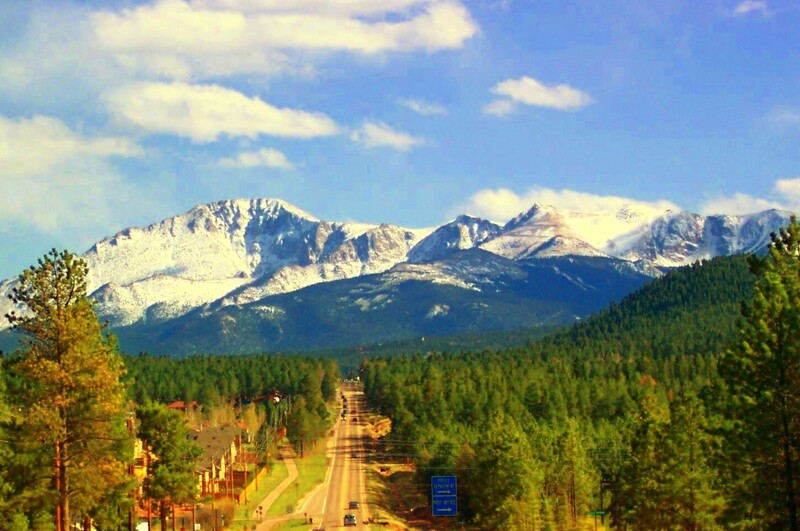
    <title type="html"><![CDATA[“Purple Mountain Majesties”: Why Pikes Peak is America’s Mountain]]></title>
    <summary type="html"><![CDATA[<p><strong><em>Pikes Peak has a long and valuable history that provides visitors with a look through different ages of America, highlighting the beauty and diversity of the land and people. </em></strong></p><img src="https://www.intermountainhistories.org/files/fullsize/fabf35ca83b85ec7549a243f9e4cbd07.jpg" alt="Pikes Peak" /><br/><p><span style="font-weight:400;">With incredible height, diversity, age, and beauty, Pikes Peak towers above at an astounding 14,115 feet, making it one of the tallest mountains in the United States. Many, if not all, Americans have heard the moving lyrics to “America the Beautiful,” but few know that Pikes Peak was the inspiration for the song. Pikes Peak has long been the subject of ballads of beauty and adventure, as well as a symbol of hope and freedom for many throughout American history. </span>
<span style="font-weight:400;">The peak itself has undergone a variety of “discoveries” throughout the different ages of settlement. Some of the first people believed to have discovered and lived near Pikes Peak were the Clovis people yet not much is known or recorded of their experience. However, the histories of many Native peoples’ lifestyles, religions, and legends centered around the peak. The Utes, or the Tabeguache, believed the mountain itself was a sacred site where the Great Spirit created the earth and where many ceremonies were held. </span>
<span style="font-weight:400;">The Spanish were the first Europeans to discover the peak in 1779 and named it “El Capitán,” or “The Captain,” due to the imposing nature of the peak. With the completion of the Louisiana Purchase, the French sold vast tracts of land to the United States of America. In an effort to appraise the land and resources the United States had obtained, President Jefferson sent out several different expeditions to explore and record the areas. It was not until 1806 that Zebulon Pike, the first American explorer who dubbed the mountain Pike’s Peak, came to the Colorado area and attempted to hike the peak. The expedition failed to summit it because they were not prepared for the weather, and the peak remained an alluring call for explorers to attempt to conquer. </span>
<span style="font-weight:400;">Pikes’ writing on his expedition, including the details about the imposing mountain, were published in several languages and widely distributed due to their fame and the public’s interest in the unexplored West. In his writings, Pike referred to the peak as the “the Grand Peak” or simply, “highest peak.”  In 1820, Dr. Edwin James made the first recorded ascent. Later in its history, a variety of media featuring Pikes Peak attracted settlers and spurred further western migration. The phenomenon started with miners and spectators with the discovery of gold and gradually drew more settlers with large plots of grazing land and a tourism industry. Pikes Peak influenced the early formation of American identity and still manages to inspire those who visit today.</span></p><p><em><strong><a href="https://www.intermountainhistories.org/items/show/747">For more (including 5 images) view the original article</a></strong></em></p>]]></summary>
    <published>2023-04-11T18:29:54+00:00</published>
    <updated>2026-04-17T19:32:16+00:00</updated>
    <link rel="alternate" type="text/html" href="https://www.intermountainhistories.org/items/show/747"/>
    <id>https://www.intermountainhistories.org/items/show/747</id>
    <author>
      <name>Addie Coombs, Brigham Young University</name>
    </author>
  </entry>
  <entry>
    <title type="html"><![CDATA[Wendover Will]]></title>
    <summary type="html"><![CDATA[<p><strong><em>The Wendover Will mechanical cowboy stands as an iconic landmark of Wendover, Nevada. Wendover Will’s construction was a feat of advanced mechanical engineering for the time, and represents the lengths Americans were willing to go to in order to drive tourism, business, and growth to small western towns in the early-to-mid-20th century.</em></strong></p><img src="https://www.intermountainhistories.org/files/fullsize/27278f4a0e6c58a666a7517646bbcd83.jpg" alt="Wendover Will " /><br/><p><span style="font-weight:400;">The city of Wendover, Nevada sits on the border of Utah and Nevada. It houses the Wendover airfield, home to many World War II relics. Wendover also lies next to the Bonneville Salt Flats, a popular camping site for many Utahns and Nevadans. However, none of these sites are quite as eye-catching as the 63-feet-tall neon cowboy that rises over the city. “Wendover Will,” dubbed the World’s Largest Mechanical Cowboy, was named after</span> <span style="font-weight:400;">Mr. William “Bill” Smith, the founder of the city. In 1926 he established a service station in the area to help travelers on what is now the I-80. His meager establishment grew into a thriving gambling city when the city of Wendover was founded in July 1991. </span>
<span style="font-weight:400;">One of the early landmarks in Wendover was a large electric pole similar to those in Las Vegas. A light flashed on top of the pole to alert travelers to the presence of Smith’s service station. The electric pole remained a signature feature of the town as it grew from a service station meant to serve passersby to a town full of hotels, casinos, and cafes. Due to Wendover’s rapid expansion, the residents of the town felt they needed a fun attraction besides the casinos to encourage tourism. In 1951, construction began on the electric light pole as the Young Electric Sign Company converted it into Wendover Will. The company completed construction of Wendover Will in the spring of 1952, which was no small feat and included Will’s height at 63-feet-tall, a large cowboy hat, a gun in his holster, and a cigarette in his mouth. One enormous hand points to the town while the other beckons to the approaching freeway travelers. Both arms are powered by a ¾ motor and the monument has 1,184 feet of neon lights and tubing that enable it to be seen from miles away. For a monument created in 1952, this was ahead of its time in mechanical engineering. </span>
<span style="font-weight:400;"> Wendover Will made history in the “Guinness Book of World Records” as the “Largest Mechanical Cowboy in the Entire World, ” beating his rival, Vegas Vic, a similar neon cowboy on the Las Vegas strip. Wendover Will continues to appeal to the people on the Nevada-Utah border, welcoming all who travel through along I-80.</span></p><p><em><strong><a href="https://www.intermountainhistories.org/items/show/737">For more (including 3 images) view the original article</a></strong></em></p>]]></summary>
    <published>2023-04-06T17:30:50+00:00</published>
    <updated>2026-04-17T19:32:16+00:00</updated>
    <link rel="alternate" type="text/html" href="https://www.intermountainhistories.org/items/show/737"/>
    <id>https://www.intermountainhistories.org/items/show/737</id>
    <author>
      <name>Isaac Rex, Brigham Young University</name>
    </author>
  </entry>
  <entry>
    <title type="html"><![CDATA[The Escalante Cross: A Reminder of Utah&#039;s Past]]></title>
    <summary type="html"><![CDATA[<p><strong><em>The Declaration of Independence was not the only progress to be made in America in the year 1776. Spanish explorers Dominguez and Escalante became known as the first Europeans to document travels in what would become Utah Territory. Their initial intention to convert Natives on their journey towards California made way for future explorers to discover the Utah Territory.</em></strong></p><img src="https://www.intermountainhistories.org/files/fullsize/b81d7023fc173daf29504bcf4bd4178b.jpg" alt="Dominguez Plaque" /><br/><p><span style="font-weight:400;">In 1776, two Spanish friars, </span><span style="font-weight:400;">Silvestre Vélez de</span><span style="font-weight:400;"> Escalante and </span><span style="font-weight:400;">Atanasio</span><span style="font-weight:400;"> Dominguez, chose to traverse the American West in search of a northern route to the missions of California. At the time, both Mexico and Spain claimed ownership of the territory. The journey became known for its historical success thanks to Escalante’s journal, which contains the first map of Utah. Beginning the exploration in Santa Fe,  Dominguez and Escalante observed and recorded landmarks that would help future explorers find their way. These recordings also helped governments know and understand the rich opportunities that lay in these lands. The journey was full of dangers for the small group, and they crossed many western states such as Utah, Colorado, and Arizona, among others. The explorers ventured through modern-day Dinosaur National Monument, down through Strawberry, Utah and eventually made their way through Spanish Fork Canyon. This path directly influenced the erection of Escalante’s Cross in Spanish Fork, Utah. </span>
<span style="font-weight:400;">These two Spanish missionaries paved the way for other explorers such as John C. Fremont to encourage The Church of Jesus Christ of Latter-Day Saints to one day settle in Utah. Escalante’s cross, located in Spanish Fork, was dedicated May 1, 1981, sponsored by The Knights of Columbus Father Escalante Council to honor Dominguez and Escalante’s expedition. It was recently restored on October 31, 2015 thanks to a member of the Woodland Hills Scout Troop’s Eagle project. The cross majestically overlooks the entrance to Spanish Fork Canyon and stands brilliantly white against the mountain range beyond. </span>
<span style="font-weight:400;">Today, the site seems like an almost forgotten piece of history. However, one sign remains in the form of a plaque at the base of the cross. It has become a beloved hike here in Utah because of the landscape’s beautiful greenery and various paths leading from the cross. Escalante Cross stands as a reminder to Utah residents of earlier explorers who literally put Utah on the map. </span></p><p><em><strong><a href="https://www.intermountainhistories.org/items/show/733">For more (including 3 images) view the original article</a></strong></em></p>]]></summary>
    <published>2023-04-05T19:50:24+00:00</published>
    <updated>2026-04-17T19:32:16+00:00</updated>
    <link rel="alternate" type="text/html" href="https://www.intermountainhistories.org/items/show/733"/>
    <id>https://www.intermountainhistories.org/items/show/733</id>
    <author>
      <name>Holly Stirling, Brigham Young University</name>
    </author>
  </entry>
</feed>