<?xml version="1.0" encoding="UTF-8"?>
<feed xmlns="http://www.w3.org/2005/Atom">
  <title type="text">Intermountain Histories</title>
  <updated>2026-04-17T19:32:10+00:00</updated>
  <generator uri="http://framework.zend.com" version="1.12.20">Zend_Feed_Writer</generator>
  <link rel="alternate" type="text/html" href="https://www.intermountainhistories.org/"/>
  <link rel="self" type="application/atom+xml" href="https://www.intermountainhistories.org/items/browse?output=rss2"/>
  <id>https://www.intermountainhistories.org/</id>
  <author>
    <name>Intermountain Histories</name>
    <uri>https://www.intermountainhistories.org</uri>
  </author>
  <link rel="hub" href="https://pubsubhubbub.appspot.com/"/>
  <entry>
    <title type="html"><![CDATA[Historic Pine Valley&#039;s Latter-day Saint Chapel]]></title>
    <summary type="html"><![CDATA[<p><strong><em>In 1856, early settlers of Southern Utah built a chapel in Pine Valley. It is the longest-operating chapel in The Church of Jesus Christ of Latter-day Saints.</em></strong></p><img src="https://www.intermountainhistories.org/files/fullsize/b7335f22f5911fdde2b2529a24866156.jpg" alt="Pine Valley Chapel today" /><br/><p>While herding cattle during the summer of 1855, members of The Church of Jesus Christ of Latter-day Saints who had been called to settle southern Utah discovered the location of beautiful Pine Valley in southwestern Utah. The following year, St. George residents went to Pine Valley to harvest timber and establish several sawmills.
As more people settled in Pine Valley, they constructed a chapel. They called upon Ebenezer Bryce, a shipbuilder from Scotland and the namesake for Bryce Canyon National Park in Utah, to design and build the structure. There is some discrepancy regarding the methods used to design the chapel. Some sources claim that because he was a shipbuilder, the roof of the building is constructed to model an upside-down ship, while other sources state that Bryce used materials appropriately common for buildings, not ships.
While the roof may look similar to a ship, the description provided by The Church of Jesus Christ of Latter-day Saints gives doubt to that claim: the building is made of pine wood, from “the finest trees in the valley, the same stand as those from which the pipe organ in the Salt Lake Tabernacle was constructed.” The foundation is made of local stone, mainly granite and red limestone. The building has three floors: a basement in which auxiliary meetings were held, a ground floor used for community purposes and as a schoolhouse, and an upper floor which contains the building’s chapel, used as the main space of worship.
Following the chapel’s original completion, Latter-day Saints in Pine Valley have since added an attic containing pictures of the original settlers and other historical artifacts. Another small building, the Tithing Office, was constructed in the corner of the lot. In 1971, the two buildings, the chapel and Tithing Office, were added to the National Register of Historic Places. Both are still in use today by Pine Valley locals as a church building and community gathering place, making it the longest-operating chapel in The Church of Jesus Christ of Latter-day Saints.</p><p><em><strong><a href="https://www.intermountainhistories.org/items/show/485">For more (including 3 images) view the original article</a></strong></em></p>]]></summary>
    <published>2021-09-15T07:33:02+00:00</published>
    <updated>2026-04-17T19:32:10+00:00</updated>
    <link rel="alternate" type="text/html" href="https://www.intermountainhistories.org/items/show/485"/>
    <id>https://www.intermountainhistories.org/items/show/485</id>
    <author>
      <name>Emily Little, Brigham Young University</name>
    </author>
  </entry>
  <entry>
    <title type="html"><![CDATA[Cove Fort<br />
: A Bulwark of Safety]]></title>
    <summary type="html"><![CDATA[<p><strong><em>Cove Fort is one of the few remaining forts built by the Latter-day Saint pioneers. Under the direction of Brigham Young, the fort was constructed in 1867 by Ira Hinckley and 40 other men near Cove Creek in today’s Millard County. Originally intended to protect travelers from attack, the fort served as a major waystation for more than a decade. After changing ownership several times, the Hinckley family purchased the fort in 1989 and later donated it to The Church of Jesus Christ of Latter-day Saints.</em></strong></p><img src="https://www.intermountainhistories.org/files/fullsize/0ef807b9607b7b3937c89b7c5f788dd3.jpg" alt="Cove Fort" /><br/><p>In the spring of 1865, Mormon settlers met with Utes of Sanpete Valley, hoping to find a resolution to years of sporadic disagreements and occasional violence between the groups. Instead of alleviating tensions, however, even greater violence erupted with the onset of the Black Hawk War. Brigham Young previously encouraged the Saints to treat Indians well, saying, “We are settled upon their lands, which materially interrupts their success in hunting, fishing, etc… For these reasons, it behooves us to exercise toward them all possible kindness, liberty, patience, and forbearance.” While his policy of kindness toward Native Nations continued, Young simultaneously recognized Mormon settlers were vulnerable to attack after dispossessing tribes of some of their settlement sites and using up the region’s finite resources.</p><p>The area around Cove Creek was a particularly dangerous resting place for travelers as 30 miles of uninhabited desert lay in both directions. On April 12, 1867, Circleville resident Ira Hinckley received a letter from Brigham Young extending a calling for him to construct a fort near Cove Creek. Its purpose was to “afford protection from the Indians to the Telegraph & Mail Stations and to travelers who are almost constantly on the road. Also to furnish feed and protection from and weather to this latter class.” Hinckley immediately told the messenger to tell Brigham Young he would accept the calling.</p><p>A few days later, Hinckley traveled to Cove Creek with his brother Arza and forty other men, and within seven months they finished building Cove Fort. While <span>most pioneer-era forts were wooden, Cove Fort was instead constructed out of volcanic rock, contributing to its structural longevity.</span></p><p></p><p>Although relatively small, measuring 100 feet by 100 feet, Hinckley and his men built an impressive fortress. The walls were 18 feet high, 4 feet thick at the base, and 2 feet at the top. Gun ports lined the walls. The fort had rooms for the Hinckley family, visitors, a kitchen and dining area, and a room for a telegraph station, which was installed in February 1867. There was also a ranch on site to provide food and a blacksmith shop to service the horses and wagons of travelers.</p><p>While the fort was initially designed for protection, it was never attacked, and the inhabitants maintained good relations with the local tribes. It did, however, serve as a refuge for all those that visited. Families, telegraph operators, mail carriers, trail workers, and even occasional Utes called upon the Fort for a place to sit or stay the night. Hinckley’s son Ira Parnell Hinckley said, “Within its then impregnable walls were safely sheltered thousands, both good and bad, the venturesome and the timid, the desperado and the saint, as they moved westward in quest of gold, or eastward in disappointment, or back and forth in their routine duty. Without it, what might have been, no one knows.”</p><p>The fort was used as a waystation from 1867 to 1882, but as the railroad became increasingly popular, fewer travelers visited the fort. The Hinckley family occupied Cove Fort until 1890, and then in 1919 the Church signed it over to William Henry Kesler. In 1989, descendants of Ira and Arza Hinckley purchased the land back from the Kesler family and subsequently donated it to The Church of Jesus Christ of Latter-day Saints. The Church restored Cove Fort to its original condition and Gordon B. Hinckley, then a member of the Church’s First Presidency and a descendant of Ira Hinckley, dedicated it as a historic monument on May 21, 1994.</p><p><em><strong><a href="https://www.intermountainhistories.org/items/show/468">For more (including 4 images) view the original article</a></strong></em></p>]]></summary>
    <published>2021-09-10T06:57:52+00:00</published>
    <updated>2026-04-17T19:32:09+00:00</updated>
    <link rel="alternate" type="text/html" href="https://www.intermountainhistories.org/items/show/468"/>
    <id>https://www.intermountainhistories.org/items/show/468</id>
    <author>
      <name>Bethany Erickson, Brigham Young University&amp;#32;&amp;amp;&amp;#32;Lindsey Conger, Brigham Young University</name>
    </author>
  </entry>
  <entry>
    <title type="html"><![CDATA[The American Fork Wall]]></title>
    <summary type="html"><![CDATA[<p><strong><em>The American Fork Wall was a wood and earthen structure meant to encompass the entirety of the American Fork settlement (then known as Lake City) for protection.</em></strong></p><img src="https://www.intermountainhistories.org/files/fullsize/b424cbe5ceb277a4cb095b6b519886f9.jpg" alt="Plaque indicating the Fort Wall" /><br/><p>When the Mormon pioneers migrated to the Great Basin to construct new settlements in July 1847, they initially settled in the Salt Lake Valley. As the population grew, the need for new settlements beyond the valley arose. This led to the establishment of Lake City, now known as American Fork. Settlers faced a reality of few supplies, harsh weather, and uncertainty amid an exposed position in Ute territory. 
General Daniel H. Wells and the Deseret Militia took the offensive about the Timpanogos Utes on March 5, 1849, killing several dozen Utes in the Battle Creek Massacre near present-day Pleasant Grove. Afterward, Wells ordered the American Fork villagers to construct a twelve-foot-tall wall surrounding the town for protection. He and other leaders feared reprisal for their hasty and violent actions against their native neighbors. Leaders like Wells were far more concerned with the need for a wall than were American Fork settlers, evidenced by the reality that they never truly finished building the wall according to its planned specifications.
To divide the labor, each family was required to build the portion of the wall connected to their plot of land. This resulted in the construction taking a longer than planned, and each section differed in dimension and construction. The city code references a tax levied on any citizen that did not nor could not complete their portion of the wall, but no record has been found documenting this bylaw’s implementation.
Eventually, in 1855, a significant enough portion of the wall was completed that it could be described as encompassing the town; however, it never reached the height of twelve feet as originally ordered. At that time 85 Latter-day Saint families lived within the fort walls. The Utes exercised tremendous restraint towards their new neighbors and never attacked the settlement before, during, nor after the wall’s construction. Whether the wall served as a reasonable deterrent to such threats or was an unnecessary product of exaggerated concerns cannot be confirmed. Today all physical remnants of the wall have been lost to time with the exception of a number of stones found in William S. Robinson park in downtown American Fork. A small plaque affixed to the base of a statue in the same park offers information about the wall.</p><p><em><strong><a href="https://www.intermountainhistories.org/items/show/467">For more (including 4 images) view the original article</a></strong></em></p>]]></summary>
    <published>2021-09-10T06:37:18+00:00</published>
    <updated>2026-04-17T19:32:09+00:00</updated>
    <link rel="alternate" type="text/html" href="https://www.intermountainhistories.org/items/show/467"/>
    <id>https://www.intermountainhistories.org/items/show/467</id>
    <author>
      <name>Collin Carroll, Brigham Young University</name>
    </author>
  </entry>
  <entry>
    <title type="html"><![CDATA[Fort Utah (Provo)]]></title>
    <summary type="html"><![CDATA[<p><strong><em>Within a year of the establishment of Fort Utah, relations between Latter-day Saint settlers and the Timpanogos Utes dissolved into violence, culminating in a two-day conflict. The original Fort Utah has since been demolished, but a replica stands in its place in Provo, Utah.</em></strong></p><img src="https://www.intermountainhistories.org/files/fullsize/0d695e51f1f5d39ac9125b391c285fc3.jpg" alt="Drawing of Fort Utah in the winter" /><br/><p>Fort Utah was first established a mile and a half east of Utah Lake by a company of one hundred and fifty Latter-day Saints. Led by John Higbee, the Saints arrived on April 1, 1849. They chose the location with the intention to farm on the fertile river soil, but when President Brigham Young visited the fort, he suggested they move to higher ground. The secondary location became the nucleus for the city of Provo. The Saints settled next to the indigenous village of the Timpanogos Utes. Initially, the Utes treated their new neighbors with kindness and generosity, and they fished and gambled together.
That winter, however, misunderstandings broke out between the Utes and Saints. It began in August with a dispute between Richard Ivie and a native known to the Latter-day Saints as Old Bishop, whom Ivie accused of stealing his shirt. When Bishop refused to give the shirt up, Ivie and his friends killed him and threw his body into the Provo River. Furious, the Timpanogos demanded the settlers hand over the murderers. When their requests were denied, they insisted the Saints provide compensation for Bishop’s death, which the Saints also refused. Considering how generous the tribe had been in sharing their prized fishing and hunting resources during the summer, the Utes felt justified in collecting rent through involuntary cattle and corn payments from their neighbors during the fall and winter. As the amicable relations began to sour, Higbee asked Brigham Young permission to declare war against the Timpanogos, whom he misrepresented to Young as hostile.
Young granted the request. Parley P. Pratt and Willard Richards agreed with him, not wanting to find themselves cut off from their southern colonies. They sent the Nauvoo Legion to assist the local Latter-day Saints in attacking the Timpanogos. After just one day, the soldiers cornered their enemies into an abandoned cabin. The next day they placed shields on sledges and attacked. Desperate, the natives fled during the second night only to be hunted down. When the fighting ended, there were more than one hundred Timpanogos casualties and one dead Latter-day Saint. This dark episode serves as a reminder that while Latter-day Saints generally had positive interactions with the Native Americans, there were certainly episodes of unwarranted and reprehensible violence.</p><p><em><strong><a href="https://www.intermountainhistories.org/items/show/465">For more (including 3 images) view the original article</a></strong></em></p>]]></summary>
    <published>2021-09-09T22:51:24+00:00</published>
    <updated>2026-04-17T19:32:09+00:00</updated>
    <link rel="alternate" type="text/html" href="https://www.intermountainhistories.org/items/show/465"/>
    <id>https://www.intermountainhistories.org/items/show/465</id>
    <author>
      <name>Andrew Burt, Brigham Young University</name>
    </author>
  </entry>
  <entry>
    <title type="html"><![CDATA[Charles Walker: St. George Poet]]></title>
    <summary type="html"><![CDATA[<p><strong><em>Charles Walker was called to the Cotton Mission in St. George and made his living there as a blacksmith and stonemason. He helped construct the St. George Temple and was renowned for his poems and songs</em></strong></p><img src="https://www.intermountainhistories.org/files/fullsize/153a43781a51f0e34aef0043afac9d06.jpg" alt="Charles L. Walker" /><br/><p>The scorching temperatures, sparse vegetation, and endless red rock of Saint George, Utah were all that greeted early settlers in the Cotton Mission. Charles Walker, born 1832 in Leek, England, was one of the individuals called by Brigham Young to settle the area and produce cotton to supplement the income for The Church of Jesus Christ of Latter-Day Saints. Upon arriving in 1862, Walker remarked, “St. George is a barren looking place. The soil is red and sandy. On the North ranges a long high red rocky bluff. On the East is a long black ridge of volcanic production. On the west the same. On the south runs the Virgin river, a shallow, rapid stream from which a great portion of the land is irrigated. To look on the country it [is a] dry, parched, barren waste with here and there a green spot on the margins of the streams.” While his observation seemed bleak, Walker exuded optimism with the work that he believed God had called him to do. He wrote in his personal journal, “Well it’s all right; we shall know how to appreciate a good country when we get to it, when the Lord has prepared the way for his people to return and build up… Zion.” Walker’s time in St. George reflected the stalwart nature of those called to settle far Western settlements, and his life in the area would have a significant impact on those around him.
The initial hope that settlers could grow cotton as a cash crop was dashed by poor soil quality. In an attempt to keep the community thriving, Brigham Young ordered the construction of a large public works project to bolster the economy: a new temple. Walker transitioned to stonemasonry and worked on the temple constantly. When the temple was completed, Walker participated in the, and a song he wrote for the occasion was sung at the event. When Walker was not busy with blacksmithing or working on the temple, he spent time with his family and saw to his various church callings. One labor that endeared him to the hearts of his neighbors was his gifted ear for writing hymns, the most famous of which is “Dearest Children, God is Near You.”
Walker later adopted polygamy as practiced by Latter-day Saints in the nineteenth century, marrying his second wife, Sarah Smith. His first wife, Abigail Middlemass, helped him select Sarah, and the trio lived together for the rest of Walker’s life. Each wife gave birth to eight children, sixteen total, with twelve of them reaching adulthood. Walker noted that his peculiar family situation allowed him to labor on the temple and work in his shop more because the burden of running the household was shared between his spouses. Walker also kept himself busy as an assistant marshal for the city and a leader in the local militia. He passed away in 1904, leaving behind a legacy of faithfulness and work ethic on the Utah Frontier.</p><p><em><strong><a href="https://www.intermountainhistories.org/items/show/464">For more (including 3 images) view the original article</a></strong></em></p>]]></summary>
    <published>2021-09-09T22:12:39+00:00</published>
    <updated>2026-04-17T19:32:09+00:00</updated>
    <link rel="alternate" type="text/html" href="https://www.intermountainhistories.org/items/show/464"/>
    <id>https://www.intermountainhistories.org/items/show/464</id>
    <author>
      <name>Dalton Bennett, Brigham Young University</name>
    </author>
  </entry>
  <entry>
    <title type="html"><![CDATA[The Grave of Levi Ward Hancock<br />
]]></title>
    <summary type="html"><![CDATA[<p><strong><em>Levi Ward Hancock was an early leader of the Church of Jesus Christ of Latter-day Saints. </em></strong></p><img src="https://www.intermountainhistories.org/files/fullsize/78aff85a9d03ca37cdaf8f93572330de.jpg" alt="Levi W. Hancock&#039;s gravestone. " /><br/><p>The grave of Levi Ward Hancock is located at the Washington City Cemetery, Washington, Washington County. Levi Ward Hancock was born on 7 April 1803 and died on 10 June 1882. His parents were Thomas Hancock III and Amy Ward. He married Clarissa Reed on the 20th of March 1830. He became a member of The Church of Jesus Christ of Latter-day Saints on 16 November 1830 in Kirtland, Ohio. In the summer of 1831, he served a mission in Missouri. In January of 1832,  he returned to Missouri for a mission, including Ohio and Virginia.</p><p>Levi Ward Hancock was a member of the School of Prophets in which he attended 22—23 January 1833 in Kirtland, Ohio. He was set apart as a Seventy in the LDS faith on 28 February 1835. He was soon  appointed to become president of the Seventy for the Church. This forced Hancock to move to Missouri in 1838. A year later he led a group of members of the Church of Jesus Christ of Latter-day Saints to Hancock County, Illinois. Levi Ward Hancock made it to the Salt Lake Valley in 1847. He was constantly moving to different locations in his life. In 1851, he moved to Payson, Utah. During the 1860’s, Levi Ward Hancock settled in Southern Utah following his son Mosiah.  Hancock died at the age of 79 in 1882 in Washington, Washington County, Utah, where he is buried.</p><p><em><strong><a href="https://www.intermountainhistories.org/items/show/440">For more (including 3 images) view the original article</a></strong></em></p>]]></summary>
    <published>2020-10-24T08:20:39+00:00</published>
    <updated>2026-04-17T19:32:09+00:00</updated>
    <link rel="alternate" type="text/html" href="https://www.intermountainhistories.org/items/show/440"/>
    <id>https://www.intermountainhistories.org/items/show/440</id>
    <author>
      <name>Nicole Wechsler, Brigham Young University </name>
    </author>
  </entry>
  <entry>
    <title type="html"><![CDATA[The Salt Lake Temple]]></title>
    <summary type="html"><![CDATA[<p><strong><em>The Salt Lake Temple has become one of America’s most recognizable religious buildings. Hewn out of local granite, it prominently stands at the center of Utah’s capital city</em></strong></p><img src="https://www.intermountainhistories.org/files/fullsize/8d309b70f3e051fbd9d2babd65be04c1.jpg" alt="The Salt Lake Temple ornate granite exterior. " /><br/><p>The site of the Salt Lake Temple was identified just days after Brigham Young and the first group of Latter-day Saint pioneers entered the Salt Lake Valley on July 24th, 1847. While Young claimed to have received the basic design of the building from God, the plans for the temple evolved throughout the forty years of its construction (1853-1893). Young invited all to contribute, stating that,“[if] any good man on earth will suggest any improvements, we will receive them and adopt them.”  </p><p>Initially, the interior was planned to feature two large assembly rooms, patterned after previously built temples. However, after the construction of the Endowment House and the St. George Temple, it was clear that more space needed to be allotted for rituals. Consequently, the original plan was adapted to include several large ordinance rooms in place of a lower assembly hall. </p><p>While work on the temple began in 1853, construction was slow as the Saints tried to eke out an existence in their new territory. Resources and manpower were constantly diverted to other more urgent projects such as the Transcontinental Railroad. It took 14 years until the temple walls reached above ground level. Stones for the temple were pulled out of nearby canyons by wagon teams until the 1870’s when blocks began to be transported by rail, speeding up the building process. Finally, in 1892, a large celebration was held as the final stone of the temple was put into place. A few hours after the capstone was fastened, the golden statue of the Book of Mormon prophet Moroni was placed on top of the capstone. At this capstone ceremony, President Woodruff requested that the interior work be completed in just one year, bringing the total period of construction to forty years. </p><p>April 6, 1893 marked the first of 31 dedication sessions. The President of the Church, Wilford Woodruff, offered the dedicatory prayer. The completion of this massive granite structure captivated the nation. As dignitaries and reporters flocked to Salt Lake City to witness the celebrations, they sent back favorable reports of the “Mormons.” The Ohio Democrat touted, “The architecture of the building is without a known parallel in ancient or modern times” and credited the structure to the “courage and determination” of the “Mormons”. H. R. Harper, editor of The Chattanooga, Tennessee News, later recalled that because of his warm reception during the dedication by “honest, industrious and God-fearing people, who have done great things for the amelioration [improvement] of mankind...” he decided to stay longer than he had planned in Salt Lake City.  The positive publicity surrounding the temple dedication undoubtedly contributed to helping Utah achieve statehood in 1896. </p><p>The Salt Lake Temple features rich religious symbolism, pointing to the importance of the building to members of the faith. Some of the symbols incorporated into the building include: the all-seeing eye, angels, the big dipper constellation, beehives, and stars. These symbols are meant to enhance the religious experience of worshipers. In 1915, one Salt Lake City resident noted, “Every stone [of the temple] is a sermon to me.” </p><p>Although periodic renovations have been necessary to allow the building to accommodate the needs of worshipers, overall, the original pioneer craftsmanship has been preserved. With its iconic spires being featured in media across the globe, the Salt Lake Temple is recognized world-wide as a symbol of the Church of Jesus Christ of Latter-day Saints.</p><p><em><strong><a href="https://www.intermountainhistories.org/items/show/419">For more (including 6 images) view the original article</a></strong></em></p>]]></summary>
    <published>2020-09-24T04:45:04+00:00</published>
    <updated>2026-04-17T19:32:08+00:00</updated>
    <link rel="alternate" type="text/html" href="https://www.intermountainhistories.org/items/show/419"/>
    <id>https://www.intermountainhistories.org/items/show/419</id>
    <author>
      <name>Ryan J. Hallstrom, Brigham Young University</name>
    </author>
  </entry>
  <entry>
    <title type="html"><![CDATA[Mary Mountain and Adoptions of Native Children in Utah Territory]]></title>
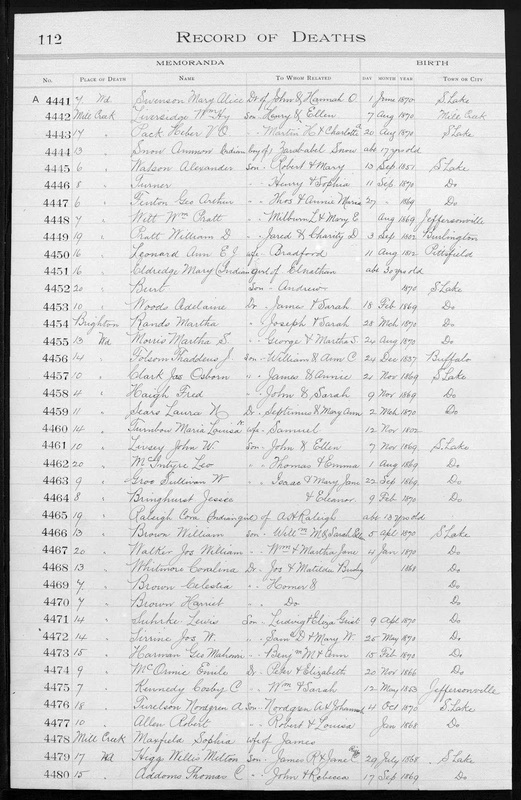
    <summary type="html"><![CDATA[<p><strong><em>A Latter-day Saint family adopted Mary Mountain under the “Act for the Further Relief of Indian Slaves and Prisoners.” Many families in the 1850s claimed this policy in order to justify their actions of legally indenturing indigenous children. Mary Mountain’s story illustrates the effects of this act, which many native children commonly experienced.</em></strong></p><img src="https://www.intermountainhistories.org/files/fullsize/c17e79facb4b24b93731db58d42269ab.jpg" alt="Record of Mary Mountain’s death." /><br/><p>Beginning with their 1847 arrival in the Great Basin and continuing through the Civil War era, Latter-day Saint settlers adopted (though legal documents of the time used the term “indentured”) indigenous children by purchasing them from slave-trading tribes such as the Utes. Mary Mountain represents one of many native children indentured according to the “Act for the Further Relief of Indian Slaves and Prisoners” passed by the Legislative Assembly of the Territory of Utah in 1851. This act legalized the indentured servitude of indigenous children in order to rescue them from Ute captivity. Another intention for this act was to redeem the children by encouraging them to adopt Christian beliefs and thereby transform into what Book of Mormon scripture describes as “a pure and a delightsome people.”</p><p>Through this act, any white settler living in Utah Territory with an “Indian prisoner, child, or woman, in [their] possession, whether by purchase or otherwise” could receive approval by a probate judge to indenture the child up to twenty years. Those involved agreed to send children between the ages of seven and sixteen to school for three months of the year. In his proclamation regarding the “Act for Further Relief,” Brigham Young declared that although they should treat indigenous people with humanity, they must not “elevate them... to an equality with those whom nature and nature's God has indicated to be their masters, their superiors.”</p><p>Ruth and Elnathan Eldredge adopted Mary Mountain in 1849 after Elnathan found her standing alone after a skirmish between the Timpanogos tribe and the Mormon militia. Although her date of birth remains unknown, the Eldredges claimed Mary was around nine years old when they found her; they also gave her the name “Mary Mountain.” Mary’s biography reveals that the Eldredges treated her well as she learned to set the table, fetch water from the stream, and tend to the Eldredges’ baby. Although the Eldredges adopted Mary, Ruth Eldredge recorded that she was “solid and dependable in practical things, but not a daughter for solace and comfort in things near her heart.” As a consequence of isolation from her native culture, Mary grew to fear members of her own tribe and ran and hid whenever they passed by the Eldredge home. Even as Mary grew older and indigenous men attempted to court her, she would have nothing to do with them, and when white men came to court her, Elnathan Eldredge advised against it due to her indigenous heritage.</p><p>Mary Mountain died from tuberculosis around the age of thirty and was buried in the Salt Lake City Cemetery. Unfortunately, many indigenous children adopted into Latter-day Saint homes also faced early deaths from exposure to European pathogens. The “Act for the Further Relief of Indian Slaves and Prisoners” represents a unique point in Utah’s history, combining hopeful intentions with sometimes fatal results.</p><p><em><strong><a href="https://www.intermountainhistories.org/items/show/407">For more (including 3 images) view the original article</a></strong></em></p>]]></summary>
    <published>2020-03-17T01:32:45+00:00</published>
    <updated>2026-04-17T19:32:08+00:00</updated>
    <link rel="alternate" type="text/html" href="https://www.intermountainhistories.org/items/show/407"/>
    <id>https://www.intermountainhistories.org/items/show/407</id>
    <author>
      <name>Taylor Tree, Brigham Young University</name>
    </author>
  </entry>
  <entry>
    <title type="html"><![CDATA[Mapleton, Utah&#039;s First LDS Meetinghouse]]></title>
    <summary type="html"><![CDATA[<p><strong><em>The first dedicated LDS meetinghouse in Mapleton, Utah was built in 1893. </em></strong></p><img src="https://www.intermountainhistories.org/files/fullsize/dbc6892c395952adcb3d5ca8b045f5ff.jpg" alt="Photo of the First Chapel" /><br/><p>The community of Union Bench was an extension of Springville, but the growing community that would soon become Mapleton hit a turning point when they built their first dedicated public meetinghouse for The Church of Jesus Christ of Latter-Day-Saints. Settlement began in 1856 and the small church branch met in a public schoolhouse located near the center of town. The schoolhouse, even with an addition made to provide more space, did not last forever. The branch was officially organized into a ward in 1888. Around this time, a larger meetinghouse was needed for both the school and the church.</p><p>As a new school was finished in 1890 and the church meetings moved there the members of the Church recognized they needed a dedicated meetinghouse. A committee was formed to find a building site and local member Matilda Streeper offered to donate one acre of land if construction of the new church began immediately. Construction on the church began in 1889, the church was dedicated in 1892, and in 1893 it was completed and meetings started. The meetinghouse was a stepping-stone into Union Bench becoming a town. As the new school and church were completed, the community pulled together to petition for township. As the Mapleton ward, named after a grove of trees near the canyon, made up a majority of the community’s population, the town came to be known as Mapleton, Utah.</p><p>The meetinghouse stood and satisfied the needs of the ward for many years. The building was sturdy and any hazards to it were swiftly taken care of, but as Mapleton continued to grow after gaining town status the need for a bigger meetinghouse arose. In the 1930s, the Great Depression hit the town and the population struggled. The church and town leaders worked closely together to combat poverty and support the struggling families by finding different work projects to provide work receipts that could be exchanged for food. One of these projects was the demolition of the old meetinghouse and the construction of a new one, which is still standing. The new chapel cost $35,000, half of which was donated by the local community. The chapel was completed in 1938 and dedicated for use in 1941 and is still in use today. You can find a plaque with a brief history outside the chapel, as well as historical photos on the walls inside which convey some of the heritage of the early Mapleton residents.</p><p><em><strong><a href="https://www.intermountainhistories.org/items/show/390">For more (including 4 images) view the original article</a></strong></em></p>]]></summary>
    <published>2020-02-18T01:20:45+00:00</published>
    <updated>2026-04-17T19:32:07+00:00</updated>
    <link rel="alternate" type="text/html" href="https://www.intermountainhistories.org/items/show/390"/>
    <id>https://www.intermountainhistories.org/items/show/390</id>
    <author>
      <name>Logan Goulding, Brigham Young University</name>
    </author>
  </entry>
  <entry>
    <title type="html"><![CDATA[John Moses Browning Home<br />
]]></title>
    <summary type="html"><![CDATA[<p><strong><em>This home was that of John Moses Browning who earned international prominence for his revolutionary designs of sporting and military firearms.</p></strong></p><img src="https://www.intermountainhistories.org/files/fullsize/e2e8e8fc9df8d30b9a356b39ed5ef3e7.jpg" alt="John M. Browning Home" /><br/><p>John Moses Browning (1855-1926) “was world renowned for his genius as an inventor, and took out more patents for improvements in fire-arms than any other man in the world.” A native of Ogden, Utah, John “was attached to the city and place of his birth.” Indeed, it could be said that “no one man did more to make the name of this city and state known over the world than John M. Browning.”</p><p>John was the son of Jonathan Browning and Elizabeth Caroline Clark, one of his father’s three wives. The Brownings had moved to Utah as part of the migration of members of The Church of Jesus Christ of Latter-Day Saints. Jonathan was a gunsmith; as a young boy, John spent hours in his father’s shop. He filed his first patent for the “J.M. Browning Single Shot Rifle” in 1879. (Eventually he held 128 patents.) The year before, he had co-founded with his younger brother the John Moses and Matthew Sandifer Browning Company, later renamed Browning Arms Company. The firearms they designed caught the attention of the Winchester Repeating Arms Company. From 1883, Browning worked in partnership with Winchester to produce a series of rifles and shotguns.</p><p>About 1900, Browning invented the first auto-loading shotgun and moved his family into their new home, designed by architect Sam Whittaker. The home  is two and a half stories. Its exterior is made from a combination of sandstone, smooth bricks and rippled natural looking brick. Its beautiful exterior is enhanced by big, clear, intricately shaped windows. </p><p>The home remained the residence of the family until around 1940 when it was converted into an apartment building.The building was purchased by the Y.W.C.A. in 1946 and was used as a women’s shelter until it was purchased by a law firm and used as office space. The home was listed on the National Register of Historic Places in 1973. In 2001 a family moved in and renovated the home then put it up for sale in 2011.</p><p>The home is privately owned so access is unfortunately restricted but it is a great reminder of the man who changed the history of firearms forever and left a lasting mark on the history of Ogden and of Utah. </p><p><em><strong><a href="https://www.intermountainhistories.org/items/show/268">For more (including 5 images) view the original article</a></strong></em></p>]]></summary>
    <published>2019-02-02T06:21:37+00:00</published>
    <updated>2026-04-17T19:32:04+00:00</updated>
    <link rel="alternate" type="text/html" href="https://www.intermountainhistories.org/items/show/268"/>
    <id>https://www.intermountainhistories.org/items/show/268</id>
    <author>
      <name>Brock Bergquist, Weber State University</name>
    </author>
  </entry>
  <entry>
    <title type="html"><![CDATA[Box Elder Stake Tabernacle<br />
]]></title>
    <summary type="html"><![CDATA[<p><strong><em>The Box Elder Tabernacle of the Church of Jesus Christ of Latter Day Saints is a fine example of Neo-Gothic architecture. It was saved from demolition and renovated in 1985.</em></strong></p><img src="https://www.intermountainhistories.org/files/fullsize/0dd08a07287acb10472ce0a9e8609fff.jpg" alt="Box Elder Tabernacle" /><br/><p>Brigham Young, President of The Church of Jesus Christ of Latter-Day Saints,  selected the site for the Box Elder State Tabernacle in 1865. However, construction did not begin until 1876 under the direction of Brigham City’s first Stake President, Lorenzo Snow. The building was not finished until 1890 under the leadership of Stake President Charles Kelley.  The architect was probably Truman 0. Angel, Jr. or his father, one of the more famous L.D.S. Church architects. With volunteer labor, field stone was collected nearby and lumber was hauled from the mountains, sawed and delivered to the site. The structure was 50 feet by 95 feet with a tower rising above each of the four corners. The seating capacity was 1200.</p><p>One Sunday afternoon in 1896, the building burned down, leaving only the four walls standing.  According to the local paper, the Brigham City Bugler, it took only a half hour for the tabernacle to turn into “a mass of furious, crackling flames.” By 2:30 in the afternoon, the building was nothing more than a smoking, blackened hulk. The fire had even stripped the plaster from the walls and floating embers from the tabernacle blaze had touched off other fires around town. </p><p>It was rebuilt under the leadership of Stake President Rudger Clawson in a more elaborate neo-Gothic style. Sixteen brick buttresses were added to the exterior with steeples topping each one. A major tower was added to the front.  Inside the building a vestibule was added and the seating capacity increased by 400. The new structure was dedicated in March of 1897. A reporter for the Brigham City Bugler wrote, “What on the day of the great fire appeared a calamity, will tomorrow be looked upon as a great blessing -- there is really no comparison between the old and the new.”</p><p>As the L.D.S. Church built more stake centers in the Brigham City area, the tabernacle became less prominent. It was added to the National Register of Historic Places in 1971. Although some talked of tearing it down, the building was restored and renovated from 1985 to 1987. To this day many come to tour and praise this celebrated building with its long history of trials and triumphs. </p><p><em><strong><a href="https://www.intermountainhistories.org/items/show/259">For more (including 3 images) view the original article</a></strong></em></p>]]></summary>
    <published>2019-01-25T04:23:19+00:00</published>
    <updated>2026-04-17T19:32:04+00:00</updated>
    <link rel="alternate" type="text/html" href="https://www.intermountainhistories.org/items/show/259"/>
    <id>https://www.intermountainhistories.org/items/show/259</id>
    <author>
      <name>Jocelyn St. Laurent, Weber State University</name>
    </author>
  </entry>
</feed>