<?xml version="1.0" encoding="UTF-8"?>
<feed xmlns="http://www.w3.org/2005/Atom">
  <title type="text">Intermountain Histories</title>
  <updated>2026-04-17T19:32:13+00:00</updated>
  <generator uri="http://framework.zend.com" version="1.12.20">Zend_Feed_Writer</generator>
  <link rel="alternate" type="text/html" href="https://www.intermountainhistories.org/"/>
  <link rel="self" type="application/atom+xml" href="https://www.intermountainhistories.org/items/browse?output=rss2"/>
  <id>https://www.intermountainhistories.org/</id>
  <author>
    <name>Intermountain Histories</name>
    <uri>https://www.intermountainhistories.org</uri>
  </author>
  <link rel="hub" href="https://pubsubhubbub.appspot.com/"/>
  <entry>
    <title type="html"><![CDATA[Rose Cottage and the Blue Tea]]></title>
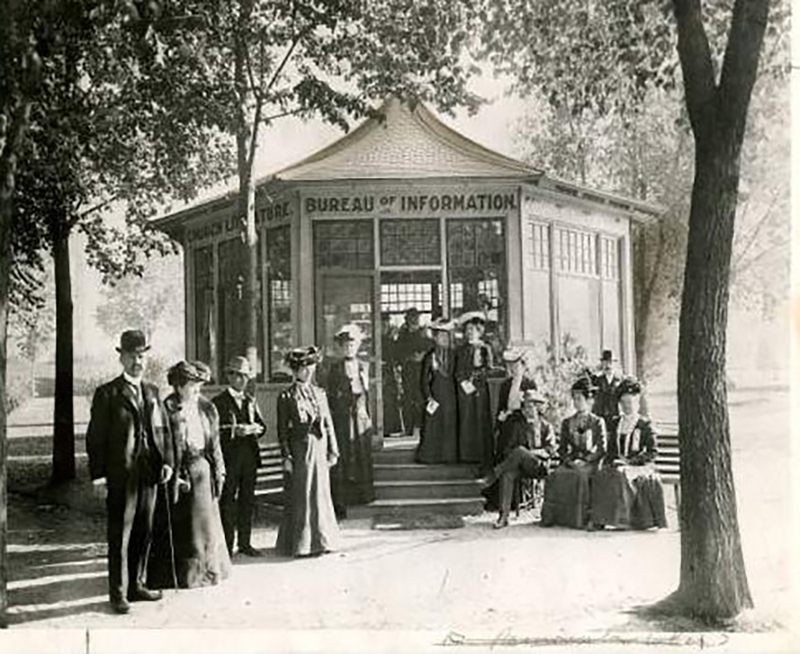
    <summary type="html"><![CDATA[<p><strong><em>Clubs provided women a means to promote sisterhood, education, and empowerment. The Blue Tea club, which met at Rose Cottage in Salt Lake City, embodied these ideals.</em></strong></p><img src="https://www.intermountainhistories.org/files/fullsize/ceda601cbf3aba27f4eb042ff150dbd0.jpg" alt="Froiseth family and Rose Cottage" /><br/><p>In the nineteenth century, Utah territory was principally populated by members of The Church of Jesus Christ of Latter-day Saints (often nicknamed “Mormons”), and the Church maintained considerable influence over social and political affairs. Consequently, the small population of non-Mormons struggled with limited opportunities for political representation and social engagement; there were few easy ways to meet non-Mormon women when so much of Utah society fell within Latter-day Saint community life. Controversy over the practice of religious polygamy, then endorsed by the Church (though now prohibited by the Church) further contributed to the barrier between practicing Mormons and objecting non-Mormons. Irish immigrant Jennie Froiseth was among this group of anti-polygamists, and she struggled with isolation and loneliness after following her husband, an army surveyor assigned to Utah territory, to Salt Lake City in 1871.
Craving socialization and a sense of culture outside the Church most of her neighbors attended, Jennie established an exclusively non-Mormon organization in 1875. Her home, Rose Cottage, became the site of Utah’s first women’s literary club. Jennie named it Blue Tea in honor of a long social and cultural tradition of tea drinking as well as in commemoration of the Blue Stocking Society, an educational movement for women in mid-eighteenth-century England. On September 21 of the same year, members formalized the club with the purpose to “organize exclusively for women… to promote mental culture.” Like Jennie, members were also looking for a social outlet and an opportunity for self-education, as few had direct access to formal education.
Members met every Thursday afternoon in Rose Cottage to share and discuss research ideas. The first topics focused on London and its history, including the English Parliament, British banking, the architecture of London Tower and Westminster Abbey, the royal family, and London museums, churches, and royal gardens. Through their time together, members of Blue Tea formed bonds of sisterhood, and they celebrated birthdays, anniversaries, and holidays together each year. Sorority, greater confidence, and stronger literary and writing skills led to more participation in political activity.
Blue Tea also provided what historian Lola van Wagenen called an “organizational basis for the anti-polygamy movement” in Utah. By November 12, 1878, several Blue Tea members, including Jennie Froiseth, helped found the Anti-Polygamy Society, an association of Utah residents that petitioned for “special legislation from… Congress to compel a cessation of plural marriages” in the territory. The women of the Anti-Polygamy Society, led by Blue Tea members including Jennie, helped produce <i>The</i> <i>Anti-Polygamy Standard</i> newspaper and a book reprinting some of the <i>Standard</i>’s articles entitled <i>The Women of Mormonism, Or the Stories of Polygamy</i>.
Nevertheless, Blue Tea was primarily a cultural and social club. They focused on the pursuit of mental culture outlined in their mission. Rose Cottage provided a space for non-Mormon women in Salt Lake City to join in self-improvement. Members taught each other about American history, politics, government, and economics as well as European culture, art, literature, and music. They gained self-confidence, created networks, empowered each other, and formed lasting friendships.
Blue Tea functioned for eight years, from 1875 to 1883. The last recorded meeting in the Blue Tea minute book was held on May 2, 1883, and the club disbanded sometime thereafter. Several years later, in 1915, Jennie reflected that on recognizing “the larger scope of the [Ladies] Literary Club, [Blue Tea] discontinued [its] organization.” About twenty percent of former Blue Tea members joined the new Ladies Literary Club, although Jennie did not.</p><p><em><strong><a href="https://www.intermountainhistories.org/items/show/604">For more (including 3 images) view the original article</a></strong></em></p>]]></summary>
    <published>2022-06-10T04:54:37+00:00</published>
    <updated>2026-04-17T19:32:13+00:00</updated>
    <link rel="alternate" type="text/html" href="https://www.intermountainhistories.org/items/show/604"/>
    <id>https://www.intermountainhistories.org/items/show/604</id>
    <author>
      <name>Amy Megowan, Northern Arizona University</name>
    </author>
  </entry>
  <entry>
    <title type="html"><![CDATA[The Elm Hotel and the Udall Family]]></title>
    <summary type="html"><![CDATA[<p><strong><em>In St. Johns, Arizona, a two-story house called the Elm Hotel stands on the corner of First Street and Cleveland. Built in 1911 by a family of Mormon polygamists that had once fled the city, the Elm Hotel in its century-long life has been a home, hotel, and restaurant.</em></strong></p><img src="https://www.intermountainhistories.org/files/fullsize/4c7934b3fe3a9dfc89f7788ccfd68610.jpg" alt="Elm Hotel" /><br/><p><span style="font-weight:400;">In 1911, David Udall returned with his family to St. Johns, Arizona with the intent to stay. They had first lived in St. Johns in 1880, but <a href="https://www.intermountainhistories.org/items/show/497?tour=39&index=0">David’s plural marriages to both Ella Stewart and Ida Hunt</a> led to <a href="https://www.intermountainhistories.org/items/show/500?tour=39&index=3">his prosecution and imprisonment</a>. His second wife, Ida, spent two years in hiding with her in-laws, and even when David was released from prison, the family lived in impoverished conditions on the frontier’s margins, outcasts for practicing plural marriage. By the turn of the twentieth century, though, two separate Latter-day Saint prophet-presidents had publicly renounced plural marriage, and while members and leaders applied the first renouncement inconsistently, the second was firm. While the Udalls remained married and continued variously living together, with the Church no longer solemnizing new marriages, the most overt persecution finally waned.</span>
<span style="font-weight:400;">From the 1880s onward, the Udalls had, whether together or separately, lived throughout northeastern Arizona, in St. Johns, Snowflake, Round Valley, Eagar, and Hunt. In 1911, however, with many of the children now adults and David committed to living in the area as president of the Church’s St. Johns Stake, the family worked together to build a “dream home” in the city. They hired contractors from Thatcher, Arizona, and the Udall sons—both Ella’s and Ida’s—labored with them, helping to haul material, craft cement bricks, and do carpentry work. Ella’s daughter Pearl also participated, cooking meals for the builders. During this time, most of the family lived in a house that Ida owned in St. Johns, a three-story edifice so drafty they nicknamed it the “Air Castle.”</span>
<span style="font-weight:400;">In the spring of 1912, the Udalls finished building their new home and moved in. David estimated it had cost $8,000, including both building materials and furnishings, and he called it a “monument” to “years of effort in building up St. Johns, and what I deem more important… the solidarity of our family circle.” The family nicknamed their dream home the Elm Hotel, naming it for an elm tree that David had previously planted on the lot years before, in 1887.</span>
<span style="font-weight:400;">The family’s unmarried sons lived in the Udall home until they married and went on to establish their own homes in St. Johns. Ida had a first-floor room and spent most of the next three years there—the last of her life. Later, when the Church called David to serve as a temple president in Mesa, he rented out rooms in the Elm Hotel while he was gone, finally fulfilling the nickname’s second half.</span>
<span style="font-weight:400;">The building stayed in the family for generations. After David passed, his and Ida’s son Grover and his wife Dora bought the Elm Hotel. Dora’s niece Elma recalled that “</span><span style="font-weight:400;">she</span><span style="font-weight:400;"> turned it into a hotel. She even got AAA approval,” added bathrooms, and started a restaurant. The hotel-motel operation outlasted the restaurant, serving customers as late as the 1980s.</span>
<span style="font-weight:400;">When Grover and Dora passed away, the Elm Hotel passed into the possession of David’s grandson Keith and his wife Gwen, among whose family is the author Brady Udall, their grandson.</span>
<span style="font-weight:400;">David’s elm tree on the lot grew to a tremendous size, and locals dubbed it the “centennial tree” for its old age. Elma Udall recalled that “it [took] five of us like this,” with arms outstretched, “to go around the trunk.” Unfortunately, after so long, the tree grew too big for the property. When it was more than a hundred years old, it began rotting, and out of concern it might fall on the house, the tree was cut down.</span>
<span style="font-weight:400;">Eventually, another St. Johns local bought the house from the Udall family and lived there for a time, but they moved out after the attic caught fire. Today, one block to the east of the Elm stands a chapel of The Church of Jesus Christ of Latter-day Saints, and two blocks to the west is the Apache County Historical Society Museum. Though the house is in some disrepair, the Elm Hotel still stands.</span></p><p><em><strong><a href="https://www.intermountainhistories.org/items/show/504">For more (including 10 images) view the original article</a></strong></em></p>]]></summary>
    <published>2021-09-24T07:46:52+00:00</published>
    <updated>2026-04-17T19:32:10+00:00</updated>
    <link rel="alternate" type="text/html" href="https://www.intermountainhistories.org/items/show/504"/>
    <id>https://www.intermountainhistories.org/items/show/504</id>
    <author>
      <name>Makoto Hunter, Brigham Young University</name>
    </author>
  </entry>
  <entry>
    <title type="html"><![CDATA[Polygamists in the Sugar House Pen]]></title>
    <summary type="html"><![CDATA[<p><strong><em>In the 1880s, Latter-day Saints convicted for polygamy filled Western prisons. One of these was “the Pen,” or Utah Territorial Penitentiary.</em></strong></p><img src="https://www.intermountainhistories.org/files/fullsize/98499b6cc99aca4386a3f83d7a5c4484.jpg" alt="Cannon and the Brethren" /><br/><p><span style="font-weight:400;">In 1857, Latter-day Saints in Britain could buy the fourth volume of the </span><i><span style="font-weight:400;">Journal of Discourses</span></i><span style="font-weight:400;"> and find a stirring declaration attributed to Brigham Young. The prophet-president of The Church of Jesus Christ of Latter-day Saints (sometimes nicknamed “Mormons” at the time) decried the United States Congress’ agitations against polygamy, saying, “True we have more wives than one, and what of that?” Young questioned if Congress could even enforce the law. He hyperbolically supposed a prison large enough to contain every polygamist lawbreaker in Utah would eventually have to encompass the entire Great Basin, “roofed… over from the summit of the Rocky Mountains to the summit of the Sierra Nevada.” When federal prosecution of polygamy cases escalated in the 1870s and 1880s, officials instead relied on western prisons like the Utah Territorial Penitentiary—sometimes nicknamed “the Pen.”</span>
<span style="font-weight:400;">Completed in 1854, the Territorial Penitentiary was southeast of Salt Lake City in Sugar House, Utah. Just two years previous, the territorial Legislative Assembly had requested federal money for building a prison in order “to prevent crime, but also to reform the offenders.” Decades later, federal officials were now trying to use the penitentiary to prevent polygamy and reform the Mormons.</span>
<span style="font-weight:400;">This included Mormons such as George Q. Cannon, who lived in hiding “underground” from 1885 to 1888. Cannon was the First Counselor in the First Presidency of the Church—a high office held only by apostles—and with five wives and thirty-two children, he was an easy target for federal marshals. Despite the dangers, though, hiding grated on Cannon. In his journal, he wrote he was “not anxious to become a martyr,” yet also “always felt to urge our people to stand up courageously to their principles” and wanted to live up to the same standard. When a prosecutor and marshal tried to extort the Church—money in exchange for not prosecuting Cannon—Cannon resolved to turn himself in, deciding, “I had much rather go to the penitentiary and serve the full term” than have the Church pay blackmail money to do him a special favor other Latter-day Saint polygamists could not afford.</span>
<span style="font-weight:400;">Cannon entered the Territorial Penitentiary in Sugar House in September 1888, and he found himself in good company. Fifty other Mormon polygamists were also in the Pen “for living with their wives,” as Cannon wrote, and they even took a few photographs together when they had visitors. Perhaps with some irony, Cannon observed in his journal that he and “the brethren”—as he liked to call his fellow Latter-day Saint incarcerees—resided in the same prison as twenty-two men either accused or convicted of murder. </span>
<span style="font-weight:400;">Conditions in the Pen were scant. Winters were cold, but fires were prohibited for fear of arson. One inmate remembered waking up on winter mornings with his beard frozen solid. The prison provided spoons but no other utensils, so “the brethren have improvised knives out of spoon handles and other scraps of metal they have got hold of and made wooden forks,” Cannon wrote. Meals themselves were mostly coffee, bread, meat, gravy, and “mush.” Cannon did not drink coffee, and he often forewent meat. He substituted milk and butter when he could.</span>
<span style="font-weight:400;">Unlike some other prisons in the Western territories, the Pen did not make labor part of the sentence, leaving inmates with copious free time. Cannon filled the extra time by researching and writing a history he called </span><i><span style="font-weight:400;">The Life of Joseph Smith the Prophet</span></i><span style="font-weight:400;">, a project he and his sons had been writing for the last six years.</span>
<span style="font-weight:400;">On Sundays, Cannon and the other imprisoned Latter-day Saints held Sunday School together, reading the Bible and singing hymns. In October 1888, they even procured an organ from the Church’s Sunday School Union for musical accompaniment. Other ministers came to the Pen to give sermons in the afternoon, and Cannon sometimes assessed them. One Episcopal preacher’s “discourse was a very weak effort,” Cannon thought, but a few months later a Methodist “preached the best Methodist sermon” Cannon had ever heard.</span>
<span style="font-weight:400;">Cannon’s prison sentence was short—only five months—and he left the Pen in February, 1889. In his journal, he was optimistic. He wrote, “The Lord manifested to me in a very plain manner, before I came in, that I ought to go, and that if I did, it would be easier for the brethren who should follow.” Now, five months later, Cannon noticed polygamists receiving shorter sentences, prison officials granting more privileges to inmates, and even the quality of the food improving. “Our lot was far from being a hard one,” Cannon thought. The Latter-day Saints would continue to endure, he was certain.</span></p><p><em><strong><a href="https://www.intermountainhistories.org/items/show/503">For more (including 5 images) view the original article</a></strong></em></p>]]></summary>
    <published>2021-09-24T04:58:21+00:00</published>
    <updated>2026-04-17T19:32:10+00:00</updated>
    <link rel="alternate" type="text/html" href="https://www.intermountainhistories.org/items/show/503"/>
    <id>https://www.intermountainhistories.org/items/show/503</id>
    <author>
      <name>Makoto Hunter, Brigham Young University</name>
    </author>
  </entry>
  <entry>
    <title type="html"><![CDATA[Annie Clark Tanner’s Underground Journey: “Years I Had Wandered”]]></title>
    <summary type="html"><![CDATA[<p><strong><em>When Annie became pregnant, masquerading as an unmarried woman became impossible. She put her teaching career on hold and went underground, moving more than twenty times in the span of two years.</em></strong></p><img src="https://www.intermountainhistories.org/files/fullsize/26719c90dcb49901dda01e5abfac6678.jpg" alt="Annie and Marion" /><br/><p><span style="font-weight:400;">In early 1888, Annie Clark Tanner was expecting her first child with Joseph Marion Tanner (see “Annie Clark Tanner’s ‘Wedding Supper’ and Early Marriage” for background). Motherhood made her feel “secure,” “thankful,” and “happy,” but contemporary circumstances cast a shadow over the pregnancy. Annie was Marion’s second wife, and for the last four years she had been masquerading as a single woman. Now pregnant, Annie could no longer pass as unmarried, and as a pregnant woman without an obvious husband, federal marshals would suspect she was a plural wife and might target her as a potential witness against her husband. To avoid subpoenas, Annie had to go underground.</span>
<span style="font-weight:400;">Annie was familiar with plural wives going underground, as her father sometimes provided a safehouse to underground women. She remembered, “When a young woman with a little baby came to my father’s, the only question asked by any of the family was, ‘Is she on the “underground railway”?’ No one wanted to know more for fear of being questioned by some Deputy Marshal who may be looking for her.”</span>
<span style="font-weight:400;">Latter-day Saints employed various underground strategies, including living far away or hiding on the outskirts of town. Annie’s strategy was to assume a false name—Mrs. Wilson—and live on the move, staying with family, friends, or willing strangers in any given town for as long as two months or as short as a day.</span>
<span style="font-weight:400;">Annie began her underground journey on April 11, 1888. Three-months pregnant, Annie felt “happy at the prospect of being a mother,” but “sad to have to leave” Farmington.</span>
<span style="font-weight:400;">Within five months, Annie moved seven times, moving back and forth to Logan, then Ogden, then Farmington with her family, then to Salt Lake City, then back to Farmington, then to Bountiful, and then finally to Centerville.</span>
<span style="font-weight:400;">Although living with her family was risky, Annie found her stays in Farmington welcome respites. Her hosts and neighbors in other towns were friendly, but she felt lonely because she could not meaningfully converse without risking revealing her true identity. “I could not say, ‘I am Ezra Clark’s daughter,’ and I hated the name of Wilson,” she recalled. Living in Farmington was precarious, though. During one stay, a neighbor saw Annie in the backyard, and “she did not conceal her surprise at seeing me big in the family way.”</span>
<span style="font-weight:400;">In Centerville, Annie stayed in the home of John Woolley and his wife. There on September 30, 1888, at around 2:00 AM, she gave birth to her daughter Jennie. Five days later, Marion made it to Centerville to visit.</span>
<span style="font-weight:400;">When Jennie was three weeks old, Annie returned again to Farmington for a few weeks, but this time her stay was “somewhat unpleasant.” Keeping baby Jennie a secret was stressful, and Annie constantly worried someone might discover them. Like her pregnancy, Annie’s daughter made her a target for federal marshals.</span>
<span style="font-weight:400;">In November, Annie moved to Ogden for a few days and then to Mendon. While she was in Mendon, both Marion and his first wife Jane “Jennie” Tanner visited. It was the first time Jennie saw Annie’s daughter, and Annie noticed Jennie start to cry, perhaps because she had no children of her own. Even so, Annie thought Jennie “loved the baby and manifested respect for me.”</span>
<span style="font-weight:400;">Even with her baby, Annie stayed itinerant. Over the next year, she lived in Logan and Richmond, Utah and then in Franklin, Georgetown, Montpelier, Paris, and Thomas’ Fork, Idaho.</span>
<span style="font-weight:400;">Marion visited Idaho in August, and on August 11 he and Annie joined a dinner in Paris, Idaho with Church apostles George Q. Cannon and Francis Lyman and Church president Wilford Woodruff also attended. While Annie “enjoyed the meetings splendidly,” one interaction became awkward. After dinner, they moved to the front room, where Jennie played on the floor while the adults talked. During the conversation, Woodruff asked Annie if she was the child’s mother. Annie said yes. Woodruff then inquired, with Marion still in the room, “And who is the happy father?”</span>
<span style="font-weight:400;">Annie wrote in her diary,</span>
<p style="margin-left:40px;"><span style="font-weight:400;">I hesitated a little and Brother Cannon, who had married us, came to my rescue by saying, “That is hardly a fair question, is it, Brother Woodruff?”</span>
<p style="margin-left:40px;"><span style="font-weight:400;">Later, one of my brothers who was there said, “You wouldn’t even tell the President of the Church who your husband was, would you?” Those of us who knew who the father was, could see how proud Brother Tanner would be to acknowledge claim on that lovely little girl. But nothing further was said.</span>
<span style="font-weight:400;">Annie’s whirlwind life continued. She left Paris the next day, and by August 16 she lived with her brother in Auburn, Wyoming. In December, she and Marion spent Christmas together in Auburn before moving to Liberty, Idaho for a week. By January 1890, Annie moved again to Montpelier for a night, then to Georgetown for a few days, and then to Franklin, arriving by January 20.</span>
<span style="font-weight:400;">For her February 8, 1890 diary entry, Annie wrote, “Mr. Tanner came to see us. We talked that evening of a home for me and baby which made our visit very memorable to me.”</span>
<span style="font-weight:400;">“Six years I had wandered,” Annie reminisced, including two years on the underground in which she moved more than twenty times and raised their daughter Jennie. Now, when she was a month pregnant with a second child, Marion finally provided Annie with a long-term home of her own in Franklin, Idaho.</span>
<span style="font-weight:400;">Franklin was comfortable, and Annie was in good company as a plural wife. She noticed “dozens of polygamist women, under assumed names, had temporary homes there while their husbands had employment elsewhere. No one asked questions.”</span>
<span style="font-weight:400;">Annie only lived in Franklin for a year before moving again, but she treasured her home while she had it. Decades later, after her relationship with Marion all but dissolved, Annie went on to build another home for herself in Farmington, Utah. The house was her “pride and security,” and she never sold it, living in Farmington for the rest of her life.</span></p><p><em><strong><a href="https://www.intermountainhistories.org/items/show/502">For more (including 4 images) view the original article</a></strong></em></p>]]></summary>
    <published>2021-09-23T11:54:46+00:00</published>
    <updated>2026-04-17T19:32:10+00:00</updated>
    <link rel="alternate" type="text/html" href="https://www.intermountainhistories.org/items/show/502"/>
    <id>https://www.intermountainhistories.org/items/show/502</id>
    <author>
      <name>Makoto Hunter, Brigham Young University</name>
    </author>
  </entry>
  <entry>
    <title type="html"><![CDATA[The United States v. Udall Cases and the St. Johns Ring]]></title>
    <summary type="html"><![CDATA[<p><strong><em>In the 1880s, David Udall—bishop of the St. Johns Ward of The Church of Jesus Christ of Latter-day Saints—found himself and his community increasingly at odds with the St. Johns Ring, a group of sheriffs, court officers, and town leaders who brought the power of public opinion and the authority of the courts to bear in their crusade against Mormon polygamy.</em></strong></p><img src="https://www.intermountainhistories.org/files/fullsize/6957fe46c0ddc29d6012b614f16e12bc.jpg" alt="Courthouse in Prescott" /><br/><p><span style="font-weight:400;">When authorities arrested Latter-day Saint bishop David King Udall on perjury charge in May 1884, his second wife Ida Hunt Udall called it a “trumped-up charge, simply got through malice on the part of the ‘ring.’” Though Ida dismissed the case as spiteful and unfounded, within the year David was in court both this perjury charge and two more trials, including a polygamy charge and second perjury case. Ida saw the “St. Johns Ring” operating behind each charge—an anti-polygamy group in St. Johns, Arizona who thoroughly controlled the town.</span>
<span style="font-weight:400;">Solomon Barth, a German Jew who founded St. Johns with Mexican farmers, led the Ring. As the town’s founder, Barth became its de facto leader, and his marriage to Refugio Landavazo y Sanchez, a prominent Spanish-American, extended his influence to the local Hispanic community. Barth regularly served as a grand jury foreman, and his employees often filled grand jury seats. With his intersecting business and political influence, Barth could influence his employees’ votes as grand jurors.</span>
<span style="font-weight:400;">Others in positions of civic authority joined Barth in the St. Johns Ring. Ebenezer S. Stover, Tomas Perez, and John Lorenzo Hubbell all served as sheriff; Charles L. Gutterson was the local United States District Attorney, Alfred Ruiz was district clerk, and George A. McCarter was the local United States Court Commissioner. McCarter’s position was particularly powerful. He determined the priority for pressing charges and often chose cases prosecuting Latter-day Saints.McCarter was also editor of the </span><i><span style="font-weight:400;">Apache Chief</span></i><span style="font-weight:400;"> (renamed </span><i><span style="font-weight:400;">St. Johns Herald</span></i><span style="font-weight:400;"> in 1884), a newspaper regarded as heavily anti-polygamy and anti-Mormon. In an 1884 journal entry, Ida reported the newspaper wrote about her “frequently,” describing her in “glowing colors” as a “prostitute, mistress, etc.” Even after McCarter sold the paper in 1885, it still declared itself “the only exclusively anti-Mormon paper in Arizona.”</span>
<span style="font-weight:400;">Although the St. Johns Ring justified their actions as the duties of elected public office, St. Johns’ Mormons accused Ring members of holding their offices through voter fraud. For example, David reported being barred from voting in November 1882. The election official simply told him, “We have decided that no polygamist should vote today.” David recalled, “There was no redress; I turned and walked away.” With the sheriffs in the Ring, investigations into the voter suppression did not materialize.</span>
<span style="font-weight:400;">By 1882, Mormons faced frequent “nuisance suits,” including larceny, unlawful assembly, and perjury. With Barth serving as grand jury foreman, indictments were frequent.</span>
<span style="font-weight:400;">Under these difficult circumstances, David testified before a grand jury for the perjury complaint filed against him. In David’s June 1884 grand jury, however, an independent St. Johns local named David Campbell served as jury foreman, not Barth. After hearing David’s testimony about the supposed perjury—an error caused by a misunderstanding on district clerk Ruiz’s part—Campbell convinced the grand jury to dismiss the case.</span>
<span style="font-weight:400;">The dismissal was only a temporary respite. By August, David was charged and arrested for unlawful cohabitation, despite his second wife Ida going into hiding two months earlier. All but one of the witnesses signing the indictment were members of the St. Johns Ring, whom Ida in her journal insisted, “knew nothing whatever of our family affairs, except from hearsay.”</span>
<span style="font-weight:400;">In November, David stood trial in Prescott, Arizona. However, the prosecution failed to subpoena Ida and compel her testimony, and without further evidence the court found David not guilty. David was fortunate; three Latter-day Saint neighbors were convicted in the same timespan. By January 1885, Church prophet-president John Taylor was advising members to flee Arizona and migrate to Mexico, beyond the reach of the U.S. government. David stayed in St. Johns, but some forty other families packed up and left town.</span>
<span style="font-weight:400;">David, perhaps, should have also left. In the summer of 1885, a grand jury convened to attempt a second indictment for the previously dismissed perjury charge, and this time the court did not inform David. Without his testimony, the grand jury indicted David for perjury.</span>
<span style="font-weight:400;">At the trial itself, Judge Howard Sumner presided. Sumner was a respected jurist and frequent speaker on the evils of polygamy. In David’s trial, Sumner sustained the prosecution’s objections to defense testimony and evidence, effectively excluding all possible proof that might have exonerated David. The jury returned a guilty verdict after 30 minutes. In response, David wrote this prayer: “Oh God, please deliver me… If I am to suffer imprisonment, let it be for my religion and not for the heinous crime that will be a disgrace to me and my family throughout life.” By September 1885, David was serving his prison sentence in Detroit, Michigan.</span>
<span style="font-weight:400;">This was the St. Johns Ring’s last anti-Mormon victory. Some unknown disagreement between Barth and the others caused him to split from the Ring. Meanwhile, former sheriff Hubbell had begun forming business relationships with Mormons, and district clerk Ruiz had actually tried to testify on David’s behalf before Sumner ruled against the defense. The two of them left the Ring, and they even signed on to a letter to President Grover Cleveland asking him to pardon David. Cleveland did, freeing David in December 1885.</span>
<span style="font-weight:400;">By 1887, the Ring fell apart. McCarter was dismissed as court commissioner due to alcoholism, and Barth went to prison for two years as the territorial court turned against him and found him guilty of destroying county records. Meanwhile, by 1888 David moved to Round Valley, Arizona, where he lived for several years before eventually moving back to St. Johns with his family and going on to <a href="https://www.intermountainhistories.org/items/show/504?tour=39&index=7">build a home there</a> and become a stake president for the Church. After his prison sentence, Barth also returned to St. Johns. Having apparently mellowed out toward Mormons by the time he died in 1928, Barth requested his funeral be held in a Latter-day Saint chapel. Levi Udall, David’s son, conducted the service.</span></p><p><em><strong><a href="https://www.intermountainhistories.org/items/show/500">For more (including 8 images) view the original article</a></strong></em></p>]]></summary>
    <published>2021-09-23T10:37:53+00:00</published>
    <updated>2026-04-17T19:32:10+00:00</updated>
    <link rel="alternate" type="text/html" href="https://www.intermountainhistories.org/items/show/500"/>
    <id>https://www.intermountainhistories.org/items/show/500</id>
    <author>
      <name>Makoto Hunter, Brigham Young University</name>
    </author>
  </entry>
  <entry>
    <title type="html"><![CDATA[Polygamist Flight from St. Johns]]></title>
    <summary type="html"><![CDATA[<p><strong><em>Though federal anti-polygamy laws had been on the books for years, the Latter-day Saints of St. Johns, Arizona hoped the remote frontier town would be a refuge for them. An arrest on the evening of July 10, 1884 dashed this hope, and four plural wives fled the city that very night.</em></strong></p><img src="https://www.intermountainhistories.org/files/fullsize/26339c61ea7e17df5da2d02549fe31a0.jpg" alt="St. Johns, Arizona" /><br/><p><span style="font-weight:400;">In July 1884, the David, Ella, and Ida Udall family of St. Johns, Arizona was optimistic about the future. The Udalls were members of The Church of Jesus Christ of Latter-day Saints (then often nicknamed Mormons), and they were also polygamists, plural marriage being a central religious practice of the Church at the time. David’s marriage to both Ella and Ida violated the Edmunds Anti-Polygamy Act of 1882, but like most other Mormon polygamists, the Udalls followed the counsel of their prophet-president John Taylor to engage in civil disobedience. When faced with the choice to “obey God or Congress,” the Udalls chose God.</span>
<span style="font-weight:400;">Despite the 1882 Edmunds Anti-polygamy Act, David had thus far avoided being arrested for polygamy, and their nontraditional family was growing. On July 5, David’s first wife Ella gave birth to their second daughter, to be named Erma. Meanwhile, their first daughter Pearl was four-years old. Despite anti-polygamy sentiments in St. Johns, the Church hoped eastern Arizona could be a haven for polygamist members. A neighbor, Catharine Cottam Romney, second wife to Miles Romney, had even returned to St. Johns after hiding in New Mexico. Ida thought her family might soon be “able to go out and do something as other people did.”</span>
<span style="font-weight:400;">However, July 10 dashed that hope. Just as the Udalls finished dinner, Mormon neighbors Ammon Tenney and Joe Crosby arrived with urgent news. Federal marshals had arrested Tenney for violating the Edmunds Act (though they had not yet taken him into custody) and issued a subpoena to his second wife Eliza Udall Tenney, Ida’s sister, who promptly fled. Tenney and Crosby warned the marshals might next arrest David and subpoena Ida to testify against him.</span>
<span style="font-weight:400;">Ida was hesitant to leave Ella, still recovering from the birth, and Pearl and Erma, who Ida regarded as if her own daughters. Still, she soon agreed to go “underground,” a term Latter-day Saints in the late-nineteenth century used to describelong-term hiding to evade arrests or subpoenas related to polygamy.</span>
<span style="font-weight:400;">Ida stayed the rest of the evening at a neighbors’ home, but before she could sleep David arrived and took Ida along with Eliza, Catharine, and Annie (Miles Romney’s third wife) three miles out of town, arriving at the home of Joel White around 2:00 AM. The house did not have room for all four women, so the group arranged beds for them outside. In her journal, Ida described sleeping “on the shady side of the house, under the blue canopy of heaven… Thus passed our first night as exiles from home.”</span>
<span style="font-weight:400;">All day July 11, Eliza kept watch with binoculars. Whenever she saw someone draw near the homestead, the four women hid behind curtains or underneath the beds. The four remained in hiding at the White home until July 16, when “it was decided,” as Ida wrote, that they would “be shipped” to Snowflake, Arizona. Unlike St. Johns, where the Mormons were newcomers, Latter-day Saints had founded Snowflake, and Ida and Eliza had family there. The women would still need to hide, but everyone hoped they would be safer in Snowflake than in St. Johns.</span>
<span style="font-weight:400;">After sunset that day and before leaving St. Johns, Ida visited Ella, Pearl, and Erma one last time, and she kissed each of them.</span>
<span style="font-weight:400;">The women departed for Snowflake thereafter and traveled through the night. Ida rode with Catharine and Annie in a wagon driven by their husband Miles Romney, but as an extra precaution Eliza (“the only criminal of the lot,” Ida wrote) took a different route. Accompanied by her husband Ammon Tenney and a neighbor, Eliza rode to Snowflake on horseback, disguised in men's clothes. </span>
<span style="font-weight:400;">Catharine gave birth in Snowflake two weeks later, having gone into, out of, and back into the underground in the span of two months, all during her final trimester. </span>
<span style="font-weight:400;">Over time, as federal marshals continued combing northeastern Arizona with subpoenas, the families decided even Snowflake wasn’t far enough. In September, David and Ida agreed to have her travel to Nephi, Utah, where she could live with David’s parents. There in Nephi, in March 1885, Ida, like Catharine, gave birth on the underground to her daughter Pauline. Ida did not reunite with the rest of the family again until the late 1880s, in Round Valley, Arizona.</span>
<span style="font-weight:400;">Catharine moved from Snowflake to St. George, Utah, where she lived with her family for a few years. After Miles resolved to flee prosecution by moving to Mexico, he, Catharine, Hannah, Anna, and their children reunited in Juarez by 1886, continuing their underground exile beyond the reach of the United States.</span>
<span style="font-weight:400;">By 1885, mounting persecution prompted President Taylor to advise the Latter-day Saints of eastern Arizona to flee the country and go to Mexico as the Romneys would in 1886. Around fifty families left St. Johns and the surrounding region, and while David did not leave initially, he eventually quit St. Johns and moved to Round Valley, Arizona in 1888, where the whole family lived together by 1892.  Some families eventually returned to St. Johns, like the Udalls who went on to build a home there (see <a href="https://www.intermountainhistories.org/items/show/504?tour=39&index=7">“The Elm Hotel and the Udall Family”</a>). Other families, like the Romneys who eventually repatriated, never lived in St. Johns again.</span></p><p><em><strong><a href="https://www.intermountainhistories.org/items/show/499">For more (including 3 images) view the original article</a></strong></em></p>]]></summary>
    <published>2021-09-23T09:57:09+00:00</published>
    <updated>2026-04-17T19:32:10+00:00</updated>
    <link rel="alternate" type="text/html" href="https://www.intermountainhistories.org/items/show/499"/>
    <id>https://www.intermountainhistories.org/items/show/499</id>
    <author>
      <name>Makoto Hunter, Brigham Young University</name>
    </author>
  </entry>
  <entry>
    <title type="html"><![CDATA[George Reynolds’s Polygamy Convictions]]></title>
    <summary type="html"><![CDATA[<p><strong><em><i><span style="font-weight:400;">Reynolds v. United States</span></i><span style="font-weight:400;"> would eventually resolve the dispute over polygamy and religious freedom in favor of the United States government. But before the case could get to the Supreme Court, George Reynolds needed to be convicted—and he wanted to fight the charge. </span></em></strong></p><img src="https://www.intermountainhistories.org/files/fullsize/227143f7e6fb8fc3a97c8b41e9bab676.jpg" alt="George Reynolds and sons" /><br/><p><span style="font-weight:400;">Although Congress passed the Morrill Anti-bigamy Act in 1862, twelve years later in 1874 no court had yet found a single member of The Church of Jesus Christ of Latter-day Saints (sometimes nicknamed “Mormons” in that time) guilty of having multiple wives. While the rest of America condemned Mormon polygamy as a barbaric heresy and theocratic threat to democracy, Church leaders insisted the First Amendment to the Constitution protected their plural marriages under the free exercise of religion. Meanwhile, most Latter-day Saint polygamists lived in remote western U.S. territories. Latter-day Saints held electoral majorities for years, effectively guaranteeing territorial law enforcement, judges, and juries were friendly to Latter-day Saints.</span>
<span style="font-weight:400;">However, in June 1874 Congress passed the Poland Act, granting United States district courts exclusive criminal jurisdiction in the territories, thereby putting judges, juries, and polygamy cases in the hands of the federal government instead of territorial voters. Within a year, federal prosecutors finally had a trial for an anti-polygamy case against George Reynolds, a clerk in the office of the Church’s First Presidency who had married a second wife earlier that year. Reynolds originally agreed to be indicted as a “test case” negotiated between the Church and federal prosecutors to settle the Church’s First Amendment claims, but the agreement fell apart after his October 1874 indictment. By the time of Reynolds’s trial in March 1875, Reynolds was fighting for a not guilty verdict.</span>
<span style="font-weight:400;">Court convened on March 31, 1875 for </span><i><span style="font-weight:400;">United States v. Reynolds</span></i><span style="font-weight:400;">. Although Latter-day Saints were among the jury, they agreed to respect the trial court’s ruling on the Morrill Act’s constitutionality for the sake of deciding the verdict. But Carey, the prosecutor, soon found himself at an impasse anyway. He declared his intent to prove Reynolds lawfully married Mary Ann Tuddenham in 1865 and unlawfully married Amelia Jane Schofield in 1874, but the fourteen witnesses he subpoenaed—including friends and family of Reynolds—had planned ahead of time to give testimonies that would obscure as much as possible Reynolds’s relationship to Schofield. Historian Bruce van Orden observed, “their testimonies bordered not merely on evasion but on lying.” Daniel H. Wells, who had officiated the marriage, testified he could not clearly remember the ceremony. Reynolds’s sister Julia, who shared his home, admitted that a woman besides Reynolds’s first wife did live in the house but insisted she did not know if the second woman and Reynolds were married. In later polygamy cases, other families made similar efforts to dance on the edge of “truth” to avoid implicating husbands and wives.</span>
<span style="font-weight:400;">Before the end of the trial’s first day, the prosecution team privately agreed they were failing to prove the case—but they were not ready to give up. There was one potential witness they had not subpoenaed already: Amelia Jane Schofield, Reynolds’s second wife. Since the government did not recognize their marriage as lawful, they could justify subpoenaing Amelia to testify against her husband. The prosecution quietly obtained a subpoena, and while they waited for a deputy marshal to escort Amelia to the courthouse, Carey asked for and received a brief recess.</span>
<span style="font-weight:400;">Not long after, Amelia arrived. Benjamin R. Cowen (sometimes spelled Cowan), Assistant Secretary of the Interior, was in the courtroom audience and believed “the ghost of Joe Smith would scarcely have produced a more profound sensation.” Now several months into her pregnancy, Amelia was obviously carrying someone’s child, and “she must either have sworn herself the lawful wife of George Reynolds or tacitly confessed to being his concubine,” Cowan thought.</span>
<span style="font-weight:400;">In the end, her cross-examination was even simpler. Because the prosecution had not previously subpoenaed Amelia, she had not been part of the other witnesses’ preparation. Carey asked Amelia who she was married to, and she calmly testified that Reynolds was her husband.</span>
<span style="font-weight:400;">Court reconvened on April 1, 1875, and Carey rested his case. J.G. Sutherland, Reynolds’s defense attorney, pivoted his strategy and admitted Reynolds and Amelia indeed were married, but he asserted the First Amendment protected their marriage as a religious practice. The prosecution objected to the statement as irrelevant, and the judge upheld the objection—establishing grounds for Reynolds to eventually bring his case to the Supreme Court. The jury—Mormons and all—returned a guilty verdict after deliberating for thirty minutes.</span>
<span style="font-weight:400;">Several legal snafus followed the trial, including an appellate court decision to overturn the trial’s verdict for irregularities in the original indictment. But after a second trial in which Reynolds’s defense again insisted the First Amendment protected his practice and a second judge again declared this defense invalid, a second jury again declared Reynolds guilty. On December 21, 1875, Judge Alexander White sentenced Reynolds to serve two years in prison.</span>
<span style="font-weight:400;">Reynolds and the Church immediately appealed the decision, and the government postponed his sentence in the meantime. But when the Supreme Court upheld the Morrill Act as constitutional in 1879, Reynolds’s two-year prison sentence caught up to him. On June 16, 1879, Reynolds handed himself over to federal marshals. Latter-day Saints called him a “living martyr,” “imprisoned for conscience’ sake.”</span></p><p><em><strong><a href="https://www.intermountainhistories.org/items/show/498">For more (including 6 images) view the original article</a></strong></em></p>]]></summary>
    <published>2021-09-23T08:48:23+00:00</published>
    <updated>2026-04-17T19:32:10+00:00</updated>
    <link rel="alternate" type="text/html" href="https://www.intermountainhistories.org/items/show/498"/>
    <id>https://www.intermountainhistories.org/items/show/498</id>
    <author>
      <name>Makoto Hunter, Brigham Young University</name>
    </author>
  </entry>
  <entry>
    <title type="html"><![CDATA[Three Conversions to Mormon Polygamy: David, Ella, &amp; Ida Udall]]></title>
    <summary type="html"><![CDATA[<p><strong><em>What persuaded nineteenth-century Latter-day Saints to depart from monogamous norms? Three different Latter-day Saints—Ella Stewart, Ida Hunt, and their husband David Udall—provide three different answers.</em></strong></p><img src="https://www.intermountainhistories.org/files/fullsize/90c5216d6194a73ae17489d82e5a8aec.jpg" alt="David and Ella Udall family" /><br/><p><span style="font-weight:400;">In 1882, Ella Stewart Udall and her husband David King Udall had a happy life as a frontier couple. David ran a store in St. Johns, Arizona and led their local congregation, and they had a two-year-old daughter, Pearl. But on May 25, the family participated in a ceremony deemed illegal by the Edmunds Act of 1882: David married a second wife, Ida Hunt Udall. They were all members of The Church of Jesus Christ of Latter-day Saints (in that time often nicknamed Mormons), which taught plural marriage to its members as a central religious practice. Yet Church membership alone did not persuade Euro-Americans with Protestant roots to accept polygamy, a practice the broader United States abhorred. All three came to accept plural marriage in different ways, often based on lifetime pondering and experiences.</span>
<span style="font-weight:400;">David Udall began considering polygamy while serving as bishop of the St. Johns ward. During that time, Church prophet-president John Taylor encouraged all Church leaders to practice polygamy. For David, this was difficult. His father’s plural marriage was unhappy, so David grew up skeptical of polygamy. In his memoir, David reported he assented to polygamy because of “only the deepest religious conviction,” and many Latter-day Saints of the era couched their acceptance of polygamy in similarly spiritual terms. Some family histories even describe “conversions” to polygamy, much as one might describe conversion to a faith.</span>
<span style="font-weight:400;">David’s attitude softened after he married Ella Stewart. Ella also grew up in a plural family, but both wives, Margery and Macy Wilkerson, were sisters and got along well. Ella’s mother Margery died when Ella was only fifteen, and Macy raised her thereafter, leading Ella to develop a positive attitude toward polygamy But while Ella was open-minded in the abstract, she may have been hesitant about participating in polygamy herself. David occasionally broached the subject of marrying a second wife, but in every case before Ida, Ella disapproved of his suggested spouse, and David dropped the matter each time.</span>
<span style="font-weight:400;">Ida entered the Udalls’ lives in 1881, when David hired her as a clerk for his Co-op store in St. Johns. At the time, she had a boyfriend named Johnny Murdock in Beaver, Utah. Unlike Ella, Ida’s parents were not polygamists during her childhood, so she had not grown up with plural marriage in her immediate family. Instead, Ida converted to polygamy in 1880 when she met Jesse N. Smith, president of the Eastern Arizona Stake, and his wives Emma Seraphine West and Mary Aikens. Ida saw a “distinct spiritual quality” in the family and an “unselfish devotion between” Emma and Mary. Ida was so impressed that she resolved to also have a plural marriage. When Johnny Murdock, her boyfriend from Beaver, wrote to her with a marriage proposal, Ida promptly broke off the relationship because Murdock did not want to practice polygamy, and Ida did.</span>
<span style="font-weight:400;">By 1881, when Ida moved to St. Johns and began working at David’s Co-op, she, Ella, and David each accepted plural marriage, though each for different reasons and to different extents. After Ida broke up with Murdock, David courted her, and he proposed in January 1882. Before accepting, Ida left St. Johns for Snowflake, and she asked Ella by letter for her consent to the proposal: </span>
<p style="margin-left:50px;"><span style="font-weight:400;">I cannot allow another day to pass by without writing you to ascertain if possible your true feelings upon… the possibility or probability of my becoming at some future day a member of your family… I cannot allow the matter to go farther, without first having received some assurance of your willingness to such a step being taken, at least that you have no more serious objections to me than you would to any other under like circumstances.</span>
<span style="font-weight:400;">Two months later, Ella wrote back:</span>
<p style="margin-left:50px;"><span style="font-weight:400;">The subject in question has caused me a great amount of pain and sorrow, more perhaps than you could imagine, yet I feel as I have from the beginning, that if it is the Lord’s will I am perfectly willing to try to endure it and trust it will be overruled for the best good of all. My feelings are such that I can write but briefly on this subject.</span>
<p style="margin-left:50px;"><span style="font-weight:400;">With kind regards to all, I remain your friend.</span>
<span style="font-weight:400;">Ella's blessing on the union was unenthusiastic, but she, Ida, and David reached an agreement. In May, David and Ida married in the St. George, Utah Temple, and in her journal entry for that day, Ida observed she had </span><i><span style="font-weight:400;">two</span></i><span style="font-weight:400;"> new relationships:</span>
<p style="margin-left:50px;"><span style="font-weight:400;">When he [David] bade me goodnight, the sacred name of </span><i><span style="font-weight:400;">wife</span></i><span style="font-weight:400;"> was whispered for the first time in my ear, causing my heart to flutter with a strange new happiness. During the night, Ella, being unable to sleep, came into my room, and mentioned for the first time our relationship to each other, and we talked long and earnestly of our hopes and desires for the future, both feeling much happier for the same.</span>
<span style="font-weight:400;">In the coming years, anti-polygamy laws, Ida going into hiding for two years, David’s arrest and imprisonment, tensions over how to balance the marriage, and financial hardship would all combine to complicate these “hopes and desires.” But at least for that May night in St. George, they were a happy family.</span></p><p><em><strong><a href="https://www.intermountainhistories.org/items/show/497">For more (including 3 images) view the original article</a></strong></em></p>]]></summary>
    <published>2021-09-23T07:25:20+00:00</published>
    <updated>2026-04-17T19:32:10+00:00</updated>
    <link rel="alternate" type="text/html" href="https://www.intermountainhistories.org/items/show/497"/>
    <id>https://www.intermountainhistories.org/items/show/497</id>
    <author>
      <name>Makoto Hunter, Brigham Young University</name>
    </author>
  </entry>
  <entry>
    <title type="html"><![CDATA[Historic Pine Valley&#039;s Latter-day Saint Chapel]]></title>
    <summary type="html"><![CDATA[<p><strong><em>In 1856, early settlers of Southern Utah built a chapel in Pine Valley. It is the longest-operating chapel in The Church of Jesus Christ of Latter-day Saints.</em></strong></p><img src="https://www.intermountainhistories.org/files/fullsize/b7335f22f5911fdde2b2529a24866156.jpg" alt="Pine Valley Chapel today" /><br/><p>While herding cattle during the summer of 1855, members of The Church of Jesus Christ of Latter-day Saints who had been called to settle southern Utah discovered the location of beautiful Pine Valley in southwestern Utah. The following year, St. George residents went to Pine Valley to harvest timber and establish several sawmills.
As more people settled in Pine Valley, they constructed a chapel. They called upon Ebenezer Bryce, a shipbuilder from Scotland and the namesake for Bryce Canyon National Park in Utah, to design and build the structure. There is some discrepancy regarding the methods used to design the chapel. Some sources claim that because he was a shipbuilder, the roof of the building is constructed to model an upside-down ship, while other sources state that Bryce used materials appropriately common for buildings, not ships.
While the roof may look similar to a ship, the description provided by The Church of Jesus Christ of Latter-day Saints gives doubt to that claim: the building is made of pine wood, from “the finest trees in the valley, the same stand as those from which the pipe organ in the Salt Lake Tabernacle was constructed.” The foundation is made of local stone, mainly granite and red limestone. The building has three floors: a basement in which auxiliary meetings were held, a ground floor used for community purposes and as a schoolhouse, and an upper floor which contains the building’s chapel, used as the main space of worship.
Following the chapel’s original completion, Latter-day Saints in Pine Valley have since added an attic containing pictures of the original settlers and other historical artifacts. Another small building, the Tithing Office, was constructed in the corner of the lot. In 1971, the two buildings, the chapel and Tithing Office, were added to the National Register of Historic Places. Both are still in use today by Pine Valley locals as a church building and community gathering place, making it the longest-operating chapel in The Church of Jesus Christ of Latter-day Saints.</p><p><em><strong><a href="https://www.intermountainhistories.org/items/show/485">For more (including 3 images) view the original article</a></strong></em></p>]]></summary>
    <published>2021-09-15T07:33:02+00:00</published>
    <updated>2026-04-17T19:32:10+00:00</updated>
    <link rel="alternate" type="text/html" href="https://www.intermountainhistories.org/items/show/485"/>
    <id>https://www.intermountainhistories.org/items/show/485</id>
    <author>
      <name>Emily Little, Brigham Young University</name>
    </author>
  </entry>
  <entry>
    <title type="html"><![CDATA[Cove Fort<br />
: A Bulwark of Safety]]></title>
    <summary type="html"><![CDATA[<p><strong><em>Cove Fort is one of the few remaining forts built by the Latter-day Saint pioneers. Under the direction of Brigham Young, the fort was constructed in 1867 by Ira Hinckley and 40 other men near Cove Creek in today’s Millard County. Originally intended to protect travelers from attack, the fort served as a major waystation for more than a decade. After changing ownership several times, the Hinckley family purchased the fort in 1989 and later donated it to The Church of Jesus Christ of Latter-day Saints.</em></strong></p><img src="https://www.intermountainhistories.org/files/fullsize/0ef807b9607b7b3937c89b7c5f788dd3.jpg" alt="Cove Fort" /><br/><p>In the spring of 1865, Mormon settlers met with Utes of Sanpete Valley, hoping to find a resolution to years of sporadic disagreements and occasional violence between the groups. Instead of alleviating tensions, however, even greater violence erupted with the onset of the Black Hawk War. Brigham Young previously encouraged the Saints to treat Indians well, saying, “We are settled upon their lands, which materially interrupts their success in hunting, fishing, etc… For these reasons, it behooves us to exercise toward them all possible kindness, liberty, patience, and forbearance.” While his policy of kindness toward Native Nations continued, Young simultaneously recognized Mormon settlers were vulnerable to attack after dispossessing tribes of some of their settlement sites and using up the region’s finite resources.</p><p>The area around Cove Creek was a particularly dangerous resting place for travelers as 30 miles of uninhabited desert lay in both directions. On April 12, 1867, Circleville resident Ira Hinckley received a letter from Brigham Young extending a calling for him to construct a fort near Cove Creek. Its purpose was to “afford protection from the Indians to the Telegraph & Mail Stations and to travelers who are almost constantly on the road. Also to furnish feed and protection from and weather to this latter class.” Hinckley immediately told the messenger to tell Brigham Young he would accept the calling.</p><p>A few days later, Hinckley traveled to Cove Creek with his brother Arza and forty other men, and within seven months they finished building Cove Fort. While <span>most pioneer-era forts were wooden, Cove Fort was instead constructed out of volcanic rock, contributing to its structural longevity.</span></p><p></p><p>Although relatively small, measuring 100 feet by 100 feet, Hinckley and his men built an impressive fortress. The walls were 18 feet high, 4 feet thick at the base, and 2 feet at the top. Gun ports lined the walls. The fort had rooms for the Hinckley family, visitors, a kitchen and dining area, and a room for a telegraph station, which was installed in February 1867. There was also a ranch on site to provide food and a blacksmith shop to service the horses and wagons of travelers.</p><p>While the fort was initially designed for protection, it was never attacked, and the inhabitants maintained good relations with the local tribes. It did, however, serve as a refuge for all those that visited. Families, telegraph operators, mail carriers, trail workers, and even occasional Utes called upon the Fort for a place to sit or stay the night. Hinckley’s son Ira Parnell Hinckley said, “Within its then impregnable walls were safely sheltered thousands, both good and bad, the venturesome and the timid, the desperado and the saint, as they moved westward in quest of gold, or eastward in disappointment, or back and forth in their routine duty. Without it, what might have been, no one knows.”</p><p>The fort was used as a waystation from 1867 to 1882, but as the railroad became increasingly popular, fewer travelers visited the fort. The Hinckley family occupied Cove Fort until 1890, and then in 1919 the Church signed it over to William Henry Kesler. In 1989, descendants of Ira and Arza Hinckley purchased the land back from the Kesler family and subsequently donated it to The Church of Jesus Christ of Latter-day Saints. The Church restored Cove Fort to its original condition and Gordon B. Hinckley, then a member of the Church’s First Presidency and a descendant of Ira Hinckley, dedicated it as a historic monument on May 21, 1994.</p><p><em><strong><a href="https://www.intermountainhistories.org/items/show/468">For more (including 4 images) view the original article</a></strong></em></p>]]></summary>
    <published>2021-09-10T06:57:52+00:00</published>
    <updated>2026-04-17T19:32:09+00:00</updated>
    <link rel="alternate" type="text/html" href="https://www.intermountainhistories.org/items/show/468"/>
    <id>https://www.intermountainhistories.org/items/show/468</id>
    <author>
      <name>Bethany Erickson, Brigham Young University&amp;#32;&amp;amp;&amp;#32;Lindsey Conger, Brigham Young University</name>
    </author>
  </entry>
  <entry>
    <title type="html"><![CDATA[Fort Utah (Provo)]]></title>
    <summary type="html"><![CDATA[<p><strong><em>Within a year of the establishment of Fort Utah, relations between Latter-day Saint settlers and the Timpanogos Utes dissolved into violence, culminating in a two-day conflict. The original Fort Utah has since been demolished, but a replica stands in its place in Provo, Utah.</em></strong></p><img src="https://www.intermountainhistories.org/files/fullsize/0d695e51f1f5d39ac9125b391c285fc3.jpg" alt="Drawing of Fort Utah in the winter" /><br/><p>Fort Utah was first established a mile and a half east of Utah Lake by a company of one hundred and fifty Latter-day Saints. Led by John Higbee, the Saints arrived on April 1, 1849. They chose the location with the intention to farm on the fertile river soil, but when President Brigham Young visited the fort, he suggested they move to higher ground. The secondary location became the nucleus for the city of Provo. The Saints settled next to the indigenous village of the Timpanogos Utes. Initially, the Utes treated their new neighbors with kindness and generosity, and they fished and gambled together.
That winter, however, misunderstandings broke out between the Utes and Saints. It began in August with a dispute between Richard Ivie and a native known to the Latter-day Saints as Old Bishop, whom Ivie accused of stealing his shirt. When Bishop refused to give the shirt up, Ivie and his friends killed him and threw his body into the Provo River. Furious, the Timpanogos demanded the settlers hand over the murderers. When their requests were denied, they insisted the Saints provide compensation for Bishop’s death, which the Saints also refused. Considering how generous the tribe had been in sharing their prized fishing and hunting resources during the summer, the Utes felt justified in collecting rent through involuntary cattle and corn payments from their neighbors during the fall and winter. As the amicable relations began to sour, Higbee asked Brigham Young permission to declare war against the Timpanogos, whom he misrepresented to Young as hostile.
Young granted the request. Parley P. Pratt and Willard Richards agreed with him, not wanting to find themselves cut off from their southern colonies. They sent the Nauvoo Legion to assist the local Latter-day Saints in attacking the Timpanogos. After just one day, the soldiers cornered their enemies into an abandoned cabin. The next day they placed shields on sledges and attacked. Desperate, the natives fled during the second night only to be hunted down. When the fighting ended, there were more than one hundred Timpanogos casualties and one dead Latter-day Saint. This dark episode serves as a reminder that while Latter-day Saints generally had positive interactions with the Native Americans, there were certainly episodes of unwarranted and reprehensible violence.</p><p><em><strong><a href="https://www.intermountainhistories.org/items/show/465">For more (including 3 images) view the original article</a></strong></em></p>]]></summary>
    <published>2021-09-09T22:51:24+00:00</published>
    <updated>2026-04-17T19:32:09+00:00</updated>
    <link rel="alternate" type="text/html" href="https://www.intermountainhistories.org/items/show/465"/>
    <id>https://www.intermountainhistories.org/items/show/465</id>
    <author>
      <name>Andrew Burt, Brigham Young University</name>
    </author>
  </entry>
  <entry>
    <title type="html"><![CDATA[Charles Walker: St. George Poet]]></title>
    <summary type="html"><![CDATA[<p><strong><em>Charles Walker was called to the Cotton Mission in St. George and made his living there as a blacksmith and stonemason. He helped construct the St. George Temple and was renowned for his poems and songs</em></strong></p><img src="https://www.intermountainhistories.org/files/fullsize/153a43781a51f0e34aef0043afac9d06.jpg" alt="Charles L. Walker" /><br/><p>The scorching temperatures, sparse vegetation, and endless red rock of Saint George, Utah were all that greeted early settlers in the Cotton Mission. Charles Walker, born 1832 in Leek, England, was one of the individuals called by Brigham Young to settle the area and produce cotton to supplement the income for The Church of Jesus Christ of Latter-Day Saints. Upon arriving in 1862, Walker remarked, “St. George is a barren looking place. The soil is red and sandy. On the North ranges a long high red rocky bluff. On the East is a long black ridge of volcanic production. On the west the same. On the south runs the Virgin river, a shallow, rapid stream from which a great portion of the land is irrigated. To look on the country it [is a] dry, parched, barren waste with here and there a green spot on the margins of the streams.” While his observation seemed bleak, Walker exuded optimism with the work that he believed God had called him to do. He wrote in his personal journal, “Well it’s all right; we shall know how to appreciate a good country when we get to it, when the Lord has prepared the way for his people to return and build up… Zion.” Walker’s time in St. George reflected the stalwart nature of those called to settle far Western settlements, and his life in the area would have a significant impact on those around him.
The initial hope that settlers could grow cotton as a cash crop was dashed by poor soil quality. In an attempt to keep the community thriving, Brigham Young ordered the construction of a large public works project to bolster the economy: a new temple. Walker transitioned to stonemasonry and worked on the temple constantly. When the temple was completed, Walker participated in the, and a song he wrote for the occasion was sung at the event. When Walker was not busy with blacksmithing or working on the temple, he spent time with his family and saw to his various church callings. One labor that endeared him to the hearts of his neighbors was his gifted ear for writing hymns, the most famous of which is “Dearest Children, God is Near You.”
Walker later adopted polygamy as practiced by Latter-day Saints in the nineteenth century, marrying his second wife, Sarah Smith. His first wife, Abigail Middlemass, helped him select Sarah, and the trio lived together for the rest of Walker’s life. Each wife gave birth to eight children, sixteen total, with twelve of them reaching adulthood. Walker noted that his peculiar family situation allowed him to labor on the temple and work in his shop more because the burden of running the household was shared between his spouses. Walker also kept himself busy as an assistant marshal for the city and a leader in the local militia. He passed away in 1904, leaving behind a legacy of faithfulness and work ethic on the Utah Frontier.</p><p><em><strong><a href="https://www.intermountainhistories.org/items/show/464">For more (including 3 images) view the original article</a></strong></em></p>]]></summary>
    <published>2021-09-09T22:12:39+00:00</published>
    <updated>2026-04-17T19:32:09+00:00</updated>
    <link rel="alternate" type="text/html" href="https://www.intermountainhistories.org/items/show/464"/>
    <id>https://www.intermountainhistories.org/items/show/464</id>
    <author>
      <name>Dalton Bennett, Brigham Young University</name>
    </author>
  </entry>
  <entry>
    <title type="html"><![CDATA[BYU’s Underground]]></title>
    <summary type="html"><![CDATA[<p><strong><em>While BYU is known for its manicured lawns, lush landscapes, and diverse architecture, few are familiar with the complex underground network of tunnels, rooms, and passageways that lie mere feet beneath it all. </p></strong></p><img src="https://www.intermountainhistories.org/files/fullsize/b6f122116ed9acb5f5773b0098d33eac.jpg" alt="An entrance to the tunnels" /><br/><p>At BYU, rumors abound about what lies underneath campus. Whispered stories of students that have plumbed the depths of campus’ underground have intrigued the BYU community for decades. Such stories have become so enmeshed in BYU folklore that it is at times hard to separate fact from fiction. </p><p>It has been half-jokingly suggested that the tunnels extend all the way to downtown Salt Lake City, connecting with the underground passages underneath Temple Square.“ If not to Salt Lake, they surely connect to the Provo Temple,” some amateur amateur urban explorers have surmised. Since at least 2002, the popular “100 Hour Board,” “a BYU online forum run by volunteer students who answer any question,” has perpetuated the idea that there are giant blood guzzling “tunnel worms” that live under campus. </p><p>While there may not be secret passageways to temples or monsters living underneath BYU, for 25 years there was a hidden nuclear reactor nestled underneath BYU’s South Hill. The 10-watt L77 research reactor was operational from 1967 until being disassembled in 1992. The nuclear lab that had once housed the reactor was later demolished in 2009. The facility was accessible through a tunnel that began under the Maeser Building. Since 1992 that part of the tunnel system has been completely sealed off.</p><p>Students that dare to enter the tunnels without permission, do so at great risk. If a student decides to descend into the depths of the BYU tunnel network, he or she potentially faces severe repercussions. If caught, students face a mandatory $300 fine and the possibility of university and/or legal criminal sanctions. While many students who trespass do so for the thrill of discovery, some have used the tunnels for more nefarious purposes. In February 2020, one such offender, a masked nineteen-year-old student, was caught in the BYU Culinary Support Center after hours. He admitted to repeatedly using the subterranean tunnels to steal food from locked university buildings. He was arrested for burglary.</p><p>Fines, expulsion from BYU, and legal charges are not the only threats that face tunnel trespassers. The pipes that extend the length of the tunnels carry 400° steam to heat buildings all across campus. An unsuspecting person touching a pipe or encountering a steam leakage could suffer horrific burns. The motion sensors, legal threats, and other deterrents have all been put into place to protect students’ safety. Those who need to enter the tunnels for maintenance must adhere to strict procedures, including using sign-out sheets. If employees fail to return by the scheduled return time they indicated on the sign-out sheet, BYU Heating Center personnel or the police will go looking for the missing individual(s). </p><p>When the BYU Heating Plant was constructed in the 1950’s tunnels were dug to more easily and efficiently heat buildings on campus. Gradually, underground piping was replaced by pipes in the much more long-lasting and easier to maintain tunnel housing. Over time the tunnel network has grown, extending as far north as the BYU Laundry and the Missionary Training Center. Today, only an estimated 10% of underground heating pipes are not contained within the tunnel system.</p><p>Originating at the Heating Plant, pipes travel to almost every building on campus carrying 400° steam, pressurized at 300psi, to provide heating. There are around 210-220 heat exchangers on campus, allowing for the high pressured steam to be used in campus buildings. Most buildings at BYU have their own heat exchanger in an underground vault. Although less extensive than the network of pipes for heating, the tunnels also house chilled water pipes that help cool buildings during Provo’s hot months. While the primary use of the tunnels is to provide heating and cooling to BYU buildings, they also provide power and internet through fiber optic lines to some buildings. </p><p><em><strong><a href="https://www.intermountainhistories.org/items/show/462">For more (including 3 images) view the original article</a></strong></em></p>]]></summary>
    <published>2021-04-03T07:12:33+00:00</published>
    <updated>2026-04-17T19:32:09+00:00</updated>
    <link rel="alternate" type="text/html" href="https://www.intermountainhistories.org/items/show/462"/>
    <id>https://www.intermountainhistories.org/items/show/462</id>
    <author>
      <name>Ryan J. Hallstrom, Brigham Young University</name>
    </author>
  </entry>
  <entry>
    <title type="html"><![CDATA[N. Eldon Tanner Building  (TNRB)]]></title>
    <summary type="html"><![CDATA[<p><strong><em>Dedicated in 1983, the N. Eldon Tanner Building houses one of the largest colleges on campus,  the Marriott School of Business.</em></strong></p><img src="https://www.intermountainhistories.org/files/fullsize/ccce647e7feaaa4ec3bf312ca6b4c88a.jpg" alt="The Tanner Building " /><br/><p>Business courses have been offered at Brigham Young University since its infancy. BYU’s business college, called by many different names in its long history, was previously housed in Maeser Building and the Jesse Knight Building.</p><p>As the number of business students at BYU increased, in 1980, private donors funded the construction of a new, larger building that the school of management could call home-- making the structure the first on campus funded entirely by private donations. This new 144,000 square foot building was named after President N. Eldon Tanner, a prominent leader in the Church of Jesus Christ of Latter-day Saints. President Tanner, had been a teacher, politician, businessman, and apostle. “Known in and out of the Church as Mr. Integrity,” President Tanner possessed high morals and prodigious management skills. Sadly, President Tanner did not live to see his namesake building finished. He died in November 1982, just months before the April 5, 1983 dedication. </p><p>In 1988, BYU’s “School of Management” was renamed the “Marriott School of Management,” after J. Willard Marriott, the founder of the famous hospitality company “Marriott International.” J. Willard and his wife Alice S. Marriott made a large donation to the school. The name of the school was adjusted again in 2017, when the university announced that the BYU Marriott School of Management was being changed to the “BYU Marriott School of Business.”</p><p>In April 2007 work began on an addition to the Tanner Building. The large, four-story addition, dedicated by President Thomas S. Monson on October 24th, 2008, housed new classrooms, study spaces, offices, a large lecture hall, a parking garage, and a deli. Between 1983 and 2008 the Marriott School saw a 50% increase in student enrollment. This addition added 53% more space for the growing school. Since becoming accredited in the 1950’s, BYU’s business school has developed some of the top undergraduate business programs in the country. The Tanner Building, with its sleek modern lines and extensive facilities, is a fitting home for the world renowned Marriott School of Business. </p><p><em><strong><a href="https://www.intermountainhistories.org/items/show/461">For more (including 4 images) view the original article</a></strong></em></p>]]></summary>
    <published>2021-04-03T06:59:23+00:00</published>
    <updated>2026-04-17T19:32:09+00:00</updated>
    <link rel="alternate" type="text/html" href="https://www.intermountainhistories.org/items/show/461"/>
    <id>https://www.intermountainhistories.org/items/show/461</id>
    <author>
      <name>Ryan J. Hallstrom, Brigham Young University </name>
    </author>
  </entry>
  <entry>
    <title type="html"><![CDATA[BYU Creameries]]></title>
    <summary type="html"><![CDATA[<p><strong><em>While BYU is perhaps best known for its academic achievements and sports programs, since the mid 1940’s the university has owned and operated a successful dairy farm and creamery.</p></strong></p><img src="https://www.intermountainhistories.org/files/fullsize/f11b2acd3cce1c171bba4c851c42cf96.jpg" alt=" Creamery on Ninth. 
" /><br/><p>Brigham Young University has operated a dairy farm since 1946. The first farm was located on 24 acres in Northern Provo. The farm operations included a creamery, producing milk and dairy products mostly for the university community. In the 1950s, the creamery was transferred from the College of Applied Science to BYU Auxiliary Services. Then in 1957 the school purchased approximately 600 acres of farmland in Spanish Fork to increase the school’s farming operations. Agriculture professor Grant Richards helped bring BYU’s dairy herd to a prize-winning level and by 1959, BYU’s pure-bred Holsteins were known to produce over twice as much milk and butter than the average American dairy cow. </p><p>In 1949, a dairy-processing plant was built just north of the Central Heating Plant. The College of Biological and Agricultural Sciences developed a curriculum in dairy processing, though these courses were eventually replaced by food science courses. The Dairy Products Laboratory building was completed in 1964 after nine months of construction. In 2009, the facility moved locations on campus and expanded to become the BYU Culinary Support Center. This new expanded operation is responsible for all on campus food, feeding tens of thousands of people daily. </p><p>The Creamery on Ninth opened in 2000. Kent’s Market, a grocery store located in the current Creamery’s location, had closed in 1999 after serving BYU students for 59 years. Heritage Halls residents and other students complained about the closure, so the university decided to refurbish the building and open a university-run grocery store and grill. The Creamery on Ninth opened on August 23, 2000 and quickly became a popular spot for BYU students and locals alike. Besides the flagship Creamery on Ninth store, soon creamery locations were established including Helaman Creamery, Creamery Outlet, Wyview Creamery, Takeaway Creamery, and Creamery Express. </p><p>While BYU's Creamery locations sell a wide variety of goods, the main attraction has always been the ice cream. With milk supplied from BYU’s dairy farm in Elberta, Utah, BYU Creamery Operations now produce over 200,000 gallons of ice cream per year. BYU’s ice cream formulas have 2-4% higher milk fat content than most ice cream recipes, giving it an unusually rich, creamy consistency. Although LaVell’s Vanilla holds the number one spot for half-gallon sales, the Creamery reports Graham Canyon to be its most popular flavor.</p><p>BYU Creameries play an integral role in the social fabric of BYU, providing convenient locations for students and staff to buy groceries and a fun place to relax after a long day of work. </p><p><em><strong><a href="https://www.intermountainhistories.org/items/show/460">For more (including 5 images) view the original article</a></strong></em></p>]]></summary>
    <published>2021-03-30T06:24:01+00:00</published>
    <updated>2026-04-17T19:32:09+00:00</updated>
    <link rel="alternate" type="text/html" href="https://www.intermountainhistories.org/items/show/460"/>
    <id>https://www.intermountainhistories.org/items/show/460</id>
    <author>
      <name>Allie Patterson, Brigham Young University; Ryan J. Hallstrom, Brigham Young University</name>
    </author>
  </entry>
  <entry>
    <title type="html"><![CDATA[Sage Treharne Jones, Female Homesteader]]></title>
    <summary type="html"><![CDATA[<p><strong><em>Sage Treharne Jones was many things before she turned to homesteading— immigrant, teacher, wife, mother, widow, and postmistress. Efficient and industrious, Sage embodied characteristics necessary to thrive on Utah frontiers in the 19th century.</p></strong></p><img src="https://www.intermountainhistories.org/files/fullsize/8eec0e69d3629d4e63f439c06eb1a19b.jpg" alt="Image of Sage Treharne Jones
" /><br/><p>In 1849, Sage Treharne migrated from Wales to the United States after being taught by Mormon missionaries. She faced cholera and smallpox along the way and watched both her parents die. She continued west, travelling with a Greene family. On her way, Sage met Thomas Jones and, upon arriving in Utah in October 1852, the two were married. Following demand for iron workers, or possibly answering a call from church leaders, Sage and Thomas moved to Southern Utah. When the iron works were discontinued in 1858, the family turned completely to farming and livestock. In 1860, they built a small adobe house in Cedar City. Thomas developed rheumatism which grew increasingly worse, disabling him until his death in September 1862. </p><p>Sage was left a widow with six living children under the age of eight. She turned to sewing to make a livelihood and depended on her farm to raise the necessary crops and livestock. She is described as an independent woman and “determined to give her children all the advantages that could be had.” “Never ashamed of how little they had,” Sage raised her family to be hardworking and proud of their heritage. Life was difficult, but growing children stepped up, taking over the farm work, and the Jones received support from their neighbors when needed. When harvests failed, the community came together, sharing what little they had and “in their kindness to one another, they found their greatest joy.”</p><p>Her oldest sons, Lehi and Kumen, acquired a contract delivering mail and freight along Pony Express routes and Sage assumed the role of postmistress. “Without ever a word of complaint,” she was a firm supporter of the boys in their position. The mail contract continued with younger sons and nephews continuing to deliver until 1876. In 1885, Sage was appointed as the postmistress of Cedar City. In this new role and with the help of her children, Sage learned to write English. She kept the post office for thirteen years. </p><p>In 1895, at age 62, Sage filed for a homestead on two land sections in Cedar Canyon, near the intersection of Moots Hollow. With her children largely established and self-reliant, it seems she filed hoping to acquire more land for her family. Soon after, she received her US citizenship. One year after becoming a citizen and before she could legally acquire the deed to her claim, Sage died. The property defaulted to her heirs several years after her death. Sage was an active member of her community and Relief Society. A dignified woman, she “was respected and loved wherever she went.” Sage was not a homesteader, at least initially, in the traditional sense of filing on a claim, but she certainly worked hard, sought independence, and “learned to love the wild country of the West.”</p><p><em><strong><a href="https://www.intermountainhistories.org/items/show/451">For more (including 4 images) view the original article</a></strong></em></p>]]></summary>
    <published>2021-02-03T05:34:32+00:00</published>
    <updated>2026-04-17T19:32:09+00:00</updated>
    <link rel="alternate" type="text/html" href="https://www.intermountainhistories.org/items/show/451"/>
    <id>https://www.intermountainhistories.org/items/show/451</id>
    <author>
      <name>Anna Bailey, Brigham Young University</name>
    </author>
  </entry>
  <entry>
    <title type="html"><![CDATA[The Endowment House]]></title>
    <summary type="html"><![CDATA[<p><strong><em> Until the completion of the Salt Lake Temple in 1893, another structure on Temple Square, the Endowment House, was the city’s most holy place of worship for members of The Church of Jesus Christ of Latter-day Saints. </em></strong></p><img src="https://www.intermountainhistories.org/files/fullsize/50386dc39e6854ac508834cc72651fc4.jpg" alt="The Endowment House on Temple Square." /><br/><p>In July 1847, immediately after arriving with the first group of Latter-day Saints in the Salt Lake Valley, Brigham Young announced the site of a temple. As construction of the Salt Lake Temple stretched over the following four decades, the Endowment House located on Temple Square temporarily served as a location for all temple ceremonies in the valley.</p><p>While previous temples were built to accommodate large congregations, Truman Angell Sr. designed the rooms of the Endowment House specifically for participation in temple rituals. These include the endowment and marriage ceremonies. Angell’s idea was later adopted in all temples of the Church. Construction on the adobe building began in fall 1854 on the northwest corner of Temple Square . The structure was dedicated by Heber C. Kimball on May 5th, 1855. While initially called the “Temple Pro Tempore” or “The House of the Lord,” it soon became known by the Saints as “the Endowment House.”</p><p>A year later, an expansion to the Endowment House included a baptismal font. At one point, the font was supplied with water from City Creek via a quarter mile of pipe. The font was constructed for “the purpose of baptizing people for the remission of sins, for their health, for the renewal of covenants, and for their dead family and friends.” In an 1880 extension to the building, a greenhouse was also added to the structure. </p><p>In contrast to the mundane appearance of the structure’s façade, the interior of the building was beautifully decorated with the best the Saints could offer. Many religious symbols were included in the decoration. The facility had modern amenities such as indoor restrooms and a dining room.</p><p>On Sunday October 8th, 1876, Church President Brigham Young announced the closure of the Endowment House, emphasizing the importance of focusing on creating permanent temple structures in Utah. The Endowment House was reopened specifically for marriage ceremonies two months after his death, but only on the last Thursday of each month. Later, in October 1879, the “Temple Pro Tempore” resumed its previous regular schedule.   </p><p>Largely in response to the Edmunds-Tucker Act of 1887, a federal law against polygamy, Church leaders voted on October 18th, 1889 to demolish the Endowment House. It was torn down soon after. The area became a nursery to support Temple Square’s growing gardens. In the early 1960’s the North Visitors' Center was built on the site of the Endowment House. </p><p>Early visitors to Temple Square described the Endowment House as “not much to look at” and were disappointed to learn that this humble structure was the where the famous “Mormon polygamous marriages” were performed. To the faithful however, the rituals in which they participated gave them feelings of “joy beyond description” culminating in what some described as “the most glorious day of their lives.” While today largely forgotten, Salt Lake City’s Endowment House was once the center of national controversy as the site of thousands of plural marriages. However, the building’s legacy quietly lives on as untold numbers of Utahans are descended from couples that were married within its walls. </p><p><em><strong><a href="https://www.intermountainhistories.org/items/show/426">For more (including 4 images) view the original article</a></strong></em></p>]]></summary>
    <published>2020-09-25T04:48:57+00:00</published>
    <updated>2026-04-17T19:32:08+00:00</updated>
    <link rel="alternate" type="text/html" href="https://www.intermountainhistories.org/items/show/426"/>
    <id>https://www.intermountainhistories.org/items/show/426</id>
    <author>
      <name>Ryan J. Hallstrom, Brigham Young University</name>
    </author>
  </entry>
  <entry>
    <title type="html"><![CDATA[Salt Lake Temple 1966 Annex]]></title>
    <summary type="html"><![CDATA[<p><strong><em>The Salt Lake Temple 1960’s annex provided the space that the temple needed to serve as the headquarters of a global church. </em></strong></p><img src="https://www.intermountainhistories.org/files/fullsize/e2ebcf82dbfade668346183aba4360c3.jpg" alt="Model of the 1966 Salt Lake Temple Annex." /><br/><p>In 1962, the original Salt Lake Temple annex was demolished. Until the new, much larger annex was completed, the North Temple Square Visitors Center functioned as “a temporary annex and temple entrance”.</p><p>Upon the completion of the new annex, the facility was dedicated in a private ceremony by Apostle Hugh B. Brown on March 21, 1966. It replaced the original annex of the temple which was built in 1892-93. The old annex’s exotic architectural style reminded patrons of the temple’s connection to ancient Judeo-Christian temple worship. The new facility however, showcased how the Church’s ability to incorporate modern architectural and technological advances could make the temple more accessible and efficient for eligible Latter-day Saints. </p><p>The purpose of the temple annex is to serve as “a transitory space... a place that is both part of and apart from the temple.” It is a place where people symbolically leave their worldly preoccupations behind and prepare to participate in sacred rituals in which they will make promises with God. Allowing for this transition, the new annex had a laundry department, storage rooms, waiting rooms, a cafeteria, offices, and a high-tech control room. </p><p>Patrons would enter the temple complex through doors cut out from the outer wall of Temple Square, shortening the distance people needed to walk. This made it easier for patrons to get inside the temple, especially during bad weather. Entering into the annex, worshipers would have their recommends checked and drop their bags down a chute, dropping their luggage into a room near the changing area. Patrons would then enter the chapel which seated four hundred and featured a large mural of Jesus Christ’s Ascension. After instruction in the chapel, patrons headed downstairs to change and prepare for temple ordinance work. The dressing rooms, one for the men on the right and another for the women on the left, had many rows of changing booths. Each booth contained several lockers where patrons could safely store their belongings. Once changed into clean white clothing patrons entered the temple proper. </p><p>While construction on the annex was completed on March 1966, there were several later additions including a new lobby, entrance, waiting rooms, and another chapel.  This annex was used for nearly sixty years by members of the Church of Jesus Christ. As part of the Salt Lake Temple’s 2020 remodeling, the annex is slated to be demolished and another annex will be built in its place.   </p><p><em><strong><a href="https://www.intermountainhistories.org/items/show/425">For more (including 3 images) view the original article</a></strong></em></p>]]></summary>
    <published>2020-09-25T04:38:59+00:00</published>
    <updated>2026-04-17T19:32:08+00:00</updated>
    <link rel="alternate" type="text/html" href="https://www.intermountainhistories.org/items/show/425"/>
    <id>https://www.intermountainhistories.org/items/show/425</id>
    <author>
      <name>Ryan J. Hallstrom, Brigham Young University</name>
    </author>
  </entry>
  <entry>
    <title type="html"><![CDATA[Salt Lake Temple Original Annex]]></title>
    <summary type="html"><![CDATA[<p><strong><em>The Salt Lake Temple’s original annex was a place of transition between the temple and the outside world. </em></strong></p><img src="https://www.intermountainhistories.org/files/fullsize/fa342d74f7a7e29d2fab60187736cef7.jpg" alt="The Original Annex in front of the Salt Lake Temple." /><br/><p>Latter-day Saint Church architects, learning through the experience of building the Endowment House and temples in St. George (1877) and Logan (1884), Utah,  realized the necessity of having an annex for the Salt Lake Temple. The purpose of a temple annex is to serve as “a transitory space... a place that is both part of and apart from the temple.” While the temple has had several annexes since the demolition of the original annex in the 1960’s, each has been a place where members of The Church of Jesus Christ of Latter-day Saints had their recommends checked, changed clothes, waited for temple ceremonies to begin, and entered the temple through a well-lit underground passageway. </p><p>While most worshipers entered the temple through the original annex, people attending marriages would come in through the temple’s large wooden doors on the east. Waiting areas for wedding parties were inside the temple. Church leaders who met in the temple to make decisions and administrate the Church, would normally enter through the west doors and ascend to the large priesthood assembly room, to council rooms, or to offices.</p><p>The annex’s main assembly room seated 300 patrons and was richly furnished. Stained glass windows imported from the world renown Tiffany Glass Company in NYC and ornate Corinthian columns added to the room’s elegance. A large reproduction of Mihály Munkácsy’s painting, "Christ before Pilate" reminded patrons of the idea that they were about to enter “The House of the Lord.”</p><p>The annex was designed by the son of Brigham Young, Don Carlos Young. Construction began in 1892 and was completed a year later, just one day before the dedication of the temple. Built in an Byzantinian style out of bright oolite limestone blocks, the annex was just as eclectic as the temple.</p><p>During renovations in 1937, wings were built on either side of the original structure and a new entrance was created. At the same time, some ornamental features were removed.  In the early 1950’s a small addition was made to the north side of the entrance.</p><p>By the early 1960’s more space was needed to accommodate temple patrons. The original annex was demolished and a new, much larger annex was built in its place. </p><p><em><strong><a href="https://www.intermountainhistories.org/items/show/424">For more (including 5 images) view the original article</a></strong></em></p>]]></summary>
    <published>2020-09-25T04:17:58+00:00</published>
    <updated>2026-04-17T19:32:08+00:00</updated>
    <link rel="alternate" type="text/html" href="https://www.intermountainhistories.org/items/show/424"/>
    <id>https://www.intermountainhistories.org/items/show/424</id>
    <author>
      <name>Ryan J. Hallstrom, Brigham Young University</name>
    </author>
  </entry>
  <entry>
    <title type="html"><![CDATA[The Salt Lake City Bureau of Information]]></title>
    <summary type="html"><![CDATA[<p><strong><em>The Salt Lake City Bureau of Information was created to provide information about the city and promote a positive image of  The Church of Jesus Christ of Latter-day Saints.</em></strong></p><img src="https://www.intermountainhistories.org/files/fullsize/073f0bf52dbc73be5a44b2f4eca79936.jpg" alt="The original Bureau of Information Building" /><br/><p>Since its conception, Temple Square has attracted interest. Many visitors to Salt Lake City were suspicious that the “heart of the city” seemed shrouded in mystery. In 1902, nine years after the completion of the Salt Lake Temple, Church officials recognized that while hundreds of missionaries were sent out across the world, “strangers within [their] gates, and even [local] residents who were not members of the Church were mostly left to draw their information [from inaccurate] sources.” Five hundred dollars were set aside for the construction of a small octagonal booth near the south gate of Temple Square for the purpose of “distributing literature and disseminating information among tourists and other visitors” to Salt Lake City. </p><p>With 105 motivated local Latter-day Saint young men and women volunteering to man the booth and give tours, the work of the Bureau moved along rapidly. One of those first volunteers, Jane Pixton Bowers, later recalled that her service was memorable, but exhausting. In the first two weeks after opening its doors, an astounding 5,000 people had already signed the guest registry. That first year 150,000 people signed the registry, some guests coming from as far away as Australia. The Bureau of Information was an immediate success. </p><p>The small 20 foot wide booth was soon replaced with a larger brick building in 1904. As the traffic to Temple Square increased, the structure was expanded several times, including an addition on the east side of the structure, and later a second story. Finally, in 1918 the building underwent its last major renovation as another expansion added a small museum. In the museum  one could see relics from Church history, Native American artifacts, and displays outlining Utah’s history. A variety of souvenirs were also available for purchase.  By the summer of 1922 the Bureau often served 3,000 people a day. </p><p>The role of the Bureau of Information eventually increased, becoming a hub in the already bustling downtown. The Bureau’s role went far beyond organizing volunteers to provide information and tours to visitors -- the Bureau published their own pamphlets, provided church supplies to local congregations, and served as an overflow space for the Church’s General Conference. Additional Bureaus of Information were created in other locations, patterned after the flagship Salt Lake City program.</p><p>In 1978 the building was demolished and the Temple Square South Visitors' Center was built in its place. The Visitors' Center was demolished in January 2020. The space will be occupied by two new guest and visitor pavilions.</p><p><em><strong><a href="https://www.intermountainhistories.org/items/show/423">For more (including 4 images) view the original article</a></strong></em></p>]]></summary>
    <published>2020-09-25T03:12:44+00:00</published>
    <updated>2026-04-17T19:32:08+00:00</updated>
    <link rel="alternate" type="text/html" href="https://www.intermountainhistories.org/items/show/423"/>
    <id>https://www.intermountainhistories.org/items/show/423</id>
    <author>
      <name>Ryan J. Hallstrom, Brigham Young University</name>
    </author>
  </entry>
  <entry>
    <title type="html"><![CDATA[Granite Mountain Records Vault <br />
]]></title>
    <summary type="html"><![CDATA[<p><strong><em>Earning a place on several lists of the most secure locations in the world, the Granite Mountain Record Vault, owned by The Church of Jesus Christ of Latter-day Saints, houses millions of genealogical records and historical documents. </em></strong></p><img src="https://www.intermountainhistories.org/files/fullsize/d12bd8fbfcd4e51b9d51df351ff2621f.jpg" alt="The Granite Mountain Records Vault access road." /><br/><p>The Granite Mountains Records Vault has been aptly called the “Mormon version of the pyramids.” While the Egyptian pyramids were built to house the remains of a few rulers, the Granite Mountain Vault was constructed in the 1960’s to store the world’s largest collection of records of the dead. For many deceased persons, the genealogical information stored in the Vault is the only evidence that they ever lived. </p><p>This near impregnable facility is situated underneath as much as 700 feet of stone. It has an internal water reservoir and doors strong enough to withstand a nuclear blast.  There are six separate vault chambers that are accessible by one main and two smaller entrances.</p><p>The Church of Jesus Christ began storing records on microfilm in 1938. As the microfilm collection began to outgrow the Genealogical Society of Utah building, Church officials started searching for a secure location where the archive could be protected and have room to expand. Sites in downtown Salt Lake City, City Creek Canyon, and Redd Red Butte Canyon were considered. Eventually, it was decided to build the storage facility deep in a mountain in Little Cottonwood Canyon near Salt Lake City. </p><p>Blasted 600 feet into the side of a mountain, the Vault stores a vast collection of microfilm. Approximately 2.4 million rolls have been amassed so far-- about 35 billion images in total. In 2004, these images began being converted to digital files. The images are of “such documents as land grants, deeds, probate records, marriage records, cemetery records, parish registers, and other records known to be of genealogical value.” The Church has since pledged to digitize all of the genealogical records in the Vault and make them available free of charge on familysearch.org.  </p><p>Apart from genealogical records, the Vault stores Church records and artifacts including handwritten temple ordinance books, Latter-Day Saint scriptures in every language in which they have been published, financial records, and minutes from the meetings of General Authorities of the Church. </p><p>Since there are no longer any public tours of the facility, rumours abound about what else might be stored in this super secure vault. Some people have even half-jokingly suggested that the vault contains Book of Mormon artifacts such as the sword of Laban or maybe even the famous Gold Plates. The public’s fascination with the facility was evidenced in fall 2019 when over a thousand people showed interest in a hoax event “Storm the Church Vault, They Can’t Stop All of Us”.  Church officials clarify that the site is not secret, but secure. Visitors are not permitted, helping to protect the records from tampering, foreign materials such as dirt and dust, and unwanted changes to temperature or humidity. Nestled in Little Cottonwood Canyon, The Granite Mountain Records Vault is equipped to store records and artifacts indefinitely. </p><p><em><strong><a href="https://www.intermountainhistories.org/items/show/422">For more (including 3 images) view the original article</a></strong></em></p>]]></summary>
    <published>2020-09-24T06:04:29+00:00</published>
    <updated>2026-04-17T19:32:08+00:00</updated>
    <link rel="alternate" type="text/html" href="https://www.intermountainhistories.org/items/show/422"/>
    <id>https://www.intermountainhistories.org/items/show/422</id>
    <author>
      <name>Ryan J. Hallstrom, Brigham Young University</name>
    </author>
  </entry>
  <entry>
    <title type="html"><![CDATA[The Bowery and the Old Adobe Tabernacle ]]></title>
    <summary type="html"><![CDATA[<p><strong><em>The Bowery and the Original Adobe Tabernacle served as public assembly spaces in Salt Lake City’s early years. They helped the city develop as a tight-knit community despite the challenges faced by the early pioneers.        </em></strong></p><img src="https://www.intermountainhistories.org/files/fullsize/ac50b09dd3d2785344e23a1a64225147.jpg" alt="Replica of the Original Bowery built in Salt Lake City." /><br/><p>Like many Christians living on the frontier in the early 19th century, members of the Church of Jesus Christ of Latter-day Saints often lacked formal meetinghouses. They congregated in homes, stores, and out in the open air. Before permanent accommodations could be built, Latter-day Saints often constructed boweries. A “bowery” was created by covering a timber framework with brush and/or tree branches. </p><p>Arriving just days after Brigham Young’s vanguard group, members of the Mormon Battalion entered the Salt Lake Valley on July 29th, 1847. They completed a small bowery in an area that had already been designated by Brigham Young as the “Temple Block”. This was the first structure built by the pioneers in the valley. Although the bowery was used primarily for religious meetings, it was also used for social gatherings.</p><p>Salt Lake City’s population quickly swelled as waves of pioneers entered the valley. In 1849, another bowery, twice the size of the original, was erected. </p><p>As the city rose out of the desert, the Saints began construction on a tabernacle. According to the Church, the word tabernacle comes from the prophecy in Isaiah that “Zion would be like an Israelite tabernacle established before Christ’s Second Coming.” The Church of Jesus Christ constructed a number of large assembly halls, called tabernacles, to be used for religious and civic gatherings throughout the West. Here Saints would gather for worship services and also to “discuss the day to day challenges of the settlement process.” The first tabernacle built on Temple Square was designed by the architect of the Church, Truman Angell. This adobe building replaced the bowery. An organ for the Adobe Tabernacle was donated by a member of the Church and was painstakingly shipped from Australia to Salt Lake City. </p><p>Due to the city’s fast population growth, by the time the Adobe Tabernacle was completed in April 1852, it was already too small. Consequently, in July 1854, the First Presidency of the Church announced intentions to construct a bowery once again on Temple Square. This bowery was built just outside of the Tabernacle to accommodate the large crowds that assembled for General Conferences of the Church. While the Tabernacle provided shelter during inclement weather, some, including James S. Brown and Elder George A. Smith, extolled the pleasures of preaching outdoors under the bowery.  </p><p>This large bowery was later used as a workshop for workers who were constructing another tabernacle on Temple Square. That tabernacle, which is still in use today, was conceptualized by Brigham Young to be like a “turtle back” and was designed to seat over 12,000. The Old Tabernacle was demolished in 1877 and the Salt Lake Assembly Hall was built in its place.</p><p><em><strong><a href="https://www.intermountainhistories.org/items/show/421">For more (including 3 images) view the original article</a></strong></em></p>]]></summary>
    <published>2020-09-24T05:48:11+00:00</published>
    <updated>2026-04-17T19:32:08+00:00</updated>
    <link rel="alternate" type="text/html" href="https://www.intermountainhistories.org/items/show/421"/>
    <id>https://www.intermountainhistories.org/items/show/421</id>
    <author>
      <name>Ryan J. Hallstrom, Brigham Young University</name>
    </author>
  </entry>
  <entry>
    <title type="html"><![CDATA[Salt Lake Assembly Hall]]></title>
    <summary type="html"><![CDATA[<p><strong><em>Built as a cold weather alternative to the nearby Tabernacle, the Salt Lake Assembly Hall is a meeting place, concert hall, and church building for Latter-day Saints and the Salt Lake community.</em></strong></p><img src="https://www.intermountainhistories.org/files/fullsize/3d91d8717819dd0e9cb7e0ba6735ced9.jpg" alt="The Salt Lake Assembly Hall on Temple Square" /><br/><p>Brigham Young proposed building the Salt Lake Assembly Hall in August 1877,  just weeks before his death. One reason for his proposal was because the Salt Lake Tabernacle proved too difficult to heat with the available technology. Like the Salt Lake Temple, the Salt Lake Assembly Hall was built out of granite from Little Cottonwood Canyon. In fact, another reason the hall was built was to make use of the leftover blocks from the ongoing Salt Lake Temple construction. The stones of the Assembly Hall however are more roughly hewn than those used for the temple. This eased the burden on skilled masons and allowed the sturdy building to be completed more quickly and cheaply. Work began soon after Brigham Young’s death under the direction of architect Obed Taylor. The hall was completed  just two years later in 1879 at a cost of $90,000 dollars (which would be roughly $2.3 million dollars today). It was originally referred to as “the New Tabernacle” but soon received its official name “the Salt Lake Assembly Hall”.</p><p>The Assembly Hall, fitted with a steam-powered heating system and gas lights, was a much more comfortable meeting place than the vast room of the Tabernacle on cold days. On several frigid occasions the Church’s General Conference was held in the Assembly Hall, such as in October 1882 and in October 1895. Since 1889 the Assembly Hall has been used regularly as overflow seating for General Conference. Reporting on the April 1923 General Conference, the Deseret News wrote that an “amplifier”, or microphone, was used in the Tabernacle and the “proceedings were... piped into the Assembly Hall”. This was the first time that a meeting of the faith was conveyed remotely. </p><p>Originally, a number of murals could be seen on the ceiling of the Assembly Hall, including the temples of the Church, Church leaders, ancient prophets, and sites important in Church history. During subsequent renovations the murals were painted over and now the ceiling is plain white.  An elaborate trumpeted pipe organ now dominates the hall. While it may look period to the building, it was added in the 1980’s when the hall underwent a major renovation. Also during the renovation, the wooden turret chimney finials were replaced with fiberglass replicas, shutters replaced window drapes, and flooring and benches were repaired and refinished.</p><p>Today the Salt Lake Assembly Hall is used frequently for lectures, concerts and other performances, and overflow seating for General Conference. </p><p><em><strong><a href="https://www.intermountainhistories.org/items/show/420">For more (including 4 images) view the original article</a></strong></em></p>]]></summary>
    <published>2020-09-24T05:30:10+00:00</published>
    <updated>2026-04-17T19:32:08+00:00</updated>
    <link rel="alternate" type="text/html" href="https://www.intermountainhistories.org/items/show/420"/>
    <id>https://www.intermountainhistories.org/items/show/420</id>
    <author>
      <name>Ryan J. Hallstrom, Brigham Young University</name>
    </author>
  </entry>
  <entry>
    <title type="html"><![CDATA[The Salt Lake Temple]]></title>
    <summary type="html"><![CDATA[<p><strong><em>The Salt Lake Temple has become one of America’s most recognizable religious buildings. Hewn out of local granite, it prominently stands at the center of Utah’s capital city</em></strong></p><img src="https://www.intermountainhistories.org/files/fullsize/8d309b70f3e051fbd9d2babd65be04c1.jpg" alt="The Salt Lake Temple ornate granite exterior. " /><br/><p>The site of the Salt Lake Temple was identified just days after Brigham Young and the first group of Latter-day Saint pioneers entered the Salt Lake Valley on July 24th, 1847. While Young claimed to have received the basic design of the building from God, the plans for the temple evolved throughout the forty years of its construction (1853-1893). Young invited all to contribute, stating that,“[if] any good man on earth will suggest any improvements, we will receive them and adopt them.”  </p><p>Initially, the interior was planned to feature two large assembly rooms, patterned after previously built temples. However, after the construction of the Endowment House and the St. George Temple, it was clear that more space needed to be allotted for rituals. Consequently, the original plan was adapted to include several large ordinance rooms in place of a lower assembly hall. </p><p>While work on the temple began in 1853, construction was slow as the Saints tried to eke out an existence in their new territory. Resources and manpower were constantly diverted to other more urgent projects such as the Transcontinental Railroad. It took 14 years until the temple walls reached above ground level. Stones for the temple were pulled out of nearby canyons by wagon teams until the 1870’s when blocks began to be transported by rail, speeding up the building process. Finally, in 1892, a large celebration was held as the final stone of the temple was put into place. A few hours after the capstone was fastened, the golden statue of the Book of Mormon prophet Moroni was placed on top of the capstone. At this capstone ceremony, President Woodruff requested that the interior work be completed in just one year, bringing the total period of construction to forty years. </p><p>April 6, 1893 marked the first of 31 dedication sessions. The President of the Church, Wilford Woodruff, offered the dedicatory prayer. The completion of this massive granite structure captivated the nation. As dignitaries and reporters flocked to Salt Lake City to witness the celebrations, they sent back favorable reports of the “Mormons.” The Ohio Democrat touted, “The architecture of the building is without a known parallel in ancient or modern times” and credited the structure to the “courage and determination” of the “Mormons”. H. R. Harper, editor of The Chattanooga, Tennessee News, later recalled that because of his warm reception during the dedication by “honest, industrious and God-fearing people, who have done great things for the amelioration [improvement] of mankind...” he decided to stay longer than he had planned in Salt Lake City.  The positive publicity surrounding the temple dedication undoubtedly contributed to helping Utah achieve statehood in 1896. </p><p>The Salt Lake Temple features rich religious symbolism, pointing to the importance of the building to members of the faith. Some of the symbols incorporated into the building include: the all-seeing eye, angels, the big dipper constellation, beehives, and stars. These symbols are meant to enhance the religious experience of worshipers. In 1915, one Salt Lake City resident noted, “Every stone [of the temple] is a sermon to me.” </p><p>Although periodic renovations have been necessary to allow the building to accommodate the needs of worshipers, overall, the original pioneer craftsmanship has been preserved. With its iconic spires being featured in media across the globe, the Salt Lake Temple is recognized world-wide as a symbol of the Church of Jesus Christ of Latter-day Saints.</p><p><em><strong><a href="https://www.intermountainhistories.org/items/show/419">For more (including 6 images) view the original article</a></strong></em></p>]]></summary>
    <published>2020-09-24T04:45:04+00:00</published>
    <updated>2026-04-17T19:32:08+00:00</updated>
    <link rel="alternate" type="text/html" href="https://www.intermountainhistories.org/items/show/419"/>
    <id>https://www.intermountainhistories.org/items/show/419</id>
    <author>
      <name>Ryan J. Hallstrom, Brigham Young University</name>
    </author>
  </entry>
</feed>