<?xml version="1.0" encoding="UTF-8"?>
<feed xmlns="http://www.w3.org/2005/Atom">
  <title type="text">Intermountain Histories</title>
  <updated>2026-04-17T19:32:18+00:00</updated>
  <generator uri="http://framework.zend.com" version="1.12.20">Zend_Feed_Writer</generator>
  <link rel="alternate" type="text/html" href="https://www.intermountainhistories.org/"/>
  <link rel="self" type="application/atom+xml" href="https://www.intermountainhistories.org/items/browse?output=rss2"/>
  <id>https://www.intermountainhistories.org/</id>
  <author>
    <name>Intermountain Histories</name>
    <uri>https://www.intermountainhistories.org</uri>
  </author>
  <link rel="hub" href="https://pubsubhubbub.appspot.com/"/>
  <entry>
    <title type="html"><![CDATA[The Women of the Ku Klux Klan in Denver]]></title>
    <summary type="html"><![CDATA[<p><strong><em><span style="font-weight:400;"> In 1926, the Women of the Ku Klux Klan (WKKK), along with their male counterparts, marched down Larimer Street in downtown Denver. The WKKK was an appealing way for Protestant women to display comradery, exist in a historically male space, and spew anti-Catholic and Jewish rhetoric.</span></em></strong></p><img src="https://www.intermountainhistories.org/files/fullsize/5d9244d4ded11646b84fd3324a59938c.jpg" alt="“Ku Klux Klan members march down Larimer Street in Denver.” 1926." /><br/><p><span style="font-weight:400;">A notable difference between the KKK of the 19</span><span style="font-weight:400;">th</span><span style="font-weight:400;"> century and the Klan of the 20</span><span style="font-weight:400;">th</span><span style="font-weight:400;"> century was the latter’s inclusion of women—a sub-organization called the Women of the Ku Klux Klan (WKKK). Like their male counterparts, the WKKK promoted a skewed version of “Americanism” and believed that the United States needed saving from minorities and non-Protestant religions. However, they filtered their bigotry and xenophobia through a uniquely feminine manner. They sought to present themselves as good, charitable, white Protestant American women and believed that they needed to uphold KKK ideals to do so. Furthermore, they had their own leaders, rules, and initiations. </span></p><p><span style="font-weight:400;">Colorado’s Klan chapters and activities were perhaps the most potent of anywhere in the Intermountain West during the 1920s, and the Klanswomen activities in this period reflected that. In 1926, the Klan held a large parade and marched down Larimer Street in Denver, Colorado. The women, like the men, marched in full regalia, although they were notably unhooded. It seems like they felt a great deal of pride and wanted their actions recognized. </span>
<span style="font-weight:400;">An important figure of Colorado’s WKKK was influential leader Laurena Senter. Senter was very active in the public sphere and acted as president of organizations such as the Colorado Federation of Women’s Clubs and the Women’s Club of Denver. Her husband was a very high-ranking member of the Klan and together they were very dedicated to the Klan. </span>
<span style="font-weight:400;">In 1925, Senter traveled around the state and performed rituals and initiations. Historian Betty Jo Brenner notes that women were eager to join the WKKK for reasons such as the allure of mystery and ritual. However, rather notably it also appealed to women seeking more agency. Women often joined independently from their husbands and were able to obtain leadership positions. Joining the WKKK also allowed women to foster comradery with other women and participate in secret organizations, a space historically dominated by men. Because of these reasons, their actions can be seen as a form of feminism. </span>
<span style="font-weight:400;">Klanswomen in Denver believed that charitable actions and benevolence defined their role. They delivered Thanksgiving baskets to less fortunate families in Denver and even adopted an orphaned child called Richard—who they dressed up in Klan regalia. They also attempted to deter people from patronizing businesses that were “run by Jews,” and raised money to keep orphans out of Catholic-supported orphanages.</span>
<span style="font-weight:400;">The WKKK of Colorado eventually split from the national WKKK. Senter described in her diary her frustration with the Klan’s leadership in Colorado. It seems that although she still believed in its mission of white Protestant supremacy, she believed that the Colorado Klan had lost sight of its purpose and criticized members for joining in hopes of personal gain and glory. </span>
<span style="font-weight:400;">The national WKKK determined that the Colorado chapter could no longer call themselves the WKKK and thus Senter reorganized her group as the “Colorado Cycle Club.” Although some members defected, many remained loyal to Senter’s group. Under the “Colorado Cycle Club,” the organization lasted until 1945. </span></p><p><em><strong><a href="https://www.intermountainhistories.org/items/show/815">For more (including 3 images) view the original article</a></strong></em></p>]]></summary>
    <published>2024-05-21T01:24:52+00:00</published>
    <updated>2026-04-17T19:32:18+00:00</updated>
    <link rel="alternate" type="text/html" href="https://www.intermountainhistories.org/items/show/815"/>
    <id>https://www.intermountainhistories.org/items/show/815</id>
    <author>
      <name>Aidan Capristo, Northern Arizona University</name>
    </author>
  </entry>
  <entry>
    <title type="html"><![CDATA[The Klan in Colorado Springs]]></title>
    <summary type="html"><![CDATA[<p><strong><em><span style="font-weight:400;">Following successes in Denver, the Ku Klux Klan formed a new chapter in Colorado Springs. Although this new chapter hoped to gain similar success, it faced many difficulties in accomplishing its goals.</span></em></strong></p><img src="https://www.intermountainhistories.org/files/fullsize/baf2ca0344300dd4d216c34836e78a31.jpg" alt="“KKK members standing in front of a cross at Pikes Peak.” July 4th, 1923." /><br/><p><span style="font-weight:400;">The Klan in Colorado originally began in Denver, but soon spread to nearby towns and cities such as Colorado Springs in hopes of gaining more influence and followers. The 30,605 residents of Colorado Springs were overwhelmingly Protestant, with only 500 Jews and 2,965 Catholics, and thus seemed like an ideal location for the Klan to penetrate. </span></p><p><span style="font-weight:400;">In 1921, the Klan immediately sought to gather support from local organizations— a strategy that worked well for them in Denver. However, many in the community, the police included, were weary of the Klan. After sending a letter to a veteran’s group that was deemed to be a veiled threat, the Klan was met with fervent backlash from local organizations. The leadership of the American Legion condemned the Klan and emphasized its lawbreaking, and Reverend Charles A. Fulton denounced the Klan to his congregation. The Klan’s attempts to gain support in Colorado Springs were deemed a failure and they retreated for the time being</span>
<span style="font-weight:400;">Two years later, on July 4th, 1923, the day following a local screening of </span><i><span style="font-weight:400;">Birth of a Nation,</span></i><span style="font-weight:400;"> Klansmen set ablaze a 30-foot-tall cross on Pikes Peak near Colorado Springs. This marked the creation of a new Klan chapter that sought to renew previous efforts. As before, Klansmen sought connections with local groups but now attempted to invoke fears about the town’s bootlegging Catholics and presented themselves as a lawful solution.</span>
<span style="font-weight:400;">However, the Klan faced multiple problems bringing their goals to fruition. Although anti-Catholicism was no doubt present in the majority Protestant population, many did not view Catholics as an immediate threat. Thus, the Klan offered a violent and militant solution that offered little appeal. Bootlegging, a prominent crime in Colorado Springs that was often used to scapegoat Catholics, was being dealt with by the actual law enforcement, and the Klan’s vigilantism was not seen as needed by the police and citizens. Colorado Springs was a popular tourist destination and residents feared that the Klan’s violent image could negatively affect their commerce and industry.  The Klan’s frequent crises of local leadership also did not help their cause. During their brief presence in Colorado Springs during the 1920s, four different men acted as the local leader or “Exalted Cyclops.” Two of these leaders were deposed before the end of their term.</span>
<span style="font-weight:400;">Although the Klan did not initially vacate the city this time, its unpopularity drove the Klan to operate from the shadows. Klan activities in Colorado Springs during the 1920s mostly consisted of debate and discussion at lodge meetings, and the occasional cross-burning. The Colorado Springs Chapter only appeared once publicly during the 1920s. Not even daring to show themselves in Colorado Springs, they decided to make a donation to a church in the nearby municipality of Fountain resulting in an uproar.</span>
<span style="font-weight:400;">Following their actions in Fountain and the subsequent backlash, the Colorado Springs Klan chapter shrank and eventually dissipated. Although reaching a notable member count of 2,000 during the 1920s, a combination of poor leadership and uninterested potential members resulted in the Colorado Springs chapter of the Klan not having the same amount of success as their Denver neighbors in gaining membership and influence during the 1920s.</span></p><p><em><strong><a href="https://www.intermountainhistories.org/items/show/814">For more (including 3 images) view the original article</a></strong></em></p>]]></summary>
    <published>2024-05-21T01:15:28+00:00</published>
    <updated>2026-04-17T19:32:18+00:00</updated>
    <link rel="alternate" type="text/html" href="https://www.intermountainhistories.org/items/show/814"/>
    <id>https://www.intermountainhistories.org/items/show/814</id>
    <author>
      <name>Aidan Capristo, Northern Arizona University</name>
    </author>
  </entry>
  <entry>
    <title type="html"><![CDATA[A Large KKK Parade and Initiation Ceremony in Boise, Idaho]]></title>
    <summary type="html"><![CDATA[<p><strong><em><span style="font-weight:400;">A large Ku Klux Klan parade marched through downtown Boise in 1924. The parade had floats and pyrotechnics. The procession ended at the fairgrounds where Klan initiation ceremonies took place. </span></em></strong></p><img src="https://www.intermountainhistories.org/files/fullsize/49066b000484ae4fe8e361ce7330a383.jpg" alt="Group of Klansmen photographed without masks" /><br/><p><span style="font-weight:400;">On September 8</span><span style="font-weight:400;">th</span><span style="font-weight:400;">, 1924, 350 Knights of the Ku Klux Klan marched through downtown Boise, Idaho. The parade—representing Klan chapters from all over Idaho—was a large spectacle and reminiscent of a traditional Fourth of July celebration. The parade contained floats, pyrotechnics, and a band blaring “Rally ‘Round the Flag”—an old Civil War tune. They marched through downtown before eventually ending at the fairground where Klan initiation ceremonies and speeches took place in front of an audience of 3000.</span></p><p><span style="font-weight:400;">Most remarkable about the Klan’s presence on that day was how they chose to represent themselves. Following backlash concerning its violent and clandestine nature in previous years, Klansmen presented themselves unhooded and orderly to emphasize their grandeur and image as proper Americans. Many members felt proud to display their allegiance, and twenty even chose to pose unmasked for an </span><i><span style="font-weight:400;">Idaho Statesman</span></i><span style="font-weight:400;"> photograph.  Their use of expensive pyrotechnics and floats is also notable because it not only shows a desire for attention but demonstrates the Klan was organized and wealthy enough to produce such a parade. Furthermore, when the procession reached the fairgrounds, Klansman concluded speeches with special bombs exploding in the air. When the bombs exploded, American flags and three “K” flags were produced in the air and gradually floated back to the ground. </span>
<span style="font-weight:400;">Two floats present in the parade represented Klan political beliefs/tactics during this period. One float was titled “Little Red Schoolhouse” but instead of a traditional red schoolhouse the Klan had draped the schoolhouse in white and added a banner proclaiming “one flag, one county, one school.” Another float followed, also covered in white, with a banner stating, “America First.” According to the Boise paper the </span><i><span style="font-weight:400;">Idaho Statesman,</span></i><span style="font-weight:400;"> this float represented the women of the Klan. Together these floats show the Klan desired to be represented as model Protestant Americans.</span>
<span style="font-weight:400;">The </span><i><span style="font-weight:400;">Statesman</span></i><span style="font-weight:400;"> and others had criticized the Klan inflicting violence against minorities and the Klan used the parade to quell the fears of the citizens. When they reached the fairgrounds, J.H Harmon, a Klansman, stated “we have demonstrated in Boise today that we are a law and order organization…It should prove to you that we do not commit violence.”  Another Klansman, W.M Cortner, stated in a speech “The Knights of the Ku Klux Klan are standing for nothing that is not just, right and honorable. It is not anti-one church, race, creed, or people. The reason why a Catholic, a Jew, or a negro cannot belong to the Klan Is because they have their own organizations.”  </span>
<span style="font-weight:400;">The Boise parade and speeches represent the Klan’s desire to use grandeur and spectacle to alter its image from violence and racism to a softer one of proper American Protestants and white supremacists. </span></p><p><em><strong><a href="https://www.intermountainhistories.org/items/show/813">For more (including 3 images) view the original article</a></strong></em></p>]]></summary>
    <published>2024-05-21T01:01:51+00:00</published>
    <updated>2026-04-17T19:32:18+00:00</updated>
    <link rel="alternate" type="text/html" href="https://www.intermountainhistories.org/items/show/813"/>
    <id>https://www.intermountainhistories.org/items/show/813</id>
    <author>
      <name>Aidan Capristo, Northern Arizona University</name>
    </author>
  </entry>
  <entry>
    <title type="html"><![CDATA[The KKK Crash the Funeral of a Salt Lake County Sheriff]]></title>
    <summary type="html"><![CDATA[<p><strong><em><span style="font-weight:400;">On April 19</span><span style="font-weight:400;">th</span><span style="font-weight:400;">, 1922, eight hooded Klansmen crashed the funeral of Salt Lake County Sheriff Gordon Stuart. The motive seems to have been a desire to be associated with law enforcement and to be seen in a grandiose manner.</span></em></strong></p><img src="https://www.intermountainhistories.org/files/fullsize/ec9bbf127f5a04bb8e83b1f74d3b3169.jpg" alt="“Klansmen paying respects to Salt Lake County Sheriff,” Salt Lake Telegram April 20th, 1922, 1." /><br/><p><span style="font-weight:400;">A key difference between the 20</span><span style="font-weight:400;">th</span><span style="font-weight:400;">-century Klan and its 19</span><span style="font-weight:400;">th</span><span style="font-weight:400;">-century counterparts was its decentralized motives as the group expanded from the South. In Salt Lake County, Utah, one of the motivations of the local chapter seemed to be a desire to associate with law enforcement and to make a spectacle.</span></p><p><span style="font-weight:400;">In Sandy, Utah, near Salt Lake City, eight Klansmen in full regalia crashed the funeral of Salt Lake County Deputy Sheriff Gordan Stuart on April 19, 1922. The presence of the Klansmen was a surprise to the funeralgoers and the local paper, the </span><i><span style="font-weight:400;">Salt Lake Telegram, </span></i><span style="font-weight:400;">painted their arrival as sudden and mysterious. The hooded men arrived toward the end of the funeral when the mourners had their heads bowed in prayer, and when they finished the </span><i><span style="font-weight:400;">Telegram </span></i><span style="font-weight:400;">stated, “the mourners lifted their heads only to stare at the ghostlike costume of the little group.”</span>
<span style="font-weight:400;">The Klansmen placed a large floral cross on the grave bearing the inscription “Knights of the Ku Klux Klan Salt Lake Chapter No. 1, April 19, 1922.” They then simultaneously raised their left hand, an action the </span><i><span style="font-weight:400;">Telegram </span></i><span style="font-weight:400;">attributed to a “mark of respect to the deputy sheriff.” Following the salute, the Klansmen made their way to the other side of the cemetery where two vehicles waited to take them away. </span>
<span style="font-weight:400;">The motive behind the uninvited attendance at the funeral is unknown. It could be evidence of the departed deputy sheriff’s involvement in the local chapter of the Klan. However, a more likely explanation for their presence was a desire to be associated with law enforcement. The Klan had been struggling to gain popular support in Utah as the Mormon Church opposed its actions. The appearance allowed them an opportunity to emphasize their grandeur and intrigue as well as to show support for law enforcement. By doing so, it is possible they hoped to dispel negative connotations that were becoming synonymous with Klan activities. When looking at the details of Stuart’s death, as well as the details of the Klan’s procession at the funeral, this theory makes sense.</span>
<span style="font-weight:400;">Deputy Sheriff Gordon Stuart died when attempting to serve civil papers to a farmer, who, mistaking the officer’s motives, opened fire with a shotgun and killed Stuart, who had pushed his partner out of harm's way. The Klan surely would have desired to be associated with the commemoration, either to appeal to the deputy sheriff's law enforcement martyrdom or to simply show respect for his service. </span>
<span style="font-weight:400;">Further evidence of this can be seen in the details of the procession itself. The Klan marched slowly in uniform—until eventually speeding up to reach the position of the funeral while the mourners' heads were bowed. Their organization and precision suggest that they knew they were being viewed and wanted to act accordingly. Furthermore, it seems the Klan wanted to appear in front of the bowing mourners before their heads were lifted. Regardless of their motives, the event shows the Salt Lake County chapter of the KKK desired an association with law enforcement.  </span></p><p><em><strong><a href="https://www.intermountainhistories.org/items/show/812">For more (including 3 images) view the original article</a></strong></em></p>]]></summary>
    <published>2024-05-21T00:26:08+00:00</published>
    <updated>2026-04-17T19:32:18+00:00</updated>
    <link rel="alternate" type="text/html" href="https://www.intermountainhistories.org/items/show/812"/>
    <id>https://www.intermountainhistories.org/items/show/812</id>
    <author>
      <name>Aidan Capristo, Northern Arizona University</name>
    </author>
  </entry>
  <entry>
    <title type="html"><![CDATA[The KKK in Butte, Montana]]></title>
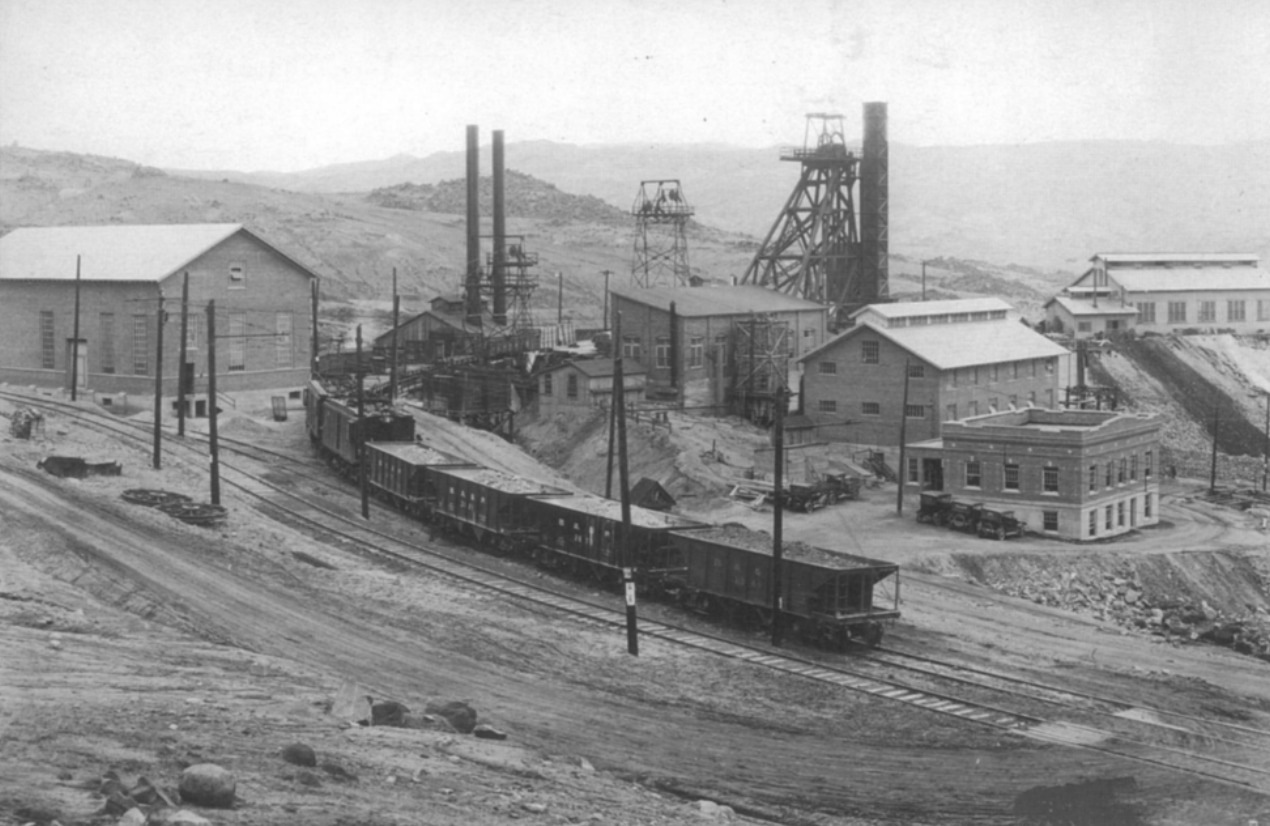
    <summary type="html"><![CDATA[<p><strong><em><span style="font-weight:400;">Taking advantage of existing tensions between Protestants and Irish Catholics in Butte, Montana, the Ku Klux Klan sought to penetrate the community and hoped to stoke discourse.</span></em></strong></p><img src="https://www.intermountainhistories.org/files/fullsize/23f3a64865731d1aad110432024680ba.jpg" alt="Undated photograph of Elm Orlu mine" /><br/><p><span style="font-weight:400;">Before the arrival of the Ku Klux Klan in 1923, tension between Protestants and Catholics existed in the mining communities of Butte, Montana. The so-called “War of the Copper Kings” was a feud between mine owners Marcus Daly and William A. Clark during an 1888 campaign for territorial representation of the companies. Although both were Irish, Clark was a Protestant while Daly was a fervent Catholic. Many of the miners were migrant Irish-Catholics and Daly won the election. Clark never forgot the loss and battled for control until he died in 1900. It was also during this period that a group known as The American Protective Association (APA) gained popularity in Butte. The APA was an organization that was extremely anti-Catholic and members frequently got into violent altercations with Catholics at local bars.   </span></p><p><span style="font-weight:400;">Furthermore, due to issues such as decreased copper demand following the end of the First World War, many in Montana felt economically unstable and wary of foreigners. When the Ku Klux Klan arrived in Butte in the 1920s, it hoped to exacerbate the existing religious tensions and economic fears by using Irish Catholic workers as scapegoats. </span>
<span style="font-weight:400;">Originally gaining popularity in Billings, the Klan sought to move into Butte. However, as Butte historian Christine Erikson notes, “Catholic Immigrants cared little for an organization that referred to the Pope as an ‘impatient, meddling individual controlled by a Jesuitical lot of assaassainous villains.’” The Klan notably chose to act in an especially clandestine manner while conducting operations in Butte. Local Klansmen moved from town to town and conducted meetings under various aliases such as the “Protestant Men’s Welfare Council” and “Butte Men’s Literary Club.” Klan officers also urged other chapters in Montana to avoid exposing Butte Klansmen by ensuring that any mail to members in Butte didn’t indicate anything that suggested a Klan association. It is estimated that at least 181 residents of Butte joined the organization during 1923-1929, including 39 who worked as miners and on rail lines for Clark. </span>
<span style="font-weight:400;">The reasons for their especially secretive nature are not completely clear. The Butte Klan could have been worried about backlash from other Protestant organizations that operated in the area such as Masonic groups. It is also possible that other Butte clandestine organizations were not eager to associate with a group that was gaining a national reputation for terrorism. Another reason could be that in a town with a sizable Irish-Catholic population, the Klan worried about community backlash. Butte’s </span><i><span style="font-weight:400;">Labor Bulletin </span></i><span style="font-weight:400;">heavily criticized the Klan in Butte and proclaimed, “Their Invisible Empire Should Have No Place in These United States.”</span>
<span style="font-weight:400;">The Klan's larger efforts in Butte eventually proved to be fruitless—the membership and public activity essentially became dormant by the 1930s. Instead, the Klansmen opted to do smaller acts such as “guarding” voting booths and writing opinion pieces in editorials about unfavorable politicians. However, most of their Butte activities seemed to be brooding in their meeting places and discussing inter-Klan politics. </span></p><p><em><strong><a href="https://www.intermountainhistories.org/items/show/811">For more (including 3 images) view the original article</a></strong></em></p>]]></summary>
    <published>2024-05-21T00:10:52+00:00</published>
    <updated>2026-04-17T19:32:18+00:00</updated>
    <link rel="alternate" type="text/html" href="https://www.intermountainhistories.org/items/show/811"/>
    <id>https://www.intermountainhistories.org/items/show/811</id>
    <author>
      <name>Aidan Capristo, Northern Arizona University</name>
    </author>
  </entry>
</feed>