<?xml version="1.0" encoding="UTF-8"?>
<feed xmlns="http://www.w3.org/2005/Atom">
  <title type="text">Intermountain Histories</title>
  <updated>2026-04-17T19:32:16+00:00</updated>
  <generator uri="http://framework.zend.com" version="1.12.20">Zend_Feed_Writer</generator>
  <link rel="alternate" type="text/html" href="https://www.intermountainhistories.org/"/>
  <link rel="self" type="application/atom+xml" href="https://www.intermountainhistories.org/items/browse?output=rss2"/>
  <id>https://www.intermountainhistories.org/</id>
  <author>
    <name>Intermountain Histories</name>
    <uri>https://www.intermountainhistories.org</uri>
  </author>
  <link rel="hub" href="https://pubsubhubbub.appspot.com/"/>
  <entry>
    <title type="html"><![CDATA[Ashley Pond]]></title>
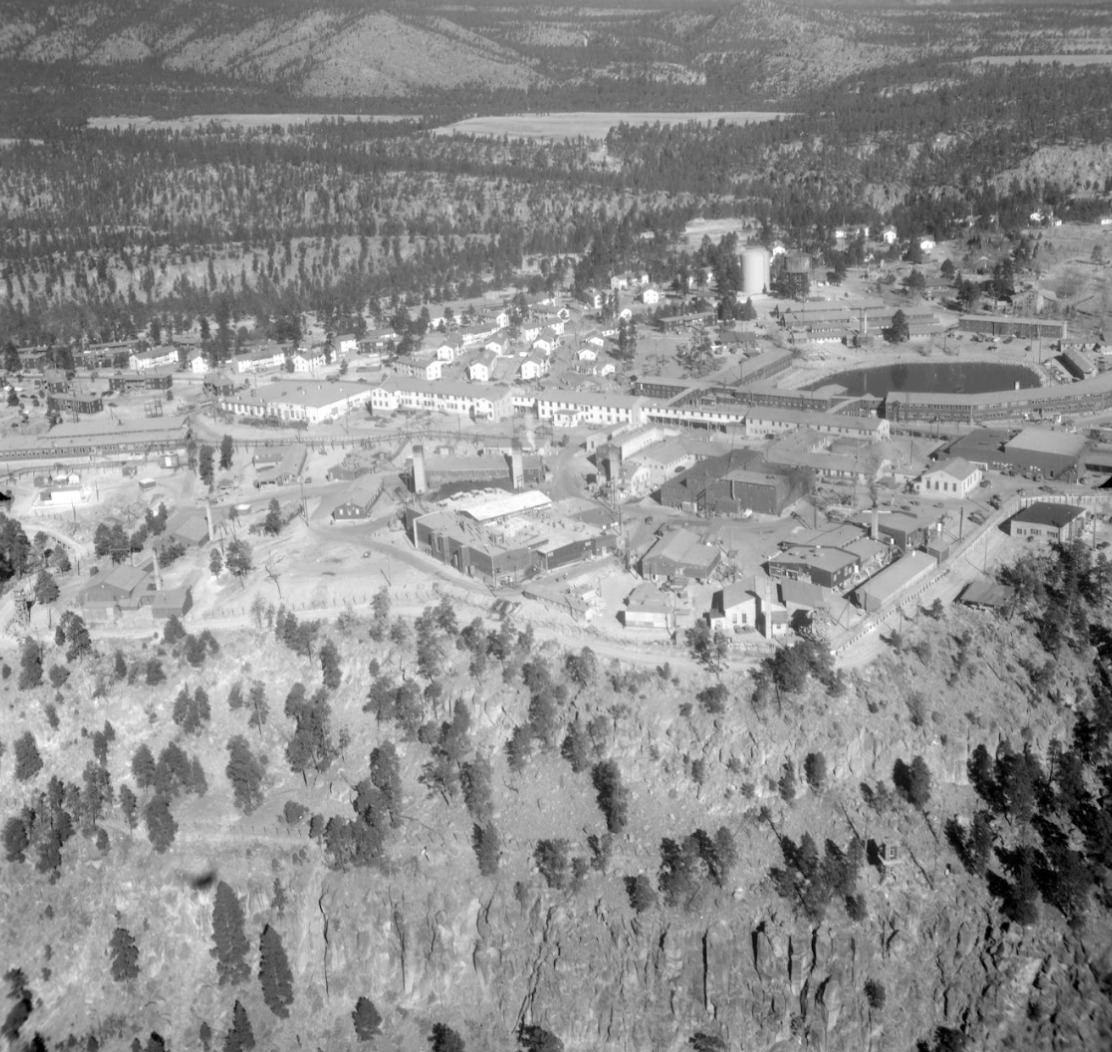
    <summary type="html"><![CDATA[<p><strong><em>From a soggy bog to a beloved community gathering place, the change and continuity of Ashley Pond illustrates the many eras of Los Alamos from homestead to Ranch School to government laboratory to the vibrant community of today.</em></strong></p><img src="https://www.intermountainhistories.org/files/fullsize/474ae326a19e2d428271b8e7a2ab5485.jpg" alt="1946 Aerial View of Los Alamos" /><br/><p><span style="font-weight:400;">Although Ashley Pond is now a prominent green space in the center of Los Alamos, it had a less majestic beginning. In 1908, it was a soggy depression used by homesteader H. H. Brook for watering his stock. Later, the Los Alamos Ranch School used it for the same purpose. Its applicable, albeit unimaginative, first name was the Stock Watering Tank. This was later switched to the Duck Pond in honor of its most popular visitors. The waterhole continued to remain a relatively unimpressive morass until the Ranch School built a dam in Los Alamos Canyon in 1923. This created a small reservoir which fed a pipeline to provide the school with water. The overflow from the pipeline was then dispersed into a puddle which progressively grew into a pond and then a small lake. </p>
<span style="font-weight:400;">The all-boys Los Alamos Ranch School was founded in 1917 by Detroit native, Ashley Pond Jr., who created it to generate tough, intelligent, well-rounded, and experienced outdoorsmen. As such, the students were encouraged to utilize the beautiful landscape for recreation and exercise. The pond provided an ideal place to put their learning into practice. Although never deep enough for true diving, the pond was perfect for canoeing and an excellent place to practice swimming. In the winter, the boys skated across its frozen surface playing hockey and harvesting the ice for the coming year. Ice blocks were stored in a nearby stone ice house and they were known to have collected enough ice to sustain them for up to two years. Once sufficiently filled, school faculty member—and notorious lover of puns—William Mills, provided the name of Ashley Pond in honor of the founder. The official title for the pond is Ashley Pond, not Ashley Pond Pond, but today Los Alamos natives enjoy the humorous anecdote. </p>
<span style="font-weight:400;">When the United States government acquired the land for the Manhattan Project, they allowed the school two months to make other arrangements. The boys went through a hurried graduation and left their beloved mountains, mesas, and pond in the hands of scientists. Manhattan Project staff built the Technical Area, also called TA 1, around the south side of Ashley Pond as a safeguard against fire. They repurposed the ice house as well, using it in 1945 to assemble nuclear components of the “gadget” which would be tested at Trinity. As such, Ashley Pond became restricted under laboratory security and very few outsiders were able to enjoy it. </p>
<span style="font-weight:400;">Today, Ashley Pond is a pleasant downtown landmark of Los Alamos. Situated near the center of town, it is used for picnics, walks, and outdoor concerts in the summer. Los Alamos natives attentively watch the ducks and geese who live at the pond, especially during chick season. During the winter, surrounding trees are decorated with colorful Christmas lights. The local winter parade currently ends at the pond, the same place where the Ranch School boys canoed and harvested ice nearly a century ago. </span>


</p><p><em><strong><a href="https://www.intermountainhistories.org/items/show/750">For more (including 6 images) view the original article</a></strong></em></p>]]></summary>
    <published>2023-09-07T23:39:58+00:00</published>
    <updated>2026-04-17T19:32:16+00:00</updated>
    <link rel="alternate" type="text/html" href="https://www.intermountainhistories.org/items/show/750"/>
    <id>https://www.intermountainhistories.org/items/show/750</id>
    <author>
      <name>Abigail Beus, Brigham Young University</name>
    </author>
  </entry>
  <entry>
    <title type="html"><![CDATA[The Swett Family Homestead]]></title>
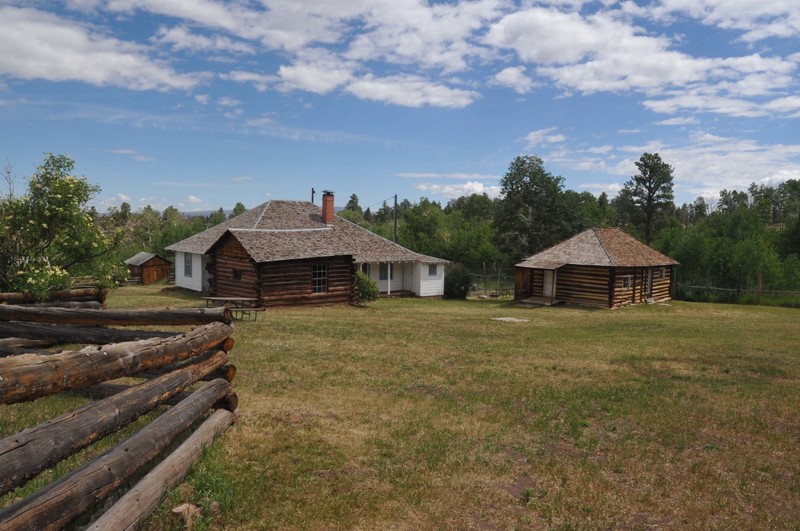
    <summary type="html"><![CDATA[<p><strong><em>In the late 1960s, urban sprawl was taking place across America. Yet Oscar and Emma Swett chose to continue their simple life on the homestead they had carved out over fifty years before.</em></strong></p><img src="https://www.intermountainhistories.org/files/fullsize/d6d7be381bb83a940cb28f070fb46eae.jpg" alt="Swett Ranch, Daggett County, Utah" /><br/><p>The Swett Homestead was established in Greendale, Utah at a time when few eligible spots for homesteading were left. Oscar Swett and Emma Eliza Oziek were among the last generation of homesteaders in the United States. Living in the mountains near the modern day Flaming Gorge Reservoir, the Swett family led a life of hard work surrounded by rugged beauty. In their lifetime, Oscar and Emma watched dirt trails turn into paved roads, grazing land turn into national forest, and wagon rides turn into Chevy pick-up truck runs.</p><p>In 1909, Oscar’s mother filed a homestead claim on 151 acres for him since he was not old enough to do so himself. Oscar filed for another 9 acres in November of 1915 to round it out to the 160 acres that was common at that time. Oscar and Emma were married in 1912 and initially only spent their summers on their new property. As they cleared more land and established a more permanent home, they began to stay on the homestead year round. </p><p>All three of the Swett family homes can still be seen today. They were built close together and increased in size to accommodate their growing family. The first home was an abandoned one-room cabin in Mckee Draw that Oscar disassembled and then reassembled at its current location. When their fourth child was born in 1919, Oscar recruited family and friends to help build the two-bedroom log cabin next door. In 1929, Oscar built the five-room house to accommodate himself, Emma, and the six children they then had. This house would later come to be called the “white house” when it was painted all white several years later. Oscar and Emma had nine children total with the last baby, Wilda, coming in 1936 when Emma was forty-four years old.</p><p>Every member of the Swett family was expected to work a variety of jobs regardless of their age or gender. The two main sources of income for the family came from selling lumber and cattle. In 1921, Oscar bought a steam-powered saw mill to make the preparation of lumber easier. But before he could put it to good use, the boiler on the mill exploded and killed an elderly man from Manila who had come to show him how to use it. The next year, Oscar bought a water-powered saw mill and was able to collect lumber from trees marked by a Forest Service ranger in the Ashley National Forest. Oscar described this process of collecting lumber, “That was quite an experience. You go up this mountain [south of the homestead] and get you a load of logs on there and start off and there was no stop ‘til you hit the bottom. Just as hard as the team would run. There was places where it would slack a little. But you could never stop.”</p><p>As the Ashley National Forest expanded and the Flaming Gorge Dam was built, the Swett’s homesteading way of life came to a close. Land that had once been used for grazing cattle, and forests that had once been used for collecting lumber, were now off limits. On November 29, 1957, neighbor Orson Burton sold his share of the cattle business to Oscar and left the Swetts as the last remaining original settlers of Greendale. In September 1968, after a day of working in the fields and shooting a porcupine that had been gnawing on a post of the house, Oscar Swett passed away in bed. In 1970, Emma sold the ranch. She passed away in May 1972 in Vernal, Utah. The U.S. Forest Service bought the ranch and turned it into a museum that same year.</p><p><em><strong><a href="https://www.intermountainhistories.org/items/show/202">For more (including 3 images) view the original article</a></strong></em></p>]]></summary>
    <published>2018-06-08T00:51:59+00:00</published>
    <updated>2026-04-17T19:32:02+00:00</updated>
    <link rel="alternate" type="text/html" href="https://www.intermountainhistories.org/items/show/202"/>
    <id>https://www.intermountainhistories.org/items/show/202</id>
    <author>
      <name>Samuel Hauber, Brigham Young University</name>
    </author>
  </entry>
  <entry>
    <title type="html"><![CDATA[The Meeks Homestead]]></title>
    <summary type="html"><![CDATA[<p><strong><em>Priddy Meeks moved west with other Mormon pioneers in 1847. In 1851, he built a home in Parowan, Utah.  Priddy, over the next ten years, adopted an Indian girl, married his third wife, and helped residents as the only doctor in southern Utah.</em></strong></p><img src="https://www.intermountainhistories.org/files/fullsize/c9a46cae00ad7635fa400a6d14999276.jpg" alt="Dr. Priddy Meeks&#039; Cabin" /><br/><p>Priddy Meeks joined the Church of Jesus Christ of Latter-Day Saints in 1840. He moved with other members of the church to Salt Lake City in 1847 when he was fifty-one years old. When Brigham Young encouraged the Saints to spread across the West, Priddy moved south to Parowan, Utah. Priddy wrote in his journal, “I left Salt Lake to go to Parowan to live to help strengthen the place against the Indians.” When Priddy arrived, everyone lived within the fort for protection. Despite the danger, Priddy built a home outside the fort and was the first to do so.</p><p>Priddy decided to build a log cabin with an adobe brick chimney. He chopped down wood with an axe and then flattened the logs with an adze so that they fit close together. He used square nails to hold the house together and chinked the small openings between the logs. The loft on the east side of the cabin was accessible only by a ladder placed outside the home. Due to the heavy snowfall in the area, Priddy decided to shingle his roof and give it a steep pitch so that the snow would slide off. After Priddy finished building his cabin, other residents of the fort began to venture out and build homes as well.</p><p>Relations with the Indians were tense at first. The Indians killed the pioneers’ calves for food, and one Indian struck the wife of John D. Lee. Another Indian offered to whip the offending Indian until Mr. Lee was satisfied. Mr. Lee agreed to the whipping and Priddy wrote, “The Indians paid more respect to our rights after that. The more the Indians became acquainted with us, the more they liked us.” Indian relations also changed when the Mormons were exposed to the Indian slave trade. One Indian killed the child he was trying to sell after a Mormon refused to buy. This event contributed to Brigham Young encouraging members of the church to buy Indian children. He asked members to educate the children, adopt them into their families, and teach them Mormon beliefs. Priddy Meeks bought a young Indian girl whom he named Lucy and raised with his other children.</p><p>Priddy Meeks had nineteen children from his three wives. He had four children with Mary Bartlett before she died in 1823. Three years later, he married Sarah Mahurin and they had five children together. Then in 1856, while living in Parowan, Sarah encouraged him to take a second wife. Priddy married Mary Jane McCleve on November 12, 1856 and they had ten children together. Priddy took care of his family and the residents of southern Utah as the first doctor in that region. He lived in Parowan for ten years before moving to Harrisburg, Utah. </p><p><em><strong><a href="https://www.intermountainhistories.org/items/show/201">For more (including 3 images) view the original article</a></strong></em></p>]]></summary>
    <published>2018-06-08T00:02:21+00:00</published>
    <updated>2026-04-17T19:32:02+00:00</updated>
    <link rel="alternate" type="text/html" href="https://www.intermountainhistories.org/items/show/201"/>
    <id>https://www.intermountainhistories.org/items/show/201</id>
    <author>
      <name>Samuel Hauber, Brigham Young University</name>
    </author>
  </entry>
  <entry>
    <title type="html"><![CDATA[The Wolfe Homestead]]></title>
    <summary type="html"><![CDATA[<p><strong><em> John Wesley Wolfe, a Civil War veteran, left his family in Ohio to find relief from his wounds in a drier climate. He and his oldest son established a cattle ranch and trading stop for Indians. In their last years on the ranch, John’s daughter Flora and her family kept him company and contributed to the ranch.</em></strong></p><img src="https://www.intermountainhistories.org/files/fullsize/af938743024b683a80bf043ceb5c95ce.jpg" alt="Arches National Park" /><br/><p>John Wesley Wolfe was born on February 17, 1829 in Tennessee. When the Civil War broke out in 1861, John joined the Union even though his home state joined the Confederacy. He fought in several major battles as a member of the 17th Ohio Battery. At the Siege of Vicksburg, John injured his leg lifting a cannon out of the mire and was given a disability discharge. He never walked without the aid of a crutch again, and this injury eventually prompted him to move to Utah.</p><p>In 1898, at the age of sixty-nine, John decided to heed his doctor’s advice and move to a drier climate. He hoped the desert air would alleviate the pain in his leg and stop the infection from spreading. He only managed to convince his son Fred to go with him to southern Utah. John’s wife and their three other children stayed behind in Ohio. John and Fred erected a simple cabin and set to work creating their “Bar DX” ranch. Though it’s not visible today, there was abundant native grass in the area that allowed over 1,000 cattle to graze on the Wolfe’s ranch. </p><p>In 1906, John’s daughter Flora and her family came to live on the ranch. She, her husband Ed Stanley, and their children Esther and Ferol brought new life to the remote homestead. Fred and Ed built a new cabin with wood floors and a window to make Flora and the children more comfortable. The men hauled timber from the Colorado River to use for the walls. They built the roof out of a frame of small logs and a large center beam. Fred and Ed laid bark from juniper trees and dirt from the surrounding hills over the top of the frame. The children helped stuff clay into the cracks between logs for insulation. This cabin is visible from the trail that leads to Delicate Arch in Arches National Park today. </p><p>Despite living in such a remote area, the Wolfes and Stanleys ate well. John irrigated a garden by plugging the creek that ran nearby with a simple dirt dam. He grew squash, corn, pumpkins, and a few extra melons to trade with the Indians who passed through. Few things made John as angry as when a rainstorm flushed out the dam. The family ate rabbit, venison, and chicken until butchering season came each fall and they had fresh beef. John supplanted their diet with groceries like canned milk that he picked up at Thompson Springs. Ed missed fresh milk so much that he once tried to milk a wild cow. The rest of the family watched as the cow kicked both hind feet and Ed quickly learned to be content with canned milk. </p><p>After two years, the Stanleys moved to Moab so their children could receive a formal education. In 1910, John sold the ranch to Tommy Larson and moved back to Ohio. John died in October of 1913 at age eighty-four. In 1914, Marvin Turnbow, the first custodian of Arches National Monument, bought the ranch from Larson. His family used the cabin occasionally until they sold it to Emmit Elizondo, who eventually sold the property to the U.S. government for inclusion in Arches National Monument.</p><p><em><strong><a href="https://www.intermountainhistories.org/items/show/200">For more (including 3 images) view the original article</a></strong></em></p>]]></summary>
    <published>2018-06-07T01:18:25+00:00</published>
    <updated>2026-04-17T19:32:02+00:00</updated>
    <link rel="alternate" type="text/html" href="https://www.intermountainhistories.org/items/show/200"/>
    <id>https://www.intermountainhistories.org/items/show/200</id>
    <author>
      <name>Samuel Hauber, Brigham Young University</name>
    </author>
  </entry>
  <entry>
    <title type="html"><![CDATA[The Larson Homestead in Kolob Canyon]]></title>
    <summary type="html"><![CDATA[<p><strong><em>Gustive O. Larson was a prominent Utah historian. He started a homestead in southern Utah in the 1930s but lost it when the Kolob National Monument was established. During his four summers on the homestead, Gustive learned about Utah history, overcame a severe illness, and built a cabin that stands today.</em></strong></p><img src="https://www.intermountainhistories.org/files/fullsize/fa6d43239eb30b5d24b6a17c13bab6f7.jpg" alt="Larson Cabin " /><br/><p>Gustive O. Larson was born in Holladay, Utah in August 1897. He met Virginia Bean while teaching in Richfield, Utah and married her on February 12, 1926. She supported him as he conducted extensive research into Utah history and participated in the community. Gustive published several books and papers, served as president of the Utah Valley chapter of the Utah State Historical Society twice, served as the chairman of the Iron County chapter of the American Red Cross for nine years, and served as chairman of the Cedar City Library Board. In the early 1930s, Gustive tried homesteading and gained valuable knowledge and experience.</p><p>Gustive set up his homestead in Dry Creek, now known as Kolob Canyon, located in the North West District of Zion National Park. Arthur Fife and William R. Palmer also established homesteads in the canyon. Gustive worked with these two men during the summers to carve out his homestead. Gustive finished his cabin in 1931 and in his personal history said his family was optimistic “to make good our claim to this beautiful little wilderness spot.” In 1932, Gustive’s salary dropped due to the depression and teacher salary cuts in Cedar City where he worked. However, Gustive was pleased with the progress being made on the homestead and the fencing that had been put up the second summer. He described the 1932–1933 school year as difficult because of his failing health and luckless speculation on the stock market. In 1933, Gustive had his appendix and gallbladder removed and his health returned.</p><p>The Larson’s were called to serve a mission for the LDS church in Sweden in 1936. In 1937, while the Larson’s were gone, the US government established the Kolob National Monument. This monument overlapped the three homesteads in the area and would eventually be incorporated into Zion National Park. When Gustive returned from Sweden, he tried to claim his homestead and was denied. The homestead laws required a family to live on the land and improve it for five years. In the summer of 1934, Gustive took several classes at UCLA and brought his family with him instead of living on the homestead. This caused the denial of his claim and the Larson’s were forced to abandon the homestead.</p><p>Though Gustive did not retain the homestead, he gained valuable knowledge from the experience. He started a friendship with his neighbor William R. Palmer, who studied Indian culture and wrote a historical radio series. This friendship influenced Gustive’s own work in the history field. Gustive and his son learned much about the outdoors from Arthur Fife who lived down the canyon. Gustive dealt with damage caused to his property by other neighbors’ goat herds and coordinated with the CCC, who were preparing to develop the region. Zion National Park has preserved the Larson cabin, which is located on the Taylor Creek trail today.</p><p><em><strong><a href="https://www.intermountainhistories.org/items/show/199">For more (including 3 images) view the original article</a></strong></em></p>]]></summary>
    <published>2018-06-07T00:54:45+00:00</published>
    <updated>2026-04-17T19:32:02+00:00</updated>
    <link rel="alternate" type="text/html" href="https://www.intermountainhistories.org/items/show/199"/>
    <id>https://www.intermountainhistories.org/items/show/199</id>
    <author>
      <name>Samuel Hauber, Brigham Young University</name>
    </author>
  </entry>
  <entry>
    <title type="html"><![CDATA[Butch Cassidy’s Childhood Home]]></title>
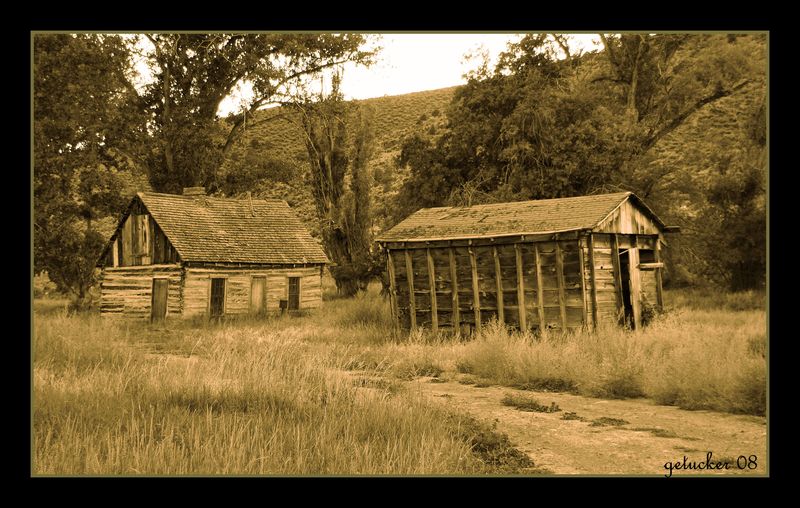
    <summary type="html"><![CDATA[<p><strong><em>Butch Cassidy worked hard to help provide for his family as a teenager on this homestead. It was the last place he lived with his family before going on to become an infamous outlaw. </em></strong></p><img src="https://www.intermountainhistories.org/files/fullsize/19f12888865cf412905d029dc4280975.jpg" alt="Butch Cassidy’s Childhood Home" /><br/><p>Robert Leroy Parker’s teenage years transpired on this homestead. Born on Friday, April 13, 1866, he would become known as the infamous Butch Cassidy. Butch’s parents, Maximillian and Annie Parker, moved Butch and his five younger siblings to this homestead when he was thirteen years old. Maxi and Ann had thirteen children total, and Butch started working to help provide for the family at thirteen years old. </p><p>In 1879 when the Parker family bought the homestead, there was already a two-room cabin on the property. As the family grew, Maxi added a kitchen on the east side and two bedrooms on the south side, expanding the house to its current size. The Parkers covered the ceiling in white cloth to make it feel less rugged. Each year, they also cleaned the homemade rag carpets and replaced the straw padding underneath them.</p><p>Though there was much hard work to be done, the Parkers still made time to have fun together. Butch, or Bob as his siblings called him, loved to take the children on pony rides or invent new games to play. They also shared a love for music, and Butch would often accompany everyone’s singing with his harmonica. There was also a fair amount of mischief. Once, Ann came home and noticed that the chickens were acting funny; reeling and stumbling around the yard. After some investigation, she figured out that the children had stolen some of their neighbor’s wine and filled pans with it for the chickens to drink. </p><p>Butch’s religious and family-centered upbringing does not match the typical origin story of an Old West outlaw. His grandparents were Mormon pioneers who crossed the plains in handcart and wagon train companies to follow their faith. But Butch started finding excuses not to go to church at a young age. Then he began to rub shoulders with outlaws like Mike Cassidy when he started working at Jim Marshall’s ranch located twelve miles south of Circleville. Mike took Butch under his wing and taught him about handling horses and guns. Butch looked up to Mike and many believe that Butch took his alias from this outlaw and cattle rustler. When Butch turned eighteen, he decided he didn’t want to scrap out a living in Circleville and wanted to go somewhere to get, “hard, solid gold.” When some thieves stole cattle in the area, Butch signed a false bill of sale and took the blame, riding out of town the day before it became known to the public. He left the homestead on an early April morning in 1884, leaving his mother to hold back his dog while he rode off on his mare Babe and lead his young colt Cornish. He sent money home often for the first few years and is considered one of the most well-liked and respected outlaws of the Old West.</p><p><em><strong><a href="https://www.intermountainhistories.org/items/show/198">For more (including 3 images) view the original article</a></strong></em></p>]]></summary>
    <published>2018-06-06T23:59:00+00:00</published>
    <updated>2026-04-17T19:32:02+00:00</updated>
    <link rel="alternate" type="text/html" href="https://www.intermountainhistories.org/items/show/198"/>
    <id>https://www.intermountainhistories.org/items/show/198</id>
    <author>
      <name>Samuel Hauber, Brigham Young University</name>
    </author>
  </entry>
</feed>