<?xml version="1.0" encoding="UTF-8"?>
<feed xmlns="http://www.w3.org/2005/Atom">
  <title type="text">Intermountain Histories</title>
  <updated>2026-04-17T19:32:20+00:00</updated>
  <generator uri="http://framework.zend.com" version="1.12.20">Zend_Feed_Writer</generator>
  <link rel="alternate" type="text/html" href="https://www.intermountainhistories.org/"/>
  <link rel="self" type="application/atom+xml" href="https://www.intermountainhistories.org/items/browse?output=rss2"/>
  <id>https://www.intermountainhistories.org/</id>
  <author>
    <name>Intermountain Histories</name>
    <uri>https://www.intermountainhistories.org</uri>
  </author>
  <link rel="hub" href="https://pubsubhubbub.appspot.com/"/>
  <entry>
    <title type="html"><![CDATA[The Lonetree Mercantile and Post Office]]></title>
    <summary type="html"><![CDATA[<p><strong><em><span style="font-weight:400;">In the center of a ranching town called Lonetree, there is an old building with a white façade and log construction that once functioned as the Post Office and mercantile store for the remote community. From 1897 to 1982, the store served as the nerve center for the community.</span></em></strong></p><img src="https://www.intermountainhistories.org/files/fullsize/de8a2ff11079a55bb74a187bf6522441.jpg" alt="Ranchers pose in front of the Lonetree Mercantile. " /><br/><p><span style="font-weight:400;">Lonetree, Wyoming, is situated just north of the high Uinta Mountains and twenty miles south of Fort Bridger. Henrys Fork River, a tributary of the Green River, first brought fur-trading Europeans to the area. Those who stayed were the descendants of LDS pioneer Captain Isaac Bullock. Bullock was sent to the area by Brigham Young in the early 1850s.</span><span style="font-weight:400;"> The Bullocks were joined by many other families. These homesteaders eventually turned to ranching. </span>
<span style="font-weight:400;">In 1897, an immigrant from Manchester, England, named Herbert Joshua Gregory came to Lonetree. Since the old post office run by R. Handley had burned down, Gregory built his own.</span><span style="font-weight:400;"> Gregory’s store provided necessary supplies and correspondence to the ranchers and townspeople in the area. A visitor to the store could expect news of deaths, births, stolen livestock, grazing permits, events, and even outlaws.</span><span style="font-weight:400;"> Dances, turkey hunts, games, and gatherings of all kinds took place around the Gregory store.</span><span style="font-weight:400;"> It is said that Butch Cassidy and the Sundance Kid were among the outlaws who stopped by Gregory’s store and interacted with members of the community.</span><span style="font-weight:400;"> Gregory was the postmaster until his death in 1952, and the title of postmaster would remain in his family until 1982 when the post office closed.</p><span style="font-weight:400;">Thanksgiving in Lonetree, 1890, made for a popular story. It is said that a Pinkerton agent came to the Gregory store and formed a posse to catch two outlaws who were riding towards Lonetree. One of the outlaws was Harry Alonzo Longabaugh or the Sundance Kid. H. J. Gregory, the town fiddler, and several others rode out to apprehend them. With no fiddler, the Thanksgiving dance could not begin. While people milled around the schoolhouse, Harry Longabaugh and his partner walked into the Gregory store. The story says that the townspeople captured Longabaugh and made him play the fiddle for their dance where he stayed long enough to dance with a woman and escape before the return of the Pinkerton agent.</span><span style="font-weight:400;"> </span>
<span style="font-weight:400;">Lonetree remains a ranching community with a small population that has not forgotten its origins in the Wild West.</span></p><p><em><strong><a href="https://www.intermountainhistories.org/items/show/875">For more (including 4 images) view the original article</a></strong></em></p>]]></summary>
    <published>2025-01-23T00:33:27+00:00</published>
    <updated>2026-04-17T19:32:20+00:00</updated>
    <link rel="alternate" type="text/html" href="https://www.intermountainhistories.org/items/show/875"/>
    <id>https://www.intermountainhistories.org/items/show/875</id>
    <author>
      <name>Landon Wilson, Brigham Young University</name>
    </author>
  </entry>
  <entry>
    <title type="html"><![CDATA[Ashley Pond]]></title>
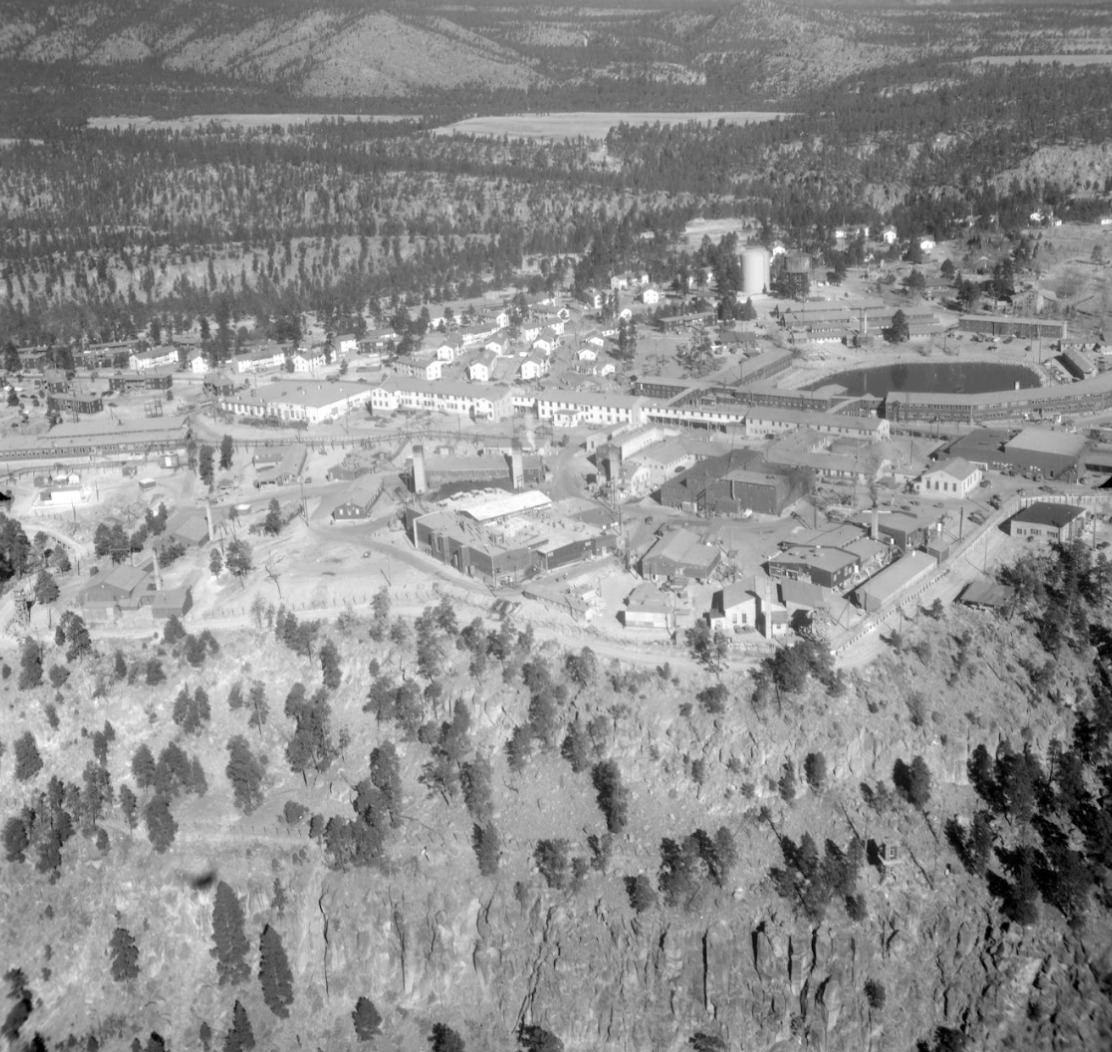
    <summary type="html"><![CDATA[<p><strong><em>From a soggy bog to a beloved community gathering place, the change and continuity of Ashley Pond illustrates the many eras of Los Alamos from homestead to Ranch School to government laboratory to the vibrant community of today.</em></strong></p><img src="https://www.intermountainhistories.org/files/fullsize/474ae326a19e2d428271b8e7a2ab5485.jpg" alt="1946 Aerial View of Los Alamos" /><br/><p><span style="font-weight:400;">Although Ashley Pond is now a prominent green space in the center of Los Alamos, it had a less majestic beginning. In 1908, it was a soggy depression used by homesteader H. H. Brook for watering his stock. Later, the Los Alamos Ranch School used it for the same purpose. Its applicable, albeit unimaginative, first name was the Stock Watering Tank. This was later switched to the Duck Pond in honor of its most popular visitors. The waterhole continued to remain a relatively unimpressive morass until the Ranch School built a dam in Los Alamos Canyon in 1923. This created a small reservoir which fed a pipeline to provide the school with water. The overflow from the pipeline was then dispersed into a puddle which progressively grew into a pond and then a small lake. </p>
<span style="font-weight:400;">The all-boys Los Alamos Ranch School was founded in 1917 by Detroit native, Ashley Pond Jr., who created it to generate tough, intelligent, well-rounded, and experienced outdoorsmen. As such, the students were encouraged to utilize the beautiful landscape for recreation and exercise. The pond provided an ideal place to put their learning into practice. Although never deep enough for true diving, the pond was perfect for canoeing and an excellent place to practice swimming. In the winter, the boys skated across its frozen surface playing hockey and harvesting the ice for the coming year. Ice blocks were stored in a nearby stone ice house and they were known to have collected enough ice to sustain them for up to two years. Once sufficiently filled, school faculty member—and notorious lover of puns—William Mills, provided the name of Ashley Pond in honor of the founder. The official title for the pond is Ashley Pond, not Ashley Pond Pond, but today Los Alamos natives enjoy the humorous anecdote. </p>
<span style="font-weight:400;">When the United States government acquired the land for the Manhattan Project, they allowed the school two months to make other arrangements. The boys went through a hurried graduation and left their beloved mountains, mesas, and pond in the hands of scientists. Manhattan Project staff built the Technical Area, also called TA 1, around the south side of Ashley Pond as a safeguard against fire. They repurposed the ice house as well, using it in 1945 to assemble nuclear components of the “gadget” which would be tested at Trinity. As such, Ashley Pond became restricted under laboratory security and very few outsiders were able to enjoy it. </p>
<span style="font-weight:400;">Today, Ashley Pond is a pleasant downtown landmark of Los Alamos. Situated near the center of town, it is used for picnics, walks, and outdoor concerts in the summer. Los Alamos natives attentively watch the ducks and geese who live at the pond, especially during chick season. During the winter, surrounding trees are decorated with colorful Christmas lights. The local winter parade currently ends at the pond, the same place where the Ranch School boys canoed and harvested ice nearly a century ago. </span>


</p><p><em><strong><a href="https://www.intermountainhistories.org/items/show/750">For more (including 6 images) view the original article</a></strong></em></p>]]></summary>
    <published>2023-09-07T23:39:58+00:00</published>
    <updated>2026-04-17T19:32:16+00:00</updated>
    <link rel="alternate" type="text/html" href="https://www.intermountainhistories.org/items/show/750"/>
    <id>https://www.intermountainhistories.org/items/show/750</id>
    <author>
      <name>Abigail Beus, Brigham Young University</name>
    </author>
  </entry>
  <entry>
    <title type="html"><![CDATA[Cecelia Weiss, Female Homesteader<br />
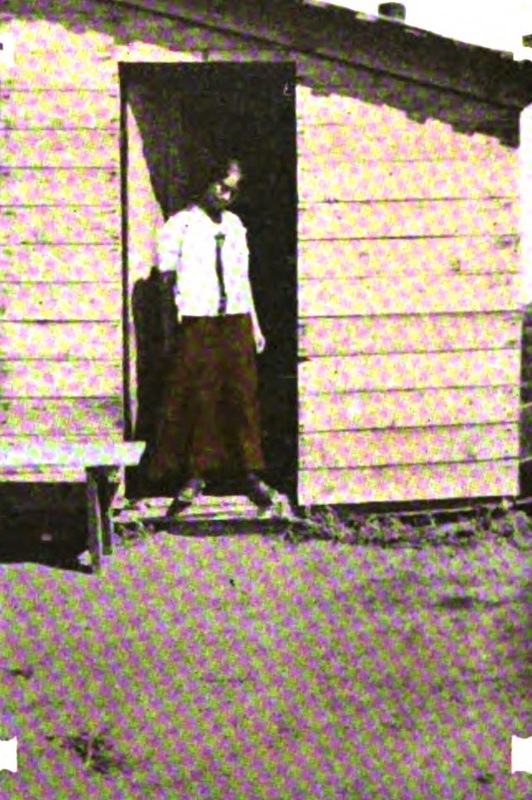
]]></title>
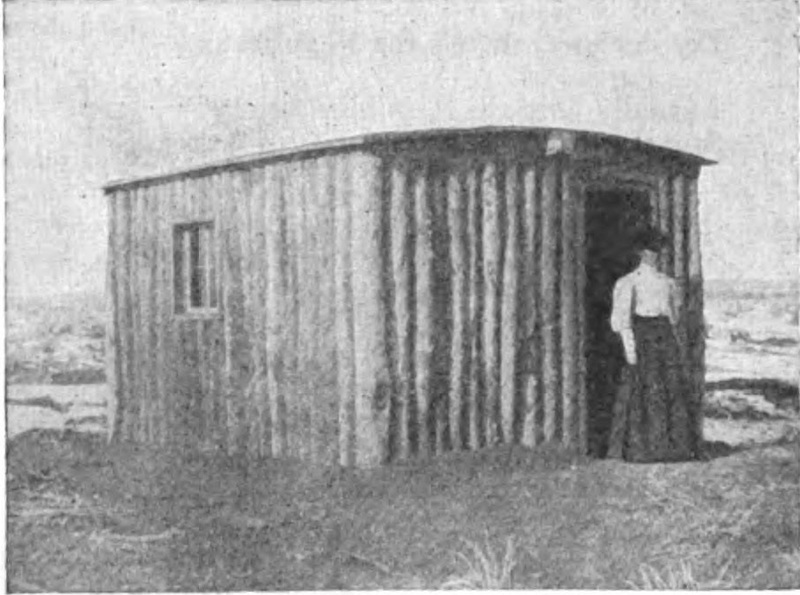
    <summary type="html"><![CDATA[<p><strong><em>“Disregarding whatever pecuniary gain there may be, it is a real inspiration to be part of a modern pioneer colony conquering the wilderness. At least it is an inspiration in the retrospect.” Cecelia Weiss recognized and exhibited the determination and grit required of a homesteader in the desert mountains of southern Utah.</p></strong></p><img src="https://www.intermountainhistories.org/files/fullsize/ae6547733ba3c480b60048add163e233.jpg" alt="Cecelia and the Piano Box
" /><br/><p>With the introduction and improvement of dry farming in the late nineteenth century, land previously considered worthless could suddenly be used. Land fever took hold of many prospective homesteaders, including Cecelia Weiss. Following the lead of her sister, in 1912 Cecelia filed for 320 acres of sagebrush in Iron County of southwestern Utah. With neighboring claims and most others in the region filed by men (only two of whom had wives), they quickly became known as “The Girls.” The two depended on one another and Cecelia recalled, “Without my sister’s companionship I think I would have deserted before the first season was half over.”</p><p>Upon acquiring her land, Cecelia hired out the building of a simple home. It was “not entirely weather-proof, but as it rarely rained in summer it afforded sufficient protection.” Cecelia was spared the “privilege of naming [her] residence.” It had scarcely been completed when a homesteader passed by, remarking that the “piano box” was finished and the “nickname clung to it ever since.”</p><p>In her accounts, Cecelia wrote, “my 320 acres do not support me — yet. I support them.” Establishing a home and a farm was no simple, or cheap, task. Cecelia returned to the city every winter, during the five month furlough allowed under homestead law, to earn the necessary funds to continue work in the summer. A Russian immigrant, she quipped that, unlike in her home country, “there are no relief commissions for girl homesteaders, and the Red Cross pays no attention to them.”</p><p>Together, the sisters worked on improvements for their land. There was no running water for miles, so they were dependent on a neighbor who could afford the expense of digging and establishing a well. Cecelia wrote, “Until I had to walk a mile and a half and carry every drop I had no conception of the value of water.” Out of necessity, “water conservation became a religion.” Putting up fences was “always one of the worst jobs of a homesteader.” When Cecelia and her sister first began digging post holes and setting the posts, they could only manage one in the morning and one in the evening, with their best effort and leaving them exhausted. Before long though, they increased to ten in the morning and ten more at night. Together, they set 600 posts and saved $75 that it would have cost to hire the work out. </p><p>To meet ownership requirements for the land, Cecelia needed to cultivate 40 acres. She paid cash for the heavy labor of clearing, plowing, seeding, and hauling. It was a helpful arrangement, but, worse than increasing her costs, it added to her “hours of leisure.” She despised the abundant spare time, writing, “I never knew how much time there is in the world, how it refuses to be prodded and hurried in its snaily crawl, until I contracted with Uncle Sam to spend seven consecutive months in the sagebrush, with the nearest neighbor almost out of sight and not sufficient work to make me forget the heat.”</p><p>Her garden became a “source of great delight.” The arid soil was not in great condition for growing, and she had to compete with rabbits and gophers, but what she was able to raise was a help. Food became less of an issue when a store was established in the nearby town, Beryl.</p><p>Even with her sister nearby, homesteading could be lonely. “In the sagebrush,” Cecelia commented, “It is not sufficient that [a young woman] should avoid evil itself; she must avoid the appearance of evil.” She records having to be careful that if a young man came to call, they would sit outside on “a hard wooden bench in the broiling sun” because it was not proper to invite him inside her one bedroom home alone. Cecelia felt “handicapped by the fear of gossip and scandal” that would “spring up overnight without provocation” in a place “where folks have nothing to do for recreation but scan the empty miles and sit and think about their neighbor.” A young girl like Cecelia, without the protection of a chaperon, made “the best material for such stories.” </p><p>Life was “not all thirst, desolation and dreariness” and, “in spite of everybody,” they made time to enjoy themselves. Cecelia found “many congenial friends” among the other settlers. Trips to call on neighbors, when managed, were all day affairs because “distances between homes [were] too great to be taken lightly” and to be travelled during midday heat. Parties “in the land of hope and thirst” were just as exciting and enjoyable as those in the city. They also often served additional practical purposes. When a big job or task was at hand, one might send for friends and neighbors to make light work of it. Food and festivities would take place after its completion. </p><p>In 1916, Cecelia received the title to her land. If she chose to sell, she could have made a neat profit of $2,200, but that was not what Cecelia wished for. She “would rather make a real farm out of the sagebrush tract.” While others saw the patent as an end goal, to her it only marked the beginning, a continuation of a dream. She wrote, “It has taken pluck to stick to the venture and see it through. There have been times when it has been very hard to stay, but I have never thought of quitting.” To develop a farm from raw land took “money, grit, perseverance, and self-denial,” but “in spite of drouth and loneliness, this plucky girl ‘won through.’”</p><p><em><strong><a href="https://www.intermountainhistories.org/items/show/458">For more (including 3 images) view the original article</a></strong></em></p>]]></summary>
    <published>2021-02-07T06:05:00+00:00</published>
    <updated>2026-04-17T19:32:09+00:00</updated>
    <link rel="alternate" type="text/html" href="https://www.intermountainhistories.org/items/show/458"/>
    <id>https://www.intermountainhistories.org/items/show/458</id>
    <author>
      <name>Anna Bailey, Brigham Young University </name>
    </author>
  </entry>
  <entry>
    <title type="html"><![CDATA[Elinore Pruitt Stewart, Female Homesteader<br />
]]></title>
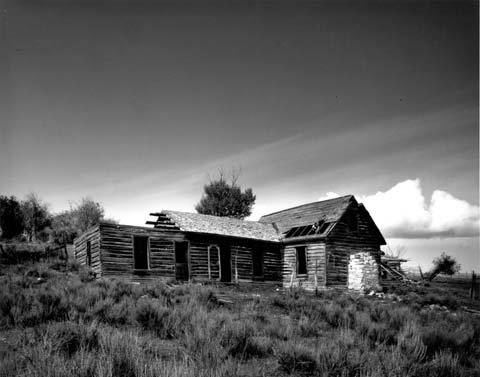
    <summary type="html"><![CDATA[<p><strong><em>“I just love to experiment, to work, and to prove out things,” wrote Elinore Pruitt Stewart in 1913. “Ranch life and ‘roughing it’ just suit me.” Elinore was not born into homesteading, but it suited her and she sought it out in her search for independence.</em></strong></p><img src="https://www.intermountainhistories.org/files/fullsize/8531e6b6c25202a7b1390570da791f74.jpg" alt="Front of the Stewart Cabin
" /><br/><p>Orphaned in her teenage years, Elinore Pruitt Stewart was accustomed to independence. She found employment as a housekeeper for Mrs. Juliet Coney in Colorado after leaving a failed marriage in Oklahoma. In 1909, Elinore decided to seek a more permanent and reliable life for herself and her daughter, Jerrine. Following the advice of her employer and her priest, Elinore began looking for a position as a housekeeper for a homesteader. She accepted a position from Clyde Stewart and moved west to his property in Burntfork, Wyoming.</p><p>That May, she filed for a 160 acre homestead under the Homestead Act on a lot adjacent to Clyde’s. The two married shortly after. She recalled that first summer of work as “the busiest, happiest” she could remember. While the work was hard, it was labor she could “really enjoy.” Over the years, Elinore detailed her life and experiences in Wyoming in letters sent to her friend and previous employer, Mrs. Coney. This collection of letters was later published as a book. It heralded the merits of homesteading as a means for women to provide for themselves. Of women considering the possibility, Elinore wrote, “I feel like urging them every one to get out and file on land… It really requires less strength and labor to raise plenty to satisfy a large family than it does to go out to wash, with the added satisfaction of knowing that their job will not be lost to them if they care to keep it.” She was “very enthusiastic about women homesteading” as a source of autonomy and solution to poverty. In her eagerness for independence and ownership of land, Elinore delayed revealing her new husband to Mrs. Coney until nearly a year after the marriage took place. </p><p>Homestead law required that married women file jointly with their husbands or live separately. Elinore had to relinquish her claim to her mother-in-law in 1912 to avoid losing it completely. She and Clyde later bought the property back once the deed had been acquired. Together they had five children, three of whom survived to adulthood. The family wintered in Boulder, Colorado so their children could attend school there. The remaining months were spent on the ranch, gardening, haying, and caring for livestock. </p><p>In addition to the hard labor, Elinore’s letters described trips with her children or into the mountains. On one such occasion, “after working so hard and so steadily,” she got away by dawn and had a “glorious day” riding in the hills with Jerrine. The publication of her letters brought some notoriety and time was also spent entertaining visitors who came to meet the confident and optimistic woman homesteader.</p><p>Elinore spent her life working and improving the Stewart homestead until her death in 1933. She died of a blood clot to the brain after a surgery following several bouts of serious illness in the years leading to her death. She was buried in Burntfork Pioneer Cemetery, leaving both a historic and a literary legacy that preserves her memory as a successful female homesteader in the American West. </p><p>The ranch continued to be operated by Clyde and their sons until it was leased in 1940 and then sold. The site is now included on the National Register of Historic Places. The homestead building still remains at its original site, although in a much dilapidated condition. There are no current plans to preserve or restore it.</p><p><em><strong><a href="https://www.intermountainhistories.org/items/show/457">For more (including 4 images) view the original article</a></strong></em></p>]]></summary>
    <published>2021-02-07T05:41:39+00:00</published>
    <updated>2026-04-17T19:32:09+00:00</updated>
    <link rel="alternate" type="text/html" href="https://www.intermountainhistories.org/items/show/457"/>
    <id>https://www.intermountainhistories.org/items/show/457</id>
    <author>
      <name>Anna Bailey, Brigham Young University</name>
    </author>
  </entry>
  <entry>
    <title type="html"><![CDATA[Geraldine Lucas, Female Homesteader<br />
]]></title>
    <summary type="html"><![CDATA[<p><strong><em>“They’ll never get me off my land,” vowed Geraldine Lucas. Drawn to Jackson Hole as a beautiful location to retire and by the presence of several siblings, Geraldine became a legendary character of the locale both for her eccentricity and her refusal to sell her land to the National Parks Association. </p></strong></p><img src="https://www.intermountainhistories.org/files/fullsize/59bed290014649aa28d35288cc8edfc5.jpg" alt="Geraldine with other locals during winter
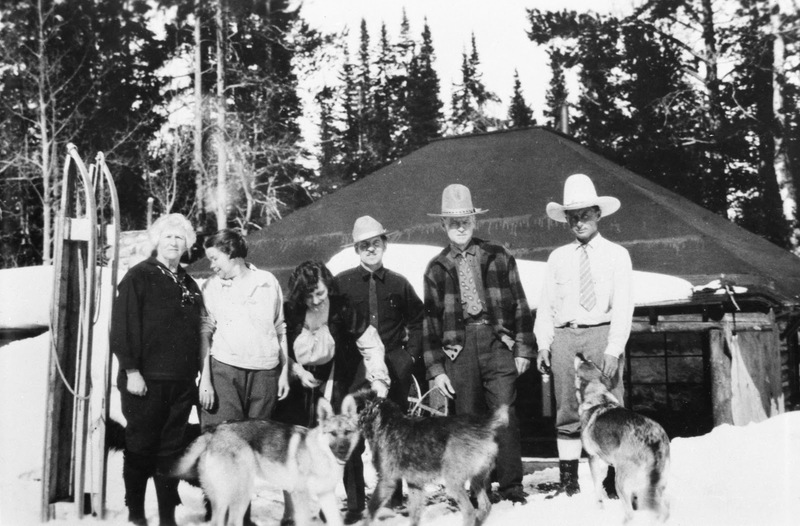
" /><br/><p>Geraldine Lucas was not one to simply comply with traditional norms. At 21, she left a brief but rocky marriage, bringing her son, Russell with her. She then chose to attend school at Oberlin College, becoming both a “returning student” and “single parent” before either term was common. Both Geraldine and Russell had strong personalities, and they clashed over Russell’s educational future spurring him to run away to the Navy. When he returned, they made up, and Geraldine successfully convinced him to join the Coast Guard.</p><p>After she retired in 1913 from teaching public school in New York, Geraldine joined several of her siblings in Jackson Hole, Wyoming where she filed for a 160-acre homestead. Geraldine chose her property as much for the grandeur of the Tetons as for its agricultural potential. She cultivated what was required by law to obtain the property, but then abandoned those efforts and grew only what she needed.</p><p>Geraldine built a cabin and made other improvements, including a second cabin, log storeroom, granary, rabbit hatch, fencing, and over two miles of ditches, all valued at over $7,000. In 1914, she also applied for a timber and stone claim along Phelps Lake, intending to enlarge her landholdings. Geraldine was at odds early on with the federal government due to various errors and complexities associated with her claim. In 1918, when she planned to prove up (colloquial phrase for the legal process of securing title to homestead lands after meeting certain government requirements) on the land, there were complications with the new land office survey and records of intention to file. Geraldine was finally issued her certificate nine years after initiating the process. Then in 1922, Geraldine filed for a desert land entry, but encountered more difficulties with the land office and, ultimately, had to revise the claim from 100 to 70 acres. These frustrations and delays antagonized her against government interference and regulation. Like many Westerners, Geraldine “believed the agency loved technicalities that bordered on harassment.”</p><p>Around 1918, Geraldine persuaded Naomi Colwell to take up an adjacent homestead. At the final proof, Geraldine witnessed that Naomi had no intention to sell her land, a legal requirement, but a short two months later bought 80 acres from her for $500. There were few qualms on the frontier about evading laws or restrictions in the pursuit of additional property. </p><p>In many ways “a loner, ”Geraldine garnered a reputation in Jackson Hole as a man hater. This was reinforced by her efforts to undermine an emerging relationship between Naomi and Russell, as well as run off other potential suitors of the young woman. </p><p>Geraldine spent her summers visiting various family members for weeks at a time, but, come fall and winter, she returned alone to her homestead until spring. She would gather the necessary groceries and wood supply then settle into her books and sewing. A talented seamstress, according to her nephew, she “would sew until hell wouldn’t have it.” Geraldine only ever wore knickers, so it is a mystery what or whom she sewed for. Her personal library consisted of over 1,350 carefully cataloged and numbered books. She also owned a piano, and her home was decorated with gifts from Russell's travels, including a walrus skull and tusks, Kodiak bear head, Eskimo pipe, and reindeer antlers. He also sent a sled and dog team to serve as transport during winter months.</p><p>A mountain climbing craze hit in the 1920s, and Geraldine suddenly had more on her mind than land. In August 1924, age 58, she joined Paul Petzoldt on his climb and became the second woman to summit the crest of the Grand. Instead of warrant accolades, her actions only tended to convince family and neighbors of her eccentricity. As they reached the summit, Petzoldt pushed Geraldine ahead of him so she would be the first on top. He said of her, “I don’t think she often broke through her protected personality, but in that moment when she threw her arms around me with a soft sob, I sensed the real Geraldine Lucas, an intelligent, loving woman who had elected for some reason to leave most of society behind.” Blunt, opinionated, and perhaps unconventional, Geraldine was certainly a character of Jackson Hole. She “simply lived life on her own terms... Yet, much of what set her apart as ‘eccentric’ in her own day, has become commonplace for today’s western women.”</p><p>In the late 1920s, John D. Rockefeller and allies formed a front organization, the Snake River Land Company, to buy property that could be added to the Grand Teton National Park. Many affected by the Great Depression were ready and willing to sell for the fair market prices being offered, but Geraldine was not one of these. Harold Fabian, tasked with buying parcels of land, said of her, “She came out from the east and homesteaded under the Tetons because she wanted to spend the rest of her life within sight of these mountains. She is a lover of beauty and nature.” When offered $50,000 for her homestead, Geraldine responded, “You stack up those silver dollars as high as the Grand Teton and I might talk to you!” She did not share the vision for a national park and had “no use for those who wanted to transform her private playground into a public one.”</p><p>Even amidst the tension of the park property disputes, Geraldine had very pleasant final years on her beloved homestead. She considered making a gift of her land to Oberlin College, but died of heart failure without a will and before any plans were official, so the homestead and property went to Russell. He sold it to a neighbor who sold to Rockefeller who in turn gave it to Jackson Hole Preserve. While Russell never shared his mother’s love for her homestead, he did appreciate it. He placed her cremated remains under a large boulder on her property with a plaque bearing her name and commemorating her memory.</p><p><em><strong><a href="https://www.intermountainhistories.org/items/show/456">For more (including 11 images) view the original article</a></strong></em></p>]]></summary>
    <published>2021-02-06T09:19:15+00:00</published>
    <updated>2026-04-17T19:32:09+00:00</updated>
    <link rel="alternate" type="text/html" href="https://www.intermountainhistories.org/items/show/456"/>
    <id>https://www.intermountainhistories.org/items/show/456</id>
    <author>
      <name>Anna Bailey, Brigham Young University</name>
    </author>
  </entry>
  <entry>
    <title type="html"><![CDATA[Kate Heizer, Female Homesteader<br />
]]></title>
    <summary type="html"><![CDATA[<p><strong><em>Of homesteading, Kate Heizer wrote, “One inquirer has an exaggerated idea of the difficulties and hardships. Another has a mistaken notion of taking a pleasant vacation while waiting till he receives title to a piece of property that will place him above financial anxiety for the rest of his life.” As for herself, Kate recognized the truth lay somewhere in the middle. </p></strong></p><img src="https://www.intermountainhistories.org/files/fullsize/5dff0bee6f413282d2b91a59c25175a3.jpg" alt="First Cabin on Heizer Claim" /><br/><p>The Dawes Severalty Act of 1887 authorized and began a process of subdividing reservation lands among Native families, breaking up and diminishing Native landholdings, including the Uintah Indian Reservation. In August 1905, “surplus” land was opened to homesteading and mineral claims. Kate Heizer was only one of thousands who applied for property in these areas. Preference for pieces of property was decided by drawing lots and Kate picked #247, low when compared to other higher possible picks. Time for potential homesteaders to look over the available land was short. Wasatch Land Company and other professional “locators” promised to identify prime lots for a price, but, with high stakes, there was a general mistrust of anyone claiming to know anything. </p><p>Potential for success rested all on the decision of what piece of land was selected. Prospective owners frantically learned all they could of sagebrush and other indicators of soil quality. Kate was skeptical of her ability to choose, writing, “I was as little capable of judging [the land] as I am of discussing the canals on Mars.” She questioned and listened to everyone who could give her any information, carefully judging “which men really understood conditions and were giving honest advice, and which either mistakenly thought they knew or had interested motives.” Her biggest concern was how the property would be irrigated, so she decided largely based on where others gathered, hoping that community would increase value and ensure a greater effort and feasibility for irrigation schemes. Kate’s study and planning paid off and she “secured a better claim than many a one who had had an earlier choice.”</p><p>The filing took place in early fall and, once settled, Kate returned to her teaching job to finish out the school year. To fulfill settlement requirements, she “resided” on her homestead for several days during the Christmas break. It was common for individuals to leave for periods to save money to fund work done in the spring. There were lonely spells as people moved in and out. Contests were raised, occasionally, against abandoned claims and Kate had one filed against herself in her absence. Fortunately, empathetic neighbors “with unmistakable western emphasis” advised the man to drop it—and he did. The incident spurred Kate to move out permanently and begin her required 14 months of continuous residence. The first summer was a difficult season. Many homesteaders needed ditches that didn’t yet exist to access water. Kate was fortunate in that her property was within a gully that retained water into midsummer and provided shade that grew trees for lumber. Once it was completed, she paid $1.25 per acre to the Indian Fund and, in exchange, received her patent. </p><p>Supplies had to be freighted in and were expensive to acquire. When funds ran dry, Kate had to sell 50 acres to continue improvements to the rest of her land. She was tormented by rabbits and prairie dogs that ate her crops and gardens, making “scarecrows, guns, and poison... futile.” Despite its difficulties, she persevered, seeing homesteading as an opportunity to learn and a cause for hope. Kate planted 90 acres of alfalfa and studied agriculture so she could take over management of her ranch entirely. </p><p>Regarding success, Kate explained that “the man who is alert and ready to seize opportunities, who holds to a purpose until it is accomplished, is the man most likely to succeed in any undertaking, and homesteading is no exception.” She certainly followed her own advice. While Kate took pride in becoming successful and competent, she found something even more gratifying—“the realization of being an important factor in the community, one whose voice has weight, a person to be consulted about matters of public interest.” Through her hard work and determination, Kate found success, independence, and political influence as a single woman in the American West.</p><p><em><strong><a href="https://www.intermountainhistories.org/items/show/455">For more (including 4 images) view the original article</a></strong></em></p>]]></summary>
    <published>2021-02-06T08:54:57+00:00</published>
    <updated>2026-04-17T19:32:09+00:00</updated>
    <link rel="alternate" type="text/html" href="https://www.intermountainhistories.org/items/show/455"/>
    <id>https://www.intermountainhistories.org/items/show/455</id>
    <author>
      <name>Anna Bailey, Brigham Young University</name>
    </author>
  </entry>
  <entry>
    <title type="html"><![CDATA[Katherine Garetson, Female Homesteader<br />
]]></title>
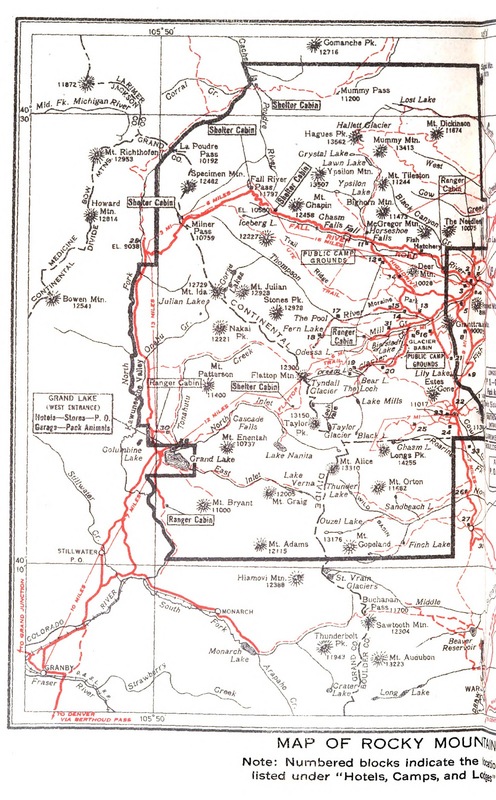
    <summary type="html"><![CDATA[<p><strong><em>Midsummer 1914, Katherine Garetson stood on the front porch of her sister’s mountain cabin and felt herself “whipped and tossed and spattered by a violent storm of wind, rain, thunder, and lightning.” Instead of hating the experience, she wished that “everyone could put into his life one storm of the high mountains.” Katherine saw homesteading as an opportunity for adventure as well as property ownership. </p></strong></p><img src="https://www.intermountainhistories.org/files/fullsize/db41df44e2eae29d90afc2b68b337941.jpg" alt="Map of Estes Park
" /><br/><p>During that 1914 midsummer storm, Katherine offered shelter to a man who had recently established his own homestead in the area, and he related its virtues to her. Katherine wrote that “every American with a spark of romance in his make-up has at some time of his life cherished this idea of taking up a claim.” Her visitor’s words, however, “fell on particularly fertile ground because [she] was seeking escape from the return to St. Louis.” So, in 1914, Katherine Garetson, a single woman in her late thirties from St. Louis, Missouri, filed for a 160-acre claim in Tahosa Valley, Colorado just south of Rocky Mountain National Park.</p><p>Katherine called filing a three-year residence claim “the most serious thing you can do, aside from marrying.” As she considered the possibility, she said “The more I thought, the more I feared. At last I deliberately took the leap as one who shuts his eyes and jumps.” </p><p>Katherine’s cabin on the property was completed just before winter set in. It was given the name Big Owl, a tribute to the great horned owl living nearby. She moved in with two companions, Annie Adele (A.A.) Shreve and Gypsy, a Great Dane. Even with their company, she often felt “desolately lonely and homesick.” With so much to learn and do, Katherine, overwhelmed, “now and then… nearly lost [her] nerve.” Looking back, Katherine commented, “It seems to me that I had an unbearable amount of ignorance to fight against that first year.” </p><p>Fortunately, there were friends who offered kindness and support. With the first big snow, Alfred Oberg “rushed down in the morning… fearing that [they] would not know how to prepare for the storm.” He taught the women tricks to prepare for and survive the long, cold winters. The excitement of Saturday mail was a boost, but also “interfered with a settled content,” reawakening interest in a life from which they “were hopelessly cut off.” </p><p>Katherine endured incredible hardship, poverty, and loneliness, especially after A.A. took a teaching position in Wyoming and Gypsy, who she struggled to feed, had to be given away. The tearoom Katherine operated was only marginally successful. The first summer ended with bills pouring in and Katherine uncertain how she could survive the coming winter. A brief visit with family revitalized her determination and provided her with a wealthy benefactor willing to “take a long chance on a good land proposition.” He gave her a thousand dollars to pay her debts and get restarted.</p><p>Katherine continued her improvements and endured another winter before reporting to the land office in Denver in December 1917 to “prove up” her claim (colloquial phrase for the legal process of securing title to homestead lands after meeting certain government requirements). “Free of all obligations to the government,” she boarded a train for St. Louis. In March, a large envelope arrived from the land office. Instead of containing her patent, it informed her that the Forest Service contested her fulfillment of cultivation requirements. Disregarding the advice of friends and family, she returned, with A.A. to the claim and planted another crop. The next envelope was good news, delivering her patent, the reward of all her labors.</p><p>While Katherine had originally hoped her land “would become valuable as summer cottage sites,” by the end of her proving time, she “was in no hurry to go someplace else to live.” She loved her home, her land, and “the whole mountain world.” She stayed as long as possible, but World War I and the influenza epidemic forced her, financially, to move out to Denver. There, she relied on her stenography and typewriting skills to work for a state senator and later the Secretary of State. She vacationed at Big Owl, “the best loved spot on earth” for years to come, but never lived there again.</p><p><em><strong><a href="https://www.intermountainhistories.org/items/show/454">For more (including 8 images) view the original article</a></strong></em></p>]]></summary>
    <published>2021-02-06T08:37:02+00:00</published>
    <updated>2026-04-17T19:32:09+00:00</updated>
    <link rel="alternate" type="text/html" href="https://www.intermountainhistories.org/items/show/454"/>
    <id>https://www.intermountainhistories.org/items/show/454</id>
    <author>
      <name>Anna Bailey, Brigham Young University</name>
    </author>
  </entry>
  <entry>
    <title type="html"><![CDATA[Marie Jordan Bell, Female Homesteader<br />
]]></title>
    <summary type="html"><![CDATA[<p><strong><em> Ranching was the preferred way of life for Marie Jordan Belle. Homesteading, for her, was an outlet for independence and an economic investment for her future.</p></strong></p><img src="https://www.intermountainhistories.org/files/fullsize/0abbd421f7d0b37611bce6ff3f925943.jpg" alt="Marie Jordan Bell in her ranch house
" /><br/><p>Born on a family ranch in Iron Mountain, Wyoming in 1898, Ella Marie Jordan grew up riding and working horses with her father and brothers. From her toddler years, she sustained a love for horses and her wild home. A lack of modern conveniences like electricity, running water, or a telephone characterized her early years. It was “just a way of life” and never impeded her love for ranching. She found passion in her work, opting to continue it even into her eighties.</p><p>When she turned 16, Marie took out a homestead section “up in the meadow by a tiny stream” near her family’s home. Her father built a small house for her that she lived in for three years, except when she was at school. It was small and simple, with only a bed, stove, mirror, window, and garden, but Marie “was sort of proud of it.” At the end of those three years, she was able to prove her claim (colloquial phrase for the legal process of securing a title to homestead lands after meeting certain government requirements). Marie’s father leased the land from her for several years, but ultimately purchased it from her for $1,000 after she tried to simply give it to him. In that way, the homestead served as an investment property for Marie rather than a permanent home. </p><p>After going to Baltimore, and later Kansas, to attend college, Marie met and married John Bell, “a gregarious, fun-loving cowboy with an acute business sense.” Together they built a large and successful ranch from the ground up in southern Wyoming. The money she had earned from her homestead was used to fix up their home, something they would have been unable to afford otherwise. John died of cancer in 1972, but Marie never considered moving away from their ranch. “What would I do in town?” she asked—a cowgirl through and through.</p><p><em><strong><a href="https://www.intermountainhistories.org/items/show/453">For more (including 4 images) view the original article</a></strong></em></p>]]></summary>
    <published>2021-02-05T03:39:06+00:00</published>
    <updated>2026-04-17T19:32:09+00:00</updated>
    <link rel="alternate" type="text/html" href="https://www.intermountainhistories.org/items/show/453"/>
    <id>https://www.intermountainhistories.org/items/show/453</id>
    <author>
      <name>Anna Bailey, Brigham Young University</name>
    </author>
  </entry>
  <entry>
    <title type="html"><![CDATA[Nellie Burgess, Female Homesteader<br />
]]></title>
    <summary type="html"><![CDATA[<p><strong><em>Eager to “help tame that Wild West,” Nellie Burgess Sudduth left a job at the Chicago Daily News with plans to establish a homestead. Nellie followed in the footsteps of her father, who had gone to California during the Gold Rush, and headed west seeking independence and adventure.</p></strong></p><img src="https://www.intermountainhistories.org/files/fullsize/b5fe1ab92bde2b87268d4550dbc33a1d.jpg" alt="Nellie as a young woman" /><br/><p>In 1908, Nellie Burgess was spurred west by the suggestion of a doctor to treat a nagging cough. An ad for a land raffle in Idaho was the only additional inducement she needed. When she arrived in King Hill, it was little more than a shed and city of tents on the banks of the Snake River. Many would-be settlers left empty handed, but Nellie persisted. Her number was the fortieth drawn from the old wooden butter churn used as the raffle pot. By that time, her first preference was already spoken for, so she selected her second—forty acres neighboring a bend in the Snake River. </p><p>Having secured her property claim, Nellie set to work improving it, both for her own quality of life and to fulfill the requirements of the Carey Act of 1894, under which she had filed her claim. Later, this would require irrigating her property, but she first set about constructing a prove-up cabin. Nellie’s was 14x16 with a small attic used as her bedroom. She rigged the trapdoor that served as its entrance to deliver a barrage of pungent pepper to the face of anyone who opened it while she slept. The resulting sound would alert Nellie and allow time to ready the gun that she slept with.</p><p>Still concerned about her safety, her family sent her sixteen year old nephew Glenn Mills to join her in 1912. By that time, her “Rainbow Ranch'' homestead was well established and she was enjoying many successes. After an initial crop of alfalfa, she added wheat, corn, melons, assorted fruits, sunflowers, and lilacs. In the first season, Nellie even grew a forty pound watermelon. Irrigation brought new weeds, but ensured that the garden grew fast. Wildlife occasionally threatened her crops, but she learned to fend them off. To supplement crops, she bought livestock, a horse, cow, pig, and chickens. Demonstrating remarkable independence and ability, she learned to hunt to supply meat. Nellie and Glenn took trips out to the mountains where they gathered berries and hunted large game.  Once, fishing along the banks of the Snake River, Glenn caught a 10 foot sturgeon that weighed over 400 pounds. They used the ferry to cross the river for other needed supplies.</p><p>In 1914, Nellie married Dave Sudduth, a neighboring rancher from Montana. She lived to see the 50th anniversary of the King Hill land drawings. By the 60th anniversary in 1968, she was the only original settler left. She died later that year. Esteemed for her courageous and adventurous spirit, friends and community members raised funds to establish a bronze plaque honoring her memory. It was cemented to a stone wall at Rainbow Ranch in 1969. The property has since been sold, but the plaque remains there in tribute to her legacy.</p><p><em><strong><a href="https://www.intermountainhistories.org/items/show/452">For more (including 11 images) view the original article</a></strong></em></p>]]></summary>
    <published>2021-02-05T03:09:47+00:00</published>
    <updated>2026-04-17T19:32:09+00:00</updated>
    <link rel="alternate" type="text/html" href="https://www.intermountainhistories.org/items/show/452"/>
    <id>https://www.intermountainhistories.org/items/show/452</id>
    <author>
      <name>Anna Bailey, Brigham Young University</name>
    </author>
  </entry>
  <entry>
    <title type="html"><![CDATA[Sage Treharne Jones, Female Homesteader]]></title>
    <summary type="html"><![CDATA[<p><strong><em>Sage Treharne Jones was many things before she turned to homesteading— immigrant, teacher, wife, mother, widow, and postmistress. Efficient and industrious, Sage embodied characteristics necessary to thrive on Utah frontiers in the 19th century.</p></strong></p><img src="https://www.intermountainhistories.org/files/fullsize/8eec0e69d3629d4e63f439c06eb1a19b.jpg" alt="Image of Sage Treharne Jones
" /><br/><p>In 1849, Sage Treharne migrated from Wales to the United States after being taught by Mormon missionaries. She faced cholera and smallpox along the way and watched both her parents die. She continued west, travelling with a Greene family. On her way, Sage met Thomas Jones and, upon arriving in Utah in October 1852, the two were married. Following demand for iron workers, or possibly answering a call from church leaders, Sage and Thomas moved to Southern Utah. When the iron works were discontinued in 1858, the family turned completely to farming and livestock. In 1860, they built a small adobe house in Cedar City. Thomas developed rheumatism which grew increasingly worse, disabling him until his death in September 1862. </p><p>Sage was left a widow with six living children under the age of eight. She turned to sewing to make a livelihood and depended on her farm to raise the necessary crops and livestock. She is described as an independent woman and “determined to give her children all the advantages that could be had.” “Never ashamed of how little they had,” Sage raised her family to be hardworking and proud of their heritage. Life was difficult, but growing children stepped up, taking over the farm work, and the Jones received support from their neighbors when needed. When harvests failed, the community came together, sharing what little they had and “in their kindness to one another, they found their greatest joy.”</p><p>Her oldest sons, Lehi and Kumen, acquired a contract delivering mail and freight along Pony Express routes and Sage assumed the role of postmistress. “Without ever a word of complaint,” she was a firm supporter of the boys in their position. The mail contract continued with younger sons and nephews continuing to deliver until 1876. In 1885, Sage was appointed as the postmistress of Cedar City. In this new role and with the help of her children, Sage learned to write English. She kept the post office for thirteen years. </p><p>In 1895, at age 62, Sage filed for a homestead on two land sections in Cedar Canyon, near the intersection of Moots Hollow. With her children largely established and self-reliant, it seems she filed hoping to acquire more land for her family. Soon after, she received her US citizenship. One year after becoming a citizen and before she could legally acquire the deed to her claim, Sage died. The property defaulted to her heirs several years after her death. Sage was an active member of her community and Relief Society. A dignified woman, she “was respected and loved wherever she went.” Sage was not a homesteader, at least initially, in the traditional sense of filing on a claim, but she certainly worked hard, sought independence, and “learned to love the wild country of the West.”</p><p><em><strong><a href="https://www.intermountainhistories.org/items/show/451">For more (including 4 images) view the original article</a></strong></em></p>]]></summary>
    <published>2021-02-03T05:34:32+00:00</published>
    <updated>2026-04-17T19:32:09+00:00</updated>
    <link rel="alternate" type="text/html" href="https://www.intermountainhistories.org/items/show/451"/>
    <id>https://www.intermountainhistories.org/items/show/451</id>
    <author>
      <name>Anna Bailey, Brigham Young University</name>
    </author>
  </entry>
  <entry>
    <title type="html"><![CDATA[Zay Philbrook, Female Homesteader<br />
]]></title>
    <summary type="html"><![CDATA[<p><strong><em>“If you have ever ridden up some mountain canyon when your trail led far above the aspen tops into higher silence… in an open world that seemed so full of God and happiness that you wanted to laugh and sob with the joy of living, then I’m sure you understand why we who have been here must always come back.” Zay Philbrook was one of those eternally drawn to the open mountains of the West.</em></strong></p><img src="https://www.intermountainhistories.org/files/fullsize/f970bb5e9d36a2bdc2f98b41a02e367e.jpg" alt="Sketch of Zay Philbrook’s Homestead Cabin" /><br/><p>Zay Philbrook had limited capital but a limitless love for the “glorious heart of Wyoming.” After boarding with a ranger and his family the summer of 1914, Zay was so smitten with her time in the Big Horn mountains that she wanted to stay. With her sister, she rented a small cabin near the town Ten Sleep and searched for land to homestead that suited her means and capabilities. Zay was realistic in her approach to settlement, considering costs of improvements and the physical demands of their completion. The restraints on her funds and time led her to consider a “Timber and Stone” claim. Such claims ranged from 40-160 acres and cost the appraised value of the land and its natural timber or stone. There were no requirements for improvements or time spent occupying the property, so Zay could purchase the patent outright.</p><p>With the help of a ranger, Zay discovered a “quiet, happy little valley fenced by red rimrock and timbered buttes, opening to the south to give a view of the Big Horn basin.” At the head of the valley were several springs that emerged from the hillside, forming a stream that ran the length of the valley. Zay wrote that even with her excitement about the property and its future, she hesitated, asking herself, if once started, she could “see the thing through to the end.” She “looked up at the mountains... measured the responsibility,” and decided she could. Zay had found her claim and, in her words, “All the rest was gladness.”</p><p>A surveyor came out to inspect the property and establish the claim. Zay, like other “timber and stone” claim holders, had to wait nine months before her patent was officially approved. At that time, she made the necessary payments which totaled $520.70 and included surveying, water and timber rights, the property, and all other fees. She paid an old trapper to build her simple one room cabin and made her own closet, shelves, table, and benches. The single room served many purposes and could be adapted to suit a single woman or a half dozen visitors passing through. Zay described it as such a “cosy, warm little room that one forgets winter is drifting down over long miles of mountainside.”</p><p>Economy was considered in all of Zay’s proceedings. She explained her thrift, saying, “Few of us lovers of the West can afford to start such a place just for the pleasure there is in it; we must look for some return for our time and money.” Improvements were viewed as an investment. The property, if necessitated, could be sold for a dude ranch or lambing ground, but Zay’s intentions were to establish a self-supporting ranch. She bought as many horses as she could afford, mainly yearlings. The homestead had only 5-6 irrigable acres and these were cleared of sage brush for a small hay pasture, a vegetable garden, and hardy fruit trees. Vegetables lasted into November and late spring frosts were more of a risk than early fall ones. </p><p>Homestead life was often marked by labor, loneliness, and difficulty, but it was also fulfilling and rewarding. Zay counseled prospective homesteaders to “expect some strenuous days,” but also to “know that every day brings fresh happiness, as you help the claim to grow, as the mountains become more friendly.”</p><p><em><strong><a href="https://www.intermountainhistories.org/items/show/450">For more (including 4 images) view the original article</a></strong></em></p>]]></summary>
    <published>2021-02-03T02:32:12+00:00</published>
    <updated>2026-04-17T19:32:09+00:00</updated>
    <link rel="alternate" type="text/html" href="https://www.intermountainhistories.org/items/show/450"/>
    <id>https://www.intermountainhistories.org/items/show/450</id>
    <author>
      <name>Anna Bailey, Brigham Young University </name>
    </author>
  </entry>
  <entry>
    <title type="html"><![CDATA[American Settlement of Jackson Hole, Wyoming<br />
]]></title>
    <summary type="html"><![CDATA[<p><strong><em>In the late 19th century, Jackson Hole, Wyoming was home to seasonal hunters and fur trappers. When the Wilson-Cheney settling company crossed Teton Pass in 1889, they brought with them women, children, and the trappings of civilization to the valley.</p></strong></p><img src="https://www.intermountainhistories.org/files/fullsize/04ae0cedc5be58f1bf0b9a20cf1389af.jpg" alt="First Post Office" /><br/><p>In 1878, Sylvester Wilson and his family, members of The Church of Jesus Christ of Latter-day Saints (LDS), settled what became Wilsonville, UT. A decade later, in the face of a prolonged drought, Sylvester and his son-in-law, Selar Cheney, moved their families north seeking better conditions. Initially intending on settling in St. Anthony, ID, the group chanced upon Sylvester’s brother, Nick Wilson, who convinced them to settle instead in Jackson Hole, a fertile and relatively untouched valley in Wyoming.</p><p>Leaving most of their possessions in Idaho, the company crossed Teton Pass in 1889. As the first company to bring women, children, and wagons into the valley, the group enlarged an indigenous trail through the pass, cutting aside trees and other growth. After two weeks and 88 miles of rough terrain, the company reached Jackson Hole on November 11, 1889.</p><p>When the Wilson-Cheney company arrived, the valley was home to only 28 individuals. The large company more than doubled the valley’s population, and quickly began constructing various elements of American civilization. In 1891, following the deaths of Sarah and Joseph Wilson, they established the valley’s first cemetery. In 1892, they opened the first school in Sylvester Wilson’s home. In 1893, Nick Wilson opened a hotel and post office at the base of Teton Pass.</p><p>The company’s greatest impact on the valley, however, was the clearing of Teton Pass for wagon travel. The trail the Wilson-Cheney company expanded allowed more homesteaders and merchants to access the valley. From its initial population of roughly 28 in 1889, the valley grew to 638 men, women, and children by 1900. The short-lived town of Cheney, one of the company’s settlements, consisted itself of almost 150 people by 1910, and included a blacksmith, carpenter, postmaster, doctor, and taxidermist. Although the LDS settlers mostly left the valley during economic struggles in the 1920s and 1930s, their initial settlements in Jackson Hole brought civilization to the otherwise rugged, mountainous backcountry, and opened the door for countless more settlers.</p><p><em><strong><a href="https://www.intermountainhistories.org/items/show/283">For more (including 3 images) view the original article</a></strong></em></p>]]></summary>
    <published>2019-02-09T07:15:45+00:00</published>
    <updated>2026-04-17T19:32:04+00:00</updated>
    <link rel="alternate" type="text/html" href="https://www.intermountainhistories.org/items/show/283"/>
    <id>https://www.intermountainhistories.org/items/show/283</id>
    <author>
      <name>Matthew Cheney, Brigham Young University</name>
    </author>
  </entry>
</feed>