<?xml version="1.0" encoding="UTF-8"?>
<feed xmlns="http://www.w3.org/2005/Atom">
  <title type="text">Intermountain Histories</title>
  <updated>2026-04-17T19:32:16+00:00</updated>
  <generator uri="http://framework.zend.com" version="1.12.20">Zend_Feed_Writer</generator>
  <link rel="alternate" type="text/html" href="https://www.intermountainhistories.org/"/>
  <link rel="self" type="application/atom+xml" href="https://www.intermountainhistories.org/items/browse?output=rss2"/>
  <id>https://www.intermountainhistories.org/</id>
  <author>
    <name>Intermountain Histories</name>
    <uri>https://www.intermountainhistories.org</uri>
  </author>
  <link rel="hub" href="https://pubsubhubbub.appspot.com/"/>
  <entry>
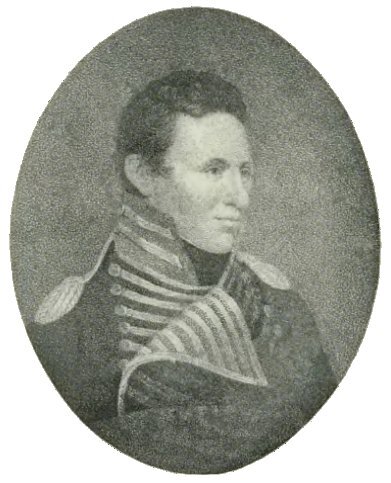
    <title type="html"><![CDATA[The Debate Over Zebulon Pike&#039;s Remains<br />
]]></title>
    <summary type="html"><![CDATA[<p><strong><em>Zebulon Pike, legendary American general and adventurer, was one of the predominant explorers of the American West. Although he discovered Pike’s Peak, he never reached its  summit. To help Pike finally  summit  the mountain that bears his name, the people of Colorado Springs have petitioned to have his remains moved to the top of Pikes Peak, but will the people of Sacketts Harbor, the location of his death, part with his body?</em></strong></p><img src="https://www.intermountainhistories.org/files/fullsize/e875a166dc7caa373a5ef2e6c45d5c4a.jpg" alt="Lieutenant Zebulon Pike" /><br/><p><span style="font-weight:400;">General Zebulon Montgomery Pike (1779-1813) was an American Army officer and explorer. His  expedition to the Louisiana Territory and subsequent books detailing his journey catapulted him into the national spotlight. His tragic death during the War of 1812 cemented his position in American memory.</span>
<span style="font-weight:400;">After his famous 1806 expedition, on which he attempted to climb Pikes Peak, Pike continued to rise up the ranks of the U.S. Army and, by the War of 1812, had reached the rank of Brigadier-general. As a general, Pike led the 1813 assault on York, the capital of Upper Canada on Lake Ontario. After successfully overrunning several enemy batteries, Pike and his men were awaiting the British surrender when  a huge explosion suddenly ripped through the air. The retreating force had ignited the fort’s powder magazine, which exploded and launched rocks, timber, and debris in every direction. A large piece of debris struck General Pike, ripped a hole through his back, and left him mortally wounded. After urging his soldiers forward, Pike was carried back to the </span><i><span style="font-weight:400;">Madison, </span></i><span style="font-weight:400;">an American ship, upon which he died with the captured British flag supporting his head. </span>
<span style="font-weight:400;">For many years, Pike’s remains were kept at Sacketts Harbor in Canada, the site of his death. In 1948, the mayor of Colorado Springs and the Colorado Springs Chamber of Commerce petitioned to have Pike’s remains moved to the top of Pikes Peak. While the mountain bears his name, he never reached the top due to harsh weather and a lack of supplies. The Mayor’s hope was to move his body to the top of the mountain where residents of Colorado Springs would build a monument to commemorate his achievements and discovery of the mountain, which would bring millions of dollars to the city through tourism. Despite the approval of Pike’s descendants and the excitement expressed by Colorado newspapers and the Colorado Congressional delegation,  the decision rested in the hands of the Sacketts Harbor mayor and city council.</span>
<span style="font-weight:400;">This decision has been complicated by the controversy over which remains in the Sacketts Harbor Cemetery actually belong to Pike. After his death at the Battle of York, Pike’s body was transported back to Sacketts Harbor in a barrel of whiskey to preserve it until he could be buried. In 1909, the cemetery in which he was buried changed location and experts were only able to positively identify four of the 130 bodies found; Pike’s was not one of them. They assumed Pike's body occupied a metal casket submerged in whiskey, but when they moved the lid of the casket, it cracked and exposed the remains to the open air, disintegrating them.</span>
<span style="font-weight:400;">Regardless of the debate over whether or not the remains ever belonged to Pike, the Mayor of Sacketts Harbor, Carl Jackson, vehemently refused the petitions of the Coloradans. He said, "General Pike's been buried here for more than a century, and we mean to keep him here."  It seems Pike may never reach the top of the famous American peak that bears his name.</span></p><p><em><strong><a href="https://www.intermountainhistories.org/items/show/745">For more (including 4 images) view the original article</a></strong></em></p>]]></summary>
    <published>2023-04-11T16:18:43+00:00</published>
    <updated>2026-04-17T19:32:16+00:00</updated>
    <link rel="alternate" type="text/html" href="https://www.intermountainhistories.org/items/show/745"/>
    <id>https://www.intermountainhistories.org/items/show/745</id>
    <author>
      <name>Ethan Dunham, Brigham Young University </name>
    </author>
  </entry>
  <entry>
    <title type="html"><![CDATA[Lucy Mack Smith Hall (HR14): Israel A. Smith (Almost) Goes to Provo]]></title>
    <summary type="html"><![CDATA[<p><strong><em>In his zeal to make a mass-dedication of new buildings a “fine chapter” of BYU history, Ernest L. Wilkinson unwittingly created a missed encounter between two Smith family cousins who were on difficult terms despite both loving the “Grandmother Smith” Lucy Mack Smith Hall was named after.</em></strong></p><img src="https://www.intermountainhistories.org/files/fullsize/f80cd674044820befb2f0f883585dd9d.jpg" alt="Smith Hall" /><br/><p><span style="font-weight:400;">BYU president Ernest L. Wilkinson planned for May 26, 1954 to be, in his words, “a very fine chapter to be added to the history of the Institution.” For years BYU had been growing, and there were twenty-two undedicated buildings. To celebrate, BYU hosted a special dedication on May 26. Speakers gave remarks for each building, and David McKay—president of BYU’s sponsor, The Church of Jesus Christ of Latter-day Saints (LDS)—offered a prayer dedicating all twenty-two.</span>
<span style="font-weight:400;">Two days later, Wilkinson received an unexpected letter from Israel A. Smith, president of the Reorganized Church of Jesus Christ of Latter Day Saints (RLDS). In the twentieth century, both the LDS and RLDS Churches claimed to be the sole successor to the nineteenth-century church founded by Joseph Smith. The churches’ relationship vacillated between warmly sharing heritage and icily distrusting one another because they differently interpreted that heritage.</span>
<span style="font-weight:400;">Israel wrote that it was “an honor to be invited” to the dedication of one of BYU’s </span><a href="https://www.intermountainhistories.org/items/show/148"><span style="font-weight:400;">Heritage Halls</span></a><span style="font-weight:400;"> dormitories: Lucy Mack Smith Hall, named after Joseph Smith’s mother, also great-grandmother of Israel. Wilkinson had asked his secretary to “send invitations to all known relatives of the women… having Heritage Halls named after them” but apparently had not expected her to invite Israel even though he was, after all, Lucy’s descendant.</span>
<span style="font-weight:400;">Israel did not attend, though. He offered “good wishes for [Wilkinson’s] personal success” but also brought up the LDS Church’s unfortunate history with Lucy. Nearly a century prior, LDS president Brigham Young excoriated a family history Lucy wrote about Joseph. Israel still felt stung by that undeserved rebuke against his ancestor. Still, while the letter seemed intended to ruffle Wilkinson’s feathers, Israel was otherwise polite.</span>
<span style="font-weight:400;">Given Israel’s relatively mild message, Wilkinson’s response may have been an overreaction. On June 14, he forwarded Israel’s letter to the Joseph Fielding Smith, an LDS apostle who was also a great-grandson of Lucy, and asked for Joseph Fielding’s “approval” of a reply to Israel in which he tried to defend Young’s objections to Lucy’s history. Strangely, Joseph Fielding apparently read “bitterness,” as he wrote, into Israel’s letter and claimed Israel “could not answer a letter like a gentleman” even though Israel’s letter was polite. Perhaps Joseph Fielding felt galled by Israel’s implication that he disrespected their common ancestor, whom Joseph Fielding affectionately called “Grandmother Smith.”</span>
<span style="font-weight:400;">Israel and Joseph did not write directly to each other, and since Israel did not attend, the missed encounter became a kind of muddled tragedy. The Smiths were cousins, after all—family—and both had good reason to celebrate a tribute to their ancestor. Rivalry, unfortunately, kept them from understanding one another and coming together. Warmer feelings had to wait for a future generation.</span>
<span style="font-weight:400;">Lucy Mack Smith Hall went on to be a rather ordinary dormitory, though the hall’s residents did win the 1962–1963 year’s homecoming housing sweepstakes. Like the other Heritage Halls, it was demolished in 2015 to make way for a new Heritage Halls complex with building numbers instead of names.</span></p><p><em><strong><a href="https://www.intermountainhistories.org/items/show/620">For more (including 18 images) view the original article</a></strong></em></p>]]></summary>
    <published>2022-06-24T05:45:27+00:00</published>
    <updated>2026-04-17T19:32:13+00:00</updated>
    <link rel="alternate" type="text/html" href="https://www.intermountainhistories.org/items/show/620"/>
    <id>https://www.intermountainhistories.org/items/show/620</id>
    <author>
      <name>Makoto Hunter, Brigham Young University</name>
    </author>
  </entry>
  <entry>
    <title type="html"><![CDATA[Helena, Montana’s Confederate Memorial Fountain]]></title>
    <summary type="html"><![CDATA[<p><strong><em>For more than a century, the Confederate Memorial Fountain in Helena, Montana was one of the country’s northernmost Confederate monuments. But when racial violence in the former Confederacy rippled across the nation, the effects reached Helana’s distant fountain as well.</em></strong></p><img src="https://www.intermountainhistories.org/files/fullsize/faadbd52b5715f201d8facc259ac4c22.jpg" alt="Confederate Memorial Fountain" /><br/><p><span style="font-weight:400;">On the late summer evening of September 6, 1916, Montana’s capital city of Helena formally unveiled and dedicated its newest landmark: a $2,000 fountain gracing the highest hill of a city park. George H. Carsley, known as “the architect of Helena,” designed the fountain and made it from native Montana granite.</span>
<span style="font-weight:400;">Even though it was a monument in Montana, it did not memorialize anyone from the Big Sky State. Instead, carved into the side were the words, “A Loving Tribute to Our Confederate Soldiers.” Helena’s local chapter of the United Daughters of the Confederacy—three members strong with Mrs. Aiken, Mrs. Read, and Gertrude “Georgia” C. Young—had fundraised for the fountain since 1903 and donated it to the city. In a dedicatory speech, Young said the fountain was the Daughters’ gift to their new home, and she praised the city’s American spirit of unity in which there were no bad feelings between the American North and South. “On behalf of the Daughters of the Confederacy,” she concluded, “I present this fountain to the city of Helena as a token of our esteem toward our new home.”</span>
<span style="font-weight:400;">City attorney Edward Horsky declared, “Helena is pleased and honored to accept this substantial and beautiful donation.” Horsky added that the fountain would “long keep bright the memory” of its donor, the United Daughters of the Confederacy.</span>
<span style="font-weight:400;">Although fifty years removed from the Civil War, the nation was in the middle of a decades-long movement to memorialize the Confederacy. Helena’s fountain was one of hundreds of memorials built and dedicated in the first half of the twentieth century (see tour introduction for “Confederate Imagery in the Intermountain West”). At the same time that more and more Confederate monuments dotted the nation, the Ku Klux Klan also resurged in activity and membership nationwide, including in Helena, terrorizing Black Americans.</span>
<span style="font-weight:400;">Aiken, Read, and Young fundraised for and built the Confederate Memorial Fountain against this backdrop, reifying White reconciliation and undermining Black experiences under the chattel slavery the Confederacy promoted. And though they gave Helena a memorial for Confederate soldiers, the city built no Civil War monument for Union soldiers thereafter, whether Black or White, even though there were Union veterans who lived in Helena, including the architect Carlsey himself.</span>
<span style="font-weight:400;">Nearly one hundred years later, on June 17, 2015, a white supremacist gunman murdered nine Black Americans at Emanuel African Methodist Episcopal Church in Charleston, South Carolina. The shock rippled across the United States, reaching Helena and prompting residents to scrutinize their fountain more critically. The Helena City Commission asked the county Heritage Tourism Council to design a sign with contextualizing history to place near the fountain.</span>
<span style="font-weight:400;">By August, heritage preservation officer Pam Attardo proposed a text which explained how Confederate memorials were tools in “the South’s quest for vindication after the Civil War.” The proposed sign even mentioned the United Daughters’ influence on school textbooks and curriculum.</span>
<span style="font-weight:400;">However, the city discovered that a sign large enough to accommodate Attardo’s text legibly would have to be massive, and the project stalled. For two years, Attardo checked in with city officials every few months to no avail while the Heritage Tourism Council waited for the city to approve the sign.</span>
<span style="font-weight:400;">In the wake of violence and death at the August 12, 2017 Unite the Right Rally in Charlottesville, Virginia, Confederate markers returned to the national conversation and to Helena. On August 15, the American Indian Caucus of Montana’s state legislature issued a call to remove the fountain entirely, and other advocates joined the call.</span>
<span style="font-weight:400;">On August 16, the City Commission held a hearing to decide the fountain’s fate. About forty Helena residents spoke, both for and against removal. Some Helenites claimed removing the fountain would disgrace history, though Montana blogger Don Pogreba wryly observed that such “passionate regard for history… seemed to be lacking when… the Montana Historical Society’s funding was under debate” several months earlier. In the end, the Commission directed city workers to remove the fountain on August 18. For lack of better storage, the city moved it to an undisclosed field where it remains.</span>
<span style="font-weight:400;">In February 2018, local civil rights advocate Ron Waterman began raising money to replace the now-gone fountain with a new monument: an Equity Fountain dedicated to equality and compassion. The grassroots campaign fundraised, called for designs, and met with the Public Arts Committee. In January 2019, the City Commission voted unanimously to accept the Equity Fountain as a donation, and in April 2020 the city installed it. Once again, Helena was “pleased and honored to accept” a “substantial and beautiful donation.”</span></p><p><em><strong><a href="https://www.intermountainhistories.org/items/show/493">For more (including 4 images) view the original article</a></strong></em></p>]]></summary>
    <published>2021-09-18T05:48:51+00:00</published>
    <updated>2026-04-17T19:32:10+00:00</updated>
    <link rel="alternate" type="text/html" href="https://www.intermountainhistories.org/items/show/493"/>
    <id>https://www.intermountainhistories.org/items/show/493</id>
    <author>
      <name>Makoto Hunter, Brigham Young University</name>
    </author>
  </entry>
  <entry>
    <title type="html"><![CDATA[Leesburg and Grantsville, Idaho]]></title>
    <summary type="html"><![CDATA[<p><strong><em>Only a year prior, these Civil War veterans had fought on opposing sides. But the promise of gold made for strange bedfellows.</em></strong></p><img src="https://www.intermountainhistories.org/files/fullsize/d2d3a52593bbb82ec75f0d06b6e38da4.jpg" alt="Leesburg, Idaho" /><br/><p><span style="font-weight:400;">Along with others who migrated to the Rocky Mountain West during the mid-nineteenth century, former Union and Confederate soldiers mixed in remote western locales like the mountains and valleys of Idaho. Miners settled land and panned for gold in Idaho as early as 1860, and in July 1866, a group of friends led by Frank Barney Sharkey found gold along Napias Creek, a tributary of the Salmon River.</span>
<span style="font-weight:400;">The news spread quickly, and other prospectors rushed to the region. By August, neighbors in Bannock, Idaho reported being “quite unprepared for the stampede that set in… for the Lemhi Valley.”</span>
<span style="font-weight:400;">The new community of prospectors included veterans from both sides of the Civil War, and they soon found themselves having one last “battle,” but over the name of the community. Unable to reconcile, the pioneers settled for having two names for two communities in the one town—Grantsville named for Union General Ulysses S. Grant and Leesburg for Confederate General Robert E. Lee.</span>
<span style="font-weight:400;">The Leesburg–Grantsville compromise was short-lived. Grantsville never managed to claim more than 500 residents of its own, but Leesburg’s population swelled into the thousands. On top of that, the town’s streets were continuous and provided no clear border. Eventually people used the Leesburg name to refer to the overall community, and the Grantsville name was forgotten. Two thousand miles away from Appomattox, for at least a handful of Civil War veterans, Lee managed to get in the last word. </span>
<span style="font-weight:400;">While post-Civil War Reconstruction led to extensive violence in the south, Leesburg remained fairly calm. Observers called the camp “unusually quiet for a mining camp and free from fights and disturbances.” The website Western Mining History speculates the Leesburgers may have been too busy surviving to waste time on fights. After all, a twelve-man team took a month-and-a-half to clear a path through the deep snows of the winter of 1866–1867 so that a pack train could bring food relief in March, saving Leesburg from starvation.</span>
<span style="font-weight:400;">After surviving that first winter, Leesburg’s population went through a rapid boom and bust. Thousands came in search of gold, and at the rush’s height some 3,000 people lived in Leesburg, including both white Americans and Chinese migrants from the West Coast. Leesburg hosted a one-room school and a hundred business firms, and its main street was a mile long. However, miners soon became unsatisfied with their returns, and interest declined. The population plummeted to 180 people by 1870 and less than sixty by 1895. Yet the allure of gold kept drawing interest back to Leesburg. In 1926, Idahoans built a small monument in Leesburg to commemorate Sharkey’s discovery of gold sixty years earlier. Meanwhile, industrial hydraulic mining and dragline mining intermittently extracted more gold out of the Leesburg area from 1926 to 1942, though these operations also did not last.</span>
<span style="font-weight:400;">Leesburg joined the National Register of Historic Places in 1975, and today only a few cabins still stand. Few traces remain of the ghost town’s Southern migrants and Confederate veterans except for the name—their one last victory over Grant and his Union soldiers.</span></p><p><em><strong><a href="https://www.intermountainhistories.org/items/show/492">For more (including 8 images) view the original article</a></strong></em></p>]]></summary>
    <published>2021-09-18T03:01:45+00:00</published>
    <updated>2026-04-17T19:32:10+00:00</updated>
    <link rel="alternate" type="text/html" href="https://www.intermountainhistories.org/items/show/492"/>
    <id>https://www.intermountainhistories.org/items/show/492</id>
    <author>
      <name>Makoto Hunter, Brigham Young University</name>
    </author>
  </entry>
</feed>
