<?xml version="1.0" encoding="UTF-8"?>
<feed xmlns="http://www.w3.org/2005/Atom">
  <title type="text">Intermountain Histories</title>
  <updated>2026-04-17T19:32:21+00:00</updated>
  <generator uri="http://framework.zend.com" version="1.12.20">Zend_Feed_Writer</generator>
  <link rel="alternate" type="text/html" href="https://www.intermountainhistories.org/"/>
  <link rel="self" type="application/atom+xml" href="https://www.intermountainhistories.org/items/browse?output=rss2"/>
  <id>https://www.intermountainhistories.org/</id>
  <author>
    <name>Intermountain Histories</name>
    <uri>https://www.intermountainhistories.org</uri>
  </author>
  <link rel="hub" href="https://pubsubhubbub.appspot.com/"/>
  <entry>
    <title type="html"><![CDATA[Girl Scouts of Utah]]></title>
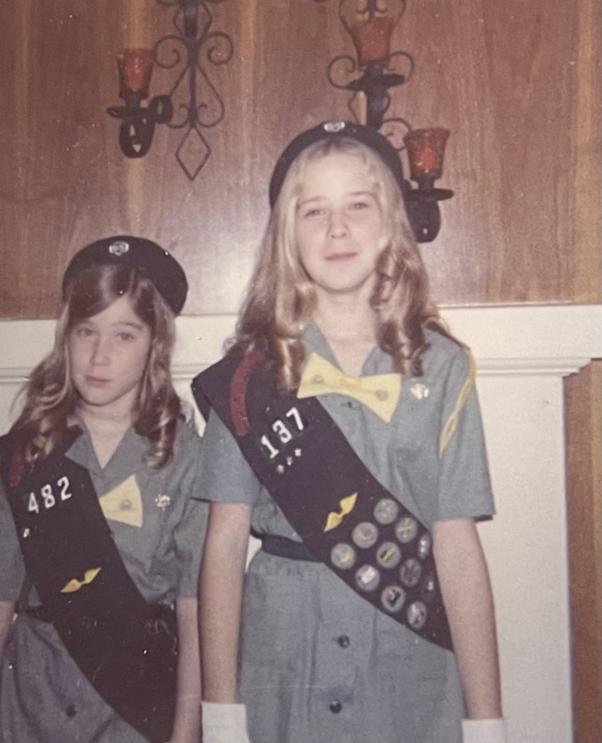
    <summary type="html"><![CDATA[<p><strong><em>Barbara Schmidt, a scout of 65 years, recalls her fondest memories growing up as a girl scout in mid-twentieth century Utah. </em></strong></p><img src="https://www.intermountainhistories.org/files/fullsize/0d86281475893b6bdc8c122102bc6d41.jpg" alt="Sisters posing in their Girl Scout uniforms circa 1970" /><br/><p><span style="font-weight:400;">The first Girl Scout troop was founded in Virginia in 1912, and it wasn’t long before troops sprouted up throughout the nation. Founded by Juliette Gordon Low, the organization was modeled to build “courage, confidence, and character,” as their mission statement declares. Becoming a Girl Scout also provided young girls with leadership opportunities and outdoor experiences, not unlike their male peers in the Boy Scouts program. </span>
<span style="font-weight:400;"></span><span style="font-weight:400;">In 1920, a group of mothers in Ogden, Utah united to find a positive community for their daughters. They initially looked into Campfire Girls, but ultimately discovered that the Girl Scouts were more suited to their needs. Advertising the opportunity in local schools, they soon had enough willing participants to create Utah’s first ever Girl Scout troop. Just a year later, another troop formed in Salt Lake City. </span>
<span style="font-weight:400;"></span><span style="font-weight:400;">In the late 1940s Barbara Schmidt, a student at Hawthorne Elementary School in Salt Lake City, was thrilled at the prospect of becoming a Girl Scout. She saw an announcement at her school for a new local troop and ran home that afternoon excitedly to ask her mom if she could go. Barbara became a Brownie which was, at the time, the group for girls aged eight to ten years old. The troop met at first in the home of the troop leader, a mother of her classmate, but as the troop grew they began meeting in the basement of Zion Lutheran Church.</span>
<span style="font-weight:400;"></span><span style="font-weight:400;">Some of Barbara’s fondest memories are from her summers at camp––and all of the months spent selling cookies in preparation. Each scout who wished to attend a camp had a quota to meet, so they had to be both diligent and creative to meet their goals. In her years of motherhood Barbara always followed her own cookie-selling scouts at a safe distance in her mini van, back in her day Barbara and her fellow scouts were often allowed out on their own––so long as they stuck with a buddy at all times. She spent countless afternoons pulling a red wagon full of cookies, twenty-five cents each, up and down the neighborhoods of Salt Lake. Her troop also received permission from the local Catholic church to sell cookies in the parking lot after mass, which drummed up a fair amount of business. When their work was done, the girls boarded an old rickety school bus that trudged wearily up the mountain to camp. Once they had finally arrived the girls spent their days developing outdoorsmanship skills and making friendships that would last a lifetime. </span>
<span style="font-weight:400;"></span><span style="font-weight:400;">Besides selling cookies and camping, Barbara recalls participating in service projects and feeling that she was “making a real difference in the community.” Though she states that she is not quite “going strong” in her volunteering today as she once did, she continues to volunteer regularly at the Heritage Museum in the Girl Scouts of Utah Council Resource Center. She continues to advocate for the girl scout program because it helps young girls to “embrace a perspective beyond their own.</span></p><p><em><strong><a href="https://www.intermountainhistories.org/items/show/928">For more (including 6 images) view the original article</a></strong></em></p>]]></summary>
    <published>2025-12-09T17:24:32+00:00</published>
    <updated>2026-04-17T19:32:21+00:00</updated>
    <link rel="alternate" type="text/html" href="https://www.intermountainhistories.org/items/show/928"/>
    <id>https://www.intermountainhistories.org/items/show/928</id>
    <author>
      <name>Megan Bailey, Brigham Young University</name>
    </author>
  </entry>
  <entry>
    <title type="html"><![CDATA[Camp Cloud Rim]]></title>
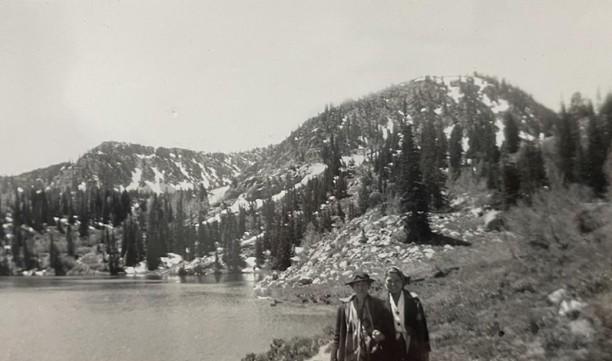
    <summary type="html"><![CDATA[<p><strong><em>Nestled in the mountains of northeast Utah, Camp Cloud Rim has been a place of refuge, belonging, and adventure to Girl Scouts for nearly a hundred years. Rising like a phoenix from its ashes at the turn of the century, the camp stands as a testament to the strength and kindness of its community. </em></strong></p><img src="https://www.intermountainhistories.org/files/fullsize/86286387e18e803da26bda97432f9ba9.jpg" alt="Two girl scouts posing in front of Lake Brimhall and the Wasatch Mountain Range." /><br/><p><span style="font-weight:400;">Camp Cloud Rim, originally called “Camp Pinar,” was constructed in 1934 with funding and labor provided by Franklin Roosevelt’s New Deal program. In 1937 the camp was officially dedicated to the Girl Scouts of America and renamed Camp Cloud Rim. While the camp is still up and running nearly a century later, its survival has been no easy feat. Following several catastrophic events the camp continues to be revived by the driven community which surrounds it. </span>
<span style="font-weight:400;"></span><span style="font-weight:400;">Located in the Wasatch Mountain Range, just outside of Park City, much of the community surrounding Camp Cloud Rim in the early days came from local mining camps. Barbara Schmidt, a lifelong scout, remembers attending the camp in the late 1940s. She has fond memories of her summers at camp which were spent swimming in Lake Brimhall, making pull taffy, developing wilderness survival skills, and forming some of the most meaningful friendships she’s ever had. One of Barbara’s first and dearest friends at the camp was a local girl whose father had died in the mines. As she returned each year she made more friends from around the state, many of whom were from mining communities, and some of which she kept in touch with by exchanging letters over the winter and even after they had aged out of camp. </span>
<span style="font-weight:400;">The trips up to camp each summer were infamous for their chaos. The road up the mountain was winding and bumpy, a journey not made any more pleasant by the old bus that carried them. Barbara recalls frequent transmission issues that sometimes stranded them on the mountain for long periods of time. </span>
<span style="font-weight:400;"></span><span style="font-weight:400;">While camp transportation has improved over the years, many aspects of camp culture from the early years live on today. Choosing a new name to go by at camp has been a common practice across the United States for decades, a tradition upheld by both the leaders and campers of all ages at Camp Cloud Rim. For many girls, camp is an opportunity to be braver, bolder, and more adventurous than they usually would be. With their new aliases, often chosen from favorite cartoon characters or fairytale heroines, they have the freedom to reinvent themselves. Like Barbara and her friends in the 1940s and 50s, girl scouts today enjoy recreational lake activities, learning survival skills, and experiencing their first taste of independence. </span>
<span style="font-weight:400;"></span><span style="font-weight:400;">In late November 1992 a fire spread throughout the camp destroying the main lodge and most of the other structures on property. The winter conditions made a trek up the mountain impossible, so the county sent helicopters to extinguish the fire. In just under six years the damaged property was brought back to life through the tireless efforts of community volunteers, fundraising efforts, and a generous benefactor––Janet Quinney Lawson, a philanthropist and lover of the outdoors. Camp Cloud Rim was reopened in 1999 and it continues to cultivate meaningful relationships and experiences for girls today, just as it did for Barbara and her friends back in the 40s. </span></p><p><em><strong><a href="https://www.intermountainhistories.org/items/show/926">For more (including 5 images) view the original article</a></strong></em></p>]]></summary>
    <published>2025-12-09T17:24:31+00:00</published>
    <updated>2026-04-17T19:32:21+00:00</updated>
    <link rel="alternate" type="text/html" href="https://www.intermountainhistories.org/items/show/926"/>
    <id>https://www.intermountainhistories.org/items/show/926</id>
    <author>
      <name>Megan Bailey, Brigham Young University</name>
    </author>
  </entry>
</feed>