<?xml version="1.0" encoding="UTF-8"?>
<feed xmlns="http://www.w3.org/2005/Atom">
  <title type="text">Intermountain Histories</title>
  <updated>2026-04-17T19:32:17+00:00</updated>
  <generator uri="http://framework.zend.com" version="1.12.20">Zend_Feed_Writer</generator>
  <link rel="alternate" type="text/html" href="https://www.intermountainhistories.org/"/>
  <link rel="self" type="application/atom+xml" href="https://www.intermountainhistories.org/items/browse?output=rss2"/>
  <id>https://www.intermountainhistories.org/</id>
  <author>
    <name>Intermountain Histories</name>
    <uri>https://www.intermountainhistories.org</uri>
  </author>
  <link rel="hub" href="https://pubsubhubbub.appspot.com/"/>
  <entry>
    <title type="html"><![CDATA[Heart of Polyurethane: Barney Clark and the Artificial Heart]]></title>
    <summary type="html"><![CDATA[<p><strong><em>In December 1982, Dr. Barney B. Clark received the first permanent total artificial heart implant in a human. The implant was his last resort and his last chance of survival after being diagnosed with congestive heart failure in 1979. He lived with the Jarvik-7 artificial heart for 112 days. Today a memorial in Provo honors his courage.</p></strong></p><img src="https://www.intermountainhistories.org/files/fullsize/1687587c565e27f65f087d15a77083a3.jpg" alt="Marker Close Up" /><br/><p><span style="font-weight:400;">In December 1982, Dr. Barney Clark pioneered medical research by receiving the first artificial heart implant. Clark had suffered from congestive heart failure for several years and his condition was worsening. Despite the experimental nature of the implant and the potential for significant personal suffering, Clark wanted to receive the artificial heart. It represented his last remaining option for survival, and he aimed to contribute to the medical community’s knowledge in the field of heart disease. Before the surgery, Clark had been treated by several doctors. He tried many treatments including experimental medications. Because of the limited number of heart donors, he was too old and too sick to be eligible for an organic heart transplant. The Jarvik-7 artificial heart was his last resort. </span>
<span style="font-weight:400;">The artificial heart was heavily researched before Clark received it. Dr. William C. DeVries had been researching it since 1967. DeVries had implanted the Jarvik-7 heart in cadavers and in many live animals, including calves. Every detail of the preparation and the surgery were outlined almost two years before Clark was selected to receive the implant. </span>
<span style="font-weight:400;">The implant surgery was initially successful. On Thursday, December 2, 1982 the Provo Daily Herald reported that after seven hours of surgery the artificial heart was working well and that it had given Clark “the blood pressure of an 18-year-old.” Despite the successful surgery, Clark soon started facing complications. He experienced an air leak in his lung, seizures, a broken valve on the artificial heart, and frequent nose bleeds. The doctors fixed these problems as they arose, although they were never able to figure out the cause of the seizures. In March 1983 Clark suffered from aspiration pneumonia, which sent him back into the intensive care unit. He never recovered. On March 23, 1983 Clark “suffered from multiple organ system failure that caused a circulatory collapse” and passed away at 10:02 that night. Researchers concluded that the artificial heart itself had not killed him, but complications associated with the surgery and prior conditions had. </span>
<span style="font-weight:400;">Clark survived with the Jarvik-7 total artificial heart for 112 days, though experiencing great suffering. Many regard Barney Clark as a pioneer and a hero. A memorial in Provo honors his legacy. Today the artificial heart is used as a temporary placement while heart failure patients wait for a heart donor.</span></p><p><em><strong><a href="https://www.intermountainhistories.org/items/show/768">For more (including 2 images) view the original article</a></strong></em></p>]]></summary>
    <published>2024-01-20T07:16:05+00:00</published>
    <updated>2026-04-17T19:32:17+00:00</updated>
    <link rel="alternate" type="text/html" href="https://www.intermountainhistories.org/items/show/768"/>
    <id>https://www.intermountainhistories.org/items/show/768</id>
    <author>
      <name>Caitlin Zollinger, Brigham Young University</name>
    </author>
  </entry>
  <entry>
    <title type="html"><![CDATA[Coconino County Hospital for the Indigent]]></title>
    <summary type="html"><![CDATA[<p><strong><em>Before the introduction of federal social welfare programs, Americans disagreed over who exactly should take care of the sick and poor members of their communities. Coconino County’s solution to this issue became known as the “poor farm.”</em></strong></p><img src="https://www.intermountainhistories.org/files/fullsize/e26264d01f0b00fec0a829a37095287f.jpg" alt="[Untitled]" /><br/><p>        In 1891, residents of Flagstaff, Arizona, began asking the newly formed Coconino County for help treating the poor members of their community. Without a hospital, care for the indigent sick fell to the citizens. On June 19, , John R. Tabor, a boarding house owner, asked the County Board of Supervisors to take over the care of a man boarding with him. He had asked several times for help, with no response. He ended his plea saying, “When will you take care of your indigent sick?”  This display led to the establishment of the Coconino County Hospital for the Indigent.</p><p>J.F. Hawks made the successful bid to run the hospital, placing it in the back of his hotel. Dr. Thomas Brannon was the attending surgeon at the hospital and oversaw most of the patients during its operation. The types of cases varied for the doctor. There were instances of mountain fever, gunshot wounds, and consumption. Because the hospital was meant for the poor, often the patients were homeless. Several men were brought in with frozen limbs in the harsh northern Arizona winters. There were also gruesome reports in the Arizona Daily Sun of patients who were injured jumping from moving trains. Dr. Brannon helped in each of these cases, earning him a sterling reputation in the community.</p><p>Several residents complained about the hospital's placement in the back of Hawks’ busy hotel, and in February 1907, the Board of Supervisors approved the building of a hospital on Fort Valley Road. The county built the hospital on tillable ground, meaning patients could use the surrounding property to grow crops. This gave the hospital the federal designation of “poor farm,” a name which caught on amongst Flagstaff residents. By adding farmland, the county hospital staff not only treated the sick, but gave them means to provide for themselves.</p><p>The Coconino County Hospital for the Indigent operated at that new site until 1938. The County Board of Supervisors closed the institution because state and federal governments began taking over health care from local governments. There was also less need for an indigent hospital with the creation of federal welfare programs. Although the hospital operated less than fifty years, it provided important medical care and led to the development of other hospitals in the area. While the county hospital was meant for the poor, Flagstaff residents saw the benefit of having designated health facilities.</p><p>Today, the hospital building is operated by the Arizona Historical Society as The Pioneer Museum. While the museum is not interpreted as a hospital, there are still artifacts on display that illustrate the building's past, including a nurse’s uniform, surgical equipment, and an iron lung. The Coconino County Hospital for the Indigent served the community of Flagstaff by taking the burden of care away from its citizens and giving it to healthcare professionals.  </p><p><em><strong><a href="https://www.intermountainhistories.org/items/show/334">For more (including 3 images) view the original article</a></strong></em></p>]]></summary>
    <published>2019-09-15T00:44:45+00:00</published>
    <updated>2026-04-17T19:32:06+00:00</updated>
    <link rel="alternate" type="text/html" href="https://www.intermountainhistories.org/items/show/334"/>
    <id>https://www.intermountainhistories.org/items/show/334</id>
    <author>
      <name>Jodie Grief, Northern Arizona University</name>
    </author>
  </entry>
  <entry>
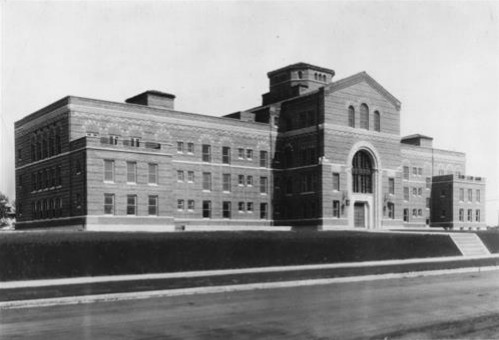
    <title type="html"><![CDATA[National Jewish Hospital for the Treatment of Consumptives (National Jewish Health)]]></title>
    <summary type="html"><![CDATA[<p><strong><em>When a patient in the nineteenth century United States was suffering from tuberculosis, the only “cure” was fresh, dry air, such as in the American West.  However, many who made the journey did not have enough money for treatment, so charitable organizations stepped in to care for the sick.</em></strong></p><img src="https://www.intermountainhistories.org/files/fullsize/97328ac5bb0c5e622e246757721a5d63.jpg" alt="National Jewish Health (1926). " /><br/><p>       Tuberculosis, formerly known as consumption, is one of history’s deadliest diseases. It was the number one killer of Americans until the 1940s, and there was no cure. The only suggestion by medical professionals was to move to a dry climate. This led many people to go West, which was an ideal location for this type of treatment. Healthcare professionals and businessmen built sanitariums (also spelled sanatoriums), facilities meant to treat tuberculosis. Builders modeled these sanitariums on European health resorts, but the American institutions focused on open air tents to treat patients’ respiratory symptoms.  </p><p>Termed “lungers,” tuberculosis patients overwhelmed the state of Colorado by the 1870s. In Denver, patients could not find housing, let alone afford to be admitted to treatment facilities. Seeing this crisis, several charities established their own care facilities. One such institution was the National Jewish Hospital for the Treatment of Consumptives. German Jews sought to build a hospital to help members of their community who were sick, but quickly ran out of money before finishing the building. Denver’s chapter of B’nai B’rith, a Jewish organization meant to foster community and growth among the Jewish population, resumed construction.  The sanatorium opened its doors in 1899, under the motto “None may pay who enter, none may enter who pay.” While the facility was originally imagined as an institution to help the Jewish community, B’nai B’rith insisted the staff treat any patient who could not afford treatment, regardless of faith. </p><p>The popularity and usefulness of sanatoriums declined in the 1940s after the development of a cure in 1946. This treatment was streptomycin, an antibiotic, and it was proven extremely effective in curing the bacterial infection which causes tuberculosis. With the advent of an actual medical treatment, the fresh air cure, and sanatoriums, quickly became antiquated. The National Jewish Hospital for the Treatment of Consumptives continued despite this, transitioning to become a specialized pulmonary hospital. Now called National Jewish Health, the hospital still offers health care to patients without insurance, and is ranked as one of the top respiratory facilities in the country.  </p><p><em><strong><a href="https://www.intermountainhistories.org/items/show/333">For more (including 3 images) view the original article</a></strong></em></p>]]></summary>
    <published>2019-09-15T00:15:42+00:00</published>
    <updated>2026-04-17T19:32:06+00:00</updated>
    <link rel="alternate" type="text/html" href="https://www.intermountainhistories.org/items/show/333"/>
    <id>https://www.intermountainhistories.org/items/show/333</id>
    <author>
      <name>Jodie Grief, Northern Arizona University</name>
    </author>
  </entry>
  <entry>
    <title type="html"><![CDATA[Childs-Drexel Home for Union Printers (Union Printers Home)]]></title>
    <summary type="html"><![CDATA[<p><strong><em>In an effort to provide relief for union members suffering from work-related lung disease, the International Typographical Union constructed a special health institution in Colorado Springs, Colorado.</em></strong></p><img src="https://www.intermountainhistories.org/files/fullsize/40af1c1c821400ca14421a15489cc5f0.jpg" alt="Union Printers Home (2018)." /><br/><p>     The working conditions of the nineteenth century were famously bleak. This was especially true of the printing industry. Workers inhaled the carbon-based ink and often developed chronic lung disease. The most prevalent disease was Black Lung, now known as coal worker’s pneumoconiosis. The printers became frustrated with their work environments, poor health, and low wages, so they established the International Typographical Union (ITU) in 1852. One of their main goals was to help union members already suffering from medical conditions brought on by their profession.</p><p>Union members suggested creating the Union Printers Home at the first ITU convention meeting in New Orleans in 1852, but the leadership committee rejected the proposal. This institution would have been a medical facility specifically for printers, in which they would live together and receive care. In 1890, union members finally approved the plan after Philadelphia newspaper publisher George W. Childs and philanthropist Anthony J. Drexel made a donation to fund the idea. Because the only treatment for respiratory illness at the time was fresh air, the ITU chose Colorado Springs as the site of this ambitious project. The Childs-Drexel Home for Union Printers opened May 12, 1892. Because the union was composed of newspaper publishers, the event was well publicized. The New York Times described the home as the only one of its kind, and the Los Angeles Herald claimed the opening day was the greatest event the West had ever seen.</p><p>The building overlooks the Garden of the Gods, as well as a view of Pikes Peak. Four stories high, workers constructed it using  white lava stone and red sandstone; it ultimately cost $80,000 to complete. The building is impressive, and the design was meant to instill a sense of pride in the printing profession. The printers could enjoy the expansive grounds and appreciate the beauty of their surroundings. The ITU initially admitted fifty union men and the staff set up twenty tuberculosis tents on the grounds. The Union Printers Home housed 25,000 printers while under the direction of the ITU.</p><p>After the Communication Workers of America absorbed the International Typographical Union in 1986, the union sold the building. The Union Printers Home is now a retirement facility, well-liked thanks to its beautiful views and architecture. The location and weather are still ideal for residents. Its unique history as a health institution is echoed in its current use.  </p><p><em><strong><a href="https://www.intermountainhistories.org/items/show/332">For more (including 3 images) view the original article</a></strong></em></p>]]></summary>
    <published>2019-09-14T23:46:47+00:00</published>
    <updated>2026-04-17T19:32:06+00:00</updated>
    <link rel="alternate" type="text/html" href="https://www.intermountainhistories.org/items/show/332"/>
    <id>https://www.intermountainhistories.org/items/show/332</id>
    <author>
      <name>Jodie Grief, Northern Arizona University</name>
    </author>
  </entry>
  <entry>
    <title type="html"><![CDATA[Crystal Hot Springs]]></title>
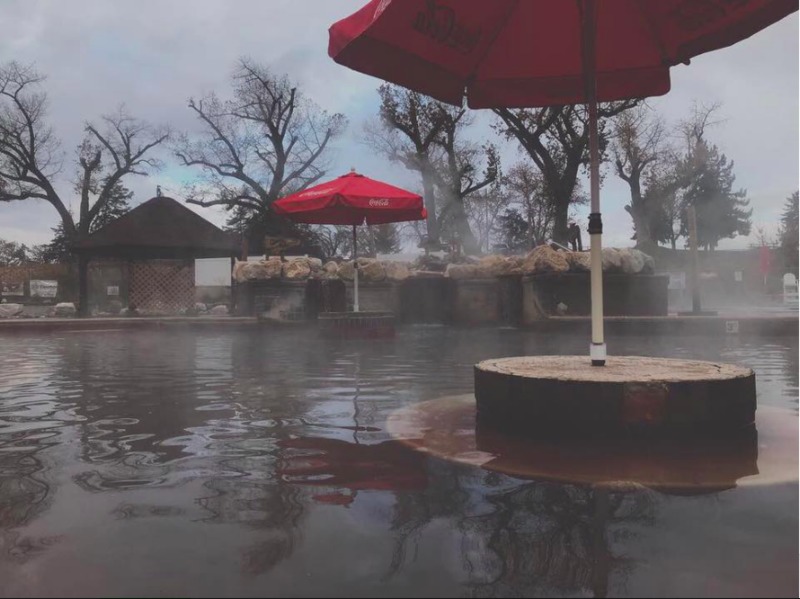
    <summary type="html"><![CDATA[<p><strong><em>For centuries, people have used hot springs in the American West to restore health and well-being.  These natural features attracted tourists and continue to be an important economic feature of the West.</em></strong></p><img src="https://www.intermountainhistories.org/files/fullsize/ac7349a2dfa7aa1b66a9820509a45137.jpg" alt="Main pool at the resort (2018)." /><br/><p>        Hot springs are a popular destination for wellness tourism, and have been an important part of the American West. Crystal Hot Springs in Honeyville, Utah, is a prime example of how the market has grown around these natural fixtures. The Great Basin Region has been home to several generations of Native Americans, most recently the Shoshone-Bannock tribe. While they inhabited the area, they used the hot springs for relaxation and wellness, just as they are used today. When white settlers came to the area, the hot springs were made a part of an industry, and were used to bring tourism revenue to the town.  </p><p>Settlers commercialized Crystal Hot Springs as a business in 1901, under the name Madsen Hot Springs. The daily operation has largely stayed the same since then. The springs contained a combination of calcium, chloride, fluoride, iron, lithium, magnesium, manganese, potassium, silver, sodium, strontium, and sulfate. These minerals are thought to improve skin texture and tone, and even relieve illness. The spring is heated naturally from the earth’s core, ranging from 120-134 degrees Fahrenheit. The resort fills its pools from the hot springs using gravity, letting the springs flow into the pools below. The original resort building was a covered pavilion, which was lost in a fire in the 1930s. The pool has remained in the same spot since the opening of the resort.   </p><p>During World War II, President Franklin Roosevelt’s administration established a rehabilitation program for wounded soldiers. For three years, the federal government sent veterans to Crystal Hot Springs to recover from their injuries. The natural heat helped manage their pain, and the minerals calmed inflammation to provide lasting comfort. These soldiers also suffered from post-traumatic stress disorder, commonly referred to as shell shock. This disorder was recognized by physicians treating war veterans, who recommended a quiet relaxing environment for the soldiers who had recently returned. Crystal Hot Springs was able to provide this, treating these veterans physically and mentally. After the war, the hot springs continued to be prosperous, providing people with a place to relax as more families enjoyed leisure time in the booming post-war economy.</p><p>Crystal Hot Springs is still a popular designation, but lately has catered more to Utah families than to tourists. The original large pool is ideal for families, as it gives children space to play, without intruding on other guests.  The resort is also affordable, making it a reasonable recreation activity even in a bad economy. While there are certainly still guests who seek the hot springs to relieve pain or relax their bodies, many more visitors are there for fun.  </p><p><em><strong><a href="https://www.intermountainhistories.org/items/show/330">For more (including 3 images) view the original article</a></strong></em></p>]]></summary>
    <published>2019-09-13T06:27:36+00:00</published>
    <updated>2026-04-17T19:32:06+00:00</updated>
    <link rel="alternate" type="text/html" href="https://www.intermountainhistories.org/items/show/330"/>
    <id>https://www.intermountainhistories.org/items/show/330</id>
    <author>
      <name>Jodie Grief, Northern Arizona University</name>
    </author>
  </entry>
  <entry>
    <title type="html"><![CDATA[The Yampah Vapor Caves]]></title>
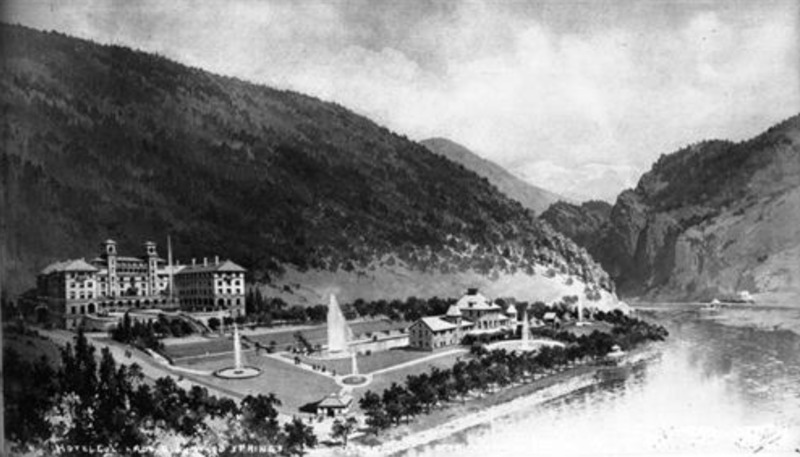
    <summary type="html"><![CDATA[<p><strong><em>As the United States became more and more industrialized in the nineteenth and twentieth centuries, Americans looked for relaxation and rejuvenation.  In the West, they found natural spas marketed to restore their mind and body. </em></strong></p><img src="https://www.intermountainhistories.org/files/fullsize/ee139bb9302858d95043e2885b8e1ee1.jpg" alt="“Hotel Colorado, Glenwood Springs” (1890-1910)" /><br/><p>The Yampah Vapor Caves are a unique natural feature among the many mineral hot springs in Colorado. Vapor from the Glenwood Hot Springs is captured in underground caves, creating a natural steam bath. The Ute peoples used these caves for centuries before the arrival of white settlers. Yampah was a site for sacred rituals, where the Utes used the vapor caves to heal their sick.</p><p>Settlers established the city of Glenwood Springs in 1883. It quickly became a town devoted to the health and wellness offerings of its hot springs, with its economy focused on tourism. A travel guide published in 1908 by the Rock Island and Pacific Railway Company referred to the city as "the most attractive Resort in Colorado." In 1887, William Devereaux secured the land rights to all of the mineral springs in the area through the Colorado Land and Improvement Company. He built the successful Colorado Hotel, then opened the Yampah Vapor Caves as a commercial business and invited guests to soak in the mineral steam. While this institution could have been advertised as a sanatorium, an institution designed to restore a person’s health, Devereaux advertised the vapor caves as a spa. By making this choice, Deveraux created a luxury experience rather than a medical one. Visitors to the Vapor Caves were not seeking a cure to a disease, but rather a relaxing natural experience. As a business, the Yampah Vapor Caves were successful enough that Deveraux built a separate resort specifically for them.</p><p>The Vapor Caves were very popular during the turn of the century, as Americans began traveling West in search of cures for respiratory diseases such as tuberculosis. After the prevalence of the disease began to decrease in the 1940s, the resort still managed to prosper, catering to the new wellness tourism market. Wellness tourism is travel focused on promoting health and well-being, rather than just recreation.  This became popular as Americans had more money for leisure and sought escape from the city. During WWII, veterans returning from combat used the Vapor Caves to recuperate from their injuries.  </p><p>Many famous people have visited the caves, including Doc Holliday and Theodore Roosevelt. Yampah continues to serve as a resort, catering to visitors looking to utilize the health benefits of mineral springs. Because the resort is a natural spa, it does not offer extravagant amenities. It is affordable, allowing it to continue to survive despite declining travel markets, as it has become a viable vacation option for families. The Yampah Vapor Caves still attract visitors seeking wellness and rest, making them a stalwart fixture in Glenwood Springs.</p><p><em><strong><a href="https://www.intermountainhistories.org/items/show/329">For more (including 3 images) view the original article</a></strong></em></p>]]></summary>
    <published>2019-09-13T06:04:11+00:00</published>
    <updated>2026-04-17T19:32:06+00:00</updated>
    <link rel="alternate" type="text/html" href="https://www.intermountainhistories.org/items/show/329"/>
    <id>https://www.intermountainhistories.org/items/show/329</id>
    <author>
      <name>Jodie Grief, Northern Arizona University</name>
    </author>
  </entry>
</feed>