<?xml version="1.0" encoding="UTF-8"?>
<feed xmlns="http://www.w3.org/2005/Atom">
  <title type="text">Intermountain Histories</title>
  <updated>2026-04-17T19:32:17+00:00</updated>
  <generator uri="http://framework.zend.com" version="1.12.20">Zend_Feed_Writer</generator>
  <link rel="alternate" type="text/html" href="https://www.intermountainhistories.org/"/>
  <link rel="self" type="application/atom+xml" href="https://www.intermountainhistories.org/items/browse?output=rss2"/>
  <id>https://www.intermountainhistories.org/</id>
  <author>
    <name>Intermountain Histories</name>
    <uri>https://www.intermountainhistories.org</uri>
  </author>
  <link rel="hub" href="https://pubsubhubbub.appspot.com/"/>
  <entry>
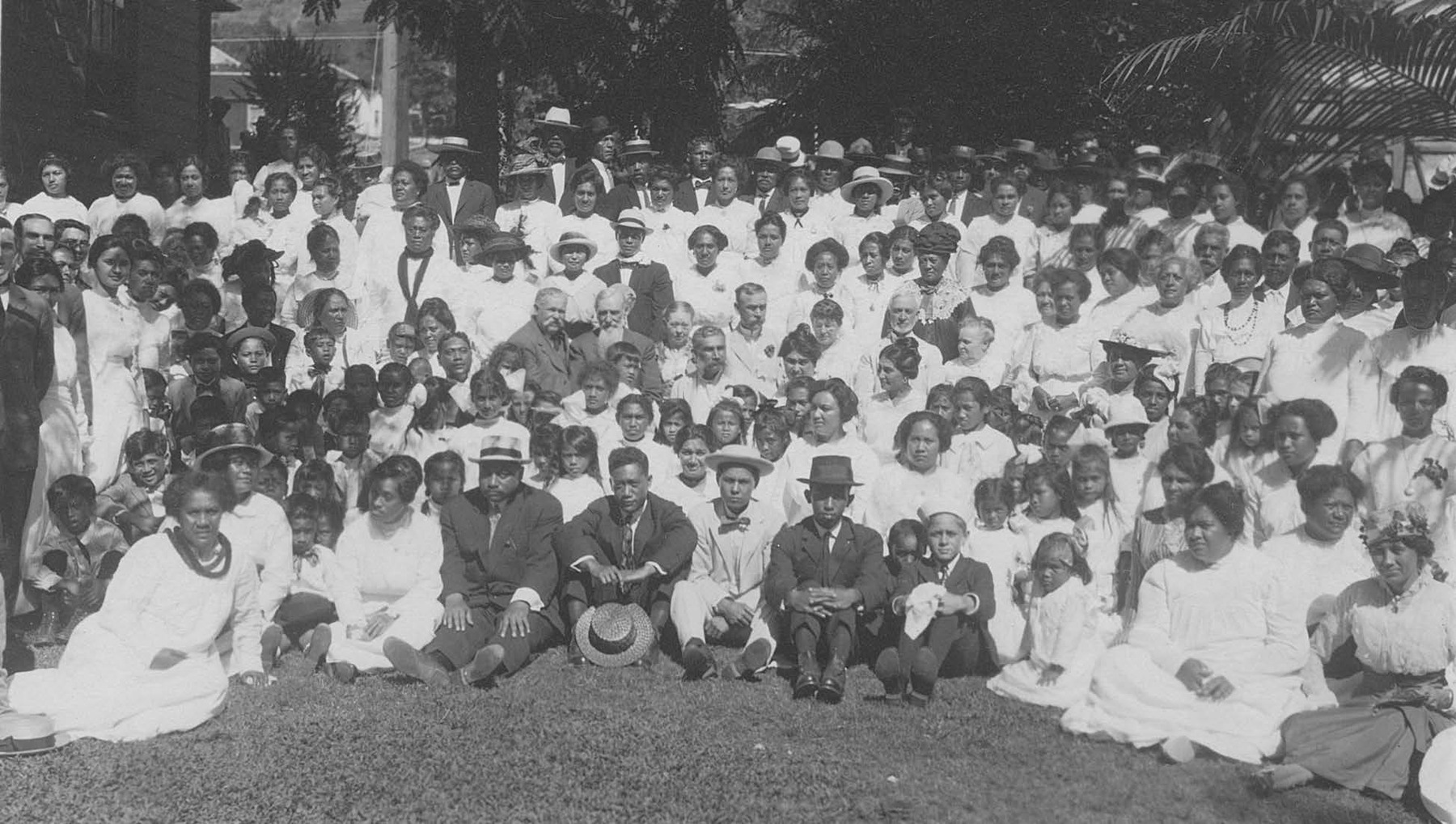
    <title type="html"><![CDATA[Joseph F. Smith and the Islanders of Iosepa]]></title>
    <summary type="html"><![CDATA[<p><strong><em>The Hawaiian members of the Church of Jesus Christ of Latter-day Saints had a very special relationship with the Church’s sixth president, Joseph F. Smith. He was influential in Hawaiian migrations both to and from Utah, including during the time that many of them resided in Iosepa, a Hawaiian colony.</p></strong></p><img src="https://www.intermountainhistories.org/files/fullsize/c4441ee0af02c1fa09ac1230935470cc.jpg" alt="Joseph F. Smith and Hawaiian Saints" /><br/><p><span style="font-weight:400;">At the age of fifteen, Joseph F. Smith served as a missionary for the Church of Jesus Christ of Latter-day Saints in the Hawaiian Islands in the early 1850s. During his several missions, Smith learned the Hawaiian language and developed a loving relationship with the Native Hawaiians. Throughout his life, Smith traveled to Hawaii more often than any other place outside of the western United States. Smith was successful in converting many Hawaiians to the LDS Church. The doctrine of gathering to “Zion” was a central teaching preached by Joseph F. Smith and other missionaries at that time. When immigration laws allowed it, a few hundred Hawaiian Latter-day Saints migrated to Utah to gather with their fellow Saints and to follow the teachings they had received. The Islanders experienced racism, discrimination, job-turnover, and prejudice that led the LDS Church to seek solutions. In 1889, a settlement was established in Tooele County for the Pacific Islanders settling in Utah. It was to be named after Joseph F. Smith, which in the Hawaiian Language is “Iosepa.” At that time, Smith was a member of the Church’s First Presidency and would later become the President of the Church.</span>
<span style="font-weight:400;">In both public and private correspondence, Joseph F. Smith was explicit in expressing his love for the Iosepan Saints. With a letter to S. M. Kinimakalehua of Iosepa, Smith sent “some cloth pants for the cold time that is coming… This is only rags, but take it with my love.” He reported that “Canon [George Q. Cannon] is joining with my family and I in sending a lot of our love to you and Makaweli and all of the Saints in Iosepa.” During a visit to Hawaii in 1915, Smith became convinced of the need for a temple in Hawaii. Upon returning to Utah, he encouraged the Hawaiian Saints to move back to Hawaii and help build a temple in La’ie. Smith also thought that the future Church Presidents would not have the same love for the Hawaiians that he did, which influenced his encouragement of the Islanders to return to their homeland. The Saints trusted in the council of Joseph F. Smith, and most resettled near the temple site in Hawaii. The settlement of Iosepa was fully abandoned by 1917. In November of 1918, Joseph F. Smith passed away and one year later the La’ie Temple was completed. </span></p><p><em><strong><a href="https://www.intermountainhistories.org/items/show/780">For more (including 4 images) view the original article</a></strong></em></p>]]></summary>
    <published>2024-02-24T03:37:50+00:00</published>
    <updated>2026-04-17T19:32:17+00:00</updated>
    <link rel="alternate" type="text/html" href="https://www.intermountainhistories.org/items/show/780"/>
    <id>https://www.intermountainhistories.org/items/show/780</id>
    <author>
      <name>Jordan Castillo, Brigham Young University</name>
    </author>
  </entry>
  <entry>
    <title type="html"><![CDATA[Iosepa: Utah’s Little Hawai&#039;i]]></title>
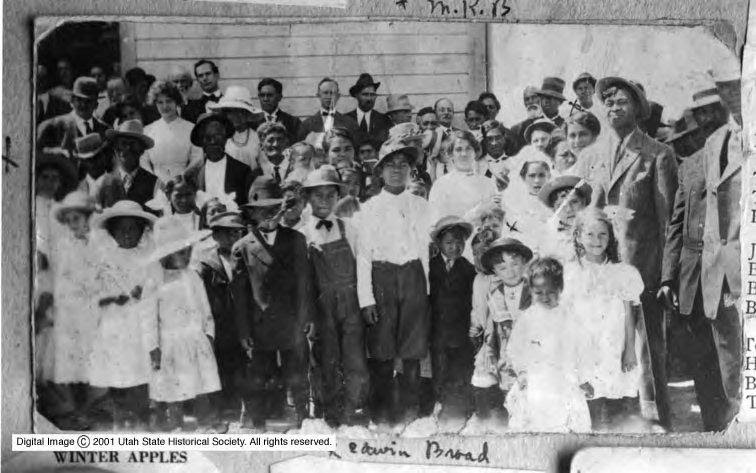
    <summary type="html"><![CDATA[<p><strong><em>Far from their island home, Hawaiian converts to the Church of Jesus Christ of Latter-day Saints established a short-lived, but unique community in the Utah desert during the late-nineteenth and early-twentieth century.</em></strong></p><img src="https://www.intermountainhistories.org/files/fullsize/d8d3edd3fe52f4ac5a720da7694b3a73.jpg" alt="Iosepa Residents Celebrating Pioneer Day in 1913. " /><br/><p>“Gathering” was an important concept in early Mormon theology. Converts to the church were encouraged to make their way to Utah so they could gather with the saints and participate in ordinances that were only available in the temples in Utah. Though missionaries had first arrived in Hawai'i in 1850, Hawaiian converts were barred by strict emigration laws from emigrating to America until the 1880s. Once Hawaii relaxed their emigration laws, Hawaiian converts began to migrate to Salt Lake City. However, because of a lack of employment opportunities for the Hawaiians, cultural differences, and a growing fear in Salt Lake City of leprosy being brought over from Hawaii, it soon became apparent that the Hawaiians would need a separate settlement. In 1889 the church bought the ranch of John T. Rich in Tooele County’s Skull Valley to use as the site for the Hawaiian settlement. On August 28, fifty-two Hawaiians arrived at their new home in Skull Valley. The settlement was named Iosepa after Joseph F. Smith, a member of the church’s first presidency who had been a missionary in Hawaii.   </p><p>To get around the provision in the Edmunds-Tucker Act that prohibited the Church from owning property valued over $50,000, Iosepa operated as a joint-stock company known as the Iosepa Agricultural and Stock Company, with several white Mormon men as shareholders. Hawaiian settlers began raising livestock and planting crops such as corn and wheat in Iosepa. While living in Iosepa, the residents faced the trials that naturally accompanied settling and farming in the Great Basin such as unexpected weather, crop failure, illness, and having enough water for their crops and daily needs. Despite these difficulties, the Hawaiian settlers managed to create a little Hawai'i in the Utah desert. They raised carp and grew algae as a substitute for seaweed in a nearby reservoir. They used corn husks as a replacement for Hawaiian ti leaves to wrap pork. They spoke Hawaiian and sang Hawaiian hymns in their church meetings. Each year they celebrated their own Pioneer Day on the anniversary of the settlement’s founding with a traditional Hawaiian feast. The Hawaiian converts also helped build the Salt Lake temple and consistently made the journey to Salt Lake City to attend the temple once it was dedicated. While the Tooele desert could not be more different from the tropical island environment of Hawaii, the settlers of Iosepa found ways to adapt to their new surroundings and participate in the religion that was so important to them.</p><p>In 1915 the church announced their plans to build a temple in Hawai'i. Joseph F. Smith encouraged the Hawaiian saints in Utah to return to Hawai'i to help with the temple and promised that the church would help pay the settlers’ traveling expenses. This essentially dissolved the community at Iosepa as almost all the settlers between 1915 and 1917 sold their property and possessions back to the Iosepa Agricultural and Stock Company and returned to the island. Though Iosepa only lasted a little over twenty-five years, it stands out in Utah’s history as being the first place in the state to be settled by non-European emigrants. Iosepa continues to be an important place for Pacific Islanders today, who gather in Iosepa each Memorial Day to commemorate Utah’s first Polynesian community. </p><p><em><strong><a href="https://www.intermountainhistories.org/items/show/388">For more (including 4 images) view the original article</a></strong></em></p>]]></summary>
    <published>2020-02-15T04:34:51+00:00</published>
    <updated>2026-04-17T19:32:07+00:00</updated>
    <link rel="alternate" type="text/html" href="https://www.intermountainhistories.org/items/show/388"/>
    <id>https://www.intermountainhistories.org/items/show/388</id>
    <author>
      <name>Hannah Chapman, Brigham Young University</name>
    </author>
  </entry>
</feed>