<?xml version="1.0" encoding="UTF-8"?>
<feed xmlns="http://www.w3.org/2005/Atom">
  <title type="text">Intermountain Histories</title>
  <updated>2026-04-17T19:32:01+00:00</updated>
  <generator uri="http://framework.zend.com" version="1.12.20">Zend_Feed_Writer</generator>
  <link rel="alternate" type="text/html" href="https://www.intermountainhistories.org/"/>
  <link rel="self" type="application/atom+xml" href="https://www.intermountainhistories.org/items/browse?output=rss2"/>
  <id>https://www.intermountainhistories.org/</id>
  <author>
    <name>Intermountain Histories</name>
    <uri>https://www.intermountainhistories.org</uri>
  </author>
  <link rel="hub" href="https://pubsubhubbub.appspot.com/"/>
  <entry>
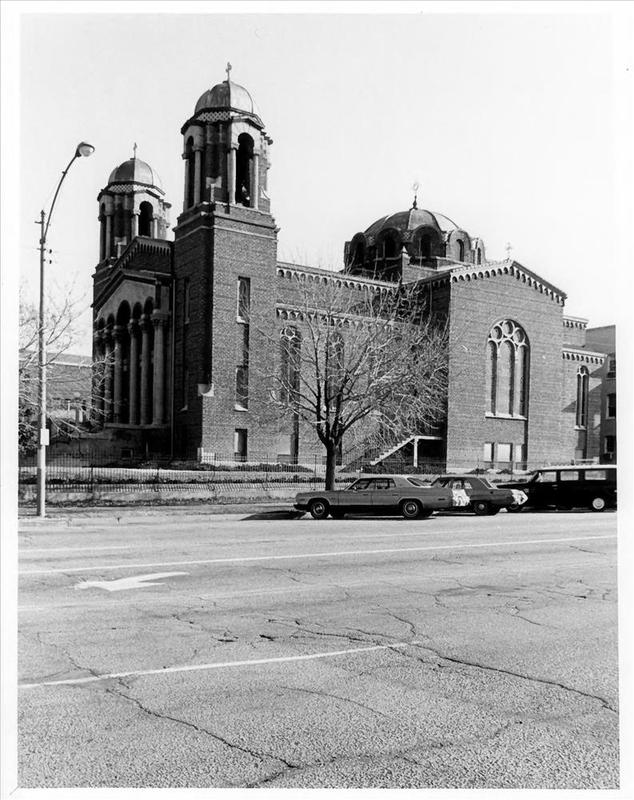
    <title type="html"><![CDATA[Greek Orthodoxy in Salt Lake City]]></title>
    <summary type="html"><![CDATA[<p><strong><em>The Holy Trinity Cathedral in downtown Salt Lake City is a registered historic monument with the National Parks Services. It is still used today and has served to connect Utah Greek communities for over one hundred years. </em></strong></p><img src="https://www.intermountainhistories.org/files/fullsize/ce84ecd0f11bd80bcfd146ca1fa2c01f.jpg" alt="Holy Trinity Greek Orthodox Church" /><br/><p>Greek Orthodoxy long served as the center of life in Greek Utah. A small church was initially built in Price, Utah in 1904 to carry out rituals of marriage, baptism, and funerals. After approximately twenty years, the Holy Trinity Cathedral was erected and later consecrated in Salt Lake City in August of 1925. It was the only Greek Orthodox cathedral in the Intermountain West during the early twentieth century and became the hub for Greeks regionwide. The West was likened unto Siberia for Greek Orthodoxy, but local newspapers hailed Salt Lake’s Orthodox Church as the “flower of the Greek clergy in America.” </p><p>The clergy played an important role in the vitality of the church in the Intermountain West. The services welcomed everyone. Priests would travel to members of their congregation that could not attend due to geography or other reasons. In addition to ministering, clergy mediated marriages and conflict. For example, during an episode of mining labor strife, one priest “climbed a Bingham Canyon mountainside to exhort Greek strikers . . . to put down their guns.” As American nationalism increased throughout the United States during World War II, the clergy also became subject to criticism. English, education, and marriage were important to the Greek community. For this reason, both Greeks and Americans were critical of the clergy. The Greek newspaper New Advocate criticized one clergyman, Father Yiannis, for only speaking Greek, doing a poor job of marrying his constituents, and for his disinterest in education. After Father Yiannis left, many Greek mothers had their babies re-baptized by the new priest that arrived from the east. </p><p>While Greek Orthodoxy responded to the cultural movements in the United States during the twentieth century, religious ceremonies and practices remained consistent. Marriage was required to take place within the church. This left many women unmarried. Funeral services reflected connections with birth and baptism. In addition, the elaborate detail on the Holy Trinity Cathedral retained Greek Orthodox symbolism. Symbols of God’s hand, seven candles and an olive branch, crowns, peacocks, and lilies can be found in the Byzantine architecture and design. A Phoenix also appears on the outside of the Cathedral, symbolizing the importance of birth, sanctification, and an ultimate resurrection. </p><p>The Holy Trinity Cathedral manifests the importance of Orthodox Theology in the West. The Holy Trinity Cathedral continues to connect the community with Greek life. Originally used as a Greek school during World War II, the basement of the Holy Trinity Cathedral has been converted into a Hellenic History Museum – it is the largest Hellenic museum west of St. Louis. The Cathedral is also involved with the Hellenic Cultural Association and the Greek Festival in downtown Salt Lake each year. For these reasons, the Holy Trinity Cathedral “is why Greeks are still a community into the fourth generation.” </p><p><em><strong><a href="https://www.intermountainhistories.org/items/show/158">For more (including 4 images) view the original article</a></strong></em></p>]]></summary>
    <published>2018-05-06T03:21:19+00:00</published>
    <updated>2026-04-17T19:32:01+00:00</updated>
    <link rel="alternate" type="text/html" href="https://www.intermountainhistories.org/items/show/158"/>
    <id>https://www.intermountainhistories.org/items/show/158</id>
    <author>
      <name>Katie Calton, Brigham Young University</name>
    </author>
  </entry>
  <entry>
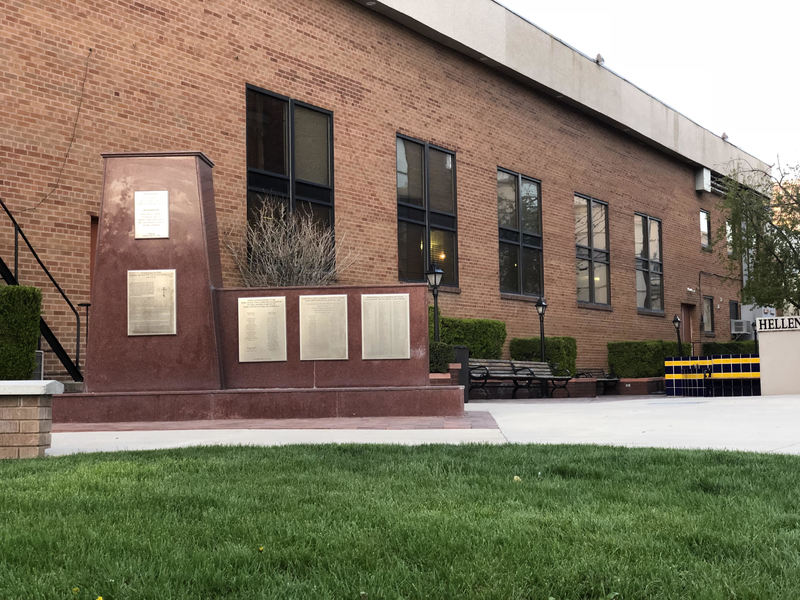
    <title type="html"><![CDATA[The Hellenic Historic Monument]]></title>
    <summary type="html"><![CDATA[<p><strong><em>A significant number of Greek Utahns served in the United States military. Their sacrifice to protect the nation is honored at the Hellenic Historic Monument in Salt Lake City. How can this monument impact our appreciation for United States service men and women?</em></strong></p><img src="https://www.intermountainhistories.org/files/fullsize/5b2ad5dcbfae1cdfc8fca342a54518b0.jpg" alt="Hellenic Historic Monument" /><br/><p>America experienced heightened nationalist ideology during World Wars I and II. As hysteria over the broader conflicts in Europe increased, xenophobia in the United States created strong inter-ethnic stress. In Utah, tension already existed in the industrial labor forces between Greeks, Americans, and other Eastern European immigrants at the start of the century. Lynchings were not widely publicized but nevertheless occurred in response to immigrant culture in the Salt Lake Valley. Greek immigrants were particularly targeted as un-American because they did not immediately desert their language and customs (often due to foundational religious beliefs), were involved in domestic labor strikes, and sent large amounts of money home. However, many Greeks were at the forefront of purchasing Liberty Bonds. Though criticized for not knowing English, Greek Newspapers (like O Ergatis) provided a resource to Greek-speaking immigrants to stay updated on war efforts in the United States.</p><p>Greek-Americans held an invested interest in World War I and II, regardless of their position on the conflict. Not only was America involved in the war, but so was their expatriate country – Greece. While many Greek Utahns joined the military by choice, others were drafted. The fairness of the draft was called into question when 221 of the 801 people in the Carbon County draft were Greek. Other members of the Greek community wanted to enlist, but were unable because they did not speak English. While many enlisted in the military to show their support for the war, others supported it through the Greek Orthodox Church. A parade was held from Price to the Holy Trinity Greek Orthodox church where speeches of patriotism were given and loyalty was pledged to the United States. </p><p>The wars significantly impacted Greek communities in Salt Lake City. Economically, the wars pushed copper miners and other industrial workers toward the city and into the middle class. This was partially due to the smaller number of more highly educated immigrants that came to Utah to be with family or friends who had already immigrated. Marriages decreased during the war (though they increased once the war had ended), and the Greek school located in the basement of the Holy Trinity Orthodox Church became less important than Orthodoxy itself. </p><p>To honor the history of Greek Utahns that fought in World Wars I, II, and the Korean Conflict, as well as the resulting effects of the war, the Hellenic Cultural Association (HCA) erected the Hellenic Historic Monument. The monument names the thirty-eight Greek Utahns that lost their lives in World Wars I, II, and the Korean Conflict, including Private First Class Theodore C. Dimas. Dimas was honored both in the community and by the Holy Trinity Orthodox church after his death. The HCA continues to hold Memorial Services for Greek servicemen and women at the monument each year.</p><p><em><strong><a href="https://www.intermountainhistories.org/items/show/157">For more (including 3 images) view the original article</a></strong></em></p>]]></summary>
    <published>2018-05-06T01:22:42+00:00</published>
    <updated>2026-04-17T19:32:01+00:00</updated>
    <link rel="alternate" type="text/html" href="https://www.intermountainhistories.org/items/show/157"/>
    <id>https://www.intermountainhistories.org/items/show/157</id>
    <author>
      <name>Katie Calton, Brigham Young University</name>
    </author>
  </entry>
  <entry>
    <title type="html"><![CDATA[Salt Lake&#039;s Historic Crown Burger]]></title>
    <summary type="html"><![CDATA[<p><strong><em>The next time you eat at Crown Burger, say hello to the cashier. They may just be a member of the Greek family who owns and operates the iconic Utah chain. </em></strong></p><img src="https://www.intermountainhistories.org/files/fullsize/3288af9d2f3899ac497717cc64f107ea.jpg" alt="Inside Crown Burger" /><br/><p>Dean Maroudas’ father immigrated to Chicago with his siblings. After spending some time in Chicago, the Maroudases came to Utah where Mr. Maroudas began working for another Greek family at Ajax Presses fashioning dry cleaning presses. When Ajax Presses decided to relocate to Chicago, the Maroudases chose to stay in Utah and open a dinner-night club. Food is “always the Greek default . . . we know how to cook.” The Katzourakis, friends of the Maroudases, opened Crown Burger in 1978. Dean eventually began working at Crown Burger as a dishwasher and is now the acting manager. He later married the Katzourakis’ daughter. </p><p>Years before Crown Burger opened its doors, John Katzourakis worked at Ajax Presses with Dean’s father. Ajax’s relocation to Chicago put John and his family out of work, as it had the Maroudases. Some of John’s siblings went to work for Bingham Canyon’s copper mine or the railroad, while John and his wife, Rula, moved to California so John could work at a machining company. During their time at the machining company, he and Rula decided to open Crown Burger.</p><p>After their pastrami burger failed to sell in California, the couple moved back to Utah. In 1978, they found a hotdog stand on the corner of 377 East and 200 South in Salt Lake City. With the help of Rula’s brother, Nic, they purchased the hotdog stand and started Crown Burger. Unlike the response in California, Utah went “gang-busters” for the pastrami burger. After six months, the Katzourakis purchased a gas station on the lot behind the hot dog stand. As Crown Burger’s popularity grew, the store expanded. There are now seven Crown Burger locations across Utah. </p><p>Greek immigrants in Chicago sold hot dogs, tamales, and other items from food carts in highly industrialized areas. The Crown Burger menu offers a similar diversity – burgers, burritos, fish and chips, and the classic Greek gyro. The community and the customers are most important to Dean and the rest of the Crown Burger family, so what the community loves to eat is what they perfect. “We don’t have [the] vision to say, ‘let’s conquer the world with this,’” Dean said, “We just really like what we are doing. We like the community. . . .We know people’s names. Probably the best way I can put it is we are not entrepreneurs, we are restaurateurs.”</p><p>The Greek word philoxenia roughly describes an inclusive friendship, even to strangers, that obligates you to care for their needs. This is the philosophy of Crown Burger, and it is the same philosophy that keeps the Greek community so inclusive and tight-knit today. </p><p><em><strong><a href="https://www.intermountainhistories.org/items/show/156">For more (including 2 images&#32;&amp;&#32;1 audio file) view the original article</a></strong></em></p>]]></summary>
    <published>2018-05-06T00:59:13+00:00</published>
    <updated>2026-04-17T19:32:01+00:00</updated>
    <link rel="alternate" type="text/html" href="https://www.intermountainhistories.org/items/show/156"/>
    <id>https://www.intermountainhistories.org/items/show/156</id>
    <author>
      <name>Katie Calton, Brigham Young University</name>
    </author>
  </entry>
  <entry>
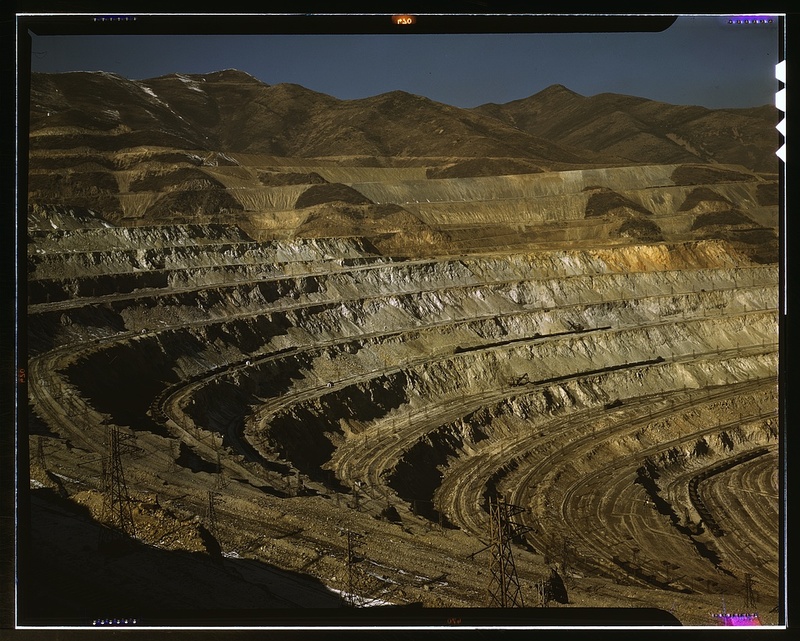
    <title type="html"><![CDATA[Kennecott&#039;s Greek History]]></title>
    <summary type="html"><![CDATA[<p><strong><em>Located on the West Side of Utah’s Salt Lake Valley, Kennecott Copper Mine provided work (and conflict) for hundreds of Greek Immigrants during the twentieth century. The mine is now the largest open pit mine in the world, built at a cost. </em></strong></p><img src="https://www.intermountainhistories.org/files/fullsize/b780d7a736a87decfc5e5f95e989ac0d.jpg" alt="View of the Utah Copper Company open-pit mine workings at Carr Fork, as seen from the railroad, Bingham Canyon, Utah" /><br/><p>By 1868, Utah’s copper industry had grown to such an extent that it attracted immigrant workers from all over Europe. After the Utah Copper Company began managing the Bingham Canyon Copper Mine in June of 1903, the Magna Mill and other smelters in Murray, Midvale, and Tooele were established to separate the copper from its ore. In Europe, Greece’s infrastructure was suffering and many families’ individual economies collapsed when the Greek currant crops failed in 1907. This pushed hundreds of Greeks to the United States in hopes of making a living for family left behind. Mining and smelting operations in Utah needed a larger labor force to excavate the mine in Bingham Canyon and to smelt. During this early period of Greek migration to Utah, many were coming from currant farming and sheep herding. Hundreds of Greek immigrants moved to Magna and areas surrounding Bingham Canyon’s smelters when offered jobs in the mining industry. In 1904 there were 2,000 names on the payroll at Bingham Canyon. By 1912, after a large influx of Greek migration to Utah, there were 3,239 laborers, and Greek-Americans made up 37.4 percent of the labor force among eleven different ethnicities, some of which included Serbian, Italian, and Russian. </p><p>Enclaves of Greek families formed in Magna, which was referred to as “Little Greece” due to its high population density of Greek immigrant families. Houses were “little tinder boxes, poorly built” and most houses were built below the top levels of the mine. As the Bingham Canyon Mine expanded, it required re-grading. Explosives were used to re-grade the mine and “every time they’d blast [the mine], boulders came rolling down the hill, several times right through [the houses].” Children and widows were found weeping in the debris. Conditions were dangerous. </p><p>Compounding the challenging circumstances of their living conditions, Greek immigrants found opposition from locals. The Ku Klux Klan’s branch in Salt Lake County was active around the mining towns that attracted Eastern European immigrants, and some Greek immigrants in Magna tell of the KKK’s white cross burning at the end of the street. Less than a month after the Utah Copper Company absorbed Bingham Canyon, newspapers reported race riots at the smelters where “[Greeks] force[d] opponents to run for their lives.” Serbians, Austrians, Italians, and Greeks were often found feuding and killings were not uncommon. In one instance, a conflict among Greeks and Italians became violent at the Bingham Canyon smelter and police were called to regulate it. Conflict toward immigrants became so heavy that in 1904, the “dastardly crime” of one Greek man prompted the mayor of Murray to propose a forced exodus of foreigners out of the mines and surrounding towns.</p><p>The conflict at Bingham Canyon fostered a strong Greek community. Few immigrants reached out across cultures due to the discrimination that existed and the structure of boarding houses at the mine. The mines did, however, provide hundreds of jobs for Greek immigrants looking for ways to economically strengthen their families. </p><p><em><strong><a href="https://www.intermountainhistories.org/items/show/155">For more (including 4 images) view the original article</a></strong></em></p>]]></summary>
    <published>2018-05-04T02:51:17+00:00</published>
    <updated>2026-04-17T19:32:01+00:00</updated>
    <link rel="alternate" type="text/html" href="https://www.intermountainhistories.org/items/show/155"/>
    <id>https://www.intermountainhistories.org/items/show/155</id>
    <author>
      <name>Katie Calton, Brigham Young University</name>
    </author>
  </entry>
</feed>