<?xml version="1.0" encoding="UTF-8"?>
<feed xmlns="http://www.w3.org/2005/Atom">
  <title type="text">Intermountain Histories</title>
  <updated>2026-04-17T19:32:19+00:00</updated>
  <generator uri="http://framework.zend.com" version="1.12.20">Zend_Feed_Writer</generator>
  <link rel="alternate" type="text/html" href="https://www.intermountainhistories.org/"/>
  <link rel="self" type="application/atom+xml" href="https://www.intermountainhistories.org/items/browse?output=rss2"/>
  <id>https://www.intermountainhistories.org/</id>
  <author>
    <name>Intermountain Histories</name>
    <uri>https://www.intermountainhistories.org</uri>
  </author>
  <link rel="hub" href="https://pubsubhubbub.appspot.com/"/>
  <entry>
    <title type="html"><![CDATA[Indigenous Inhabitants of Antelope Island ]]></title>
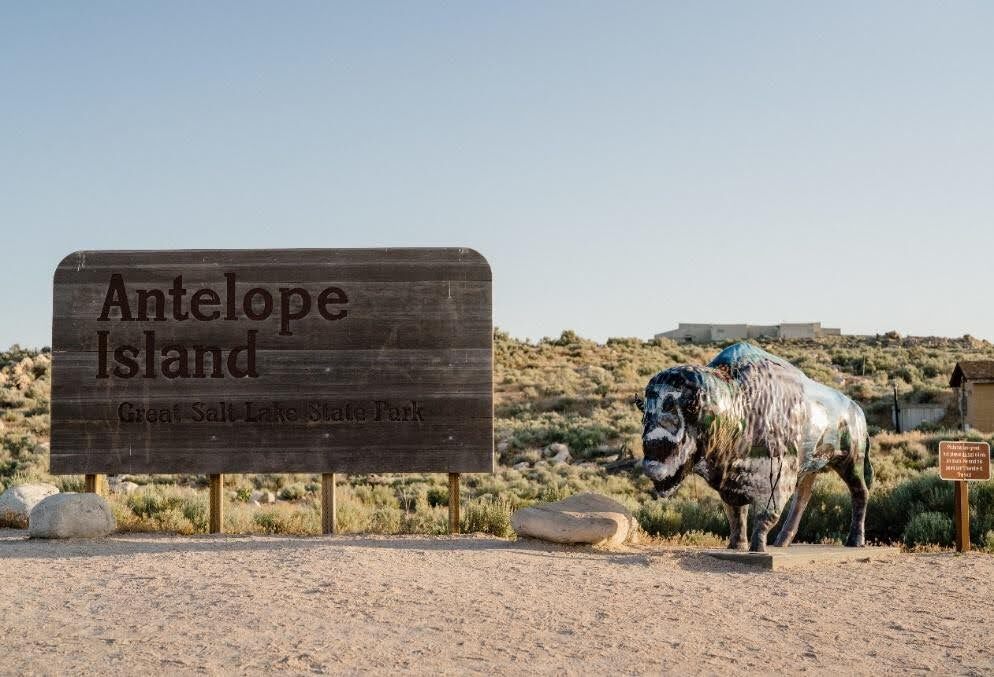
    <summary type="html"><![CDATA[<p><strong><em>The history of Indigenous interactions with Antelope Island, as documented through oral histories, artifacts, and written accounts, reveals a rich and diverse relationship over thousands of years.</em></strong></p><img src="https://www.intermountainhistories.org/files/fullsize/9ab62dc8307a1a682b90b16c59114809.jpg" alt="Antelope Island Great Salt Lake State Park " /><br/><p>Antelope Island holds great historical and geographical significance to the current and previous inhabitants of the Great Salt Lake, whose water levels rose and fell repeatedly. The interactions and ties between Natives and the Island are deeply embedded in the island’s history, encompassing exploration, resource utilization, cultural exchanges, and adaptation over millennia. </p><p><strong>Paleo, Archaic, and Fremont Peoples:</strong> </p><p>The earliest residents of Antelope Island, Paleo peoples, are estimated to have arrived in the region over 12,000 years ago. Like more recent Indigenous peoples, First peoples found the area accommodating for hunting, gathering, fishing, and insect roasting. These shoreline populations resided in caves, bush dwellings, or shelters constructed with nearby natural resources. Shoreline peoples hunted geese and rabbits and gathered berries, roots, and seeds along the Great Salt Lake’s shoreline. As climate changes occurred, island inhabitants adapted. The transition from Paleo-Indians to Archaic peoples (roughly 8000 B.C.E.) and later to the Fremont (300 B.C.E.) is evident, with each group utilizing the island’s resources differently. Archaic peoples used fine-pointed spears to hunt megafauna, big game, smaller mammals, rodents, and birds. About 2,000 years ago, the Fremont practiced many of the same food gathering techniques as their predecessors, but also farmed corn and traded with the southern Ancestral Puebloans. Around 1100 A.D., immigrants from southern California entered the scene and marked the end of the Salt Lake Fremont era, transitioning into occupation by the Numic speaking peoples including the Shoshones, Utes, and Goshutes. </p><p><strong>Nineteenth century:</p> </p><p>Explorers John C. Fremont and Kit Carson arrived at Antelope Island in 1845 and recorded some of their first impressions of the island and its wildlife. One of their most notable discoveries was Native encampments on the island. Numic-speaking peoples frequented the island. According to one account, Fremont consulted Utes residing in the area regarding the nature of the island before he and Carson explored it. The Utes said the party could easily reach the island on horseback. The explorers described their trip across the shallows to the island. The water never rose above their saddle girths. They described the lake floor as a sheet of salt resembling softening ice, into which the horses’ feet sank to their fetlocks. A variety of wildlife species lives on Antelope Island, including antelope. Fremont and his men killed an antelope for sustenance in the 18. After returning from the island, a Native man informed Fremont’s party that the antelope they had killed was one from his herd of antelope. To avoid any tension or conflict, Fremont gave the man cloth, tobacco, and a knife in exchange for their venison dinner. Ongoing Research and </p><p><strong>Conservation:</strong> </p><p>Contemporary archaeological efforts continue to survey and excavate Antelope Island, aiming to uncover prehistoric cultural sites. Discoveries, such as ancient spear points and metates, contribute to our understanding of the island’s long Indigenous occupation. Biologists monitor archaeological findings to identify native species for potential reintroduction to the island. The water level of the Great Salt Lake surrounding Antelope Island fluctuates up and down. On September 30, 2023, Native representatives from various tribes came together to offer a ceremonial blessing of healing. Former tribal chairman of the Northwest Band of Shoshones Darren Parry, Paiute Tribe of Utah Chairwoman Corrina Bow, and members of the Kanosh band participated in the event.</p><p><em><strong><a href="https://www.intermountainhistories.org/items/show/854">For more (including 4 images) view the original article</a></strong></em></p>]]></summary>
    <published>2024-09-25T03:39:42+00:00</published>
    <updated>2026-04-17T19:32:19+00:00</updated>
    <link rel="alternate" type="text/html" href="https://www.intermountainhistories.org/items/show/854"/>
    <id>https://www.intermountainhistories.org/items/show/854</id>
    <author>
      <name>Ethan Cornelius, Brigham Young University</name>
    </author>
  </entry>
  <entry>
    <title type="html"><![CDATA[Saltair Beach at Great Salt Lake: The &quot;Coney Island of the West&quot; ]]></title>
    <summary type="html"><![CDATA[<p><strong><em>Attracting visitors to float in its salty waters, the southern beaches at Great Salt Lake became increasingly popular with the Saltair Resort but now face environmental threats.</em></strong></p><img src="https://www.intermountainhistories.org/files/fullsize/1dca8d46b480914c5e65caf4b1a71f24.jpg" alt="[Untitled]" /><br/><p>The Great Salt Lakes' southern beach became a well-known vacation spot because of the Saltair Resort and its motto “Try to Sink” which encouraged visitors' curiosity to swim and float in the salty waters. Today, the beach has seen a drop in visitation due to receding water levels, with about 130,000 fewer visitors from 2012 to 2022. At the beach's peak visitation during the late nineteenth century and early twentieth century, beach life consisted of swimming, picnicking, and carnival rides such as a rollercoaster, merry-go-round, and Ferris wheel.</p><p>The Goshute tribe and the Skull Valley Goshutes live near and still use the resources of the southern end of Great Salt Lake. In 1847, Mormon settlers first came to Salt Lake Valley and initiated the recreational beach life on the lake. In the 1860s, Mormon settler Heber Kimball built a ranch near Black Rock Beach. Known later as “Rock House” this spot became the first well-known swimming spot on the lake. Attraction grew with the completion of the Utah Central Railroad in 1870 and the Utah-Nevada Railway in 1875 which made Black Rock and the future Saltair Beach accessible to transcontinental visitors.</p><p>In 1893, Deseret News announced the construction of a new resort called “Saltair.” The Church of Jesus Christ of Latter-day Saints invested the most money in the Saltair Beach Company and hoped to create a wholesome recreational resort that was family-oriented. Saltair opened in 1893 and soon was nicknamed “Coney Island of the West” for its many carnival and recreational attractions. The beaches were most popular on American holidays such as the Fourth of July with thousands of people visiting to swim on weekends and special occasions. In 1919 attendance reached 450,000 people and the resort's popularity peaked during the 1920s. However, on April 22, 1925, Saltair burned down for unknown reasons, and by the 25th, its manager announced rebuilding efforts with no proposed start date. With the promise to be “larger, stronger, and more beautiful” than ever by the Salt Lake Tribune, the second Saltair opened in May of 1926. Nonetheless, the resort did not live up to its predecessor and presently the third Saltair, due to another fire, serves as a concert venue.</p><p>Saltair was the center of beach life at the southern shore of Great Salt Lake, and with the decline of the resort came the decline of beach life. The latest reviews describe the beach as having great views, but decreasing water levels means a long and smelly walk to the water. In 2023 alone the lake lost two feet of water to evaporation and while Utah policymakers and environmental programs have forged a plan to save the lake, they did not include any Native tribes in the conversation. Today, people can still swim, or rather float, in the 12% average salinity levels of the Great Salt Lake compared to the Pacific Ocean's 3.5% average salinity. As well as kayak, boat, and sunbathe on the southern beach's shores and marina.</p><p><em><strong><a href="https://www.intermountainhistories.org/items/show/827">For more (including 5 images) view the original article</a></strong></em></p>]]></summary>
    <published>2024-05-23T00:29:57+00:00</published>
    <updated>2026-04-17T19:32:18+00:00</updated>
    <link rel="alternate" type="text/html" href="https://www.intermountainhistories.org/items/show/827"/>
    <id>https://www.intermountainhistories.org/items/show/827</id>
    <author>
      <name>Olivia Hall, Northern Arizona University</name>
    </author>
  </entry>
  <entry>
    <title type="html"><![CDATA[The Great Salt Lake Shorelands Preserve]]></title>
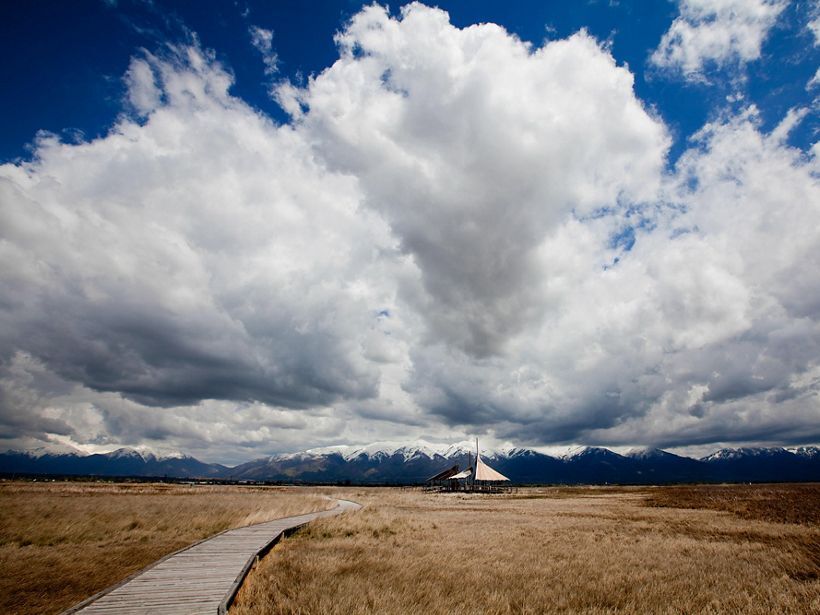
    <summary type="html"><![CDATA[<p><strong><em>Nicknamed “the Bird Refuge,” The Great Salt Lake Shorelands Preserve in Layton, Utah is a rest stop for 4-6 million birds migrating annually. The protected land has also become a recreational spot for tourists and locals to bird watch and enjoy the wetlands of the Great Salt Lake.</em></strong></p><img src="https://www.intermountainhistories.org/files/fullsize/3ea1ff3a8d741ab1d715b39c0db58c87.jpg" alt="Great Salt Lake Pavilion " /><br/><p><span style="font-weight:400;">In 2003, a group called “The Nature Conservancy” gained custody of 4,400 acres of wetlands fed by the waters of the Great Salt Lake. The wetlands lie on the eastern shore of the lake near Farmington Bay and Antelope Island State Park. Nicknamed “the Bird Refuge,” this preserve’s mission is to provide refuge to 4-6 million birds as they make their annual migrations on routes that span from the Arctic to Central and South America. Bird watchers have documented 250 species visiting the Shorelands preserve to feed or rest and 93 species that nest there. The number of birds passing through the area has increased by 25% since 2020, showing the importance of the preserve. </span>
<span style="font-weight:400;">The Shorelands Preserve includes a circular boardwalk spanning about 1 mile. Two wooden structures serve as stops along the boardwalk, one hosting a 30-foot viewing tower for visitors to better observe the surrounding area and to increase their chances of spotting birds. The other is a large wooden pavilion. Informative signs dot the boardwalk, helping visitors identify the birds that frequent the Preserve. They also provide information about the ecosystem of the area. </span>
<span style="font-weight:400;">In May 2020, the Mitigation Commission released a statement turning over ownership of The Nature Conservancy to the federal government. Giving the federal government stewardship over The Nature Conservancy was viewed as a better way to protect the lands from future development. This was crucial at a time when Utah’s Department of Transportation was considering expanding the West Davis Corridor, a road system. The drought-driven shrinking of the Great Salt Lake poses an additional risk to the region. The Nature Conservancy is in the process of developing strategies to divert water to the preserve to help the wetlands and aid the bird species that rely on it.</span></p><p><em><strong><a href="https://www.intermountainhistories.org/items/show/790">For more (including 4 images) view the original article</a></strong></em></p>]]></summary>
    <published>2024-03-03T03:57:53+00:00</published>
    <updated>2026-04-17T19:32:17+00:00</updated>
    <link rel="alternate" type="text/html" href="https://www.intermountainhistories.org/items/show/790"/>
    <id>https://www.intermountainhistories.org/items/show/790</id>
    <author>
      <name>Gabby Segura, Brigham Young University</name>
    </author>
  </entry>
  <entry>
    <title type="html"><![CDATA[Sheepherding on Fremont Island]]></title>
    <summary type="html"><![CDATA[<p><strong><em>In 1859, two pioneer brothers from Farmington, Henry William Miller and Daniel Arnold Miller, began the first ranching operation on Salt Lake’s Fremont Island.</em></strong></p><img src="https://www.intermountainhistories.org/files/fullsize/1e4eeac398afc93856bcf40417422df4.jpg" alt="Fremont Island" /><br/><p><span style="font-weight:400;">The storied explorer John C. Fremont and his traveling companions initially documented their foray onto the Great Salt Lake with incredible optimism. While paddling arduously in their small rubber craft in 1843, they observed that, “Several large islands raised their high rocky heads out of the waves; but whether or not they were timbered, was still left to our imagination…”. When they explored one of the aforementioned “high rocky heads,”  they found  an island populated with sagebrush, bunch grass, and a surprising lack of fresh water. After a day or two, Fremont dubbed his discovery “Disappointment Island.”</span>
<span style="font-weight:400;">While surveying the Great Salt Lake for The Church of Jesus Christ of Latter-day Saints in 1850, Captain Howard Stansbury, perhaps to Fremont’s chagrin, changed the name of the formerly disappointing island to Fremont Island. Stansbury noted that the plentiful bunch grass and brackish water would be perfect for livestock. In 1859, Daniel and Henry Miller demonstrated their agreement by moving flocks of sheep and some cattle to the island, which the locals then recognized as “Miller Island.”</span>
<span style="font-weight:400;">Seymour Miller, the grandson of Daniel and Henry, recorded some of his experiences as a de facto ranch hand for the family ranching business on Fremont Island. They kept 2,000 sheep on the island and ferried themselves and their stock back and forth on the </span><i><span style="font-weight:400;">Lady of the Lake</span></i><span style="font-weight:400;">, a boat designed by Jacob Miller, Seymour’s cousin. Keeping the sheep on a relatively small island (4.60 sq. mi.) led the Millers to conclude that they did not need a full-time herder on the island. Instead, they let the sheep run wild for most of the year, confident in the confines of the island.</span>
<span style="font-weight:400;">The sheep quickly went feral and became “wild as a deer.” This provided the Millers with some market advantage because “The meat of this flock tasted more like venison than mutton and would always bring a fancy price on the market when ordinary mutton could hardly be sold.” Unfortunately, during shearing and lambing seasons, these wild qualities caused numerous problems for the island herders. They would sometimes go a full day or two during round ups without successfully driving a single sheep into the shearing pens. During one especially eventful drive, Seymour and his companions cornered some sheep on a peninsular part of the island and “Rather than be caught, several of them took off into the lake. The last I saw of them they were still going.”</span>
<span style="font-weight:400;">Unfortunately for the Millers, their ranching operation did not last past 1885, when local lawyer Uriah Wenner took an interest in living on the island and began legal procedures to oust them and their flocks. The Millers were forced to move their herds to the mainland, where they continually lost woolies due to the sheep’s feral nature that befuddled conventional herders. In his memoir, Seymour concluded that “we never got a dollar out of them.”</span>
<span style="font-weight:400;">After Wenner and his wife died, possession of the island changed hands without remarkable business or improvement until 2003. For a few years, Fremont Island underwent a small stint as a hunting ground for exotic livestock and then changed ownership until it landed in the hands of the State of Utah.</span></p><p><em><strong><a href="https://www.intermountainhistories.org/items/show/735">For more (including 3 images) view the original article</a></strong></em></p>]]></summary>
    <published>2023-04-06T16:23:06+00:00</published>
    <updated>2026-04-17T19:32:16+00:00</updated>
    <link rel="alternate" type="text/html" href="https://www.intermountainhistories.org/items/show/735"/>
    <id>https://www.intermountainhistories.org/items/show/735</id>
    <author>
      <name>Joshua Rust, Brigham Young University</name>
    </author>
  </entry>
  <entry>
    <title type="html"><![CDATA[A Brief History of Antelope Island]]></title>
    <summary type="html"><![CDATA[<p><strong><em>Antelope Island is located in the Great Salt Lake, Utah. Both humans and animals have utilized this land for thousands of years. Antelope Island, sometimes connected to the mainland at low tide, contains natural resources, diverse animal species and ecosystems. </em></strong></p><img src="https://www.intermountainhistories.org/files/fullsize/551392983ad745092c1f6292f583e72e.jpg" alt="Black Rock and Antelope Island, Salt Lake" /><br/><p>Antelope Island represents the largest island within the Great Salt Lake, covering an area of 42 square miles. First inhabited by indigenous natives about 2,000 years ago, natives utilized Antelope Island up until the 1840’s. Indigenous camps discovered on the island provide the knowledge of this use. In 1845, John C. Fremont and Kit Carson explored the island and documented their expedition. Carson’s journal states that he and Fremont hunted Pronghorn Antelope on this island, just like the members of the Ute tribe, and decided to name the island after the animal. </p><p>In 1848, The Church of Jesus Christ of Latter-day Saints moved a herd of cattle to the island under the rancher Fielding Garr. The Church continued to run a ranch on the island until 1875, when the homestead movement and the Union Pacific Railroad required land, causing the Church to abandon its use on the island. The land passed through the hands of numerous owners throughout the years until it was purchased in totality in 1981 by the State of Utah. </p><p>John White and John Dooly, the ranchers during that time, introduced twelve bison to the island in 1893. Overgrazing and overpopulation with the grazing animals on the island caused it to become necessary to cull and relocate the herd regularly. The herd created a significant genetic pool for use in bison conservation and breeding efforts today. In modern time, numerous species of animals reside on the island, including bighorn sheep, deer, birds, pronghorn, bobcats, among numerous other species. </p><p>Antelope Island contains many natural resources. Mining activity included prospecting for slate (1874), gold and copper (1899), oil (1904), and sand and gravel deposits (1967). Eventually, the State of Utah purchased part of Antelope Island in 1969 and bought the rest in 1981, when it officially became a part of the Utah State Parks System. Mining activities halted in 1979 and the state park, which opened to the public in 1993, is currently a habitat for the wildlife inhabiting the island. </p><p><em><strong><a href="https://www.intermountainhistories.org/items/show/297">For more (including 4 images) view the original article</a></strong></em></p>]]></summary>
    <published>2019-02-13T09:59:39+00:00</published>
    <updated>2026-04-17T19:32:05+00:00</updated>
    <link rel="alternate" type="text/html" href="https://www.intermountainhistories.org/items/show/297"/>
    <id>https://www.intermountainhistories.org/items/show/297</id>
    <author>
      <name>Jessica Newman, Brigham Young University</name>
    </author>
  </entry>
</feed>