<?xml version="1.0" encoding="UTF-8"?>
<feed xmlns="http://www.w3.org/2005/Atom">
  <title type="text">Intermountain Histories</title>
  <updated>2026-04-17T19:32:21+00:00</updated>
  <generator uri="http://framework.zend.com" version="1.12.20">Zend_Feed_Writer</generator>
  <link rel="alternate" type="text/html" href="https://www.intermountainhistories.org/"/>
  <link rel="self" type="application/atom+xml" href="https://www.intermountainhistories.org/items/browse?output=rss2"/>
  <id>https://www.intermountainhistories.org/</id>
  <author>
    <name>Intermountain Histories</name>
    <uri>https://www.intermountainhistories.org</uri>
  </author>
  <link rel="hub" href="https://pubsubhubbub.appspot.com/"/>
  <entry>
    <title type="html"><![CDATA[Waterfalls Canyon Fire, Grand Teton National Park]]></title>
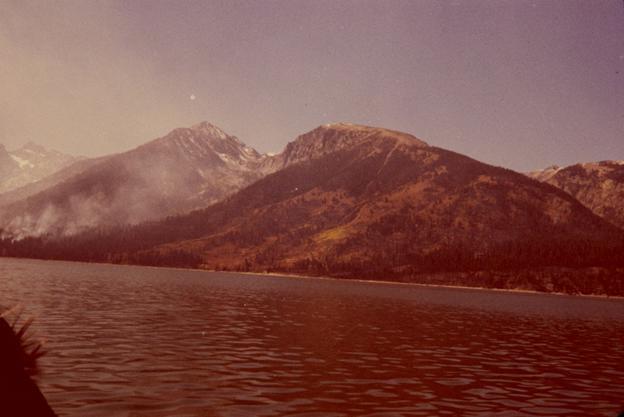
    <summary type="html"><![CDATA[<p><strong><em>The 1974 Waterfalls Canyon Fire started in a designated let-burn area near Jackson Lake in Grand Teton National Park, so the National Park Service allowed it to burn. Smoke from the blaze impacted tourists and local communities, prompting public debates about the Park Service policy that allowed natural fires to burn. </em></strong></p><img src="https://www.intermountainhistories.org/files/fullsize/218d40ecfabb4d0268fec6ef7807fcd7.jpg" alt="Smoke in the mountains at Grand Teton National Park during a fire." /><br/><p>In 1968, the National Park Service (NPS) officially revised its approach to wildfires, stating that they played a key role in maintaining the health of forests. According to Department of the Interior reports, natural burns cleared dead timber and dense clusters of young trees that prevented new growth. In the wake of the decision, park managers experimented with different approaches to maintain healthy forests without causing severe damage. During prescribed burns, the Park Service started fires within strictly defined boundaries and weather conditions to control their severity. During let-burn situations, the agency monitored natural blazes and allowed them to burn. Grand Teton National Park experimented with both approaches.
On August 28, 1973, NPS officials ignited  the Uhl Hill Fire in a dense grove of sagebrush and aspen near the Grand Teton’s eastern edge. One of two prescribed fire experiments that year, NPS expected Uhl Hill to burn one-hundred acres. Cool, wet conditions made it easier to control, but fifty-six firefighters stood by to suppress it if it escaped approved boundaries. While snow and high wind quickly ended the project, which only burned thirty acres of brush, it showed that the Park Service could control blazes within park boundaries. This experiment proved useful on July 17, 1974, when lightning sparked the Waterfalls Canyon Fire near Jackson Lake. It started in the same area that a five-acre let-burn blaze impacted in 1973. Because of its location, park officials allowed it to burn. The Park Service closely monitored the flames, noting that they spread slowly unless high winds or heavy fuels stimulated them.
While NPS perceived Waterfalls Canyon as a successful test of let-burn management, decades of suppression had pushed the public to fear fire, generating controversy. By September 18, the blaze burned 1,900 acres, and smoke from it reached the nearby town of Jackson, Wyoming. The Park Service estimated that about 100,000 tourists observed the smoke, and it incensed Jackson’s citizens, many of whom relied on tourist traffic from Grand Teton to make a living. Residents complained that the let-burn policy ignored the needs of local communities, drawing increased attention to the flames. The National Broadcasting Company (NBC), the Columbia Broadcasting System (CBS), and <em>Time </em>magazine reported on Waterfalls Canyon in September, bringing it to national attention. In response to the controversy, the Park Service’s Rocky Mountain regional office issued a press release that explained the let-burn approach.
Despite public backlash, Park Service officials never suppressed Waterfalls Canyon. Snow finally extinguished it in November 1974, and it only burned 3,500 acres. However, the negative publicity pushed NPS to educate the public about the let-burn approach. In 1974, the Park Service issued a press release that argued that natural fires maintained a healthy landscape in parks. Three years later, a Park Service policy known as NPS-18 approved let-burn management nationwide.</p><p><em><strong><a href="https://www.intermountainhistories.org/items/show/914">For more (including 3 images) view the original article</a></strong></em></p>]]></summary>
    <published>2025-09-23T15:39:29+00:00</published>
    <updated>2026-04-17T19:32:21+00:00</updated>
    <link rel="alternate" type="text/html" href="https://www.intermountainhistories.org/items/show/914"/>
    <id>https://www.intermountainhistories.org/items/show/914</id>
    <author>
      <name>Kaylen Wilson, Northern Arizona University </name>
    </author>
  </entry>
  <entry>
    <title type="html"><![CDATA[1967 Fire Season, Glacier National Park]]></title>
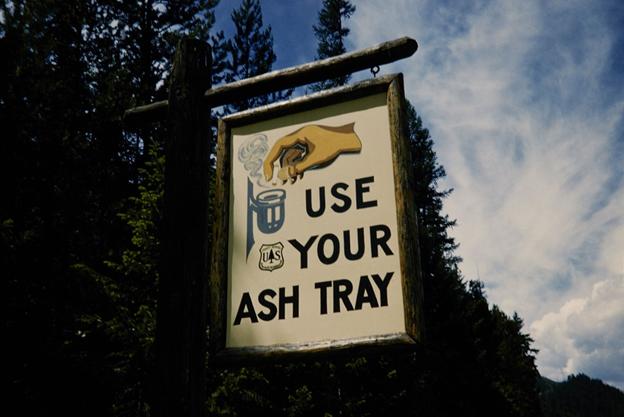
    <summary type="html"><![CDATA[<p><strong><em>Glacier National Park burned more frequently throughout its history than almost any other national park in the United States. Starting in 1910, the National Park Service persistently extinguished all wildfires that occurred within parks, but Glacier’s severe fire season in 1967 helped to end this suppression policy.</em></strong></p><img src="https://www.intermountainhistories.org/files/fullsize/75678ebbab988382ceaac098ab81df69.jpg" alt="Fire Safety Sign" /><br/><p>Throughout the early twentieth century, Glacier National Park in Montana utilized suppression, which required federal land management agencies to extinguish all forest fires. This approach gained national support after millions of acres of land burned in Idaho and Montana in 1910, including about 60,000 acres in Glacier. When 50,000 acres of Glacier burned in 1926, the National Park Service began to formulate official firefighting in the park. By 1929, Chief Forester John D. Coffman drafted the first national park fire management plan to organize firefighters and their equipment at Glacier. During the same year, the Half Moon Fire burned 50,000 acres in Glacier and destroyed numerous buildings. Coffman used analyses of Half Moon to revise and expand his initial strategy, making suppression an integral part of park policy.
In the 1960s, NPS developed a scientific approach to park management that changed the way it approached wildfires, but individual parks rarely aligned their management procedures with these ideas. In 1963, the Advisory Board on Wildlife Management, created by Interior Secretary Stuart Udall, published the Leopold Report. It stated that flames played a key role in maintaining healthy forests, advising administrators to contain wildfires and allow them to burn. Without routine burning, plant materials accumulated on the forest floor, fueling more destructive blazes. However, decades of fighting fires pushed park managers to fear the damage they caused. For decades, NPS managed forests to create attractive landscapes for visitors, and burned forests challenged this idealized image. As such, Glacier’s revised 1965 management plan upheld suppression.
In 1967, a significant drought and hot, windy weather created optimal conditions for flames to spread in Glacier. On August 11, 1967, lightning sparked approximately twenty-one fires throughout the park, including the Glacier Wall and Flathead blazes. They continued burning for a month despite containment efforts. The Office of Emergency Preparedness declared Glacier and the national forests surrounding it a national disaster area, contributing federal funding and labor to put out the flames. 1967 became the most destructive fire season Glacier had seen since 1929, and about 90,000 acres in the park burned.
The 1967 season quickly sparked a debate between the Park Service and the public over suppression. NPS officials contrasted it with the 1910 season  it to display the effectiveness of the policy, noting that less acres burned and less people died in the 1967 fires. However, inholders, who owned cabins, ranches, and hotels in Glacier, blamed the Park Service for mismanaging burns that damaged their properties. One vocal inholder, Montana Senator Burton Wheeler, brought these criticisms to national attention, prompting NPS to reassess its firefighting policies. In 1968, the Park Service acknowledged the ecological benefits of fire in the Green Book, a policy document that established budgets and dictated management policies for the entire park system. Revising this document made changing the suppression policy an issue of national importance. By 1977, Glacier’s management plan allowed natural fires to burn.</p><p><em><strong><a href="https://www.intermountainhistories.org/items/show/913">For more (including 5 images) view the original article</a></strong></em></p>]]></summary>
    <published>2025-09-23T15:39:29+00:00</published>
    <updated>2026-04-17T19:32:21+00:00</updated>
    <link rel="alternate" type="text/html" href="https://www.intermountainhistories.org/items/show/913"/>
    <id>https://www.intermountainhistories.org/items/show/913</id>
    <author>
      <name>Kaylen Wilson, Northern Arizona University </name>
    </author>
  </entry>
  <entry>
    <title type="html"><![CDATA[Boom and Bust in Bodie, CA]]></title>
    <summary type="html"><![CDATA[<p><strong><em><span style="font-weight:400;">Once among the largest and most prosperous towns in California, Bodie is now defined by the ghost of its past in the form of abandoned objects, peeling wallpaper, and half-destroyed buildings. </span></em></strong></p><img src="https://www.intermountainhistories.org/files/fullsize/24dc4420a11bbf404db7f58bf5daf143.jpg" alt="Old buildings in Bodie, California" /><br/><p><span style="font-weight:400;">In the summer of 1859, W. Bodey found rich gold deposits in California, seven miles west of the Nevada border. He had traveled from Poughkeepsie, New York, in pursuit of an adventure, and his discovery would lead to the town of Bodie and surrounding hills being named in his honor. His name is something of a mystery today; there are reports that refer to him as William, Waterman, and Wakeman, his second initial as either “T” or “S,” and his last name occasionally spelled as Body rather than Bodey. As for the spelling of the town’s name, the “ie” ending was initially the result of a confused sign painter, and it just stuck. </span>
<span style="font-weight:400;">Bodey’s ambition to find more for himself in life fueled both his success and his downfall. He was one of the first to discover gold in eastern California and managed to survive the dire circumstances of early prospecting life through the first change of seasons. It wasn't the work in the mines during the summer that killed him, but the harsh winter that followed. In November 1859 Bodey and his traveling companion left camp to get supplies. They were caught in a blizzard, and Bodey–unable to keep up with his companion–was left to die. His remains were recovered and now lie beneath two headstones: one that reads “Waterman S. Bodey” with an engraved image of miners panning gold from a stream against a backdrop of mountains; and another, much smaller with the name “William S. Bodey.”</span>
<span style="font-weight:400;">In the years following his death, the town of Bodie was brought to life by other ambitious miners and their families, bringing the town’s population to 10,000 in 1879. With so many people arriving in such a short period of time, most of them lived in tents–even after the town became more established. In 1881 the Bodie and Benton Railway was built and used to haul lumber and other goods from the Bodie mines to the saw mill by Mono Lake. Bodie was becoming a prosperous center for work. It served some twenty-two gold and silver mines in the region with a stamp mill for processing ore and plenty of businesses in town. Saloons dominated, but there was also a mercantile, several general stores, motels, gambling and dancing halls, schools, stables, and both a Catholic and a Methodist church. </span>
<span style="font-weight:400;">Like its namesake, the town is no stranger to tragedy and risk. Two accidental fires–one from a kitchen in 1892 and another started by a child in 1932–caused the destruction of several main street buildings, and led to economic hardship. Combined with the sundry difficulties of the Great Depression, the town failed to recover. It joined the arid region’s long list of ghost towns. Weather conditions in the mountains are still just as treacherous as they were in W. Bodey’s fateful last days. Travel to Bodie during winter months is only possible by way of skis, snowshoes, or snowmobiles. </span>
<span style="font-weight:400;">In an attempt to preserve the historic elements of the town, Bodie was made an official California State Park in 1962. Only five percent of what once made up the booming town of Bodie is thought to have survived, and today its ghost-like remains sit virtually untouched in tattered buildings and houses. </span></p><p><em><strong><a href="https://www.intermountainhistories.org/items/show/806">For more (including 6 images) view the original article</a></strong></em></p>]]></summary>
    <published>2024-05-16T02:01:48+00:00</published>
    <updated>2026-04-17T19:32:18+00:00</updated>
    <link rel="alternate" type="text/html" href="https://www.intermountainhistories.org/items/show/806"/>
    <id>https://www.intermountainhistories.org/items/show/806</id>
    <author>
      <name>Megan Bailey, Brigham Young University</name>
    </author>
  </entry>
  <entry>
    <title type="html"><![CDATA[The Big Burn of 1910]]></title>
    <summary type="html"><![CDATA[<p><strong><em>The summer of 1910 was very dry in the northwest United States, with absolutely no precipitation May through July. The resulting fire was so destructive that Americans named it “the Big Burn.”</em></strong></p><img src="https://www.intermountainhistories.org/files/fullsize/1aac363c55b106acdcbdfdad043cc9a0.jpg" alt="Scars of Wallace, ID" /><br/><p>In the summer of 1910, every step through the forests in the Bitterroot Mountains between Idaho and Montana could meet with a resounding <em>crunch</em> from the arid twigs and leaves. The season had been extremely dry, with no rain at all from May through July.
On the night of July 26, a lightning storm swept across the Bitterroots. Thunder roared through the valleys, but there was no rainfall. By the following morning, nearly a thousand fires had sprung up around the region, sparked by the lightning. In the following weeks, even more blazes emerged. Sparks, thrown by trains rumbling through the dense forest had no trouble lighting the desiccant woodland, adding to the crisis. By the middle of August, there were 2,500 separate fires burning in Idaho and Montana.
On the morning of August 20, a breeze picked up through the Coeur d’Alene National Forest and the St. Joe Mountains. The wind gradually intensified throughout the day. Before the firefighters knew it, they were dealing with gusts of up to 70 mph. Hurricane-like winds pushed together hundreds of fires. By this point, there was virtually no hope of containing the fire. The Big Burn had started.
The dry wilderness was like an endless source of fuel, and he giant blaze devoured everything in its path. Flaming trees were pulled from the ground and tossed like mere sticks while dry timber caught fire and instantly exploded into a ball of sparks. Firefighters that survived reported that it was near impossible to outrun the heat because the inferno moved at the speed of a charging horse. Those with a head start had a chance of survival; most others did not. Over the course of two days, the Big Burn torched three million acres of land. A third of Wallace, Idaho—a town of three thousand people—burned to the ground. The fire almost completely leveled the mining towns of Grand Forks, Idaho and Taft, Montana. Eighty-six people died, seventy-eight of whom were firefighters.
It was soon clear that the Big Burn was the most destructive fire the United States Forest Service had ever seen. The fire would also be recognized as the most significant wildfire emergency because of its deep impact on future forest policies. The disaster inspired a wave of priority and policy concerning national land. The incredible loss of life and forest showed the Forest Service needed serious recognition from the people. Donations poured in, and Congress doubled the organization’s budget. Parks and forest stations hired more staff and established resources in preparation of another wildfire catastrophe. The disaster of 1910 imprinted on the nation how dangerous fire could be; it was a lesson learned at incredible human cost.</p><p><em><strong><a href="https://www.intermountainhistories.org/items/show/623">For more (including 5 images) view the original article</a></strong></em></p>]]></summary>
    <published>2022-06-25T06:54:15+00:00</published>
    <updated>2026-04-17T19:32:13+00:00</updated>
    <link rel="alternate" type="text/html" href="https://www.intermountainhistories.org/items/show/623"/>
    <id>https://www.intermountainhistories.org/items/show/623</id>
    <author>
      <name>Brennen Donahue, College of Idaho</name>
    </author>
  </entry>
  <entry>
    <title type="html"><![CDATA[Sunshine Mine Disaster]]></title>
    <summary type="html"><![CDATA[<p><strong><em>On May 2, 1972, the Sunshine Mine experienced a devastating fire. Claiming the lives of seventy-one men, the Sunshine Mine Disaster is considered one of the worst mining disasters in Idaho’s history.</em></strong></p><img src="https://www.intermountainhistories.org/files/fullsize/a74eff8e5bddf88d0b3807cc81cc5f79.jpg" alt="Sunshine Miners Memorial" /><br/><p>The fire at the Sunshine Mine, a silver mine near Kellogg, Idaho, was first reported at about 11:40 pm after an electrician smelled smoke and warned the foreman. The foreman telephoned down to the mechanics, who were in a work room, and asked them to see where the fire was burning. When they decided to head to another tunnel to search, they found it so filled with smoke they could not enter; when they moved toward an adjacent tunnel, they found it was also filled with smoke. Simultaneously, the shaft foremen requested had the warning system activated, alerting miners to the presence of gas, and sent oxygen masks into the mine. Most of the men became aware of the fire when the smoke entered their workplaces, which they retreated from by moving toward another part of the shaft. There, miners hoisted men up to the surface. This continued until about 1:00 PM when the miner manning the lift was overcome by gas and smoke. Men on the lower levels were stuck, and while many tried to make it to where men were being hoisted to the surface or at least barricade themselves against the gas, most died from carbon monoxide exposure.
While the surviving miners and surface workers mounted their own rescues, they also called in trained rescue teams. In order to reach the bottom of the mine, rescuers and workers needed to use mine hoists to travel up and down the shafts, and that required repairing the electical system. However, with so much gas and smoke, the crew could work only for as long as their oxygen tanks lasted, about two hours at a time. With so little time, rescuers chose to focus on finding survivors rather than removing the bodies, and they forced themselves to walk past and over the bodies of asphyxiated miners every time they made the trip to the repair site. In total, eighty escaped the mine, only two survived the disaster while inside the mine, and ninety-one died.
The exact reason and location for the fire is unknown. Because the fire damaged walls and support beams, the mine partially collapsed, burying areas that might have provided clues. The Sunshine Mine’s high profile fire significantly impacted discourse surrounding the safety of hard rock mining. This disaster prompted Congress to pass the Federal Mine Safety and Health Act of 1977, improving safety standards for hard rock mining. For example, the act required mines to provide more ventilation and to create plans for guiding surface workers’ response in the event of another disaster. The act also stipulated mandatory disaster training so all miners knew what to do and where to go in an emergency, and it required miners have personal oxygen tanks with them at all times. Overall, the act created a safer work environment to help prevent similar disasters in the future.</p><p><em><strong><a href="https://www.intermountainhistories.org/items/show/539">For more (including 4 images) view the original article</a></strong></em></p>]]></summary>
    <published>2021-11-13T22:39:10+00:00</published>
    <updated>2026-04-17T19:32:11+00:00</updated>
    <link rel="alternate" type="text/html" href="https://www.intermountainhistories.org/items/show/539"/>
    <id>https://www.intermountainhistories.org/items/show/539</id>
    <author>
      <name>Megan Wagner, Northern Arizona University</name>
    </author>
  </entry>
  <entry>
    <title type="html"><![CDATA[White Ash Mine Disaster]]></title>
    <summary type="html"><![CDATA[<p><strong><em>A flood in the White Ash Mine, located in Colorado, killed ten men. Though not the worst mining disaster in Colorado history, the White Ash Mine disaster is remembered for a mysterious fire that thwarted an attempt to rescue the drowned miners.</em></strong></p><img src="https://www.intermountainhistories.org/files/fullsize/319b9bf4fa97e5419ff9cdd0e0e32404.jpg" alt="The mine and her miners" /><br/><p>On September 9, 1889, at about four o’clock in the afternoon ten men drowned in the White Ash Mine, a coal mine near Golden, Colorado. An engineer, Charles Hoagland, was the first to discover that something had happened. He had attempted to send down the elevator, but it wouldn’t go to the bottom, and then it wouldn’t rise. Hoagland attempted to contact the cage man who was at the bottom of the mine, but he did not respond. Hoagland phoned the foreman, Evan Jones. When Jones descended into the mine, he heard the roaring of water. Realizing the mine was flooding, he informed the general manager and gathered other men in an attempt to rescue the men trapped below. However, they were only able to travel about 300 feet down before they were hit with bad air and retreated. Around midnight, the mine inspector, John McNeil, and the general manager, Paul Lanious, descended into the mine.
They found out the mine, which was about 780 feet deep, was filled with CO2. The water had reached 140 feet high and was scalding hot at about 115 degrees Fahrenheit. At about 280 feet down, they felt a strong heat coming out of the walls; when they examined the area, they found that a portion of this level was on fire. The fire was getting closer to the shaft timbers, making it impossible to isolate the fire and put it out. McNeil and Lanious made it about 400 feet down before the gas became too much, forcing them to ascend.
As a result of the fire, the gas, and the height of the water, officials concluded the men could not have survived. With the mine considered too dangerous, officials suspended extraction efforts and instead sealed off the shaft. Their decision entombed the men in the mine.
In the aftermath, people wondered that had caused the disaster. Investigation revealed the most likely culprit was the Loveland Mine, attached to the White Ash Mine through coal veins. About ten years before the White Ash Mine flood and fire, the Loveland Mine had itself shut down due to flooding. Over the years, the underground
The biggest question that everyone had was what caused the disaster. The culprit was found to be the Loveland Mine which was attached to the White Ash Mine through coal veins. The Loveland Mine had been closed about ten years before the disaster on account of flooding. While White Ash passed inspections, showing no signs of potential flooding, over the years the coal walls separating Loveland and White Ash degraded. When they finally broke down, the floodwaters still inside Loveland poured into White Ash.
While the precise reasons the coals walls degraded is not known for certain, most people believe an underground fire had smoldered inside Loveland and slowly ate away at the coal separating the two mines. In fact, McNeil had discovered a smoldering fire between the walls a few years earlier, though he had it sealed up. However, there may have been a second fire that went unnoticed. This unchecked fire made the walls crumble, allowing the Loveland Mine’s water to drain into the White Ash.</p><p><em><strong><a href="https://www.intermountainhistories.org/items/show/537">For more (including 4 images) view the original article</a></strong></em></p>]]></summary>
    <published>2021-11-13T21:37:47+00:00</published>
    <updated>2026-04-17T19:32:11+00:00</updated>
    <link rel="alternate" type="text/html" href="https://www.intermountainhistories.org/items/show/537"/>
    <id>https://www.intermountainhistories.org/items/show/537</id>
    <author>
      <name>Megan Wagner, Northern Arizona University</name>
    </author>
  </entry>
  <entry>
    <title type="html"><![CDATA[Granite Mountain/Speculator Mine Disaster]]></title>
    <summary type="html"><![CDATA[<p><strong><em>The Granite Mountain/Speculator Mine disaster is considered the worst hard-rock mine disaster in the United States, with 163 people dying as a result of the fire. The disaster is remembered both for its death toll as well as the strike that ensued following the fire. </em></strong></p><img src="https://www.intermountainhistories.org/files/fullsize/b27dced64868903650ec532263084c95.jpg" alt="Where there’s smoke" /><br/><p>The Granite Mountain/Speculator Mine disaster near Butte, Montana, began a little before midnight on June 8, 1917, as the result of a tragic but ironic accident. The North Butte Mining Company planned to install a sprinkler system in the 3,500-foot shaft of Granite Mountain to increase safety. The system was nearly complete when one of the last steps required moving an electrical cable that was 1,200 feet long and weighted three tons. While workers lowered the cable, it slipped and fell about a thousand feet down a mine shaft. The cable was ruined in the fall, as it had stripped away the cable’s lead sheathing, revealing the oil-soaked cloth insulation underneath. Workers left the cable in the shaft and reported the incident to the assistant foreman, Ernest Sullau.
Sullau and John Collins, a shift boss, went down to inspect the damages and locate the cable. Sullau carried a carbide-burning lantern, with an open flame, and as he walked around the shaft, he set a piece of cloth on fire. Surprised, he moved the lantern back away from the burn but inadvertently set another section of cloth on fire. Sullau stayed below while Collins went above to inform the engineers of the fire.
Although the fire burned extremely hot, few miners were burned. Instead, the fire’s smoke and gas was the true threat as it spread throughout the mine as well as into adjoining mines, asphyxiating Sullau and many miners. Firefighters worked for five days to contain the fire, and it took rescuers three days thereafter to get all the survivors out. Most of those who survived were treated for smoke and gas inhalation onsite and were able to go home; the few particularly bad but still living cases were rushed to the hospital. By the time the dust settled, the community counted 168 dead.
The fire was a breaking point for the workers in Butte. Left with no unions since 1914, they went on strike and created the Metal Mine Workers’ Union. However, Butte was one of the largest producers of copper, and due to World War I copper was in high demand. As a result of the need for copper, in August the federal government deployed troops to break the strike. With federal troops on the scene adding to mounting pressures against the miners, their strike ended in December.
The fire was also particularly difficult for the miners’ families. While compensation was available, it was only given to miners who had wives or children. Otherwise, the company was only obligated to pay $75 for funeral expenses. However, many of the unmarried miners were the sole providers to their elderly parents. Miners whose family members were either not U.S. citizens or not in the country also did not receive financial compensation. Overall, only 39 of the 163 families of the dead received any non-funeral financial compensation.</p><p><em><strong><a href="https://www.intermountainhistories.org/items/show/535">For more (including 4 images) view the original article</a></strong></em></p>]]></summary>
    <published>2021-11-13T10:53:02+00:00</published>
    <updated>2026-04-17T19:32:11+00:00</updated>
    <link rel="alternate" type="text/html" href="https://www.intermountainhistories.org/items/show/535"/>
    <id>https://www.intermountainhistories.org/items/show/535</id>
    <author>
      <name>Megan Wagner, Northern Arizona University</name>
    </author>
  </entry>
  <entry>
    <title type="html"><![CDATA[The Rush Creek Point Fire Lookout and Fire Suppression <br />
]]></title>
    <summary type="html"><![CDATA[<p><strong><em>Rush Creek Point Fire Lookout is an abandoned fire lookout overlooking the Rush, Cabin, and Big Creek drainages in central Idaho’s Payette National Forest, built by the Civilian Conservation Corps (CCC) as part of the Forest Service’s fire suppression efforts.</p></strong></p><img src="https://www.intermountainhistories.org/files/fullsize/2f634c9d453524fbbca9cd296dfe52ac.jpg" alt="Rush Creek Point Fire Lookout " /><br/><p>The Rush Creek Point Fire Lookout is a small structure built in 1937 by the Civilian Conservation Corps to monitor fires from its vantage point straddled between the Big Creek and Rush Creek drainages. Fire lookouts were necessary due to the Forest Service’s 10:00 AM policy, which announced that forest fires should be put out by 10:00 AM on the day after they occurred. To make this feasible, the CCC built fire lookouts while the Forest Service strung telephone lines throughout the national forests for communication with the outside world. The surplus of labor during the Great Depression made this development possible with the government-sponsored work-relief programs of the New Deal, such as the CCC. </p><p>The aggressive fire-fighting policy of the Forest Service often proved impracticable in Idaho. Forest Service employee Elers Koch noted in his 1935 article “The Passing of the Lolo Trail,”  the failures of the firefighters to contain the conflagrations even under ideal conditions, suggesting that perhaps some of this difficulty originated from the buildup of fuels as a result of earlier fire suppression. Despite these early concerns, the Forest Service maintained the 10:00 AM policy until 1977, after which fires were addressed with individualized plans often including alternatives to suppression.</p><p>The 1980 Central Idaho Wilderness Act further reduced the necessity of the Rush Creek Point Fire Lookout by defining this portion of the Payette National Forest as part of the Frank Church-River of No Return Wilderness Area. This limited the fire suppression activities that the Forest Service was legally allowed to conduct, since in wilderness areas the use of motorized tools is prohibited. Furthermore, suppressing fire at all in wilderness is only questionably legal, since the act calls for wilderness “untrammeled” by man. Abandoned, the Rush Creek Point Fire Lookout has been out of service for many years, a relic of the Forest Service’s aggressive fire suppression. </p><p><em><strong><a href="https://www.intermountainhistories.org/items/show/302">For more (including 2 images) view the original article</a></strong></em></p>]]></summary>
    <published>2019-02-14T00:25:36+00:00</published>
    <updated>2026-04-17T19:32:05+00:00</updated>
    <link rel="alternate" type="text/html" href="https://www.intermountainhistories.org/items/show/302"/>
    <id>https://www.intermountainhistories.org/items/show/302</id>
    <author>
      <name>Everett Masterman, University of Idaho</name>
    </author>
  </entry>
  <entry>
    <title type="html"><![CDATA[Virginia City’s Volunteer Fire Department<br />
]]></title>
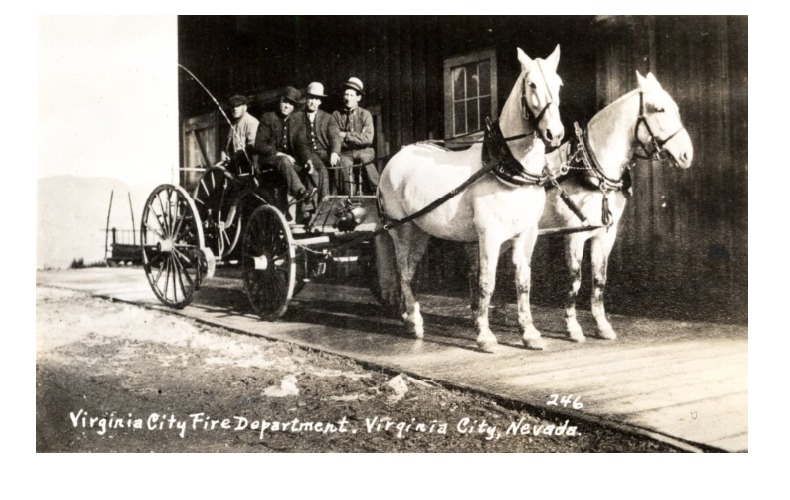
    <summary type="html"><![CDATA[<p><strong><em>The Volunteer Virginia City firemen were heroes in the public eye. They fought fires for a decade, choosing to risk their lives to keep the town, mines and people safe.  </p></strong></p><img src="https://www.intermountainhistories.org/files/fullsize/393f2aa049c504300a561238b49a1a56.jpg" alt="Virginia City Fire Department" /><br/><p>The volunteer fire department began with a snowball fight. In 1861, a fire broke out in town. Having no department, no fire-battling equipment, and no organization, townspeople attempted to douse the fire using snowballs. Although their attempts did nothing to discourage the flames, it began the formation of the future Virginia City Volunteer Fire Department. The citizens decided that something needed to change to ensure security for their community. First, a volunteer bucket brigade was formed, followed by a volunteer fire engine company. The Virginia Engine Company No. 1 was the first fire engine company created, quickly followed by the Ladder Company No. 1, in 1861.  After creating five more companies, the Virginia City fire department formed in 1866. </p><p>The Virginia Fire Department brought men from all walks of life, from well-to-do business men, to those who frequently warmed a bar stool in the local saloons, to serve the community. It was considered an honor to volunteer for the department. The department organized themselves under an informal set of bylaws, hoping to bring order to the rough frontier town. These bylaws were mostly a rule of conduct. Among these rules, firemen were expected to not instigate fights, to perform all duties assigned to them, to obey their commanding officer, to not shirk from their duty, and to always conduct themselves with decorum. However, this did not stop the occasional disagreement that occurred between the men in the department. There was an unspoken rivalry between the various companies, all competing to be the first company to report to the scene of a fire. Often these rivalries got so heated that riots broke out between the men. Even though they had a standard of conduct, they were still rough frontiersmen who solved their problems with fists rather than diplomacy. </p><p>However, their popularity had its limits. After the Great Fire of 1875, the volunteer fire department received partial blame for the extensive damage. The public felt that they were ineffective in their methods of protecting the city. The Territorial Enterprise was especially critical of the fire chief, Frank McNair, and the department. They reported, “Toward McNair as a man we bear no malice, but on more than one occasion he has shown his utter incompetency as fire chief…We call upon Mr. McNair to resign…There should be no ill-feeling between the citizens and the firemen, but when the citizens grant every reasonable request of the firemen, they, in return, should respect the reasonable desires of the citizens.” After continual pressure from the press and public, most volunteer fire engine companies had disbanded by 1877. The city officials began hiring a full-time, paid crew and organized a city sponsored fire department. A new building was constructed, as well as hoses installed throughout the city to offer easier access for the firemen. The era of volunteer firemen had passed, but the new fire department received a warm welcome. The Virginia City Fire Department continue to protect the city, and do its duty to serve the public to the present day. </p><p><em><strong><a href="https://www.intermountainhistories.org/items/show/249">For more (including 3 images) view the original article</a></strong></em></p>]]></summary>
    <published>2019-01-18T02:05:49+00:00</published>
    <updated>2026-04-17T19:32:04+00:00</updated>
    <link rel="alternate" type="text/html" href="https://www.intermountainhistories.org/items/show/249"/>
    <id>https://www.intermountainhistories.org/items/show/249</id>
    <author>
      <name>Rachel Hendrickson, Brigham Young University</name>
    </author>
  </entry>
  <entry>
    <title type="html"><![CDATA[The Virginia City Great Fire of 1875<br />
]]></title>
    <summary type="html"><![CDATA[<p><strong><em>Considered one of Nevada’s fastest growing cities in its day, Virginia City quickly became a pile of rubble after an 1875 fire ravaged the city for nine hours, leaving more than 2,000 structures destroyed, and hundreds homeless.</em></strong></p><img src="https://www.intermountainhistories.org/files/fullsize/cfcb08d69c92c7d2a6bdf3030dd74e58.jpg" alt="Extinguishing flames on C Street" /><br/><p>Fire was feared throughout the West. Most boom towns were constructed of lumber since wood was cheaper, more accessible and easier to ship. However, this made towns major fire hazards. Virginia City battled several fires throughout its history, but the ‘Great Fire of 1875’ was the largest. On the morning of October 26, 1875 at 5:15am, a single lamp caused the biggest fire in the town’s history. The fire started on A Street in Kate Shea's boarding house when a lamp was accidentally knocked over, probably due to the rough, rowdy atmosphere. Within minutes, the fire consumed the dry timber, quickly burning the entire building. To make matters worse, nature intervened. The westerly wind, known as the “Washoe Zephyr,” began to fan and push the flames further into town.</p><p>The fire quickly consumed all buildings in its path. Reportedly, even the few buildings built with brick melted due to the intense heat. Several attempts were made to extinguish the flames, but to no avail. The volunteer fire companies tried to combat the fire, but their water hoses could not pump enough water to fight the flames. Even a bucket brigade did little good in competing with the large-scale fire. The greatest fear was the fire reaching the Consolidated Virginia and Ophir mine shafts. If the fire reached the mines, it could potentially cause extensive damages and leave most of the town jobless. As fire continued to destroy everything in its wake, the wind finally shifted in the afternoon, leaving only the southern end of town standing. By 2:00pm, most of the flames were extinguished, leaving behind only a memory in the charred remains of one of the largest cities in the Nevada. </p><p>The damage was severe. Over 2,000 structures were destroyed, including homes, churches, saloons, businesses, mills and other mining buildings. The burnt section of town spanned three-quarters of a mile long and half-a-mile wide. Over $1,000,000 was estimated in damages, causing stocks to drop overnight. Further problems arose as over three hundred people were left homeless and sought shelter in the only remaining public buildings standing, the school houses. Rioting began in the streets, causing city patrols to ask for additional help from the National Guard to protect still-standing property. The city also forced the remaining saloons to prohibit the sale of alcohol, trying to prevent further problems. The biggest concern was providing food, clothing, and shelter for the fire victims. </p><p>Luckily, immediate humanitarian relief was sent from California, providing food and clothing for the victims. The mines reopened the following day after the fire, since minimal damage to the shafts in the Ophir mine allowed miners to go back to work. Optimistic townspeople reported to newspapers that “the town will be all right in a week or two.” Although the total amount of money lost estimated to be almost $10,000,000, the townspeople proved to be resilient and the fire became just another minor setback in the rich history of the Comstock. </p><p><em><strong><a href="https://www.intermountainhistories.org/items/show/246">For more (including 4 images) view the original article</a></strong></em></p>]]></summary>
    <published>2019-01-12T01:21:47+00:00</published>
    <updated>2026-04-17T19:32:03+00:00</updated>
    <link rel="alternate" type="text/html" href="https://www.intermountainhistories.org/items/show/246"/>
    <id>https://www.intermountainhistories.org/items/show/246</id>
    <author>
      <name>Rachel Hendrickson, Brigham Young University</name>
    </author>
  </entry>
</feed>