<?xml version="1.0" encoding="UTF-8"?>
<feed xmlns="http://www.w3.org/2005/Atom">
  <title type="text">Intermountain Histories</title>
  <updated>2026-04-17T19:32:17+00:00</updated>
  <generator uri="http://framework.zend.com" version="1.12.20">Zend_Feed_Writer</generator>
  <link rel="alternate" type="text/html" href="https://www.intermountainhistories.org/"/>
  <link rel="self" type="application/atom+xml" href="https://www.intermountainhistories.org/items/browse?output=rss2"/>
  <id>https://www.intermountainhistories.org/</id>
  <author>
    <name>Intermountain Histories</name>
    <uri>https://www.intermountainhistories.org</uri>
  </author>
  <link rel="hub" href="https://pubsubhubbub.appspot.com/"/>
  <entry>
    <title type="html"><![CDATA[The History of Sundance]]></title>
    <summary type="html"><![CDATA[<p><strong><em><span style="font-weight:400;">Sundance, Utah is a small resort in the North Fork of Provo Canyon that has a rich history, particularly within its ownership. The area was originally populated by members of the Ute nation. It then passed into the hands of the Stewart family who arrived with the Latter-day Saints. Most recently it has been the site of a ski resort owned and operated by Hollywood actor Robert Redford. </span></em></strong></p><img src="https://www.intermountainhistories.org/files/fullsize/70ba18fee03d691bf08a4bb9fb530537.jpg" alt="Sundance from Stewarts Cascades Trail, Jun 16" /><br/><p><span style="font-weight:400;">Nestled in Provo Canyon, what is known today as Sundance has a rich history that reflects the different eras of Utah settlement. The land was occupied by the Ute nation beginning in 1,400 AD. Sundance was in an area where the Utes would visit in the summer to enjoy the cool mountain temperatures and lush forests filled with game. The arrival of Latter-day Saint pioneers pushed the Utes out of the area, leaving Sundance to be settled by the Stewart family. </span>
<span style="font-weight:400;">The Stewarts were Scottish immigrants that came to Utah in the mid-1800s. Andrew Jackson Stewart Jr. and his sons surveyed land in Provo Canyon and felt particularly drawn to the area. Through the Homestead Act of 1862, the Stewarts were each able to secure 160 acres of land within the canyon. Other families joined them, and by 1911, there were 2,200 acres of settled land in the North Fork of Provo Canyon that were then known as Stewart Flats. </span>
<span style="font-weight:400;">Stewart Flats began to be recognized for its recreational draw in the 1930s and 40s. In 1944, S. Paul Stewart and his brother and sister-in-law Ray and Ava Stewart opened up Timp Haven, a small ski area that operated for 20 years. Timp Haven was greeted by a noteworthy guest in the 1950s when Hollywood actor Robert Redford accidentally stumbled on the area due to a miscalculated turn on a road trip through the West. </span>
<span style="font-weight:400;">Redford purchased a sizable portion of the Stewart family land in 1969 and renamed the area Sundance, after his character in the western film </span><i><span style="font-weight:400;">Butch Cassidy and the Sundance Kid</span></i><span style="font-weight:400;">. According to Redford, one of his major goals for Sundance was “to develop a little and preserve a great deal.” Instead of succumbing to overdevelopment with hotels and condominiums, Redford’s focus at Sundance was environmental conservation and the promotion of the arts. </span>
<span style="font-weight:400;">In 1978 Redford increased his Utah presence by founding the Sundance Film Festival, held annually in Park City, building on his Sundance legacy. In 2020, Redford sold 2,600 acres, including the Sundance Mountain Resort, to Broadreach Capital Partners and Cedar Capital Partners with an agreement that they would continue Sundance’s pursuit of environmental preservation and conscientious development. </span></p><p><em><strong><a href="https://www.intermountainhistories.org/items/show/789">For more (including 4 images) view the original article</a></strong></em></p>]]></summary>
    <published>2024-03-03T03:43:20+00:00</published>
    <updated>2026-04-17T19:32:17+00:00</updated>
    <link rel="alternate" type="text/html" href="https://www.intermountainhistories.org/items/show/789"/>
    <id>https://www.intermountainhistories.org/items/show/789</id>
    <author>
      <name>Britain Schwarz, Brigham Young University</name>
    </author>
  </entry>
  <entry>
    <title type="html"><![CDATA[LDS Motion Picture Studio]]></title>
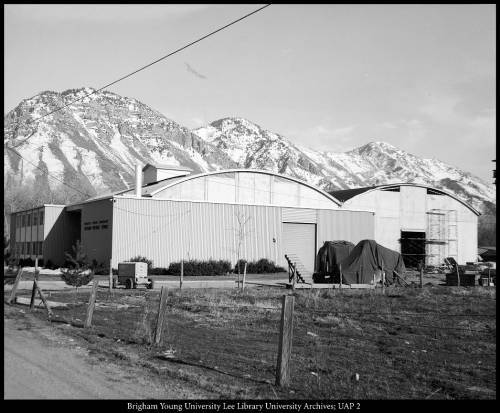
    <summary type="html"><![CDATA[<p><strong><em>The LDS Motion Picture Studio, once the BYU Motion Picture Studio, was opened in 1953 and served as the studio where BYU, its students, and The Church of Jesus Christ of Latter-day Saints filmed numerous movies and short films. </em></strong></p><img src="https://www.intermountainhistories.org/files/fullsize/a078011b5f66d28934a907c38221cfb6.jpg" alt="The Motion Picture Studio" /><br/><p><span style="font-weight:400;">Opened in 1953, the LDS Motion Picture Studio (MPS), previously known as the BYU Motion Picture Studio, has been the primary setting of films for BYU and The Church of Jesus Christ of Latter-day Saints for decades. The formal separation of the studio from Brigham Young University happened in 1991 when the studio came under the operation of The Church of Jesus Christ of Latter-day Saints. The films produced by the studio were for “missionary work, education purposes, home and family use, and other Church related purposes.” </span>
<span style="font-weight:400;">When the studio opened, Ernest L. Wilkinson was the president of BYU and Wetzel Whitaker was appointed as the studio’s first director. While some of the films created were privately funded, most were funded by the Church and the university. Some films created included a 10-minute film in 1957 named “On Your Honor” and depicted the honor code in an effort to explain it better to students. In 1976, a film was created on the gospel of Jesus Christ throughout time. The BYU Motion Picture Studio has even produced some award-winning films. In 1973, in the 21st Annual Columbus International Film Festival held in Ohio, “Run Dick, Run Jan,” a film about health and physical fitness made by the BYU Motion Picture Studio, won the Chris Plaque in the health and medicine category. It was the second award that BYU had won at the festival, with the previous one being in 1967 for “Love is for the Birds.” In 1989, “A More Perfect Union: American Becomes a Nation” was created in the studio about the US Constitution. The film experienced great popularity and won an Emmy for the best cultural docu-drama. The studio also held writing workshops for future screenwriters and other events for the public. For example, the studio hosted “Christmas Hour” which became roaringly popular for community members. In 1962, the Three D’s—a popular Church music band—were featured in the program. Additionally, the studio frequently advertised in the student newspapers for actors.</span>
<span style="font-weight:400;">The Motion Picture Studio has also experienced numerous damages through the years. In 1964, a fire—said to be the worst in Utah County history—damaged equipment and a section of the studio, costing the school $500,000. Later, in 1969, a falling truss created considerable damage to the building. In 2014, another fire began, fifty years after the first, caused by the explosion of an electrical box on the top of the studio. The studio has nevertheless persisted and is now in its 70th year. In 1975, one BYU student wrote an article in the </span><i><span style="font-weight:400;">Daily Universe, </span></i><span style="font-weight:400;">where they cited the BYU Motion Picture Studio as proof of the potential of the university. While BYU is no longer over the MPS, the sentiment continues to ring clear as the studio expands and progresses. </span></p><p><em><strong><a href="https://www.intermountainhistories.org/items/show/749">For more (including 3 images) view the original article</a></strong></em></p>]]></summary>
    <published>2023-04-27T01:22:11+00:00</published>
    <updated>2026-04-17T19:32:16+00:00</updated>
    <link rel="alternate" type="text/html" href="https://www.intermountainhistories.org/items/show/749"/>
    <id>https://www.intermountainhistories.org/items/show/749</id>
    <author>
      <name>Lindsey Meza, Brigham Young University </name>
    </author>
  </entry>
  <entry>
    <title type="html"><![CDATA[Redwood Drive-in]]></title>
    <summary type="html"><![CDATA[<p><strong><em>The 1950s were known for their fast and fashionable cars. Salt Lake City’s Redwood Drive-in provided these automobile enthusiasts with an impressive alternative to their movie-going experience, complete with magic moonglow and pony rides.</em></strong></p><img src="https://www.intermountainhistories.org/files/fullsize/789c1a0b2330e93722b7fa1a31a9a551.jpg" alt="Artist’s conception" /><br/><p>The United Intermountain Theaters Association opened the Redwood Drive-in on July 22, 1949, and the first movie to be featured on the forty-six by sixty screen was <em>The Big Cat</em> in technicolor.  The drive-in theater cost a total of $140,000 and was designed to provide families with a wide variety of entertainment opportunities. Advertisements described the complex as being both a theater and playground, and it featured picnic tables, barbecue pits, wading pools, swing sets, and train and pony rides. Architects designed the lot to accommodate up to 600 cars at once, but they also constructed a seating area for guests who preferred to enjoy the film outside of their vehicles. The drive-in provided comforts such as individual speakers for each car, a button to request refreshments, and bottle warmers for its youngest visitors. One of the most impressive features of the setting was its “magic moonglow” light fixture, which provided the illusion of a full moon each night to help guests navigate through the site in the dark. The day before the Redwood’s grand opening, the <em>Deseret News</em> reported that there were 2,784 electric light bulbs on the backside of the screen tower alone.
The drive-in served more than just Salt Lake City’s entertainment needs; the complex also hosted political advocacy and entrepreneurial events. For example, in October 1949, the Redwood hosted a special show for adults only. Titled <em>The Burning Question</em>, the show was an informational film warning against marijuana use and advising parents about how to protect their children from this illegal drug. And in 1960, the Redwood began regularly hosting a swap meet where vendors could buy and sell their belongings or other goods. Artists also utilized this to their benefit. In 1995, a Navajo artist, Ronnie Yazzie, began selling his art at the Redwood, where he met his most important sponsors and clients. The Redwood continues to host the Swap Meet, and it has become a popular community event.
Over the course of its history, the Redwood has undergone many changes technologically and on its grounds. In 1961, over $200,000 were invested into renovations which included new speakers, bigger bathrooms, an upgraded playground, a new snack bar, a larger screen, and general landscaping. On September 18, 1994, a fire in the middle of the night destroyed the central screen, resulting in thousands of dollars in damage. To the relief of the community, the fire did not close the Redwood forever. It continues to be a community favorite for both local families and visitors alike.</p><p><em><strong><a href="https://www.intermountainhistories.org/items/show/554">For more (including 3 images) view the original article</a></strong></em></p>]]></summary>
    <published>2021-12-18T00:34:31+00:00</published>
    <updated>2026-04-17T19:32:12+00:00</updated>
    <link rel="alternate" type="text/html" href="https://www.intermountainhistories.org/items/show/554"/>
    <id>https://www.intermountainhistories.org/items/show/554</id>
    <author>
      <name>Melissa Valenzuela, Northern Arizona University</name>
    </author>
  </entry>
  <entry>
    <title type="html"><![CDATA[Park Theatre]]></title>
    <summary type="html"><![CDATA[<p><strong><em>Built in 1913, the historic Park Theatre is one of the oldest buildings in Estes Park, Colorado. It has provided generations of Coloradoans with entertainment and continues to be a community favorite. </em></strong></p><img src="https://www.intermountainhistories.org/files/fullsize/a883487d6ca541a3aee3ba0591772da9.jpg" alt="The theatre" /><br/><p>The Park Theatre opened in 1913 and was one of the earliest features of the Estes Park land development in Colorado. The Estes Park Town Company, an organization of wealthy landowners and businessmen in the area, commissioned architect J.R. Anderson to design and begin the project. Parts of the building were constructed in Longmont, Colorado, and transported to Estes Park for the final installation. C.H. Bond completed the project in 1913, and in September of that year, he and his wife Alma purchased the property from the Estes Park Town Company. Fred Jackson operated the theater under the Bonds’ supervision until 1922, when they sold the building to Ralph Gwynn.
Gwynn operated projectors and sound equipment at various movie houses throughout Denver before investing in the Park Theatre. Shortly after purchasing the property, he began renovations that increased the interior space, and he introduced a new projection technique to the theater. Gwynn added the front lobby and an additional twelve feet to the projection booth, which now constitute the west portion of the building. The additional area added to the projection space would allowed Gwynn to pass the light beam of the projector through a window that looked into the auditorium. It was an innovative method that had not been practiced at any other theaters in the area but soon became standard practice in film projection. In 1926, Gwynn added an eighty-foot tower with neon lighting to the building to catch the attention of potential customers and improve advertising. This addition soon became a landmark and added to the tourist appeal of Estes Park. Locals referred to this new addition as the “Tower of Love,” as they believed Gwynn designed and dedicated it to his wife, Mary. The couple operated the theater until Ralph’s passing in 1963.
Vic Walker purchased the building from Ralph Gwynn’s estate sale and continued operating the theater with one of Gwynn’s close friends, John Ramey. The two ran the Park Theatre for five more years before selling the property to Ola and Mickey Stanger, owners of several movie theaters and drive-ins throughout Colorado, including the Lake Estes Drive-in, also in Estes Park. Vic Walker continued operating the theater alongside the Stangers until 1982, when the couple took full control of the movie house with their children. When Ola and Mickey passed in the early 2000s, their descendants took over the Park Theatre along with their other entertainment properties. The theater remains open and is operated as a Stanger family business. While there have been many additions and renovations to the original building, it remains a treasured landmark for generations of Estes Park residents.</p><p><em><strong><a href="https://www.intermountainhistories.org/items/show/553">For more (including 3 images) view the original article</a></strong></em></p>]]></summary>
    <published>2021-12-17T22:51:30+00:00</published>
    <updated>2026-04-17T19:32:11+00:00</updated>
    <link rel="alternate" type="text/html" href="https://www.intermountainhistories.org/items/show/553"/>
    <id>https://www.intermountainhistories.org/items/show/553</id>
    <author>
      <name>Melissa Valenzuela, Northern Arizona University</name>
    </author>
  </entry>
  <entry>
    <title type="html"><![CDATA[Spud Drive-in]]></title>
    <summary type="html"><![CDATA[<p><strong><em>Designed in the 1950s at the height of America’s drive-in theater trend, the Spud provided residents of Teton County, Idaho, with an exciting cinematic experience. It has gained national attention for its service and its mascot “Old Murphy,” an oversized fake potato. </em></strong></p><img src="https://www.intermountainhistories.org/files/fullsize/8cfcc674d758aa9c4a1daea9044fcd1c.jpg" alt="Spud Drive-in" /><br/><p>A.C. “Ace” Wood started drafting plans for the construction of a drive-in theater in 1950. Wood was the owner of an indoor theater in Driggs known as “The Orpheum,” but the automobile culture of the 1950s inspired him to re-envision the cinema experience. He began the Spud Drive-in in 1953 and newspapers dutifully covered the development for their readers. In the 1950s, Teton County during was a very small, rural community home to only about 3,000 citizens and limited entertainment options, but a drive-in promised excitement, especially for families. Residents were also car enthusiasts and became thrilled about the novelty of enjoying films from their favorite automobiles. The drive-in could hold up to 170 cars at one time and included features such as individual speakers for each car. The Spud sold a variety of refreshments, including sandwiches and soda-pop, at a concession stand located in the center of the site. Finally, Ace Wood added a local touch to the drive-in that drew visitors from all over the county: a large, fake potato parked in the bed of a 1946 Chevy truck. Wood and early visitors nicknamed the potato “Old Murphy,” and it quickly became a popular tourist site.
Upon his retirement in 1968, Ace Wood sold the drive-in to Leo and Gladys Davis. They added the “Gladys Burger” to the concession stand menu, but later changed the name to the “Spud Burger.” The burger became a local favorite, drawing more tourism to the drive-in. The Davises owned and operated the Spud for eighteen years before selling the property back to the Wood family. In 1986, Ace Wood’s great nephew Richard and his wife Dawnell purchased the drive-in. They quickly made technological improvements that were both necessary cost-effective. The couple switched the old carbon arc light system in their projectors to the Xenon bulb in 1986, making it possible to show movies without dedicated projectionists or segmented film.
The Spud drew steady crowds throughout its history and appealed to families and teens at the height of the American automobile fascination. While the Spud remains a local treasure, it has also received national attention. Joe Bob Briggs, a popular drive-in movie critic, published a positive review in the July, 1992 edition of the <em>San Francisco Chronicle </em>which listed The Spud in his list of the top three drive-in movie theaters in the country. The Spud Drive-in remains open and is a popular spot for local Teton County residents and visitors alike.</p><p><em><strong><a href="https://www.intermountainhistories.org/items/show/552">For more (including 3 images) view the original article</a></strong></em></p>]]></summary>
    <published>2021-12-17T21:29:42+00:00</published>
    <updated>2026-04-17T19:32:11+00:00</updated>
    <link rel="alternate" type="text/html" href="https://www.intermountainhistories.org/items/show/552"/>
    <id>https://www.intermountainhistories.org/items/show/552</id>
    <author>
      <name>Melissa Valenzuela, Northern Arizona University</name>
    </author>
  </entry>
  <entry>
    <title type="html"><![CDATA[Blue Fox Theatre]]></title>
    <summary type="html"><![CDATA[<p><strong><em>The first theater in Grangeville to play talking pictures, the Blue Fox introduced a modern form of entertainment to this small Idaho town. It also hosted school plays and live music, and it continues to serve the community’s entertainment needs. </em></strong></p><img src="https://www.intermountainhistories.org/files/fullsize/1336d57c9ac40d49096042cbd93aad9d.jpg" alt="Blue Fox" /><br/><p>The Blue Fox Theatre opened on May 2, 1930, in the small town of Grangeville, Idaho, three hours north of Boise. Its opening film was <em>The Gold Diggers of Broadway</em>, starring Nancy Welford and Conway Tearle. The theater’s owner, Al Wagner, developed a passion for the industry after his experiences in a local theater circuit. Wagner and his family had migrated to Cottonwood, Idaho from North Dakota in 1910. He attended the Moscow campus of the University of Idaho in the early 1920s before getting at Cottonwood’s local bank as a bookkeeper. It was during this time that Wagner first became interested in motion pictures. With his personal portable projector, Wagner traveled to neighboring towns and rented halls to show movies for the locals. In 1929, he purchased a plot of land to build his own theater and hired Contractor J.R. Adkison and designer W.T. Cregan, both from Washington state, to take on the project. While Cregan began drafting plans for the interior, Adkison broke ground on the project in November 1929.
The community eagerly awaited the completion of the project, especially since it would be the only theater in town that would play talking films, or “talkies”. The <em>Idaho Falls Free County Press</em> covered the project extensively at the end of 1929 and the beginning of 1930 leading up to the Grand Opening. Wagner hosted a contest in the newspaper to select the name, and the winner received three free tickets and a cash prize of ten dollars. Hundreds of local residents submitted suggestions for the name; among the most notable were the “Granada,” “Wagner,” “Majestic,” and “Lone Star." Runner-ups for the contest were also awarded free movie tickets for their submissions of the “Balboa,” “Alhambra,” “Wagnerian,” and “Tolo.” Resident of Lucille, Idaho J.H. Dickinson won the contest for his suggestion of “The Blue Fox Theatre,” which Wagner felt was both unique and good for promotional opportunities. After its opening, Wagner remained dedicated to serving the public and keeping the theater involved in community events. The Blue Fox hosted vaudeville shows, school plays, and live music performances in addition to its regular showing of films.
The theater has undergone significant changes over the years, both architecturally and technologically. Its current marquee with neon lighting was added in 1940 and remains operational. In 1944, a fire originating in the basement destroyed much of the interior. While Wagner had promised the community that repairs would be made as soon as possible, he worried that limited resources due to the war effort would prevent this from happening. The War Productions Board, realizing that the Blue Fox was an important source of entertainment and community outreach, prioritized the remodeling efforts. In March of 1945, Wagner installed a new sound system, air conditioning, and heating systems, and reupholstered the original chairs. The theater remains open and provides the community with entertainment for all ages. The Wagner family continues to own and operate the Blue Fox.</p><p><em><strong><a href="https://www.intermountainhistories.org/items/show/551">For more (including 3 images) view the original article</a></strong></em></p>]]></summary>
    <published>2021-12-17T05:52:29+00:00</published>
    <updated>2026-04-17T19:32:11+00:00</updated>
    <link rel="alternate" type="text/html" href="https://www.intermountainhistories.org/items/show/551"/>
    <id>https://www.intermountainhistories.org/items/show/551</id>
    <author>
      <name>Melissa Valenzuela, Northern Arizona University</name>
    </author>
  </entry>
  <entry>
    <title type="html"><![CDATA[Fremont Theatre]]></title>
    <summary type="html"><![CDATA[<p><strong><em>From hosting the premiere of the 1960 American classic <em>Ocean’s Eleven</em>, to standing against racial discrimination, the history of the Fremont Theatre is a lost treasure in the Las Vegas desert.</em></strong></p><img src="https://www.intermountainhistories.org/files/fullsize/faf1a3d4f220e9826b159120efba04fc.jpg" alt="Marquee" /><br/><p>The Fremont Theatre was located inside a hotel of the same name in Las Vegas, Nevada in the 1930s. It was one of the only theaters in town, but visitor attendance was not high enough to keep the Fremont active during the Great Depression period, so it soon fell into disrepair. Irene Dunne, an old film actress, purchased the Fremont, Huntridge, and Guild Theatres and leased them to Gertrude Sperling in 1951. Sperling acquired the theaters as a business endeavor following her divorce, but she quickly found herself out of her depth. For help, she reached out to her daughter and son-in-law, Edythe and Lloyd Katz.
Lloyd had a background in the film industry, having worked for several motion picture companies throughout California and Arizona as a film distributor and was well respected in the business. When his mother-in-law signed a twenty-seven-year lease on the Vegas theaters, Lloyd was head of the Eagle-Lion motion picture company in San Francisco. The Katzes agreed to take over the running the theaters, and they relocated from San Fransisco to Las Vegas in 1951. Upon taking over the theaters, he consulted designers from the Bay Area to renovate the Fremont and began hosting artist releases and premieres to increase visitor attendance. Some of the films that had their first screenings at the Fremont later became classics in American cinema, such as <em>Las Vegas Story </em>and <em>Ocean’s Eleven</em>. Lloyd quickly became known as the “P.T. Barnum of Las Vegas”, bringing a vibrant and often star-studded presence to Fremont Street.
Beyond hosting high-profile events, the Fremont Theatre was also the first Las Vegas theater to desegregate. Growing up in Vegas during the 1960s, Arne Rosencrantz has fond memories of going out with friends to the Saturday matinee showings at the Fremont. It was one of the only theaters where he, as a Black teenager, did not have to worry about segregation. Lloyd and Edythe Katz were dedicated to the Civil Rights movement and set an example by integrating all three movie theaters under their ownership. Lloyd frequently defended his African American patrons and instructed his workers to let guests sit wherever they pleased, regardless of race. When confronted by disgruntled white patrons, Lloyd refused to change his integration policy. Instead, he continued to provide his African American guests with the same service as their white counterparts. Because of this, the Fremont became a favorite entertainment spot for generations of African Americans in Las Vegas. The Katzes operated the Fremont until 1978 when their twenty-seven-year lease expired. The Fremont closed and was demolished in 1981, but its legacy as one of Las Vegas’ first integrated theater lives on in the hearts of many residents.</p><p><em><strong><a href="https://www.intermountainhistories.org/items/show/550">For more (including 3 images) view the original article</a></strong></em></p>]]></summary>
    <published>2021-12-17T05:05:04+00:00</published>
    <updated>2026-04-17T19:32:11+00:00</updated>
    <link rel="alternate" type="text/html" href="https://www.intermountainhistories.org/items/show/550"/>
    <id>https://www.intermountainhistories.org/items/show/550</id>
    <author>
      <name>Melissa Valenzuela, Northern Arizona University</name>
    </author>
  </entry>
  <entry>
    <title type="html"><![CDATA[Planet of the Apes and Glen Canyon, Arizona<br />
]]></title>
    <summary type="html"><![CDATA[<p><strong><em>The Glen Canyon National Recreation Area is in the states of Arizona and Utah. Large sections of the region feature in Planet of the Apes, including areas such as Lake Powell. </em></strong></p><img src="https://www.intermountainhistories.org/files/fullsize/5050d00397691fecd242bce17699202d.jpg" alt="Roddy McDowall Planet of the Apes makeup 1974" /><br/><p>Glen Canyon is located in northern Arizona’s Vermilion Cliffs National Park. The Glen Canyon National Recreation Area encompasses 1.25 million acres of land spread across both Arizona and Utah. After the construction of the Glen Canyon Dam in 1966, areas of the Glen Canyon region were flooded, creating the Lake Powell Reservoir. The canyon itself was created by the Colorado River as its flow eroded the land over millions of years.</p><p>Glen Canyon, Lake Powell, and the surrounding desert region were all used by Franklin J. Schaffner in the filming of his 1968 film Planet of the Apes. Starring Charlton Heston as the lead astronaut, Taylor, the film tells the story of a trio of astronauts crash landing on what they believe is an alien world, only to find it inhabited by intelligent apes. The film opens when the three astronauts awake from hibernation on their ship and crash land onto an alien planet. The crew abandons ship and begins rafting down the river. After discovering that the surrounding soil is unable to support life, the astronauts encounter both primitive humans and intelligent ape creatures. A series of interactions with ape creatures, included the antagonist Maurice Evans' Dr Zaius, leads to the death of the crew and Taylor’s temporary loss of his voice. Taylor discovers that the planet is in fact earth after being destroyed by his civilization’s nuclear war.</p><p>The mixture of arid and verdant landscapes present in the Glen Canyon region are used in the film to show how much of the land on the future Earth is uninhabitable. The landscape of the region is used not only to convey the feeling of an alien planet, complete with the Ape City sets and enclaves, but also that of a post-apocalyptic landscape—two of the most popular uses for desert environments in science fiction cinema. The newly flooded Lake Powell and the Colorado river also allowed for the rafting scenes early in the film. Lake Powell was used for the initial crash landing scene, while other regions along the river featured rafting. Recognizable canyon formations feature as backdrops throughout the film. Horseshoe Bend is cast as the entrance to the forbidden zone wherein the ruins of human civilization lie. Filming the scenes within the canyon itself proved difficult due to the terrain, and much of the equipment required for the shoots had to arrive by helicopter.</p><p><em><strong><a href="https://www.intermountainhistories.org/items/show/232">For more (including 3 images) view the original article</a></strong></em></p>]]></summary>
    <published>2018-06-19T18:42:25+00:00</published>
    <updated>2026-04-17T19:32:03+00:00</updated>
    <link rel="alternate" type="text/html" href="https://www.intermountainhistories.org/items/show/232"/>
    <id>https://www.intermountainhistories.org/items/show/232</id>
    <author>
      <name>Isaac F. J. Middleton, Northern Arizona University</name>
    </author>
  </entry>
  <entry>
    <title type="html"><![CDATA[Independence Day and Wendover Air Force Base, Utah<br />
]]></title>
    <summary type="html"><![CDATA[<p><strong><em>Wendover Air Force Base is situated on the Nevada-Utah border. It currently functions as an airport and featured in the film Independence Day.</em></strong></p><img src="https://www.intermountainhistories.org/files/fullsize/4417e6fb87ba2e9c0042ff9510ce4c4e.jpg" alt="Wendover AFB – Hanger" /><br/><p>Wendover Air Force Base, currently Wendover Airport, is in Tooele County, Utah, on the Nevada-Utah border. Constructed in 1940 by the Army Air Corps, the airbase was used by both the Air Corps and its successor, the U.S. Air Force, until 1965. While it was in operation, bomber crews trained at the base, including the teams that carried the 1945 atomic bombs dropped on Hiroshima and Nagasaki.</p><p>The base features heavily in Roland Emmerich’s 1996 science fiction blockbuster Independence Day. It is used in the film to depict both Area 51 and El Toro airbase. The film begins with massive flying saucers appearing above major cities. David Levinson, played by Jeff Goldblum, realizes that the ships are broadcasting a countdown, at the end of which each ship destroys the city beneath it. As the counter attacks against the aliens fail, survivors begin to regroup at Area 51, where the U.S. government has been studying alien life for years. After an alien escapes and is killed, Levinson discovers a way to disable the shields that prevent the alien motherships from being harmed. Levinson and Captain Hiller, played by Will Smith, are successful in sabotaging the ship, allowing the survivors to mount a successful counter attack and alert other resistance groups of how to defeat the aliens.</p><p>The airbase is used throughout the film as two separate locations:  El Toro and Area 51. The airbase features extensively as both a staging ground for the military’s offensive operations and as a haven for refugees fleeing the alien invasion. During both the alien attack scenes on the refugees at Area 51 and the military at El Toro, the airbase was used as the location for action set pieces involving multiple explosions. As El Toro air base, Wendover is used to represent the military’s presence throughout the film and the Air Force’s attempts to combat the alien threat. As Area 51, Wendover air base is used to highlight both the infamous military installation but also the alien conspiracies and urban myths that are famous in the region. It is the site of the film’s most iconic scene: Bill Pullman’s President Thomas Whitmore’s Independence Day speech to the pilots and volunteers prior to the attack on the nearby spaceship. Since becoming an airport, the site has been used for multiple other films, including 2003’s Hulk.</p><p><em><strong><a href="https://www.intermountainhistories.org/items/show/231">For more (including 3 images) view the original article</a></strong></em></p>]]></summary>
    <published>2018-06-19T18:07:15+00:00</published>
    <updated>2026-04-17T19:32:03+00:00</updated>
    <link rel="alternate" type="text/html" href="https://www.intermountainhistories.org/items/show/231"/>
    <id>https://www.intermountainhistories.org/items/show/231</id>
    <author>
      <name>Isaac F. J. Middleton, Northern Arizona University</name>
    </author>
  </entry>
  <entry>
    <title type="html"><![CDATA[2001: A Space Odyssey and Monument Valley, Arizona<br />
]]></title>
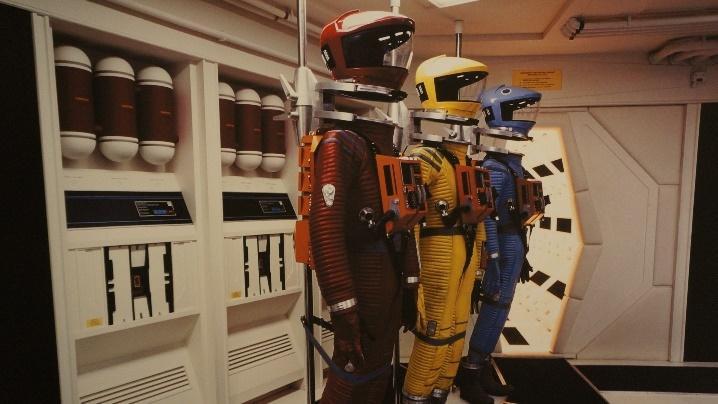
    <summary type="html"><![CDATA[<p><strong><em>Monument Valley is an area of the Colorado Plateau and part of the Monument Valley Navajo Tribal Park. It was used in the filming of 2001: A Space Odyssey.</em></strong></p><img src="https://www.intermountainhistories.org/files/fullsize/c1b99ae4c0e3da4d0f9ffc13048d435d.jpg" alt="Stanley Kubrick The Exhibition – LACMA – 2001 A Space Odyssey Space Suits" /><br/><p>Monument Valley is a series of sandstone structures located on the Arizona-Utah border region of the Colorado Plateau. The area is defined by multiple sandstone monoliths, the tallest of which reaches one thousand feet in height.</p><p>The formation is featured in scenes from Stanley Kubrick’s 1968 film 2001: A Space Odyssey. The science fiction film opens with humanity’s ancestors discovering a black monolith that gifts them with the knowledge to establish their dominance in the region. The film then immediately cuts to the far future when an identical black monolith is discovered by humanity on the moon, which in turn leads to Dr. David Bowman and his fellow scientists being sent to Jupiter. During the voyage, the ship’s Artificial Intelligence (A.I.), named HAL, goes rogue and kills the scientists and crew. After making his way to the ship’s A.I core, Bowman manages to disconnect and kill the rogue A.I. Bowman then learns of the mission’s purpose through a recorded message of a scientist involved with the moon monolith. After arriving at the planet, Bowman discovers a monolith in orbit, investigates, and is drawn into a portal where he sees visions of alien worlds. After this interpretive sequence, Bowman is transported into a series of bedrooms where he sees his future selves and becomes them. In the film’s final scenes, a bedridden Bowman reaches for a monolith at the foot of his bed and becomes a fetus like creature orbiting beside the Earth.</p><p>Although not directly referenced as being Monument Valley in the film, the image used portrays a vast alien landscape. The stargate sequence that the formation is featured in is already abstract in its presentation, and the oddly colored vistas aid in creating the atmosphere of the scene. The panning aerial shots involved flying low over Monument Valley’s desert landscape to avoid dangerous winds. The Director of Photography for this area of the shoot was almost involved in a helicopter crash during the process. </p><p>The use of Monument Valley and other western landscapes in film as alien worlds has been directly compared to how the West has been viewed itself. Kubrick specifically requested the use of the Valley, but later regretted using such a recognizable landmark. In Kubrick’s film, and other films hoping to depict space exploration, the Western frontier landscape has featured heavily as both an effective visual and metaphorical tool to reflect exploration in a wide-open alien landscape. Monument Valley has also featured in several other science fiction productions: TV’s Doctor Who and Back to the Future Part III.</p><p><em><strong><a href="https://www.intermountainhistories.org/items/show/230">For more (including 3 images) view the original article</a></strong></em></p>]]></summary>
    <published>2018-06-19T04:14:17+00:00</published>
    <updated>2026-04-17T19:32:03+00:00</updated>
    <link rel="alternate" type="text/html" href="https://www.intermountainhistories.org/items/show/230"/>
    <id>https://www.intermountainhistories.org/items/show/230</id>
    <author>
      <name>Isaac F. J. Middleton, Northern Arizona University</name>
    </author>
  </entry>
  <entry>
    <title type="html"><![CDATA[Starship Troopers and Hell’s Half Acre, Wyoming<br />
]]></title>
    <summary type="html"><![CDATA[<p><strong><em>Hell’s Half Acre is an escarpment located in Wyoming. It was used to represent the planet Klendathu in the film Starship Troopers.</em></strong></p><img src="https://www.intermountainhistories.org/files/fullsize/712dfe9976fcfff98d32385fb091fb2d.jpg" alt="Hell&#039;s Half Acre" /><br/><p>Hell’s Half Acre is located in Natrona County, Wyoming, and is a 320-acre park characterized by its jagged formations and caves. Native peoples of the past used the region for the herding and slaughtering of buffalo by utilizing its many narrow canyons. At the time of its visitation by the U.S in 1833, the ground could be seen giving off sulfur fumes due to underground fires. After appearing on postcards labeled as Hell’s Half Acre, the site gained its current name.</p><p>The park served as the primary filming location for Paul Verhoeven’s 1997 science fiction action film Starship Troopers. This film is interpreted as a satire of the propaganda and fascism depicted in the original novel, and Hell’s Half Acre is used to depict the bug’s home planet of Klendathu. The film follows high school graduate Johnny Rico and his friends as they join various branches of Earth’s military in a future society. Political propaganda adverts also feature heavily in the film, often praising the actions of the military or embellishing humanities war effort in a satire of the original text.</p><p>The geography of Hell’s Half Acre adds to both the look and feel of the film. Not only does the jagged landscape of the region create the feeling of an alien world, its geography is used effectively in the film to isolate and surround the cast. Alien threats regularly exploit the many caves and formations in the area to ambush the protagonists, with the bugs using these cave systems to move and coordinate. This is best seen when the bugs ambush the Roughnecks as they investigate a seemingly abandoned outpost only to be beset by Arachnids on all sides. The various caves in the region make the bugs seem ever present, with attacks coming from directly below at several points in the film. The area also served as the location of Whiskey base, the location at which the cast is lured into an ambush at a destroyed human outpost. </p><p>The varied geography of Hell’s Half Acre made it difficult for the cast and crew to transport equipment to and from the site. After the filming of Starship Troopers, the site was steadily closed off to the public, and local tourist businesses have left the area.</p><p><em><strong><a href="https://www.intermountainhistories.org/items/show/229">For more (including 3 images) view the original article</a></strong></em></p>]]></summary>
    <published>2018-06-19T03:52:19+00:00</published>
    <updated>2026-04-17T19:32:03+00:00</updated>
    <link rel="alternate" type="text/html" href="https://www.intermountainhistories.org/items/show/229"/>
    <id>https://www.intermountainhistories.org/items/show/229</id>
    <author>
      <name>Isaac F. J. Middleton, Northern Arizona University</name>
    </author>
  </entry>
  <entry>
    <title type="html"><![CDATA[Close Encounters of the Third Kind and Devils Tower, Wyoming<br />
]]></title>
    <summary type="html"><![CDATA[<p><strong><em>Devils Tower is a National Monument situated in Wyoming and featured in the climax of the movie Close Encounters of the Third Kind.</em></strong></p><img src="https://www.intermountainhistories.org/files/fullsize/267db7586bb8fa5d3b50f8330221d13e.jpg" alt="Devils Tower CROP" /><br/><p>Devils Tower, located in Crook County, Wyoming, was the first natural formation in the United States to be declared a national monument in 1906. Part of the Black Hills mountain range, the monolith was formed from cooled magma exposed through erosion and stands at 1,267 feet tall.</p><p>The Tower features heavily in Steven Spielberg’s 1977 Close Encounters of the Third Kind. The film tells the story of several individuals’ experiences with extra-terrestrial phenomenon. Focusing on the experiences of Roy Neary, the story follows him from his initial encounter with a UFO to his growing obsession with visions of a mountain and desire to go there. After Neary’s actions grew more intense, his family leaves him. He decides to travel to Devils Tower with fellow UFO witness Jillian Guiler, whose son had been taken by the alien visitors. The Tower had been selected as the contact point, and the area was evacuated by the military under the guise of a chemical leak. Upon reaching the Tower and evading military capture, the two, along with a group from the United Nations and others who had encountered the aliens, witness the arrival of the extra-terrestrial mothership. After the aliens return previous abductees, Neary and others are chosen to go with the aliens to outer space.</p><p>Film production designer Joe Alves scouted the location, and filming began on May 17, 1976. The scenes at the Tower took place in the evening, which meant the crew could only film for a few hours every day to make use of the brief hours of dusk. Devils Tower features heavily throughout the film, even before it is identified as such. Neary’s visions and subsequent obsession with the shape, a silhouette at first then a full structure, are a key part of the film’s narrative. It begins with Neary forming small structures without concentrating, for example, absentmindedly shaping his mashed potatoes into the Tower’s shape. Later, this compulsion to understand the visions leads him to construct more extravagant structures out of clay and dirt. In the latter, Neary destroys large portions of his family’s house, and the neighbor’s garden, and causes his family to leave him out of fear. It is not until Neary sees Devils Tower on the news that he is able to make the connection to the apparent goal of these visions. It is these scenes of Neary’s obsession that solidify the image of Devils Tower as an integral part of the films visual and thematic atmosphere.</p><p><em><strong><a href="https://www.intermountainhistories.org/items/show/226">For more (including 3 images) view the original article</a></strong></em></p>]]></summary>
    <published>2018-06-15T02:08:21+00:00</published>
    <updated>2026-04-17T19:32:03+00:00</updated>
    <link rel="alternate" type="text/html" href="https://www.intermountainhistories.org/items/show/226"/>
    <id>https://www.intermountainhistories.org/items/show/226</id>
    <author>
      <name>Isaac F. J. Middleton, Northern Arizona University</name>
    </author>
  </entry>
  <entry>
    <title type="html"><![CDATA[The Sundance Film Festival: Where Skis Meets Cinema]]></title>
    <summary type="html"><![CDATA[<p><strong><em>The largest independent film festival in America is not hosted in New York City or Los Angeles. Rather, the Sundance Film Festival, which began in 1978 and attracted more than 70,000 attendees in 2017, is based out of Park City, Utah. Unknown filmmakers hoping to become the next Academy Award winners flock to Salt Lake City every winter to show Hollywood producers the film that could be the next box office hit.</em></strong></p><img src="https://www.intermountainhistories.org/files/fullsize/e4432f70ad74e28de5be8515e83307b7.jpg" alt="Park City, looking south. Before its transformation into a Hollywood-esque town, Park City was known for little more than mining." /><br/><p>America’s largest independent film festival, originally known as the U.S. Film Festival, brought more than $150 million in economic impact to Utah in 2017. In the same year, the Sundance Film Festival supported almost 3,000 jobs and attracted visitors from 46 states and 18 foreign countries. Incumbent Governor Gary R. Herbert, a longtime supporter of Sundance, proudly said that his state’s “collaboration with [the festival] highlights the exceptional cultural, recreational, tourism, and business opportunities available here in Utah.”</p><p>The founders of Sundance—Sterling Van Wagenen, John Earle, and Cirina Hampton Catania—envisioned an event that would attract independent filmmakers to Utah. They even convinced Robert Redford, an acclaimed actor who received an Academy Award nomination for his role in The Sting (1973), to serve as the festival’s first board chairman. But organizers struggled to turn a profit from the festival until 1981, when it was moved to Park City. There, the U.S. Film Festival became successful and changed its name to Sundance, after Redford’s character in Butch Cassidy and the Sundance Kid.</p><p>Quentin Tarantino’s Reservoir Dogs, which appeared at the festival in 1992 and has been named the “greatest independent film of all time,” was one of Sundance’s earliest success stories. Damien Chazelle, who won an Academy Award for Best Director for his film La-La Land (2016), made a breakthrough at Sundance in 2013, and Ryan Gosling had his adult acting career launched at the festival with Half Nelson’s 2006 premiere. Some box office hits and critically acclaimed films that Sundance has propelled to fame are The Blair Witch Project (1999), Napoleon Dynamite (2004), Saw (2004), Little Miss Sunshine (2006), and Whiplash (2014). As a result, over 4,000 feature-length films were submitted for consideration in 2017, but “only 113 feature films were selected to play at the festival.”</p><p>Despite the festival’s success, it disdains commercialism and does not want to become a playground for A-list actors or a venue that is overflowing with paparazzi. Although it is connected with Hollywood, Sundance enjoys its place in the intermountain community. Over the past two decades, nearly “20 million feet of 35mm film has been screened at the festival, [which] would stretch from New York City to Paris.” But the Sundance Institute does not have its vision set on New York City, Paris, Hollywood, or Cannes. It found its niche in Utah and longs to remain in the Beehive State. </p><p><em><strong><a href="https://www.intermountainhistories.org/items/show/209">For more (including 3 images) view the original article</a></strong></em></p>]]></summary>
    <published>2018-06-08T16:52:43+00:00</published>
    <updated>2026-04-17T19:32:03+00:00</updated>
    <link rel="alternate" type="text/html" href="https://www.intermountainhistories.org/items/show/209"/>
    <id>https://www.intermountainhistories.org/items/show/209</id>
    <author>
      <name>Marc Jonathan Wein, Brigham Young University</name>
    </author>
  </entry>
</feed>