<?xml version="1.0" encoding="UTF-8"?>
<feed xmlns="http://www.w3.org/2005/Atom">
  <title type="text">Intermountain Histories</title>
  <updated>2026-08-18T16:00:24+00:00</updated>
  <generator uri="http://framework.zend.com" version="1.12.20">Zend_Feed_Writer</generator>
  <link rel="alternate" type="text/html" href="https://www.intermountainhistories.org/"/>
  <link rel="self" type="application/atom+xml" href="https://www.intermountainhistories.org/items/browse?output=rss2"/>
  <id>https://www.intermountainhistories.org/</id>
  <author>
    <name>Intermountain Histories</name>
    <uri>https://www.intermountainhistories.org</uri>
  </author>
  <link rel="hub" href="https://pubsubhubbub.appspot.com/"/>
  <entry>
    <title type="html"><![CDATA[Arson at the Vail Ski Resort, 1998]]></title>
    <summary type="html"><![CDATA[<p><strong><em><span style="font-weight:400;">In 1998, radical environmentalists targeted a ski resort in Colorado, leading to the most infamous eco-terrorist attack of all time.</span></em></strong></p><img src="https://www.intermountainhistories.org/files/fullsize/5633ebcaa19a669c5b376d439eda1ea1.jpg" alt="Vail Ski Resort in 1983" /><br/><p><span style="font-weight:400;">In the early hours of the morning on October 19, 1998, agents of the notorious eco-terrorist cell known as “the Family” ignited seven separate fires across the Vail Ski Resort in Colorado. They had traveled to Colorado from their homes in Oregon to orchestrate an attack that would send a message. By the time the fires were extinguished, eight structures had been either damaged or completely destroyed. Four ski lift towers, the ski patrol headquarters, radio towers, and the Two Elk Lodge restaurant had all been affected by the attack. No people or animals had been injured, but damages were extensive at an estimated $24 million.</span>
<span style="font-weight:400;">Later that same day, individuals from the Earth Liberation Front (ELF) and the Animal Liberation Front (ALF) called into radio stations and sent a communique to several newspapers to claim responsibility for the fires in Vail. Their motives were clear: to protect lynx habitats by preventing expansion. A coalition of environmental groups had recently lost a legal battle to halt Vail’s plans to develop 885 acres of virgin national forest, an area the environmentalists claimed to be a prime habitat for the Canadian lynx. In retaliation, radical members turned to arson, stating in their communique that “Putting profit ahead of Colorado’s wildlife will not be tolerated.” They warned skiers to find somewhere else to go.</span>
<span style="font-weight:400;">In the days following the attack, local and national newspapers began to categorize the fires as the worst eco-terrorist attack in history. News stories connected the events to Edward Abbey’s fictional work </span><i><span style="font-weight:400;">The Monkey Wrench Gang</span></i><span style="font-weight:400;">, indicating the level of influence literature had on the public imagination, even being referenced in testimonies in following years by the Federal Bureau of Investigation to the Senate Judiciary Committee. The FBI and other federal agencies categorized the Vail arson as particularly destructive compared to other eco terrorist attacks. The FBI soon identified eco-terrorist and special interest extremist groups as the number one domestic terrorist threat, and highlighted the perpetrators of the Vail attack as one of the most prolific domestic terrorism cells of all time.</span>
<span style="font-weight:400;">The federal government launched an inter-agency investigation, known as Operation Backfire, to take down the group responsible for the Vail arson and other eco-terrorist attacks. Their investigation targeted the group known as “the Family” which was a particularly radical faction branching off of the Earth Liberation Front. Between 1995 and 2001, the FBI credits the group with over forty criminal acts, with the Vail arson seen as their most notorious attack. Damages related to these crimes are estimated at $40 million. The investigation gave insight to the highly secretive inner workings of eco-terrorist groups. Operation Backfire led to the capture, indictments, and convictions of six out of the seven individuals involved in the attack on the Vail Ski Resort. Josephine Sunshine Overaker, the only uncaptured perpetrator, remains on the FBI’s Most Wanted list for crimes of domestic terrorism. Twenty-five years later, the federal government continues to seek justice.</span></p><p><em><strong><a href="https://www.intermountainhistories.org/items/show/838">For more (including 2 images) view the original article</a></strong></em></p>]]></summary>
    <published>2024-05-29T19:22:31+00:00</published>
    <updated>2026-04-17T19:32:18+00:00</updated>
    <link rel="alternate" type="text/html" href="https://www.intermountainhistories.org/items/show/838"/>
    <id>https://www.intermountainhistories.org/items/show/838</id>
    <author>
      <name>Emily Roth, Northern Arizona University</name>
    </author>
  </entry>
  <entry>
    <title type="html"><![CDATA[Tree Spiking in Idaho&#039;s Clearwater National Forest, 1989 ]]></title>
    <summary type="html"><![CDATA[<p><strong><em><span style="font-weight:400;">In 1989, a group sought to sabotage a lumber sale by spiking trees in Idaho’s Clearwater National Forest. The incident led to decades of controversy for the environmentalist movement.</span></em></strong></p><img src="https://www.intermountainhistories.org/files/fullsize/04567ad38d5a1641ca7d1bf82bced03b.jpg" alt="Nail in a Tree" /><br/><p><span style="font-weight:400;">In March 1989, the U.S. Forest Service received a letter warning that trees in the Clearwater National Forest in Idaho had been spiked, claiming that nine people spent 11 days spiking trees with 500 pounds of nails. It mentioned that the land was important to the earth, and home to wildlife and the trees. The group signed the letter under the pseudonym “George Hayduke” in reference to a protagonist in Edward Abbey’s </span><i><span style="font-weight:400;">The Monkey Wrench Gang</span></i><span style="font-weight:400;">, followed by a threat that disregarding the message could result in a lot of people getting hurt. Investigations by the Forest Service revealed that 284 trees had been spiked with 384 nails. As a result, the Plum Creek Sawmill in Montana suffered damages when a saw exploded after hitting a spike.</span>
<span style="font-weight:400;">The perpetrators were a group associated with Earth First! who had first met in Missoula, Montana in 1988. They were protesting the Post Office Creek Timber sale, which opened a northeast parcel of Clearwater National Forest to logging operations. By spiking trees in the area, they hoped to preserve old growth in the forest. Earth First! founder Dave Foreman’s environmentalist guidebook </span><i><span style="font-weight:400;">Ecodefense</span></i><span style="font-weight:400;">, published in 1985, cites tree spiking as a viable tactic to disrupt logging and deforestation. The book includes a how-to section for tree spikers, as well as instructional diagrams. Spiking trees in a visible way was seen as an immediate deterrent for loggers, while concealing spikes could be effective in destroying equipment. By the 1990s, Earth First! literature no longer supported spiking due to both danger for humans and legal repercussions. </span>
<span style="font-weight:400;">The mailing of the letter led to FBI and Forest Service investigations into the Environmental Studies Department at the University of Montana. Agents raided student housing, collecting notebooks and calendars for evidence. The FBI subpoenaed seven Missoula residents to provide handwriting and hair samples for physical evidence before an Idaho grand jury. Investigators discovered that Tracy Stone-Manning, a University of Montana graduate student associated with the group, had rented a typewriter from the library to retype the letter then mailed the letter to the Forest Service. Stone-Manning, facing charges of conspiracy, received immunity in exchange for her testimony against other members of the group. In February 1993, a grand jury indicted Jeffrey Fairchild and John Blount in connection to the tree-spiking. A federal jury in Spokane, Washington convicted the men of conspiracy and depredation against property of the United States following a June 1993 trial. Blount was sentenced to 17 months in prison and ordered to pay restitution, while Fairchild received probation. </span>
<span style="font-weight:400;">The incident at Clearwater National Forest returned to the national spotlight in 2021 when President Joe Biden nominated Tracy Stone-Manning as director of the Bureau of Land Management. Her confirmation by the Senate Committee on Energy and Natural Resources was marked by discussions on ecoterrorism and participation in radical environmentalist groups. Despite the controversy around her involvement in the 1989 tree-spiking, the Senate Committee confirmed Stone-Manning as director of the BLM.</span></p><p><em><strong><a href="https://www.intermountainhistories.org/items/show/837">For more (including 4 images) view the original article</a></strong></em></p>]]></summary>
    <published>2024-05-29T18:55:12+00:00</published>
    <updated>2026-04-17T19:32:18+00:00</updated>
    <link rel="alternate" type="text/html" href="https://www.intermountainhistories.org/items/show/837"/>
    <id>https://www.intermountainhistories.org/items/show/837</id>
    <author>
      <name>Emily Roth, Northern Arizona University</name>
    </author>
  </entry>
  <entry>
    <title type="html"><![CDATA[Sabotage at the Arizona Snow Bowl, 1987]]></title>
    <summary type="html"><![CDATA[<p><strong><em><span style="font-weight:400;">After an eco terrorist fringe organization orchestrated attacks on an Arizona ski resort and power plants throughout the Southwest, FBI undercover agents spent years infiltrating the group.</span></em></strong></p><img src="https://www.intermountainhistories.org/files/fullsize/69a4f22b3aed687abecaee3f9b6eceb4.jpg" alt="Fall Color Scenic Skyride at the Arizona Snowbowl" /><br/><p><span style="font-weight:400;">On the morning of November 7, 1987, members of the eco terrorist group EMETIC carried out an attack on the Fairfield Snow Bowl Ski Resort north of Flagstaff, Arizona. Using propane torches, they cut through cables that supported the main ski lift. The resort was closed in preparation for its winter opening, and the sabotage resulted in no casualties. Snow Bowl officials estimated damages at $26,0000 with an additional $30,000 spent on added security measures. Employees at the Snow Bowl received a computer-generated letter from EMETIC taking credit for the attack. The letter warned to either discontinue ski operations and allow trees to grow back or suffer another sabotage, also referencing that development encroached on sacred indigenous land. On October 25, 1988, a similar attempt occurred. An EMETIC member used a torch to cut through a main support for the cable lift, then called into a local radio station claiming responsibility.</span>
<span style="font-weight:400;">EMETIC (Evan Mecham Eco Terrorist International Conspiracy) was a group comprised of individuals from Prescott, Arizona associated with the </span><span style="font-weight:400;">Earth First!</span><span style="font-weight:400;"> environmental group. The group's name served as a sarcastic reference to right-wing then-governor of Arizona Evan Mecham. Although they had participated in </span><span style="font-weight:400;">EF</span><span style="font-weight:400;">! activities, members of EMETIC believed much more radical direct action was necessary to protect the planet. In 1989, the group plotted to cut electrical transmission lines to nuclear power stations in Arizona, Colorado, and California. On the night of May 30, the FBI arrested three members of EMETIC while they were doing a test run of cutting down a power line tower of the Central Arizona Project canal. Early the next morning, agents arrested </span><span style="font-weight:400;">EF</span><span style="font-weight:400;">! co-founder Dave Foreman in connection to the conspiracy. The FBI indicted a fourth EMETIC member six months later. In 1991, federal courts convicted the ecoterrorists of the attack on the Snow Bowl and planned attacks on the nuclear power plants. Foreman’s charges were separated and later dropped to a misdemeanor, as it was apparent that he was not connected to the ecoterrorist activities.</span>
<span style="font-weight:400;">After the 1987 Snow Bowl incident, the Federal Bureau of Investigation launched THERMCON, an operation to investigate </span><span style="font-weight:400;">Earth First</span><span style="font-weight:400;">! in Arizona. Between 1987 and 1989, undercover agents infiltrated EMETIC and monitored ecoterrorist activity. Ron Fraizer, a friend of the group, worked as a paid informant for the FBI in that time. Agents secretly recorded hundreds of hours of conversations with activists. Following the arrests, </span><span style="font-weight:400;">Earth First</span><span style="font-weight:400;">! members accused the FBI of attempting to undermine their organization by connecting their leaders to extremist activity. </span><span style="font-weight:400;">EF</span><span style="font-weight:400;">! leader Judi Bari alleged that the FBI undercover agents entrapped the members of EMETIC and unsuccessfully tried to convince them to use explosives in sabotage, which agents repeatedly offered to supply. Michael Fain, the undercover agent who infiltrated the group, was allegedly caught on tape saying they needed to bust Dave Foreman to send a message. However, the federal government continued to emphasize the danger of eco terrorist groups and the necessity of operations like THERMCON for national safety.</span></p><p><em><strong><a href="https://www.intermountainhistories.org/items/show/836">For more (including 3 images) view the original article</a></strong></em></p>]]></summary>
    <published>2024-05-27T15:58:41+00:00</published>
    <updated>2026-04-17T19:32:18+00:00</updated>
    <link rel="alternate" type="text/html" href="https://www.intermountainhistories.org/items/show/836"/>
    <id>https://www.intermountainhistories.org/items/show/836</id>
    <author>
      <name>Emily Roth, Northern Arizona University</name>
    </author>
  </entry>
  <entry>
    <title type="html"><![CDATA[The Crack at Glen Canyon, 1981 ]]></title>
    <summary type="html"><![CDATA[<p><strong><em><span style="font-weight:400;">In 1981, </span><span style="font-weight:400;">Earth First!</span><span style="font-weight:400;"> staged a demonstration at Glen Canyon Dam, giving the appearance of an attack. The incident placed the group on the national radar, with some calling this the birth of the radical environmental movement.</span></em></strong></p><img src="https://www.intermountainhistories.org/files/fullsize/483deaf10dd730edfd0ff19ddb60c859.jpg" alt="Glen Canyon, circa 1898" /><br/><p><span style="font-weight:400;">Earth First</span><span style="font-weight:400;">! members gathered on March 21, 1981 to protest the Glen Canyon Dam. Completed in 1966, the dam was the subject of much political controversy and protest by environmentalists. The dam flooded Pueblo cliff dwellings containing ancient artifacts; damaged the Colorado River ecosystem and endangered native species; and submerged the Cathedral in the Desert, a beautiful natural monument within the canyon. In the </span><i><span style="font-weight:400;">Earth First! Journal</span></i><span style="font-weight:400;">, the group described the dam as having “drowned the most magical place on the continent.” They claimed the dam as a symbol for humanity’s destruction of the planet, and invited members to join in protest. The demonstration was the focal point of a Spring Solstice and full moon celebration by the group.</span>
<span style="font-weight:400;">Seventy-five members of </span><span style="font-weight:400;">Earth First</span><span style="font-weight:400;">! lined up on the Colorado River bridge at Glen Canyon, carrying protest signs calling for the destruction of the dam and freeing of the river. Several members carried 300-feet of black plastic, then unfurled it over the dam to give the appearance of a large crack. These actions were inspired by </span><i><span style="font-weight:400;">The Monkey Wrench Gang</span></i><span style="font-weight:400;">, in which a group plans to blow up the Glen Canyon Dam. The author of the influential novel, Edward Abbey, attended the 1981 demonstration and gave a speech while standing on the back of a pickup truck. Abbey referred to Glen Canyon as a treasure stolen from the people by greedy developers and politicians, and the dam as an invasion. He urged the protestors to oppose the destruction of the Earth, and resort to sabotage and subversion when political action failed. </span>
<span style="font-weight:400;">As Abbey completed his speech, National Park Service police and Coconino County Sheriff’s deputies arrived. Law enforcement officers questioned protestors and attempted to disperse the crowd. According to </span><span style="font-weight:400;">Earth First</span><span style="font-weight:400;">! founder Dave Foreman, the FBI also investigated the incident and dusted the plastic “crack” for fingerprints. Media attention on the demonstration led to a sudden rise in </span><span style="font-weight:400;">Earth First</span><span style="font-weight:400;">! membership, with new members from across the country expressing interest in the movement. The “cracking” of Glen Canyon Dam is often cited as the first moment of radical direct action within the environmental movement. </span><span style="font-weight:400;">Earth First</span><span style="font-weight:400;">! was suddenly on the national radar as a radical alternative to mainstream environmental groups.</span>
<span style="font-weight:400;">Decades later, Glen Canyon remains a site of controversy. Environmental activists continue to argue for the decommissioning of the dam and restoration of the canyon. Despite growing interest in dam removal, the federal government views Glen Canyon and its reservoir, Lake Powell, as a necessity. Glen Canyon generates electricity for millions of homes, and Lake Powell is used for water storage for the Upper Basin states in the Colorado River Compact.</span></p><p><em><strong><a href="https://www.intermountainhistories.org/items/show/835">For more (including 4 images) view the original article</a></strong></em></p>]]></summary>
    <published>2024-05-27T15:31:48+00:00</published>
    <updated>2026-04-17T19:32:18+00:00</updated>
    <link rel="alternate" type="text/html" href="https://www.intermountainhistories.org/items/show/835"/>
    <id>https://www.intermountainhistories.org/items/show/835</id>
    <author>
      <name>Emily Roth, Northern Arizona University </name>
    </author>
  </entry>
  <entry>
    <title type="html"><![CDATA[The Round River Rendezvous in Moab 1980]]></title>
    <summary type="html"><![CDATA[<p><strong><em><span style="font-weight:400;">A newly formed environmental group, </span><span style="font-weight:400;">Earth First</span><span style="font-weight:400;">!, gathered for an annual rendezvous to celebrate and discuss action. Over the decades, the rendezvous became a source of political contention and factionalism.</span></em></strong></p><img src="https://www.intermountainhistories.org/files/fullsize/292b61ee5e90862f570d244c7c58b800.jpg" alt="Earth First logo" /><br/><p><span style="font-weight:400;">In 1980, environmental activists in the Southwest founded Earth First! as a form of radical activism. The group emerged in part as a reaction to dissatisfaction with efforts by mainstream environmental groups, such as the Sierra Club. Earth First! cofounder Dave Foreman emerged as a spokesperson. Foreman had previously worked as an environmental lobbyist, but became disillusioned with what he saw as an ineffective approach. In the </span><span style="font-weight:400;">Earth First</span><span style="font-weight:400;">! Statement of Principles, Foreman wrote that there could be no political compromise in defense of Earth and that all decisions should put Earth first before humankind. The group argued that illegal tactics were warranted, since they viewed democratic processes as having been corrupted by corporate interests. Earth First! prioritized direct action over formal political doctrine, which contributed to a diverse membership with often conflicting ideologies. Direct action entailed taking environmental protection into their own hands, rather than relying on political processes. They took inspiration from Edward Abbey’s writing in </span><i><span style="font-weight:400;">The Monkey Wrench Gang, </span></i><span style="font-weight:400;">in which a fictional group sabotages environmental development that they considered destruction of the Southwest. Ecosabotage and “monkeywrenching” are referenced throughout Earth First! literature.</span>
<span style="font-weight:400;">Earth First! began hosting the Round River Rendezvous in 1980, an annual meeting for members. The name of the meeting, according to urban legend, comes from an Ojibwe myth about a continuous river of life. They held the first rendezvous near Moab, Utah. Each year, the location of the annual meeting shifts to different locations throughout the West. According to the </span><i><span style="font-weight:400;">Earth First! Journal</span></i><span style="font-weight:400;">, the rendezvous sites are chosen based on remoteness, natural beauty, and proximity to a site being threatened with development. In 1980, the rendezvous coincided with plans by Utah’s Grand County Commission to send a bulldozer into a Bureau of Land Management Wilderness Study Area near Moab.</span>
<span style="font-weight:400;">The rendezvous served as an opportunity for community and celebration, as well as a site to discuss conservation issues and plan direct action. The rendezvous featured activist workshops, music and poetry, and demonstrations. The </span><i><span style="font-weight:400;">EF Journal</span></i><span style="font-weight:400;"> also encouraged wilderness exploration, such as hiking in the area. By the end of the decade, the togetherness of the Round River Rendezvous shifted into a venue for intense factionalism. The group became divided on a number of issues, most significantly regarding the push towards increasingly extremist direct action including using illegal and violent means to protect the environment.  Other debates focused on racism, sexism within the group, and advocacy for animals. The 1987 rendezvous at the Grand Canyon was marked by especially harsh division between new leftist or anarchist members and older members of the group, including intense criticism of attendee Edward Abbey. By this point, Dave Foreman and other co-founders began to distance themselves from the group, as they became concerned with the new trajectory. </span>
<span style="font-weight:400;">The Round River Rendezvous today still serves as an opportunity for environmentalists to gather in celebration. </span><span style="font-weight:400;">The Earth First</span><span style="font-weight:400;">! agenda has become more inclusive and diversified since the early years, and no longer focused on the environment as their sole issue.</span></p><p><em><strong><a href="https://www.intermountainhistories.org/items/show/834">For more (including 3 images) view the original article</a></strong></em></p>]]></summary>
    <published>2024-05-27T14:58:20+00:00</published>
    <updated>2026-04-17T19:32:18+00:00</updated>
    <link rel="alternate" type="text/html" href="https://www.intermountainhistories.org/items/show/834"/>
    <id>https://www.intermountainhistories.org/items/show/834</id>
    <author>
      <name>Emily Roth, Northern Arizona University</name>
    </author>
  </entry>
  <entry>
    <title type="html"><![CDATA[Uranium Mining on the Navajo Reservation]]></title>
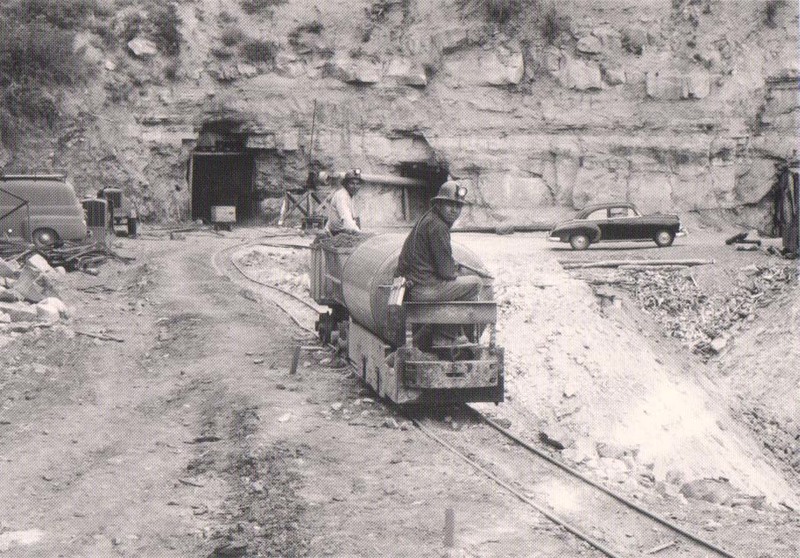
    <summary type="html"><![CDATA[<p><strong><em>The mining of uranium on the Navajo Reservation at the numerous Kerr-McGee mines aided weapon development during the Cold War. For many Navajo miners, this mining also exposed them to harmful radiation.</em></strong></p><img src="https://www.intermountainhistories.org/files/fullsize/1b04369a7d813bd703c61eb424a5f89d.jpg" alt="Navajo miners near Cove, Arizona in 1952" /><br/><p>After the conclusion of World War II, uranium ore was discovered in Northeast Arizona in the Lukachukai Mountains near the towns of Cove and Red Valley , Arizona. The Kerr-McGee Corporation started mining operations in 1952 in the Red Valley area by opening the Cove and Mesa mines on the Navajo Reservation. These uranium digs helped fuel the nuclear Arms Race between the United States and the Soviet Union during the 1950s and 1960s. Unlike other mines in Arizona, however, mining here proved more difficult since this uranium ore had formed in irregular and thin layers. The corporation used manual labor, employing mostly Navajo people, instead of machines to crush the stone. This crushed ore resembled a yellow chalk that could then undergo a refining process to extract the uranium. </p><p>This type of mining produced critically contaminated air, filling the mine shafts with radioactive uranium dust, radon gas, and superfine silica. Smaller mines in particular lacked proper ventilation systems to remove or filter air, and as a result, workers inhaled these chemicals constantly. Many miners developed health complications ranging from damaged lungs to cancer due to lack of knowledge about the long-term effects of radiation as well as inadequate protective equipment. </p><p>Mining operations peaked in 1955 and 1956 with the fervor of the Cold War, but two decades later in 1967, all uranium mining ceased. The fatalities that occurred from mining efforts, in addition to lingering health problems, left their mark on the history of uranium mining; its legacy of damaged lives and environmental landscapes eventually resulted in government action. Congress passed the Radiation Exposure Compensation Act (RECA) in 1990 to compensate those affected by nuclear or radioactive exposure. Uranium miners and ore transporters, among them many Navajos, received the largest compensation of $100,000. While monetary compensation cannot reverse the consequences of uranium mining, RECA demonstrates the cooperation between the U.S. government and the Navajo Reservation.</p><p><em><strong><a href="https://www.intermountainhistories.org/items/show/402">For more (including 3 images) view the original article</a></strong></em></p>]]></summary>
    <published>2020-03-08T05:33:53+00:00</published>
    <updated>2026-04-17T19:32:08+00:00</updated>
    <link rel="alternate" type="text/html" href="https://www.intermountainhistories.org/items/show/402"/>
    <id>https://www.intermountainhistories.org/items/show/402</id>
    <author>
      <name>Kee Ranger, Brigham Young University</name>
    </author>
  </entry>
  <entry>
    <title type="html"><![CDATA[Murray Smelter: The Purpose of the Superfund Program]]></title>
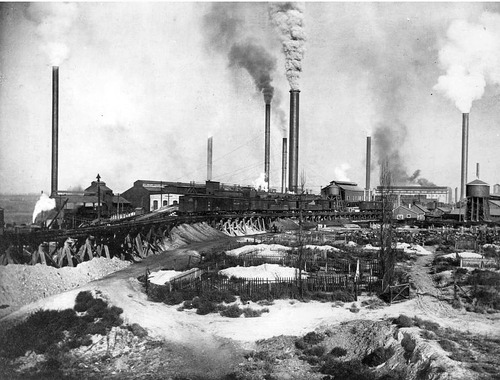
    <summary type="html"><![CDATA[<p><strong><em>State, local, and EPA officials worked together in Murray, Utah - a suburb of Salt Lake City - to clean up a lead smelter that had received the highest ever hazard rating from the EPA. </em></strong></p><img src="https://www.intermountainhistories.org/files/fullsize/f5dd95bbbf8d8a7695a767a59e41168b.jpg" alt="Murray Smelter" /><br/><p>The Murray Smelter Superfund demonstrates the potential of the ambitious Superfund program and stands as a testament to its limitations. Modern industry has had staggering destructive impacts across the West. Clean-up processes have been complicated and often delayed. There are flaws in the Superfund program, but ultimately it was created for a good purpose. It marked an era when Americans started to be conscious of the impacts that they were having on the environment and strove to remediate the damage they had done. </p><p>Opened in 1902 and operated by the American Smelting and Refining Company (ASARCO), the Murray Smelter grew to become the nation’s largest supplier of lead. As early as 1907, nearby farmers began to complain of the effect that lead and arsenic released into the air were having on livestock and crops. A national court case forced ASARCO to invest in new towering smokestacks that would reduce the effects of the pollution. The smelter operated 24 hours a day, seven days a week, superheating lead ore and separating it from other material while also releasing copious amounts of toxic material into the air and water. Following the end of WWII, the demand for lead declined and the Murray Smelter closed in 1949, leaving behind the iconic smokestacks and 142 deserted acres of polluted property. In 1994 when the EPA evaluated the site for consideration on the Superfund list, it received the highest ever hazard rating ever given in agency’s history, at 86.6. By comparison, the average hazard rating for the other Superfund sites in this tour is only 45.3. The hazard rating is used “to assess the relative potential of sites to pose a threat to human health or the environment.” The rating that the Murray Smelter received was alarming, especially when considering the town’s high school was just across the street.</p><p>And yet, the city of Murray refused to be defined by its environmental problem. City, state, and EPA officials immediately began work together on cleanup operations. The smokestacks that were caked in toxic lead and asbestos were demolished in 2000, and thousands of tons of contaminated soil have since been removed. ASARCO has contributed to the cleanup as well, providing funding and installing groundwater monitoring stations. By 2002, the site was deemed clean enough for commercial development, and now is home to a massive Intermountain Healthcare Medical Center, Costco, and the local public transportation Frontrunner station. The EPA’s site manager commented, “The ability to work and problem solve with so many different groups made the cleanup process exciting.” The successful collaboration turned one of the most potentially dangerous toxic sites in America into a thriving commercial area. </p><p>The Murray Smelter site shows the potential that the Superfund program has; however, it also shows that the clean-up process can be highly selective. In the other locations featured in Superfund Me: Stories of Environmental Tragedies in the West, as well as many others across the nation, groups of people are neglected because of the lack of economic opportunities in their cities. The Navajo and the Coeur d’Alene tribes are ignored as the land and water they have relied on for generations is poisoned. The cries for help from the people of Monticello, Silverton, and Libby are discarded because their communities are so small. The immigrant miners of Butte were forced to move as their homes were consumed by a giant pit, and just as the people of Hayden today face economic and environmental pressures that threaten to create a new ghost town. The attention and effort that we give to clean the massive messes we have made should not be based on the economic potential of that area. We should learn from those past mistakes to ensure a healthy relationship between man and the environment in the future. We owe it to everyone and everything that considers the West its home.  </p><p><em><strong><a href="https://www.intermountainhistories.org/items/show/383">For more (including 4 images) view the original article</a></strong></em></p>]]></summary>
    <published>2020-01-08T23:38:49+00:00</published>
    <updated>2026-04-17T19:32:07+00:00</updated>
    <link rel="alternate" type="text/html" href="https://www.intermountainhistories.org/items/show/383"/>
    <id>https://www.intermountainhistories.org/items/show/383</id>
    <author>
      <name>Sam Heywood, Brigham Young University</name>
    </author>
  </entry>
  <entry>
    <title type="html"><![CDATA[Run Like Hell: The Libby Asbestos Story	]]></title>
    <summary type="html"><![CDATA[<p><strong><em>In 2009, the EPA declared the situation in Libby, Montana a public health emergency due to residents' levels of exposure to asbestos from nearby mines.  </em></strong></p><img src="https://www.intermountainhistories.org/files/fullsize/bb2ee5fd316ff1cffbb7fa0dbb243e89.jpg" alt="Zonolite Insulation Advertisement" /><br/><p>In 1999 the EPA began to investigate claims that an alarming number of residents of Libby, Montana were experiencing health problems from exposure to asbestos. This was linked to nearby mines and Libby was placed on the superfund list in 2002. In 2009 the EPA declared the situation in Libby a “Public Health Emergency” - a first in the agency’s history - citing the immediate need for additional funding from the national government. Over 400 people have died in this small mountain town due to an asbestos contamination, and an estimated 3,000 additional people have been diagnosed with diseases such as mesothelioma. </p><p>The Zonolite company first started mining operations in Libby in the 1920s, extracting the mineral vermiculite from the surrounding mountains. Vermiculite is a unique mineral that expands when exposed to heat and is used for a variety of purposes. Zonolite marketed vermiculite as the cheapest, most efficient way to insulate homes and experienced great success initially. During its operation, the mine in Libby was responsible for providing 80% of the country’s vermiculite supply and was successfully marketed to homeowners across America.  Pure vermiculite is not dangerous, but unfortunately for the townspeople of Libby, the nearby deposit was contaminated by a naturally occurring form of asbestos called tremolite-actinolite.</p><p>By 1956 it was clear that Zonolite knew about the asbestos risk, but they did not disclose it to their employees. In 1963 when W. R. Grace and Company bought the mine in Libby, the effects of the asbestos were readily apparent in miners. A company report from 1965 contained a long list of employees that are listed as having “abnormal chests,” many of whom had already died from lung disease. People in the town were certainly aware that the large quantity of dust was linked to rising number of health problems, but when they asked about the mysterious “dust disease,” company officials always responded that the mine only contained tremolite. One miner remembered confronting a mining operator upon learning that tremolite is one of the most dangerous forms of asbestos. “That really upset me because we’re not geologists. There’s not a person up on that hill that new the definition for tremolite.”</p><p>The dust affected the entire community, not just the employees. When miners returned home from work, they were covered in toxic dust. Embraces with loved ones were unknowingly dangerous for their families. Waste and dust from the mines contaminated over one million cubic yards of soil, land on which schools and playgrounds were built. Surrounding groundwater was contaminated as well, carrying deadly fibers of asbestos into the intestines of the people of Libby. By the time the mine closed in 1990, it was too little too late for many of the town’s residents. Asbestos from the mine devastated Libby, killing up to 10% of the population, and afflicting many more. </p><p>W. R. Grace executives were acquitted in a trail brought against them by the federal government for knowingly causing harm to the people of Libby, in which the CEO stated "the company worked hard to keep the operations in compliance with the laws and standards of the day." The judge who presided in the case took issue with the prosecution’s “inexcusable dereliction of duty” in the handling of some evidence, and ultimately could not convict a company responsible for violating a law (the Clean Air Act) that was not in effect during the mine’s operation. Locals of Libby were disappointed in the verdict, but many admit that the company was not entirely to blame for the mine staying open for so long. Zonolite and Grace provided jobs for these people and are responsible in large part for the existence and identity of the town. One miner summed up the precarious situation like this, “I loved my job at Zonolite. I loved it so much that even if they had told me that I was endangering my life, I would probably have stayed. But if they’d told me it was killing my wife and my family too, I would have run like hell.” </p><p>The EPA initially divided Libby into zones for the cleanup operation. Today, certain zones have been deemed “clean,” while other, more isolated areas still report contamination. People in Libby still gather every year to remember the loved ones they have lost to disease. Some still demand compensation from the government, but the Superfund program is unable to offer any financial assistance to affected residents. By law, the EPA can only divert funds to cleanup operations. Others want to move on from the disaster, and look forward to a future where their small town is not defined by the asbestos tragedy.  </p><p><em><strong><a href="https://www.intermountainhistories.org/items/show/382">For more (including 7 images) view the original article</a></strong></em></p>]]></summary>
    <published>2020-01-08T23:23:55+00:00</published>
    <updated>2026-04-17T19:32:07+00:00</updated>
    <link rel="alternate" type="text/html" href="https://www.intermountainhistories.org/items/show/382"/>
    <id>https://www.intermountainhistories.org/items/show/382</id>
    <author>
      <name>Sam Heywood, Brigham Young University</name>
    </author>
  </entry>
  <entry>
    <title type="html"><![CDATA[Becoming a Ghost Town: The Superfund of Hayden, Arizona]]></title>
    <summary type="html"><![CDATA[<p><strong><em>Hayden, Arizona faces depopulation and pollution due to the nearby copper smelter that provided most of the town's jobs over the last century. </em></strong></p><img src="https://www.intermountainhistories.org/files/fullsize/3e32f171ae34e5252cf0c9c3ca0fcd9c.jpg" alt="Hayden Smelter" /><br/><p>Unlike scenic towns in Colorado and Idaho, Hayden, Arizona has been unable to shift its economic focus to tourism. According to one article, it lacks “charm” and is too polluted to attract visitors. Today Hayden’s very existence is threatened by depopulation: it has lost 75% of its people since 1920. Residents worry that if things don’t change soon, Hayden could be abandoned entirely. Like other cities in this tour, Hayden was built as a company town in the early 20th century close to the nearby source of jobs: a copper smelter. Kennecott built the smelter and operated the nearby mine that supplied the ore, but eventually both were bought by the Arizona-based mining company ASARCO in 1986. The smelter in Hayden has released a staggering amount of toxic metals into the air throughout the years and is responsible for adverse health effects on the townspeople.</p><p>Pollution and the health problems that come from it have divided the town. Some demand justice for ASARCO’s disregard for health and the environment, while others defend the company’s economic value in Hayden. There are key differences in Hayden though. For one, the smelter is still in operation today, and the threat of air pollution is still relevant. Another important distinction in Hayden is that the town isn’t technically on the National Priority List for Superfund sites. Instead, it has been classified as a Superfund alternative approach, which according to the EPA, “uses the same investigation and cleanup process and standards that are used for all Superfund sites.” Basically, when a potentially responsible party, in this case ASARCO, presents a plan for cleanup that the EPA deems acceptable, they allow the private company to handle operations with state and national oversight. Due to copper’s importance to the state’s economy, the state of Arizona worked hard to ensure Hayden avoided the stigma of being officially listed as a Superfund. However, no one worked harder than ASARCO to avoid the designation.</p><p>Over the years they have maintained that pollution is well under dangerous levels, even in the face of serious litigation brought on by fed-up Hayden residents in 2008. Reforms include installing new equipment with emission-reducing technology and covering contaminated soil. However, residents complained that the thin layer of gravel laid down by ASARCO isn’t enough to mitigate the danger, especially when it rains, and the contaminated soil escapes from underneath. </p><p>In 2011 the EPA officially sanctioned ASARCO for violating the Clean Air Act by having as much as two to three times the federal limit of lead emissions on some days, but cleanup was still left to the company. With budget cuts to the EPA and the current administration’s general views towards the environment, it is uncertain if federal aid for the cleanup will ever arrive in Hayden. Many have left as evidenced by the boarded-up buildings that line Main Street, but some claim to be too poor to relocate. Even the 10,000 dollars that residents won in the lawsuit against ASARCO is not enough to help people escape. For some, it feels as if they are trapped watching Hayden become a ghost town. </p><p><em><strong><a href="https://www.intermountainhistories.org/items/show/381">For more (including 3 images) view the original article</a></strong></em></p>]]></summary>
    <published>2020-01-08T23:11:54+00:00</published>
    <updated>2026-04-17T19:32:07+00:00</updated>
    <link rel="alternate" type="text/html" href="https://www.intermountainhistories.org/items/show/381"/>
    <id>https://www.intermountainhistories.org/items/show/381</id>
    <author>
      <name>Sam Heywood, Brigham Young University</name>
    </author>
  </entry>
  <entry>
    <title type="html"><![CDATA[The Gold King Mine Disaster: EPA’s “Help” Not Wanted ]]></title>
    <summary type="html"><![CDATA[<p><strong><em>After an accidental spill at Gold King Mine in 2015, Silverton residents resisted Superfund designation fearing it would negatively impact tourism in the area. </em></strong></p><img src="https://www.intermountainhistories.org/files/fullsize/a7c08f5be62c192ef0eaf31a5c578cb2.jpg" alt="Gold King Mine" /><br/><p>In 2015, the EPA hired private contractors to clear the entrance to the abandoned Gold King Mine outside of Silverton, Colorado. They sought to determine the mine’s impact on contamination of the nearby Animas River. There had been a steady trickle of highly acidic waste coming from the mine since its closure in 1991, but the workers were not expecting to find 3 million gallons of highly pressurized orange sludge waiting on the other side of a massive plug in the mine. Those present were fortunate to escape with their lives as the poisonous mixture flowed down the mountain, eventually draining into the Animas River. The river turned a murky orange and immediately a ban was placed on drinking or swimming in the water due to the high amounts of toxic lead and arsenic. Exactly one year after the disaster, the EPA placed the region surrounding Silverton on the superfund list, qualifying it for federal funding for clean-up efforts. Silverton had actually been fighting Superfund designation for over 20 years. Residents feared it would impact the region’s primary economic market - tourism.</p><p>Silverton has a history of defending itself. Concern over pollution was a century-old affair, but the people of Silverton vehemently defended their principal sources of income: mining and processing raw ore. In the early 20th century, residents of the downstream town of Durango were fed up with Silverton’s pollution. In 1902, the Durango Democrat complained, “There never was a word or sentence uttered against the purity and excellence of the Animas river water until Silverton, in open violation of the law, began using the stream for a dumping ground for garbage and mill tailings.” The Silverton Standard shot back, “The thing for Durango to do is employ its energy in providing a water supply from some of the many pure mountain streams[…] It certainly cannot afford to take any action that will annoy or embarrass the mining and milling of Silverton.” However, Silverton was also well accustomed to the economic booms and busts associated with mining. In response, the city had turned to tourism as early as the 1930s. The Animas River provided adventurous river rafting experiences, and the surrounding San Juan Mountains left visitors awestruck. When the last mines closed in the 1990s, tourism was the largest industry left in Silverton. </p><p>With the same passion that residents once defended their mines, they defended their reputation as a scenic mountain paradise. One lifelong Silverton resident remarked, “We’re a tourist area. You hear the word ‘Superfund’ site and 99 percent think ‘danger.’ So why would you want to go to a Superfund site?” It is not as though the people of Silverton are pro-pollution, for there is an organized community effort to clean up the Animas, but rather they are understandably committed to protecting what brings business into their town. Some residents blame the EPA for the leak, while others fault the Gold King Mine Company for the pollution in the first place; however, everyone in Silverton can agree that the EPA’s Superfund program is not welcome relief from environmental tragedy, but a death sentence on the town’s marketability as a popular destination. </p><p>The Animas River was deemed safe for drinking and recreational use weeks after the spill, though there are still consequences from the disaster. Today the EPA continues clean-up operations near Silverton and the site has grown to include 48 mines that risk contaminating groundwater. A water treatment plant was constructed in 2015, though according to the EPA, “migration of contaminated groundwater is not stabilized.” The impact of human exposure to the toxic waste is uncertain, but contaminated waste reached as far as New Mexico, Utah and the Navajo Nation, harming crops and livestock near the Animas and San Juan Rivers. Despite their initial misgivings towards the EPA and the Superfund program, the people of Silverton now work together with the federal government to clean-up the last mess and assure this never happens again. </p><p><em><strong><a href="https://www.intermountainhistories.org/items/show/380">For more (including 5 images) view the original article</a></strong></em></p>]]></summary>
    <published>2020-01-08T22:28:45+00:00</published>
    <updated>2026-04-17T19:32:07+00:00</updated>
    <link rel="alternate" type="text/html" href="https://www.intermountainhistories.org/items/show/380"/>
    <id>https://www.intermountainhistories.org/items/show/380</id>
    <author>
      <name>Sam Heywood, Brigham Young University</name>
    </author>
  </entry>
  <entry>
    <title type="html"><![CDATA[Tragedy at Church Rock: Superfunds and the Marginalization of Navajos]]></title>
    <summary type="html"><![CDATA[<p><strong><em>In 1979 the United Nuclear dam in New Mexico failed and released over 1,000 tons of radioactive waste, greatly harming the Navajo community at nearby Church Rock. </em></strong></p><img src="https://www.intermountainhistories.org/files/fullsize/24fb43a1f523a53719f4159e884c1d1d.jpg" alt="Church Rock Dam Breach" /><br/><p>Before sunrise on July 16, 1979, Navajos who resided in Church Rock, New Mexico, awoke to the sound of rushing water. They were confused, for there had been no rain to cause flooding of the nearby Puerco River. Unbeknownst to them, a nearby dam owned by United Nuclear had failed, releasing 95 million gallons of mine waste into the local water systems. This waste contained 1,100 tons of radioactive waste from a mill that processed uranium, killing sheep that drank it and burning the feet of children who waded in it. United Nuclear temporarily closed the mill and immediately the Indian Health Services urged people not to drink the water, but without assistance many poor families had no other options. Shortly after, the CDC tested the radiation levels of just six people, and when their results weren’t alarming, declared that no major threat to public health existed due to the spill. In spite of this, the Navajo Nation appealed to the state’s governor to declare a state of emergency in the Church Rock area, a request that was denied. However, when United Nuclear threatened to start laying people off if the mill remained closed, the state and federal government quickly complied to let mill operations resume just five months after the massive spill. The spill, and effects from the mill’s continued operation after, landed the Church Rock on the National Priority List for Superfund sites in 1983.</p><p>The neglect of Navajo lands is evident when one compares the response to another nuclear accident that happened just four months prior at Three Mile Island in Pennsylvania. A partial nuclear meltdown led to the evacuation of 140,000 people and to the state declaring a state of emergency, even though the release of nuclear radiation was significantly less than at Church Rock. Many government funded investigations were commissioned to understand the causes and the long-lasting effects of the accident in Pennsylvania, but such studies do not exist for the Navajo at Church Rock. The failure of United Nuclear’s dam was no mystery; cracks were reported in the 75-foot earthen structure nearly two years prior to the spill, but no action was taken. United Nuclear efforts to clean amounted to the removal of 3,500 tons of contaminated soil downstream, estimated to be just 1% of the total affected soil.</p><p>The site’s designation as a Superfund has hardly been effective at providing meaningful assistance. After 36 years as a Superfund, the EPA’s website still reports today that “groundwater contamination, and the migration of contaminated groundwater is not stabilized.” Many Navajos have long given up hope of government assistance. They have formed grassroots organizations like Eastern Navajo Diné Against Uranium Mining to prevent future mining operations and aid contaminated areas. In 2017, the ENDAUM discovered a small Navajo community was still using contaminated water to hydrate and bathe their livestock. They found hairless sheep and insides of cows that had turned yellow. The Navajo had to burn the sick animals to avoid further contamination. Even though there is a lack of scholarly investigation on the effects of the spill, the experiences of Navajo show the terrible consequences on local health. One Navajo remarked on the high cancer rates in the reservation: “That’s why we drink. We think we won’t live long.” This has negative implications for the future Navajo, as one resident of Church Rock commented, “Our generation is afraid of having children. Cancer runs in our family, but it shouldn't.” </p><p>Americans generally don’t view pollution positively, but the time of putting production and profits over human lives must end. The current presidential administration values economic potential over the environment and public health, a trend that does not bode well for the neglected Navajo. The Navajo Nation deserves the reparation that disasters like the Church Rock spill demand as well as protection from future exploitation. </p><p><em><strong><a href="https://www.intermountainhistories.org/items/show/379">For more (including 3 images) view the original article</a></strong></em></p>]]></summary>
    <published>2020-01-08T22:11:58+00:00</published>
    <updated>2026-04-17T19:32:07+00:00</updated>
    <link rel="alternate" type="text/html" href="https://www.intermountainhistories.org/items/show/379"/>
    <id>https://www.intermountainhistories.org/items/show/379</id>
    <author>
      <name>Sam Heywood, Brigham Young University</name>
    </author>
  </entry>
  <entry>
    <title type="html"><![CDATA[Lead Heads and a Toxic Timebomb: The Bunker Hill Superfund Site]]></title>
    <summary type="html"><![CDATA[<p><strong><em>Silver mining in the Coeur d'Alene River Basin contaminated the area, which now constitutes the second largest EPA superfund site in the US.</em></strong></p><img src="https://www.intermountainhistories.org/files/fullsize/6b86473fee6667b3c27c80bccfde820d.jpg" alt="Bunker Hill Miner" /><br/><p>The Coeur d’Alene River Basin in Idaho has earned its nickname as “The Silver Valley.” Since the late 19th century over 140 million tons of ore have been mined and processed from the surrounding mountains, including silver, zinc, and lead. Mine waste was often dumped directly into the Coeur d’Alene River, which in turn flows into the scenic Coeur d’Alene Lake and eventually into the Spokane River in Washington. The effects of contamination stretch about 166 miles, creating the nation’s second largest superfund site in 1983, and introducing complex problems to diverse groups of people in the basin.</p><p>Though many companies have mined in the valley, the biggest contributor to the pollution was the Bunker Hill Company. Though attitudes toward pollution differed greatly in the 1930s from views today, the terrible effects of waste disposal from the Bunker Hill mine were already indisputable. One local paper reported in 1934 that just 20 years prior to the Coeur d’Alene River measured 60 feet deep in one section, but now was reduced to a depth of just two feet because “it has been filled up with mine slimes” and has led to a “concerning number of dead fish and lead” in the river. Some measures were taken to curb pollution then, but it wasn’t until the nationwide environmental movement began in the 1960s and 1970s that regulations were enacted. Towns where much of the ore was processed, namely Kellogg and Smelterville, are the easiest to identify the negative effects of the dumping.</p><p>“You had the taste of metal in your teeth,” one resident remembers from growing up in Kellogg. An initial study conducted by the Idaho state government found that 99% of children living in Smelterville had over 40 micrograms of lead in their blood per deciliter, when just 5 micrograms is already a serious cause for concern. Such high levels of lead are responsible for the increase in health problems among residents, mental illnesses like schizophrenia and attention deficit hyperactivity disorder. Some residents claim that the lead poisoning has created a stigma in the surrounding towns that the townspeople of Kellogg are crazy. “They call us ‘lead heads,’” remarked one former miner. Though the more prosperous people of nearby cities like Coeur d’Alene may look down on Kellogg and Smelterville, they must deal with their own effects of this environmental tragedy. </p><p>Lake Coeur d’Alene has long drawn visitors with its beautiful mountain vistas and scenic forests, but few tourists know that the lake is a repository for 75 million tons of sediment contaminated by lead, zinc, and arsenic. For now, the dangerous metals are trapped at the bottom of the lake and can’t harm those who enjoy it’s waters, though this is subject to change. Both modern forms of pollution and suggested treatment options can decrease the amount of oxygen in the lake, which would allow the metals to rise and create a toxic mess that “in other places, has shut down water supplies and caused fish die-offs.” Because of the scale of the problem, a proper clean-up is projected to take many years, however; the process has already been delayed and muddled many times because of the number of parties involved. The EPA is often at odds with the state government, which itself must deal with the conflicting opinions of local activist groups. On top of that the local Native American tribe, the Coeur d’Alene, have continuously fought to earn decision making power when it comes to protecting and cleaning the lake they have relied on for centuries. The lake was incorporated into the Bunker Hill superfund site in 2002, but the complexity of issues in the entire basin make it clear that the EPA is unequipped to effectively deal with the damage done to this beautiful area.</p><p>Despite all the unresolved problems, the Trump administration has repeatedly expressed interest in reopening mining operations at Bunker Hill, even giving one company a permit in 2018. The possibility of the Bunker Hill mine operating again creates even more divides in the surrounding communities, and could only worsen the already precarious environmental situation in the Coeur d’Alene River Basin. </p><p><em><strong><a href="https://www.intermountainhistories.org/items/show/378">For more (including 4 images) view the original article</a></strong></em></p>]]></summary>
    <published>2020-01-08T06:13:51+00:00</published>
    <updated>2026-04-17T19:32:07+00:00</updated>
    <link rel="alternate" type="text/html" href="https://www.intermountainhistories.org/items/show/378"/>
    <id>https://www.intermountainhistories.org/items/show/378</id>
    <author>
      <name>Sam Heywood, Brigham Young University</name>
    </author>
  </entry>
  <entry>
    <title type="html"><![CDATA[Monticello Mill: Federal Government Forces Locals to Unite]]></title>
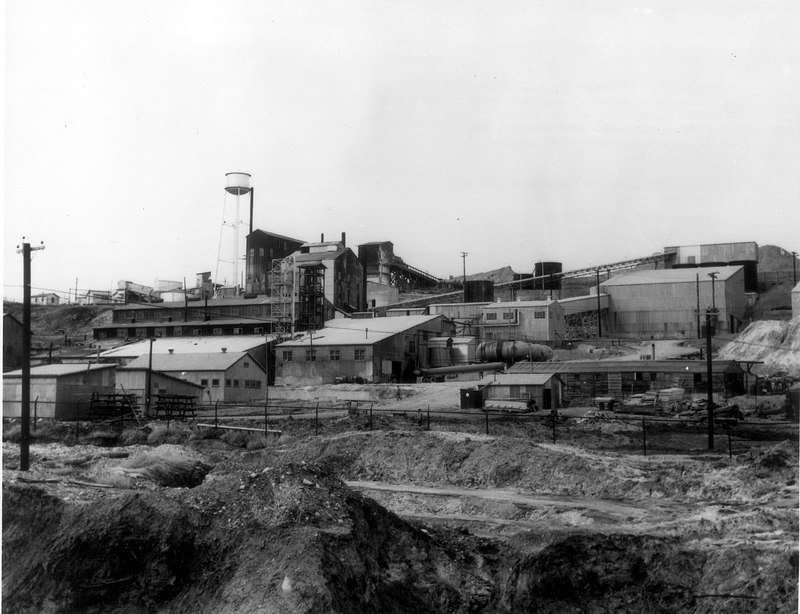
    <summary type="html"><![CDATA[<p><strong><em>Residents of Monticello -  a small town in southeast Utah - are still weighing the economic benefits of the Monticello Mill against the environmental and health problems it caused in their community. </em></strong></p><img src="https://www.intermountainhistories.org/files/fullsize/4267f041bea81fd7d2246268ad36780e.jpg" alt="Monticello Mill" /><br/><p>When a new government-owned mill opened in 1942 in the small town of Monticello, Utah, the local response was overwhelmingly positive. The local paper rejoiced, “Monticello is feeling the influx of much more money… Owners of restaurants, markets, garages, the motion picture house, and other businesses have learned that the coming of a new industry means a new source of income for all.” The new industry that caused the boom in Monticello was the mining and processing of vanadium, and later uranium. Both were essential elements in the production of America’s growing stockpile of nuclear weapons, and both are radioactive. The initial enthusiasm built from promised economic development soured due to pollution and health crises. Even though the EPA has designated two Superfund sites, many locals remain unsatisfied with government efforts to remediate the damage done to their community. </p><p>Economic growth was not the only factor influencing the initial positive reception of the mill. Patriotism also fueled the resident’s support of the mill’s operation. People felt that they were meaningfully contributing to the efforts of the Cold War. San Juan County was touted as “the new muscle behind the American effort in waging total war” and was deemed the “area that has made a greater contribution to the scientific world than any other spot in the universe.” The Department of Energy ran the Monticello Mill, so people employed there were working for the federal government, not a greedy private company. By the 1960s, however, the bottom had fallen out in the uranium industry and after the mill’s closure, people were left in an economic depression and with a lot of unanswered questions. </p><p>For about 40 years after the mill’s closing, over 2 million tons of tailings waste and other contaminated materials sat exposed at the mill site. Wind blew dust from the radioactive waste into the town and contaminated materials used in construction throughout Monticello. In 1993, locals officially formed the committee Victims of Mill Tailings Exposure (VMTE). The VMTE is especially unique because of the lack of organizations like it in the state of Utah. Even though there have been as many as 25 super fund sites in the Beehive State, the VMTE is the only organization that has formed in response to environmental damage done to the community. A memorial funded by the VMTE reads “During the Cold War, we fought against communist ideology, but it was ourselves we were killing.” The tribute continues describing the effects of contamination, “Chrome came off car bumpers. Screen doors changed color. White sheets hung on the line turned yellow, and fumes from the plant were inhaled in the lungs of young and old alike; mill workers, miners, ore haulers, city residents, families and children.” </p><p>Despite the mounting evidence that contaminants have led to an increase in cancer and other disease rates in Monticello, the VMTE continues to fight for at least two things they feel they deserve: access to and payment for adequate treatment. The nearest cancer center over 100 miles away in Durango, Colorado. Some residents travel up to 300 miles for treatment in St. George, Utah. Monticello was once notable as a town whose residents enthusiastically supported of the national government. Today, many demand that the United States take responsibility for its mistakes and provide compensation. One VMTE member explained how fellow townspeople motivate him to keep fighting, “They say ‘Don't stop. We know that mill caused our cancer.’”</p><p><em><strong><a href="https://www.intermountainhistories.org/items/show/377">For more (including 4 images) view the original article</a></strong></em></p>]]></summary>
    <published>2020-01-08T05:53:41+00:00</published>
    <updated>2026-04-17T19:32:07+00:00</updated>
    <link rel="alternate" type="text/html" href="https://www.intermountainhistories.org/items/show/377"/>
    <id>https://www.intermountainhistories.org/items/show/377</id>
    <author>
      <name>Sam Heywood, Brigham Young University</name>
    </author>
  </entry>
  <entry>
    <title type="html"><![CDATA[The Berkeley Mine Pit: Butte’s Scenic Toxic Lake]]></title>
    <summary type="html"><![CDATA[<p><strong><em>The Berkeley Mine Pit is the most expensive site on the EPA’s superfund list, filled with water so acidic it can dissolve the propeller of a boat.</em></strong></p><img src="https://www.intermountainhistories.org/files/fullsize/b0280a5e449e8efb8945c58f3821f84f.jpg" alt="Berkeley Pit" /><br/><p>Butte, Montana’s history is inseparably tied to mining. A gift shop on the outskirts of town sits next to a massive man-made pit filled with 40 billion gallons of water. Some visitors comment on the beauty of the contrast between the “blue sky and emerald green waters” and enjoy signs that give brief snippets about the history of the Anaconda Copper Mining Company and the pit. Others who visit know that that the pit is filled with water so acidic that it can dissolve the propeller of a boat. In 2016 the poisonous water was responsible for the death of an estimated 4,000 geese who stopped for a drink. The Berkeley Mine Pit is now the most expensive site on the EPA’s superfund list.</p><p>Underground mining operations date back to the 1870s in Butte. By 1955, however, Anaconda decided that it would be more profitable and safer for miners to dig straight down to copper veins instead of tunneling to them. This method resulted in a growing pit. The people of Butte proudly identified as miners, but the pit exposed the community to a type of mining never before experienced and they began complaining to company officials about the noise and dust from nearby explosions. As the pit grew deeper and wider and more waste was produced, Anaconda saw only one way to stop complaints and keep their operation going: obtain more land.</p><p>Anaconda faced the task of dismantling communities that they helped create. East Butte, Meaderville, McQueen, Dublin Gulch, and Finn Town were towns of immigrant miners close enough to the Berkeley Pit that the company deemed their destruction necessary to continue mining operations. Fortunately for Anaconda, they already owned most of the land in these towns, they needed only to buy or trade the houses on top of it. A sign by the pit today reads, “many of the relocated residents didn’t mind because it meant that good paying jobs would stay in the community.” While it is true that these communities were eventually abandoned and engulfed by waste or the pit itself, the reality of people leaving their homes, churches, and baseball fields to be destroyed was more complicated. One resident remarked, “People said they’d fight, but then they jumped.”</p><p>Anaconda was no longer the typical pre-WWII mining company that hired detectives to intimidate or beat workers into submission. They used legal means to move workers and their families to different parts of town. They offered fair sums of money for houses or offered a trade so people could immediately move into a house in a different town also owned by Anaconda. Though many took the deals offered by the company, there were always holdouts. In 1961 however, a bill passed in the state legislature that gave private companies like Anaconda the right to exercise eminent domain to expand pit operations. Though the process was used sparingly, Anaconda could take property if they wanted to, making resistance to pit expansion futile. Still, one man in charge of covering the old school in Meaderville with mine waste said, “I felt like a murderer. Progress does have its price.”</p><p>By the 1980s, pressures from environmentalists and the financial state of Anaconda Copper led to the closure of the Berkeley Pit. Pumps that kept surrounding groundwater from the pit were turned off, and the pit has been filling with toxic water ever since. In 1983 the pit was placed on the EPA’s superfund list. Last year, ground was broken on a facility that will stop water in the pit from raising to levels that would poison surrounding water supplies in Butte. The pit stands today as a poignant reminder of the large-scale destructive effects of capitalism in the West and represents the complex relationship between people and the resources on which they depend for jobs, and ultimately, life. The Berkeley Pit cannot be discussed in Butte without a reverence for the thousands of miners that sacrificed limbs, time, and sometimes their lives all to earn a decent wage. As we look forward to solutions for Berkeley, we must not forget to remember how and why it was created.</p><p><em><strong><a href="https://www.intermountainhistories.org/items/show/376">For more (including 4 images) view the original article</a></strong></em></p>]]></summary>
    <published>2020-01-07T03:35:54+00:00</published>
    <updated>2026-04-17T19:32:07+00:00</updated>
    <link rel="alternate" type="text/html" href="https://www.intermountainhistories.org/items/show/376"/>
    <id>https://www.intermountainhistories.org/items/show/376</id>
    <author>
      <name>Sam Heywood, Brigham Young University</name>
    </author>
  </entry>
  <entry>
    <title type="html"><![CDATA[Bear River Migratory Bird Refuge<br />
]]></title>
    <summary type="html"><![CDATA[<p><strong><em>The 79,000 acres of the Bear River Migratory Bird Refuge are federal and state lands managed by the U.S. Fish and Wildlife Service to protect the area for the millions of birds along their migration routes.</p></strong></p><img src="https://www.intermountainhistories.org/files/fullsize/95d229f169fa71229a3c44c9886cd822.jpg" alt="Bear River Bird Refuge" /><br/><p>The Bear River courses 600 miles from the Uinta Mountains through parts of Wyoming, Idaho, and Utah to the Great Salt Lake creating an extensive marsh area. The waterfowl which inhabit the marshes have been hunted for food for hundreds of years. However, after non-Natives settled in the area, water was diverted for irrigation and hunting became commercialized. From 1877 to 1900, more than 200,000 ducks were killed annually for transport to both California and eastern markets.</p><p>By 1900, the watershed was overgrazed by cattle and sheep; diversions had greatly reduced the summer water flow; hunters had decimated the waterfowl populations. Disease took further toll on the waterfowl. In 1910, a half million ducks died around the mouth of the Bear River during the late summer.</p><p>Alexander Wetmore began researching and believed that the sickness was caused by the alkaline water that had formed in pools throughout the marshlands. E. R. Kalmbach did further research and found that the sickness was not actually caused by the water, but by a form of botulism which lives in alkaline conditions. </p><p>The first efforts to save the waterfowl were made by sportsmen. The several duck hunting clubs which operated in the area acted to purchase or lease the remaining marshes and control the hunting. The Bear River Club organized in 1901, for example, owned 8,000 acres in North Bay and acted to preserve nesting and feeding areas.</p><p>These sports clubs, federal researchers, and the Utah Fish and Game Commission worked together to establish the establishment of the Bear River Migratory Bird Refuge by a special act of Congress on April 23, 1928. The nearly 65,000 acres acquired under this act were to be "maintained as a refuge and breeding place for migratory birds included in the terms of the convention between the United States and Great Britain for the protection of migratory birds, concluded August 16, 1916." The act provided that "at no time shall less than 60 per centum of the total acreage of the said refuge be maintained as an inviolate sanctuary for such migratory birds.'' The Bear River Migratory Bird Refuge was the first waterfowl refuge to be created by law.</p><p>A dam was built across the river canals led off across the marshes. Nearly 40 miles of earthen dikes were built to keep the marshland water levels consistent. The Refuge was a Civilian Conservation Corps project during the Great Depression. However, in 1983 the dikes broke due to high water levels in the Great Salt Lake and the refuge was deemed inoperable because of flooding. However, by 1990 the waters had receded and work began to restore the refuge. </p><p>In 2006, the James V. Hansen Wildlife Education Center was built. The Center features exhibits and hosts a variety of special events throughout the year to promote learning and participation in wildlife preservation. In addition to the visitor center, the refuge offers various locations for hunting, fishing, bird-watching, and photography.</p><p><em><strong><a href="https://www.intermountainhistories.org/items/show/260">For more (including 6 images) view the original article</a></strong></em></p>]]></summary>
    <published>2019-01-25T05:17:36+00:00</published>
    <updated>2026-04-17T19:32:04+00:00</updated>
    <link rel="alternate" type="text/html" href="https://www.intermountainhistories.org/items/show/260"/>
    <id>https://www.intermountainhistories.org/items/show/260</id>
    <author>
      <name>Dawn Smith, Weber State University</name>
    </author>
  </entry>
  <entry>
    <title type="html"><![CDATA[JFK at the Salt Lake City Municipal Airport: Story 5 of 5 of the John F. Kennedy’s Conservation Tour in September, 1963 Tour]]></title>
    <summary type="html"><![CDATA[<p><strong><em>The second public address given by President John F. Kennedy in Utah targeted the state’s development and its potential to become one of the most popular recreation areas in the U.S. At the end of his last speech during the Conservation Tour in the Intermountain West, JFK initiated the first power generator at the Flaming Gorge Powerplant along the Utah-Wyoming border.</em></strong></p><img src="https://www.intermountainhistories.org/files/fullsize/bade3215422a10e1786885a503087779.jpg" alt="President John F. Kennedy Starts the First Generator at Flaming Gorge Powerplant" /><br/><p>The last speech delivered by President Kennedy during his Conservation Tour in the Intermountain West was at Salt Lake City Municipal Airport.  In this address, which started at 9:35 a.m. on September 27, 1963, JFK explained how innovative resource conservation and development programs would benefit future generations. According to the President, wise management of resources would make a profound difference to the state of Utah, and preserving natural resources would make the state a great recreational attraction for tourists from all over the United States.</p><p>Kennedy dedicated the main part of the speech to the Flaming Gorge Dam on the Green River, one of the six dams that make up the Colorado River Storage Project. The President pointed out that the dam, with almost four million acre feet of capacity, would make Salt Lake City grow and properly organize the distribution of water along the Colorado River Basin. By pushing a buzzer, JFK started the first generator at the dam, making it run at full speed. Thus, the first unit of the Flaming Gorge Dam went into operation on September 27, 1963, at the flip of a switch by the 35th president of the United States.</p><p>Kennedy also emphasized the significance of the ceremony for the people of the state of Utah, stating that every drop of water should be organized to be of service to mankind. Using water wisely was not only crucial for the development of the state and the whole county in the 1960s, but also in the years to come. Kennedy was proud to implement the project that people had been thinking of for fifty years and highlighted the significance of the event for the state of Utah.</p><p>Before leaving, the president warmly greeted the people who had gathered to hear his speech. At 9:50 a.m. on September 27, 1963, Kennedy departed Salt Lake City Municipal Airport by jet for Seattle-Tacoma International Airport, thus ending his Conservation Tour in the Intermountain West. All of the speeches he delivered were well received, especially when he focused on foreign policy. The president’s visits made lasting impressions on everyday witnesses, thus increasing their understanding of the environment and its value.</p><p><em><strong><a href="https://www.intermountainhistories.org/items/show/225">For more (including 3 images) view the original article</a></strong></em></p>]]></summary>
    <published>2018-06-14T01:46:47+00:00</published>
    <updated>2026-08-18T15:59:49+00:00</updated>
    <link rel="alternate" type="text/html" href="https://www.intermountainhistories.org/items/show/225"/>
    <id>https://www.intermountainhistories.org/items/show/225</id>
    <author>
      <name>Anastasiia Shuvaeva, Northern Arizona University</name>
    </author>
  </entry>
  <entry>
    <title type="html"><![CDATA[JFK at the Salt Lake City Tabernacle (Mormon Tabernacle)<br />
: Story 4 of 5 of the John F. Kennedy’s Conservation Tour in September, 1963 Tour]]></title>
    <summary type="html"><![CDATA[<p><strong><em>The State of Utah was John F. Kennedy’s next stop during his 1963 Conservation Tour. He delivered two speeches. The first one was at the Salt Lake Tabernacle. It is notable that nearly all American presidents have spoken from its podium since its construction in 1867.</em></strong></p><img src="https://www.intermountainhistories.org/files/fullsize/48b0f684a20b7032c575ac4df901cd2e.jpg" alt="Conservation Tour of Western States: Utah, Salt Lake City: Address at Mormon Tabernacle, 8:18 PM" /><br/><p>The president arrived at the Mormon Tabernacle on Temple Square in Salt Lake City at 7:50 p.m. on Thursday, September 26, 1963. The program at the Tabernacle started at 8:00 p.m., and more than eleven thousand people (eight thousand inside and three thousand outside on the grounds of the Tabernacle) gathered to hear the president speak.</p><p>Before talking about environmental protection or domestic and foreign affairs, Kennedy emphasized the history of the Tabernacle and of the Mormon community. He said he was “proud to be back in this historic building,” noting that he had already given a speech at the Tabernacle during his 1960 presidential campaign. The President highlighted the invaluable contribution of American pioneers and settlers, the Mormon Trail, and the founders of the Mormon community, who were courageous, faithful, self-reliant, and determined to see the right prevail.</p><p>Kennedy was sure that Salt Lake City was the perfect place to talk about what could be done to preserve natural resources and the precious environment of the Salt Lake region. Besides natural resources, the president also mentioned the importance of preserving human resources, by which he meant human spirit and perseverance.</p><p>John F. Kennedy emphasized the contribution of the state of Utah not only in the field of conservation, but also in the education of children. He pointed out that a very high percentage of boys and girls at that moment were able to finish high school and then go to college.</p><p>The focus of the President’s speech was not only resource conservation and domestic affairs, like education and radical reduction of federal spending, but also U.S. foreign policy. He talked about the importance of U.S. involvement in the affairs of other countries in the world and emphasized America’s indisputable role as the global leader. “We cannot turn our back on the world outside,” President Kennedy told the crowd.</p><p>At 8:35 p.m., President Kennedy departed the Mormon Tabernacle for Hotel Utah (now the Joseph Smith Memorial Building). News accounts reported that more than 100,000 citizens, of the capital city’s 189,000 residents, gathered along the parade route to see the Democratic President. </p><p>The Salt Lake Tabernacle is an institution universally known for the music of its great choir. Its construction began in 1863 and was complete in 1867. In March 2007, the building was reopened after a two-year renovation. The Tabernacle is located in Temple Square and, even standing in front of the building, the visitors can enjoy its remarkable acoustics.</p><p><em><strong><a href="https://www.intermountainhistories.org/items/show/224">For more (including 6 images) view the original article</a></strong></em></p>]]></summary>
    <published>2018-06-14T00:54:03+00:00</published>
    <updated>2026-08-18T16:00:03+00:00</updated>
    <link rel="alternate" type="text/html" href="https://www.intermountainhistories.org/items/show/224"/>
    <id>https://www.intermountainhistories.org/items/show/224</id>
    <author>
      <name>Anastasiia Shuvaeva, Northern Arizona University</name>
    </author>
  </entry>
  <entry>
    <title type="html"><![CDATA[JFK at Great Falls High School Memorial Stadium: Story 3 of 5 of the John F. Kennedy’s Conservation Tour in September, 1963 Tour]]></title>
    <summary type="html"><![CDATA[<p><strong><em>Although the primary purpose of President Kennedy’s Conservation Tour was environmental protection and efficient use of natural resources, a significant part of his speech in Great Falls focused on U.S. foreign policy. Maintaining mutually beneficial relations with other countries of the world and promoting U.S. national interests were on the president’s international agenda.</em></strong></p><img src="https://www.intermountainhistories.org/files/fullsize/b27f99ad4998dc498f7014d9ec7025a8.jpg" alt="Conservation Tour of Western States: Montana, Great Falls: President Kennedy Addressing and Greeting Crowd at Great Falls High School Memorial Stadium" /><br/><p>The Great Falls High School Memorial Stadium in Great Falls, Montana was President Kennedy’s next stop during his Conservation Tour. The president departed Great Falls International Airport at 11:45 a.m. on Thursday, September 26, 1963, and arrived at the stadium at 12:25 p.m. Five minutes later, he was ready to deliver his speech.</p><p>The first part of the president’s address was dedicated to the United States’ foreign policy and highlighted the importance of preventing a nuclear war between the United States and the Soviet Union. Kennedy focused on the concentration of the most powerful nuclear missile systems in the state of Montana and urged the citizens to be conscious of every possible danger. However, he shared his hopes for a peaceful conclusion to the Cold War and emphasized the United States’ commitment to help other countries like Laos, Vietnam, or the Congo in maintaining their freedom. One of the major aspects of the U.S. international agenda was, according to President Kennedy, the country’s determination to develop a world in which all countries were free. He believed this would eventually decrease the threat to the United States’ security.</p><p>President Kennedy then focused on the elimination of possible environmental threats and introduced his administration’s plans to implement natural resource conservation. Preserving the natural resources and beauty of Montana would make the Northwest United States highly attractive to people from other states and from all over the world. Kennedy also hoped that the Columbia River Treaty with Canada would be ratified and that the Libby Dam Project in Northwest Montana would soon begin. </p><p>The President emphasized the importance of making American cities better places to live; he focused on the significance of good education for children, the prosperity of the country in general, and the nation’s interest in promoting freedom around the globe. At 1:05 p.m., President Kennedy departed Great Falls High School Memorial Stadium for the airport, leaving the more than twenty thousand people who gathered to hear his speech with positive thoughts about a bright future for the United States. </p><p>The Great Falls High School Memorial Stadium is located on the campus of the Great Falls High School in Great Falls, Montana. The stadium was built in November 1930 to honor the veterans of World War I and World War II.</p><p><em><strong><a href="https://www.intermountainhistories.org/items/show/223">For more (including 3 images) view the original article</a></strong></em></p>]]></summary>
    <published>2018-06-14T00:18:04+00:00</published>
    <updated>2026-08-18T15:59:56+00:00</updated>
    <link rel="alternate" type="text/html" href="https://www.intermountainhistories.org/items/show/223"/>
    <id>https://www.intermountainhistories.org/items/show/223</id>
    <author>
      <name>Anastasiia Shuvaeva, Northern Arizona University</name>
    </author>
  </entry>
  <entry>
    <title type="html"><![CDATA[JFK at the Yellowstone County Fairgrounds: Story 2 of 5 of the John F. Kennedy’s Conservation Tour in September, 1963 Tour]]></title>
    <summary type="html"><![CDATA[<p><strong><em>At Yellowstone County Fairgrounds in Billings, Montana, President John F. Kennedy extended his message on conservation. He also focused on the prevention of a nuclear conflict and the importance of maintaining world peace. Some significant issues in the U.S. domestic policy like education, economics, and national security were also addressed. </em></strong></p><img src="https://www.intermountainhistories.org/files/fullsize/7289602c39d624563a43cf066cb2b3d8.jpg" alt="President John F. Kennedy delivers an address at Yellowstone County Fairgrounds on September 25, 1963. " /><br/><p>After giving a speech at the University of Wyoming earlier that day (September 25, 1963), President John F. Kennedy arrived at the Yellowstone Fairgrounds in Billings, Montana, at 3:55 p.m. The Secret Service estimated that more than seventeen thousand people in this Republican stronghold gathered to greet the Democratic president and listen to his speech on outdoor recreation policy. Before arriving at the Fairgrounds, Kennedy was greeted by more than one hundred thousand people waiting for his arrival both at the airport and on the streets of the city.</p><p>In his speech, the President addressed U.S. foreign policy and the complexities of the world in a time of great changes. Assisting other countries of the world served the national interest of the United States, and decreasing the chance of a military collision between the two great nuclear powers – the USA and the Soviet Union – was of key significance. Kennedy emphasized the importance of developing international relations and highlighted the support of the Nuclear Test Ban Treaty.</p><p>Kennedy also talked about significant aspects in the U.S. domestic policy, focusing on the importance of passing a new tax bill, stimulating the U.S. economy, and avoiding overwhelming economic problems. Creating new jobs, promoting the development of education, increasing youth employment and security would make the country stronger and help promote its vital interests. According to the President, it was also crucial to focus on the protection of resources like land, water, and power in order to keep the United States strong.</p><p>John F. Kennedy discussed the projects that had already been initiated in Washington, D.C. He focused on ten reclamation projects and the acquisition of wetlands, as well as the importance of saving woodlands, protecting the country’s wildlife, and supporting farmers and ranchers. Kennedy emphasized the role of the state of Montana in conservation and pointed out that creating new wilderness areas would attract even more tourists and help develop the state tourism industry. Each citizen, according to the president, should help lay the foundation for a prosperous and peaceful future for both the state and the country. Everyone should take action in order for future generations to live in greater security and prosperity.</p><p>At 4:35 p.m. on Wednesday, September 25, 1963, President John F. Kennedy departed the Yellowstone County Fairgrounds by motor for Logan Field Airport.</p><p>Yellowstone County, which is located in south-central Montana, is the state’s most populous county with an estimated population of 158,980 in 2017. Billings is the largest city in the state of Montana, and it is a major retail and wholesale trade, financial, energy, transportation and medical center.</p><p><em><strong><a href="https://www.intermountainhistories.org/items/show/222">For more (including 3 images) view the original article</a></strong></em></p>]]></summary>
    <published>2018-06-13T23:45:26+00:00</published>
    <updated>2026-08-18T16:00:24+00:00</updated>
    <link rel="alternate" type="text/html" href="https://www.intermountainhistories.org/items/show/222"/>
    <id>https://www.intermountainhistories.org/items/show/222</id>
    <author>
      <name>Anastasiia Shuvaeva, Northern Arizona University</name>
    </author>
  </entry>
  <entry>
    <title type="html"><![CDATA[JFK at the University of Wyoming War Memorial Fieldhouse: Story 1 of 5 of the John F. Kennedy’s Conservation Tour in September, 1963 Tour]]></title>
    <summary type="html"><![CDATA[<p><strong><em>The first public speech delivered by President John F. Kennedy in the Intermountain West focused on the diversity of the state of Wyoming and the importance of the youth’s contribution in protecting the country’s invaluable resources. The President was determined to continue the great conservation movement of the early 1900s.</em></strong></p><img src="https://www.intermountainhistories.org/files/fullsize/c168ced43c79b62f07fc2ada587b7e75.jpg" alt="Conservation Tour of Western States: Montana, Billings: President Kennedy Addressing and Greeting Crowd at Yellowstone County Fairgrounds" /><br/><p>The University of Wyoming War Memorial Fieldhouse was President Kennedy’s first stop in the Intermountain West during his 1963 Conservation Tour. The President arrived at the University at 12:45 p.m. on Wednesday, September 25. At 12:50 p.m., he was ready to address the audience.</p><p>Each speech made by John F. Kennedy during the Conservation Tour addressed specific needs and characteristic features of the place where it was given, and the University of Wyoming was not an exception. In the first part of his speech, JFK focused on the key role of universities in educating new generations and developing the talents of the United States of America. He addressed the students directly, emphasizing the importance of their invaluable service to their state and to the country. Kennedy then addressed the diversity of Wyoming and pointed out the importance of public investment in protecting and expanding the resources of the state and the whole county. The President talked about the protection of all nonrenewable resources (coal, oil) and mentioned the steps that should be taken in developing new resources, including ocean and space. He emphasized the importance of understanding of the environment and its value and suggested changing the whole concept of conservation. The contribution of the youth in conservation and the protection of the resources across the United States was crucial to ensure that future generations lived in a strong and prosperous country.</p><p>Kennedy then focused on the importance of maintaining the military and economic strength of the United States. In order to hold leading positions in the world, as well as protect their quality of life, Americans needed to use science and technology to not only protect the environment, but also to develop new energy sources, especially nuclear power plants. Like in almost all of his speeches during the Conservation Tour, Kennedy emphasized the importance of helping other countries of the world, encouraging mutual understanding between the Americans and the representatives of other nations. </p><p>JFK pointed out the contribution of Presidents Theodore Roosevelt and Franklin Delano Roosevelt in the conservation of natural resources in the first half of the twentieth century. Praising the great conservation movement of the 1900s, John F. Kennedy declared himself to be in favor of the third wave of conservation in the United States. </p><p>At 1:25 p.m. on September 25, 1963, John F. Kennedy departed the University of Wyoming Fieldhouse for his next stop in the Intermountain West. </p><p>Today, the University of Wyoming is a nationally recognized research institution. The War Memorial Fieldhouse located on the campus of the university is a 5,000 seat multi-purpose arena, which opened in 1951 along with the War Memorial Stadium.</p><p><em><strong><a href="https://www.intermountainhistories.org/items/show/221">For more (including 4 images) view the original article</a></strong></em></p>]]></summary>
    <published>2018-06-13T16:48:01+00:00</published>
    <updated>2026-08-18T16:00:16+00:00</updated>
    <link rel="alternate" type="text/html" href="https://www.intermountainhistories.org/items/show/221"/>
    <id>https://www.intermountainhistories.org/items/show/221</id>
    <author>
      <name>Anastasiia Shuvaeva, Northern Arizona University</name>
    </author>
  </entry>
  <entry>
    <title type="html"><![CDATA[Moab’s Uranium Mill Tailings Pile<br />
]]></title>
    <summary type="html"><![CDATA[<p><strong><em>Moab, known in the 1950s as the “Uranium Capital of the World,” is now better known as the home of Arches and Canyonlands National Parks. However, hikers, campers, rock climbers, and mountain bikers who visit Moab ought to be aware of the town’s connections to uranium mining. Every day, 136 containers of radioactive waste are transported alongside the highway that visitors take to get to either park. Furthermore, those who visit Lake Powell or Mead, the Grand Canyon, or any section of the Colorado River south of Moab ought to be aware of the 10.8 million tonnes of radioactive tailings that are being transported to a safer site but currently sit a few hundred feet away from the river.</p></strong></p><img src="https://www.intermountainhistories.org/files/fullsize/3646cbeb4873f2970c61de3905c3825d.jpg" alt="The Uranium Reduction Company Mill" /><br/><p>Outdoor enthusiasts are drawn to Moab because of its location along the Colorado River and its proximity to both Arches and Canyonlands National Park. The federal government has taken an active role in the conservation of land and wildlife in the area, but it has also partnered with entrepreneurs in the private sector who mined for uranium ore, a radioactive mineral that exists in abundance in parts of the southwest. Moab is a town where opposites meet—clean soil meets radioactive dust. The air, while fresh, could be dangerous to visitors who camp or kayak downwind from its massive uranium mill tailings pile.</p><p>During the Cold War, the U.S. military encouraged prospectors to search for uranium ore to create stockpiles of atomic and hydrogen bombs to defend against the Soviets. In 1952, thirty-two-year-old prospector Charles Steen discovered the country’s largest uranium deposit in Moab. Ore was extracted at the Mi Vida Mine and processed at the nearby Uranium Reduction Company. After it was processed, the hazardous waste was deposited in an unlined pond adjacent to the Colorado River. In 1962, Steen sold the processing company, which continued as the Atlas Uranium Mill. In 1984, the mill was permanently closed and the pond was covered. However, given the site’s proximity to the Colorado, pollutants from the waste began to leech into the river—one of America’s most important rivers, which is a source of drinking water for more than 40 million people and flows through Las Vegas’s Lake Mead.</p><p>In 2001, management of the site was transferred to the U.S. Department of Energy. In 2005, it announced that 10.8 million tonnes of the radioactive tailings would be moved from along the Colorado River, mostly by rail, and buried in a lined hole in Crescent Junction, twenty-eight miles north of Moab. The first relocation occurred in 2008 and might take more than twenty years to complete. Although a radiological survey has verified that the containers have no radioactive material on the outside, Dr. Gene Cole, a retired BYU professor and an environmental health specialist, has argued that it is impossible to completely prevent harmful tailings from spreading along the route, which passes alongside and under U.S. Route 191. Inconveniently, this state highway is the one that most drivers take when visiting Arches and Canyonlands National Parks, as well as iconic Monument Valley. In July 2014, the 7 millionth ton of tailing was placed in the Crescent Junction holding cell, where it should be secured. Nevertheless, who really knows how much radioactive dust blows off along the way?</p><p><em><strong><a href="https://www.intermountainhistories.org/items/show/216">For more (including 3 images) view the original article</a></strong></em></p>]]></summary>
    <published>2018-06-12T01:26:29+00:00</published>
    <updated>2026-04-17T19:32:03+00:00</updated>
    <link rel="alternate" type="text/html" href="https://www.intermountainhistories.org/items/show/216"/>
    <id>https://www.intermountainhistories.org/items/show/216</id>
    <author>
      <name>Marc Jonathan Wein, Brigham Young University</name>
    </author>
  </entry>
  <entry>
    <title type="html"><![CDATA[Rainbow Bridge, Native Peoples, and Tourism]]></title>
    <summary type="html"><![CDATA[<p><strong><em>Rainbow Bridge stands as one of the largest natural bridges in the world. It is sacred to six Native American tribes who successfully contested that behavior at the bridge should be respectful because of it’s great cultural importance.</em></strong></p><img src="https://www.intermountainhistories.org/files/fullsize/307a02a0fb0c0964a02078db1b9bb84b.jpg" alt="The Discoverer&#039;s View" /><br/><p>Rainbow Bridge sits at the southern edge of Lake Powell at the tip of Forbidding Canyon, which extends out from Glen Canyon. It stands at 290 feet tall and 275 wide, making it one of the largest natural bridges in the world. In 1909 Byron Cummings and W.B. Douglass publicized the bridge to the world after they saw it with the help of Paiute guides. For centuries Native Americans have known about the bridge and have incorporated it into their spiritual understanding. President William H. Taft designated the bridge a national monument in 1910, and visitors included Teddy Roosevelt who considered the bridge as one of the wonders of the world. </p><p>The waters of Lake Powell rose up to and under the bridge due to flooding from the Glen Canyon Dam, despite the fact that the Colorado River Storage Project Act of 1956 included provisions to protect the monument. Environmentalists took this to heart and there was a new zeal to stop such a thing happening again. The lake changed the accessibility of the bridge as the water allowed tourists to travel by boat to the arc, taking away from the challenging and adventurous journey experienced before.</p><p>For Native American tribes, this new accessibility presented new problems. Rainbow Bridge is an important religious site for the Navajo, Hopi, Ute Mountain Ute, San Juan Southern Paiute, Zuni, and Kaibab Paiute. These tribes felt that Lake Powell was tarnishing their sacred sites and Rainbow Bridge was their biggest concern. Lake Powell attracted tourists who considered the bridge a part of their vacation experience without respecting its religious significance. By the mid-1970s visitors to the bridge were demanding that drinking fountains be installed alongside trash cans for the waste. The bridge had become a part of the party and vacation atmosphere that surrounded Lake Powell. </p><p>In 1974 members of the Navajo tribe filed suit against the Bureau of Reclamation, as well as the Director of the National Park Service and the Secretary of the Interior, in an attempt to preserve their religious site. They lost when the district court of Utah ruled that the Navajo did not have a claim to the land the bridge was on. They also lost their 1980 appeal, as the Tenth Circuit Court of Appeals argued that in this case water storage was more important than religious rights.  </p><p>In April 2017, the National Park Service recognized Rainbow Bridge’s significance to Native Americans by designating it a Traditional Cultural Property. The national monument is the first site in Utah to receive such designation. The hope is that such designation can better preserve Rainbow Bridge for years to come; now any federal project that could impact it has to undergo a vigorous review. For example, geologists have been measuring the vibrations felt by the bridge. Certain actions such as drilling and construction cause vibrations that put strain on the bridge.  Most importantly, the designation is a vital step in recognizing the bridge’s cultural and religious significance to many Native Americans. </p><p><em><strong><a href="https://www.intermountainhistories.org/items/show/63">For more (including 5 images) view the original article</a></strong></em></p>]]></summary>
    <published>2017-06-06T20:09:49+00:00</published>
    <updated>2026-04-17T19:31:59+00:00</updated>
    <link rel="alternate" type="text/html" href="https://www.intermountainhistories.org/items/show/63"/>
    <id>https://www.intermountainhistories.org/items/show/63</id>
    <author>
      <name>George Mumford, Northern Arizona University</name>
    </author>
  </entry>
  <entry>
    <title type="html"><![CDATA[The Orphan Lode Uranium Mine in the Grand Canyon]]></title>
    <summary type="html"><![CDATA[<p><strong><em>The Lost Orphan Uranium Mine sat on the south rim of the Grand Canyon. In the 1960s Congress approved plans to extend the mine into Grand Canyon National Park. </em></strong></p><img src="https://www.intermountainhistories.org/files/fullsize/ebce618a9a71827de049d920e948b978.jpg" alt="Orphan Mine headframe " /><br/><p>The Lost Orphan Mine started as a copper claim by Daniel Hogan in 1906. The mine, on the southern rim of the Grand Canyon, found itself within the Grand Canyon National Park upon the latter’s creation in 1919. Hogan invested in an inn called the Kachina Lodge in 1936 as he realized the potential for tourists was far greater than the mining prospects. However, World War Two led to a decline in interest. Hogan sold the mine in 1946 and the property went through multiple owners until in 1951 prospectors discovered uranium at the site.  The Golden Crown Mining Company bought the mine as it was willing to invest to make the location profitable. Golden Crown’s parent company, Western Gold, took over, and until 1969 shipped uranium through the park to a uranium mill in Tuba City, Arizona. </p><p>In 1958 the Atomic Energy Commission (AEC) issued a new policy limiting purchased ore to only previously developed mines. Western Gold argued that its claim, which extended into the national park, was protected by apex rights, the miner’s right to follow a claim into other’s property. The AEC disagreed and the issue went to Congress. Nether the AEC nor Western Gold wanted to lose in court. Both believed that a congressional compromise was the best way to achieve a solution. </p><p>The debate centered on a number of issues. The United States valued uranium as important during the Cold War for protection, but likewise the Grand Canyon represented the American values being defended. Northern Arizona business leaders and the Navajo Tribal Council had an economic interest in the extension of the mine as it provided jobs. Proponents of the mine also used classic conservationist arguments in stating that the uranium was useless if left in the ground.</p><p>By May 1961 the issue was unresolved, so the Western Gold chairman announced that instead of a mine the company was going to build a 400 room hotel that descended the southern rim of the Grand Canyon. Western Gold then stirred public disapproval for the hotel through an advertising campaign. The gargantuan concrete hotel was considered to be far more of an eyesore than a bigger uranium mine. A year later, and after much debate, the House passed a bill detailing the compromise and Western Gold expanded its mining operation into the Grand Canyon. By 1967 the Westec Corporation owned the mine. Westec went bankrupt in 1967, and the Cotter Corporation took over mining but could not make it profitable due to rising production costs.</p><p>The Orphan Mine closed in 1969. It had produced 495,107 tons of ore which was processed into 4,257,571 pounds of uranium oxide. In June 2016 the Sierra Club and Native American tribal leaders pushed for a 1.7 million acre national monument around the Grand Canyon in order to protect it from further mining or logging in the area. Opponents of the proposal have expressed concerns over the economic impact of the restrictive monument. However, the Orphan Mine has already cost U.S. tax payers an estimated $15 million to clean up.</p><p><em><strong><a href="https://www.intermountainhistories.org/items/show/62">For more (including 4 images) view the original article</a></strong></em></p>]]></summary>
    <published>2017-06-06T19:17:20+00:00</published>
    <updated>2026-04-17T19:31:59+00:00</updated>
    <link rel="alternate" type="text/html" href="https://www.intermountainhistories.org/items/show/62"/>
    <id>https://www.intermountainhistories.org/items/show/62</id>
    <author>
      <name>George Mumford, Northern Arizona University</name>
    </author>
  </entry>
  <entry>
    <title type="html"><![CDATA[The Navajo Generating Station and Environmental Debates]]></title>
    <summary type="html"><![CDATA[<p><strong><em>The Navajo Generating Station was a solution to the damming of the Colorado River within the Grand Canyon, although many questions exist over its future. Environmentalists wish for the station to close but the Navajo and Hopi tribes hope that the federal government will support it to keep it open.</em></strong></p><img src="https://www.intermountainhistories.org/files/fullsize/e9a0d1548358ae0f96978bb0c2ef9f07.jpg" alt="The Station in Operation" /><br/><p>Stewart Udall served as Secretary of the Interior for both President John Kennedy and Lyndon Johnson. Udall, a westerner, believed that he could leave his mark on the West, in the style championed by Franklin Roosevelt during the New Deal. In part, this meant utilizing the West’s natural resources. Udall fought for Echo Park Dam, and later Glen Canyon Dam; in 1964 he also proposed dams under the Pacific Southwest Water Plan. The dams would provide electricity for the Central Arizona Project (CAP) and subsidize the project’s cost. They would be located on the upper and lower ends of the Grand Canyon. </p><p>Environmentalists, led by David Brower and the Sierra Club, launched a successful campaign to stop the dams. One advertisement famously asked the reader, “Should We Also Flood the Sistine Chapel So Tourists Can Get Nearer the Ceiling?” The Navajo Generating Station replaced the power produced by the lost dams and in 1968 President Johnson signed the Colorado River Basin Project Bill, effectively  launching CAP.</p><p>The station is fueled by a coal strip mine at Black Mesa called Kayenta Mine. Combined, the power plant and mine currently employ 935 people, in addition to contractors. Ninety percent of its employees are Native American. Originally the Hopi and Navajo tribes had terrible royalty deals but renegotiation has made the plant worth millions to the tribes. The station is set to close in 2019 due to rising costs. Native tribes will lose the most from its closure; the Hopi themselves rely on the plant for eighty percent of their income. As of April 2017 the station’s owners, Peabody Energy, hope to sell the station and then sell coal from Kayenta Mine at a lower price. Both the Bureau of Reclamation and the Navajo and Hopi tribes hope to see the plant remain open. Navajo Nation officials are looking to President Donald Trump in the hope that his administration will support federal subsidies to keep the site open.</p><p>Environmentalists have campaigned for regulation of the plant due to the pollution it emits. This pollution affects the atmosphere and the Grand Canyon. This is ironic considering the original campaign for its existence was to save the Grand Canyon. The 1977 Clean Air Act paved the way for environmental regulation but the Environmental Protection Agency (EPA) did not implement it to curtail regional pollution. Environmentalists campaigned and filed lawsuits pushing the EPA in 1991 to create new regulations specifically for Navajo Generating Station’s pollution; yet this did not solve the problem. Working with the EPA, the Grand Canyon Trust, and the Environmental Defense Fund, the station committed to severe cuts to sulfur emissions by 1999.</p><p>The station is still a large source of pollution and smog. The plant discharges 11.4 million metric tons a year; more greenhouse gases than a natural gas plant of equal size. It also releases 472 pounds of mercury, 4370 pounds of selenium, and 259 pounds of arsenic into the environment each year. These toxic chemicals contaminate the water affecting fish populations and our drinking water.</p><p><em><strong><a href="https://www.intermountainhistories.org/items/show/61">For more (including 4 images) view the original article</a></strong></em></p>]]></summary>
    <published>2017-06-06T19:06:55+00:00</published>
    <updated>2026-04-17T19:31:59+00:00</updated>
    <link rel="alternate" type="text/html" href="https://www.intermountainhistories.org/items/show/61"/>
    <id>https://www.intermountainhistories.org/items/show/61</id>
    <author>
      <name>George Mumford, Northern Arizona University</name>
    </author>
  </entry>
</feed>