<?xml version="1.0" encoding="UTF-8"?>
<feed xmlns="http://www.w3.org/2005/Atom">
  <title type="text">Intermountain Histories</title>
  <updated>2026-04-17T19:32:06+00:00</updated>
  <generator uri="http://framework.zend.com" version="1.12.20">Zend_Feed_Writer</generator>
  <link rel="alternate" type="text/html" href="https://www.intermountainhistories.org/"/>
  <link rel="self" type="application/atom+xml" href="https://www.intermountainhistories.org/items/browse?output=rss2"/>
  <id>https://www.intermountainhistories.org/</id>
  <author>
    <name>Intermountain Histories</name>
    <uri>https://www.intermountainhistories.org</uri>
  </author>
  <link rel="hub" href="https://pubsubhubbub.appspot.com/"/>
  <entry>
    <title type="html"><![CDATA[The Divorce of Miller, Marilyn, and the Misfits]]></title>
    <summary type="html"><![CDATA[<p><strong><em>Playwright and Movie Star Make Washoe Courthouse History, Twice.</em></strong></p><img src="https://www.intermountainhistories.org/files/fullsize/599c62862b473332f849966482585c68.jpg" alt="Photo of Marilyn Monroe and Arthur Miller at their wedding from the May 1961 issue of TV-Radio Mirror." /><br/><p>Many divorcee’s inaugural steps as single souls graced the Washoe Courthouse steps. One such divorcee was the famous playwright Arthur Miller. Miller had resided at the Pyramid Lake Guest Ranch in the spring of 1956. After his six weeks residency and subsequent divorce,  he returned to film a movie he had written that was founded upon his own six-week stay as a divorcee.  </p><p>Miller’s residency was fulfilled on May 31, 1956. Arthur Miller received his divorce from Mary Slattery Miller on June 12, 1956. He held mental cruelty as grounds for divorcing Mary, whom he’d met in college. The Washoe Courthouse divorce hearing lasted only five minutes. This speedy hearing would strike a strong comparison to another upcoming hearing for Miller.  He had been subpoenaed to testify before the House un-American Activities Committee Washington D.C. the following week. </p><p>Amidst the height of the Red Scare, Miller had been accused of Communist leanings. His hearing before the House had been delayed to allow for Miller to stay in the state for the duration of his residency. After enduring both his marital and political hearings, Miller would marry star Marilyn Monroe. </p><p>Miller had two eras in Reno. The first occurred in 1956 when Miller obtained a divorce from his first wife. In Miller’s second act in Reno, he arrived with his new bride Marilyn. The two arrived to film Misfits in 1960. Misfits’ premise was inspired by his own residency on Pyramid Lake. The film combined Miller’s experience on a divorce ranch with a plot that featured his movie-star wife. The divorce ranch served as a token of Reno that was romanticized by many but brought to the big screen by Arthur Miller and Marilyn Monroe. Monroe operated as the leading lady and starred alongside Clark Gable. Gable was already a familiar face in Reno, beyond his national fame. He had stayed at the Flying M E Ranch and later fished with Sinatra on Nevadan lakes. The stars offered a film that brought the stories of Nevada’s many divorcees to light.</p><p>However, the pensive Miller who had created stories along the shores of Pyramid Lake would later discover a painful irony in his Misfits film. Miller and Monroe’s marriage would fall apart on the Misfits set. The film was released in 1961 and Marilyn’s role as a divorcee in Miller’s film would be realized that same year. </p><p>Within Miller’s own experience and his wife’s portrayal of Reno divorces, the infamous Washoe County Courthouse maintained a central symbolic presence. Miller’s first steps as an ex-husband were captured by local reporters. Then, a few years later, his new wife Monroe would stand on the very steps Washoe County Courthouse steps portraying the divorcee she would soon become. </p><p><em><strong><a href="https://www.intermountainhistories.org/items/show/354">For more (including 4 images) view the original article</a></strong></em></p>]]></summary>
    <published>2019-10-03T04:19:04+00:00</published>
    <updated>2026-04-17T19:32:06+00:00</updated>
    <link rel="alternate" type="text/html" href="https://www.intermountainhistories.org/items/show/354"/>
    <id>https://www.intermountainhistories.org/items/show/354</id>
    <author>
      <name>Ann Johnston, Brigham Young University</name>
    </author>
  </entry>
  <entry>
    <title type="html"><![CDATA[Literature and Legacy of Pyramid Lake Ranch]]></title>
    <summary type="html"><![CDATA[<p><strong><em>This ranch served as home to many divorcees evolved through many owners over the years.</p></strong></p><img src="https://www.intermountainhistories.org/files/fullsize/d6040b730f6676b759e385d0d96c4ebf.jpg" alt="[Untitled]" /><br/><p>Like the Riverside Hotel, Pyramid Lake Guest Ranch has roots in the 1880s, before being passed around from owner to owner in the 20th century. The first commercial use of the land came from Sutcliffe’s 1880s ranch dubbed the Willows. Sutcliffe’s era came to a close in 1926 when he sold the residence to A.J. Olds. Five years later, in 1931, the property was rebounded in its sale to John Marshall. In 1936, the ranch was sold to Alva and Leslie Kitselman who called the property, “The Sage” until 1946. During the Kitselman’s reign, Alva and Leslie’s adult son Beau caused conflicts with neighboring Native Americans. Harry Drackert then leased and managed the ranch with his wife Joan until 1956. By the sixties, Nevada’s role as a divorce haven began to wane as did the number of visitors to Pyramid Lake. </p><p>A few visitors wrote about their experiences at Pyramid Lake. Connecticut transplant Marilu Norden wrote a fictional book based on her 1951 experience at Pyramid Lake . From an interview with her and her son, she describes daily experiences at the ranch and the closeness of the community. She knew and loved the ranch’s manager Harry and his wife and Joan Drackert, she befriended a Grecian Premier, and once talked with Frank Sinatra during her stay. The cabins in pyramid lake were not extravagant.  By Nordan’s description, the cabins bore light with a single dangling light bulb. The cabins were twenty years old when Norden and her son arrived.</p><p>One story set in Pyramid Lake was published a few years later, in 1954. After visiting the lakeside dude ranch, Abbott Joseph Leibling wrote an story based in Pyramid Lake. Leibling’s fictional article was overtaken by Arthur Miller’s 1961 film “Misfits”, also based on his time at  Pyramid Lake.  </p><p>Arthur Miller was a Pulitzer Prize Winner who had penned successful plays like 'Death of A Salesman.'  He came to stay at Pyramid Lake two years after Liebling's Pyramid Lake story was published. Miller came as the lover of Marilyn Monroe and husband of Mary Miller, from whom he was seeking a divorce.</p><p>Miller wrote while waiting out his Nevadan residency on the rural landscape. The ranch rested on the shores of its namesake, Pyramid Lake. Situated 30 miles outside of Reno, the ranch offered a slower pace, well suited to Miller’s writing needs. In 1960, Miller would return when his short story had evolved into a screenplay for the Nevada divorce film. </p><p>Pyramid Lake served as a temporary home to many divorcees. Hospitality ranged from owner to owner, including the troublesome Beau Kitselman to the beloved Harry Drackert.  Like the ownership, the name of the ranch changed frequently moving from its 1880 origins of the Willows to Sutcliffe, then becoming The Sage before being dubbed Pyramid Lake Guest Ranch. After the divorce haven era, the ranch was renamed the Sutcliffe Inn before its current title as the Crosby Lodge. Today, this historic plot of land remains a home to travelers and likely some divorcees in Sutcliffe, Nevada. </p><p><em><strong><a href="https://www.intermountainhistories.org/items/show/353">For more (including 5 images) view the original article</a></strong></em></p>]]></summary>
    <published>2019-10-01T20:39:27+00:00</published>
    <updated>2026-04-17T19:32:06+00:00</updated>
    <link rel="alternate" type="text/html" href="https://www.intermountainhistories.org/items/show/353"/>
    <id>https://www.intermountainhistories.org/items/show/353</id>
    <author>
      <name>Ann Johnston, Brigham Young University</name>
    </author>
  </entry>
  <entry>
    <title type="html"><![CDATA[Sinatra’s Reno Residency]]></title>
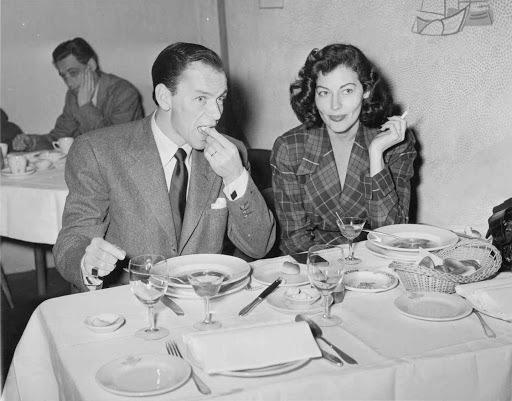
    <summary type="html"><![CDATA[<p><strong><em>Sinatra established residency at the Riverside Hotel where he sang as he filed for divorce from his first wife. </p></strong></p><img src="https://www.intermountainhistories.org/files/fullsize/1c311385456d211225d9b62d734deedf.jpg" alt="Frank Sinatra and Ava Gardner" /><br/><p>The Riverside Hotel became a temporary home to many as the divorce colony blossomed. Its walls evolved and expanded over the 20th century. In 1951, Frank Sinatra came to establish a Nevadan residence to divorce his first wife and sang at the Riverside Hotel during his stay.</p><p>Years before his 1951 divorcee debut in Reno, a twenty four year-old Frank and nineteen year-old Nancy were wed thousands of miles away from the Riverside Hotel. Young Frank and Nancy Sinatra were married in 1939 just as Frank was beginning to sing in a successful band. </p><p>The two were married for eleven years and had three children. Eventually Frank’s fame grew and rumors of infidelity spread. Over time, one extramarital relationship took on greater importance in Sinatra’s life than all the others. Sinatra sought a divorce from Nancy in 1950 per his lover Ava Gardner’s request. On February 14, 1950, Nancy and Frank announced their intent to divorce. His journey towards Reno began.  </p><p>The once humble and now legendary Frank Sinatra arrived in Nevada on August 9, 1951. Newspapers across the country and around the world bore his name that day, announcing his movement towards divorce. While he established residency, his voice filled the Riverside Hotel for six weeks as he performed for visitors and residents. Frank did not come alone, however. On August 18th, a familiar brunette arrived at Lake Tahoe to stay with friends. From that day, Sinatra was accompanied by his new love interest and intended wife, Ava Gardner. </p><p>Complexity filled Sinatra’s time at the Riverside Hotel. His ties to the mob intensified as Lucky Luciano, a known mob member, visited Sinatra in the gambling town. Evidently, Sinatra mingled with the famous and the infamous while seeking the usual Reno cure. Clark Gable also visited Sinatra in August. This visit to the divorce haven spurred questions of Gable’s own intent to divorce. </p><p>Newspapers across the country noted Sinatra’s schedule while residing in the divorce capital. The Des Moines Tribune noted on August 24, that Ava Gardner, Clark Gable, and Frank Sinatra had plans to go on a fishing trip together. </p><p>Gable and Sinatra also spent time at the Riverside Casino. Their time was documented by newspapers that mentioned Gable’s presence and Sinatra’s lack of finances. At the time, Sinatra’s fame had been dwindling and rumors of Sinatra’s troubled financial situation mounted.</p><p>In an article documenting Gable’s presence, the Gazette also notes, “Sinatra is crooning for his supper at the Riverside.” Sinatra performed in Reno’s Riverside until August 22. Gardner and Sinatra relocated to Las Vegas for another singing engagement before he completed his six week residency at the end of September. He ultimately received his divorce in Las Vegas.</p><p>The day after Sinatra’s divorce, the duo applied for a marriage license. Some newspapers note that twenty-four hours had not passed from the time Sinatra was divorced from Nancy before applying for the marriage license with Gardner. Frank Sinatra and Ava Gardner left the Nevadan communities they’d called home to marry at Isaac Levy’s home in Pennsylvania on November 7, 1951. </p><p><em><strong><a href="https://www.intermountainhistories.org/items/show/352">For more (including 3 images) view the original article</a></strong></em></p>]]></summary>
    <published>2019-10-01T20:23:37+00:00</published>
    <updated>2026-04-17T19:32:06+00:00</updated>
    <link rel="alternate" type="text/html" href="https://www.intermountainhistories.org/items/show/352"/>
    <id>https://www.intermountainhistories.org/items/show/352</id>
    <author>
      <name>Ann Johnston, Brigham Young University</name>
    </author>
  </entry>
  <entry>
    <title type="html"><![CDATA[Judge Bartlett’s Legacy]]></title>
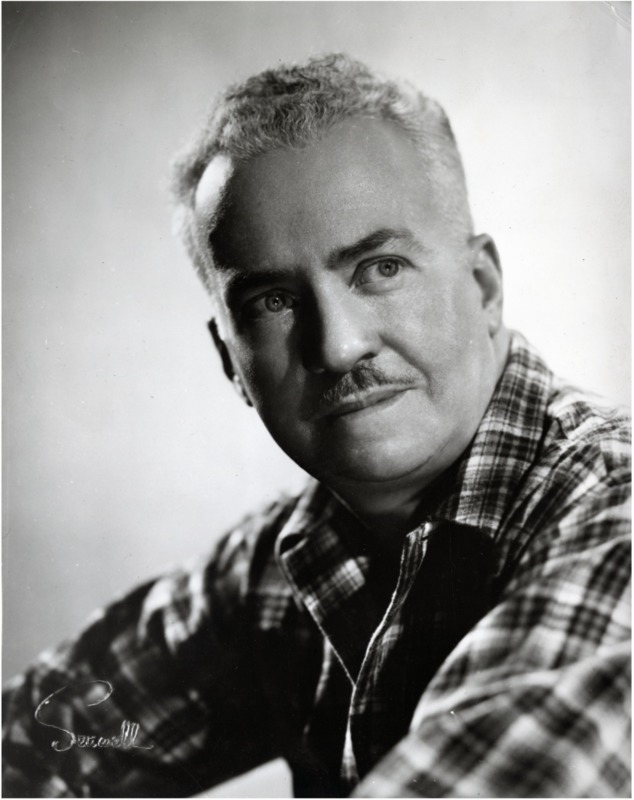
    <summary type="html"><![CDATA[<p><strong><em>A Reno judge witnessed and shaped the evolution of the Nevada divorce haven.</em></strong></p><img src="https://www.intermountainhistories.org/files/fullsize/6b37d5ae2f19cbd173ff378d9d2d0854.jpg" alt="The Cure" /><br/><p>Reno’s honorable Judge Bartlett presided over divorce proceedings and served as and attorney in the early 20th century. Bartlett was revered by his clients and received heavy criticism for his role in Reno divorces. Through his books and his presence in the community and the courtroom, Bartlett serves as an iconic symbol of Reno divorce. </p><p>George Arthur Bartlett was born in 1869, graduated from Georgetown Law in 1894, and became a district attorney of Eureka County in 1899. He also married Pearl Gates in 1899 and joined the marital institution he would later criticize. </p><p>After serving as district attorney, he represented Nevada as a House Representative in 1907. He served as a representative until 1911 and then worked as a law partner.</p><p>Bartlett first became a judge in 1918. He served in the district courts for decades where he caused Nevada’s divorce proceedings to become more lenient. As a judge, he is most widely associated with divorce, but he also married couples. After marrying a couple, he was known to ask the groom, “How much is she worth to you?” The groom might hand the judge all the money in his pockets and the judge would give that money to the bride. Judge Bartlett’s unique approach became iconic. However, in 1931, he was replaced by Judge Ben Curler after controversy over a child custody case cost him the election. </p><p>After years on the bench of the district court, Bartlett wrote a book drawing from his experience as a judge. His book “Men, Women, and Conflict” sparked controversy in questioning the efficacy of marriage. Bartlett republished the book in 1947 under a more provocative title, “Is Marriage Really Necessary?”</p><p>When he lost his seat as district judge, Bartlett turned to private practice. Through his experience as both judge and attorney in Reno, Nevada, Judge Bartlett was the divorce expert for the nation. He received streams of letters from potential divorcees asking for advice, from children pleading for the judge not to allow their parents’ divorce, and criticism for his liberal views. </p><p>Judge Bartlett’s clients often felt a strong sense of endearment to the man as evidenced by letters from high profile clients such as Tellulah Bankhead. He continued practicing law for decades and was practicing law at the time of his death.</p><p>The local newspapers reported the 81-year-old’s fall which broke his hip in March 1951. This article was followed by his obituary a few months later. He died on June 1, 1951 as a judge, attorney, U.S. representative, husband and father. </p><p>It appears Bartlett was a family man. His daughter Dorothy offered housing accommodations to his clients seeking residency. He was known to host gatherings in his home and walk his red setter dog around the town. Although he wrote criticisms of marriage and helped with the dissolution of countless marriages, Bartlett remained married to Pearl throughout his life. </p><p><em><strong><a href="https://www.intermountainhistories.org/items/show/351">For more (including 4 images) view the original article</a></strong></em></p>]]></summary>
    <published>2019-10-01T19:59:42+00:00</published>
    <updated>2026-04-17T19:32:06+00:00</updated>
    <link rel="alternate" type="text/html" href="https://www.intermountainhistories.org/items/show/351"/>
    <id>https://www.intermountainhistories.org/items/show/351</id>
    <author>
      <name>Ann Johnston, Brigham Young University</name>
    </author>
  </entry>
  <entry>
    <title type="html"><![CDATA[Reno Residence Options Evolve With Residency Law]]></title>
    <summary type="html"><![CDATA[<p><strong><em> The lowering of residency requirements caused Reno housing options to expand.</em></strong></p><img src="https://www.intermountainhistories.org/files/fullsize/d3ed162ddf5fc6fdc24f072de821c426.jpg" alt="Cornelius Vanderbilt" /><br/><p>News of Laura Corey’s divorce brought hopeful divorcees to Reno in droves. To augment the influx of divorcees and improve the state’s reputation, the state legislature voted to lengthen the time required to establish residency in 1913. The state increased the required six-month residency to one year to slow the draw of divorcees. However, amidst competing divorce havens, Nevada’s economic success came to a halt. Therefore, just two years later, in 1915, the legislature remitted the change and the six-month residency was reinstated. The divorce mecca was restored. Divorcees continued to cycle through the town throughout that decade and into the next.</p><p>The fluctuating residency requirement shifted again in 1927 as six month stays were reduced to three months. However, as the Great Depression hit, divorces around the country waned. In 1931, Nevada combatted the economic devastation by legalizing gambling and amending the state residency requirement. Suddenly, residency could be established and divorces obtained in a mere six weeks. By offering the easiest divorces and the forbidden sport of gambling, Nevada found financial respite in one of the most devastating economic crises. </p><p>With their sights on the 1927 revisions to the state’s divorce law, forthcoming hotel owners lobbied to support the reduction in residency requirement. As a result, two massive hotels were constructed to accommodate the anticipated influx of visitors. The El Cortez Hotel and the Riverside Hotel would continue to expand over the 19th-century. </p><p>This growth of housing opportunity in Reno would explode and diversify in the coming decade. After the residency requirements were shortened once again in 1931, the city’s population continued to swell and more divorcees began to briefly call Reno home. The town’s expanding population was supported by the city’s accommodations. The housing accommodations varied to fit the range of economic backgrounds flocking to the city.</p><p>The emergence of guest ranches in the 1920s offered alternative housing for Reno divorcees. In 1927, Cornelius Vanderbilt Jr. opened the luxurious Lazy Me Dude Ranch which was equipped with private baths for posh visitors like Amelia Earhart.  Lavish accommodations like Vanderbilt’s contributed to an increase in affluent visitors and Reno offered divorces to many prominent figures during the early 1930s.  In a span of three years, Dale Carnegie (1931) General MacArthur (1929), and Norman Rockwell (1930) all received Reno divorces either by their spouse’s trek to the city or by their own Reno relocation.  </p><p>Dude ranches offered housing at lower costs and subsequently offered the possibility of divorce to those with less financial security. On these ranches, labor may be required to fulfill housing costs. While some found peace and solace in a cost-effective stay on a ranch, other visitors found themselves spending their six-weeks at a luxurious six story hotel. Reno’s economic opportunity offered a variety of housing options for those seeking dicorves. While housing and entertainment expanded, the Washoe Courthouse remained Reno’s greatest attraction as the courthouse flooded with divorce decrees.</p><p><em><strong><a href="https://www.intermountainhistories.org/items/show/350">For more (including 3 images) view the original article</a></strong></em></p>]]></summary>
    <published>2019-09-28T03:14:49+00:00</published>
    <updated>2026-04-17T19:32:06+00:00</updated>
    <link rel="alternate" type="text/html" href="https://www.intermountainhistories.org/items/show/350"/>
    <id>https://www.intermountainhistories.org/items/show/350</id>
    <author>
      <name>Ann Johnston, Brigham Young University</name>
    </author>
  </entry>
  <entry>
    <title type="html"><![CDATA[Evolution of the Riverside Hotel]]></title>
    <summary type="html"><![CDATA[<p><strong><em>One prominent building built in 1870 evolved with the Reno divorce colony.</em></strong></p><img src="https://www.intermountainhistories.org/files/fullsize/d18534375041f0583d63e6790a9d418f.jpg" alt="Riverside Hotel 1880" /><br/><p>The Riverside Hotel witnessed the emergence of Reno’s divorce haven. It sits on the Truckee River and was central to Reno’s divorce history. The 20th century hotel evolved from an 1870s home.  The house was dubbed The Lake House after its owner Myron C. Lake. It was purchased by Lake’s family in 1880 and was given its famous name, Riverside. This first sale of the building would begin a long pattern of transferring ownership.</p><p>The hotel was sold again in 1896, this time to Harry Gosse. Gosse rebuilt the Riverside into an extravagant hotel. The Riverside was transformed from a home into a modern three story hotel at the turn of the 20th century. After its debut in 1907, Gosse’s hotel held prestige in the community for over a decade. The hotel had 110 rooms and touted ornate architecture amid its brick exterior. However, this grand version of the Riverside was destroyed by fire in 1922. </p><p>After the fire, the historic property was sold to George Wingfield in 1924. Wingfield found a local architect to rebuild Riverside into a six-story building. Wingfield lobbied for a shorter residency period to prepare for his hotel’s grand opening in 1927. Wingfield knew a reduction of the residency requirement from six months to three months would bring security to his massive hotel. With the legislation in place, his hotel was filled with an influx of divorcees. Just after residency was reduced, greater draw to Nevada came in 1931 with the state’s legalization of gambling. The Riverside met that legal opportunity by opening a casino in 1935. </p><p>While the Riverside Hotel’s business for gambling grew, a young divorced mother worked at a neighboring club. In the late 1930’s Jessie Beck worked at a gambling club alongside her second husband, Fred Beck. When Fred passed away in 1954, Jessie took over the games and grew to be a more prominent figure in Reno. Jessie’s decades of experience at the club prepared her with the business acumen and sense of hospitality which supported her in her 1971 purchase of the Riverside Hotel. After the three million dollar purchase, Jessie added her name to the hotel’s signage after purchasing the hotel. </p><p>The Riverside Hotel lays claim to many different owners. Through reconstruction and sell outs, the hotel maintains a legacy for the people it housed throughout Reno’s time as a divorce haven. George Wingfield had sold the building in 1955 in the height of Reno’s divorce haven heyday. He had owned the hotel as the residency period shortened in 1931 and sold before other states lessened obstacles to divorce in the 1960’s. By Jessie Beck’s death in 1987, the city had entirely lost its national draw as a divorce haven. The Riverside hotel serves as a monument to housing and hospitality for divorcees throughout Reno's history. </p><p><em><strong><a href="https://www.intermountainhistories.org/items/show/349">For more (including 7 images) view the original article</a></strong></em></p>]]></summary>
    <published>2019-09-28T02:45:38+00:00</published>
    <updated>2026-04-17T19:32:06+00:00</updated>
    <link rel="alternate" type="text/html" href="https://www.intermountainhistories.org/items/show/349"/>
    <id>https://www.intermountainhistories.org/items/show/349</id>
    <author>
      <name>Ann Johnston, Brigham Young University</name>
    </author>
  </entry>
  <entry>
    <title type="html"><![CDATA[President of U.S. Steel Gets Renovated]]></title>
    <summary type="html"><![CDATA[<p><strong><em>Prominent figure Laura Corey filed for divorce in Reno and brought the national spotlight to the divorce haven. </em></strong></p><img src="https://www.intermountainhistories.org/files/fullsize/0243116008dcc5c4bdabb5fc0863d05b.jpg" alt="Laura Corey" /><br/><p>Reno first met Laura Corey in December 1905 as she came seeking a divorce from her husband. William Ellis Corey was President of U.S. Steel and previously the president of the Carnegie Steel Company. Laura and William had married in 1883 with meager financial conditions but the president of U.S. Steel had left Laura for actress Mabelle Gilman. </p><p>At this prominent woman’s arrival in Reno, rumors began circulating that William and Laura Corey’s marriage would soon be 'Renovated,' a term later used to describe a Reno divorce. </p><p>The Corey family was a prominent one. The news spread of Laura Corey’s relocation to a place widely known to draw those seeking a divorce. Subsequently, newspapers across the country began following Mrs. Corey and cast predictions of an imminent divorce. Once Corey’s intent to divorce was confirmed, newspapers around the country highlighted Reno. Laura Corey’s quickie divorce propelled the city’s reputation as a divorce capital. </p><p>In the early 1900’s, Nevada law required a six-month stay to establish residency. Once an individual had obtained residency, they could seek a Nevada divorce. </p><p>While in Nevada, Laura Corey and her son Alan Corey were joined by her sister-in-law, Miss Ada Corey. Ada and Laura Corey seemed to  immerse themselves in the community, according to local newspapers. Laura Corey and her son resided at the elegant R. L. Fulton Home. </p><p>Relocating across the country for six months generated great expense. However, with her means, Corey experienced a comfortable stay in Reno. In 1900, those who could migrate to obtain a Reno divorce had wealth and means. Over  time, with transportation advances and Reno’s developing accommodations, middle class Americans could come to sever their marital ties. </p><p>Laura Corey filed for divorce on June 11, 1906 and the trial would take place on the last day of July. On July 24th, William Ellis’ family flocked to Reno for the divorce proceedings and testified in favor of Laura. </p><p>The divorce hearing was held at ten o’clock in the morning on Monday, July 31, 1906. Laura Corey had solicited the legal help of an east-coast attorney for her divorce. However, in coming years the city of Reno would swell with capable divorce attorneys. Laura was awarded $3 million in the divorce settlement. Crowds of newspapermen surrounded the Washoe County Courthouse to catch the first sight of the newly-divorced Corey. </p><p>In the wake of the divorce, a newspaper in the Corey’s home state of Pennsylvania noted, “The Carnegie Steel Company will drill a well 6000 feet. What an excellent hole for President Corey to crawl into.” The nation’s eyes were rested upon the Corey’s and the pains of such a public divorce. However, this publicity ultimately supported divorce migration to Reno for years to come. </p><p><em><strong><a href="https://www.intermountainhistories.org/items/show/348">For more (including 3 images) view the original article</a></strong></em></p>]]></summary>
    <published>2019-09-28T02:32:40+00:00</published>
    <updated>2026-04-17T19:32:06+00:00</updated>
    <link rel="alternate" type="text/html" href="https://www.intermountainhistories.org/items/show/348"/>
    <id>https://www.intermountainhistories.org/items/show/348</id>
    <author>
      <name>Ann Johnston, Brigham Young University</name>
    </author>
  </entry>
  <entry>
    <title type="html"><![CDATA[Russell’s Renovation]]></title>
    <summary type="html"><![CDATA[<p><strong><em>The divorce of a British Earl in 1901 brought Reno international attention for easy divorces.</em></strong></p><img src="https://www.intermountainhistories.org/files/fullsize/821f45bf9e1973e59264f5b6ff07f564.jpg" alt="[Untitled]" /><br/><p>At the dawn of the 20th century, Nevada’s divorce laws required six months to establish state residency and offered seven grounds for divorce. The state’s liberal divorce laws and ease for establishing residency drew interest across the world, including a British Earl hoping to be remarried. John Francis Stanley Russell’s migration to Nevada sparked an international reputation for the budding divorce industry. Russell was a member of the House of Lords and a member of British royalty. He arrived in Glenbrook, Nevada in 1899 with Mollie Somerville. He and Mollie maintained a six-month state residency in the Glenbrook House on Lake Tahoe.</p><p>Six months later, in the spring of 1900, the Earl received his divorce. Judge Ben Curler served as the judge for Russell’s divorce in the city of Genoa. The judge then accompanied the couple to Reno where the trio ventured to Riverside Hotel. Three days after the Earl’s April 12th divorce, Curler officiated the wedding of Mollie Somerville and Earl Russell. After the marriage, the newlyweds returned to England where legal trouble ensued.</p><p>In 1895, before the Earl’s divorce migration, his first wife Mabel had sought judicial separation from the Earl which was denied her but eventually granted to the Earl as he brought up charges against his wife. Though legally separated, the two were not divorced in England’s eyes. This difference of legality between countries sparked intrigue to the efficacy of Nevada divorces. </p><p>While Russell’s Nevadan divorce was not recognized, his Nevada marriage to Mollie was recognized. The Earl was arrested for bigamy on June 17, 1900. He was tried before the House of Lords, the chamber of Parliament of which he was part, and sat before his peers in judgement. The American judge who ruled Russell’s divorce and married the two divorcees in Nevada, Judge Curler, was summoned to England to testify for the prosecution. Russell pleaded guilty to the charges and was sentenced to three months in prison. For the rest of his life, Russell worked to reform British divorce laws though he would not see his advocacy realized. In part due to the legal attention of an imprisoned English Lord, Russell’s global migration for divorce cast the eyes of the world to Reno’s tolerant divorce laws and this media attention served as a catalyst to the emerging divorce haven.</p><p><em><strong><a href="https://www.intermountainhistories.org/items/show/347">For more (including 5 images) view the original article</a></strong></em></p>]]></summary>
    <published>2019-09-28T02:18:16+00:00</published>
    <updated>2026-04-17T19:32:06+00:00</updated>
    <link rel="alternate" type="text/html" href="https://www.intermountainhistories.org/items/show/347"/>
    <id>https://www.intermountainhistories.org/items/show/347</id>
    <author>
      <name>Ann Johnston, Brigham Young University</name>
    </author>
  </entry>
  <entry>
    <title type="html"><![CDATA[Making the Divorce Capital of the World]]></title>
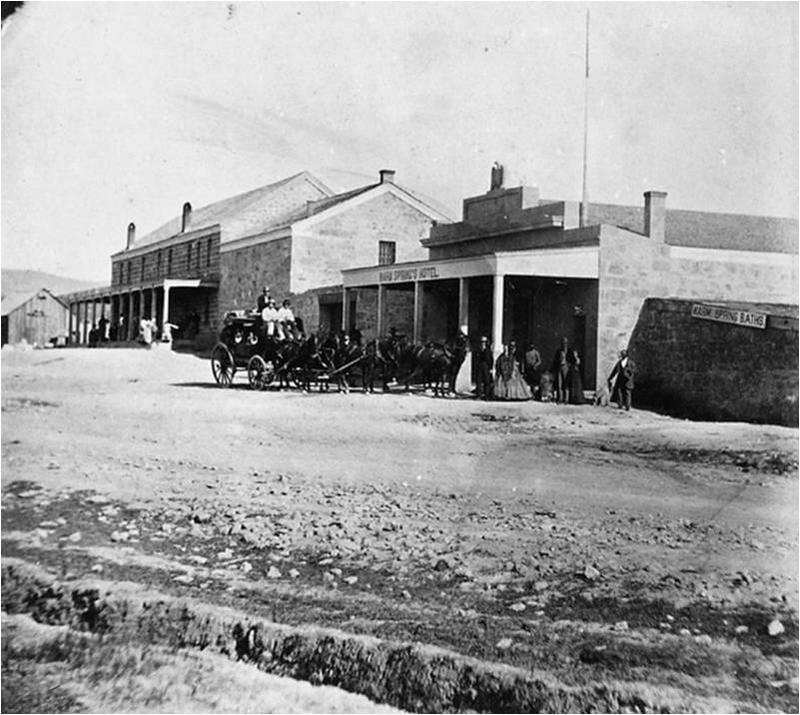
    <summary type="html"><![CDATA[<p><strong><em>Divorce blossomed in the American west though the emergence of Nevada’s statehood and lenient divorce laws.</em></strong></p><img src="https://www.intermountainhistories.org/files/fullsize/aba27889d61cd8ebc9fc597b5042952b.jpg" alt="The Warms Springs Hotel" /><br/><p>For the majority of the 20th century, Reno, Nevada served as the divorce capital of the world. The state offered easy divorce requirements at a time when most states discouraged divorce through complex legal barriers. Nevada’s comparatively lax requirements for divorce demonstrated the early evolution to normality of divorce evident today.  </p><p>Modern divorce stems from ancient Rome.  Romans bore liberal views of divorce when compared to the strict marital laws of England that are most evident in chaotic attempts by English ruler Henry the VIII to be released from marriage. While King Henry and his many wives received annulments rather than divorces, 1,500 years earlier Romans allowed men and women to seek divorce. English and Roman precedents bore lasting influence on world perspectives of ending marital commitments. </p><p>Hundreds of years after King Henry’s marital discords, a country emerged across the sea. America held a flourishing population and new marital laws. American divorce was bred by Roman and English influences but took innovative turns. In the early 20th century, American states held varied qualifications for divorce. Many states held extensive requirements to prevent divorce, New York being the most extreme.  New York demanded evidence of adultery for grounds for divorce. Others states like Nevada offered comparative ease of nuptial dissolution. One Colorado newspaper noted Nevada’s lenient laws on their front page, “extreme stinginess is considered a sufficient cause for divorce in Nevada court.” </p><p>Interstate influences were paramount in developing the divorce haven. Nevada’s lenient divorce law drew from Utah’s divorce traditions. The neighboring Utah territory held liberal qualifications like “incompatibility” as grounds for divorce. These lenient divorce requirements accommodated women trying to leave unhappy polygamous situations. However, so liberal was Utah’s divorce law, Nevada dropped Utah’s no-fault divorce in their adaptation of divorce law. Although Utah offered more liberal divorces, Nevada welcomed more out of state divorcees who could obtain residency more easily. This low residency requirement fostered  the migratory divorce trade and opened Nevada’s lenient divorces to unhappy couples all over the country.</p><p>The territory’s first legislature met and established foundational laws between October and November of 1861 in the upper room of the Warm Springs Hotel. The hotel was located in the recently established legislative city of Carson City which would become the state capital. When the state of Nevada emerged in 1864, the divorce laws bore minimal changes from those established in the territory’s 1861 legislature.  </p><p>Nevada’s liberal grounds for divorce drew divorce tourism which offered economic growth for the western territory. In offering a unique ease of dissolution to marriage, Nevada found economic growth in providing a home to the divorce tourists. Nevada encouraged a divorce migration by pairing liberal grounds for divorce with short residency requirements to allow people from other states to benefit from the state’s liberal divorce laws. With easier divorcements and quick residency, many unhappy wives and husbands came flocking to the city of Reno which teemed with housing and cultural accommodations for divorcees.</p><p><em><strong><a href="https://www.intermountainhistories.org/items/show/346">For more (including 3 images) view the original article</a></strong></em></p>]]></summary>
    <published>2019-09-28T02:00:38+00:00</published>
    <updated>2026-04-17T19:32:06+00:00</updated>
    <link rel="alternate" type="text/html" href="https://www.intermountainhistories.org/items/show/346"/>
    <id>https://www.intermountainhistories.org/items/show/346</id>
    <author>
      <name>Ann Johnston, Brigham Young Universty</name>
    </author>
  </entry>
</feed>