<?xml version="1.0" encoding="UTF-8"?>
<feed xmlns="http://www.w3.org/2005/Atom">
  <title type="text">Intermountain Histories</title>
  <updated>2026-04-17T19:32:19+00:00</updated>
  <generator uri="http://framework.zend.com" version="1.12.20">Zend_Feed_Writer</generator>
  <link rel="alternate" type="text/html" href="https://www.intermountainhistories.org/"/>
  <link rel="self" type="application/atom+xml" href="https://www.intermountainhistories.org/items/browse?output=rss2"/>
  <id>https://www.intermountainhistories.org/</id>
  <author>
    <name>Intermountain Histories</name>
    <uri>https://www.intermountainhistories.org</uri>
  </author>
  <link rel="hub" href="https://pubsubhubbub.appspot.com/"/>
  <entry>
    <title type="html"><![CDATA[Our Lady of the Rockies]]></title>
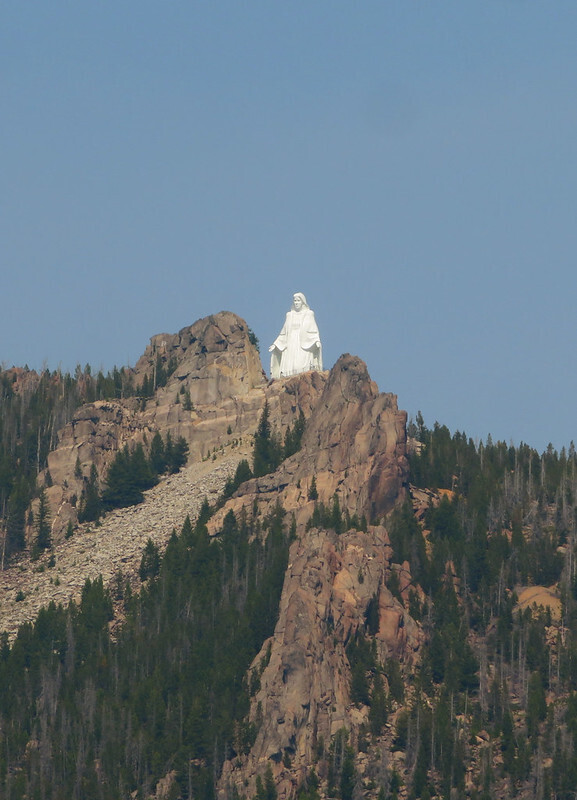
    <summary type="html"><![CDATA[<p><strong><em><em>Our Lady of the Rockies </em>looks out across the city of Butte, Montana with arms stretched wide from a vantage of some 3,500 feet above the city, and weighing over 50 tons.</em></strong></p><img src="https://www.intermountainhistories.org/files/fullsize/c4ae7467ddb2ea3d296e2b06e342e9ae.jpg" alt="Our Lady of the Rockies. " /><br/><p>The statue project began with Bob O’Bill, who, in 1979 made a plea with God in hopes that his bed-ridden wife Joyce would make a full recovery. When she did, O’Bill began to discuss with his peers the logistics of building the statue. As word spread about the building project, an overwhelming amount of support arose, making the statue a community project. The initial plan for the six-foot statue with community support soon grew to a project that would be over 90 feet tall. Though some thought that the project was strictly Catholic, project sponsors took care to present it as a community effort which symbolized “the dignity of motherhood and the sacrificial love a mother has for her child.” Community pride has always been strong in Butte, extending back in Butte's mining history in the 19th century. Whenever the future was uncertain, the community of Butte banded together and cared for each other. This bond and the meaning behind the statue are both driving factors in what makes Butte’s community so special. </p><p>Supplies including paint, food for workers, and enough iron and steel to build the statue, were all gifted to the project by donors. A major contributor to the project, Joe Roberts, was connected to O’Bill through Ann Nettles, who knew Joe to be a guy whot took up outlandish projects. Once he familiarized himself with the project and got over how crazy he thought it to be, Robert’s Rocky Mountain Equipment Co. discussed a plan to put up the statue, ensuring that it was done safely with high stability. Roberts grew to have a major role in the project, raising funds, donating the use of his equipment, and even providing one thousand dollars to start off the construction fund. From there the community took care of the rest. </p><p>After six years of trouble-shooting technical difficulties, the statue was finally ready to assemble on the mountain top. On December 17, 1985, the statue was lifted in four sections by the Nevada Air National Guard Team and assisted by the Army Reserve stationed in Butte, as well as the Montana National Guard. Today Our Lady of the Rockies continues to show civic generosity through the volunteers that keep the statue up and running so that it may be able to show hope and optimism to inspire generations to come.</p><p><em><strong><a href="https://www.intermountainhistories.org/items/show/862">For more (including 4 images) view the original article</a></strong></em></p>]]></summary>
    <published>2024-10-18T13:00:52+00:00</published>
    <updated>2026-04-17T19:32:19+00:00</updated>
    <link rel="alternate" type="text/html" href="https://www.intermountainhistories.org/items/show/862"/>
    <id>https://www.intermountainhistories.org/items/show/862</id>
    <author>
      <name>Logyn J. Klebe, Rocky Mountain College</name>
    </author>
  </entry>
  <entry>
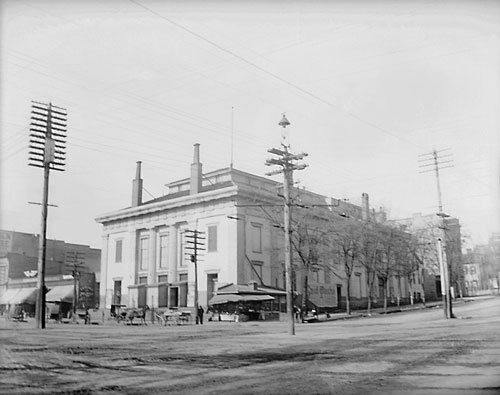
    <title type="html"><![CDATA[The Salt Lake Theatre: Brigham Young&#039;s Love Letter to Theater Out West]]></title>
    <summary type="html"><![CDATA[<p><strong><em>The creation of the Salt Lake Theatre was led by Brigham Young and supported by the Church of Jesus Christ of Latter Day Saints in 1862. The Theatre was the most decorated building in Utah territory before the Salt Lake City Temple and Tabernacle were constructed. Its 66-year run brought entertainment and enjoyment to early Utah settlers.</em></strong></p><img src="https://www.intermountainhistories.org/files/fullsize/5d59a9a867f7c3f8c5b35d2310be0c7e.jpg" alt="An Exterior View of the Salt Lake Theatre. Salt Lake City, Utah, 1900. " /><br/><p>Early LDS church leaders were fond of artistic expression to bring culture, entertainment, and refinement to the Salt Lake Valley. In 1852, just a few years after settling in Utah, Brigham Young decided it was time to bring theater back into the lives of the saints, forming The Deseret Dramatic Association. These Saint-actors performed at the Social Hall for five years, marking a vital advancement to society in the West. Unfortunately, the Utah War made the stage go dark for a few years. It returned when Phill Margaretts created The Mechanics Dramatic Association in 1859, which sponsored plays that were not affiliated with the church. In response, Brigham Young decided it was time to create a permanent stage where he could control the actors, scripts, and overall impression of the theater.</p><p>It was the perfect timing in Utah History for the construction of a gathering place to enjoy the arts. Initially, Brigham Young intended to build a dance hall. Instead, he determined to create “a model playhouse for producing professional theatre.” Construction of the Salt Lake Theatre began in July 1861 and was completed by March the following year at a cost of around $100,000. The architect was William H Folsom, with E. L. T. Harrison designing the interior. The theatre had room to hold an audience of 1500. Throughout Utah’s territorial history, the LDS church and the growth of Utah’s economy went hand and hand. The theater was just one of many buildings and ventures that were sponsored by the church. Because Young used church funds to finance the Salt Lake Theatre he guided its operation.</p><p>A dedication was held to honor this “temple of drama,” built to bring wholesome amusement and moral guidance to its patrons. The theater became a huge success. Thomas Lyne, a professional actor who had joined the church and promoted theater in Nauvoo, was instrumental in the popularity of plays presented there. The success of The ‘Mormon theater’ sparked the interest of many famous actors and drew them to Utah throughout its 66-year run. Several famous actresses, including Maude Adams, who later pioneered the role of Peter Pan on Broadway, played their first roles in Salt Lake City. The building was used not only for local arts but it hosted political events and eventually touring performing groups coming through Salt Lake City. Despite Young’s original vision, over time the theater welcomed people of all religious backgrounds and secular attitudes. Throughout its history, the theater played a significant role in the culture of Salt Lake City. Unfortunately, the creation of many new vaudeville theaters and Utah’s economic downturn of 1920s drove the theater into deep debt. People desperate for basic needs could not afford to attend shows. In addition, the building needed renovations. The president of the Church, Heber J. Grant, closed the theater and sold the building. In 1928 it was demolished–a great loss of a cultural icon to Utah and the United States.</p><p><em><strong><a href="https://www.intermountainhistories.org/items/show/779">For more (including 4 images) view the original article</a></strong></em></p>]]></summary>
    <published>2024-02-23T15:13:08+00:00</published>
    <updated>2026-04-17T19:32:17+00:00</updated>
    <link rel="alternate" type="text/html" href="https://www.intermountainhistories.org/items/show/779"/>
    <id>https://www.intermountainhistories.org/items/show/779</id>
    <author>
      <name>Mikenzie Moon, Brigham Young University</name>
    </author>
  </entry>
  <entry>
    <title type="html"><![CDATA[Dark Sky over Thunder Mountain Pootseev Nightsky]]></title>
    <summary type="html"><![CDATA[<p><strong><em>Named the first “Dark Sky Nation,” Thunder Mountain Pootseev Nightsky, on the Kaibab Paiute Reservation, is the first ethnically and culturally homogenous community to unanimously adopt practices for preserving the natural sky.</em></strong></p><img src="https://www.intermountainhistories.org/files/fullsize/25e28682944c04542490c757c80e7f2d.jpg" alt="Night sky over Kaibab" /><br/><p>In 2015, the International Dark Sky Association accepted the Kaibab Paiutes’s application to acknowledge their reservation on the borderlands of Utah and Arizona as a Dark Sky Community. International Dark Sky Community’s official name, Thunder Mountain Pootseev Nightsky, uses the Southern Paiute language to recognize the importance Kaibab Paiute culture places on Thunder Mountain and the night sky.
The Kaibab Paiutes’ recognized history in Utah and Arizona began when they entered the Colorado Plateau around 1150 CE, living off the land by hunting and foraging. Since then, the Kaibab Paiutes’ culture has emphasized being responsible for protecting and sustainably managing natural resources due to a history of conflict over resources. members of The Church of Jesus Christ of Latter-day Saints—sometimes nicknamed “Mormons” in that time—began forming settlements on the Colorado Plateau in the 1860s. Despite generous efforts by indigenous peoples elsewhere in the Intermountain West to accommodate and live peacefully with the overwhelmingly Euro-American newcomers, who had initially arrived in the Salt Lake Valley in 1847, by the 1860s the Latter-day Saints’ growing population of new arrivals and extractive agricultural practices were increasingly incompatible with indigenous ways of life, including those of the Kaibab Band of Paiutes. The Latter-day Saints who settled the Colorado Plateau cut down trees and other flora which grew on the of the Kaibab Paiutes’ homeland, and they took control of springs and wells for farm irrigation. No evidence exists of this group of Mormons attempting to purchase any plots or use rights, and they apparently simply seized the land without offering any compensation.
Within a few years, the Mormons’ terraforming destroyed the Kaibab Paiutes’ farmland and degraded the landscape so much it could no longer support wildlife. To make way for farms and pastures, they had also cut down the Kaibab Paiutes’ piñon pine trees, whose edible nuts were a major food source that might have otherwise helped them stave off starvation. Having lost the natural world which once supported them, to survive, many of the Kaibab Paiutes had to relocate to camps near Mormon settlements and take jobs.  About 90% of the Kaibab Paiute population died from starvation and other difficult changes stemming from the relocation.
The local Mormons justified their conquest of the land and people with the common Euro-American settler-colonial myth that the indigenous Paiutes were not properly utilizing the land. Though manifestly untrue—nineteenth-century Euro-Americans simply did not recognize the Kaibab Paiutes’ foodways and agricultural and hunting practices—the sting of that myth has not been forgotten. After the U.S. government created the Kaibab Paiute reservation on May 28, 1909, the people resolved to never let their natural resources be wasted or depleted now that they had land designated specifically for Kaibab Paiutes. Minerals and wildlife were the natural resources originally focused on for preservation and compensation when harmed or exploited by outside parties. This conservationist attitude extended to the night sky when the Kaibab Paiute become aware of how light pollution threatened their natural skies, and by 2015, every light in the 250-person community was modified to be night sky friendly.
Celestial observation was a part of many Great Basin mythologies, and the Kaibab Paiutes were no exception. One myth, called Mountain Sheep in the Sky, is about how the three large stars that may make up Orion’s belt are three mountain sheep being chased westward by a Sheep Trailer who shoots the middle sheep.  Other versions of the myth exist with a blind man named Puiat as the hunter, different animals such as antelopes, and even a tale of conflict between beings like Coyote and Mountain Lion. Another tale about the same constellation describes a wife perpetually chasing after her baby and two husbands who left her since she did not work hard enough to satisfy the family. Roland Maldonado, Tribal Chairperson, and Daniel Bulletts, Environmental Program Director, in 2015 spoke of how preserving their night skies would restore value to the traditions of celestial observance.  The night skies provide a backdrop for teaching younger generations stories about culture or lessons in morality, and Thunder Mountain Pootseev Nightsky has chosen to defend that educational tradition for their heritage and ecological conservation.</p><p><em><strong><a href="https://www.intermountainhistories.org/items/show/542">For more (including 3 images) view the original article</a></strong></em></p>]]></summary>
    <published>2021-11-14T04:38:53+00:00</published>
    <updated>2026-04-17T19:32:11+00:00</updated>
    <link rel="alternate" type="text/html" href="https://www.intermountainhistories.org/items/show/542"/>
    <id>https://www.intermountainhistories.org/items/show/542</id>
    <author>
      <name>Emma Svenson, Northern Arizona University</name>
    </author>
  </entry>
  <entry>
    <title type="html"><![CDATA[The Polysophical Society]]></title>
    <summary type="html"><![CDATA[<p><strong><em>The Polysophical Society was an intellectual and cultural society held in the home of Lorenzo Snow from 1854-1856. </p></strong></p><img src="https://www.intermountainhistories.org/files/fullsize/83495cfadd7d9042ba0f89d135a943e8.jpg" alt=" Lorenzo Snow Brigham Street Home" /><br/><p>On December 20, 1854, siblings Lorenzo Snow and Eliza R Snow formed the Polysophical Society, where plays, poetry, music, orations, and other spectacles were performed. Eliza described that it was a “gathering for social, literary, and a general cultivation for mind and manners” and a “magnificent moral, intellectual, and spiritual picnic.” The group meet weekly in the home of Lorenzo Snow on the Southeast corner of South Temple and Third East in Salt Lake City. One of its members, Henry Naisbitt, described the society as “the first nucleus of a varied intellectual character in the Church and its speedily drew toward itself the lion’s share of that latent talent which through the gathering, gravitated to Salt Lake City.”</p><p>For a typical Polysophical Society meeting, Lorenzo’s home was “decorated in a manner to correspond to the occasion” according to Eliza. Each member was allowed no more than fifteen minutes for their performance. The acts were typically all planned and arranged beforehand. Many different types of instruments were played such as the guitar, organ, piano, violin, bagpipe, flute, and clarinet. Dramatic productions were often performed in French, Italian, or English. Many of the members also wrote poetry for the meetings. Eliza, as well as other poets such as Martha S. Heywood, penned several poems discussing a range of spiritual, social, and economic issues that they read for the society.</p><p>Eliza described, that “throughout the city quite a sensation was created...many came to my brother and with persistent earnestness begged admittance.” Soon the meetings were too large to be held in Lorenzo’s home and were often held in the Seventies Hall and the Social Hall. Prominent Church members such as Wilford Woodruff, Orson Pratt, and Brigham Young were members of the society. This original group inspired other polysophical groups to be formed within different wards in the Church.</p><p>However, in the fall of 1856, the Polysophical Society was shut down after only two years of existence. This was not the choice of its members, but the decision of Mormon Church leaders Jedediah Grant and Heber C. Kimball, who said the group had an “adulterous spirit” and was “a stink in [the] nostrils.” Despite the original society’s demise however, by the 1880s many ward and city polysophical societies spring up again and continued to inspire its members with intellectual, cultural, and spiritual refinement.</p><p><em><strong><a href="https://www.intermountainhistories.org/items/show/310">For more (including 3 images) view the original article</a></strong></em></p>]]></summary>
    <published>2019-02-22T11:19:34+00:00</published>
    <updated>2026-04-17T19:32:05+00:00</updated>
    <link rel="alternate" type="text/html" href="https://www.intermountainhistories.org/items/show/310"/>
    <id>https://www.intermountainhistories.org/items/show/310</id>
    <author>
      <name>McKenzi Christensen, Brigham Young University</name>
    </author>
  </entry>
  <entry>
    <title type="html"><![CDATA[The Pine Grove Hills: Birthplace of The Ghost Dance<br />
]]></title>
    <summary type="html"><![CDATA[<p><strong><em>The Pine Grove Hills is a small mountain range in western Nevada. Located south of Carson City and the Pyramid Lake Paiute reservation, this area played a major role in the life of the prophet Wovoka and the wider Ghost Dance movement.</p></strong></p><img src="https://www.intermountainhistories.org/files/fullsize/bab5f2b8f22cb4b207936d157375f92f.jpg" alt="View of the Pine Grove Hills" /><br/><p>The Pine Grove Hills is a small mountain range in western Nevada. The area features a wide variety of natural life, including golden eagles, sage-grouse, and bighorn sheep. Located south of Carson City and the Pyramid Lake Paiute reservation, this area played a major role in the life of the prophet Wovoka and the wider Ghost Dance movement. Wovoka—Paiute for “woodcutter”—also went by the name Jack Wilson and worked on the Wilson farm and in the surrounding areas. These hills secured his occupation, and many of his most notable acts took place here, such as his famous ending of a drought. The Pine Ridge Hills were an ideal location for logging because of the Pine and Juniper-Pinyon trees scattered throughout. </p><p>While Wovoka worked in these hills on New Year’s Day of 1889, a solar eclipse occurred. During this eclipse that Wovoka saw a vision in which he witnessed the coming of Jesus Christ to the American continent, the renewal of the land, and the resurrection of all the deceased Natives. The instructions to bring about these events founded the Ghost Dance movement. Wovoka spread the news and direction that he received to other nations via telegraph and rail technology. This message, outlined in his famous “Messiah Letter” went to many tribes including the Cheyenne, Arapaho, and Lakota. The practice of this religion by the Lakota led to the death of Tatanka Yotanka and the Wounded Knee Massacre two weeks later on December 29, 1890. Despite this deadly result, the Ghost Dance demonstrated one of the most widely accepted forms of religious syncretism in an era of religious intolerance and marked the beginning of new Pan-Indian movements that defined Native history in the twentieth century. While these events are often cited in the history of the Ghost Dance, this area often receives little attention for its role in the development of Wovoka as a spiritual figure. Despite this common oversight, in 2014 an area of the Pine Grove Hills was named the “Wovoka Wilderness” in recognition of the location’s history.</p><p><em><strong><a href="https://www.intermountainhistories.org/items/show/287">For more (including 4 images) view the original article</a></strong></em></p>]]></summary>
    <published>2019-02-12T05:29:52+00:00</published>
    <updated>2026-04-17T19:32:04+00:00</updated>
    <link rel="alternate" type="text/html" href="https://www.intermountainhistories.org/items/show/287"/>
    <id>https://www.intermountainhistories.org/items/show/287</id>
    <author>
      <name>Evan Gibbons, Brigham Young University</name>
    </author>
  </entry>
  <entry>
    <title type="html"><![CDATA[Eccles Community Arts Center<br />
]]></title>
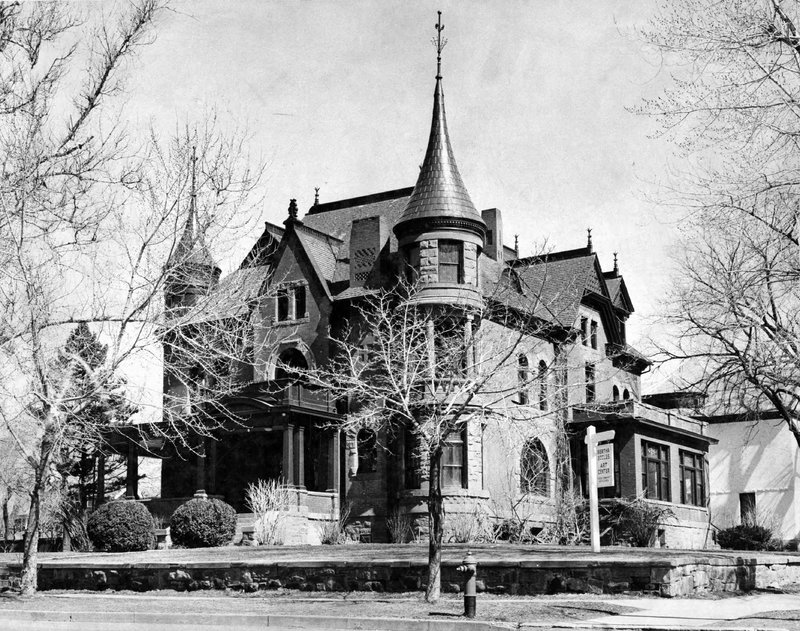
    <summary type="html"><![CDATA[<p><strong><em>The Bertha Eccles Community Art Center embodies the legacy of its owner as a leader in the cultural and educational activities in Ogden, Utah.</em></strong></p><img src="https://www.intermountainhistories.org/files/fullsize/204b067ecd1b651a2feb2277234be780.jpg" alt="Bertha Eccles residence" /><br/><p>The present-day Bertha Eccles Community Art Center is a Queen Anne styled Victorian home built in 1893. It's red brick was imported from the Midwest and red sandstone from northern Utah.  The original owner, James Clarence Armstrong was a wealthy banker and Weber County commissioner in the 1890's.  Samuel A. Whitaker most likely designed the home.  Armstrong sold the home in 1896 to David Eccles, another prominent businessman in northern Utah. Eccles met his first wife, Bertha Marie Jensen at the Weber Stake Academy which eventually became what is now Weber State University. The Eccles extensively remodeled the interior with woodwork of maple, quartered oak, and maple.</p><p>Eccles second wife, Ellen Stoddard, lived in Oregon and then in Logan. Between his two polygamous wives, Eccles fathered 21 children. He also founded at least 56 companies in five western states. Those businesses included sugar factories, banks, railroads, coal mining companies, and lumber yards. During the 50 years Bertha Eccles lived in the home, it became a prominent center for Ogden’s educational and cultural activities. Mrs. Eccles was one of the founders of the Girl Scout movement in Utah and was involved in the Children’s Aid Society, the Red Cross, the Drama Club, and the Child Culture Club.</p><p>After her death, the home was given to the L.D.S. Church. Then, in 1948, the home was turned over to Weber State College which converted it into a women’s dormitory and social center. When the college moved to a new campus, 1954 to 1956, the house reverted back to the L.D.S. church which then gifted it to the Ogden Arts Council which had been formed in 1953 as a coalition of several groups and clubs in Ogden interested in civic and cultural developments in the community. The Bertha Eccles Community Art Center opened in October 1959. In 1976, the name of both the facility and the non-profit organization that supports it was changed to the Eccles Community Art Center. A gallery store was renovated in the 1913 carriage house and opened in May 1985. In 1999, a complex was built on the grounds to accommodate the offices of the Ogden Symphony Ballet Association as well as to house ongoing educational programs. </p><p>Besides displaying artwork, the Center provides space for the Junior League of Ogden, the Palette Club, the Weber County Heritage Foundation, and the Symphony Guild, and other organizations. Classes in graphics, ceramics, painting, drawing, sculpture, drama, and ballet, are taught during the year. Following Bertha Eccles inspirations, this building continues to serve the community and supports various cultural activities. </p><p><em><strong><a href="https://www.intermountainhistories.org/items/show/265">For more (including 4 images) view the original article</a></strong></em></p>]]></summary>
    <published>2019-02-01T05:22:40+00:00</published>
    <updated>2026-04-17T19:32:04+00:00</updated>
    <link rel="alternate" type="text/html" href="https://www.intermountainhistories.org/items/show/265"/>
    <id>https://www.intermountainhistories.org/items/show/265</id>
    <author>
      <name>Faith Connors, Weber State University</name>
    </author>
  </entry>
  <entry>
    <title type="html"><![CDATA[Basque Culture in Boise]]></title>
    <summary type="html"><![CDATA[<p><strong><em>The Boise Basque Block is an entire city block dedicated to the culture and heritage of Basque in Boise and across the United States. Located along the entire length of Grove Street, this area features museums, restaurants, music events, and annual festivals. The historic block is home to one of the largest Basque communities in the United States with an estimated 16,000 residents. </em></strong></p><img src="https://www.intermountainhistories.org/files/fullsize/a36978dc31ec6c0002d8a71f3c169930.jpg" alt="Boise Basque Center" /><br/><p>Drawn to the United States by the gold rush of 1848, waves of Basque people arrived in the U.S. and settled around Los Angeles. After becoming established in southern California, their populations expanded and followed the discovery of gold to northern California and Nevada. By 1890 the Basques had moved into Oregon and southern Idaho, and by 1910 they had spread throughout the West.</p><p>Basque peoples focused their efforts on establishing themselves in the region through various economic endeavors, such as sheep herding. The Basque style of sheep herding is one of solitude in which the shepherd is out alone with only the animals that he cares for. These grazing practices helped shape the ecological landscape of the regions that were used. Furthermore, it drove the Basques to the regions and industries that they are currently in today. This is shown through their large populations in areas such as Fruitland, Idaho and Ontario, Oregon. These cities have long histories of Basque culture and deep ties to the traditions that they hold dear. </p><p>After months of this lonely schedule, men commonly rented rooms at Basque boarding houses that housed their fellow countrymen. These would be places to relax, court potential wives, and reconnect with their culture. A boarding house was the key factor in establishing what is today the Boise Basque Block. The Cyrus Jacobs/Uberuaga House served as a Basque boarding house in Boise from 1910 until 1968.   Today it stands in the center of the block and is a museum dedicated to the Basque community. </p><p>With such an established Basque community in Boise centered around the Cyrus Jacobs/Uberuaga House, it was decided in 1949 to build the Basque center right next door. This place served as a location for gatherings and events as well as a location to preserve the heritage of the Basque people. Their influence began to spread throughout Boise as their population grew and various businesses and restaurants came up throughout the city. </p><p>The Boise Basque Block became such an influence on the community that in 1987 the festival of Jaialdi was held there. Jaialdi celebrates the patron saint San Ignacio of Loyola and is in an effort to educate the public of the Basque culture and be part of Basque activities.  This is a festival that is held the last weekend in July every five years with an average attendance of 40,000 people. It has become a highlight for all of Basque people in the Pacific Northwest.</p><p><em><strong><a href="https://www.intermountainhistories.org/items/show/168">For more (including 3 images) view the original article</a></strong></em></p>]]></summary>
    <published>2018-05-15T00:30:09+00:00</published>
    <updated>2026-04-17T19:32:02+00:00</updated>
    <link rel="alternate" type="text/html" href="https://www.intermountainhistories.org/items/show/168"/>
    <id>https://www.intermountainhistories.org/items/show/168</id>
    <author>
      <name>John Fisk, University of Idaho</name>
    </author>
  </entry>
</feed>