<?xml version="1.0" encoding="UTF-8"?>
<feed xmlns="http://www.w3.org/2005/Atom">
  <title type="text">Intermountain Histories</title>
  <updated>2026-04-17T19:32:19+00:00</updated>
  <generator uri="http://framework.zend.com" version="1.12.20">Zend_Feed_Writer</generator>
  <link rel="alternate" type="text/html" href="https://www.intermountainhistories.org/"/>
  <link rel="self" type="application/atom+xml" href="https://www.intermountainhistories.org/items/browse?output=rss2"/>
  <id>https://www.intermountainhistories.org/</id>
  <author>
    <name>Intermountain Histories</name>
    <uri>https://www.intermountainhistories.org</uri>
  </author>
  <link rel="hub" href="https://pubsubhubbub.appspot.com/"/>
  <entry>
    <title type="html"><![CDATA[Geronimo Surrender Monument]]></title>
    <summary type="html"><![CDATA[<p><strong><em>For many years, the ferocity and war tactics of the Chiricahua Apaches deterred the American military from taking their land in Arizona. General William T. Sherman became so frustrated by the Apache that he suggested Arizona should be abandoned to the American Indians. Despite these resilient efforts in maintaining their land, the Chiricahua surrendered to preserve their people from a “bitter end.” The Geronimo Surrender Monument stands as a stark reminder in Skeleton Canyon of southern Arizona. </em></strong></p><img src="https://www.intermountainhistories.org/files/fullsize/ab99b990d9a8de68c67dae2ffd6fa20b.jpg" alt="Apache Gaan dancers " /><br/><p>The Chiricahua Apaches settled in southeastern Arizona, southwestern New Mexico, and northern Mexico in the Sonoran and Chihuahuan Deserts. They fielded fierce warriors with agile, athletic builds that proved a formidable fighting force in the desert Southwest. Apaches constructed easily built dome-shaped wickiup dwellings made of thatch and poles and covered with animal skins.</p><p>Few Americans entered Chiricahua territory before the gold rush. The 1851 discovery of gold in the Pinos Altos region of New Mexico, which lay at the Southern end of the Black Mountains, homeland of the Warm Springs Band of Chiricahua, was an early source of conflict. Apaches did not understand the allure of this metal to Americans. The endeavor to mine for gold was purposeless and sacrilegious to their nation. Nonetheless, miners were determined to invade their territory and take its resources and the Chiricahua successfully resisted those efforts for several decades. The federal government attempted to create peace through several treaties, but both sides had difficulty adhering to the terms.</p><p>Many battles ensued between the Chiricahua, settlers, and American troops. While the Americans had better developed equipment and weapons, the Apache knew the land better and had more experience fighting to defend their homeland. They evaded and defeated military forces hundreds of times their size. Despite their best efforts to protect their sovereignty, the Chiricahuas knew they could not continue to thwart the efforts of the American militia indefinitely. The Apache wars brought great hardships to their people, so Apache leaders Geronimo and Nachiz, met with Lieutenant Gatewood to discuss the future of their people. The Lieutenant explained that if they surrendered, their families would be sent to Florida to await the final decision of the President. If they did not surrender, they would have to fight to the bitter end. After some discussion, Nachiz and Geronimo decided to surrender in order to preserve their people. Despite many years of successfully resisting American encroachment, the Chiricahua Apaches capitulated to the government’s demands in Skeleton Canyon on September 4, 1886, a location now known as the Last Stand of the Chiricahua Apaches. The Chiricahua Apaches were evicted from their ancestral homeland, temporarily assigned to Florida and Alabama, before being the last Indigenous nation the U.S. Congress relocated into present-day Oklahoma in 1894.</p><p><em><strong><a href="https://www.intermountainhistories.org/items/show/848">For more (including 4 images) view the original article</a></strong></em></p>]]></summary>
    <published>2024-09-24T04:49:59+00:00</published>
    <updated>2026-04-17T19:32:19+00:00</updated>
    <link rel="alternate" type="text/html" href="https://www.intermountainhistories.org/items/show/848"/>
    <id>https://www.intermountainhistories.org/items/show/848</id>
    <author>
      <name>Leah T. Smith, Brigham Young University</name>
    </author>
  </entry>
  <entry>
    <title type="html"><![CDATA[Snowflake: Zion on the Little Colorado]]></title>
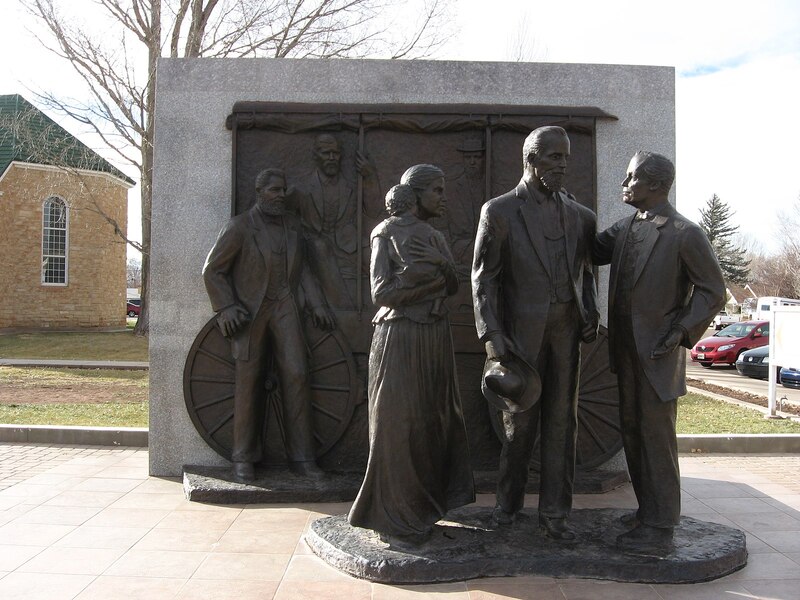
    <summary type="html"><![CDATA[<p><strong><em>Snowflake, Arizona is a small town located in the eastern portion of the state along a tributary of the Little Colorado River known as Silver Creek. It was founded in 1878 by William Jordan Flake and a group of Mormon pioneers who had been directed by Brigham Young to colonize Arizona. The town was officially incorporated in 1919.</em></strong></p><img src="https://www.intermountainhistories.org/files/fullsize/37e4b095306e0664935a3b27b26d576d.jpg" alt="The Snowflake Monument" /><br/><p><span style="font-weight:400;">After finally arriving in the Salt Lake Valley in the late 1840s, early converts of the Church of Jesus Christ of Latter-day Saints deserved a rest. After gathering from across the nation and overseas and fleeing persecution in their flight across the Great Plains, the Saints finally arrived in Salt Lake. They began to make the desert “blossom as a rose” and settled themselves into the comfort of their new home. However, Church President Brigham Young’s ambitions for this fledgling “Zion” extended far beyond the confines of the Salt Lake Valley. His envisioned state of “Deseret” was much larger, and he soon began sending Church members to make new settlements across the Intermountain West.</span>
<span style="font-weight:400;">Church leaders called one such group to settle the Little Colorado River in present-day Arizona in 1876. Among them was William Jordan Flake, a rancher from Beaver who had been orphaned as a child due to the dangers of pioneering. Initially horrified with the idea of leaving all he had worked for to make for the Arizona desert, William asked President Young if he might just go for a year or two and then return to Beaver. Young’s reply was unequivocal: “Sell all that you have, that you cannot take with you. Take your family and go there to settle the Saints. Leave nothing to come back to.” William and his pioneer companions obeyed the command and, upon arriving in the Little Colorado Valley, they established the settlements of Ballinger’s Camp, Sunset, Old Taylor, and Allen’s Camp. The early settlements initially struggled against the hostile environment and the difficulty of living the standards set by the “United Order,” a Church movement which called for collectivist, communal living. William Flake, troubled by these </span><span style="font-weight:400;">problems, decided to look for a place to build a new settlement. He rode out to meet James Stinson, a rancher who had acquired and irrigated 300 acres on Silver Creek, a tributary of the Little Colorado. Stinson said he would sell his land for $12,000, which William raised by convincing Church leaders to procure the sale of cattle from their Utah ranches.</span>
<span style="font-weight:400;">On July 21, 1878, Flake and other pioneer families moved onto the ranch. Soon more followed. On September 24th of the same year, Church Apostle Erastus Snow visited the townsite, and they decided to name the settlement Snowflake, a combination of the two men’s names. The town grew steadily. In 1892, tragedy struck when William’s son Charles was killed in a shootout while attempting to arrest a suspected bank robber (the outlaw was also killed in the gunfight). Nevertheless, Snowflake became one of the more successful of the Little Colorado Valley settlements, and the town was eventually incorporated in 1919. Snowflake now stands as a monument to the legacy of faith left by the early Mormon pioneers.</span></p><p><em><strong><a href="https://www.intermountainhistories.org/items/show/742">For more (including 4 images) view the original article</a></strong></em></p>]]></summary>
    <published>2023-04-10T19:01:01+00:00</published>
    <updated>2026-04-17T19:32:16+00:00</updated>
    <link rel="alternate" type="text/html" href="https://www.intermountainhistories.org/items/show/742"/>
    <id>https://www.intermountainhistories.org/items/show/742</id>
    <author>
      <name>Joseph Flake, Brigham Young University</name>
    </author>
  </entry>
</feed>