<?xml version="1.0" encoding="UTF-8"?>
<feed xmlns="http://www.w3.org/2005/Atom">
  <title type="text">Intermountain Histories</title>
  <updated>2026-04-17T19:32:18+00:00</updated>
  <generator uri="http://framework.zend.com" version="1.12.20">Zend_Feed_Writer</generator>
  <link rel="alternate" type="text/html" href="https://www.intermountainhistories.org/"/>
  <link rel="self" type="application/atom+xml" href="https://www.intermountainhistories.org/items/browse?output=rss2"/>
  <id>https://www.intermountainhistories.org/</id>
  <author>
    <name>Intermountain Histories</name>
    <uri>https://www.intermountainhistories.org</uri>
  </author>
  <link rel="hub" href="https://pubsubhubbub.appspot.com/"/>
  <entry>
    <title type="html"><![CDATA[Mining in Madrid, NM]]></title>
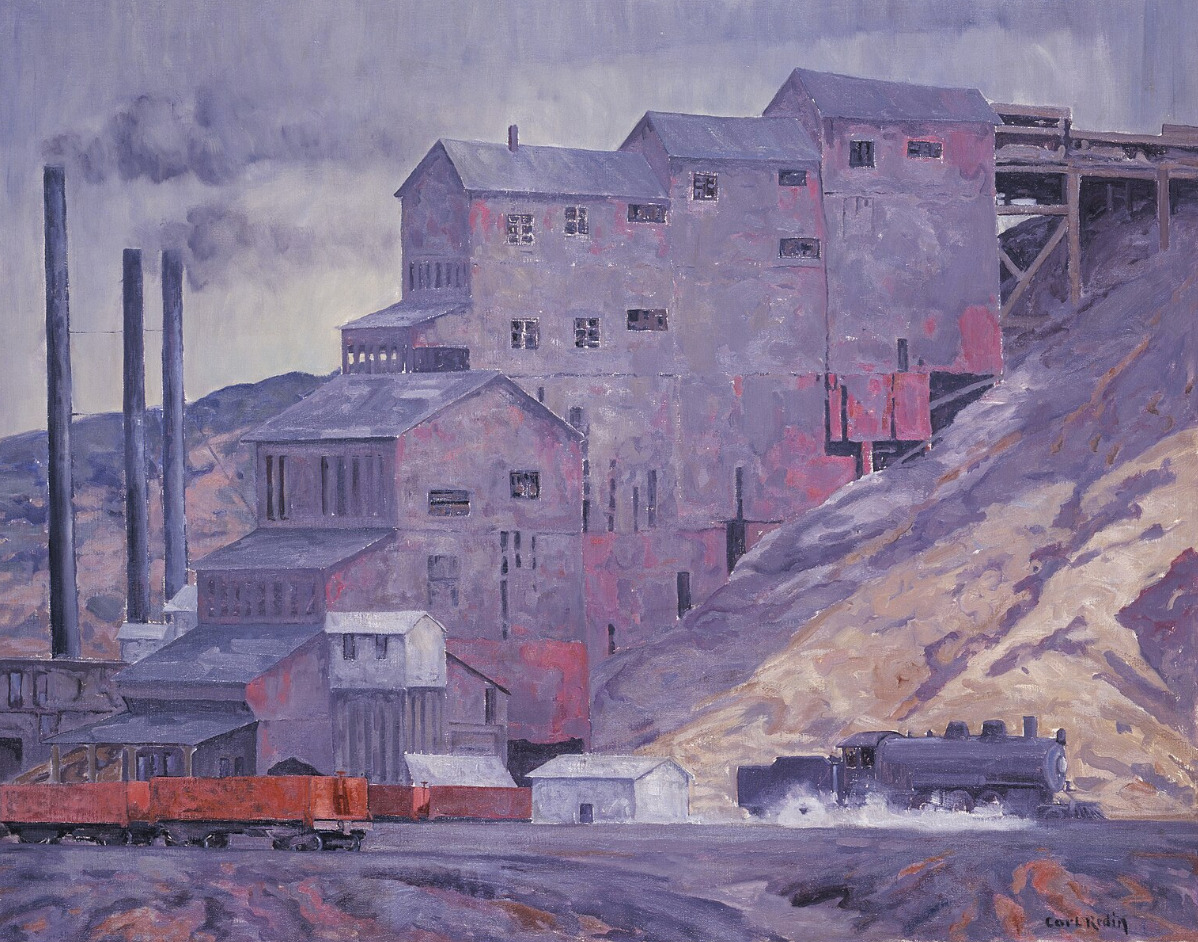
    <summary type="html"><![CDATA[<p><strong><em><span style="font-weight:400;">Once a coal mining town with mandated celebratory traditions, Madrid is kept alive today by a community of artists.</span></em></strong></p><img src="https://www.intermountainhistories.org/files/fullsize/2c557ddeacfb0b63a0565ae116711530.jpg" alt="At Madrid Coal Mine, New Mexico" /><br/><p><span style="font-weight:400;">There is a community in the mountains of Santa Fe County, New Mexico that has redeemed itself from “ghost town” status–though they still claim the title. Madrid was best known for its wealth of coal during the mining boom in the late nineteenth and early twentieth century. The town was first founded in 1869, attracting attention from its location along the Santa Fe Railroad. Traveling journalist Charles Fletcher Lummis said that there was no other railroad that “penetrated such a wonderland of the pictorial in geography and in humanity.” Trains used Madrid to refuel and stock up on coal. The prosperity of the land brought in a large enough community for businesses like the trading post, stores, schools, a diner, and a boarding house to be built and well-used in the early twentieth century. </span>
<span style="font-weight:400;">Life in mining towns is sometimes thought of as exciting–newfound wealth and communities brought together in the wake of the gilded age–but the reality was far grittier. Men, women, and children who worked in coal mines were subject to the dangers of collapsing shafts, explosions, and machinery malfunctions, as well as gas poisoning and other illnesses brought on by poor air quality. However, the corporations running the town had several initiatives that attempted to make life more enjoyable for the residents. </span>
<span style="font-weight:400;">The free electricity they provided to each home was certainly the most valuable perk, but there were also annual festivities that were required in an attempt to boost the community’s morale. As Christmas approached each year, every resident had to ornament their house with string lights, buy a Christmas tree, and make sure their house was as much of a spectacle as possible. With 3,000 residents by the 1930s, Madrid did become quite a spectacle, drawing in crowds from Albuquerque and other nearby communities in awe of the light displays. When blackouts for World War II started, the Christmas lights were put out, and shortly after the war ended, the mines were closed for good.</span>
<span style="font-weight:400;">As steam locomotives were replaced with diesel engines, coal lost its value and the mines in Madrid were shut down not long after the war ended. The population rapidly declined, and Madrid sat among other former mining towns in Santa Fe county, with the threat of complete abandonment. Yet, Madrid never quite lost its charm. It went on to be featured in several movies, from 1970 to the early 2000s, and now it is home to artists, quirky landmarks, and converted historic buildings. </span></p><p><em><strong><a href="https://www.intermountainhistories.org/items/show/805">For more (including 3 images) view the original article</a></strong></em></p>]]></summary>
    <published>2024-05-16T01:44:03+00:00</published>
    <updated>2026-04-17T19:32:18+00:00</updated>
    <link rel="alternate" type="text/html" href="https://www.intermountainhistories.org/items/show/805"/>
    <id>https://www.intermountainhistories.org/items/show/805</id>
    <author>
      <name>Megan Bailey, Brigham Young University</name>
    </author>
  </entry>
  <entry>
    <title type="html"><![CDATA[Fish Creek Massacre]]></title>
    <summary type="html"><![CDATA[<p><strong><em>In the summer of 1869, Italian immigrants in Eureka, Nevada decided to go on strike to protest low wages. Local tensions escalated the situation to the point of violence, and, on August 18, 1879, five protesting Italian immigrants were killed. </p></strong></p><img src="https://www.intermountainhistories.org/files/fullsize/ecef27111ebdf406b0daf3a633e5fe8b.jpg" alt="Ore Shutes in Eureka" /><br/><p><span style="font-weight:400;">In the 1870s, Eureka was the second largest mining town in Nevada. Eureka produced primarily charcoal, and many flocked there as new smelters increased labor demands. As was the case in many other booming western mining towns, immigrants made up a large portion of the population. Italians were by far the largest immigrant group in Eureka. Racial and cultural prejudice against Italians that was prevalent throughout the United States was mirrored in Eureka and other western mining towns. As a result, they were paid less than half of what the average miner made. On July 6, 1879, a large group of mainly Italian coal burners gathered at a local saloon to unionize. They formed the Eureka Charcoal Burners Protective Association with the goal of increasing wages. Since Italians made up the majority of Eureka’s cheap labor force, the group's resulting labor strike halted charcoal production. </span>
<span style="font-weight:400;">With a dwindling charcoal supply, tensions in town grew. Eventually, Sheriff Matthew Kyle began arresting some of the strike’s ringleaders. Further, because he did not want to involve state militia, he created a “fighting posse” to go to the charcoal camps and arrest the strike leaders.  They did so over the next month, but on August 18, 1879, the posse turned violent.</span>
<span style="font-weight:400;">The posse of about 20 men set out for Fish Creek, where a large group of strikers was rumored to be camped.  Despite being extremely outnumbered by the striking laborers, deputies attempted to arrest the strike leader. When strikers resisted and the posse was unable to make their arrest, tempers flared. Marshall Rich, one of the head deputies, started insulting the Italian leader, who pulled out his gun and fired at Rich. The posse then opened fire on the mostly unarmed coal burners. Five Italians were killed in the massacre, six were seriously injured, and fourteen were sent to prison. Those who died were all Italian and included: Giovanni Pedroni, Marcellus Locatelli, Todoro Zesta, Pompeo Pattini, and Anotonio Canonica.  </span>
<span style="font-weight:400;">Other accounts of the massacre vary, with some placing all of the blame on the posse and others claiming that the Italians were seeking violence. Regardless, the posse ceased making arrests after this and no one in the posse was charged. The strike eventually ended, and tensions between the Italians and other groups lessened in the following years. </span></p><p><em><strong><a href="https://www.intermountainhistories.org/items/show/727">For more (including 6 images) view the original article</a></strong></em></p>]]></summary>
    <published>2023-03-06T21:27:00+00:00</published>
    <updated>2026-04-17T19:32:16+00:00</updated>
    <link rel="alternate" type="text/html" href="https://www.intermountainhistories.org/items/show/727"/>
    <id>https://www.intermountainhistories.org/items/show/727</id>
    <author>
      <name>Sydney Wilson, Brigham Young University </name>
    </author>
  </entry>
  <entry>
    <title type="html"><![CDATA[Castle Gate Mine Disaster]]></title>
    <summary type="html"><![CDATA[<p><strong><em>The Castle Gate Mine Disaster was a horrific tragedy that took the lives of 171 men. Considered the second-worst mining disaster in Utah’s history, the disaster is well remembered not only for the death toll but also for the push for safety reform in its aftermath.</em></strong></p><img src="https://www.intermountainhistories.org/files/fullsize/3addcc19e4ca5cf2966b852500df227f.jpg" alt="Mass funeral" /><br/><p>On March 8, 1924, in Castle Gate, Utah, two explosions rocked the local coal mine, killing all 171 men working at the time. Both explosions happened when men ignited carbon monoxide while trying to relight their lamps. First, a boss investigating some methane gas near the roof of a mineshaft. When his lamp went out, he tried to relight it, but his match ignited the gas, which in turn ignited coal dust, setting off a huge explosion. Those who survived this first explosion found themselves plunged into darkness, as the blast blew out their lamps. When these survivors attempted relighting their lamps, they set off another explosion.
Rescue workers faced severe challenges when they entered the mine to look for any possible survivors. The passageway was covered with debris and badly damaged. It made the passageway incredibly difficult to traverse and slowed them down. The mine was also filled with gas, which made it deadly for the rescue workers. One rescuer died when another knocked off his oxygen clip; within a few minutes, he breathed in too much gas and perished. When the workers found the bodies, many were badly burned and mutilated. Because of huge number of deaths, bodies were buried soon after identification.
Most of the men were married with children, leaving behind many widows and children without fathers. In the days after the disaster, the Red Cross along with women from other parts of came to offer aid to the families. They cooked meals, tended to children, and even sewed mourning clothes for the community. The families of the miners were devastated; in addition to losing a husband and father, they also lost their primary financial provider. Although the families did receive compensation, many left Castle Gate to go live with relatives. Those who stayed received aid from a Red Cross committee that provided food, clothes, and anything else the families might need. The relief committee continued to distribute aid until 1936, ultimately dispersing $132,145 worth of relief.
The mine eventually reopened with increased safety measures. The Utah Fuel Company, which owned the mine, met with the state government to review safety laws and create new amendments and resolutions to make the mines safer. This included more funding for mine inspectors, mandates about clearing dust created from rock mining, prohibiting moving methane gas while men were working in the mine, and requiring coal dust be cleaned from abandoned rooms. Though these new procedures did not completely stop other disasters, they did greatly improve the safety of the mines.</p><p><em><strong><a href="https://www.intermountainhistories.org/items/show/538">For more (including 3 images) view the original article</a></strong></em></p>]]></summary>
    <published>2021-11-13T22:04:12+00:00</published>
    <updated>2026-04-17T19:32:11+00:00</updated>
    <link rel="alternate" type="text/html" href="https://www.intermountainhistories.org/items/show/538"/>
    <id>https://www.intermountainhistories.org/items/show/538</id>
    <author>
      <name>Megan Wagner, Northern Arizona University</name>
    </author>
  </entry>
  <entry>
    <title type="html"><![CDATA[White Ash Mine Disaster]]></title>
    <summary type="html"><![CDATA[<p><strong><em>A flood in the White Ash Mine, located in Colorado, killed ten men. Though not the worst mining disaster in Colorado history, the White Ash Mine disaster is remembered for a mysterious fire that thwarted an attempt to rescue the drowned miners.</em></strong></p><img src="https://www.intermountainhistories.org/files/fullsize/319b9bf4fa97e5419ff9cdd0e0e32404.jpg" alt="The mine and her miners" /><br/><p>On September 9, 1889, at about four o’clock in the afternoon ten men drowned in the White Ash Mine, a coal mine near Golden, Colorado. An engineer, Charles Hoagland, was the first to discover that something had happened. He had attempted to send down the elevator, but it wouldn’t go to the bottom, and then it wouldn’t rise. Hoagland attempted to contact the cage man who was at the bottom of the mine, but he did not respond. Hoagland phoned the foreman, Evan Jones. When Jones descended into the mine, he heard the roaring of water. Realizing the mine was flooding, he informed the general manager and gathered other men in an attempt to rescue the men trapped below. However, they were only able to travel about 300 feet down before they were hit with bad air and retreated. Around midnight, the mine inspector, John McNeil, and the general manager, Paul Lanious, descended into the mine.
They found out the mine, which was about 780 feet deep, was filled with CO2. The water had reached 140 feet high and was scalding hot at about 115 degrees Fahrenheit. At about 280 feet down, they felt a strong heat coming out of the walls; when they examined the area, they found that a portion of this level was on fire. The fire was getting closer to the shaft timbers, making it impossible to isolate the fire and put it out. McNeil and Lanious made it about 400 feet down before the gas became too much, forcing them to ascend.
As a result of the fire, the gas, and the height of the water, officials concluded the men could not have survived. With the mine considered too dangerous, officials suspended extraction efforts and instead sealed off the shaft. Their decision entombed the men in the mine.
In the aftermath, people wondered that had caused the disaster. Investigation revealed the most likely culprit was the Loveland Mine, attached to the White Ash Mine through coal veins. About ten years before the White Ash Mine flood and fire, the Loveland Mine had itself shut down due to flooding. Over the years, the underground
The biggest question that everyone had was what caused the disaster. The culprit was found to be the Loveland Mine which was attached to the White Ash Mine through coal veins. The Loveland Mine had been closed about ten years before the disaster on account of flooding. While White Ash passed inspections, showing no signs of potential flooding, over the years the coal walls separating Loveland and White Ash degraded. When they finally broke down, the floodwaters still inside Loveland poured into White Ash.
While the precise reasons the coals walls degraded is not known for certain, most people believe an underground fire had smoldered inside Loveland and slowly ate away at the coal separating the two mines. In fact, McNeil had discovered a smoldering fire between the walls a few years earlier, though he had it sealed up. However, there may have been a second fire that went unnoticed. This unchecked fire made the walls crumble, allowing the Loveland Mine’s water to drain into the White Ash.</p><p><em><strong><a href="https://www.intermountainhistories.org/items/show/537">For more (including 4 images) view the original article</a></strong></em></p>]]></summary>
    <published>2021-11-13T21:37:47+00:00</published>
    <updated>2026-04-17T19:32:11+00:00</updated>
    <link rel="alternate" type="text/html" href="https://www.intermountainhistories.org/items/show/537"/>
    <id>https://www.intermountainhistories.org/items/show/537</id>
    <author>
      <name>Megan Wagner, Northern Arizona University</name>
    </author>
  </entry>
  <entry>
    <title type="html"><![CDATA[Smith Mine Disaster]]></title>
    <summary type="html"><![CDATA[<p><strong><em>The Smith Mine Disaster was the worst coal disaster in the state of Montana. It claimed the lives of seventy-five people and destroyed the mining industry of Bearcreek which had been built around it.</em></strong></p><img src="https://www.intermountainhistories.org/files/fullsize/491a3bb779af0871cc256249ca6bbe49.jpg" alt="Smith Mine Disaster memorial" /><br/><p>On February 27, 1943, Bearcreek, Montana experienced what remains the worst coal disaster in the state. A combination of carbon monoxide and methane gas created an explosion killing seventy-four of the seventy-seven men working in the mine. The three men to survive were in the mine but did not see the explosion. However, they described feeling a pressure on their ears but hearing nothing before being blasted with air. One of the men rushed to the phone to let the men on the surface know that something was wrong but before he could he was overcome with gas. The other two men were attempting to escape the mine when they were knocked to their feet by the blast of air and then fell unconscious from the gas.
The explosion knocked out the electricity, preventing the mine’s emergency system from sounding. However, other mines in the area sounded theirs, alerting the other miners as well as those in the town that something was wrong in Smith Mine.
Men came from adjacent mines and from the town to rescue the men still trapped. Rescuers who went into the mine faced serious danger from the combination of carbon monoxide and methane gas. The farther anyone went into the mine, the more the gas took a toll, with many tripping, falling, hallucinating, or becoming disoriented. One of the rescuers breathed in too much gas and died as a result.
The seventy-four men who died either died immediately in the blast or were killed by the gas.  The precise extent of the three survivors’ injuries is not documented in the sources, but they did spend a few days in the hospital.
The tragedy deeply affected the victims’ families. Family members spent sixty-three hours waiting to hear what had happened and get updates about their family members. The town was small, so virtually everyone there was a part of a mining family and thus knew or was related to someone who had died. The scale of the loss devastated the families, and many left Bearcreek afterwards because of their grief.
Bearcreek was small before and the disaster only made it worse. The mine closed permanently, and the town’s coal production fell. The biggest hit to the town’s economy and population came when the railroad ceased operating in 1953, ten years after the disaster. The railroad was the easiest way to ship coal, and with it closed, most of the mines followed suit, with the last mine closing in the 1970s. The Smith Mine disaster was effectively the beginning of the end for Bearcreek.</p><p><em><strong><a href="https://www.intermountainhistories.org/items/show/536">For more (including 4 images) view the original article</a></strong></em></p>]]></summary>
    <published>2021-11-13T11:42:54+00:00</published>
    <updated>2026-04-17T19:32:11+00:00</updated>
    <link rel="alternate" type="text/html" href="https://www.intermountainhistories.org/items/show/536"/>
    <id>https://www.intermountainhistories.org/items/show/536</id>
    <author>
      <name>Megan Wagner, Northern Arizona University</name>
    </author>
  </entry>
  <entry>
    <title type="html"><![CDATA[Helper, Utah]]></title>
    <summary type="html"><![CDATA[<p><strong><em>This Carbon County hub was one of Utah’s most ethnically diverse towns in the early twentieth century.</em></strong></p><img src="https://www.intermountainhistories.org/files/fullsize/3c8dd110b632fb394c09a83e1b1db99a.jpg" alt="Helper Station" /><br/><p>Helper—situated between Castle Gate and Price in Castle Valley—is the product of the Denver & Rio Grande Western Railroad’s search for coal in the late nineteenth century. Low-grade coal fueled the railroads, but until the 1880s no one had discovered a coal seam of sufficient quality in Utah to produce good “coke” for industrial smelting. This meant that metal mines in other parts of the state could not process low-grade copper and silver at a profitable rate. The D&RGW extended through Castle Valley in the early 1880s in its search for coal, and an engineer for the railroad discovered high quality coal in Castle Gate. The town’s name comes from the railroads; “helper” locomotives waited along that stretch of railway to tow trains up the steep grade.</p><p>The demand for Castle Valley’s coal meant that there was an increased demand for workers. Italians, Slovenians, Croatians, and Serbians immigrated to the area to work in the mines, adding to the mix of cultures where Chinese people had previously worked on the railroad. In 1894, Carbon County split from Emery County. By then, it had an industry and ethnic mix distinct from the Mormon homesteaders to the south. By 1900 there were sixteen different nationalities represented in Helper in a population of only 385 people. This would increase in 1903 and 1904, as a strike at Castle Gate prompted the mine’s owners to bring in Greek and Japanese workers as strikebreakers. </p><p>With its location at the center of several nearby coal mining camps and farms, Helper became a hub for commerce for the many different ethnic groups in the county. Immigrants in Helper worked as merchants and business owners. European and Asian immigrants operated saloons and coffee houses and otherwise provided services for nearby workers. As a steadily growing town—in contrast to the boom towns usually associated with mining in the West—community life for its diverse enclaves became a part of Helper’s story. By the 1910s, there was a Catholic church in Helper and a Greek Orthodox church in nearby Price. There were Italian, Croatian, and Slovenian lodges in the county, and a YMCA in Helper served as a general public meeting place. The influx of immigrants during this pivotal time in Utah’s history has left a lasting imprint on the culture of Helper as well as the state overall. </p><p><em><strong><a href="https://www.intermountainhistories.org/items/show/373">For more (including 3 images) view the original article</a></strong></em></p>]]></summary>
    <published>2019-11-22T03:58:41+00:00</published>
    <updated>2026-04-17T19:32:07+00:00</updated>
    <link rel="alternate" type="text/html" href="https://www.intermountainhistories.org/items/show/373"/>
    <id>https://www.intermountainhistories.org/items/show/373</id>
    <author>
      <name>Nate Housley, University of Utah</name>
    </author>
  </entry>
</feed>
