<?xml version="1.0" encoding="UTF-8"?>
<feed xmlns="http://www.w3.org/2005/Atom">
  <title type="text">Intermountain Histories</title>
  <updated>2026-04-17T19:32:13+00:00</updated>
  <generator uri="http://framework.zend.com" version="1.12.20">Zend_Feed_Writer</generator>
  <link rel="alternate" type="text/html" href="https://www.intermountainhistories.org/"/>
  <link rel="self" type="application/atom+xml" href="https://www.intermountainhistories.org/items/browse?output=rss2"/>
  <id>https://www.intermountainhistories.org/</id>
  <author>
    <name>Intermountain Histories</name>
    <uri>https://www.intermountainhistories.org</uri>
  </author>
  <link rel="hub" href="https://pubsubhubbub.appspot.com/"/>
  <entry>
    <title type="html"><![CDATA[Idaho’s Territorial Capital Dispute]]></title>
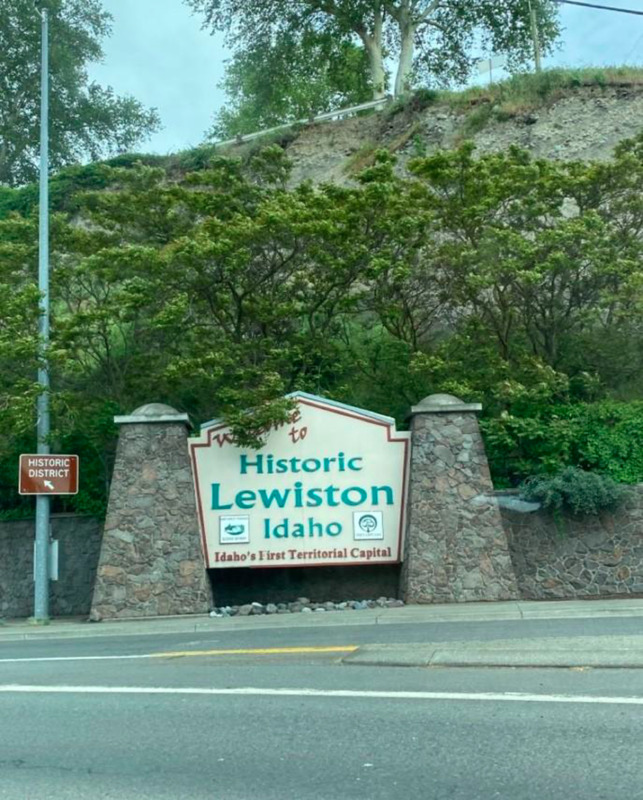
    <summary type="html"><![CDATA[<p><strong><em>Lewiston was Idaho's first territorial capital, but the title was short-lived. Many disputes over moving the capital down to Boise ensued between the people of Lewiston and the people of Boise, contributing to a longstanding divide between northern and southern Idaho.</em></strong></p><img src="https://www.intermountainhistories.org/files/fullsize/acc53b1a3c757d53c6ac8a90857a5ee8.jpg" alt="First" /><br/><p>A nineteenth-century dispute over where to place the state capital dispute helped create a regional divide that persists in Idaho to this day. It all started when westward settlers found gold in 1860, leading many to migrate to the Rocky Mountains in hopes of striking it rich. Settlers found gold in the Clearwater River, in northern Idaho, and some formed mining camps, one of which was Lewiston. As the settler population grew, many in the area called for establishing a seat of United States government closer than Olympia, Washington. In response, in March 1863, territorial governor William H. Wallace pronounced Lewiston the capital of Idaho. Wallace chose this location because in addition to the gold, there was already an established transportation and communication system that linked northern Idaho to other U.S. states and territories.
After the discovery of gold in 1862 in the Boise Basin, however, eager settlers rushed to the southern part of the territory. At the same time, gold had depleted up north in Lewiston, even further accelerating the southward migration. With most of the settler population now residing in the south, moving the capital seemed logical, especially since mountainous terrain made traveling between Boise and Lewiston difficult.
This turned out to be easier said than done, however. The territorial legislature, primarily made up of representatives from northern Idaho, failed the first initiative to change Idaho’s capital. However, in 1864 Idaho’s number of legislative representatives changed to accommodate the difference in population, leaving three representatives for the north and four for the south. This change in political power—plus pressure from H. C. Riggs, one of Bosise’s founders—convinced acting governor Caleb Lyon to move the capital to Boise. On November 23, 1864, Riggs introduced a bill to make Boise the capital. It passed six days later, and Lyon signed it into law.
Rather than fix the problem, this may have only made it worse. Governor Lyon fled to nearby Walla Walla, Washington, and sent a trusted official to retrieve the official documents from the acting secretary of Lewiston. After a stalemate over who had rights to the papers, and where the capital would officially reside, President Lincoln’s territorial secretary C. DeWitt Smith went to serve as acting governor of Idaho. With help from Fort Lapwai soldiers, Smith obtained the documents and traveled to Boise, where he put the new law into effect.
In the end, moving the capitol from Lewiston to southern Idaho left its residents with a sense of lost pride. This sparked a cultural divide between northern and southern Idaho that continues to this day. To this day, downtown Lewiston hosts a sign proclaiming the city “Idaho's First Territorial Capital,” demonstrating that the residents remember their city’s history and will not let people forget Idaho’s original territorial capital.</p><p><em><strong><a href="https://www.intermountainhistories.org/items/show/628">For more (including 3 images) view the original article</a></strong></em></p>]]></summary>
    <published>2022-06-30T20:51:21+00:00</published>
    <updated>2026-04-17T19:32:13+00:00</updated>
    <link rel="alternate" type="text/html" href="https://www.intermountainhistories.org/items/show/628"/>
    <id>https://www.intermountainhistories.org/items/show/628</id>
    <author>
      <name>Dawson Packwood, College of Idaho</name>
    </author>
  </entry>
  <entry>
    <title type="html"><![CDATA[Battle of Julesburg]]></title>
    <summary type="html"><![CDATA[<p><strong><em>After American militias massacred Cheyenne and Arapaho as part of the Civil War in the West, indigenous warriors banded together, determined to not let American colonizers’ unwarranted violence go unanswered.</em></strong></p><img src="https://www.intermountainhistories.org/files/fullsize/39ffd1ff27a2be44f963f783464803e2.jpg" alt="Battle of Julesburg" /><br/><p>In January 1865, Julesburg, Colorado was 200 miles east of Denver. Complete with an eating-house, stable, blacksmith, repair shop, granary, and corral, the town was an important waystation for immigrants and settlers traveling along the Platte River on the Oregon Trail.
However, Julesburg’s relative prominence also made it a target for Native retaliation after the Sand Creek Massacre. Six weeks earlier, on November 29, 1864, led by brevet Colonel John Chivington, the 675-men strong Third Colorado massacred several hundred Cheyenne and Arapaho men, women, and children in southeastern Colorado Territory. Dog Soldiers (a militant Cheyenne subgroup) allied with other Cheyenne, Arapaho, and Lakota warriors to avenge their relatives who died at Sand Creek. In total, they numbered some 1200 Dog Soldiers and other warriors. Sitting Bull, Spotted Tail, Pawnee Killer, and others led the attack on Julesburg. On January 7, 1865, the allied Natives found that many soldiers had left town as part of their regular patrols, leaving only 37 men to defend the fort at Julesburg.
A small group of Lakotas led the initial charge. Nicholas James O’Brien, a highly decorated Civil War soldier and commander of the troops at Julesburg, saw the oncoming attack and pursued the Lakotas, unwittingly falling into their strategic trap to encircle the soldiers once they had been separated from reinforcements. The Native alliance intended to surround the American soldiers, but some young Cheyenne left their position too early before the entrapment could be realized. Despite this minor lapse, within a few minutes of fighting, nearly half of the U.S. soldiers were killed.
O’Brien led his surviving soldiers back to the fort, and the Native alliance laid siege. The remaining tribesmen entered Julesburg and raided every building. George Bent, a Cheyenne who participated in the raid, recalled that allied Natives found all the goods they desired. Tribal women brought extra horses to carry the spoils back to their camps. The horses were so heavily loaded that it took three days to make the return trip home. The raid lasted the whole day and became the first of many Cheyenne, Arapaho, and Lakota raids conducted in the Central Plains over the coming months. The accumulation of goods brought sustenance to the tribes that winter while the United States took a staggering blow to their efforts to control American Indian affairs during the Civil War.</p><p><em><strong><a href="https://www.intermountainhistories.org/items/show/576">For more (including 4 images) view the original article</a></strong></em></p>]]></summary>
    <published>2022-03-12T07:54:28+00:00</published>
    <updated>2026-04-17T19:32:12+00:00</updated>
    <link rel="alternate" type="text/html" href="https://www.intermountainhistories.org/items/show/576"/>
    <id>https://www.intermountainhistories.org/items/show/576</id>
    <author>
      <name>Ryan Blamires, Brigham Young University</name>
    </author>
  </entry>
  <entry>
    <title type="html"><![CDATA[The Confederate Connections of Dixie State University]]></title>
    <summary type="html"><![CDATA[<p><strong><em>A Dixie State University alumni said, “I have been asked in each of my 7 post-grad interviews, ‘Where is Dixie?’” After all, who could know it was in southern Utah?</em></strong></p><img src="https://www.intermountainhistories.org/files/fullsize/1e2f92d9224feef966957a918dd7745b.jpg" alt="Dixie State University" /><br/><p><span style="font-weight:400;">“The name ‘Dixie’ is one of those distinctive things about this part of Utah,” historian Andrew Karl Larson wrote in his 1962 history of the Virgin River Basin of southern Utah. “It is a name much used, indeed overused, it would seem to the casual visitor. Businesses use it; its newspapers have been called after it; its junior college is named for it.”</span>
<span style="font-weight:400;">As of 2021, that “junior college” is Dixie State University—though likely not for much longer.</span>
<span style="font-weight:400;">In the mid-nineteenth century, members of The Church of Jesus Christ of Latter-day Saints grew cotton in southern Utah as part of a Church project to make Utah economically self-sufficient. Although the majority of settlers were from the northeastern United States, a community lore developed claiming many were from the American South, including former slave owners and overseers, chosen because they were familiar with cultivating cotton. The settlers dubbed the region “Dixie,” allegedly in reference to the similarly sunny, cotton-growing South. During the Civil War, although Church prophet Brigham Young assured the United States that “Utah has not seceded, but is firm for the Constitution,” a small number of Dixie settlers sympathized with their namesake. For example, local bishop Robert Dockery Covington rejoiced when he heard about Confederate victories. In a similarly sectional spirit, in April 1868—during Reconstruction—local newspaper </span><i><span style="font-weight:400;">Our</span></i> <i><span style="font-weight:400;">Dixie Times</span></i><span style="font-weight:400;"> ridiculed a Republican senator for “vot[ing] for negro equality.”</span>
<span style="font-weight:400;">The “junior college” was founded in 1911 as Dixie Academy. In 1916 it became Dixie Normal College and later Dixie College, even though school founder and trustee Edward Hunter Snow seemed unlikely to be a Confederate sympathizer. Snow was a northerner, and when he had preached as a Latter-day Saint missionary in the South years earlier, the Ku Klux Klan threatened to kill him.</span>
<span style="font-weight:400;">However, after Snow’s death in 1932, the campus community increasingly used “Dixie” to mean more than cotton and sunny skies. In 1952, Dixie College changed its mascot from “the Flyers” to “Rodney the Rebel.” In 1959, the community embraced the Confederate battle flag as a secondary school symbol. Then, in 1966, the yearbook’s name changed from </span><i><span style="font-weight:400;">The Dixie</span></i><span style="font-weight:400;"> to </span><i><span style="font-weight:400;">The Confederate</span></i><span style="font-weight:400;">.</span>
<span style="font-weight:400;">For the rest of the century, student costumes, activities, and displays made light of slavery and embraced the Confederacy. Students wore blackface as late as the 1990s and organized “slave days” and mock slave auctions. Confederate battle flags adorned school spirit imagery. These ongoing embraces of the Dixie-Confederate connection paralleled the broader mid-twentieth-century Dixiecrat campaign against the Civil Rights Movement.</span>
<span style="font-weight:400;">The school began moving away from Confederate imagery when it retired the battle flag as a school emblem in 1994. In 2005, it replaced Rodney the Rebel as a mascot, and it officially dropped the “Rebels” nickname in 2007 in favor of becoming the Red Storm and later the Trailblazers.</span>
<span style="font-weight:400;">Yet the Dixie name stayed. When the college transitioned into a university, the board of trustees voted unanimously on January 13, 2013 to name the school Dixie State University, despite growing grassroots interest in dropping “Dixie.” Multiple donors said they would withdraw funding if “Dixie” wasn’t in the name, and chairman Steve Caplin insisted, “No one on this board or in this administration is aware of any racial discrimination in our past.”</span>
<span style="font-weight:400;">Jeanetta Williams, president of the Salt Lake City chapter of the NAACP and a Black woman, was stunned. “Have they not seen all the blackface, the mock slave auction?” she asked.</span>
<span style="font-weight:400;">In 2020, pressure again mounted against the name during a nationwide reckoning on racial justice, and the university commissioned an impact study on “Dixie.” Released on December 13, the study revealed that over a third of out-of-state prospective students believed the Dixie name hurt the university’s reputation. Some expressed discomfort with the idea of wearing Dixie State memorabilia. The next day, the board of trustees voted unanimously to recommend the university change its name.</span>
<span style="font-weight:400;">Authorizing a name change fell to Utah’s state legislature, but some representatives and members of the community were reluctant, and others were hostile. While the legislature and community deliberated, the university’s Student Executive Council wrote an op-ed pleading for a new name. They quoted an anonymous alumni who reported,</span>
<p style="margin-left:50px;"><span style="font-weight:400;">I have been asked in each of my seven post-grad interviews, ‘Where is Dixie?’ …My first day at each of [three] jobs has been explaining the Dixie name as quickly as possible and only getting neutral or negative responses.</span>
<span style="font-weight:400;">On March 4, Utah’s legislature finally passed a bill authorizing a name change, and on March 16 Governor Spencer Cox signed the bill into law. On June 14, 2021, a university committee recommended “Utah Polytechnic State University” as a new name, but community backlash was nearly immediate and trenchantly hostile to a name some argued was too reminiscent of nineteenth-century polygamy. By June 29, the committee withdrew its polytechnic suggestion and instead proposed “Utah Tech University,” which the university decided to move forward with, pending approval from the Utah state board of higher education, legislature, and governor.</span>
<span style="font-weight:400;">After more than a century, the name “much used, indeed overused,” would be used one time less.</span></p><p><em><strong><a href="https://www.intermountainhistories.org/items/show/496">For more (including 7 images) view the original article</a></strong></em></p>]]></summary>
    <published>2021-09-18T08:24:43+00:00</published>
    <updated>2026-04-17T19:32:10+00:00</updated>
    <link rel="alternate" type="text/html" href="https://www.intermountainhistories.org/items/show/496"/>
    <id>https://www.intermountainhistories.org/items/show/496</id>
    <author>
      <name>Makoto Hunter, Brigham Young University</name>
    </author>
  </entry>
  <entry>
    <title type="html"><![CDATA[The Rebels of Dixie State]]></title>
    <summary type="html"><![CDATA[<p><strong><em>In the 1980s, St. George locals commissioned a Utah artist to create a larger version of an earlier work depicting two Union soldiers. There was one request: change the soldiers to Confederates.</em></strong></p><img src="https://www.intermountainhistories.org/files/fullsize/75e7666a3274b5f2fe5a5ecb51ac8965.jpg" alt="The Rebels in Leeds" /><br/><p><span style="font-weight:400;">A statue on Dixie State College campus depicted a scene right out of American history: a Civil War soldier rode on horseback through a battlefield, reaching down to grab a comrade by the arm and lift him out of danger. The artist, Jerry Anderson of southern Utah, said his message was “one man helping another” and that the statue “represented every war in every country.”</span>
<span style="font-weight:400;">For a growing proportion of the St. George community in 2012, though, three sticking points of the statue overshadowed this supposed message. The statue’s name was </span><i><span style="font-weight:400;">The Rebels</span></i><span style="font-weight:400;">, the boys depicted were not Union soldiers, and the rider brandished a large Confederate battle flag.  Why, people asked, was this Confederate statue on the campus of Dixie State College in St. George, Utah?</span>
<span style="font-weight:400;">The story began in 1982 when Anderson finished his latest work: a small statue titled </span><i><span style="font-weight:400;">Retreat</span></i><span style="font-weight:400;">. Based on the song “Two Little Boys,” it depicted two Union soldiers in a pose similar to </span><i><span style="font-weight:400;">The Rebels</span></i><span style="font-weight:400;">, one reaching down to rescue another. In 1983, a group of St. George residents commissioned Anderson to create a similar work at a larger scale, with one change requested: replace the Union soldiers with Confederates. The commissioners wanted to donate the statue to the city of St. George, and they told Anderson they wanted it to visually relate to Dixie College’s mascot: Rodney the Rebel. Formerly the Flyers, the mascot became Rodney the Rebel in the 1950s, during the era of Southern Dixiecrat revivals of Confederate imagery to promote segregation (see tour introduction “Confederate Imagery in the Intermountain West”). Anderson complied with the request.</span>
<span style="font-weight:400;">After four years of work, Anderson completed the statue, and it was dedicated at the Dixie Center Plaza on March 14, 1987 as part of a Dixie “Secession” Fair held as a fundraiser by the Chamber of Commerce (see “The Dixie ‘Secessions’ of 1987 and 1988”). Then called </span><i><span style="font-weight:400;">Two Little Boys</span></i><span style="font-weight:400;">, the statue later came to be known by its current name, </span><i><span style="font-weight:400;">The Rebels</span></i><span style="font-weight:400;">.</span>
<i><span style="font-weight:400;">The Rebels</span></i><span style="font-weight:400;"> passed the next two decades seemingly quietly. When the city built a new convention center, it sold the old center’s property to the state of Utah, which added the land to Dixie State College.</span>
<span style="font-weight:400;">In 2005, the Dixie mascot changed to the Red Storm, and later again to Brooks the Bison (the current mascot), but </span><i><span style="font-weight:400;">The Rebels</span></i><span style="font-weight:400;"> kept its place on campus and its name.</span>
<span style="font-weight:400;">In 2012, however, controversy thrust </span><i><span style="font-weight:400;">The Rebels</span></i><span style="font-weight:400;"> into the statewide spotlight. Dixie State College was in the middle of a four-year process to transition into a university by 2013, and university status would require a new name for the institution. While some favored Dixie State University as an obvious choice, others requested a name that did not include “Dixie.” Newspaper editorials, students, and other community members criticized the name “Dixie” for its ties to the Confederate States of America, itself from the “Dixie” American South for which southern Utah had been nicknamed, and advocates cited </span><i><span style="font-weight:400;">The Rebels</span></i><span style="font-weight:400;"> as evidence of a connection between the Dixie name and Confederate imagery. By late November 2012, community members staged anti-racism rallies around the statue, and in one demonstration a protester threw a sheet over the statue’s Confederate flag. (For more, see <a href="https://www.intermountainhistories.org/items/show/496?tour=38&index=4">“The Confederate Connections at Dixie State University.”</a>)</span>
<span style="font-weight:400;">On December 6, 2012, Dixie State College moved the statue into storage as a precaution against damage or vandalism. Dixie State President Stephen Nadauld said, “The statue has become a lighting rod… We are nervous something might happen to the statue.”</span>
<span style="font-weight:400;">Anderson criticized the decision and accused the college of being “wusses.” In an interview with local news, Anderson said the college “should have kept it up,” and he used racially charged language to make his point. “Let the black people, or whoever is fighting against it, try to disfigure it in some way, and put them in jail where they belong,” he said. “They don’t stand up for what we, in St. George, believe in.”</span>
<i><span style="font-weight:400;">The Rebels</span></i><span style="font-weight:400;"> stayed in storage for two years while the college became a university and investigated the statue’s ownership. Anderson’s clients originally donated the statue to the city of St. George, and while the state of Utah had purchased the land it sat on, the college was unsure if that included the statue.</span>
<span style="font-weight:400;">Two years later, in 2015, a judge finally declared Dixie State University the legal owners of </span><i><span style="font-weight:400;">The Rebels</span></i><span style="font-weight:400;">. On January 13, Dixie State announced it would move the statue out of storage and return it to Anderson in exchange for him donating another work to display on campus. When asked about the statue’s departure from Dixie State campus, Anderson said, “You've got to make everybody happy, is what I've learned from it all.”</span>
<span style="font-weight:400;">Anderson moved the statue to his personal gallery in Leeds, Utah, where he displayed it by the front door as recently as February 2020. By January 2021, Anderson gave </span><i><span style="font-weight:400;">The Rebels</span></i><span style="font-weight:400;"> to an unidentified friend, where it most likely remains.</span></p><p><em><strong><a href="https://www.intermountainhistories.org/items/show/495">For more (including 5 images) view the original article</a></strong></em></p>]]></summary>
    <published>2021-09-18T07:47:32+00:00</published>
    <updated>2026-04-17T19:32:10+00:00</updated>
    <link rel="alternate" type="text/html" href="https://www.intermountainhistories.org/items/show/495"/>
    <id>https://www.intermountainhistories.org/items/show/495</id>
    <author>
      <name>Makoto Hunter, Brigham Young University</name>
    </author>
  </entry>
  <entry>
    <title type="html"><![CDATA[The Dixie “Secessions,” 1987–1988]]></title>
    <summary type="html"><![CDATA[<p><strong><em>A presidential inauguration, feast, and slave auction attended Dixie’s springtime secession from the Union. But it wasn’t 1861 or south of the Mason–Dixon line—it was March 13, 1987 in St. George, Utah.</em></strong></p><img src="https://www.intermountainhistories.org/files/fullsize/1ff8daacca6fd81435544f635c7c5808.jpg" alt="Confederate header" /><br/><p><span style="font-weight:400;">“The old South will rise again,” declared the </span><i><span style="font-weight:400;">Washington County News</span></i><span style="font-weight:400;"> on March 13, 1987. “Rebels everywhere prepare to secede from the state in a two-day celebration of Utah’s Dixie,” a nickname for southern Utah.</span>
<span style="font-weight:400;">Part county fair, part gala, and part fundraiser, the Dixie “Secession” of 1987 was the brainchild of Lon Henderson, a St. George resident who the Chamber of Commerce had tasked with putting together a fundraiser. Rejecting the Chamber’s initial suggestion of a coupon book, Henderson proposed a “once-a-year, gala celebration-type activity” with Secession as the unifying theme, inspired by the region’s nickname and the local college’s Rebel mascot.</span>
<span style="font-weight:400;">Although the Chamber of Commerce liked the idea, it did not feel confident about hosting such a large event on its own. But the city government of St. George had also asked Henderson to organize a fundraiser on its behalf, and he realized he could solve one problem with another. Henderson invited the city to join the enterprise and later Dixie College and the Washington County School District as well. Together, the four groups agreed to jointly sponsor the Secession, and they tasked a “Secession committee” with organizing the event. Advertisements sponsoring the Secession appeared in newspapers, television, and radio, and local businesses tied into the Secession, promising discounts for customers who displayed official Secession pin-back buttons.</span>
<span style="font-weight:400;">The two-day “celebration package” spanned Friday through Saturday, March 13 and 14, and was large in scope. Some events seemed like they could come from any weekend fair, such as the golf tournament, inauguration of Dixie College president Douglas Alder, country music concert with Mel Tillis and Dottie West, and hot air balloon race. But other activities embraced the aesthetics of the Secession name. At 11:00 AM on Saturday, a bronze statue of two Confederate soldiers was dedicated at the Dixie Center Plaza (see <a href="https://www.intermountainhistories.org/items/show/495?tour=38&index=3">“</a></span><a href="https://www.intermountainhistories.org/items/show/495?tour=38&index=3"><i><span style="font-weight:400;">The Rebels</span></i></a><span style="font-weight:400;"><a href="https://www.intermountainhistories.org/items/show/495?tour=38&index=3"> of Dixie State”</a> for more). Later, at 11:45 AM in Worthen Park, Utah Governor Norman Bangerter read a secession proclamation, announcing that St. George would be “officially seceded” from Utah from noon until midnight. Accompanied by the Dixie Middle School Band, Bangerter fired an “old Dixie cannon” at 12:00 PM to officially begin the festivities.</span>
<span style="font-weight:400;">A “Southern Utah State Fair” offered rides on hot air balloons, a greased pig chase, and a chance to plunge Mayor Karl Brooks at a dunking booth. Simultaneously, a “Southern barbecue” served barbecued meats, corn bread, and green salad while performers sang jazz and country music. An auction also started at noon, offering over a hundred items including a microwave, a keyboard, a chainsaw—and “slaves.” The </span><i><span style="font-weight:400;">Washington County News</span></i><span style="font-weight:400;"> wrote, “Slaves will also be sold at the auction.” These “slaves” were local community members, and “purchasing” them at the auction entitled one to “the services they will provide.” For example, Mayor Karl Brooks put himself up for sale and offered to “assign the city to perform a service.” Royce Jones, executive vice president of the Chamber of Commerce, promised to “mow a lawn.” Finally, the Secession closed with the evening “Dixie Ball,” a dance themed after the popular 1939 film </span><i><span style="font-weight:400;">Gone With the Wind</span></i><span style="font-weight:400;">. Plus, whoever wore the “best overall” “Southern costume” was promised a special prize: a $400 VCR with a copy of </span><i><span style="font-weight:400;">Gone With the Wind</span></i><span style="font-weight:400;">.</span>
<span style="font-weight:400;">Including both advertising sponsorships and ticket fees, the 1987 Secession took in a little over $40,000 in revenue, but the cost of putting on the event was so high the Secession’s four organizing institutions made only about $15,000 in profit. Nevertheless, they resolved to make the tradition annual, and on February 12, 1988, Mayor Brooks publicly proclaimed that on March 12, Utah’s Dixie would secede “from everything or anything you want,” including “snow, fog, the phone, the kids.” Henderson helped unfurl a forty-foot-long Confederate battle flag over St. George Boulevard, and members of the Utah National Guard fired a rifle salute.</span>
<span style="font-weight:400;">The 1988 Secession added new events: a 10K run, a volleyball tournament, and a second dance intended for college students called “The Rebellion.” Governor Bangerter stepped aside as “president” of the Secession, replaced by television news anchor Dick Norse.</span>
<span style="font-weight:400;">TV and radio commercials once again publicized the Secession, made possible  in 1988 by John H. Morgan, president of Utah Resources International, Inc. In exchange for including a plug for his St. George Hilton Inn, Morgan donated nearly $30,000 of advertising time to the Secession. One ad declared, “Dixie is Rising again. And we are rebelling. Rebelling against crime, ignorance, sloth, and idleness. And we’re building a great community.”</span>
<span style="font-weight:400;">Despite the excitement, the “annual” tradition did not take. 1988 was the last time Utah’s Dixie “seceded.”</span></p><p><em><strong><a href="https://www.intermountainhistories.org/items/show/494">For more (including 9 images&#32;&amp;&#32;1 audio file) view the original article</a></strong></em></p>]]></summary>
    <published>2021-09-18T06:15:02+00:00</published>
    <updated>2026-04-17T19:32:10+00:00</updated>
    <link rel="alternate" type="text/html" href="https://www.intermountainhistories.org/items/show/494"/>
    <id>https://www.intermountainhistories.org/items/show/494</id>
    <author>
      <name>Makoto Hunter, Brigham Young University</name>
    </author>
  </entry>
  <entry>
    <title type="html"><![CDATA[Helena, Montana’s Confederate Memorial Fountain]]></title>
    <summary type="html"><![CDATA[<p><strong><em>For more than a century, the Confederate Memorial Fountain in Helena, Montana was one of the country’s northernmost Confederate monuments. But when racial violence in the former Confederacy rippled across the nation, the effects reached Helana’s distant fountain as well.</em></strong></p><img src="https://www.intermountainhistories.org/files/fullsize/faadbd52b5715f201d8facc259ac4c22.jpg" alt="Confederate Memorial Fountain" /><br/><p><span style="font-weight:400;">On the late summer evening of September 6, 1916, Montana’s capital city of Helena formally unveiled and dedicated its newest landmark: a $2,000 fountain gracing the highest hill of a city park. George H. Carsley, known as “the architect of Helena,” designed the fountain and made it from native Montana granite.</span>
<span style="font-weight:400;">Even though it was a monument in Montana, it did not memorialize anyone from the Big Sky State. Instead, carved into the side were the words, “A Loving Tribute to Our Confederate Soldiers.” Helena’s local chapter of the United Daughters of the Confederacy—three members strong with Mrs. Aiken, Mrs. Read, and Gertrude “Georgia” C. Young—had fundraised for the fountain since 1903 and donated it to the city. In a dedicatory speech, Young said the fountain was the Daughters’ gift to their new home, and she praised the city’s American spirit of unity in which there were no bad feelings between the American North and South. “On behalf of the Daughters of the Confederacy,” she concluded, “I present this fountain to the city of Helena as a token of our esteem toward our new home.”</span>
<span style="font-weight:400;">City attorney Edward Horsky declared, “Helena is pleased and honored to accept this substantial and beautiful donation.” Horsky added that the fountain would “long keep bright the memory” of its donor, the United Daughters of the Confederacy.</span>
<span style="font-weight:400;">Although fifty years removed from the Civil War, the nation was in the middle of a decades-long movement to memorialize the Confederacy. Helena’s fountain was one of hundreds of memorials built and dedicated in the first half of the twentieth century (see tour introduction for “Confederate Imagery in the Intermountain West”). At the same time that more and more Confederate monuments dotted the nation, the Ku Klux Klan also resurged in activity and membership nationwide, including in Helena, terrorizing Black Americans.</span>
<span style="font-weight:400;">Aiken, Read, and Young fundraised for and built the Confederate Memorial Fountain against this backdrop, reifying White reconciliation and undermining Black experiences under the chattel slavery the Confederacy promoted. And though they gave Helena a memorial for Confederate soldiers, the city built no Civil War monument for Union soldiers thereafter, whether Black or White, even though there were Union veterans who lived in Helena, including the architect Carlsey himself.</span>
<span style="font-weight:400;">Nearly one hundred years later, on June 17, 2015, a white supremacist gunman murdered nine Black Americans at Emanuel African Methodist Episcopal Church in Charleston, South Carolina. The shock rippled across the United States, reaching Helena and prompting residents to scrutinize their fountain more critically. The Helena City Commission asked the county Heritage Tourism Council to design a sign with contextualizing history to place near the fountain.</span>
<span style="font-weight:400;">By August, heritage preservation officer Pam Attardo proposed a text which explained how Confederate memorials were tools in “the South’s quest for vindication after the Civil War.” The proposed sign even mentioned the United Daughters’ influence on school textbooks and curriculum.</span>
<span style="font-weight:400;">However, the city discovered that a sign large enough to accommodate Attardo’s text legibly would have to be massive, and the project stalled. For two years, Attardo checked in with city officials every few months to no avail while the Heritage Tourism Council waited for the city to approve the sign.</span>
<span style="font-weight:400;">In the wake of violence and death at the August 12, 2017 Unite the Right Rally in Charlottesville, Virginia, Confederate markers returned to the national conversation and to Helena. On August 15, the American Indian Caucus of Montana’s state legislature issued a call to remove the fountain entirely, and other advocates joined the call.</span>
<span style="font-weight:400;">On August 16, the City Commission held a hearing to decide the fountain’s fate. About forty Helena residents spoke, both for and against removal. Some Helenites claimed removing the fountain would disgrace history, though Montana blogger Don Pogreba wryly observed that such “passionate regard for history… seemed to be lacking when… the Montana Historical Society’s funding was under debate” several months earlier. In the end, the Commission directed city workers to remove the fountain on August 18. For lack of better storage, the city moved it to an undisclosed field where it remains.</span>
<span style="font-weight:400;">In February 2018, local civil rights advocate Ron Waterman began raising money to replace the now-gone fountain with a new monument: an Equity Fountain dedicated to equality and compassion. The grassroots campaign fundraised, called for designs, and met with the Public Arts Committee. In January 2019, the City Commission voted unanimously to accept the Equity Fountain as a donation, and in April 2020 the city installed it. Once again, Helena was “pleased and honored to accept” a “substantial and beautiful donation.”</span></p><p><em><strong><a href="https://www.intermountainhistories.org/items/show/493">For more (including 4 images) view the original article</a></strong></em></p>]]></summary>
    <published>2021-09-18T05:48:51+00:00</published>
    <updated>2026-04-17T19:32:10+00:00</updated>
    <link rel="alternate" type="text/html" href="https://www.intermountainhistories.org/items/show/493"/>
    <id>https://www.intermountainhistories.org/items/show/493</id>
    <author>
      <name>Makoto Hunter, Brigham Young University</name>
    </author>
  </entry>
  <entry>
    <title type="html"><![CDATA[Leesburg and Grantsville, Idaho]]></title>
    <summary type="html"><![CDATA[<p><strong><em>Only a year prior, these Civil War veterans had fought on opposing sides. But the promise of gold made for strange bedfellows.</em></strong></p><img src="https://www.intermountainhistories.org/files/fullsize/d2d3a52593bbb82ec75f0d06b6e38da4.jpg" alt="Leesburg, Idaho" /><br/><p><span style="font-weight:400;">Along with others who migrated to the Rocky Mountain West during the mid-nineteenth century, former Union and Confederate soldiers mixed in remote western locales like the mountains and valleys of Idaho. Miners settled land and panned for gold in Idaho as early as 1860, and in July 1866, a group of friends led by Frank Barney Sharkey found gold along Napias Creek, a tributary of the Salmon River.</span>
<span style="font-weight:400;">The news spread quickly, and other prospectors rushed to the region. By August, neighbors in Bannock, Idaho reported being “quite unprepared for the stampede that set in… for the Lemhi Valley.”</span>
<span style="font-weight:400;">The new community of prospectors included veterans from both sides of the Civil War, and they soon found themselves having one last “battle,” but over the name of the community. Unable to reconcile, the pioneers settled for having two names for two communities in the one town—Grantsville named for Union General Ulysses S. Grant and Leesburg for Confederate General Robert E. Lee.</span>
<span style="font-weight:400;">The Leesburg–Grantsville compromise was short-lived. Grantsville never managed to claim more than 500 residents of its own, but Leesburg’s population swelled into the thousands. On top of that, the town’s streets were continuous and provided no clear border. Eventually people used the Leesburg name to refer to the overall community, and the Grantsville name was forgotten. Two thousand miles away from Appomattox, for at least a handful of Civil War veterans, Lee managed to get in the last word. </span>
<span style="font-weight:400;">While post-Civil War Reconstruction led to extensive violence in the south, Leesburg remained fairly calm. Observers called the camp “unusually quiet for a mining camp and free from fights and disturbances.” The website Western Mining History speculates the Leesburgers may have been too busy surviving to waste time on fights. After all, a twelve-man team took a month-and-a-half to clear a path through the deep snows of the winter of 1866–1867 so that a pack train could bring food relief in March, saving Leesburg from starvation.</span>
<span style="font-weight:400;">After surviving that first winter, Leesburg’s population went through a rapid boom and bust. Thousands came in search of gold, and at the rush’s height some 3,000 people lived in Leesburg, including both white Americans and Chinese migrants from the West Coast. Leesburg hosted a one-room school and a hundred business firms, and its main street was a mile long. However, miners soon became unsatisfied with their returns, and interest declined. The population plummeted to 180 people by 1870 and less than sixty by 1895. Yet the allure of gold kept drawing interest back to Leesburg. In 1926, Idahoans built a small monument in Leesburg to commemorate Sharkey’s discovery of gold sixty years earlier. Meanwhile, industrial hydraulic mining and dragline mining intermittently extracted more gold out of the Leesburg area from 1926 to 1942, though these operations also did not last.</span>
<span style="font-weight:400;">Leesburg joined the National Register of Historic Places in 1975, and today only a few cabins still stand. Few traces remain of the ghost town’s Southern migrants and Confederate veterans except for the name—their one last victory over Grant and his Union soldiers.</span></p><p><em><strong><a href="https://www.intermountainhistories.org/items/show/492">For more (including 8 images) view the original article</a></strong></em></p>]]></summary>
    <published>2021-09-18T03:01:45+00:00</published>
    <updated>2026-04-17T19:32:10+00:00</updated>
    <link rel="alternate" type="text/html" href="https://www.intermountainhistories.org/items/show/492"/>
    <id>https://www.intermountainhistories.org/items/show/492</id>
    <author>
      <name>Makoto Hunter, Brigham Young University</name>
    </author>
  </entry>
  <entry>
    <title type="html"><![CDATA[Navajo Long Walk to Bosque Redondo]]></title>
    <summary type="html"><![CDATA[<p><strong><em>The forced relocation of Navajo to Fort Sumner in the 1860s was a time of loss and sorrow. The United States government was unable to support the large number of people forced out of their homes. </em></strong></p><img src="https://www.intermountainhistories.org/files/fullsize/14772910caae170413410284c32f8787.jpg" alt="[Untitled]" /><br/><p>From 1864 to 1868, the Navajos were forced to live at Fort Sumner on the Bosque Redondo reservation in eastern New Mexico, approximately 300 miles from their homeland. Around 8,000 Navajos were forced to make the journey. Hundreds, including the elderly and children, died on the way. Many more died during the four years at Bosque Redondo. </p><p>Navajo homelands cover northeast Arizona, northwest New Mexico, southeast Utah, and southwest Colorado. Their home, which they call Dinétah, is bordered by the four sacred mountains. Leading up to the Long Walk, the Navajos had difficult relations with the United States Army. This included broken treaties, the Army not protecting the Navajos from other raiding tribes, and some Navajos raiding the soldiers. Because of these raids, the military leader of New Mexico, James H. Carleton, wanted to control the Navajos. Carleton’s other motives were to assimilate the Navajos into an agricultural and Christian lifestyle. He also wanted their land for silver and gold mining. He gave the Navajos a chance to surrender but none did. He received help from Christopher “Kit” Carson, who eventually got the Navajos to abandon their land after burning and destroying everything they had. The majority surrendered, but others hid from and fought the soldiers. </p><p>In spring of 1864, the Navajos were forced to journey to Bosque Redondo. They did not know where they were going, how far they would travel, or how long the trip would last. They were not prepared for such a journey. Those who could not keep up were left behind. Fort Sumner was not big enough for the large number of Navajos plus the Mescalero Apaches that were also relocated there. Inadequate amounts of food and supplies caused near starvation. When they were given food, it was spoiled or they did not know how to prepare it. Crops that the Navajos grew failed greatly each year. Carleton’s experiment was unsuccessful.</p><p>On June 1, 1868, the Treaty of Bosque Redondo was signed by the United States Government and Navajo leaders. The treaty allowed them to return to their traditional homeland. They were granted “$150,000 for rehabilitation, plus 15,000 sheep and goats and 500 head of cattle, as well as token payments to each tribal member.” Part of the treaty included sending the children and future generations to government boarding schools where their cultural identity was stripped from them. The last of these schools closed in the 1980s.</p><p>The tragedy of the Long Walk is still evident in the culture and attitudes of the Navajo. While it is difficult for them to reflect upon, they remember the strength of their ancestors that led to the continuation of their people. </p><p><em><strong><a href="https://www.intermountainhistories.org/items/show/184">For more (including 3 images) view the original article</a></strong></em></p>]]></summary>
    <published>2018-05-26T03:56:33+00:00</published>
    <updated>2026-04-17T19:32:02+00:00</updated>
    <link rel="alternate" type="text/html" href="https://www.intermountainhistories.org/items/show/184"/>
    <id>https://www.intermountainhistories.org/items/show/184</id>
    <author>
      <name>Cherie Elise Gutierrez, Brigham Young University</name>
    </author>
  </entry>
</feed>
