<?xml version="1.0" encoding="UTF-8"?>
<feed xmlns="http://www.w3.org/2005/Atom">
  <title type="text">Intermountain Histories</title>
  <updated>2026-04-17T19:32:10+00:00</updated>
  <generator uri="http://framework.zend.com" version="1.12.20">Zend_Feed_Writer</generator>
  <link rel="alternate" type="text/html" href="https://www.intermountainhistories.org/"/>
  <link rel="self" type="application/atom+xml" href="https://www.intermountainhistories.org/items/browse?output=rss2"/>
  <id>https://www.intermountainhistories.org/</id>
  <author>
    <name>Intermountain Histories</name>
    <uri>https://www.intermountainhistories.org</uri>
  </author>
  <link rel="hub" href="https://pubsubhubbub.appspot.com/"/>
  <entry>
    <title type="html"><![CDATA[The Circleville Massacre]]></title>
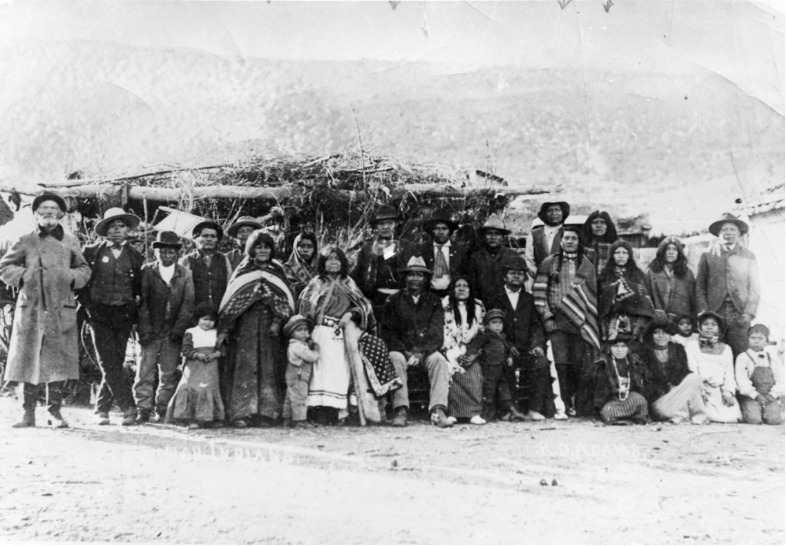
    <summary type="html"><![CDATA[<p><strong><em>In the midst of Utah’s Black Hawk War between the Latter-day Saints and local Indian tribes, a brutal massacre happened in the settlement of Circleville, resulting in the tragic deaths of men, women, and children of the Koosharem Band of Paiutes.</em></strong></p><img src="https://www.intermountainhistories.org/files/fullsize/82b7857c58d88b127610d63f624be8a3.jpg" alt="Local Koosharem Band several decades after the massacre" /><br/><p>In 1864, Brigham Young called fifty families to move into Paiute territory in Circle Valley, southern Utah. Initially, the settlement of Circleville boomed, and by 1865, nearly 100 families lived in Circleville. One inhabitant, Oluf Larsen, described relations with neighboring Paiutes as friendly. “There was a small tribe of friendly Indians living in the valley which we furnished with bread stuff and treated kindly. They in turn brought us venison and beaver meat.” Despite the seemingly mutually beneficial relationship, Larsen added, “we dared not attach too much confidence to them and watched their every move with suspicion.”
The settlers’ suspicions of the local Paiutes grew after one of Chief Black Hawk’s lieutenants, Tamartiz, led a raid on Circleville on November 25<sup>th</sup>, 1865. Although the Paiutes had nothing to do with the attack, the settlers were afraid of being attacked again and began acting more aggressively toward all American Indians. Violence increased in the area, with nearby settlements being raided and settlers killing Indians even suspected to be guilty of any crime against the settlers.
Growing tensions between local Indians and settlers increased and reached a climax in April of 1866. On April 22, Paiutes formerly viewed as friendly were spotted, allegedly behaving suspiciously, near Fort Sanford, 15 miles away from Circleville. A skirmish broke out between soldiers at the fort and the Indians, leaving one of the Paiutes dead and a soldier wounded.
When the Circleville settlers heard that previously peaceful Paiutes were involved in the skirmish, they grew suspicious that the Paiutes near them were involved with Black Hawk and were planning to attack the settlement. To prevent any potential attacks, the militia of Circleville, led by Major James T.S. Allred, went to the local Koosharem Band of Paiutes and convinced them to gather their people together and come to Circleville for a meeting, promising peace between the groups. A group of roughly 20 Paiutes gathered, and the men were led to the meetinghouse and tied together while the women and children were placed in a nearby cellar.      </p><p>The Circleville settlers then sent a message to Colonel W.H. Dame and hoped to receive instructions on what to do with the imprisoned Paiutes. Erastus Snow, religious leader over Southern Utah, was with Colonel Dame when he received the message, and Snow told Dame to ensure the prisoners were treated kindly. </p><p>Unfortunately, the message was not received in time. When several Paiute men attempted to escape, they, along with all the other male prisoners, were immediately shot. Fearing survivors would report the violence to Black Hawk and return with reinforcements, the Circleville guards proceeded to slit the throats of all the Paiute women and children who were old enough to remember the horrific event, sparing only a few children. A total of 15 to 18 Paiutes were killed.
Although the Circleville inhabitants claimed they acted in self-defense, today the event is remembered as a tragic massacre of innocent Paiutes. In honor of those murdered, on April 22, 2016, a monument with inscriptions written by the Paiute Tribe was dedicated in Circleville and includes the Paiute oral history of the event. The Tribe wrote: “None of us can ever hope to describe the emotions that these people might have felt. All we can do is honor their existence as human beings.”</p><p><em><strong><a href="https://www.intermountainhistories.org/items/show/477">For more (including 3 images) view the original article</a></strong></em></p>]]></summary>
    <published>2021-09-11T07:51:15+00:00</published>
    <updated>2026-04-17T19:32:10+00:00</updated>
    <link rel="alternate" type="text/html" href="https://www.intermountainhistories.org/items/show/477"/>
    <id>https://www.intermountainhistories.org/items/show/477</id>
    <author>
      <name>Bethany Erickson, Brigham Young University</name>
    </author>
  </entry>
  <entry>
    <title type="html"><![CDATA[Butch Cassidy’s Childhood Home]]></title>
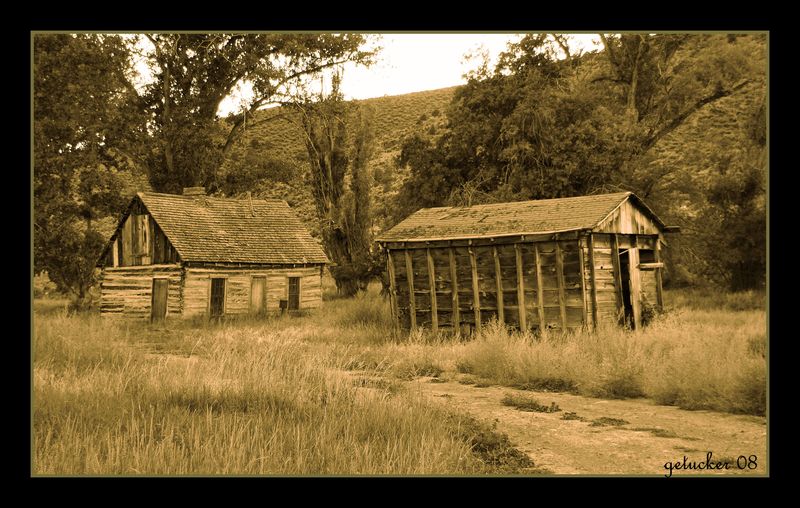
    <summary type="html"><![CDATA[<p><strong><em>Butch Cassidy worked hard to help provide for his family as a teenager on this homestead. It was the last place he lived with his family before going on to become an infamous outlaw. </em></strong></p><img src="https://www.intermountainhistories.org/files/fullsize/19f12888865cf412905d029dc4280975.jpg" alt="Butch Cassidy’s Childhood Home" /><br/><p>Robert Leroy Parker’s teenage years transpired on this homestead. Born on Friday, April 13, 1866, he would become known as the infamous Butch Cassidy. Butch’s parents, Maximillian and Annie Parker, moved Butch and his five younger siblings to this homestead when he was thirteen years old. Maxi and Ann had thirteen children total, and Butch started working to help provide for the family at thirteen years old. </p><p>In 1879 when the Parker family bought the homestead, there was already a two-room cabin on the property. As the family grew, Maxi added a kitchen on the east side and two bedrooms on the south side, expanding the house to its current size. The Parkers covered the ceiling in white cloth to make it feel less rugged. Each year, they also cleaned the homemade rag carpets and replaced the straw padding underneath them.</p><p>Though there was much hard work to be done, the Parkers still made time to have fun together. Butch, or Bob as his siblings called him, loved to take the children on pony rides or invent new games to play. They also shared a love for music, and Butch would often accompany everyone’s singing with his harmonica. There was also a fair amount of mischief. Once, Ann came home and noticed that the chickens were acting funny; reeling and stumbling around the yard. After some investigation, she figured out that the children had stolen some of their neighbor’s wine and filled pans with it for the chickens to drink. </p><p>Butch’s religious and family-centered upbringing does not match the typical origin story of an Old West outlaw. His grandparents were Mormon pioneers who crossed the plains in handcart and wagon train companies to follow their faith. But Butch started finding excuses not to go to church at a young age. Then he began to rub shoulders with outlaws like Mike Cassidy when he started working at Jim Marshall’s ranch located twelve miles south of Circleville. Mike took Butch under his wing and taught him about handling horses and guns. Butch looked up to Mike and many believe that Butch took his alias from this outlaw and cattle rustler. When Butch turned eighteen, he decided he didn’t want to scrap out a living in Circleville and wanted to go somewhere to get, “hard, solid gold.” When some thieves stole cattle in the area, Butch signed a false bill of sale and took the blame, riding out of town the day before it became known to the public. He left the homestead on an early April morning in 1884, leaving his mother to hold back his dog while he rode off on his mare Babe and lead his young colt Cornish. He sent money home often for the first few years and is considered one of the most well-liked and respected outlaws of the Old West.</p><p><em><strong><a href="https://www.intermountainhistories.org/items/show/198">For more (including 3 images) view the original article</a></strong></em></p>]]></summary>
    <published>2018-06-06T23:59:00+00:00</published>
    <updated>2026-04-17T19:32:02+00:00</updated>
    <link rel="alternate" type="text/html" href="https://www.intermountainhistories.org/items/show/198"/>
    <id>https://www.intermountainhistories.org/items/show/198</id>
    <author>
      <name>Samuel Hauber, Brigham Young University</name>
    </author>
  </entry>
</feed>