<?xml version="1.0" encoding="UTF-8"?>
<feed xmlns="http://www.w3.org/2005/Atom">
  <title type="text">Intermountain Histories</title>
  <updated>2026-04-17T19:32:16+00:00</updated>
  <generator uri="http://framework.zend.com" version="1.12.20">Zend_Feed_Writer</generator>
  <link rel="alternate" type="text/html" href="https://www.intermountainhistories.org/"/>
  <link rel="self" type="application/atom+xml" href="https://www.intermountainhistories.org/items/browse?output=rss2"/>
  <id>https://www.intermountainhistories.org/</id>
  <author>
    <name>Intermountain Histories</name>
    <uri>https://www.intermountainhistories.org</uri>
  </author>
  <link rel="hub" href="https://pubsubhubbub.appspot.com/"/>
  <entry>
    <title type="html"><![CDATA[Kam Wah Chung &amp; Co. ]]></title>
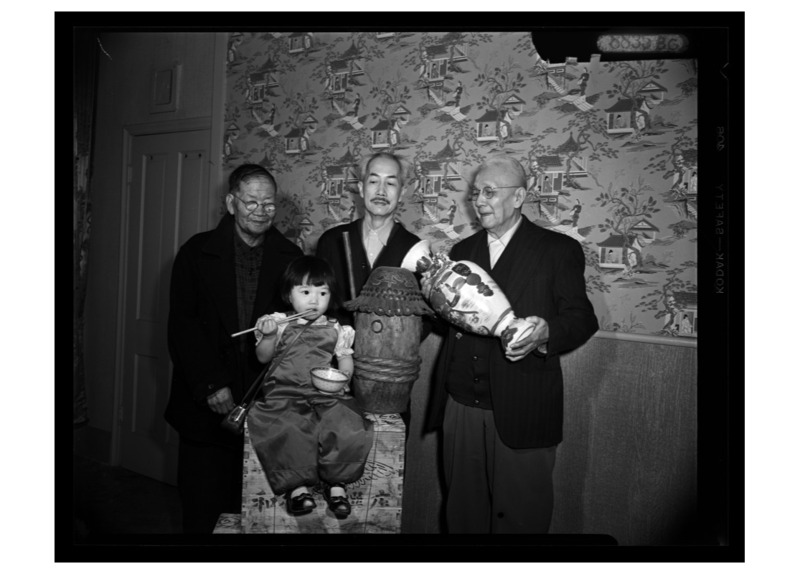
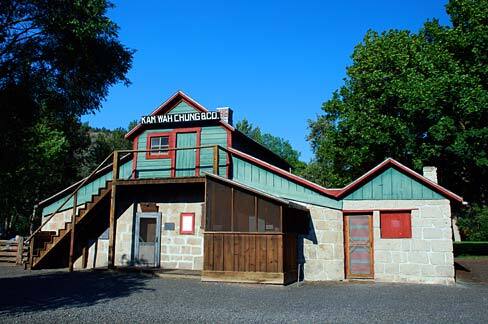
    <summary type="html"><![CDATA[<p><strong><em>In the 19th century, the United States rapidly expanded West. This expansion was expedited by the discovery of gold in the western mountains. Along with it came an influx of Chinese workers. As anti-Chinese sentiment festered during the latter half of the century, a medicine shop rose to prominence in John Day, Oregon.</em></strong></p><img src="https://www.intermountainhistories.org/files/fullsize/5bc7a3df9efef6793d330b545baa0691.jpg" alt="Kam Wah Chung Museum" /><br/><p><span style="font-weight:400;">Along the Dalles Military Road sits the small town of John Day, Oregon. In the mid-1860s, a Chinatown hub for the Chinese miners and immigrants emerged in the area. A small wooden building purchased by Ing Hay and Lung On served as the foundation for a business with—at the time—no promises for future success.</span> <span style="font-weight:400;">Ing Hay was both an herbalist and pulsologist, diagnosing patients based on their pulse. Born in 1862, he sought better fortunes in the Western United States in 1887. In John Day, Oregon, he met Lung On and purchased the dying Kam Wah Chung & Co. Locally known as “Doc” Hay, he treated a variety of ailments with traditional Chinese remedies based on Taoist teachings of harmony and balance. His clientele diversified and included more non-Chinese patients through the 1910s. </p> <span style="font-weight:400;">Lung On, on the other hand, was a savvy businessman fluent in both Chinese and English. He was also a Chinese immigrant and managed the business side of Kam Wah Chung which included pricing, inventory, translating and responding to letters. Locally known as “Leon”, he owned, co-owned, and invested in numerous other operations around Oregon, including businesses, land and mining claims, racehorses, and later an automotive dealership. He also provided a letter-writing service and assistance in navigating American laws for Chinese migrants and immigrants.</p> <span style="font-weight:400;">Together, the two transformed Kam Wah Chung & Co. into a successful mercantile, apothecary, and clinic. It also served as an education and community center. Kam Wah Chung served as an anchor for the surrounding Chinese community and a bridge for non-Chinese neighbors during an era of heightened anti-Chinese sentiment. This success continued into the early 20th century until Lung On’s death in 1940. Ing “Doc” Hay moved to Portland in 1948 due to failing health. The Kam Wah Chung & Co. has been converted into a museum that houses a plethora of Lung On’s untranslated ledgers and documents, Chinese medicinal recipes from Ing Hay’s days of practice, and records of the significant footprint Hay and On left on western U.S. history.</span>
<i><span style="font-weight:400;">Friends Of Kam Wah Chung, </span></i><span style="font-weight:400;">a non-profit organization, continues to research, translate, and excavate the cultural artifacts left behind in John Day. More information about current research and the museum can be found on their website, and much of their work is available to the public. Kam Wah Chung is now a state park and National Historical site.</span></p><p><em><strong><a href="https://www.intermountainhistories.org/items/show/743">For more (including 6 images) view the original article</a></strong></em></p>]]></summary>
    <published>2023-04-10T19:33:02+00:00</published>
    <updated>2026-04-17T19:32:16+00:00</updated>
    <link rel="alternate" type="text/html" href="https://www.intermountainhistories.org/items/show/743"/>
    <id>https://www.intermountainhistories.org/items/show/743</id>
    <author>
      <name>Emma Dutcher, Brigham Young University</name>
    </author>
  </entry>
  <entry>
    <title type="html"><![CDATA[Chinden Boulevard: Remembering Chinese Contributions to Boise]]></title>
    <summary type="html"><![CDATA[<p><strong><em>Many residents of Idaho’s capital know the name “Boise” comes from the French word for “wooded,” but will those who call “The City of Trees” home recognize another familiar name in the valley that recalls Idaho’s storied past as a culturally diverse frontier territory?</p></strong></p><img src="https://www.intermountainhistories.org/files/fullsize/a9f4450a4cbf7c33cbfa46eac170c193.jpg" alt="A Festival on Chinden" /><br/><p><span style="font-weight:400;">“Chinden Boulevard,” or US Highway 20/26 is a vital East-West artery of the Boise metropolitan area which connects suburban homes to the workplaces, restaurants, and entertainment centers of the capital city’s quaint downtown. Many commuters on this road, or those pleasure-seekers out for a night on the town, are, perhaps, unaware that the road’s name bears the memory of the Chinese immigrants who came to the region decades before Idaho achieved statehood. Instead of the tattoo parlors and used car lots lining the road today, near the end of the 19th century, the road passed acres of beautiful vegetable gardens planted and cared for by Chinese immigrants, thus earning the name “China-garden,” or “Chinden.”</span>
<span style="font-weight:400;">The discovery of gold in Southern Idaho in 1862 marked the beginning of a mass migration into the region that extended over the course of multiple decades and paved the way to statehood. Though united in their search for fortune and opportunity, the early prospectors and adventurers who braved this new frontier came from diverse cultural and ethnic backgrounds. One early resident of Idaho expressed his first impression of Boise in these words: “In the courtyard of the Overland Hotel I saw, the morning of my arrival in Boise, an Irishman, a Spaniard, a Frenchman, two Chinamen, a Canadian, an Englishman—and not an American.”</span>
<span style="font-weight:400;">Early Idaho was diverse and one prominent group in the cultural patchwork of the region was Chinese immigrants. In fact, in a population of about 20,600 in the territory of Idaho in 1869, 4,274 were Chinese. Though many Chinese came to the region in search of gold, over time they took up other pursuits. Indeed, it could be said that in the Idaho Gold Rush the Chinese abided by the idiom, “during a gold rush, sell shovels.” Instead of mining, many began shop keeping, cleaning laundry, raising pigs, and growing and selling vegetables to mining communities. Initially, the produce from these Chinese gardens was intended for Chinese miners, but—due to the quality and availability of the vegetables—the market quickly expanded outside Chinese circles to entire communities. The produce attracted such praise that one newspaper commented that, “most of their productions surpass in size and excellence the imported articles.” With Boise as the main supply center of the region and many Chinese looking to sell their goods and services to miner customers, many Chinese gravitated to the city, becoming a crucial part of both the city and territorial economy. In 1871, a newspaper noted that “The China population are planting gardens here pretty extensively. They are so patient and puttering that they do well.” These “patient and puttering” gardeners were known to group together to lease land for their various crops. Each took part in planting, harvesting, and selling their produce.</span>
<span style="font-weight:400;">During the growing season, work in the fields would begin before dawn. By sun-up, their carts would be loaded and ready for making deliveries to homes or selling vegetables in the streets. Another newspaper report illustrates a typical interaction between a Chinese vegetable peddler and their client: “John Chinaman makes his appearance at our door bright and early every morning, with the traditional pole and baskets, the latter filled with every variety of fresh plucked and cool vegetables.” Clearly, the Chinese presence in Boise was prominent as they filled a variety of needs for a variety of customers on a regular basis.</span>
<span style="font-weight:400;">While newspapers at times praised the industry of Chinese workers, their often patronizing tone is indicative of both the underlying and overt racism and persecution the Chinese in Idaho endured. Indeed, as far removed as the territory was, it was not far enough to escape the waves of anti-Asian legislation that spread in the wake of the Chinese Exclusion Act of 1882. After only a few decades, many Chinese left Idaho, and the once vibrant Chinese community became a shadow of what it once was. Today, Chinden Boulevard still passes through Garden City, the lowlands west of Boise’s downtown where scores of Chinese immigrants cultivated gardens to build themselves better lives. Though their exodus out of Idaho left a vacancy in Boise’s Chinese population that has not been filled since, the memory of their resolve in the face of adversity can continue to inspire generations of Idahoans as they travel along the old China-gardens road.</span></p><p><em><strong><a href="https://www.intermountainhistories.org/items/show/739">For more (including 3 images) view the original article</a></strong></em></p>]]></summary>
    <published>2023-04-07T18:08:21+00:00</published>
    <updated>2026-04-17T19:32:16+00:00</updated>
    <link rel="alternate" type="text/html" href="https://www.intermountainhistories.org/items/show/739"/>
    <id>https://www.intermountainhistories.org/items/show/739</id>
    <author>
      <name>Jacob Johnson, Brigham Young University</name>
    </author>
  </entry>
  <entry>
    <title type="html"><![CDATA[Anti-Chinese Riot in Tonopah, Nevada]]></title>
    <summary type="html"><![CDATA[<p><strong><em>Because of anti-Chinese attitudes in central Nevada, a mob of white union workers attacked Tonopah’s Chinatown in September of 1903. One Chinese man was killed and several others were injured, and Chinatown was destroyed. </em></strong></p><img src="https://www.intermountainhistories.org/files/fullsize/5db119f1bcc036387ec509da0fea5311.jpg" alt="Laundromat in Tonopah " /><br/><p><span style="font-weight:400;">Tonopah, Nevada is a small town in central Nevada that popped up in 1900 when silver was discovered in the area. Within a few years, the mining town was booming, and many Chinese immigrants, mainly men, moved to Tonopah seeking opportunity. The Chinese, however, were not actually allowed to mine in this part of Nevada, so they took up jobs as laundrymen and cooks. Although their labor was needed, white miners were still apprehensive about Chinese immigrants in town, and national anti-Chinese laws and broad anti-Chinese sentiment in the Western United States fomented resistance to their presence. Whereas many other outbursts of anti-Chinese violence in the west began when Chinese miners were hired to undercut unionized white miners, the Chinese population targeted in Tonopah were not hired to undercut potential strikes.</span>
<span style="font-weight:400;">On September 15, 1903, a group of about 30-50 white labor union members marched into Tonopah’s Chinatown and demanded the Chinese immigrants living there to leave in the next 24 hours. Later that day, a second, larger group of men came to Chinatown and began destroying the homes and businesses of the Chinese people. The mob burned down over 100 Chinese establishments and was responsible for the death of 66-year-old Chong Bing Long, who owned a laundromat in town and had lived in the United States for over 30 years. Long was not fast enough to escape the men in the mob, who robbed and beat him. They then drove him outside of town to the desert, where they beat him again and left him to die. Though this was the only death, several Chinese people received serious injuries from being beaten, with little being done by local police to protect them. </span>
<span style="font-weight:400;">In the aftermath, the Chinese returned to town to assess the damage. Fifteen white men were initially arrested for their involvement in the riot, but nine were immediately released and the other six were acquitted of all charges. The Chinese pulled all of their resources together to pay to convict members in the mob, but eventually ran out of money and had to stop pursuing the case.  The Chinese embassy tried to help, but was largely powerless. Many of the Chinese chose to stay in Tonopah, and several white locals told the Chinese they would, “work out a plan to provide protection” for them. Others left for nearby cities like Reno, and resentment for the Chinese gradually died down in Nevada over the next few years.</span></p><p><em><strong><a href="https://www.intermountainhistories.org/items/show/730">For more (including 6 images) view the original article</a></strong></em></p>]]></summary>
    <published>2023-03-06T22:40:44+00:00</published>
    <updated>2026-04-17T19:32:16+00:00</updated>
    <link rel="alternate" type="text/html" href="https://www.intermountainhistories.org/items/show/730"/>
    <id>https://www.intermountainhistories.org/items/show/730</id>
    <author>
      <name>Sydney Wilson, Brigham Young University</name>
    </author>
  </entry>
  <entry>
    <title type="html"><![CDATA[Anti-Chinese Riot near Virginia City, Nevada]]></title>
    <summary type="html"><![CDATA[<p><strong><em>In 1869, with anti-Chinese sentiment growing in the west, a mob in Virginia City, Nevada attempted to expel the Chinese immigrants from town. They raided the railroad where the Chinese were laying tracks, demanded their departure, and destroyed all of their property. </em></strong></p><img src="https://www.intermountainhistories.org/files/fullsize/b8f3b7605935f2ffe65447f76de43fe6.jpg" alt="Three Chinese Women and a Chinese Boy in Virginia City" /><br/><p><span style="font-weight:400;">In the latter half of the nineteenth century, thousands of people, including many immigrants, flocked to the Intermountain West region in search of economic opportunity. Virginia City, Nevada was a popular destination for these laborers due to its booming silver mining industry. The city sprung up in the late 1850s, and by the late 1860s, it was the largest mining town in Nevada. Most who migrated to Virginia City were of European descent, but the town also attracted many Chinese laborers. As was common in other parts of the country, the Chinese in Virginia City were willing to work for lower wages than other ethnic groups. This increased the competitiveness of the labor market in Virginia City and turned other groups against the Chinese community. </span>
<span style="font-weight:400;">In 1869, anti-Chinese sentiment was running high in Virginia City, and the unionized miners in the city decided to act against the Chinese laborers working on grading the Virginia and Truckee Railroad. On September 29th, a mob of nearly 400 men marched on the Chinese. Sensing trouble, Sheriff W. J. Cummings followed the mob and tried to stop them, but he was powerless against the mass of angered miners. When the mob arrived at the tracks, they demanded that the Chinese depart within thirty minutes and began destroying their property and makeshift residences. Luckily, no Chinese people were injured by the mob, but the property destruction was extensive. </span>
<span style="font-weight:400;">A week later, William Sharon, a railroad official, met with the leaders of the mob and came to an agreement with two provisions: first, the railroad would stop employing Chinese workers; and second, the mob would stop harassing the Chinese. Sharon was reluctant to enter into this agreement because he could employ Chinese laborers at a better rate than white laborers, but the mob could not be reasoned with. They simply wanted the Chinese gone. </span>
<span style="font-weight:400;">Local newspapers condemned the actions of the mob and called for those involved to be arrested; however, they knew it would be extremely difficult to find a jury who would convict the mob members. Indeed, no action was taken against any of the mob participants. By October 21st, the railroad only employed workers of European descent. Many of the Chinese people did leave town, but others found various forms of employment in the city. Chinese people faced continual discrimination in Virginia City, but they continued to find work and ways to send money back to their families in China and make a life in the country.</span></p><p><em><strong><a href="https://www.intermountainhistories.org/items/show/729">For more (including 6 images) view the original article</a></strong></em></p>]]></summary>
    <published>2023-03-06T22:17:52+00:00</published>
    <updated>2026-04-17T19:32:16+00:00</updated>
    <link rel="alternate" type="text/html" href="https://www.intermountainhistories.org/items/show/729"/>
    <id>https://www.intermountainhistories.org/items/show/729</id>
    <author>
      <name>Sydney Wilson, Brigham Young University</name>
    </author>
  </entry>
  <entry>
    <title type="html"><![CDATA[Denver Race Riot of 1880]]></title>
    <summary type="html"><![CDATA[<p><strong><em>General anti-Chinese sentiment in the nineteenth century was rapidly growing. This was particularly true in western cities like Denver. A saloon fight between several Chinese and white men led to the destruction of Denver’s Chinatown and to one of Colorado’s worst race riots in its history.</em></strong></p><img src="https://www.intermountainhistories.org/files/fullsize/6869a1e762d9d490541313b1f3600ab6.jpg" alt="Riot in Denver" /><br/><p><span style="font-weight:400;">Chinese immigration was a heavily discussed issue during the 1880 election cycle, especially in western states and territories where Chinese labor and communities were prevalent. Although Democrats and Republicans took an anti-Chinese labor stance in the election, many Democrats accused Republican presidential candidate, James A. Garfield, of favoring cheap Chinese labor over American or European immigrant labor. Denver, Colorado, which hosted a large Chinese population, provides a striking example of how these national anti-Chinese politics inflamed local tensions to the point of violence in the west. On October 30, 1880, a crowd of three thousand attended a Democratic Party anti-Chinese demonstration. As demonstrators held anti-Chinese signs, prominent Denver Democrats gave speeches outlining the supposed danger of continual Chinese immigration to the United States. </span>
<span style="font-weight:400;">Conflict broke out the following day. Two Chinese men were playing pool in a local saloon when a group of white men entered and started harassing them. John Asmussen, the saloon’s owner, advised the Chinese men to leave through the back door to avoid a fight, and the men complied. The white men, however, followed them out, and one of them struck one of the Chinese men with a board. A crowd gathered and soon the white men began attacking the Chinese people working in the laundromat next door. More and more people joined the growing white mob, and by the day’s end, three to five thousand people had stormed Chinatown. The mayor, Richard Sopris, and the fire department attempted to disperse the mob with a firehose, but this and the eight policemen on duty were largely powerless. The mob engaged in arson, robbery, destruction of property, rape, and violence. At some point, the mob forced a Chinese man named Look Young from his house, dragged through the town by a rope wrapped around his neck, beat him, and finally lynched him.</span>
<span style="font-weight:400;">It is likely the mob would have killed more, but citizens sympathetic to the Chinese plight prevented more deaths. A group of prostitutes from a nearby brothel protected about 30 Chinese people, while others opened their homes and businesses to the fleeing Chinese. The mayor helped establish safehouses in hotels, saloons, residences, and the jail. The riot died down by the next morning. That day, the Republican party held a rally condemning the actions of the mob. Due to the sheer size of the mob and chaos of the scene, few rioters were convicted of any crimes. The Chinese residents of Denver were not paid any sort of reparations. Around 100 Chinese residents chose to leave for other cities within the U.S. or return to China. The remaining Chinese residents chose to stay in Denver and rebuild Chinatown.</span></p><p><em><strong><a href="https://www.intermountainhistories.org/items/show/728">For more (including 4 images) view the original article</a></strong></em></p>]]></summary>
    <published>2023-03-06T22:02:22+00:00</published>
    <updated>2026-04-17T19:32:16+00:00</updated>
    <link rel="alternate" type="text/html" href="https://www.intermountainhistories.org/items/show/728"/>
    <id>https://www.intermountainhistories.org/items/show/728</id>
    <author>
      <name>Sydney Wilson, Brigham Young University </name>
    </author>
  </entry>
  <entry>
    <title type="html"><![CDATA[The Chinese-Italian &quot;War&quot;]]></title>
    <summary type="html"><![CDATA[<p><strong><em>Mounting tensions between competing Italian and Chinese mining groups in Como, Colorado climaxed on November 9, 1879 when Italian miners forced the Chinese out of their mining shaft and demanded their departure from Como. </em></strong></p><img src="https://www.intermountainhistories.org/files/fullsize/9d1cf2145afd4c047c062d1977e73ab1.jpg" alt="Today in Como" /><br/><p><span style="font-weight:400;">As immigrants flocked to the Mountain West for job opportunities throughout the latter half of the nineteenth century, they often faced multifold economic difficulties—low wages, lack of job availability, and the boom-and-bust nature of western industries, like mining. These conditions made for fierce competition between immigrants, who usually stuck to and watched out for their own ethnic groups. The mining town Como, Colorado provides a stark example of these dynamics. Como was founded in 1859 by mining prospectors, and became an important stop along the Denver, South Park, and Pacific Railroad in 1879 with the construction of a depot. That same year, the South Park Mining Company set up a mine in Como, and many flocked to the area. Italian immigrants were some of the first miners to move to Como, soon followed by Chinese immigrants.  While many Americans and Coloradoans viewed both Italians and Chinese as racially inferior, treatment of Chinese immigrants was usually worse. The Chinese were also willing to work for less money, so other Como miners viewed them as a threat to their jobs. </span>
<span style="font-weight:400;">Hoping to minimize conflict between the Chinese and Italian miners, the South Park Coal Company divided them into two different mining shafts.  However, as the number of Chinese miners began to eclipse the Italians, Italian workers began to panic that they might be altogether replaced.  Italians felt these fears were substantiated on November 9, 1879, when the company fired two Italian workers and hired two Chinese workers in their stead. Later that day, a group of around 30 Italians entered the Chinese mining shaft and demanded their departure. The Chinese persuaded the Italians to wait and talk with the mine manager, Edward Thayer, before doing anything drastic. When Thayer refused to fire the Chinese, the Italians beat him nearly to death, disarmed all the Chinese workers, and marched them out of the mine and into town, where they instructed them to leave Como. </span>
<span style="font-weight:400;">The South Park Coal Company reacted by firing all of the Italians involved. In the following weeks, Sheriff D. J. Cook was sent to protect the Chinese while they worked, which largely ended any physical threat. However, the violence had scared away many freight trains needed by the local businesses. Businessmen in the area were angered by the Italian’s action. Newspapers like the Rocky Mountain News leveraged this and other events to continually fan the flames of anti-Chinese sentiments in Colorado. These forms of anti-Chinese rhetoric added to the violent atmosphere that later culminated in the Denver Race Riot of 1880 and national anti-Chinese legislation.</span></p><p><em><strong><a href="https://www.intermountainhistories.org/items/show/725">For more (including 5 images) view the original article</a></strong></em></p>]]></summary>
    <published>2023-03-06T19:18:45+00:00</published>
    <updated>2026-04-17T19:32:16+00:00</updated>
    <link rel="alternate" type="text/html" href="https://www.intermountainhistories.org/items/show/725"/>
    <id>https://www.intermountainhistories.org/items/show/725</id>
    <author>
      <name>Sydney Wilson, Brigham Young University </name>
    </author>
  </entry>
  <entry>
    <title type="html"><![CDATA[The Pierce City Massacre: Violence Against Immigration Laborers]]></title>
    <summary type="html"><![CDATA[<p><strong><em>In 1885, one of Pierce, Idaho’s most popular residents was brutally murdered, and five Chinese men were charged with the crime. Furious about the murder, a group of vigilantes took custody of the Chinese men and lynched them a few miles outside of town.</em></strong></p><img src="https://www.intermountainhistories.org/files/fullsize/ef6d8ea863046d1bc8793f88bf3fb5bb.jpg" alt="Pierce, Idaho" /><br/><p><span style="font-weight:400;"> Pierce was a mining town located in northern Idaho that came to be dominated by a large Chinese population in 1885. Though the Chinese were legally banned from mining in Idaho when Pierce was settled, they were eventually given the right to mine if they paid a $4 monthly tax to the county government. With this adjustment, many Chinese migrated to the area. However, like in other western cities, Chinese presence was not particularly welcome, as others worried that their jobs would be taken by Chinese laborers who were willing to work for less money. They also saw the Chinese as dirty and incapable of assimilation. </span>
<span style="font-weight:400;">In 1885, an American merchant named D.M. Fraser was murdered, supposedly by a competing Chinese merchant, Lee Kee Nam. Fraser was a prominent man in the community, and the town was horrified and outraged when they found his body, which had been cut into pieces, in his own store. A group of vengeful vigilantes assembled, and they captured Lee Kee Nam and his business partner. The vigilantes threatened to hang the two men which led Lee Kee Nam and his partner to incriminate one another. After this, they rounded up three more Chinese men, who the mob claimed had actually committed the crime, and turned all five men over to the sheriff. The group was charged for Fraser’s murder and sent to trial. </span>
<span style="font-weight:400;">However, the five men were not given the chance to appear in court. While the sheriff and some of his men were transporting Lee Kee Nam and the other men to the court in the nearby town of Murray on September 18, 1885, they were confronted by a large group of armed men just a few miles outside of Pierce. The men overtook the sheriff’s posse, took the five Chinese men into custody, and lynched them. According to a newspaper report from the next day, a reporter “found the five Chinamen hanging by the necks on a pole lashed to two pine trees.” </span>
<span style="font-weight:400;">The Chinese government found the lynchings extremely upsetting and demanded reparations. The new territorial governor, Edward A. Stevenson, went to investigate the events, and it was found that Lee Kee Nam and his associate really had committed the crime. He used this as an excuse for the vigilantes’ behavior, and no one involved in the mob was ever prosecuted for their involvement. Stevenson did, however, urge Idahoans to stop harassing the Chinese, and there were few anti-Chinese incidents in Idaho following this lynching. </span></p><p><em><strong><a href="https://www.intermountainhistories.org/items/show/724">For more (including 6 images) view the original article</a></strong></em></p>]]></summary>
    <published>2023-03-06T18:24:51+00:00</published>
    <updated>2026-04-17T19:32:16+00:00</updated>
    <link rel="alternate" type="text/html" href="https://www.intermountainhistories.org/items/show/724"/>
    <id>https://www.intermountainhistories.org/items/show/724</id>
    <author>
      <name>Sydney Wilson, Brigham Young University</name>
    </author>
  </entry>
  <entry>
    <title type="html"><![CDATA[Salt Lake’s Forgotten Chinatown<br />
]]></title>
    <summary type="html"><![CDATA[<p><strong><em>In the 1860s, Plum Alley, Utah’s original Chinatown, was founded in the heart of downtown Salt Lake City. It was built near today’s Regent Street in between First and Second South. Due to anti-Chinese sentiment in America and the Chinese immigrant mentality of coming to work in America to gain a fortune then to return to China, most Chinese communities in Utah rose and fell in a single generation. </em></strong></p><img src="https://www.intermountainhistories.org/files/fullsize/a2cbd6f9bd8c2d68992bba10644486f3.jpg" alt="A Chinese family gathers for a picture in a Plum Alley Building.
" /><br/><p>As the transcontinental railroad was being finished in 1869, some Chinese laborers moved south. These railroad workers helped establish the Plum Alley community. Originally just a dirt track, Plum Alley grew to be a narrow road surrounded by a few buildings, mostly tenements. A heavy majority of the Chinese who made up Plum Alley were male. These bachelors came from China to earn money in America through physical labor jobs unwanted by most Americans. Railroad worker, miner, launderer, and household servant were the most commonly held jobs. Rather than start a new life in America, most Chinese immigrants planned on earning money, then taking their fortunes back to China to start a family. Despite the noticeable lack of women, Plum Alley was a tight-knit community that grew and diversified. </p><p>Laundries, Asian grocery stores, Chinese restaurants, and tenements popped up along Plum Alley. The two most frequented buildings were the Joss House and the Bing Kong Tong. The Joss House opened in 1895 as a religious hub where a statue of Quon Kong, a god of war, was worshiped. The most prominent celebration took place on New Years, when food offerings were offered to Quon Kong. The Bing Kong Tong was a social institution that offered physical and psychological security, and helped individuals find jobs and access legal services. It also provided social activities for lonely Chinese immigrants. </p><p>The Plum Alley Chinese enclave survived mostly on its own without social contact with other ethnic groups. Many Utahns viewed Plum Alley and other “Chinatowns” suspiciously as centers for vice and illegal activity. Gambling, opium dens, and occasional brothels caused Utahns to oppose the growth of Chinese communities in Utah even though the Chinese were known to be reliable workers that did the jobs that nobody else wanted to do. Regular anti-Chinese sentiments resulted in restricting Chinese mobility and opportunity, concentrating their lives in the small community. The 1890 Census enumerated only 269 people of Chinese descent in Salt Lake City with most of them living in Plum Alley. After 1890, the Chinese population waned. Only 194 Chinese were in Salt Lake according to the 1930 Census. After the decline of Plum Alley, the Chinese population in Utah drastically jumped about 50 years later. Because of the repealment of federal Chinese exclusion laws in the 1940s, the number of Chinese immigrants in Utah reached over 1,700 in Salt Lake by 1970.</p><p>Despite racial persecution and the Chinese exclusion laws of 1882, Plum Alley’s collapse was caused by the Great Depression. The economic crisis forced Chinese businessmen to close stores and operations and many returned to China without their sought-after fortune. By 1940, many tenements in Plum Alley were vacated and demolished. Then, In 1952, Plum Alley was officially abandoned and razed so that a parking structure could be built in its place. In less than 100 years, Salt Lake City’s first Chinatown was built and destroyed, leaving only the stories of Chinese immigrants in its place. </p><p><em><strong><a href="https://www.intermountainhistories.org/items/show/443">For more (including 4 images) view the original article</a></strong></em></p>]]></summary>
    <published>2020-10-31T06:27:15+00:00</published>
    <updated>2026-04-17T19:32:09+00:00</updated>
    <link rel="alternate" type="text/html" href="https://www.intermountainhistories.org/items/show/443"/>
    <id>https://www.intermountainhistories.org/items/show/443</id>
    <author>
      <name>Josie Manwill, Brigham Young University</name>
    </author>
  </entry>
  <entry>
    <title type="html"><![CDATA[The Rock Springs Massacre of 1885 <br />
]]></title>
    <summary type="html"><![CDATA[<p><strong><em>In Rock Springs, Wyoming a fatal display of jealously and racism took place against Chinese immigrants on September 2, 1885. </p></strong></p><img src="https://www.intermountainhistories.org/files/fullsize/4813f8fd04b20abf1d38258622e59ced.jpg" alt="Rock Springs Massacre" /><br/><p>The first large wave of Chinese immigrated to California in 1848 in search of gold. The Chinese labored in mines and railroads. Companies loved Chinese laborers because they worked longer hours than their white counterparts and for less pay. Many white laborers in the West felt threatened by the Chinese laborers because of the lower wages and poorer conditions they worked for. The Chinese laborers experienced discriminated in political, social, and economic life. Some examples of this discrimination include denied citizenship, negative social stereotypes, and lower wages.  </p><p>In 1882 the United States Congress passed the Chinese Exclusion Act, which prohibited Chinese from entering the United States. It did not directly impact those immigrants already in America although violence and discrimination towards Chinese increased. </p><p>One of the notorious atrocities occurred in Rock Springs, Wyoming in 1885. Over 600 Chinese lived there with 250 white workers at the mine run by the Union Pacific Railroad. White laborers had tried to unionize to protect wages but the Chinese laborers did not unionize with them. On the morning of September 2, 1885, a fight broke out between Chinese and Caucasian miners. The white workers went to town and rallied people together to go and attack the China town portion of Rock Springs across Bitter Creek. The mob gave the Chinese an hour to leave but the mob attacked a half hour after the warning. They burned all the homes in Chinatown, killed twenty-eight Chinese laborers and injured fourteen more as a direct result of the massacre. </p><p>In Wyoming Territory, Governor Francis F. Warren telegraphed President Grover Cleveland on September 7, 1885, asking for federal troops to come to the aid of Wyoming to help control the mob telling him that the mob would not allow the Chinese to return to the city. The president commanded the army to protect the Chinese laborers and they went back to the mines with the guaranteed protection of the army. None of the murderers were prosecuted. The white laborers felt as though the federal government, in protecting the Chinese, enabled and upheld a type of slavery that negatively impacted their ability to compete. This incident served as catalyst for other anti-Chinese race riots that occurred throughout the United States. </p><p><em><strong><a href="https://www.intermountainhistories.org/items/show/276">For more (including 4 images) view the original article</a></strong></em></p>]]></summary>
    <published>2019-02-09T04:16:46+00:00</published>
    <updated>2026-04-17T19:32:04+00:00</updated>
    <link rel="alternate" type="text/html" href="https://www.intermountainhistories.org/items/show/276"/>
    <id>https://www.intermountainhistories.org/items/show/276</id>
    <author>
      <name>Sarah Adams, Brigham Young University</name>
    </author>
  </entry>
  <entry>
    <title type="html"><![CDATA[Chinese Pioneers of the Boise Basin]]></title>
    <summary type="html"><![CDATA[<p><strong><em>Late nineteenth-century gold rush communities in southern Idaho’s Boise Basin were often home to diverse and international populations.  Among this population were many Chinese immigrants who, although mostly male, also included women and children.  Though their tenure in the region was brief, the Chinese men, women, and children of the Boise Basin helped to shape the communities and the landscape that define the region today.</em></strong></p><img src="https://www.intermountainhistories.org/files/fullsize/12f925087aceef9a1efafe05e79738ee.jpg" alt="Chinese Street Scene" /><br/><p>Chinese immigrants began arriving in the mountainous and mineral-rich Boise Basin in the 1860s. Their population expanded following the repeal of a local law excluding Chinese miners from the Basin and the departure of European Americans as easy-to-work claims were exhausted. In many cases, Chinese immigrants purchased claims abandoned by others, thus revitalizing local economies. Others entered the Boise Basin as entrepreneurs and began providing goods and services to a growing population. Between 1870 and 1890, places like Centerville, Pioneerville, Placerville, and Idaho City were home to over 1,500 Chinese individuals who accounted for nearly 50 percent of the local population. </p><p>As in other historical Western communities, most Chinese immigrants were men. Despite arriving in smaller numbers and facing disproportionally restrictive legal and social barriers, Chinese women and children were nonetheless a part of the Western landscape in the late nineteenth and early twentieth centuries.  By 1870 at least 54 Chinese women and 10 Chinese children were living in Centerville, Pioneerville, Placerville, and Idaho City. Late nineteenth-century census data describe most single Chinese women as prostitutes or placer miners. These were not exclusive employment strategies, however. Both as wives and domestic laborers, Chinese immigrant women were part of households that earned a living by informally peddling goods or by operating stores, restaurants, groceries, or laundries.</p><p>In addition to domestic and economic activities, historical Boise Basin newspapers indicate that Chinese immigrant women also regularly participated in weddings, funerals, and festivals, as well as local community and cultural events that would have made them an undeniable part of the social and economic fabric of the Boise Basin. Unlike in San Francisco and other urban locations, Chinese children in Idaho City were not excluded from public schools.  As members of the diverse Boise Basin community, Chinese women and children interacted with their neighbors in a variety of capacities and helped to define the local character.  For example, For Cue Di Sang, the granddaughter of Idaho City merchant Loke Kee and a second-generation Idahoan, formed a friendship with her European American neighbors that continued through correspondence for decades after her family relocated to China.  </p><p>Chinese exclusion laws and changes in mining technology drove most Chinese from the Boise Basin in the early twentieth century. Mining has continued at a small scale but, currently, most economic activity centers around tourism and recreation in the Boise National Forest. The demographics have changed, but the legacy of the Chinese men, women, and children who contributed to the social and economic history of these communities endures in local historical museums like the Boise Basin Museum and the Pon Yam House in Idaho City.  Over a century of mining, much of which was carried out by Chinese immigrants, has left an undeniable imprint on the landscape of the Basin.  Visitors can see the sheer scale of this impact in the vast array of mining features that are the backdrop for recreation activities in the Boise National Forest today.  </p><p><em><strong><a href="https://www.intermountainhistories.org/items/show/141">For more (including 5 images) view the original article</a></strong></em></p>]]></summary>
    <published>2018-02-06T21:47:10+00:00</published>
    <updated>2026-04-17T19:32:01+00:00</updated>
    <link rel="alternate" type="text/html" href="https://www.intermountainhistories.org/items/show/141"/>
    <id>https://www.intermountainhistories.org/items/show/141</id>
    <author>
      <name>Renae Campbell, University of Idado</name>
    </author>
  </entry>
  <entry>
    <title type="html"><![CDATA[Silver City, A Town with Three Graveyards]]></title>
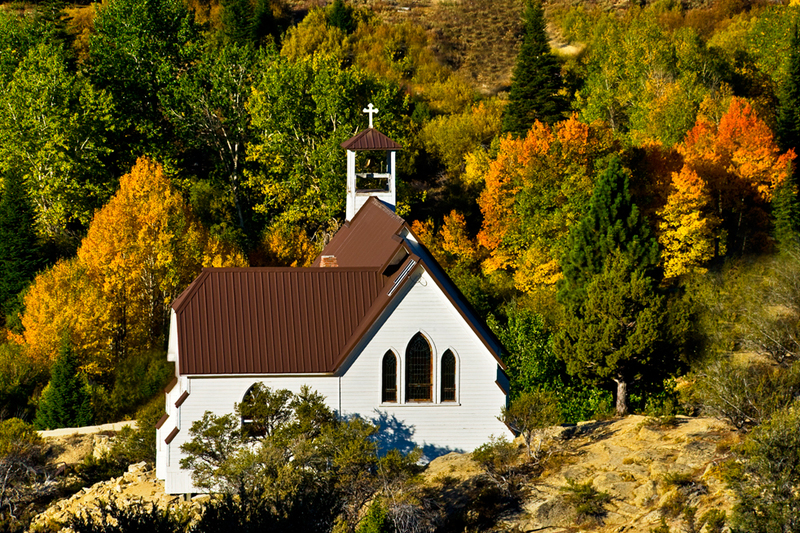
    <summary type="html"><![CDATA[<p><strong><em>Once a thriving mining town in Southeastern Idaho, Silver City is now a quiet and fascinating ghost town—a tiny slice of history preserved at the end of a precarious and winding dirt road. Finding the Chinese history of Silver City takes some work.</em></strong></p><img src="https://www.intermountainhistories.org/files/fullsize/283f04590c19050cb8d60ff36bd9d2d9.jpg" alt="Church in Silver City, Idaho" /><br/><p>Today, Silver City is kept alive by tourists. Visitors can stay in an antiquated hotel, which only recently procured indoor plumbing, and walk around the small town. There is a beautiful white chapel on the hill, a small general store that boasts crystallized rock candies from a bygone age, and dilapidated buildings. While the town is not large, a signpost points to two different graveyards: the Masons/I.O.O.F Cemetery and the Silver City Citizens Cemetery. A third cemetery can be found only if you already know where it is—far up on the Slaughterhouse Gulch hill away from town, with a small sign that simply reads, “Cemetary.” It was here where the Chinese were buried. </p><p>Like many other Chinese miners in Idaho Territory, the Chinese in Silver City arrived a little after their white counterparts and began to mine the unwanted tracts of land. With time, the Chinese accounted for 21% of Silver City’s population.  While they largely mined, some Chinese also worked as merchants. Examples include Sung Chong, who sold Chinese and Japanese fancy goods, Lee Long who owned a Chinese store, and Tong Chung Lung, who ran the Star restaurant. </p><p>In general, the Chinese lived segregated from the whites, and their cemetery was separated as well. Immigrant Chinese had very strict customs regarding death and interment. Believing that it was of the upmost importance for living descendants to pay reverence to the deceased for the spiritual well-being of both the living and the dead, most Chinese Americans’ bones were exhumed and sent back to China. In systematic fashion, Chinese officials and companies (such as the Six Companies) traveled through western United States and oversaw the exhumation and removal of Chinese bodies. </p><p>All but one of the Chinese graves were exhumed in Silver City, and although the graves are empty, the “Cemetary” on Slaughterhouse Gulch hill reminds that among the romanticized memories of a bustling mining town, also lived the Chinese. </p><p><em><strong><a href="https://www.intermountainhistories.org/items/show/130">For more (including 5 images) view the original article</a></strong></em></p>]]></summary>
    <published>2018-02-01T19:20:56+00:00</published>
    <updated>2026-04-17T19:32:00+00:00</updated>
    <link rel="alternate" type="text/html" href="https://www.intermountainhistories.org/items/show/130"/>
    <id>https://www.intermountainhistories.org/items/show/130</id>
    <author>
      <name>Dani Carmack, Brigham Young University</name>
    </author>
  </entry>
  <entry>
    <title type="html"><![CDATA[Pon Yam House, Idaho City]]></title>
    <summary type="html"><![CDATA[<p><strong><em>On the corner of Montgomery and Commercial Street in Idaho City, Idaho, there is a small inconspicuous, brick house. A sign identifies it as the “Pon Yam House.”</p><p>The last remaining trace of the once bustling Chinese community in Idaho City, the Pon Yam house gives us a glimpse into the lives of Chinese miners in the Boise Basin area.</p></strong></p><img src="https://www.intermountainhistories.org/files/fullsize/30fc4b37f1647740ccf404ec2af37747.jpg" alt="Pon Yam House" /><br/><p>Between 1860 and 1875, the Chinese population in Idaho dramatically increased. In fact, at its height, the Chinese accounted for over 30 percent of the state’s population—the highest per capita amount in the entire nation. Following the alluring promise of gold, Chinese miners flocked to Idaho’s mountains. These Chinese miners, just like their white counterparts, bought mining claims and settled into their newfound communities. </p><p>While the immigrant Chinese experience varied from individual to individual, the experiences of Chinese miners in Idaho City were relatively positive. Although they faced some discrimination, overall, they were able to fairly purchase land, safely mine, and establish businesses. Pon Yam, a miner and businessman, was arguably the most well-known of the Chinese community in Idaho City. Rumored to have possessed a two-carat diamond ring—the largest in the area—Pon Yam became a successful merchant.  Smoothly navigating the American legal and financial system, Pon Yam ran a store in the middle of Idaho City, which locals called the “Pon Yam House.” </p><p>Well respected by both whites and Chinese, Pon Yam lived in Idaho City for 20 years before returning to his hometown in China. During his sojourn in Idaho, the Pon Yam House became the heart of the Chinese community. Festivals and other Chinese celebrations were held at the store and for these special occasions, Pon Yam would decorate the store with his own paintings and ornaments. Additionally, Pon Yam and other Chinese participated in local American festivities. One newspaper reported that during a Fourth of July celebration Pon Yam and other prominent white merchants donated money for a new schoolhouse. </p><p>Today, the Pon Yam House serves as a reminder of the integral role Chinese played in the early history of Idaho City. Furthermore, Pon Yam’s life demonstrates that Chinese immigrants were both active and effective members of their community. </p><p><em><strong><a href="https://www.intermountainhistories.org/items/show/129">For more (including 4 images) view the original article</a></strong></em></p>]]></summary>
    <published>2018-02-01T19:11:18+00:00</published>
    <updated>2026-04-17T19:32:00+00:00</updated>
    <link rel="alternate" type="text/html" href="https://www.intermountainhistories.org/items/show/129"/>
    <id>https://www.intermountainhistories.org/items/show/129</id>
    <author>
      <name>Dani Carmack, Brigham Young University</name>
    </author>
  </entry>
  <entry>
    <title type="html"><![CDATA[Polly Bemis House]]></title>
    <summary type="html"><![CDATA[<p><strong><em>Although most immigrants coming to the American West from China in the 19th century were male, some women came as well.  Many, however, were unwilling immigrants, brought by force and  compelled to work as prostitutes. While we know very little about the stories of these individuals, we do know about Polly Bemis, a unique Chinese immigrant who left an indelible impression on her community.</em></strong></p><img src="https://www.intermountainhistories.org/files/fullsize/b834364967f843e802cca3b3464f4e1c.jpg" alt="Chas. A &amp; Polly Bemis" /><br/><p>Born in Northern China, Polly Bemis came to the United States as a young woman. The details surrounding her arrival are unclear, but it appears as if Polly’s impoverished family sold her to bandits. These bandits shipped her to the United States and where she was eventually sold to Hong King, an older man running a salon in mining town of Warrens, Idaho. </p><p>Polly worked for Hong King for several years and many friends while there. Often described as young and beautiful with many charms, Polly was well liked by both the locals and people passing through the town. Polly’s neighbor, saloon owner Charlie Bemis, became one of her closest friends—and then lover—and he would often protect her from unwanted advances in Hong King’s saloon. Although it was rumored that Charlie Bemis “won” Polly in a poker game with Hong King, it would be many years after this legendary game that Charlie and Polly married. </p><p>In 1892, the Geary Act was passed, which required all Chinese immigrants to have legal residence in the United States. Polly, however, like many other Chinese female prostitutes, had entered the United States illegally. Perhaps in response to this, Charlie Bemis married Polly in 1896 and she was able to obtain an official certificate of residence, despite laws prohibiting interracial marriages. </p><p>In her later years, and after the death of her husband, Polly continued living on their small farm. Close friends with her neighbors, Polly called them every day on the telephone and they would check on her and chop her wood. Other friends took her to Montana and Boise, where she was amazed to see the railroad for the first time. </p><p>Polly’s bright and mischievous personality won her many friends and today, her house stands as a monument to her resilient life. Many of her possessions can be found in nearby St. Gertrude’s museum. Despite facing many challenges as a Chinese female in the American West, Polly’s irrepressible spirit continues to echo across rural Idaho.  </p><p><em><strong><a href="https://www.intermountainhistories.org/items/show/128">For more (including 4 images) view the original article</a></strong></em></p>]]></summary>
    <published>2018-02-01T19:05:07+00:00</published>
    <updated>2026-04-17T19:32:00+00:00</updated>
    <link rel="alternate" type="text/html" href="https://www.intermountainhistories.org/items/show/128"/>
    <id>https://www.intermountainhistories.org/items/show/128</id>
    <author>
      <name>Dani Carmack, Brigham Young University</name>
    </author>
  </entry>
  <entry>
    <title type="html"><![CDATA[Chinese Massacre Cove]]></title>
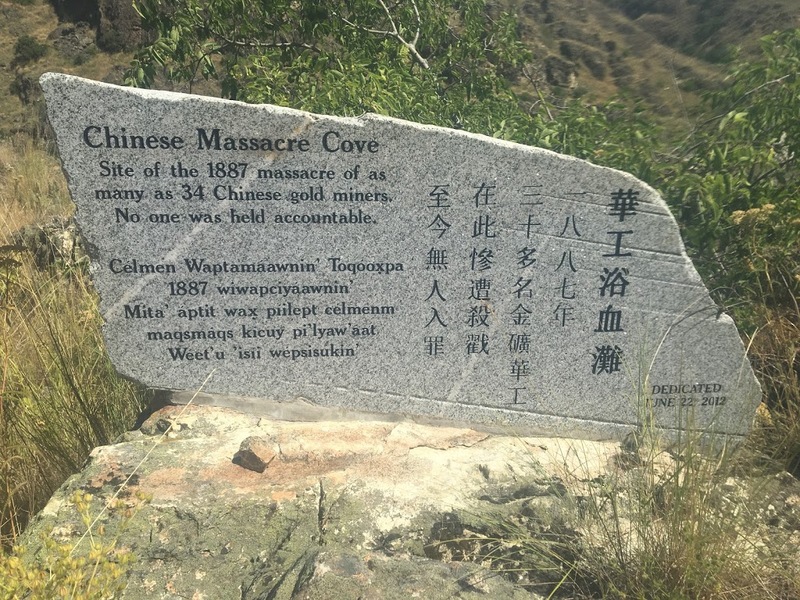
    <summary type="html"><![CDATA[<p><strong><em>Chinese Massacre Cove is located along a desolate and remote part of the Snake River—a dusty river bank in the middle of Hells Canyon—straddling the Oregon-Idaho border. Prospective visitors can only get there by either an arduously hot hike or by riverboat. Once there, the spot does not look much different from other parts of the river, except for an inscribed stone. This memorial stone describes the tragic events that took place here over 130 years ago.</em></strong></p><img src="https://www.intermountainhistories.org/files/fullsize/5693672d452077ca8fef11df17598de5.jpg" alt="Chinese Massacre Cove" /><br/><p>Many Chinese immigrants to the United States in the 19th century came to work as laborers and miners. They faced considerable discrimination and challenging working conditions in the American West. Usually reworking claims that American miners had deserted for more promising land, the Chinese also were at times prohibited by law to own mining claims and were forced to pay a special “Chinese” monthly tax. </p><p>The Chinese mining the Snake River tract of land, known today as Chinese Massacre Cove, were likely working under similar circumstances as their counterparts throughout the west. Not much is known about them—not even their names. However, what is known is that in May 1887 they were brutally murdered while working their mine. The motive is unknown, but most assume the murderers were after their gold. The exact details surrounding the massacre are ambiguous. Despite confessions by a few of the murderers, no one was ever convicted for the deaths of the 31-34 Chinese. </p><p>One of the worst massacres of Chinese people in the United States, Chinese Massacre Cove has received little public attention. Despite contemporary pleas by the Chinese delegates to track down the killers, few efforts were taken to incarcerate the ones responsible or to find out exactly what happened. Only recently have dedicated parties attempted to resurrect the tragedy, making the site an official historical area in 2009—a reminder of the often fatal discrimination Chinese workers faced in the American West. </p><p><em><strong><a href="https://www.intermountainhistories.org/items/show/127">For more (including 2 images) view the original article</a></strong></em></p>]]></summary>
    <published>2018-02-01T18:52:23+00:00</published>
    <updated>2026-04-17T19:32:00+00:00</updated>
    <link rel="alternate" type="text/html" href="https://www.intermountainhistories.org/items/show/127"/>
    <id>https://www.intermountainhistories.org/items/show/127</id>
    <author>
      <name>Dani Carmack, Brigham Young University</name>
    </author>
  </entry>
  <entry>
    <title type="html"><![CDATA[Boise&#039;s Chinatown]]></title>
    <summary type="html"><![CDATA[<p><strong><em>Walking around Boise today, there is little evidence of a bustling Chinatown—no markers, signs, or old buildings. In fact, most people would be surprised to learn that a large population of Chinese people once lived in Boise.  In fact, the Chinese community was strong and active in the early years of the city’s history</em></strong></p><img src="https://www.intermountainhistories.org/files/fullsize/f098af98c1e67d4e82ded64443854cf3.jpg" alt="Chinese New Year Parade" /><br/><p>Similar to the rest of Idaho, Boise was home to many Chinese immigrants in the mid to late 1800s. Integral to Boise’s history, Boise’s first Chinatown was first located in the middle of downtown Boise, on Idaho Street. Attracted to the Boise Basin area for its gold mines, many Chinese immigrants arrived to earn funds to return home to their families in China. Thousands of Chinese arrived at Boise and its surrounding area in the 1860s. However, by 1920, fewer than 600 remained. Despite the brevity of this period, Chinese immigrants left an impact on Boise that is often forgotten. </p><p>Cultural celebrations and parades in Boise's Chinatown were a key factor in raising its prominence in the broader community. Chinese parades fascinated the locals, and many residents of Boises took to the streets to watch the strange and colorful parades. Government officials, invited by Chinese associations, would also attend. During an era where Chinese were often discriminated against, the festivals provided Chinese immigrants a chance to celebrate their heritage. Moreover, these celebrations helped Chinese immigrants feel at home in a foreign land, and provided a way for them pass on Chinese cultural traditions to their children. </p><p>Despite the popularity of such events, all was not well in the community. Boise’s early Chinatown was often a violent place. First, Chinese immigrants faced violence from locals, such as Billy Haug robbing laundryman Wong Hong—and being acquitted for the act. Anti-Chinese sentiments grew from cultural, social, and economic rifts. There was also internal conflict. Belonging to different “tongs” or organizations, there was constant friction between the different groups of Chinese. Newspapers constantly reported on the various skirmishes between the tongs. Local Chinese leaders tried to control the violence by signing peace agreements. </p><p>Today, there are no historical markers to indicate Boise’s long-ago Chinese presence. Boise’s Chinatown is not a ghost town, but a town that has been completely subsumed by Boise’s cityscape. The last original Chinese building was removed in 1970 to make way for renovations. The presence and contributions of early Chinese immigrants to Boise merit remembrance.</p><p><em><strong><a href="https://www.intermountainhistories.org/items/show/126">For more (including 5 images) view the original article</a></strong></em></p>]]></summary>
    <published>2018-02-01T18:42:28+00:00</published>
    <updated>2026-04-17T19:32:00+00:00</updated>
    <link rel="alternate" type="text/html" href="https://www.intermountainhistories.org/items/show/126"/>
    <id>https://www.intermountainhistories.org/items/show/126</id>
    <author>
      <name>Dani Carmack, Brigham Young University</name>
    </author>
  </entry>
  <entry>
    <title type="html"><![CDATA[Golden Spike National Historic Site and the Chinese Arch]]></title>
    <summary type="html"><![CDATA[<p><strong><em>On May 10, 1869 the Central Pacific’s Jupiter and Union Pacific’s No. 119 locomotive trains triumphantly met in Promontory Point, Utah. Railroad officials hammered the final spike—a 17.6 karat gold spike—into the track. Photographers snapped an official picture of the sensational moment and newspapers across the country reported that, finally, the dream of a great American transcontinental railroad had been realized. Unrepresented in the famous photographs, however, are the Chinese laborers who toiled to complete the railroad throughout the American West.</em></strong></p><img src="https://www.intermountainhistories.org/files/fullsize/3610cbd1221092d8a32bac234dc459d6.jpg" alt="Chinese Arch" /><br/><p>Today, sightseers can visit the Golden Spike National Historic Site and see the exact point where the Central Pacific and Union Pacific railroad companies converged. Two jauntily painted trains both replicate and celebrate this important moment in America’s western history. However, to the east of the site is a small, yet unique formation of rocks—a green-tinted rock arch. A plaque next to the rocks identifies it as the “Chinese Arch.” First called “Chinamen’s Arch” by 19th century railroad passengers who simultaneously saw the arch and Chinese railroad worker camps as they rounded a bend in the tracks, today the arch pays homage to the thousands of Chinese workers who helped build the railroad. </p><p>Building the railroad was a grueling and nearly impossible task. The Central Pacific railroad company, in particular, struggled finding a reliable labor force willing to challenge the formidable Sierra Nevada. Desperate, railroad executive Charles Crocker turned to Chinese immigrants as an experiment. Doubtful at first of the ability of the Chinese to perform such backbreaking labor, Crocker was soon impressed with his new workers’ diligence and he began hiring the Chinese in earnest. At first recruited from California and then as demand increased, from China, soon 4 out of every 5 hired railroad workers were Chinese. </p><p>Paid at a lower rate than their white counterparts and often facing racial discrimination, the Chinese workforce courageously blasted, shoveled, drilled, picked, and hammered their way through the Sierra Nevada and Great Basin regions. Largely in charge of leveling the earth into the correct grading for the tracklayers, the Chinese were also given the more dangerous tasks, such as dynamiting. Hanging precariously from ropes, the workers would set the dynamite in the rockface and then get pulled to safety by their coworkers. Faulty dynamite explosions, avalanches, and sicknesses claimed the lives of many, although the exact number is unknown. </p><p>While the Chinese contribution to the transcontinental railroad has historically been overlooked, the “Chinese Arch” reminds us of the once-invisible workforce that made the railroad possible. It was only through their efforts that allowed the lagging Central Pacific to meet with the Union Pacific in Promontory Point, Utah and their overall impact on the building of the great transcontinental railroad is immeasurable. </p><p><em><strong><a href="https://www.intermountainhistories.org/items/show/123">For more (including 6 images) view the original article</a></strong></em></p>]]></summary>
    <published>2018-02-01T04:08:34+00:00</published>
    <updated>2026-04-17T19:32:00+00:00</updated>
    <link rel="alternate" type="text/html" href="https://www.intermountainhistories.org/items/show/123"/>
    <id>https://www.intermountainhistories.org/items/show/123</id>
    <author>
      <name>Dani Carmack, Brigham Young University</name>
    </author>
  </entry>
</feed>