<?xml version="1.0" encoding="UTF-8"?>
<feed xmlns="http://www.w3.org/2005/Atom">
  <title type="text">Intermountain Histories</title>
  <updated>2026-04-17T19:32:17+00:00</updated>
  <generator uri="http://framework.zend.com" version="1.12.20">Zend_Feed_Writer</generator>
  <link rel="alternate" type="text/html" href="https://www.intermountainhistories.org/"/>
  <link rel="self" type="application/atom+xml" href="https://www.intermountainhistories.org/items/browse?output=rss2"/>
  <id>https://www.intermountainhistories.org/</id>
  <author>
    <name>Intermountain Histories</name>
    <uri>https://www.intermountainhistories.org</uri>
  </author>
  <link rel="hub" href="https://pubsubhubbub.appspot.com/"/>
  <entry>
    <title type="html"><![CDATA[Golden: A Ghost Town]]></title>
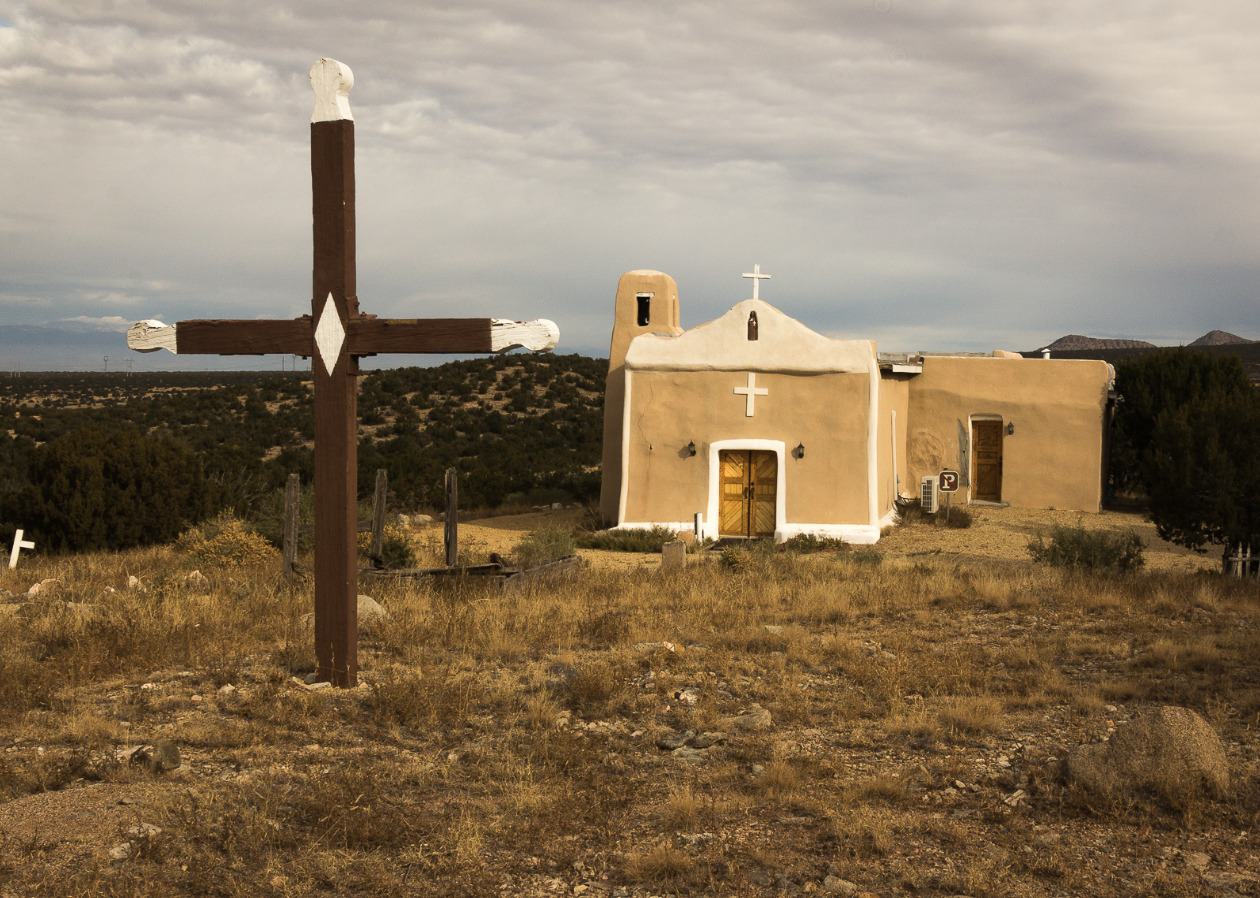
    <summary type="html"><![CDATA[<p><strong><em><span style="font-weight:400;">In an overgrown cemetery, amidst tombstones and memorabilia, a child’s white metal bed frame sits above a grave. Golden, New Mexico–population zero–is a ghost town in more ways than one. </span></em></strong></p><img src="https://www.intermountainhistories.org/files/fullsize/e67fd8700f683d9e53b557c2c957ca2f.jpg" alt="San Francisco de Asis Catholic Church" /><br/><p><span style="font-weight:400;">Today the tiny Santa Fe community of Golden is known for the gold rush that it was named for, but before the gold Navajo peoples found prosperity in turquoise. The road running from Albuquerque to Santa Fe, which is now part of New Mexico 14, is still aptly referred to as the “Turquoise Trail.” In the 14th century Spanish Conquistadors made their way to the region of Mexico that would later become New Mexico and Arizona. For several hundred years they traded goods, mined, and colonized the land. </span>
<span style="font-weight:400;">It is said that the gold rush didn’t really begin in New Mexico until it was declared an American state, but nearly one-hundred years earlier in 1825 the community of Golden had its day in the sun. When Mexico gained independence from Spain in 1821, the Santa Fe trail became open to Americans for trading purposes–creating an influx of American settlers to the area, who had been few and far between during the Spanish years. Trading opportunities, cattle herding, gold, and the exciting prospect of “new” land drew Americans in from surrounding U.S. territories and states. Gold was discovered in the land just north of the San Pedro mountains and a mining district blossomed. Within the next few decades a general store, a post office, a public school, and quite a few saloons, were built as well as a Catholic church–which is now the most photographed church along the Turquoise Trail. </span>
<span style="font-weight:400;">San Francisco de Asis Catholic Church, named after Saint Francis of Assisi, was built around 1830. The adobe brick plaster makeup of the church has held up well over the years, and the white painted crosses still look as bright as ever. The churchyard is home to the bodies of those who died in the fleeting time of Golden’s own “life.” Although the church provides a glimpse into the past, it isn’t completely dormant. Beloved by those who explore the grounds on their way through town, and welcoming to Sunday tourists who attend church services.</span>
<span style="font-weight:400;">The era of growth and excitement in the community was short-lived and ended almost as suddenly as it had begun. When the 1825 gold rush era ended, there was little reason to stay. The few who remained resorted primarily to agriculture to make their living. There was a dwindling and largely fruitless attempt by some remaining residents to dig up the last of the gold, but there was only so much to be found before even the most stubborn of them abandoned the pursuit. A hundred years after the initial gold rush there were so few people remaining that Golden lost its township status. In 2021 the census reported a population of zero residents of Golden, but the Turquoise Trail continues as a scenic route for road trips and the church with its overgrown cemetery stands as a monument–a living memory of all that once was. </span></p><p><em><strong><a href="https://www.intermountainhistories.org/items/show/799">For more (including 5 images) view the original article</a></strong></em></p>]]></summary>
    <published>2024-05-15T19:52:11+00:00</published>
    <updated>2026-04-17T19:32:17+00:00</updated>
    <link rel="alternate" type="text/html" href="https://www.intermountainhistories.org/items/show/799"/>
    <id>https://www.intermountainhistories.org/items/show/799</id>
    <author>
      <name>Megan Bailey, Brigham Young University</name>
    </author>
  </entry>
  <entry>
    <title type="html"><![CDATA[The B’nai Israel Cemetery]]></title>
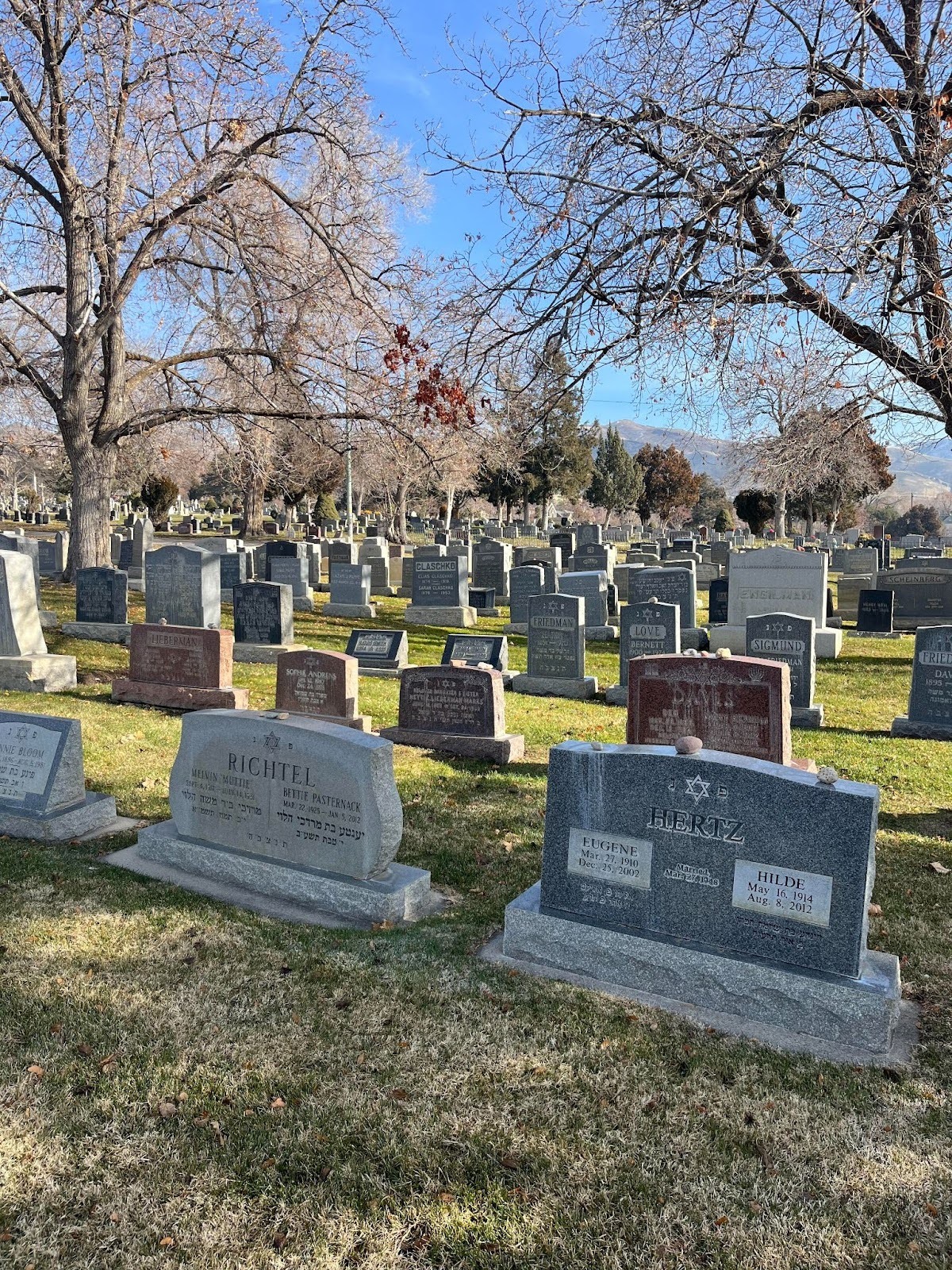
    <summary type="html"><![CDATA[<p><strong><em><span style="font-weight:400;">Cemetery B’nai Israel is a burial ground dedicated to followers of the Reform branch of Judaism. Located in the sloping Avenues of Salt Lake City, this space is a beautiful resting place for some of Utah’s most famous Jewish residents.</span></em></strong></p><img src="https://www.intermountainhistories.org/files/fullsize/fdf6c8848584d2a8d6f2dee9d815a3ee.jpg" alt="B&#039;nai Israel Cemetery" /><br/><p><span style="font-weight:400;">The B’nai Israel Cemetery is one of Salt Lake City’s three Jewish cemeteries. The other cemeteries connected with the Kol Ami Cemetery Association are Montefiore (Conservative) and Shaare Tzedek (Orthodox). Located at 1021 East and 4th Avenue, it serves adherents of Reform Judaism. The tenets of Reform Judaism include an emphasis on the growing, changing nature of Judaism, a focus on its ethical implications rather than its ceremonial ones, a constant search for knowledge and truth, and a focus on human reason. It is a more liberal branch of Judaism, with less focus on ritual observance and more focus on the autonomy of the individual and progressive values. </span>
<span style="font-weight:400;">The land for Salt Lake’s Jewish cemeteries was originally donated to the Jewish community by Brigham Young around 1866. These were the first Jewish cemeteries in the Intermountain West. The cemeteries are exclusively maintained by the Kol Ami Cemetery Association. This association is composed of members of Salt Lake’s synagogue, Congregation Kol Ami. Members of the board serve as volunteers. Although any Jewish person can be buried in one of the three cemeteries, each has slightly different requirements. Those wanting to be buried with non-Jewish spouses can only do so in the Reform cemetery. Orthodox and Conservative cemeteries require a ceremonial washing of the body before burial, but Reform cemeteries make that ritual optional. </span>
<span style="font-weight:400;">Cemetery B’nai Israel is located on the south side of Salt Lake City Cemetery. Unlike the Montefiore and Shaare Tzedek cemeteries, B’nai Israel permits the burial of non-Jewish spouses and minor Children with the Jewish family member. The guiding principles of the Kol Ami Cemetery Association are </span><i><span style="font-weight:400;">Kavod Ha Meit: </span></i><span style="font-weight:400;">showing honor and respect for the dead; </span><i><span style="font-weight:400;">Nichum Aveilim: </span></i><span style="font-weight:400;">comforting those who are mourning a loss; and simplicity: all are equal in death.</span>
<span style="font-weight:400;">Several prominent figures in Utah history were laid to rest in this peaceful graveyard, including Simon Bamberger, the first Jewish governor of Utah whose term ran from 1917 to 1921, and brothers Samuel and Frederick Auerbach, who established the People’s Store– a long-time Salt Lake City landmark. </span>
<span style="font-weight:400;">The tranquil B’nai Israel Cemetery has served practitioners of Reform Judaism for well over one hundred years, and continues to do so today. Under the governance of the Kol Ami Cemetery Association, these burial grounds are maintained with a tangible sanctity and respect.</span></p><p><em><strong><a href="https://www.intermountainhistories.org/items/show/765">For more (including 4 images) view the original article</a></strong></em></p>]]></summary>
    <published>2024-01-12T22:29:43+00:00</published>
    <updated>2026-04-17T19:32:17+00:00</updated>
    <link rel="alternate" type="text/html" href="https://www.intermountainhistories.org/items/show/765"/>
    <id>https://www.intermountainhistories.org/items/show/765</id>
    <author>
      <name>Isabella Holt, Brigham Young University</name>
    </author>
  </entry>
  <entry>
    <title type="html"><![CDATA[Shaare Tzedek Cemetery]]></title>
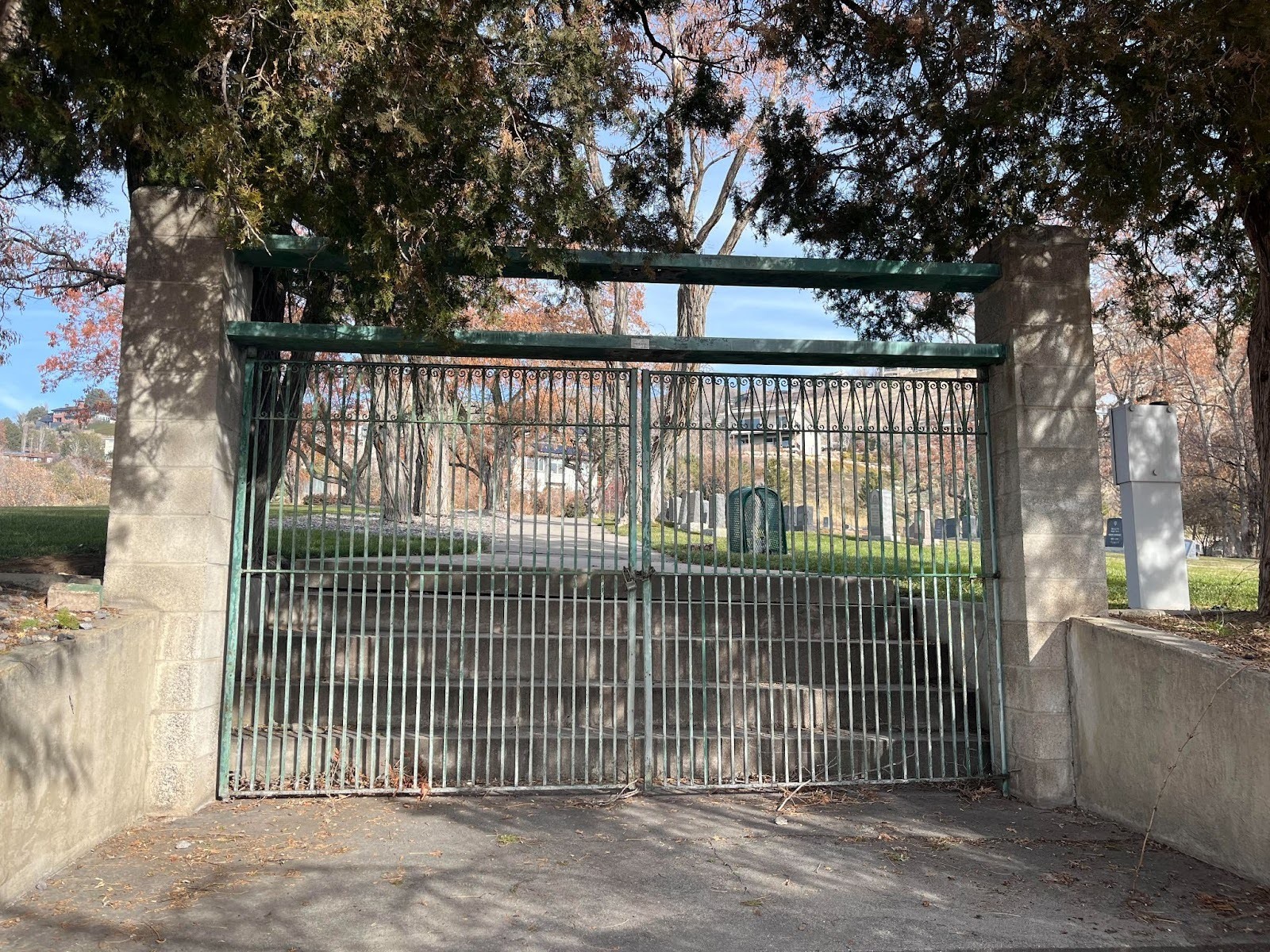
    <summary type="html"><![CDATA[<p><strong><em>The Shaare Tzedek Cemetery is a dedicated gravesite for practicing Orthodox Jews in the Salt Lake City area. Though smaller than its sister cemeteries, B’nai Israel and Montefiore, the recently rededicated Shaare Tzedek is nonetheless a quiet and peaceful site for remembrance and service.</em></strong></p><img src="https://www.intermountainhistories.org/files/fullsize/70156a3e7c4070953a3aad3742f17530.jpg" alt="Cemetery Gate" /><br/><p><span style="font-weight:400;">Cemetery Shaare Tzedek has stood for over a century and is one of the three Jewish cemeteries in the Salt Lake City metro. It can be found at 915 East 11th Avenue. Shaare Tzedek is designated for Orthodox adherents of Judaism, whereas its sister cemeteries, Montefiore and B’nai Israel, serve Conservative and Reform Jews, respectively. Orthodox Jews believe that the Torah (both the written word and oral traditions) were divinely revealed to Moses on Mount Sinai and have been faithfully maintained throughout the centuries. Being Orthodox entails a strict adherence to Jewish law (</span><i><span style="font-weight:400;">halakha</span></i><span style="font-weight:400;">). Practices include Sabbath-day observance, following Kosher dietary restrictions, and regular study of the Torah. To be buried in an Orthodox Jewish cemetery, one must be an Orthodox Jew, undergo rituals of washing and dressing, and generally be buried in a plain wooden casket without internal or external adornment. </span>
<span style="font-weight:400;">These lands in the larger Salt Lake City Cemetery were set aside for the use of the Jewish community by Brigham Young in 1866. The care and upkeep of these three cemeteries is entrusted to the Kol Ami Cemetery Association. This association is run on a volunteer basis by members of Salt Lake’s synagogue, Congregation Kol Ami. Members of the board serve as volunteers. The guiding principles of the Kol Ami Cemetery Association are </span><i><span style="font-weight:400;">Kavod Ha Meit: </span></i><span style="font-weight:400;">showing honor and respect for the dead; </span><i><span style="font-weight:400;">Nichum Aveilim: </span></i><span style="font-weight:400;">comforting those who are mourning a loss; and simplicity: all are equal in death. While any member of the Jewish community may be buried in one of the three cemeteries, each graveyard has slightly different requirements. Those wanting to be buried with non-Jewish spouses are only permitted to do so in the Reform cemetery. Both Conservative and Orthodox cemeteries require a ceremonial washing of the body before burial, but that practice is mandatory in Reform cemeteries. </span>
<span style="font-weight:400;">The Shaare Tzedek Cemetery is located just above the sprawling expanse of the Salt Lake City Cemetery, a few blocks north of the B’nai Israel and Montefiore cemeteries. It is the smallest of the three Jewish cemeteries. Salt Lake’s Orthodox Jewish community and synagogue faded around 1930, largely due to financial reasons and fewer Orthodox Jews as opposed to Conservative and Reform Jews in the city. The Shaare Tzedek Cemetery was recently rededicated– a very rare circumstance, but necessary because the western part of the burial ground, though original to the cemetery, had never been dedicated. That issue was resolved in 2023. Shortly after the rededication, the Kol Ami Cemetery Board held a tree-planting ceremony to further protect and beautify the space. </span></p><p><em><strong><a href="https://www.intermountainhistories.org/items/show/763">For more (including 4 images) view the original article</a></strong></em></p>]]></summary>
    <published>2024-01-12T20:29:15+00:00</published>
    <updated>2026-04-17T19:32:17+00:00</updated>
    <link rel="alternate" type="text/html" href="https://www.intermountainhistories.org/items/show/763"/>
    <id>https://www.intermountainhistories.org/items/show/763</id>
    <author>
      <name>Isabella Holt, Brigham Young University</name>
    </author>
  </entry>
  <entry>
    <title type="html"><![CDATA[Ephraim Pioneer Cemetery]]></title>
    <summary type="html"><![CDATA[<p><strong><em>Ephraim’s forgotten cemetery stands as a memorial to early Scandinavian settlers and a reminder of violence in pioneer-era Utah.  </em></strong></p><img src="https://www.intermountainhistories.org/files/fullsize/0a0ea5bdb78a58b830875ad874dbde59.jpg" alt="View of Ephraim Pioneer Cemetery Facing East" /><br/><p>The events that led to the creation of Ephraim Pioneer Cemetery reflect the tumult of early Euro-American settlement in Utah. Members of The Church of Jesus Christ of Latter-day Saints established Fort Ephraim in 1854 near, the geographic center of Utah. These first settlers in Ephraim were far from their homelands; most were converts to the Church who had immigrated from Denmark. Consequently, the settlement became known as “Little Denmark.” When Chief Wakara met Brigham Young in 1849 he invited Latter-day Saints to settle in Central Utah, but amicable relations between Euro-American settlers and the indigenous peoples of the region did not last for long. The Walker War fought between Euro-American Latter-day Saints and Utes brought violence to the Ephraim region from 1853 to 1854, just as Fort Ephraim was being built. The first person from Fort Ephraim to die was a Mr. Manwaring, though the details surrounding his death are unknown. The fort was small and did not have a cemetery in the plans, so the settlers received permission to bury Manwaring in Spring City, ten miles to the north. When the funeral party was just two miles out of Ephraim there came word of an imminent attack. Stuck vulnerably between the two settlements, the settlers went no farther but quickly buried Mr. Manwaring’s body and returned to the safety of the fort. These unexpected circumstances determined where Ephraim residents would be buried until 1905, when residents began using the Park Cemetery in town.
Ephraim Pioneer Cemetery hosts the graves of various inhabitants whose diverse occupations were useful to Fort Ephraim’s functions. They were masons, blacksmiths, stonecutters, millers, harness makers, shingle makers and more. Nearly all the names on the cemetery’s headstones end in the Scandinavian “son” or “sen.” Where a place of birth was added, it nearly always indicates Denmark and occasionally Sweden. The history of violence in the area is also etched on the cemetery’s headstones. For example, the marker for Christian Thorpe indicates he was a second lieutenant in the Blackhawk War, fought between the United States and Sauk leader Black Hawk. Additionally, a granite stone marks the burial site of seven individuals who were killed in 1865. Other cemetery residents were victims of drowning, and disease was also a prevalent threat, as evidenced by the many children’s graves. The cemetery acts as a reminder of the many risks early pioneers faced in Utah.
Approaching Ephraim from the north, it is easy to miss the small clump of trees marking the cemetery off in the distance west of the highway. The cemetery is more than a mile out of town and is accessible only by a dirt road.  The cemetery has gone through periods of neglect and renewal through the decades. In 1990, a committee organized to transform the derelict cemetery to a more respectful resting place. In 1995, the Daughters of Utah Pioneers added plaques to inform visitors about the history of the site. In 2017, a local Boy Scout collected old farm equipment from the mid to late-1800s and placed them in the cemetery as part of an Eagle Scout project. Visitors today will see new, shiny replacement headstones for some alongside broken pieces marking the burial of others.</p><p><em><strong><a href="https://www.intermountainhistories.org/items/show/560">For more (including 6 images) view the original article</a></strong></em></p>]]></summary>
    <published>2021-12-18T04:48:49+00:00</published>
    <updated>2026-04-17T19:32:12+00:00</updated>
    <link rel="alternate" type="text/html" href="https://www.intermountainhistories.org/items/show/560"/>
    <id>https://www.intermountainhistories.org/items/show/560</id>
    <author>
      <name>Tessa Smith, Brigham Young University</name>
    </author>
  </entry>
  <entry>
    <title type="html"><![CDATA[Finnish Headstones and Saunas in Scofield<br />
]]></title>
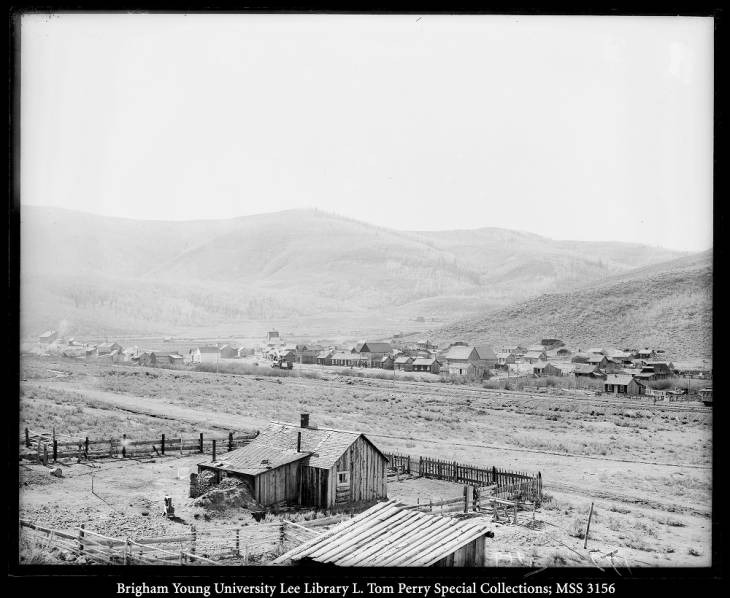
    <summary type="html"><![CDATA[<p><strong><em>Like many other mining districts, the town of Scofield went through a boom and bust cycle that effectively created a living ghost town. Despite the town’s current state, the Finnish immigrant community in Scofield left a lasting impact. Headstones and saunas are Scofield’s two most prominent visual features that tell the story of Utah’s immigrants from Finland. </p></strong></p><img src="https://www.intermountainhistories.org/files/fullsize/db01e37dc27f40411c5412b29a62a9f4.jpg" alt="The Town of Scofield, Utah at a South West Angle." /><br/><p>Although Scofield, Utah is not a booming community anymore, the town still retains remnants of immigrant life. According to the 2010 US Census, Scofield housed only 24 people. However, 120 years ago, Carbon County boasted a booming mining community. 	While most of Utah’s Scandinavian population came in the late nineteenth and early twentieth century as Mormon converts, Finland contributed only 14 people to those early groups of Mormon migrants. Instead, the year 1890 brought most of Utah’s Finnish immigrants to Utah as miners and railway workers. By the year 1900, there were over 200 Finns in Carbon County with most of them living in a small community in Winter Quarters, a suburb just outside Scofield.    </p><p>The Finns brought with them to America a desire to preserve their Finnish culture. This resulted in the building of many public and private saunas throughout Scofield. Saunas work by running water over hot stones to create steam. The saunas helped the Finns to teach their culture to the young in their company. The principle of “sisu” or internal fortitude was taught through the sauna as the Finns used the steam baths to provide both physical and spiritual cleansing. </p><p>Disaster struck Scofield’s Finnish community on May 1, 1900. An explosion in the WInter Quarters Number Four mine marked the largest mine explosion in the United States up to that point. Over 200 were numbered among the dead and many others lost that remained unaccounted for. The Finnish lost 62 of their fathers, sons, and brothers. Hit specifically hard was the Luoma family. Abe Luoma lost six sons and three grandsons in the destruction of the mine. Most of the Finns who died in the explosion were buried in the Scofield cemetery and Reverend A. Granholm, a Finnish Lutheran minister from Wyoming, came down to Scofield to dedicate the graves of the fallen Finns. </p><p>After the explosion, a majority of the Finns stayed in Scofield until the area’s mines began to cease operation in the 1920s. Even after the decline of the Scofield Finnish community, the Finns in Utah were some of the frontline advocates for greater safety for mine workers. The strikes of 1903, 1922, and 1933 featured Finns who desired to keep the period of unions alive. Despite the hardship that Finnish immigrants faced, their hearty spirit left a legacy of preserved culture and a new culture of defending and protecting their families and other immigrant workers. </p><p><em><strong><a href="https://www.intermountainhistories.org/items/show/448">For more (including 3 images) view the original article</a></strong></em></p>]]></summary>
    <published>2020-10-31T08:56:17+00:00</published>
    <updated>2026-04-17T19:32:09+00:00</updated>
    <link rel="alternate" type="text/html" href="https://www.intermountainhistories.org/items/show/448"/>
    <id>https://www.intermountainhistories.org/items/show/448</id>
    <author>
      <name>Josie Manwill, Brigham Young University </name>
    </author>
  </entry>
  <entry>
    <title type="html"><![CDATA[The Russians Who Left Northern Utah <br />
]]></title>
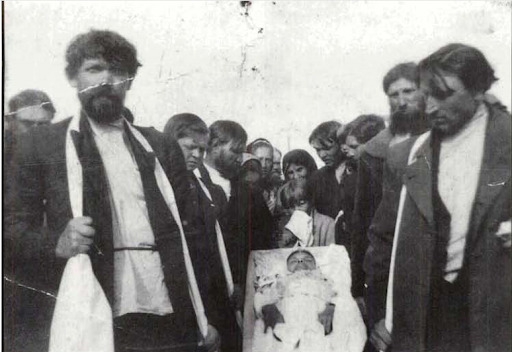
    <summary type="html"><![CDATA[<p><strong><em>In the arid northwest corner of Utah, there is a ghost town with not much left but the road that leads to it, a few decaying foundations, and a cemetery with two Russian gravestones.</em></strong></p><img src="https://www.intermountainhistories.org/files/fullsize/008a9c046a0751c6d2c3fd72ff951583.jpg" alt="Mary Kalpakoff’s family mourns her death. " /><br/><p>While there have been Russians from different religions who have settled in Utah over the years, a settlement of Molokan Russians in Park Valley is one of the only known Russian enclaves in Utah’s history. “Molokan” is a derivative from the Russian word for “milk drinker.” The Molokans inherited their name in the eighteenth century after breaking away from the Russian Orthodox Church over disagreements about the worship of icons, paying clergyman, and dietary distinctions. Specifically, they chose not to stop drinking milk during fasts such as Lent. Their additional aversion to warfare and military service forced the Molokans out of Russia and into California where the Molokans grouped together to establish themselves economically. Although they were able to provide for themselves, many Molokans felt unhappy in San Francisco--they could no longer pasture and farm and were losing vital pieces of their culture and religion. </p><p>Moving to Park Valley was a deliberate choice for this group of Russian migrants. It was their goal to protect their Molokan culture and prevent their children from adopting American habits. Thus, the Molokan Russians chose to migrate from Los Angeles to middle-of-nowhere Utah in 1914. While many stayed in California, a group of over 100 Russians, more than a dozen families, attempted to resume an agrarian way of life in Park Valley. They established a village laid out similarly to a Russian agrarian village and sought to practice their religion in peace. Sadly, after a year of joyful farming and welcoming over eight new babies to the settlement, the Molokan utopian settlement began to crumble.   </p><p>Lack of water access made living in Park Valley difficult. Their crops would not grow and their animals suffered. Then, before their first year in Utah was over, tragedy struck. In an accident during 1914, Andrew Kalpakov, the leader of the Molokan village, accidently shot his wife while cleaning his gun. A year later, the sister of Kalpakov’s wife died in childbirth. The difficult circumstances of drought and death quickly pushed the Molokans to abandon the settlement.	</p><p>Only four years later, tax documents note that there was only one Russian living in Box Elder County. While a few families chose to move east toward Logan in Cache Valley, most of the Molokans moved back to San Francisco. Even though Utah’s Russian settlement did not last very long, the Molokan people left an interesting story behind for Utahns to learn and discover.  </p><p><em><strong><a href="https://www.intermountainhistories.org/items/show/442">For more (including 3 images) view the original article</a></strong></em></p>]]></summary>
    <published>2020-10-31T04:11:17+00:00</published>
    <updated>2026-04-17T19:32:09+00:00</updated>
    <link rel="alternate" type="text/html" href="https://www.intermountainhistories.org/items/show/442"/>
    <id>https://www.intermountainhistories.org/items/show/442</id>
    <author>
      <name>Josie Manwill, Brigham Young University</name>
    </author>
  </entry>
  <entry>
    <title type="html"><![CDATA[The Grave of Levi Ward Hancock<br />
]]></title>
    <summary type="html"><![CDATA[<p><strong><em>Levi Ward Hancock was an early leader of the Church of Jesus Christ of Latter-day Saints. </em></strong></p><img src="https://www.intermountainhistories.org/files/fullsize/78aff85a9d03ca37cdaf8f93572330de.jpg" alt="Levi W. Hancock&#039;s gravestone. " /><br/><p>The grave of Levi Ward Hancock is located at the Washington City Cemetery, Washington, Washington County. Levi Ward Hancock was born on 7 April 1803 and died on 10 June 1882. His parents were Thomas Hancock III and Amy Ward. He married Clarissa Reed on the 20th of March 1830. He became a member of The Church of Jesus Christ of Latter-day Saints on 16 November 1830 in Kirtland, Ohio. In the summer of 1831, he served a mission in Missouri. In January of 1832,  he returned to Missouri for a mission, including Ohio and Virginia.</p><p>Levi Ward Hancock was a member of the School of Prophets in which he attended 22—23 January 1833 in Kirtland, Ohio. He was set apart as a Seventy in the LDS faith on 28 February 1835. He was soon  appointed to become president of the Seventy for the Church. This forced Hancock to move to Missouri in 1838. A year later he led a group of members of the Church of Jesus Christ of Latter-day Saints to Hancock County, Illinois. Levi Ward Hancock made it to the Salt Lake Valley in 1847. He was constantly moving to different locations in his life. In 1851, he moved to Payson, Utah. During the 1860’s, Levi Ward Hancock settled in Southern Utah following his son Mosiah.  Hancock died at the age of 79 in 1882 in Washington, Washington County, Utah, where he is buried.</p><p><em><strong><a href="https://www.intermountainhistories.org/items/show/440">For more (including 3 images) view the original article</a></strong></em></p>]]></summary>
    <published>2020-10-24T08:20:39+00:00</published>
    <updated>2026-04-17T19:32:09+00:00</updated>
    <link rel="alternate" type="text/html" href="https://www.intermountainhistories.org/items/show/440"/>
    <id>https://www.intermountainhistories.org/items/show/440</id>
    <author>
      <name>Nicole Wechsler, Brigham Young University </name>
    </author>
  </entry>
  <entry>
    <title type="html"><![CDATA[Lehi Pioneer Cemetery]]></title>
    <summary type="html"><![CDATA[<p><strong><em>The oldest cemetery in Lehi, Utah provides a rich history of the people and culture of Lehi. </em></strong></p><img src="https://www.intermountainhistories.org/files/fullsize/d5a099a9b3cc6831582125a5a9e7dc7b.jpg" alt="Eastern View of Monument and Park" /><br/><p>The Lehi Pioneer Cemetery was the first settler cemetery in the Lehi area. When the citizens first started using this land as a cemetery in 1851, it was public land. Thomas R. Jones acquired the property through the Homestead Act of 1862, but quickly deeded it to the city for its continued use as a cemetery. Although most of the records for the cemetery prior to 1895 have been lost, evidence exists proving that a pioneer who died at the age of seventy-five was the first man to be buried in this land. It is also evident that along with the many early settlers that died of natural causes there were a few murder victims buried in the Lehi Pioneer Cemetery, such as the Lehi schoolteacher, George William Thurmond, who was killed by one of his students while trying to decorate a city Christmas tree on Christmas Eve. </p><p>In 1872, Lehi's population was growing and the city decided they needed to widen the State Road that the Lehi Pioneer Cemetery was located on and build a railroad through the middle of the cemetery. Subsequently, many bodies that were buried in the cemetery were dug up and reburied in a new cemetery. Many families who had family members buried in the cemetery had moved and were indifferent to the relocation, but a few families asked for the bodies to not be moved. In the process of building, most of the bodies in the area were removed but some were not found and remain there today, including John Griggs White. </p><p>Following the removal of the bodies from the cemetery and the addition of a railroad, the land was no longer recognized as a cemetery and people could buy the land for their own property. Den Turner bought some of the land and built a tire shop called “Den’s Tire Shop” during the 1950s. Bud Nielson also bought a portion of the land to build his home around the 1970s. Den Turner eventually sold his tire shop to Don Harris during the 1970s. All three men found skeletons of the pioneers on their land while doing construction. In response to the bodies that were found, the Daughters of Utah Pioneers decided to build a monument near Den’s Tire Shop on the centennial anniversary (1951) of the cemetery’s establishment. However, in the five years that followed it became evident that the monument needed to be moved because the customers of Den’s Tire Shop were repeatedly hitting the monument while entering and exiting the shop. The Daughters of Utah Pioneers pleaded with the city for the monument to be moved and in 1958, the city gave a small piece of land to the Daughters of Utah Pioneers a block east of the actual historical cemetery for the monument and small roadside park. Currently, one can visit the monument of this historical cemetery on this roadside park located from 190-200 West State Street, Lehi Utah.</p><p><em><strong><a href="https://www.intermountainhistories.org/items/show/387">For more (including 4 images) view the original article</a></strong></em></p>]]></summary>
    <published>2020-02-15T04:05:59+00:00</published>
    <updated>2026-04-17T19:32:07+00:00</updated>
    <link rel="alternate" type="text/html" href="https://www.intermountainhistories.org/items/show/387"/>
    <id>https://www.intermountainhistories.org/items/show/387</id>
    <author>
      <name>Natalie Carroll, Brigham Young University</name>
    </author>
  </entry>
</feed>