<?xml version="1.0" encoding="UTF-8"?>
<feed xmlns="http://www.w3.org/2005/Atom">
  <title type="text">Intermountain Histories</title>
  <updated>2026-04-17T19:32:09+00:00</updated>
  <generator uri="http://framework.zend.com" version="1.12.20">Zend_Feed_Writer</generator>
  <link rel="alternate" type="text/html" href="https://www.intermountainhistories.org/"/>
  <link rel="self" type="application/atom+xml" href="https://www.intermountainhistories.org/items/browse?output=rss2"/>
  <id>https://www.intermountainhistories.org/</id>
  <author>
    <name>Intermountain Histories</name>
    <uri>https://www.intermountainhistories.org</uri>
  </author>
  <link rel="hub" href="https://pubsubhubbub.appspot.com/"/>
  <entry>
    <title type="html"><![CDATA[Sage Treharne Jones, Female Homesteader]]></title>
    <summary type="html"><![CDATA[<p><strong><em>Sage Treharne Jones was many things before she turned to homesteading— immigrant, teacher, wife, mother, widow, and postmistress. Efficient and industrious, Sage embodied characteristics necessary to thrive on Utah frontiers in the 19th century.</p></strong></p><img src="https://www.intermountainhistories.org/files/fullsize/8eec0e69d3629d4e63f439c06eb1a19b.jpg" alt="Image of Sage Treharne Jones
" /><br/><p>In 1849, Sage Treharne migrated from Wales to the United States after being taught by Mormon missionaries. She faced cholera and smallpox along the way and watched both her parents die. She continued west, travelling with a Greene family. On her way, Sage met Thomas Jones and, upon arriving in Utah in October 1852, the two were married. Following demand for iron workers, or possibly answering a call from church leaders, Sage and Thomas moved to Southern Utah. When the iron works were discontinued in 1858, the family turned completely to farming and livestock. In 1860, they built a small adobe house in Cedar City. Thomas developed rheumatism which grew increasingly worse, disabling him until his death in September 1862. </p><p>Sage was left a widow with six living children under the age of eight. She turned to sewing to make a livelihood and depended on her farm to raise the necessary crops and livestock. She is described as an independent woman and “determined to give her children all the advantages that could be had.” “Never ashamed of how little they had,” Sage raised her family to be hardworking and proud of their heritage. Life was difficult, but growing children stepped up, taking over the farm work, and the Jones received support from their neighbors when needed. When harvests failed, the community came together, sharing what little they had and “in their kindness to one another, they found their greatest joy.”</p><p>Her oldest sons, Lehi and Kumen, acquired a contract delivering mail and freight along Pony Express routes and Sage assumed the role of postmistress. “Without ever a word of complaint,” she was a firm supporter of the boys in their position. The mail contract continued with younger sons and nephews continuing to deliver until 1876. In 1885, Sage was appointed as the postmistress of Cedar City. In this new role and with the help of her children, Sage learned to write English. She kept the post office for thirteen years. </p><p>In 1895, at age 62, Sage filed for a homestead on two land sections in Cedar Canyon, near the intersection of Moots Hollow. With her children largely established and self-reliant, it seems she filed hoping to acquire more land for her family. Soon after, she received her US citizenship. One year after becoming a citizen and before she could legally acquire the deed to her claim, Sage died. The property defaulted to her heirs several years after her death. Sage was an active member of her community and Relief Society. A dignified woman, she “was respected and loved wherever she went.” Sage was not a homesteader, at least initially, in the traditional sense of filing on a claim, but she certainly worked hard, sought independence, and “learned to love the wild country of the West.”</p><p><em><strong><a href="https://www.intermountainhistories.org/items/show/451">For more (including 4 images) view the original article</a></strong></em></p>]]></summary>
    <published>2021-02-03T05:34:32+00:00</published>
    <updated>2026-04-17T19:32:09+00:00</updated>
    <link rel="alternate" type="text/html" href="https://www.intermountainhistories.org/items/show/451"/>
    <id>https://www.intermountainhistories.org/items/show/451</id>
    <author>
      <name>Anna Bailey, Brigham Young University</name>
    </author>
  </entry>
  <entry>
    <title type="html"><![CDATA[The Utah Shakespeare Festival: A Player’s Oasis in Cedar City]]></title>
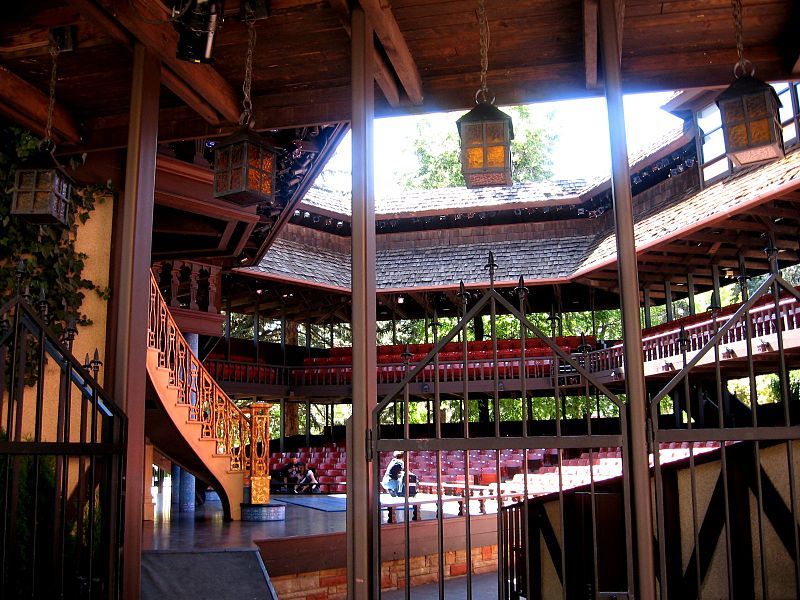
    <summary type="html"><![CDATA[<p><strong><em>The Utah Shakespeare Film Festival is a hallmark of Cedar City, a university town in southern Utah. Over the years, the festival has transformed the town into an oasis of artistic creativity that attracts hundreds of thousands of people and steals the show every summer.</em></strong></p><img src="https://www.intermountainhistories.org/files/fullsize/fbd2aadda1e5b1b4070783687894de78.jpg" alt="Interior of the Adams Memorial Theater, a Replica of the Globe Theatre" /><br/><p>Cedar City, settled by Mormon pioneers in 1851, is located in the southeast Great Basin, a place that one traveler called “a spot of mange,” and affirmed that “no portion of the earth is more lacquered with paltry, unimportant ugliness.” Despite its proximity to the arid landscape, the town of 30,000 residents has blossomed artistically as the home of the Utah Shakespeare Festival. In Cedar City, Shakespeare’s words come to life in the summers, and the impressive festival now attracts over 120,000 people.</p><p>The festival was established in 1961, but its founding was not met without opposition. Fred Adams, the festival’s organizer, saw resistance from the Cedar City Council and the Chamber of Commerce, who “thought it was a really dumb idea.” He eventually received $1,000 as an investment. Despite the budget constraints, the first season’s two-week run in 1962—which included The Merchant of Venice, The Taming of the Shrew, and Hamlet—attracted 3,000 spectators and yielded a $2,000 profit. Adams produced Macbeth in 1964, and Romeo and Juliet first appeared in 1968, a few months before Franco Zeffirelli’s Academy Award-winning film adaptation was released on the big screen. That same year, after the actress playing Juliet refused to climb the balcony on the festival’s makeshift stage because it wobbled, Adams recognized the importance of a permanent theater. Throughout the 1970s, the festival spent $250,000 to construct the Adams Memorial Shakespearean Theatre, an Elizabethan-style, open-air theater that was designed after The Globe Theatre in London.</p><p>The festival’s budget has increased from that initial $1,000 to $7 million, 75 percent of which is raised from ticket sales. A 2012 study determined the economic impact of the festival to be at more than $35 million annually. Many actors have taken part in the festival, and some have achieved fame in recognizable Hollywood roles. Benjamin Bratt, the star of Law and Order, began his career at the festival, and comedian Ty Burrell of Modern Family participated in 1999. As the festival has grown, it has branched out from Shakespeare. For example, since 2010, it has also produced adaptations of Pride and Prejudice, The Diary of Anne Frank, Les Misérables, To Kill a Mockingbird, Into the Woods, Mary Poppins, and The Three Musketeers. </p><p><em><strong><a href="https://www.intermountainhistories.org/items/show/210">For more (including 3 images) view the original article</a></strong></em></p>]]></summary>
    <published>2018-06-08T17:22:38+00:00</published>
    <updated>2026-04-17T19:32:03+00:00</updated>
    <link rel="alternate" type="text/html" href="https://www.intermountainhistories.org/items/show/210"/>
    <id>https://www.intermountainhistories.org/items/show/210</id>
    <author>
      <name>Marc Jonathan Wein, Brigham Young University</name>
    </author>
  </entry>
</feed>