<?xml version="1.0" encoding="UTF-8"?>
<feed xmlns="http://www.w3.org/2005/Atom">
  <title type="text">Intermountain Histories</title>
  <updated>2026-04-17T19:32:17+00:00</updated>
  <generator uri="http://framework.zend.com" version="1.12.20">Zend_Feed_Writer</generator>
  <link rel="alternate" type="text/html" href="https://www.intermountainhistories.org/"/>
  <link rel="self" type="application/atom+xml" href="https://www.intermountainhistories.org/items/browse?output=rss2"/>
  <id>https://www.intermountainhistories.org/</id>
  <author>
    <name>Intermountain Histories</name>
    <uri>https://www.intermountainhistories.org</uri>
  </author>
  <link rel="hub" href="https://pubsubhubbub.appspot.com/"/>
  <entry>
    <title type="html"><![CDATA[The Cathedral of the Madeleine ]]></title>
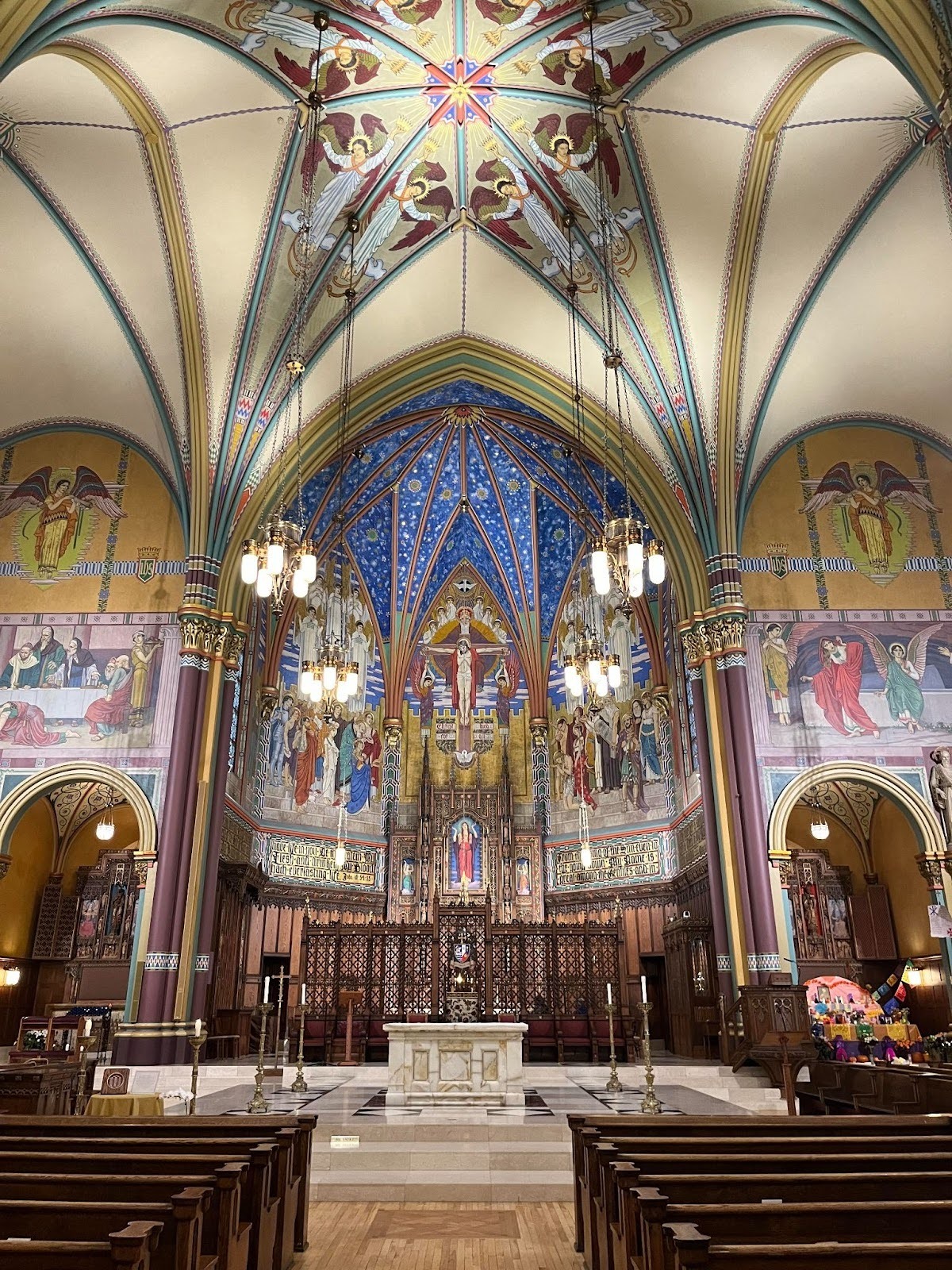
    <summary type="html"><![CDATA[<p><strong><em><span style="font-weight:400;">The Cathedral of the Madeleine, constructed in the late 19th and early 20th centuries, stands at the head of the Diocese of Salt Lake City. Featuring neo-Gothic architecture and glorious stained glass windows, the cathedral is a beautiful place to visit and worship. </span></em></strong></p><img src="https://www.intermountainhistories.org/files/fullsize/f7791fe20b0648355edb90452c3b4370.jpg" alt="Church Interior" /><br/><p><span style="font-weight:400;">The Cathedral of the Madeleine, located in downtown Salt Lake City, is the only cathedral in the United States under the patronage of Saint Mary Magdalene. Construction on this venerable building began in 1899 and was completed in 1909. It was dedicated under the name Saint Mary’s Cathedral on August 15, 1909, but was given its present name under the leadership of Bishop Joseph Glass, the second bishop of Salt Lake City.</span>
<span style="font-weight:400;">The stained glass windows are original to the Cathedral and were commissioned by Lawrence J. Scanlan, the first Catholic bishop of Salt Lake City. Designed by F.X. Zettler of the Royal Bavarian Institute in Munich, Germany, these windows tell the story of Christ’s life through what Catholics call the “Mysteries of the Rosary.” Scenes included are the annunciation with Gabriel and Mary, Mary visiting Elizabeth, Christ’s birth, Christ’s presentation at the temple to Simeon and Anna, the Resurrection, Christ’s ascension into heaven, the Assumption of Mary, and Mary being crowned Queen of Heaven. </span>
<span style="font-weight:400;">In addition to these scenes from the “Mysteries of the Rosary, moments  from Christ’s life between His presentation at the temple and His Resurrection are commemorated with stunning murals. These murals were completed in 1918 by artist Felix Lieftuchter. Combining Byzantine, Spanish Gothic, and modern art styles, the murals depict Christ teaching at the temple, a woman (portrayed here as Mary Magdalene) washing Christ’s feet, and Christ’s suffering in the Garden of Gethsemane. A mural of Christ’s sacrifice on the cross stands above the Blessed Sacrament Chapel and the Tabernacle. It is the focal point of the chapel. Christ is shown on the cross in a red robe, with God the Father and the Holy Spirit watching from above. Below Christ’s pierced feet are a pelican and her chicks. In Catholic iconography, the pelican symbolizes Christ’s sacrifice. Biblical figures and Catholic saints stand on either side of the crucified Christ, worshiping and praising the Lord. </span>
<span style="font-weight:400;">The Stations of the Cross were painted by Utah native Roger ‘Sam’ Wilson between 1992-1993. The Stations of the Cross commemorate Christ’s suffering and death. There are fourteen stations in all, each depicting a moment on His journey to Calvary. The Stations at the Cathedral of the Madeleine follow the revisions of the second Vatican Council, which took place between 1962-1965. This council helped to bridge the gap between Catholic tradition and the modern world. It made many changes to Catholic practices– one of the most dramatic of these was holding Mass in languages other than Latin. The updated Stations of the Cross are more in keeping with Biblical descriptions rather than oral tradition. Wilson’s rendition of the Stations blends Catholic iconography with an American Southwestern style. Flowers, animals, and other symbols are included to lend to the significance and power of each scene. </span>
<span style="font-weight:400;">The cathedral underwent heavy restoration projects between 1991-1993. The stained glass was carefully preserved. The altar and the baptismal font were re-positioned in accordance with the established traditions of the Vatican II Council. The organ was replaced, as were the Stations of the Cross. The floor of the Cathedral of the Madeleine is currently being restored. There are about four hundred regularly attending constituents, with about half of that number speaking Spanish as their first language. On weekdays, masses are held at 8:00 AM and 5:15 PM. Saturday masses are at 8:00 AM, 5:00 PM, and 7:00 PM, with the latter exclusively in Spanish. Sunday worship times are at 8:30 AM, 11:00 AM, 3:00 PM (Spanish), and 6:00 PM. The Cathedral was added to the National Register of Historic Places on March 11, 1971, and serves thousands of people annually. From practicing Catholics to those interested in theology or the Cathedral’s architecture, all are welcome. </span></p><p><em><strong><a href="https://www.intermountainhistories.org/items/show/764">For more (including 7 images) view the original article</a></strong></em></p>]]></summary>
    <published>2024-01-12T22:03:33+00:00</published>
    <updated>2026-04-17T19:32:17+00:00</updated>
    <link rel="alternate" type="text/html" href="https://www.intermountainhistories.org/items/show/764"/>
    <id>https://www.intermountainhistories.org/items/show/764</id>
    <author>
      <name>Isabella Holt, Brigham Young University</name>
    </author>
  </entry>
  <entry>
    <title type="html"><![CDATA[Cathedral Church of Saint Mark]]></title>
    <summary type="html"><![CDATA[<p><strong><em>St. Mark’s Cathedral began its life as the headquarters of the Salt Lake Missionary Diocese, later becoming the base for the Diocese of Utah. Serving parishioners for over 150 years, this Gothic Revival Cathedral was added to the National Register of Historic Places in 1970.</em></strong></p><img src="https://www.intermountainhistories.org/files/fullsize/e7e58cf77fd4e76efacbeb4cf870ec8d.jpg" alt="Photograph of St. Mark&#039;s Cathedral " /><br/><p><span style="font-weight:400;">The story of St. Mark’s Cathedral begins with Bishop Daniel S. Tuttle, who took his post presiding over the missionary district of Montana in 1867. This district included jurisdiction over Idaho and Utah. After the completion of the Transcontinental Railroad in 1869, Bishop Tuttle decided to make Salt Lake City the headquarters of the district. From 1867-1871, Utah’s earliest Episcopalian parishioners met in Independence Hall, an adobe building on Third South and East Temple (now Main Street). The land for St. Mark’s Cathedral was purchased on April 20, 1870. The cornerstone was laid on July 30, 1870. Opening on September 3, 1871, St. Mark’s Cathedral was designed in the Gothic Revival style by Richard Upjohn – one of his only two identified works west of the Mississippi River. </span>
<span style="font-weight:400;">The Cathedral was officially consecrated on May 14, 1874. In April 1902, money was raised for the addition of the west transept, the Chancel, and a room to house the organ pipes. When the chancel was added in 1903, this room became the Chapel of the Resurrection. Extensive renovations took place after the Cathedral was damaged by a fire in 1935. Fire damage can still be observed today from the exterior and along the ceiling of the Chapel of the Resurrection. A number of the Cathedral’s windows were destroyed in the fire, but the May Lillian Bishop Thompson Window (a scene depicting the women at Christ’s tomb speaking with an angel), was reassembled. When the fire melted the lead holding the window together, a parishioner was able to collect the glass pieces and take them to Tiffany Studios in New York, where the window was repaired. However, some pieces were lost, and thus the previously brunette angel became a blonde. </span>
<span style="font-weight:400;">St. Mark’s Cathedral has hosted a number of noteworthy visitors over the years. Episcopalian Archbishop Demond Tutu came to Salt Lake City for the opening ceremonies of the 2002 Olympics, calling on the Cathedral on February 10, 2002. St. Mark’s hosted the North American Dean’s Conference from April 23-25, 2009. Over the week of June 25-July 3, 2015, the Diocese of Utah and St. Mark’s Cathedral welcomed delegates to the 78th Convention of the Episcopal Church. On June 27, 2015, St. Mark’s made headlines when Michael Bruce Curry became the first African American to be elected presiding bishop of the Episcopalian Church. </span>
<span style="font-weight:400;">To conclude, St. Mark’s Cathedral has been part of the Salt Lake City skyline since 1871. Its bell was the first church bell to ring in Salt Lake City and continues to call Episocpalians and visitors for worship today. </span></p><p><em><strong><a href="https://www.intermountainhistories.org/items/show/761">For more (including 12 images) view the original article</a></strong></em></p>]]></summary>
    <published>2024-01-11T23:36:49+00:00</published>
    <updated>2026-04-17T19:32:16+00:00</updated>
    <link rel="alternate" type="text/html" href="https://www.intermountainhistories.org/items/show/761"/>
    <id>https://www.intermountainhistories.org/items/show/761</id>
    <author>
      <name>Isabella Holt, Brigham Young University</name>
    </author>
  </entry>
  <entry>
    <title type="html"><![CDATA[Abbey of Our Lady of the Holy Trinity: Trappist Cistercian Monastery]]></title>
    <summary type="html"><![CDATA[<p><strong><em>The Our Lady of the Holy Trinity Abbey was a monastery in Huntsville was one of the oldest monasteries in the Western United  States. At its peak, the monastery produced honey, bread, and grandfather clocks. Due to the decreasing number of monks, the monastery closed in 2017.  </em></strong></p><img src="https://www.intermountainhistories.org/files/fullsize/ca47ab2d2a54662a1f03fa4e327b3caa.jpg" alt="Abbey of Our Lady of the Holy Trinity" /><br/><p><span style="font-weight:400;">The Our Lady of the Holy Trinity of Abbey was a Trappist Monastery in Huntsville, Utah. The abbey was founded in 1947, just two years after the end of the Second World War. After the war, monasteries around the country were filling up. The Monastery of the Gethsemani Abbey in Kentucky opened five monasteries around the country, one of which was in Huntsville. </span>
<span style="font-weight:400;">When the Monastery of Huntsville was first founded in 1947, it had 32 monks living in military Quonset huts until the abbey could be built. However, the grand abbey was never built and the monks continued to live on the land for the next six decades in a smaller building. By 1956, over 80 monks had been added to the monastery's ranks.  The Monastery in Huntsville was one of the biggest properties in the Weber County area, totaling up to 1,860 acres of land. Father Patrick Boyle said of his time at the abbey, “We had 84 monks and we would pick up fifty-thousand bales of hay by hand … we had more energy than sense.” </span>
<span style="font-weight:400;">Until the mid-1990s, the monks built a life and a business, selling the farm’s beef, hay, honey, peanut butter, cereal, bread, and crafted items including clocks that were hand built by Brother Nicholas. While farming the land, the monks established a tradition of leaving one alfalfa field to bloom in order for the bees to have a plentiful food source. They credited the alfalfa with making particularly delicious honey.</span>
<span style="font-weight:400;">However, decreasing price of goods affected their bottom line. The two tons of milk and 450 dozen eggs they sold daily was not enough to sustain the community. Even the sale of calves, steer, bales of alfalfa and barley, wheat and pastuage was insufficient to reach their needed profit margin. Soon, monks began to leave the monastery. The bakery, known for its wheat and raisin bread, shut down in 1996 because there were no longer enough monks to run it. The heavy work of running the farm was outsourced and performed by college students.</span>
<span style="font-weight:400;">The lack of new recruits meant that only a handful of aging monks were present for their daily prayer in the near empty chapel. As Father Brendan Freeman explained, “You’re supposed to have elderly Monks, then the middle age monks, and then juniors, but if no one comes then it’s just all elderly monks.” </span>
<span style="font-weight:400;">In the 2000s, the monastery had only 10 monks. In 2013, Father Brendan Freeman came to the monastery with an assignment of trying to sell and conserve the property. The monks voted “yes” to the sale. On August 27, 2017 the final mass was celebrated and ended the 70 years of the monastery’s service. Reverend Patrick Boyle left the Abbey of Our Lady of the Holy Trinity in Huntsville to join his brethren at St. Joseph Villa Catholic nursing home in Salt Lake City. Boyle, 89, who had served in the abbey for 67 years, was the last of the remaining monks to leave the compound.</span>
<span style="font-weight:400;">The land was purchased by Huntsville local, Bill White, to save the land as open space. </span><span style="font-weight:400;">The current owners, Bill White and Wynstonn Wangsgard, continue agricultural production, particularly alfalfa, barley, and cattle grazing. Honeybees are also still kept on the property. </span><span style="font-weight:400;">The Summit Land Conservancy, Park City’s local accredited land trust, and Ogden Valley Land Trust came together to help protect the property.</span> <span style="font-weight:400;">The farm serves as a wildlife corridor and provides potential habitat for two endangered species, the Canada lynx and yellow-billed cuckoo, and ten migratory avian species. The property is also used as rangeland and wintering ground for elk and deer. Owls, hawks, and wild turkeys thrive in the wooded areas at the edge of the farm’s pastures. </span></p><p><em><strong><a href="https://www.intermountainhistories.org/items/show/694">For more (including 5 images) view the original article</a></strong></em></p>]]></summary>
    <published>2022-11-04T02:59:12+00:00</published>
    <updated>2026-04-17T19:32:15+00:00</updated>
    <link rel="alternate" type="text/html" href="https://www.intermountainhistories.org/items/show/694"/>
    <id>https://www.intermountainhistories.org/items/show/694</id>
    <author>
      <name>Stephen Sokol and Caeser Mayren, Weber State University</name>
    </author>
  </entry>
  <entry>
    <title type="html"><![CDATA[The Guadalupe Center: A Haven for Hispanics]]></title>
    <summary type="html"><![CDATA[<p><strong><em>In 1966, on 346 West 100 South in Salt Lake City, UT, the Guadalupe Center opened its doors to the public. Started by Father Jerald H. Merrill, this center was a haven for the Hispanic population of Salt Lake.</em></strong></p><img src="https://www.intermountainhistories.org/files/fullsize/2c2175e6d7758e3defd53960ca070a96.jpg" alt="The Guadalupe Center" /><br/><p><span style="font-weight:400;">In 1961, Father Jerald Merrill, a Catholic priest, was assigned to the “Our Lady of Guadalupe” Mission on the West side of Salt Lake City, Utah. With the mission having recently received a new building, all adults of the parish were invited to monthly meetings of the Guadalupana Society—a group which met to discuss problems pertaining to their mission. A few months after his arrival, Father Merrill created a branch of the Guadalupana Society that focused on social programs meant to solve the Hispanic community’s problems. In a rented room underneath the Rio Grande Hotel, Merrill and other members founded the precursor to the Guadalupe Center. Later, in 1966 and under the direction of Manuel G. Martinez and Oliver Ulibarri, volunteers helped to open a larger version of the center on 346 West 100 South with faith that the center would become a focal point for local Hispanics. </span>
<span style="font-weight:400;">After its opening, the center focused on projects for the economic and professional development and well-being of the Hispanic community. The Westside Catholic Credit Union focused on helping local members of the community to build capital. The Voluntary Improvement Program taught English and other valuable skills. A cooperative store was opened to serve poorer families in the area. Additionally, the Utah Nonprofit Housing Corporation collaborated with multiple churches and cooperative associations in the area to rehabilitate houses in the inner city region. The Guadalupe Center served as a clearinghouse for information on these and other services and coordinated support for the city’s Hispanic population. The center was also the birthplace for Hispanic activist group SOCIO, which helped pave the way for Latino civil rights throughout Utah. </span>
<span style="font-weight:400;">To create capital that could be reinvested into these programs, leaders decided to open La Morena Café as part of the center. Started just six months after the opening of the Guadalupe Center, La Morena proved immensely valuable. In addition to the profit it eventually generated, enough to support many of the Center’s programs, it also unified a diverse set of people—both hispanic and non-hispanic—in the community through its warm atmosphere and authentic Mexican cuisine. La Morena became a welcoming place for all and encapsulated the vision of  Father Merrill through its ability to unify the community. </span>
<span style="font-weight:400;">In 1986, after their rented lot was bought to build the Triad center, the original Guadalupe Center closed its doors. However, the center’s aims extended into the Guadalupe School which continues to operate today. The school provides personalized education for children with a focus on those in the Latinx community. For Latinx adults the center provides English classes, citizenship classes, and career planning. Since its inception, the spirit of the Guadalupe Center and those who founded it continue to better the lives and welfare of members of the Utah Latinx community. </span></p><p><em><strong><a href="https://www.intermountainhistories.org/items/show/642">For more (including 2 images) view the original article</a></strong></em></p>]]></summary>
    <published>2022-09-09T16:01:16+00:00</published>
    <updated>2026-04-17T19:32:14+00:00</updated>
    <link rel="alternate" type="text/html" href="https://www.intermountainhistories.org/items/show/642"/>
    <id>https://www.intermountainhistories.org/items/show/642</id>
    <author>
      <name>Lindsey Meza, Brigham Young University </name>
    </author>
  </entry>
  <entry>
    <title type="html"><![CDATA[Our Lady of Guadalupe Mission: Catholicism and Hispanics in Utah]]></title>
    <summary type="html"><![CDATA[<p><strong><em>As the Spanish-speaking population of Salt Lake exploded in the beginning of the twentieth century, the need for a Catholic mission to better minister to members and protect them from other missionary efforts resulted in the Our Lady of Guadalupe mission. </em></strong></p><img src="https://www.intermountainhistories.org/files/fullsize/7496cac3a9eb22aee98d622cb4485883.jpg" alt="Sisters of Perpetual Adoration" /><br/><p>In the first half of the twentieth century, religious diversity within Salt Lake was growing along with ethnic diversity. Saint Patrick’s Catholic Parish dedicated itself to ministering to Italian Catholics. However, Father Francis Alva noticed a distinctive lack of accommodation for Spanish-speaking patrons, many of whom hailed from New Mexico. Beginning in 1920, Father Alva held mass in Spanish. Concurrently, he wrote to the Catholic Diocese asking for a separate school and church to be formed in the “mission style” to adjust to the city’s demographics. He recommended that this mission be called Our Lady of Guadalupe—a clear reference to Mexico’s patron saint. </p><p>The need for Spanish-speaking priests was not fulfilled until 1927, when Father Perfecto Arrellano joined Saint Patrick’s parish. For the next three years, the mission experienced a quick turnover of four Spanish-speaking priests until 1930. While the mission went through a revolving door of priests, Mexican nuns—refugees from tension between the Catholic church and the Mexican government—kept the mission afloat. Called Las Madres (The Mothers), were sent to Salt Lake to start and maintain school programs for the mission’s children. They became so busy with these new duties that their superiors reprimanded them for not keeping a twenty-four-hour vigil of the Holy Eucharist, as was required by their order. </p><p>In 1930, Father Collins came to Guadalupe. Despite not knowing Spanish, Father Collins immediately began his ministry over the predominantly Spanish-speaking congregation. His commitment to learning Spanish and the congregants’ culture endeared him to those in the mission. As the Great Depression continued, the mission’s budget was extremely limited, but the mission still provided space to hold activities and celebrations, as well as sponsor a Boy Scout troop. It was also in meetings held by the mission that members of the mission envisaged community outreach programs such as Spanish Speaking Organization for Community, Integrity, and Opportunity—an organization that advocated for the welfare of Hispanics in Utah during the latter half of the twentieth century. In 1944, as the mission grew to accumulate more than 1800 members, the Church officially raised the mission to become Our Lady of Guadalupe parish from West Temple and 500 West to 100 and 600 South.</p><p><em><strong><a href="https://www.intermountainhistories.org/items/show/637">For more (including 3 images) view the original article</a></strong></em></p>]]></summary>
    <published>2022-09-07T16:44:21+00:00</published>
    <updated>2026-04-17T19:32:14+00:00</updated>
    <link rel="alternate" type="text/html" href="https://www.intermountainhistories.org/items/show/637"/>
    <id>https://www.intermountainhistories.org/items/show/637</id>
    <author>
      <name>Lindsey Meza, Brigham Young University</name>
    </author>
  </entry>
  <entry>
    <title type="html"><![CDATA[“This Gathering”: Hispanics in Monticello 1900-1950 ]]></title>
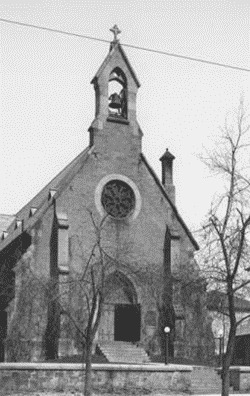
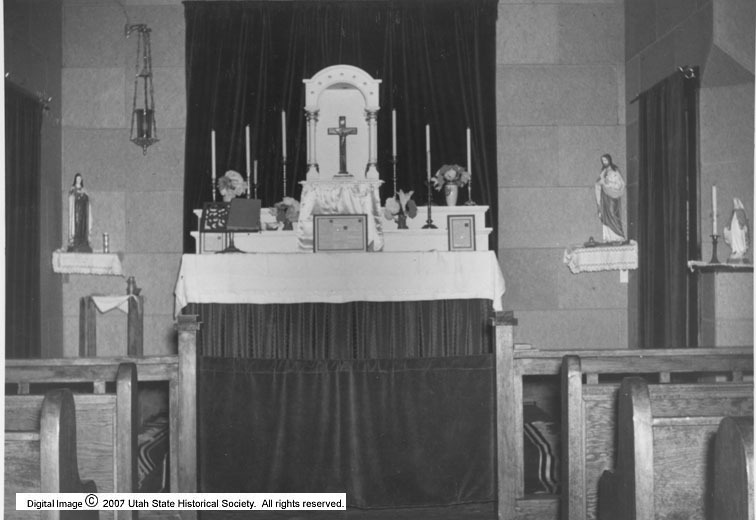
    <summary type="html"><![CDATA[<p><strong><em>Due to external pressures and free land, several Hispanic families moved to Monticello and the surrounding San Juan County. The rural landscape allowed Hispanic families to keep more of their culture than those in more urban spaces which manifested in the construction of the first Hispanic Catholic Church in the state. </em></strong></p><img src="https://www.intermountainhistories.org/files/fullsize/548a81439a5af7bab727f49d8255c5d3.jpg" alt="St. Joseph&#039;s Cathedral Altar" /><br/><p>Compared to the rest of the American Southwest, Utah did not have as strong a Hispanic population until the twentieth century. Previously, Hispanic men had often moved to southern Utah to herd sheep and cattle for three quarters of the year before moving back home to their families. Beginning in the early 1900s, men started to bring their families to Monticello,​​ Utah. Many of the Hispanic families who moved to Monticello were citizens from small New Mexican villages or Colorado. Governments and policies in these states took away Hispanics’ land, water, and right to be involved in the government. This, along with the promise of “free” land in Monticello, spurred Hispanics to move. Groups of families began homesteading in the community with men being employed as sheep herders, ranch hands, and cowboys. </p><p>William Herman Gonzalez’s father was of the first family to move to the community in the early twentieth century. Born and raised in Monticello, Gonzalez remembers that “there was always deer meat and potatoes and plenty of tortillas.” Their small group of Hispanics attracted others to move to the community, “this gathering.” In times of need, the families of Hispanics would rally around one another, although they were mostly independent due to the layout of Monticello. As a consequence of the rural landscape, the Hispanics who moved to Monticello were able to keep more of their traditional culture in comparison to Hispanics who moved to urban landscapes. Many were strongly Catholic and raised money to build the first Hispanic Catholic church in Utah, St. Joseph’s. </p><p>The relations between Hispanics and Anglos in the community were complex because of the cultural barriers between Catholic and Mormon and Anglo and Hispanic. The two communities did not intermarry until the late 1940s. When World War II began, about 125 Hispanic men enlisted in the war. Upon their return, some were able to advance economically. One of them was Robert Nieves who opened the Highland Café in 1947. However, World War II and the Korean War created new dynamics in this southern part of the state and led many Hispanics in and around Monticello to move north for better paying jobs, bringing with them their strong sense of culture.</p><p><em><strong><a href="https://www.intermountainhistories.org/items/show/636">For more (including 4 images) view the original article</a></strong></em></p>]]></summary>
    <published>2022-09-07T16:29:42+00:00</published>
    <updated>2026-04-17T19:32:14+00:00</updated>
    <link rel="alternate" type="text/html" href="https://www.intermountainhistories.org/items/show/636"/>
    <id>https://www.intermountainhistories.org/items/show/636</id>
    <author>
      <name>Lindsey Meza, Brigham Young University</name>
    </author>
  </entry>
  <entry>
    <title type="html"><![CDATA[The Nunnery]]></title>
    <summary type="html"><![CDATA[<img src="https://www.intermountainhistories.org/files/fullsize/7fd8911778918bad54a0a8a8d8942b72.jpg" alt="Lodge interior. St. Anne&#039;s Retreat. " /><br/><p>Known by various names, including Hatch's Camp, Forest Hills, Pine Glenn, St. Anne's Retreat, and the Nunnery, this historic site is about 6 miles up Logan Canyon in the middle of the Cache National Forest. This former summer camp has been listed on top haunted lists of the US. </p><p>The first owners and developers of the land were the Hatch and Odlum families. Boyd and Anne Hatch and Floyd and Hortense Odum not only developed this land together, but also went into business together starting in the 1920’s and soon became millionaires due to their entrepreneurial efforts. In the 1950s the Hatch family donated the property to St. Thomas Aquinas Parish in Logan. which gladly accepted the property on behalf of the Catholic Church and renamed the camp St. Anne's Retreat. It was only after the Catholic church took over the ownership of the Hatch property that rumors began to take hold of the community, filling the communal mind with images of drowning babies and Satanic nuns. Gary Topping, the archivist of the Catholic Diocese of Salt Lake City, is unaware of any actual crime that would taint the site's reputation in the era when the church used the property as a resort and was unable to find any evidence of any incident in the records of St. Thomas Aquinas Parish. A reporter for the Deseret Morning News was also unable to unearth any evidence backing up local legends. This leads many to believe that these horror stories were created from an environment of prejudice against non-LDS religions in Utah. </p><p>In 1995, Jesse Smith Bushman, a BYU graduate student, conducted a study in which he interviewed two Catholic priests in Utah about their experience as a religious minority in the area during the time that the rumors began about St. Anne’s retreat. These are some of the things they had to say about the LDS church and Catholic relations during the 1950s, “The LDS church and its members tended to overlook the other faiths in the state” and “some adults are still very affected by social barriers and may leave for that reason”. This idea of a “us” versus “them” society is shown in a story that one of the priests shared “about a man who had felt somewhat left out for five years and then after joining the LDS church felt quite accepted." These candid accounts suggest how mistrusting rumors could have started about a non-LDS religious institution. </p><p><em><strong><a href="https://www.intermountainhistories.org/items/show/10">For more (including 2 images) view the original article</a></strong></em></p>]]></summary>
    <published>2017-01-11T00:50:06+00:00</published>
    <updated>2026-04-17T19:31:58+00:00</updated>
    <link rel="alternate" type="text/html" href="https://www.intermountainhistories.org/items/show/10"/>
    <id>https://www.intermountainhistories.org/items/show/10</id>
    <author>
      <name>Taylor Dexter, Brigham Young University</name>
    </author>
  </entry>
</feed>